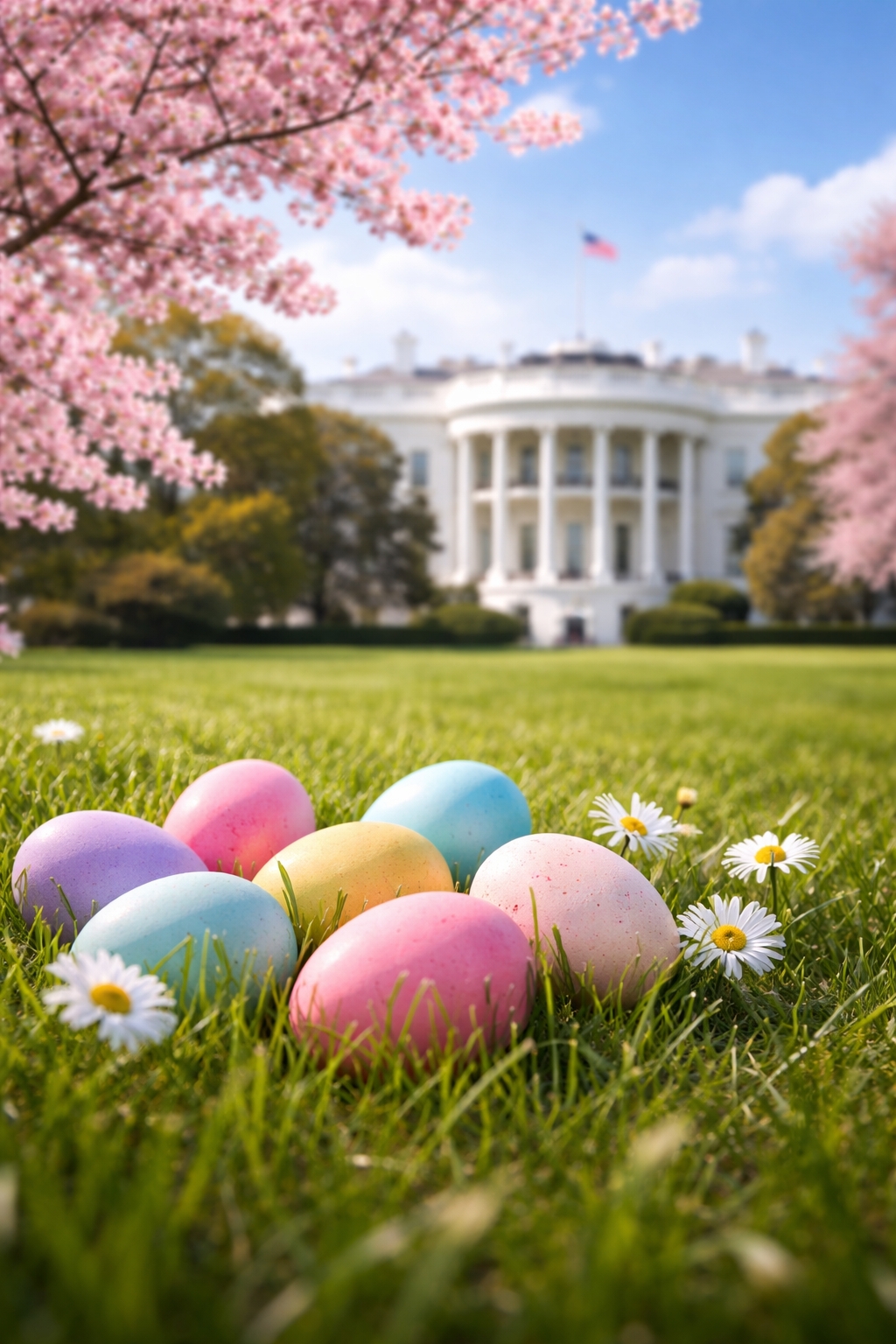
White House Easter Egg Roll 2026: A Timeless Tradition at the Nation's Front Door
As the cherry blossoms unfurl along the National Mall and children begin dreaming of colorful eggs, Washington D.C. prepares to host one of its most beloved springtime traditions. The White House Easter Egg Roll 2026 invites families to the South Lawn of the White House on April 6 2026 for a day of games, storytelling, music and festive egg rolling. Started in the late nineteenth century, this free public event has grown into a signature celebration of American family life and civic heritage, and the 2026 edition will honor America’s 250th birthday with patriotic themes and commemorative keepsakes. Tickets are awarded through an online lottery, and families with children under fourteen can look forward to an unforgettable experience at the President’s front door.
Introducing a Springtime Spectacle
Spring in the nation’s capital is a season of anticipation. By early April the city’s bare trees have erupted into clouds of pink and white blossoms, the air is crisp and fragrant, and families across the country are planning road trips and flights to witness the storied rituals that unfold around the White House. The Easter Egg Roll is the oldest annual public event on the White House grounds. Its origins trace back to 1878, when President Rutherford B. Hayes invited local children to roll eggs on the Executive Mansion’s lawn after Congress banned the practice on the west grounds of the U.S. Capitol. That simple act of hospitality marked the birth of a tradition that has endured war, economic hardship and technological change. Today, the event combines elements of a state ceremony with the warmth of a neighborhood picnic. Families wait patiently in line, children clutching painted eggs and wearing their holiday best, volunteers and staff bustle around in bright shirts, and the Marine Band strikes up familiar anthems as the gates swing open. The South Portico becomes a stage where the President and First Lady greet visitors, read stories and sometimes join in the games. At its core, the Easter Egg Roll is a celebration of youth and possibility—a symbolic opening of the White House to the American people at the start of spring.
A Tradition Rooted in History
To appreciate the significance of the Easter Egg Roll, it helps to understand its unlikely beginnings. In the early 1870s, the rolling of hard‑boiled eggs down the grassy slopes of Capitol Hill was a popular Easter Monday pastime for Washington families. The sight of dozens of children tumbling alongside their eggs was charming, but the activity left large bare patches on the Capitol lawn. Fearing for their landscaping, lawmakers inserted a provision into an 1876 appropriations bill forbidding the grounds from being used as a playground. Undeterred, local children petitioned the new President, Rutherford B. Hayes. Legend has it that Hayes was so moved by their request that he personally issued an order allowing children to roll eggs on the White House lawn. On Easter Monday 1878, the South Lawn hosted its first official Egg Roll. Since then, presidents and first ladies have expanded the event with music, story time, athletic demonstrations and celebrity performances, but the core activity—rolling eggs with wooden spoons across the lawn—remains the same. Over the decades, millions of parents and children have made cherished memories under the watchful gaze of the Executive Mansion.
History and Tradition of the White House Easter Egg Roll
The Easter Egg Roll’s history mirrors that of the nation itself. Through wars, depressions and social change, the event has persisted, reflecting the values of inclusion and community. In the early years, attendees were mostly local children. By the twentieth century, the event began to attract visitors from across the country, particularly after the introduction of commemorative wooden eggs in 1981. These wooden eggs, signed by the President and First Lady and painted in thematic colors, quickly became coveted keepsakes and are now produced annually by the White House Historical Association, a nonprofit organization that preserves the history of the Executive Mansion. The 2026 set features five eggs painted in patriotic hues to celebrate the semiquincentennial of the Declaration of Independence, complete with the Presidential Seal and coat of arms.
Throughout its long history, the Easter Egg Roll has been shaped by the first families who host it. President Benjamin Harrison introduced music by the United States Marine Band in 1889. First Lady Florence Harding added storytelling in the 1920s. During the Great Depression, President Franklin D. Roosevelt opened the event to more children from across the country, and World War II saw the event canceled for several years to conserve resources. In 1978, First Lady Rosalynn Carter invited disabled children to participate, highlighting inclusivity. The event has also served as a stage for pop culture; performers such as Justin Bieber, Ariana Grande and Idina Menzel have sung on the South Lawn, while professional athletes demonstrate sports clinics. Each era leaves its own imprint, making the Easter Egg Roll both timeless and timely.
How the Event Works
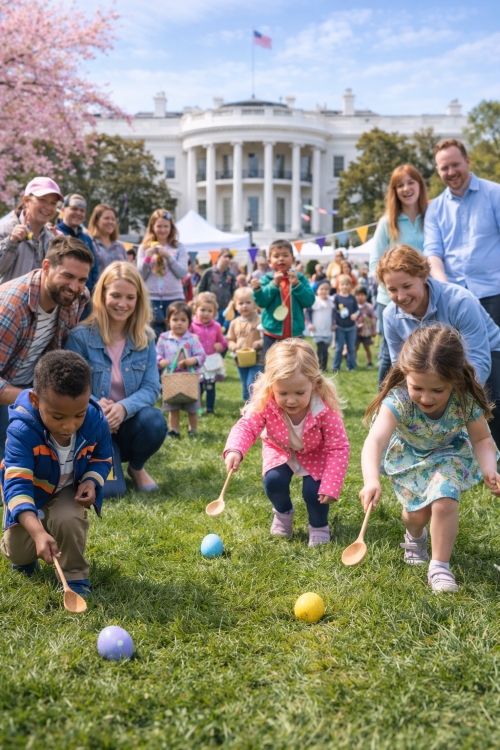
The Easter Egg Roll remains grounded in simple childhood joy. Children are given wooden spoons and brightly colored hard‑boiled eggs. When the whistle blows, they race to gently push their eggs toward the finish line using only their spoons. The challenge lies in keeping the egg rolling straight without breaking it—a feat that elicits both laughter and gentle frustration. Multiple races occur throughout the day for different age groups so that toddlers and older children alike get a turn. Surrounding the main rolling lanes are numerous activity stations. There are storytelling tents where authors and celebrities read children’s books, craft tables where kids decorate cookies or make paper hats, and stages featuring live music, dance troupes and even mascots from major sports teams. Over the years, new activities such as yoga sessions, science demonstrations and fitness obstacle courses have been introduced to encourage healthy living. Volunteers from across the country guide families through each activity, handing out souvenirs and ensuring that everyone has a memorable experience.
Notable Milestones Over the Years
Below is a brief timeline of some of the event’s most memorable milestones. These moments reflect how the Easter Egg Roll has evolved while remaining true to its core purpose of welcoming families to the White House.
| Year | Milestone | Notes |
|---|---|---|
| 1878 | First official White House Easter Egg Roll | President Rutherford B. Hayes welcomes children to the South Lawn. |
| 1889 | Music added | President Benjamin Harrison invites the Marine Band to perform. |
| 1921 | Storytelling introduced | First Lady Florence Harding reads to children. |
| 1942–1945 | Event canceled during World War II | Resource conservation and security concerns lead to suspension. |
| 1974 | “People’s Egg” theme | Celebrates inclusion and features diverse performers. |
| 1981 | Wooden souvenir eggs introduced | First Lady Nancy Reagan begins a new tradition; eggs become collectible. |
| 1998 | First online lottery | Ticket distribution moves online, increasing fairness. |
| 2026 | 148th Easter Egg Roll & America 250 theme | Patriotic motifs celebrate the nation’s 250th birthday and the largest public participation to date. |
Each of these milestones shows how first families have used the event to communicate values—music to uplift, storytelling to educate, and inclusivity to ensure all children feel welcome. The 2026 edition promises to add another meaningful chapter to this living tradition.
2026 White House Easter Egg Roll: Dates, Tickets and Lottery
One of the most important things to know about the Easter Egg Roll is that admission is free but access is limited. To preserve the historic grounds and ensure a safe, enjoyable experience, attendance is capped and tickets are required. Tickets are distributed through an online lottery hosted by Recreation.gov, the federal reservation platform for national parks and events. The lottery opens several weeks before the event and remains available for only a short period. For 2026, the lottery opens at 12:00 PM ET on February 26 2026 and closes at 12:00 PM ET on March 4 2026, with winners notified by March 10 2026. The event itself takes place on Monday, April 6 2026. These dates are crucial; missing the entry window means waiting another year.
Key Dates at a Glance
| Item | Date & Time |
|---|---|
| Lottery opens | Feb 26 2026, 12:00 PM ET |
| Lottery closes | Mar 4 2026, 12:00 PM ET |
| Winners notified | Mar 10 2026 |
| Event date | Apr 6 2026 |
Families should create or log in to their Recreation.gov account before the lottery opens. Each household is allowed one application requesting up to six tickets, with a maximum of two adults and at least one child aged 13 or younger. The lottery form asks for preferred time slots; selecting more than one slot increases your chances. Tickets cannot be sold or transferred, and you must present a government‑issued photo ID along with the ticket when entering the White House grounds. All participants, including infants, must be listed on the ticket request.
How to Enter the Lottery
Applying for tickets is straightforward:
-
Visit the official lottery page on Recreation.gov using a desktop or mobile browser during the lottery window. You can search for “White House Easter Egg Roll” on the site or go directly to the event page. Create an account if you don’t already have one.
-
Select your preferred time slots. The day is divided into several sessions, each lasting about two hours. Choose as many sessions as you are available for; the system will assign one if you win.
-
Enter your party details. Provide the names and ages of the children and adults who will attend. Make sure the information matches your IDs. You cannot add or substitute attendees later.
-
Submit and wait. Recreation.gov will send a confirmation email acknowledging your entry. On March 10 you will receive a notification indicating whether you were selected. Winners must confirm acceptance promptly or risk losing the ticket.
Because demand is high, not everyone who applies will be selected. If you are not chosen, consider volunteering (see the volunteer section below) or exploring other spring events in the capital. Also remember that all visitors must pass through security screening, so allocate extra time on the day of the event.
Ticket Rules and Eligibility
To ensure fairness and safety, the White House imposes specific eligibility rules:
-
Free admission: Tickets are free, and there is no cost to enter the lottery. Any third‑party site or individual offering to sell tickets is fraudulent.
-
Household limitation: Only one application per household is allowed. Multiple entries can result in disqualification.
-
Age requirements: The event is designed for children 13 and under. At least one child and one adult must be included on each ticket. Adults without children are not permitted.
-
Group size: Each ticket grants entry for up to six people (maximum two adults).
-
Identification: Adults must present government‑issued photo ID matching the names on the ticket. Children are not required to have ID.
-
Nontransferable: Tickets may not be sold, transferred or auctioned. Violators risk forfeiture and may be barred from future events.
Following these rules not only increases your chances of attending but also helps maintain the integrity of the event.
Activities and Entertainment at the Easter Egg Roll
The heart of the event lies in its joyful activities. From morning until late afternoon, the South Lawn is transformed into a festival grounds with multiple interactive zones. Each area is designed to engage children’s imagination, foster learning and encourage physical activity while celebrating the spirit of Easter and spring.
Egg Rolling and Egg Hunts
The main event is, of course, the egg roll itself. Children armed with long wooden spoons line up behind starting markers. When the whistle blows, they race to gently push their eggs toward the finish line using only their spoons. The challenge lies in keeping the egg rolling straight without breaking it—a feat that elicits both laughter and gentle frustration. Multiple races occur throughout the day for different age groups so that toddlers and older children have equal opportunities. Alongside the roll is the Egg Hunt, where eggs are hidden in hay and behind decorations, giving children the thrill of discovery. Sometimes golden eggs are tucked away with special small prizes inside.
Live Music and Performances
No celebration would be complete without music. Since President Harrison’s invitation to the Marine Band in 1889, live music has been a staple of the Easter Egg Roll. On a small stage near the South Portico, bands from the military services alternate with popular children’s entertainers and youth choirs. Past performers have ranged from Broadway stars to chart‑topping pop singers and local school orchestras. In addition to music, dance troupes, magicians and even costumed characters from children’s television shows take turns entertaining families.
Storytime and Educational Activities
In a quieter corner of the lawn, large tents are set up for storytime. Authors, teachers and celebrities read children’s classics and new releases, often highlighting themes of diversity, kindness and American history. In some years, the President or First Lady has appeared to read a favorite book, creating memorable photographs. Adjacent to the story tents are educational booths. Museums like the Smithsonian sometimes host interactive exhibits where children can handle artifacts, complete simple science experiments or learn about important figures in American history. These activities underscore the event’s dual purpose of entertainment and education.
Arts, Crafts and Fitness
Creativity thrives at the craft stations. Children can decorate cookies with pastel icing, paint wooden eggs or assemble paper hats and masks. Volunteers provide supplies and guidance, and children take their creations home as souvenirs. Nearby, physical fitness stations encourage movement. Yoga instructors lead family sessions on colorful mats, while professional athletes set up mini drills to demonstrate football throws, basketball shooting and soccer dribbling. The President’s Council on Sports, Fitness and Nutrition often sponsors these areas to promote active lifestyles.
Food and Refreshments
Outside food is typically restricted for security reasons, but the event provides light refreshments and snacks. Booths offer fruit cups, yogurt, pretzels and water, ensuring that families stay hydrated and energized. There are also concessions selling coffee and tea for adults. Because lines can be long, visitors are encouraged to eat a healthy meal before arriving and to bring sealed water bottles if allowed by security guidelines.
Tips for Attending the Easter Egg Roll
An enjoyable Easter Egg Roll experience begins with good preparation. Below are practical suggestions to help your family make the most of the day.
Plan Your Transportation
The White House is located at 1600 Pennsylvania Avenue NW, in the heart of Washington D.C. Using public transportation is highly recommended:
-
Metrorail: The nearest stations are Farragut West and Federal Triangle on the Blue, Orange and Silver lines. Both are about a ten‑minute walk to the White House. McPherson Square and Farragut North stations on the Red line are also nearby. Check the Washington Metropolitan Area Transit Authority website for schedules and possible service changes.
-
Bus: Several Metrobus routes stop near the White House. Plan your route in advance and allow extra time for potential traffic.
-
Rideshare and taxi: While convenient, rideshare vehicles may drop off passengers several blocks away due to street closures. Confirm your pickup and drop‑off points.
-
Parking: There is no public parking at the White House. Private garages and street parking around downtown fill quickly. If you must drive, pre‑book a space in a reputable garage and factor in a 10–15 minute walk to the entrance.
What to Bring and Wear
Comfort and practicality are key. Spring weather in Washington can be unpredictable—mornings may be chilly, afternoons warm, and rain showers common. Dress in layers and wear comfortable shoes for standing and walking. Bring the following:
-
Printed or digital tickets and photo IDs for adults.
-
A small bag or backpack that meets security guidelines—typically no larger than 12 inches by 12 inches. Pack sunscreen, a hat, sunglasses and a light jacket.
-
Sealed water bottles and healthy snacks for children. Note that outside food may be limited, so check guidelines closer to the event.
-
An empty Easter basket or bag for craft projects and treats.
-
A fully charged smartphone or camera for photos—selfie sticks are generally prohibited.
Avoid bringing large bags, backpacks with metal frames, weapons (including pocket knives), alcohol, glass containers, aerosols, pets (except service animals) or banners. Security screening is mandatory for all attendees. Strollers and wheelchairs are permitted but will be searched.
Arrival and Check‑In
Your ticket will specify a designated entry time. Arrive at least 30 minutes early to allow for security screening and check‑in. Lines can be long, especially for the first session of the day. Staff and volunteers will guide you to the correct queue. Once inside, follow signage to the various activity zones. Bathrooms and first aid stations are clearly marked; note their location upon entry.
Accessibility and Inclusion
The White House strives to make the Easter Egg Roll accessible to all. Wheelchair‑accessible routes are available, and sign language interpreters are stationed near the performance stages. If you or a family member has specific accommodation needs, indicate them on your lottery application and look for assistance at the entrance. Service animals are permitted. Information booths staffed by volunteers can answer questions and provide guidance.
Make the Most of Your Time Slot
Each session lasts about two hours. Prioritize activities that matter most to your children—egg rolling lanes can fill quickly, and lines for popular crafts may be long. Divide duties if attending with another adult; one person can reserve a place in a line while the other explores a nearby activity. Keep an eye on the performance schedule posted near the stage to catch your favorite entertainers. Remember to hydrate and take breaks in shaded areas, especially if it is sunny.
Beyond the Event: Exploring Nearby Attractions
After your session ends, consider exploring the rich cultural offerings within walking distance. The National Mall, lined with monuments and memorials, is just south of the White House and open to the public year‑round. Families may enjoy visiting the Washington Monument, the Lincoln Memorial or the World War II Memorial. Museums such as the Smithsonian National Museum of American History and the National Museum of Natural History provide interactive exhibits perfect for children. Springtime also coincides with the peak bloom of the Tidal Basin’s cherry blossoms, one of the city’s most photogenic sights. These destinations are all accessible without a car and offer free or low‑cost admission. For an organized tour, consult the official National Park Service calendar for ranger‑led programs.
America’s 250th Birthday and the 2026 Theme
The 2026 Easter Egg Roll is special not only because it marks the 148th iteration of this tradition but also because it commemorates America’s Semiquincentennial—the 250th anniversary of the signing of the Declaration of Independence. Nationwide celebrations will culminate on July 4 2026, but the White House is weaving patriotic motifs into its Easter festivities. Expect to see red, white and blue bunting adorning the South Lawn, as well as educational exhibits highlighting key moments in the nation’s journey from 1776 to the present.
Patriotic Programming
To honor the semiquincentennial, the 2026 Easter Egg Roll will feature special programming that blends fun with history. Actors dressed as founding fathers and mothers may roam the grounds telling stories from the Revolutionary era. Historical reenactments will bring to life the signing of the Declaration, the debates that shaped the new republic and milestones such as the Emancipation Proclamation. Interactive displays may allow children to explore the state flags and symbols of the fifty states or try on colonial costumes. Musical selections will include patriotic songs such as “America the Beautiful” and “The Stars and Stripes Forever.” These elements ensure that young visitors leave with not only a basket of treats but also a deeper understanding of the principles that underpin the nation.
Commemorative Eggs and Souvenirs
Each year, the White House Historical Association produces wooden eggs as official souvenirs. The 2026 set features five eggs painted in hues of red, white, blue, gold and a special multicolor pattern representing diversity. Four eggs display the Presidential Coat of Arms, while the fifth—the “Golden Egg”—bears the Presidential Seal. Both the President and First Lady’s signatures are imprinted on the reverse. The set comes in a box with cut‑out windows, making it a striking keepsake. In keeping with America 250, the eggs also bear a semiquincentennial logo. Visitors can purchase the eggs in person at the event or online through the White House Historical Association’s shop. Additional semiquincentennial merchandise, including ornaments and books, will be available as part of a wider collection.
America 250 Resources
The United States Semiquincentennial Commission, branded as America 250, coordinates national programs leading up to July 4 2026. If you want to explore broader events or educational resources, visit the commission’s official website at America250.org. The site provides a calendar of state and local celebrations, learning resources for classrooms and volunteer opportunities across the country. By participating in these initiatives, families can extend the patriotic spirit beyond the Easter Egg Roll and engage with their communities in meaningful ways.
Volunteer Opportunities and Commemorative Souvenirs
Behind every successful Easter Egg Roll stands an army of volunteers. Each year, hundreds of individuals donate their time to ensure the event runs smoothly—from staffing activity stations and guiding guests to distributing eggs and assisting with clean‑up. Volunteering offers a unique perspective on the event and an opportunity to serve alongside White House staff.
How to Volunteer
Prospective volunteers must apply through the official portal, typically accessible via the event’s page on the White House’s website several weeks before Easter. Volunteers must be at least 18 years old and available for training sessions preceding the event. Roles include:
-
Activity facilitators – Help children with games, crafts and exercises.
-
Greeters and crowd guides – Assist visitors with directions and manage lines.
-
Ticket checkers – Scan tickets at entry points and verify identification.
-
Logistics and set‑up crew – Prepare the lawn, arrange tables and chairs, and maintain cleanliness.
-
Accessibility support – Provide assistance to guests with disabilities, including guiding wheelchairs and communicating with sign language interpreters.
Volunteers are asked to commit for the full day of the event and may be assigned to morning or afternoon sessions. In return, they receive commemorative volunteer badges, refreshments and the satisfaction of contributing to a national tradition. Applications typically close in late February, and selected volunteers are notified by early March.
Collectible Souvenirs and Keepsakes
Attendees who wish to bring home a piece of the event have several options. In addition to the official wooden egg sets, vendors on site sell pins, bookmarks, posters and children’s books relating to White House history. The White House Visitor Center, located a few blocks away at 1450 Pennsylvania Avenue NW, offers a broader range of merchandise such as china replicas, photographs and ornaments. Shopping at these official sources supports historical preservation and education programs. If you cannot attend the event but still want a souvenir, the White House Historical Association’s online store ships nationally. Avoid purchasing from unauthorized resellers, who often inflate prices and offer counterfeit items.
Exploring Washington D.C. During Easter: Travel Tips and Nearby Hotels
Many families travel long distances to attend the Easter Egg Roll, and the capital offers far more than a single event. Planning an extended stay allows you to explore the city’s museums, parks and culinary scene. It also makes sense to stay close to the White House to minimize transit on the day of the event.
The Best Areas to Stay
Washington D.C. is compact, and most attractions are concentrated around downtown and the National Mall. Staying near these areas gives you easy access to monuments, museums and restaurants. Some neighborhoods to consider include:
-
Downtown / Federal Triangle: Steps from the White House, this area is ideal for attendees. Government buildings, museums and theaters surround tree‑lined streets. Hotels here are mostly business‑oriented, offering convenience and modern amenities.
-
Penn Quarter: A lively neighborhood just east of the White House, known for its restaurants, galleries and the Capital One Arena. It’s within walking distance of the National Gallery of Art and the Smithsonian museums.
-
Foggy Bottom: Home to George Washington University and the Kennedy Center, this neighborhood offers a mix of hotels, eateries and cultural venues. It’s a short ride to the White House via the Metrorail.
-
Dupont Circle: A charming area with historic rowhouses, boutique hotels, bookstores and cafés. It’s slightly farther from the White House but still walkable or a quick Metro ride.
Why Choose Hotel Washington
Among the many lodging options, Hotel Washington stands out for its location and historic charm. Often referred to as the closest hotel to the White House, it sits at the edge of the White House Lawn and offers unobstructed views of the Executive Mansion. The building dates back to 1917 and has hosted dignitaries, artists and celebrities for more than a century. Recently renovated, it combines classic elegance with contemporary comfort.
Guests at Hotel Washington enjoy spacious rooms, a rooftop lounge with panoramic views of the National Mall, and easy access to the Washington Monument, the National Museum of African American History and Culture, and numerous dining options. On the morning of the Easter Egg Roll, families can walk out of the lobby and be at the security entrance in minutes, avoiding the hassle of transportation and parking. The hotel’s concierge can assist with lottery reminders, volunteer sign‑ups and curated itineraries for exploring the city. Whether you are attending the event or simply visiting Washington in the spring, the hotel provides a luxurious yet welcoming base.
Other Notable Hotels Near the White House
If Hotel Washington is fully booked, several other reputable hotels are within a short walk of the White House. The Willard InterContinental, an iconic property known for hosting presidents and diplomats, offers opulent rooms and fine dining. The Sofitel Washington D.C. Lafayette Square features French‑inspired décor and a high‑end brasserie. The JW Marriott Washington, DC provides modern comforts and family‑friendly services. For a more boutique experience, the Hay-Adams offers luxury accommodations with balconies overlooking the White House. All of these hotels emphasize security, convenience and proximity to the event.
Dining and Entertainment
Washington’s culinary scene is as diverse as its population. Near the White House you’ll find everything from food trucks serving gourmet grilled cheese sandwiches to Michelin‑starred restaurants. Families might enjoy Old Ebbitt Grill, a historic saloon known for its crab cakes and kid‑friendly menu, or Founding Farmers, which serves farm‑to‑table American classics. For a quick bite, head to the National Gallery of Art’s Sculpture Garden where seasonal cafés sell sandwiches and pastries. When evening falls, catch a performance at the John F. Kennedy Center for the Performing Arts, which offers concerts, ballets and plays. Check each venue’s official website for showtimes and ticket availability.
Day Trips and Excursions
Extend your stay by venturing beyond downtown. A short Metro ride will take you to Arlington National Cemetery in Virginia, where you can witness the Changing of the Guard at the Tomb of the Unknown Soldier. Drive or take a boat to Mount Vernon, George Washington’s historic estate on the Potomac River. Nature lovers will appreciate a hike in Rock Creek Park, an urban oasis offering picnic areas, horseback riding and miles of trails. For a taste of local culture, explore the boutiques and music venues along U Street or visit the vibrant farmers’ market in Eastern Market on Capitol Hill. Each of these outings adds richness to your Easter visit.
Frequently Asked Questions
How do I get tickets for the White House Easter Egg Roll 2026?
Request tickets through the online lottery at Recreation.gov when the lottery opens on February 26 2026. Create an account, fill out the form with your family’s details and select preferred time slots. Winners will be notified by March 10 2026. Tickets are free and nontransferable.
What is the age limit for participants?
The event is geared toward children 13 years old and younger. Each ticket must include at least one child and may include up to two adults. Adults without children cannot attend.
What should I wear to the event?
Dress in layers appropriate for spring weather. Comfortable shoes are essential for walking and standing. Bring sunscreen, a hat, sunglasses and a light jacket. Avoid bringing large bags or prohibited items.
Can I bring food and drinks?
Light snacks and sealed water bottles are generally allowed, but outside food may be restricted. Event organizers provide refreshments. Check the final guidelines on your ticket or the official event page before packing.
Are strollers and wheelchairs permitted?
Yes. Strollers and wheelchairs are allowed and will be searched at security checkpoints. Accessible routes and services are available. If you need additional assistance, inform a volunteer at the entrance.
Where can I buy commemorative eggs?
Official wooden eggs and other souvenirs are sold at the event and online through the White House Historical Association’s shop. Avoid purchasing from unauthorized sellers, as tickets and souvenirs should never be resold.
Is there a virtual option to watch the Easter Egg Roll?
In recent years, the White House has live‑streamed parts of the event on its website and social media channels. Check the White House’s official media pages closer to the date for livestream details.
Where should I stay for easy access to the White House?
Hotel Washington is the closest hotel to the White House, positioned at the edge of the White House Lawn. Its prime location and amenities make it an ideal base for attending the Easter Egg Roll. Other nearby hotels include the Willard InterContinental and the Hay-Adams.
Conclusion
The White House Easter Egg Roll is more than a children’s game; it is a living testament to American openness, hospitality and resilience. For nearly a century and a half, presidents have opened their backyard to families from every state, allowing children to revel in simple joys under the watchful eye of the seat of power. The 2026 edition, with its patriotic theme honoring America’s 250th year and an array of activities celebrating history and community, will be particularly poignant. Whether you are rolling eggs for the first time or returning with the next generation, the event offers a sense of continuity that binds the past to the present. Make your plans early, prepare thoughtfully and embrace the opportunity to create memories on the South Lawn. And if you seek a comfortable and convenient place to stay just steps from the action, consider the best hotel in Washington DC, Hotel Washington, where timeless elegance meets modern hospitality.
Read other posts