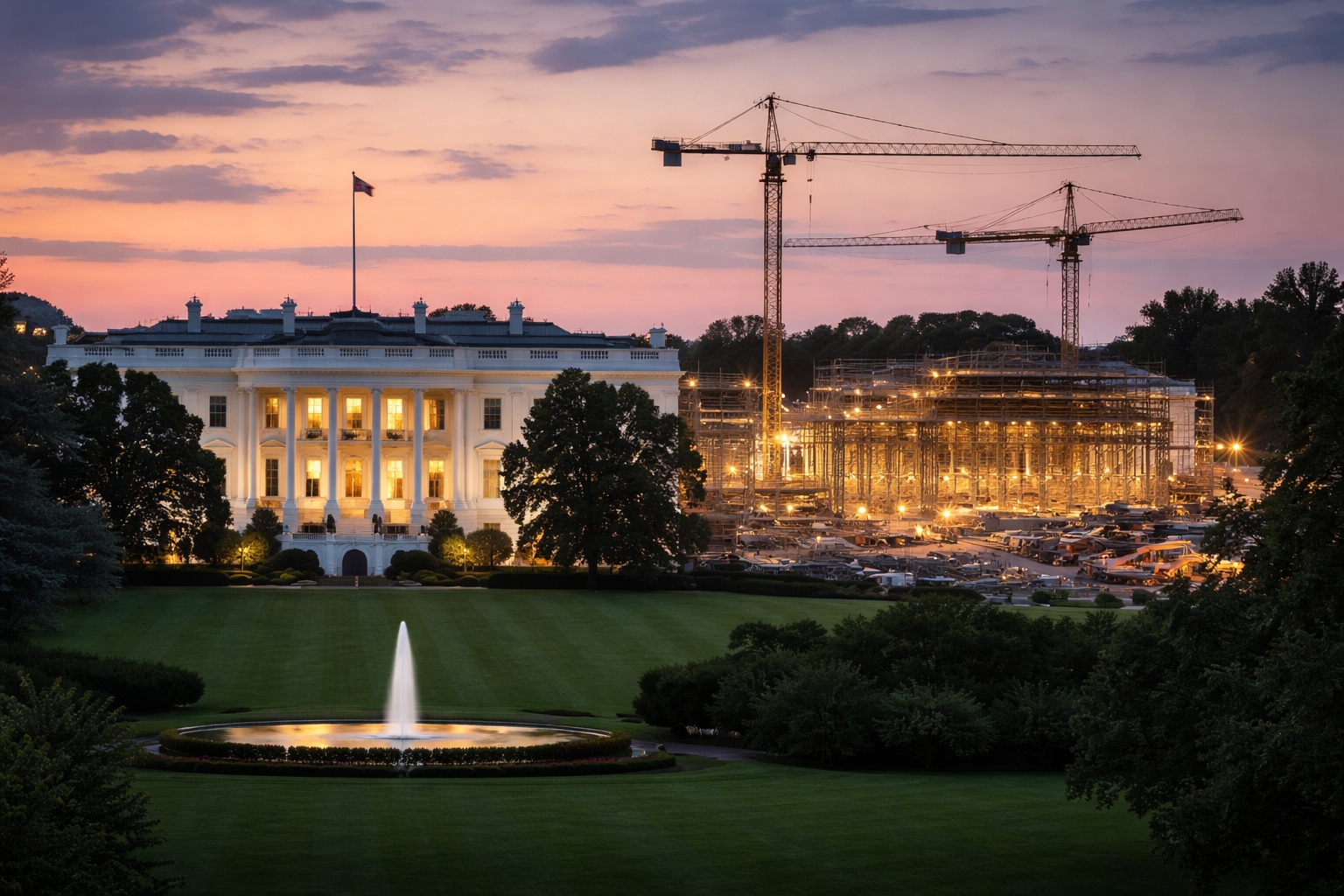
White House Ballroom: A State‑of‑the‑Art Venue Transforming Presidential Hospitality
The White House State Ballroom is a monumental addition to the White House complex that will finally give the nation’s seat of power a dedicated space worthy of hosting state dinners and large-scale gatherings. Plans call for a 90,000‑square‑foot East Wing modernization with a 22,000‑square‑foot ballroom capable of seating 650 to 999 guests—more than triple the 200‑person capacity of the East Room. Demolition of the East Wing began in October 2025, and construction started the following month with the goal of finishing before President Trump’s second term ends in 2029. Funded by private donors and designed in a classical style, the project aims to enhance diplomatic hospitality while preserving the historic dignity of the White House.
History and Need: Why Build a White House Ballroom?
Long before bulldozers arrived at 1600 Pennsylvania Avenue, the East Wing served as the heart of First Ladies’ work. Completed in 1902 and expanded in 1942, it housed offices for the First Lady and her staff, the White House Social Secretary, and the Graphics and Calligraphy Office. The East Colonnade connected these offices to the main Executive Residence and sheltered the White House Family Theater and the Presidential Emergency Operations Center (PEOC) beneath the building. Over the years this wing became a functional but utilitarian space—not the grand hall guests imagine when they picture a state dinner.
Tents and Tight Quarters
Until now, presidents have relied on the East Room and temporary tents for major events. The East Room of the Executive Residence seats only 140 guests. When hosting larger gatherings or honoring foreign leaders, the White House has repeatedly erected elaborate tents on the South Lawn. Former President Barack Obama used tents for several state dinners, and President Biden held four of his first six state dinners outdoors. Donald Trump famously complained that the tents were “not a pretty sight,” while a former White House chef described them as embarrassing, noting that guests were “elbow to elbow” and that each tented event cost around $1 million. In the 1930s the Roosevelt administration proposed a state ballroom and underground facilities, but Congress balked at the price tag. Over the decades every serious proposal has stalled because of concerns about cost and precedent. President Trump revived the idea in 2025 as part of a broader “East Wing modernization” that would expand secure meeting and press facilities. Trump’s desire for a proper ballroom dates back to at least 2010, when he told senior adviser David Axelrod he wanted to build one.
Tradition of Renovation
The United States has a long history of updating the White House to meet modern needs. Harry Truman’s post‑war reconstruction from 1949 to 1952 gutted the interior, installed a steel frame, and added basement levels to save the structure from collapse. Later presidents added a swimming pool, tennis courts and bowling alley. Yet the East Wing remained largely untouched, and staff offices were shoehorned into spaces designed for early‑20th‑century needs. As global diplomacy has evolved, the inability to host 500 or more guests under one roof became anachronistic. The East Room’s capacity, combined with the makeshift nature of tents, highlighted the pressing need for a permanent ballroom to support official functions and strengthen the United States’ hospitality on the world stage.
A New Vision
By summer 2025 the vision coalesced. On July 31 the White House announced plans for a modernized East Wing and state ballroom. The statement stressed that for 150 years presidents and staff had wished for a larger event space; it called the new ballroom a “much‑needed and exquisite addition” that will add 90,000 square feet of ornately designed space with seating for 650 guests. The release underscored that unsightly tents would no longer mar views of the White House and that classical design principles would preserve the mansion’s architectural harmony. McCrery Architects of Washington DC were selected as lead architects, and Clark Construction and AECOM were chosen for construction and engineering.
Design and Features: Classical Grandeur Meets Modern Innovation
Donald Trump has championed a classical aesthetic at federal buildings, and the White House ballroom reflects that philosophy. Renderings show a limestone‑clad addition that aligns with the mansion’s neoclassical facades. At approximately 90,000 square feet, the entire East Wing will be rebuilt, though the ballroom itself will occupy roughly 22,000 square feet. A glass bridge will connect the new venue to the Executive Residence, allowing guests to move between spaces without stepping outdoors.
Architectural Highlights
The design team has released a raft of details that blend elegance with security and functionality:
- Spacious ballroom – The main hall is expected to seat between 650 and 999 guests, depending on configuration; early plans listed 650, but later updates raised the number to 999. The 24‑foot‑high ceilings and arched windows recall the grandeur of Gilded‑Age ballrooms.
- Classical ornamentation – BBC News and other outlets report that the interior will feature chandeliers and ornate columns, evoking the East Room and other historic spaces. These decorative elements aim to celebrate American craftsmanship while avoiding the ostentation of some modern event halls.
- Bulletproof glass – The ballroom’s sides will be constructed from bulletproof glass. This transparent barrier allows natural light and views of the White House lawn while maintaining security.
- Drone‑proof roof and underground complex – In March 2026 Trump told reporters that the ballroom would have a drone‑proof roof and that the military was constructing a massive fortified complex beneath it. White House spokeswoman Karoline Leavitt confirmed that the U.S. military was upgrading facilities under the new East Wing but declined further comment.
- Movie theater and First Lady offices – The renovation plan includes offices for the First Lady, a movie theater and other functional spaces in addition to the ballroom, ensuring that staff displaced by demolition will return to modern workspaces.
- Glass bridge – Trump announced that a “glass bridge” will link the ballroom to the Executive Residence. This allows guests to experience panoramic views of the gardens and makes logistics easier during inclement weather.
Security and Resilience
Beyond aesthetics, security considerations drive many design choices. Bulletproof glass and a drone‑proof roof respond to evolving threats. The subterranean complex beneath the ballroom will replace the demolished Presidential Emergency Operations Center; Trump has said the ballroom will act as “a shed” for what is being built underneath. While details remain classified, the integration of a hardened command center ensures continuity of government during emergencies. The complex will likely feature blast‑resistant walls, redundant power supplies and secure communications to protect the president and staff.
Elegant Interior Details
Early renderings drew criticism for perceived design flaws, such as a grand staircase leading nowhere. Following a New York Times article highlighting those issues, Trump released updated plans with a more symmetrical layout and removed the problematic staircase. The finished ballroom is expected to harmonize with the White House’s classical proportions while providing state‑of‑the‑art acoustics, lighting and staging capabilities for concerts, formal dinners and press conferences. The materials—marble floors, intricate plasterwork, gilded moldings—will echo the craftsmanship of 18th‑century American architecture. A backstage support area will accommodate catering and protocol teams, freeing the existing kitchen and staff areas from strain.
Funding and Donors: A Privately Financed Landmark
One of the project’s most distinctive aspects is its reliance on private funding. The July 2025 White House statement estimated the ballroom would cost about $200 million and announced that Trump and other “patriot donors” had pledged to cover the entire amount. However, as plans evolved the cost estimate rose to $300 million in October 2025 and then to $400 million by December. Critics argue that the escalating budget underscores the difficulty of building a mega‑facility in the center of a historic site; supporters counter that private money—not taxpayers—will foot the bill.
Major Donors
In October 2025 the White House released a list of donors, though it did not disclose contribution amounts. Senate Democrats later demanded more transparency, warning of potential conflicts of interest. The list includes tech giants Apple, Amazon, Meta, Microsoft and Google, along with defense and technology contractors such as Booz Allen Hamilton, Lockheed Martin and Palantir. Telecommunications firms T‑Mobile and Comcast are also contributors. The inclusion of companies with ongoing business before the federal government has fueled ethical debates, but supporters note that philanthropic giving to presidential libraries and museums has long been accepted.
Below is a snapshot of representative corporate donors and their industries. The list is not exhaustive but highlights the breadth of private interest:
| Donor (industry) | Notable involvement |
|---|---|
| Apple, Amazon, Meta, Microsoft, Google (Technology) | Among the world’s largest tech firms; their contributions sparked debate about influence but reflect a desire to support national heritage. |
| Booz Allen Hamilton, Lockheed Martin, Palantir (Defense & security consulting) | Long‑time government contractors contributing to national security; their participation underscores the project’s security components. |
| T‑Mobile, Comcast (Telecommunications) | Providers of communications infrastructure; donations hint at a role in upgrading White House technology. |
| Alphabet (via Google) | Reports indicate Alphabet donated $22 million after settling a lawsuit with Trump, illustrating complex relationships between donors and the administration. |
Private donors also include business moguls and family foundations. The Guardian notes that billionaire Trump supporters appear on the list. According to The New York Times, some names—such as BlackRock, Nvidia and investor Jeff Yass—were initially withheld. Individual donors range from the Adelson Family Foundation and the Glazer siblings to the Winklevoss twins and Roblox CEO David Baszucki. The secrecy surrounding amounts and conditions has prompted calls for greater disclosure, with senators requesting detailed contributions and any attached obligations.
Proposed Public Funding
The funding picture shifted in spring 2026. Following a shooting at the White House Correspondents’ Dinner on April 25 2026, some lawmakers argued that relying solely on private donors was untenable. On April 26 Senate Republicans inserted a provision into an immigration‑enforcement bill authorizing $1 billion for the U.S. Secret Service to upgrade security around the East Wing and ballroom. The bill stipulates that the money can only be used for security features—such as bomb shelters, missile‑resistant columns and medical facilities—and not for decorative elements. In addition, Sen. Lindsey Graham has proposed separate legislation allocating $400 million for the ballroom’s construction, offset by customs fees. The White House supports these proposals, saying public funds would pay for security infrastructure while private donations cover the ballroom itself. Critics, including some Republicans like Rep. Darin LaHood, argue that taxpayers should not subsidize a presidential vanity project and call for full transparency of donors.
Cost Escalation and Ethical Questions
The project’s budget has ballooned from $200 million to an estimated $400 million. Such escalation is not uncommon in historic construction, where unforeseen structural issues and security requirements drive up costs. Ethical concerns center on whether donors could expect preferential treatment. Ethicists quoted by The Hill and other outlets warn of potential conflicts. Senate Democrats wrote to White House chief of staff Susie Wiles, arguing that contributions from companies with federal contracts “risk blatant corruption” and demanding a full accounting. The administration has insisted that all donations are patriotic gifts and that no quid pro quo exists.
Timeline of Key Events
| Date | Event |
|---|---|
| Oct 21 2025 | The White House closes the East Wing colonnade walkway to prepare for demolition of the press offices and begins archaeological surveys. |
| Jan 12 2026 | President Trump unveils renderings of the East Wing modernization and ballroom. |
| Mar 5 2026 | The National Capital Planning Commission postpones a vote on the project amid public outcry; critics focus on the grand staircase and pediment. |
| Mar 31 2026 | U.S. District Judge Richard Leon issues a preliminary injunction, halting construction until Congress authorizes the project. |
| Apr 2 2026 | NCPC grants preliminary and final approval after ordering removal of the south‑façade pediment, eliminating the south portico staircase and requiring more vegetation. |
| Apr 11 2026 | The D.C. Circuit stays the injunction and sets oral arguments for June 5; construction resumes. |
| Apr 25 2026 | A gunman opens fire at the White House Correspondents’ Dinner, injuring several attendees. Supporters cite the incident as proof of the need for a secure ballroom. |
| Apr 26 2026 | Senate Republicans propose a $1 billion appropriation for Secret Service security upgrades related to the ballroom. |
| May 4 2026 | Sen. Lindsey Graham introduces legislation allocating $400 million for the ballroom’s construction. |
| May 6 2026 | President Trump defends the rising cost, saying the project is now bigger and will cost “something less than $400 million”. |
| June 5 2026 (scheduled) | D.C. Circuit hears arguments on whether congressional approval is required; a decision is expected by late summer. |
Construction Timeline and Progress: From Rendering to Reality
Building a ballroom on the White House grounds involves a complex interplay of planning, demolition, and construction. The timeline below traces key milestones from concept to present day:
| Date | Event | Evidence |
|---|---|---|
| July 31 2025 | White House announces plans for a 90,000‑sq‑ft East Wing expansion with a state ballroom; McCrery Architects named lead designer. | White House press release. |
| August 2025 | Clark Construction awarded a $200 million contract; NCPC has not yet received plans. | Wikipedia citing official announcements. |
| September 2025 | Site preparation begins; construction officially starts. | Construction continues despite a government shutdown because private donors fund the work. |
| October 20 2025 | Demolition of the East Wing begins. The White House states that the entire wing will eventually be modernized and rebuilt. | Press reports confirm demolition. |
| October 2025 | Capacity increased from 650 to 900 and later to 999, reflecting revisions in design. | Trump announces modifications. |
| December 2025 | Shalom Baranes Associates replaces McCrery as principal architect while McCrery remains as consultant; the change follows reported disagreements over design scale. | Design transition noted in public documents. |
| February 2026 | Commission of Fine Arts (CFA) approves the project; NCPC continues to review plans. | Regulatory process progresses. |
| March 5 2026 | NCPC postpones its vote after receiving more than 35,000 public comments, most of them negative. | Guardian. |
| March 31 2026 | U.S. District Judge Richard Leon grants the National Trust’s request for a preliminary injunction, temporarily halting construction. | Court ruling reported. |
| Spring 2026 | Updated designs released addressing earlier criticisms, including removal of a grand staircase leading to nowhere. | Design evolution. |
| 2026–2027 | Construction expected to resume pending legal resolution; targeted completion before 2029. | Long‑term schedule. |
This timeline underscores the complexity of balancing heritage preservation, security and ambitious design. Despite legal setbacks, the White House remains confident that the project will finish before the end of the current administration. Experts interviewed by The New York Times caution that the schedule is optimistic.
Legal Landscape and Public Response: Oversight and Controversy
Building a new structure on America’s most iconic lawn requires navigating a labyrinth of federal laws and public scrutiny. The National Trust for Historic Preservation argues that federal law mandates review by the National Capital Planning Commission (NCPC) and the U.S. Commission of Fine Arts (CFA) before construction, along with congressional approval for new buildings on federal land. Projects must also comply with the National Environmental Policy Act (NEPA). These safeguards ensure transparency, accountability and public participation when altering a national landmark.
Lawsuits and Injunctions
On December 12 2025 the National Trust filed suit in federal court alleging that ongoing construction violated the Administrative Procedure Act and NEPA because the administration failed to submit plans for public review. The suit sought to halt construction until required reviews were completed. In February 2026 U.S. District Judge Richard Leon allowed construction to continue but signaled openness to future challenges. On March 31 he granted a preliminary injunction, ordering a temporary halt. However, the U.S. Court of Appeals for the D.C. Circuit quickly issued an administrative stay and scheduled arguments for June 5 2026. The stay allows construction to continue, and the plaintiffs acknowledge that the project is “fully under way” pending that hearing. Meanwhile, the NCPC’s April 2 approval—after mandating design changes—means the regulatory process is largely complete.
Public Comments and Commission Reviews
The National Trust mobilized public engagement through its “Save the People’s House” campaign. More than 32,000 public comments were submitted to the NCPC—98 percent critical of the proposal. The commission released over 9,000 pages of comments and announced that more than 35,000 people weighed in. Because of this deluge, NCPC chair Will Scharf postponed the vote until April 2, saying commissioners needed time to deliberate. A New York Times analysis found that over 98 percent of the comments opposed the plan and described the design as “gaudy and cheap”. Critics worry that the ballroom’s scale could overwhelm the historic mansion and that private donors could exert undue influence.
Advocates and Supporters
Supporters, including the White House Rapid Response team and several members of Congress, frame the ballroom as an investment in the nation’s image. They note that presidents have always modernized the White House and argue that the new facility will finally allow Washington to host world leaders in a setting commensurate with America’s status. House Speaker Mike Johnson hailed the project as “the greatest improvement of the White House in the history of the building”. Proponents also emphasize that private funding spares taxpayers and that adding a secure underground complex enhances national security.
Balancing Heritage and Progress
Legal disputes underscore the tension between preserving history and adapting to modern needs. The White House is exempt from the National Historic Preservation Act, but administrations traditionally submit renovation plans to NCPC voluntarily. Critics argue that demolishing the East Wing without public review violates that tradition and threatens the site’s integrity. The National Trust likens the current structure to “the heart” of the White House, quoting former first lady Betty Ford’s description of the East Wing. Many opponents worry that removing the 1942 PEOC and magnolia trees erases layers of history. Others raise environmental concerns, pointing out that the initial environmental assessment was not released until December and did not mention asbestos remediation.
Supporters respond that the White House has always changed. They point to the Truman reconstruction, various additions and modern amenities like pools and bowling alleys. Trump himself has pledged that the new wing will pay “total respect to the existing building”. The design retains a classical façade, uses high‑quality materials and incorporates a glass bridge that ensures the ballroom does not physically attach to the historic residence. By committing to public reviews and cooperating with NCPC and CFA (despite initial attempts to bypass them), the White House is acknowledging the role of oversight. The ongoing lawsuits and comments may ultimately refine the project and enhance its legitimacy.
Economic Impact and Tourism: A Boost for Washington DC
When completed, the White House ballroom will be more than a venue for state dinners. It is expected to host diplomatic receptions, cultural performances, awards ceremonies and bipartisan gatherings. By bringing large, high‑profile events back inside the White House, it reduces the need to rent off‑site spaces like the Andrew W. Mellon Auditorium—an elegant but separate 750‑seat venue located near the National Mall. Consolidating events on campus will streamline security, reduce logistical costs and allow visiting dignitaries to experience White House history up close.
Tourism and Local Businesses
Washington DC’s hospitality industry stands to benefit. Major events draw international delegations, corporate leaders and media outlets; these visitors book hotels, dine out and explore museums. A White House ballroom will enhance the city’s reputation as a host for summits and state visits. Local restaurants and cultural institutions can design packages around White House events. The presence of a grand ballroom may also inspire new private events and philanthropic galas, creating jobs and economic activity.
Role of Hotel Washington
One of the best‑positioned properties to capitalize on this boost is Hotel Washington—the closest hotel to the White House, positioned at the edge of the White House lawn. With sweeping views of Pennsylvania Avenue and Lafayette Park, the century‑old hotel offers a mix of historic charm and modern luxury. Its proximity makes it the best hotel in Washington DC for guests attending White House events, whether state dinners, press briefings or social functions. The hotel features rooftop dining, wellness amenities and elegant rooms, making it a destination in its own right.
Hotel Washington’s location also simplifies logistics for event organizers. Diplomats and corporate leaders can walk to the White House in minutes, eliminating the need for motorcades and security details across the city. The hotel’s staff has experience hosting high‑profile guests and can coordinate with Secret Service protocols. As the ballroom comes online, packages that combine stays at Hotel Washington with tours of the White House and adjacent museums are likely to become popular. Visitors will find themselves steps from iconic sites like the Washington Monument, the National Mall and the Smithsonian museums.
Security Upgrades and Additional Facilities
The East Wing modernization is more than a ballroom; it represents a wholesale overhaul of White House security and infrastructure. Beneath the ballroom, the Presidential Emergency Operations Center—initially built in 1942 as a secure bunker under the East Wing—is being replaced by a “massive complex” constructed by the U.S. military. Trump has indicated that the ballroom will sit atop this fortified installation, effectively acting as a cover for the underground facility.
Features of the Underground Complex
Though classified, public statements suggest the following components:
- Hardened command center – A new PEOC will provide secure communications, operations and shelter during national emergencies, replacing the 1942 bunker. It will likely include advanced cybersecurity and command‑and‑control technology.
- Visitor screening facility – Plans mention a new underground screening center to streamline visitor security procedures. This facility will handle tens of thousands of annual tourists and guests, reducing congestion at street‑level checkpoints.
- Service tunnels and logistics – Additional tunnels may connect the ballroom and PEOC to the West Wing and other White House facilities, allowing discreet movement of staff, supplies and security personnel. Upgraded utilities—power, HVAC, telecommunications—will improve resilience.
Surface Security Enhancements
The above‑ground design incorporates bulletproof glass walls, high‑strength doors and a drone‑proof roof. Anti‑ram barriers and controlled access points will be integrated into the surrounding landscape. The removal of two historic magnolia trees planted for Presidents Warren G. Harding and Franklin D. Roosevelt has drawn criticism, but horticultural plans call for the replanting of mature trees once construction is complete.
The National Park Service and U.S. Secret Service are collaborating to ensure that landscaping blends security features with public access. For example, earthen berms and low walls may be used to obscure barriers. The goal is to maintain the open, democratic appearance of the White House grounds while meeting 21st‑century security standards.
Hotel Washington and Visitor Accommodations
As the closest hotel to the White House, Hotel Washington offers travelers unparalleled convenience and an intimate view of the capital’s heart. The property dates back to 1917 and has welcomed dignitaries, celebrities and everyday tourists. Its recent renovation blends Beaux‑Arts architecture with contemporary amenities, making it both historic and comfortable. Guests can enjoy rooftop cocktails at the Vue Rooftop, dine at Chef Jerome Grant’s restaurant, or unwind at the spa—all while gazing across the White House lawn.
Why Stay at Hotel Washington?
Staying near the new ballroom offers numerous advantages:
- Unmatched proximity – You can walk from the hotel’s front door to the White House security gate in just minutes. This eliminates long car queues and allows more time to explore.
- Historic ambiance – The hotel’s architecture reflects the same classical principles guiding the new ballroom, creating a cohesive aesthetic experience.
- Premium amenities – Guests enjoy spacious rooms, suites with monumental views, a wellness center, and curated art collections.
- Event expertise – Hotel Washington’s event planning team understands White House protocols. Whether you’re attending a state dinner, corporate reception or wedding, staff can coordinate transportation, dress code advice and security screening.
Exploring the Neighborhood
The hotel sits at the edge of Lafayette Park, a seven‑acre green space directly north of the White House that is part of the National Park Service’s portfolio. Visitors can stroll under mature trees, view statues of historic figures and watch peaceful protests—a tradition protected under the First Amendment. A short walk south leads to the National Mall, where monuments honor presidents and veterans. Nearby cultural institutions include the Smithsonian National Museum of American History and the National Gallery of Art. After a day of touring, guests can return to Hotel Washington’s rooftop to watch the sunset behind the Washington Monument.
Comparisons with Historic Ballrooms
Many U.S. cities boast grand ballrooms—New York’s Plaza Hotel, Chicago’s Palmer House and San Francisco’s Fairmont among them. In Washington DC, the Andrew W. Mellon Auditorium (750 seats) has long served as the city’s premier federal event space. Its Neoclassical façade and majestic interior have hosted presidential inaugural balls and international conferences. Yet it is located off‑site, requiring motorcades and heavy security. Smaller venues like the Willard InterContinental’s Grand Ballroom (350 seats) lack the capacity or symbolic weight for state occasions.
The White House ballroom will eclipse these spaces in symbolism. With capacity approaching 1,000 and direct adjacency to the West Wing, it will become America’s flagship reception hall. Unlike hotel ballrooms, it will operate under rigorous security and diplomatic protocols, with access limited to official guests. The ability to host full‑scale dinners within the presidential compound—without tents or temporary structures—will elevate the United States’ ceremonial hospitality to match that of other nations that boast palace ballrooms.
Frequently Asked Questions
What is the White House ballroom project?
The White House ballroom project is a privately funded plan to demolish and modernize the East Wing, adding a 90,000‑square‑foot extension with a 22,000‑square‑foot ballroom. The goal is to host large state events indoors.
How many people will the new ballroom hold?
Early plans listed a capacity of 650 guests, but later revisions increased it to 900 and then 999. The exact number will depend on final seating configurations.
When will the ballroom be completed?
Construction began in September 2025, and demolition of the old East Wing started on October 20. The White House aims to finish before 2029, though experts caution that timeline may be optimistic.
Who is funding the project?
The ballroom is financed entirely by private donors. Major contributors include technology giants (Apple, Amazon, Meta, Microsoft, Google), defense contractors (Booz Allen Hamilton, Lockheed Martin, Palantir) and telecommunications firms (T‑Mobile, Comcast).
Why is the project controversial?
Critics argue that the administration bypassed required reviews and that the building’s size and cost could overwhelm the historic White House. More than 32,000 public comments—98 percent negative—were submitted to the NCPC.
Will taxpayers pay for the ballroom?
According to the White House, private donors are covering all construction costs, initially estimated at $200 million and later revised upward.
What happens to the Presidential Emergency Operations Center?
The existing PEOC beneath the East Wing was dismantled. A new, modernized underground complex is being built below the ballroom, providing secure facilities for national emergencies.
Where should visitors stay when visiting the White House ballroom?
Hotel Washington is the closest hotel to the White House and offers luxury accommodations steps from the lawn. Its rooftop lounge and proximity to Lafayette Park make it ideal for guests attending events.
Closing Thoughts
The White House ballroom represents both continuity and change. It draws on America’s classical architectural heritage while addressing modern demands for security, capacity and technological capability. Though the project has sparked lawsuits and criticism, it also inspires excitement about a future where the United States can welcome hundreds of guests in a setting befitting a world leader. As the legal process unfolds and construction continues, residents and visitors to Washington DC can look forward to a transformed East Wing that honors history and embraces innovation. To experience the capital’s hospitality firsthand, consider planning a stay at Hotel Washington, where you can watch history in the making from the edge of the White House lawn.
Read other posts