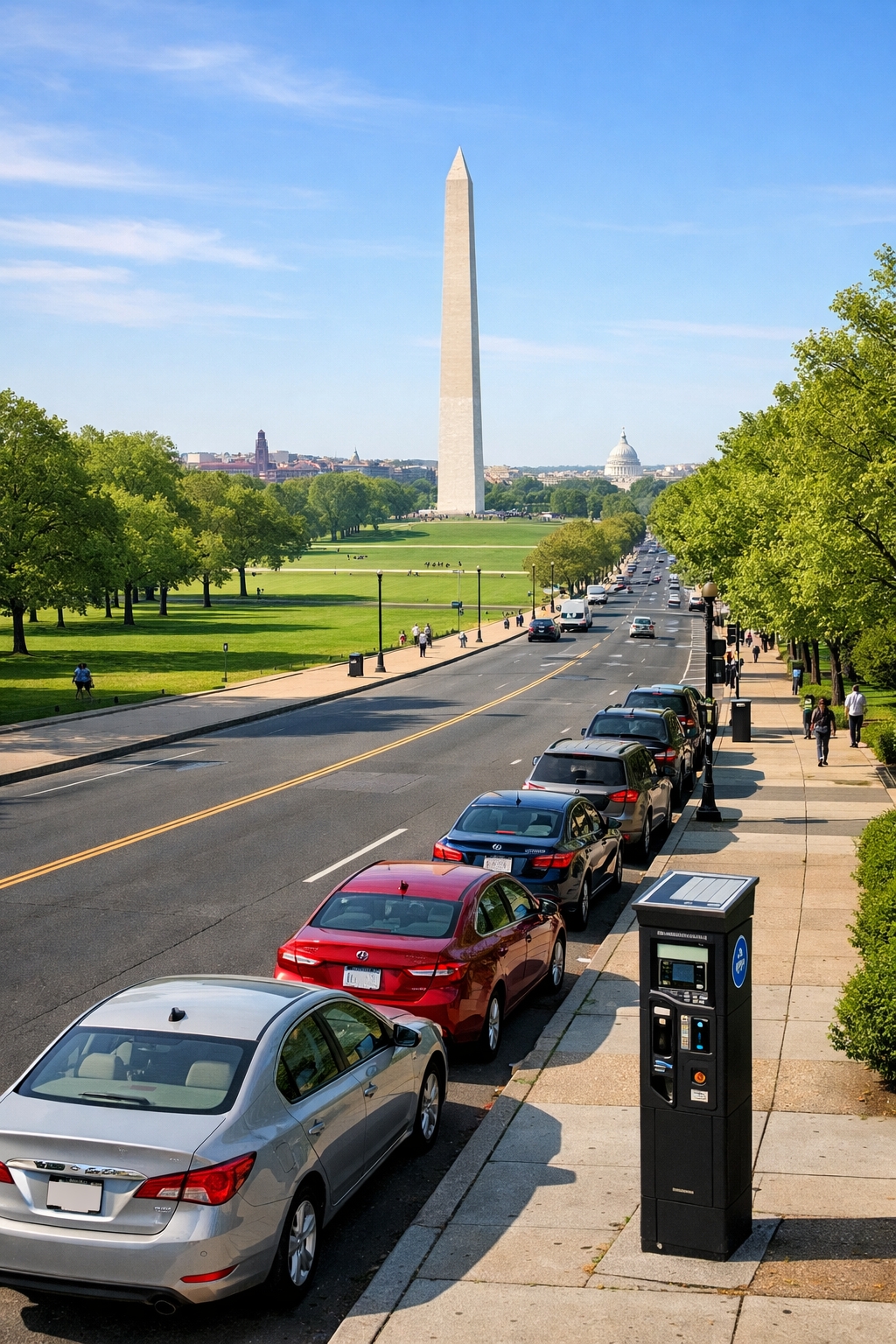
Where to Park Near the National Mall in DC: The 2026 Visitor’s Guide
The most reliable parking for the National Mall is found in large commercial garages such as the Ronald Reagan Building and International Trade Center or L’Enfant Plaza, which offer security and proximity to major museums. Street parking is available along Constitution Avenue and Independence Avenue but is highly competitive, time-restricted, and subject to aggressive rush-hour towing enforcement. For stress-free access, most seasoned visitors utilize parking apps like ParkMobile or choose accommodations with dedicated valet services in the downtown corridor.
Navigating the Capital’s Historic Grid
Washington, D.C. is a city designed with grandeur in mind, featuring wide avenues and sweeping sightlines that draw the eye toward monumental architecture. The original urban design, conceived by Pierre Charles L’Enfant, prioritized procession and ceremony over the eventual demands of modern vehicular traffic. Today, this historic layout creates a unique challenge for visitors arriving by car. The National Mall itself acts as a massive, pedestrian-centric green space that stretches two miles from the Capitol steps to the Lincoln Memorial, effectively bisecting the city’s grid. While this preservation of open space provides an unparalleled walking experience, it intentionally pushes vehicle storage to the periphery.
Navigating this landscape requires a shift in mindset from suburban convenience to urban strategy. The area surrounding the museums and monuments is a bustling federal district where security zones, one-way streets, and motorcades frequently alter traffic patterns. Finding a parking space here is not merely about locating a slot for a vehicle; it is about understanding the rhythm of the city. Mornings on the Mall are deceptive in their calm, with street spots vanishing by 9:00 AM. Afternoons bring the complex dance of rush hour restrictions, where a legally parked car at 3:55 PM becomes a towed vehicle by 4:05 PM.
Success lies in preparation. The seasoned traveler does not circle the block hoping for luck but arrives with a targeted destination—a specific garage or a known street zone—already in mind. Understanding the distinction between National Park Service jurisdiction and District of Columbia public works enforcement is equally critical, as the rules for a meter on Madison Drive differ significantly from those on Pennsylvania Avenue. This guide illuminates the logistics of the monumental core, ensuring that the logistics of arrival do not overshadow the inspiration of the visit.
Primary Parking Options Overview
Securing a spot near the monuments involves choosing between three distinct categories of parking, each with its own balance of cost, convenience, and availability.
| Parking Type | Best For | Typical Cost | Availability |
| Commercial Garages | Full-day visits, families, peace of mind | $25–$50+ per day | High (Pre-booking recommended) |
| Street Parking (Meters) | Short visits (2–3 hours), quick stops | $2.30+ per hour | Low / Competitive |
| Public Transit (Park & Ride) | Budget travelers, staying outside DC | $5–$10 + Fare | High (Suburban stations) |
Top-Rated Parking Garages Near the National Mall
For the vast majority of visitors, a commercial garage is the superior choice. The predictable cost and elimination of towing anxiety outweigh the expense, particularly when planning a full day of museum exploration. The garages listed below are selected for their strategic location relative to the most popular Smithsonian institutions and monuments.
Ronald Reagan Building and International Trade Center
Located just north of the National Mall, this massive federal complex offers one of the largest and most secure underground parking facilities in the city. Its position is unrivaled for visitors targeting the National Museum of American History or the National Museum of African American History and Culture. Because it is a federal building, security is tight; drivers should expect vehicle screenings upon entry, including trunk inspections. This slight delay is a small price for the assurance of a secure, well-lit environment that places you steps from the Federal Triangle Metro station and the heart of the action.
L’Enfant Plaza
Situated south of the Mall, L’Enfant Plaza serves as a critical hub connecting the SW Waterfront to the museum district. The garage here is vast, catering to thousands of office workers during the week and tourists on weekends. It is the ideal strategic entry point for the International Spy Museum and the Hirshhorn Museum and Sculpture Garden. The complex also features a substantial food court, providing a convenient climate-controlled break area before or after a long day of walking. Exiting the garage places visitors on the quieter southern edge of the Mall, often avoiding the heavier traffic found along Constitution Avenue.
The Wharf District Garages
While slightly further removed—roughly a 15-minute walk or a short shuttle ride to the Mall—the garages at The Wharf offer a modern, resort-style parking experience. This area is particularly attractive for visitors who plan to transition from daytime sightseeing to evening dining along the waterfront. Parking here allows for a seamless day that begins with monuments and ends with sunset views over the Washington Channel, removing the need to move the car between activities.
Union Station Parking Garage
Anchoring the eastern end of the tourist corridor, Union Station provides a reliable, high-capacity parking deck. This is a favored option for those arriving from the north via the I-95 corridor who wish to avoid driving deep into the downtown grid. From Union Station, visitors can walk to the U.S. Capitol or utilize the DC Circulator bus system to navigate the length of the Mall. The station itself is a destination, featuring stunning Beaux-Arts architecture and extensive retail options.
Mastering Street Parking Rules and Meters
Attempting to park on the street in downtown D.C. is often compared to a competitive sport. It requires agility, timing, and a thorough understanding of the rulebook. The spaces lining the National Mall are governed by a patchwork of jurisdictions, primarily the National Park Service (NPS) and the District Department of Public Works (DPW).
Constitution and Independence Avenues
These two major arteries frame the National Mall to the north and south. During off-peak hours (typically 9:30 AM to 4:00 PM), metered parking is available and highly coveted. However, drivers must be hyper-vigilant regarding rush hour restrictions. Signs will explicitly state "No Stopping or Standing" during morning (7:00–9:30 AM) and evening (4:00–6:30 PM) commute times. Enforcement is swift and unforgiving; tow trucks often line up minutes before the restriction begins. If a sign indicates a rush hour clearway, believe it.
Madison and Jefferson Drives
These inner roads run directly through the gravel pathways of the Mall, separating the museums from the central grass panels. Parking here is managed by the National Park Service. These spots are perhaps the most scenic in the country, placing your vehicle directly in the shadow of the Washington Monument or the Capitol Dome. Because of this, turnover is low, and finding an open space requires immense patience. These meters often have shorter time limits (typically three hours) designed to encourage turnover, making them unsuitable for all-day museum marathons.
Payment and Technology
The era of digging for quarters is largely over in the District. While some meters still accept coins and credit cards, the primary method of payment is mobile. The ParkMobile app is ubiquitous across D.C. and is essential for any driver. It allows users to pay for parking, monitor remaining time, and extend sessions (where allowed) remotely. Visitors should download and set up their accounts prior to arrival to avoid fumbling with credit card entry while traffic streams past.
Zone-by-Zone Parking Strategy
To minimize walking, visitors should choose their parking zone based on their primary destination for the day. The National Mall is larger than it appears on maps, and parking on the "wrong" end can result in a mile-long walk before the sightseeing even begins.
The Capitol Hill Zone (East End)
For itineraries focused on the United States Capitol, the Library of Congress, or the United States Botanic Garden, the eastern garages are best. Street parking is scarce due to permit-only restrictions for residents and congressional staff.
-
Best Strategy: Target garages near Union Station or surface lots south of the Capitol along New Jersey Avenue.
-
Walking Note: The terrain here involves the gentle slope of Capitol Hill; comfortable footwear is non-negotiable.
The Museum Mile Zone (Center)
This is the heart of the Smithsonian experience, housing heavy hitters like the National Museum of Natural History and the National Air and Space Museum. This zone generates the highest parking demand.
-
Best Strategy: The Ronald Reagan Building garage mentioned earlier is the premium choice here. Alternatively, look for garages along 10th and 11th Streets NW, north of Pennsylvania Avenue.
-
Pro Tip: Avoid circling Madison Drive unless you are arriving before 9:30 AM on a weekday. The time spent circling is better spent walking from a secure garage block away.
The Monuments Zone (West End)
The western end, home to the Lincoln Memorial, the Vietnam Veterans Memorial, and the Korean War Veterans Memorial, is significantly less dense than the museum district. It feels more like a park and less like a city grid.
-
Best Strategy: Street parking along Ohio Drive SW (West Potomac Park) is often easier to find here than in the city center. This area is slightly removed from the Metro, making driving a more viable option.
-
Access: Parking lots at the Tidal Basin provide scenic access but fill rapidly during peak spring and summer months.
Free Parking: Fact vs. Fiction
The search for free parking near the National Mall is the most common quest for budget-conscious travelers. While it exists, it comes with caveats regarding location and time.
East Potomac Park (Hains Point)
Located on a peninsula south of the Jefferson Memorial, East Potomac Park offers hundreds of free parking spaces. The catch is the distance. Parking here often necessitates a significant walk (15–20 minutes) or a transfer to the DC Circulator bus to reach the main Mall area. It is a fantastic option for those who bring bicycles or enjoy a long, scenic walk along the Potomac River, but it may be challenging for those with limited mobility.
Sundays and Holidays
Historically, street parking in D.C. was free on Sundays. However, visitors must read signage carefully. In highly trafficked tourist zones, many meters now enforce payment seven days a week to manage demand. Never assume a meter is free because it is Sunday; always check the digital display or the ParkMobile app for confirmation. Federal holidays generally offer free parking at meters, but again, verification at the specific block level is mandatory.
Accessible and Disability Parking
Washington, D.C. and the National Park Service are committed to making the National Mall accessible to all. The approach to disability parking is twofold, covering both reserved zones and meter policies.
Red Top Meters
Throughout the downtown area, meters with red tops are reserved specifically for vehicles displaying valid handicap placards or tags. These spaces are often located at the corners of blocks to provide curb cut access.
National Mall Permissions
On Madison and Jefferson Drives, vehicles with valid handicap tags are often permitted to park for longer durations or in specific reserved areas near museum entrances. The Smithsonian Institution provides detailed accessibility maps for each museum, indicating the closest drop-off points and accessible entrances. For example, the National Air and Space Museum has a designated drop-off lane that allows passengers to exit safely before the driver proceeds to park.
The "Park & Ride" Alternative
For visitors staying outside the city or those who wish to avoid downtown driving entirely, the Metro system offers a "Park & Ride" solution. This strategy involves driving to a suburban Metro station, parking in a large commuter deck, and riding the train into the city.
Strategic Stations
-
Greenbelt (Green Line): Ideal for visitors coming from the north (Baltimore/Philadelphia area). Large surface lots and garages are available.
-
Huntington (Yellow Line): Convenient for those approaching from the south via I-95.
-
Vienna (Orange Line): The primary hub for visitors arriving from Northern Virginia and the west.
Once on the train, visitors can disembark at the Smithsonian station (Blue/Orange/Silver Lines) or L’Enfant Plaza, placing them directly on the Mall without the hassle of city traffic. This option is not only cost-effective—saving on gas and premium garage rates—but also immerses visitors in the local commuting culture.
Seasonal Considerations and Events
The calendar plays a massive role in parking availability. Washington is a city of events, protests, parades, and festivals, all of which can shut down roads instantly.
Cherry Blossom Season
During the peak bloom of the cherry blossoms (typically late March to early April), the Tidal Basin area becomes gridlocked. Public parking lots in East Potomac Park and along Ohio Drive are frequently closed to unauthorized vehicles to manage the crowds. During this window, driving near the Tidal Basin is strongly discouraged. Using a garage north of the Mall and walking down is the only sanity-saving strategy.
Independence Day (July 4th)
On the Fourth of July, extensive road closures surround the Mall to secure the fireworks display area. Street parking is virtually non-existent, and many garages fill by mid-morning. Visitors staying at properties like Hotel Washington, the closest hotel to the White House, positioned at the edge of the White House Lawn, enjoy a distinct advantage here, as they are already within the security perimeter or a short walk away, rendering the car unnecessary.
Staying at Hotel Washington
For the ultimate convenience, the most effective parking strategy is to eliminate the daily need for a car entirely. Hotel Washington offers valet parking services that handle the complexities of vehicle storage for you. Guests can arrive, hand over the keys, and step directly into the history of the city.
Located at 15th Street and Pennsylvania Avenue, the property sits at a unrivaled vantage point. From the lobby, the White House is a neighbor, and the National Mall is a brief, pleasant stroll past the Treasury Department and the Sherman Memorial. This proximity allows guests to return to their rooms for a midday break—a luxury that commuters parked in distant garages cannot afford. Whether enjoying a cocktail at VUE Rooftop with its panoramic skyline views or resting between museum visits, the location serves as a strategic basecamp for exploring the capital.
Frequently Asked Questions
Is parking free on Sundays in DC?
Not always. While many residential streets remain free, high-demand tourist zones around the National Mall often enforce meter payment seven days a week. Always check the meter display or parking app to avoid tickets.
What is the best app for parking in DC?
ParkMobile is the standard app for street metering in the District. For reserving garage spaces in advance, apps like SpotHero are widely used and can offer discounted daily rates.
Can I park overnight at the National Mall?
No. Street parking on the Mall (Madison and Jefferson Drives) is prohibited overnight (typically closing at 1:00 AM). Commercial garages offer overnight rates, but you must confirm 24-hour access hours before leaving your vehicle.
Where is the closest parking to the Lincoln Memorial?
Metered street parking is available along Ohio Drive SW and West Potomac Park. However, these spots fill quickly. The nearest commercial garages are located in the Foggy Bottom neighborhood, roughly a 15-minute walk away.
Do Smithsonian museums have their own parking?
Generally, no. Most Smithsonian museums do not have public parking facilities. The National Air and Space Museum’s Udvar-Hazy Center (located near Dulles Airport, not on the Mall) is an exception with its own paid lot.
How much does a parking ticket cost in DC?
Fines vary but are generally steep. An expired meter ticket is typically around $30, while rush hour violations (parking in a tow-away zone) can exceed $100 plus significant towing and impound fees.
Is there handicap parking at the WWII Memorial?
Yes, there is limited accessible parking on Home Front Drive SW, accessible from 17th Street. These spaces are strictly reserved for vehicles with valid disability placards.
How close is Union Station to the National Mall?
Union Station is approximately a 15-minute walk to the U.S. Capitol and the eastern edge of the Mall. It is a major transportation hub with ample parking and easy access to the DC Circulator bus route.
Planning a trip to the nation's capital requires balancing the awe of history with the logistics of travel. By securing a reliable parking strategy in advance, you free yourself to focus on the monuments that define the American experience.
For a visit defined by ease and access, consider staying where the city's history meets modern luxury. Visit the Hotel Washington official site to book your stay at the closest hotel to the White House, positioned at the edge of the White House Lawn, and let us handle the details while you enjoy the view.
Entity References
| Entity Name | Entity Type | Official Website Domain Used |
| National Park Service (NPS) | Government Agency | nps.gov |
| Ronald Reagan Building and International Trade Center | Building / Venue | rrbitc.com |
| L’Enfant Plaza | Commercial Complex | https://www.google.com/search?q=lenfantplaza.com |
| International Spy Museum | Museum | spymuseum.org |
| Hirshhorn Museum and Sculpture Garden | Museum | hirshhorn.si.edu |
| Union Station | Transit Hub / Landmark | unionstationdc.com |
| United States Capitol | Government Building | visitthecapitol.gov |
| Library of Congress | Government Institution | loc.gov |
| United States Botanic Garden | Garden / Museum | usbg.gov |
| National Museum of Natural History | Museum | naturalhistory.si.edu |
| National Air and Space Museum | Museum | airandspace.si.edu |
| Lincoln Memorial | Monument | nps.gov |
| Vietnam Veterans Memorial | Memorial | nps.gov |
| Korean War Veterans Memorial | Memorial | nps.gov |
| East Potomac Park | Park | nps.gov |
| Smithsonian Institution | Institution | si.edu |