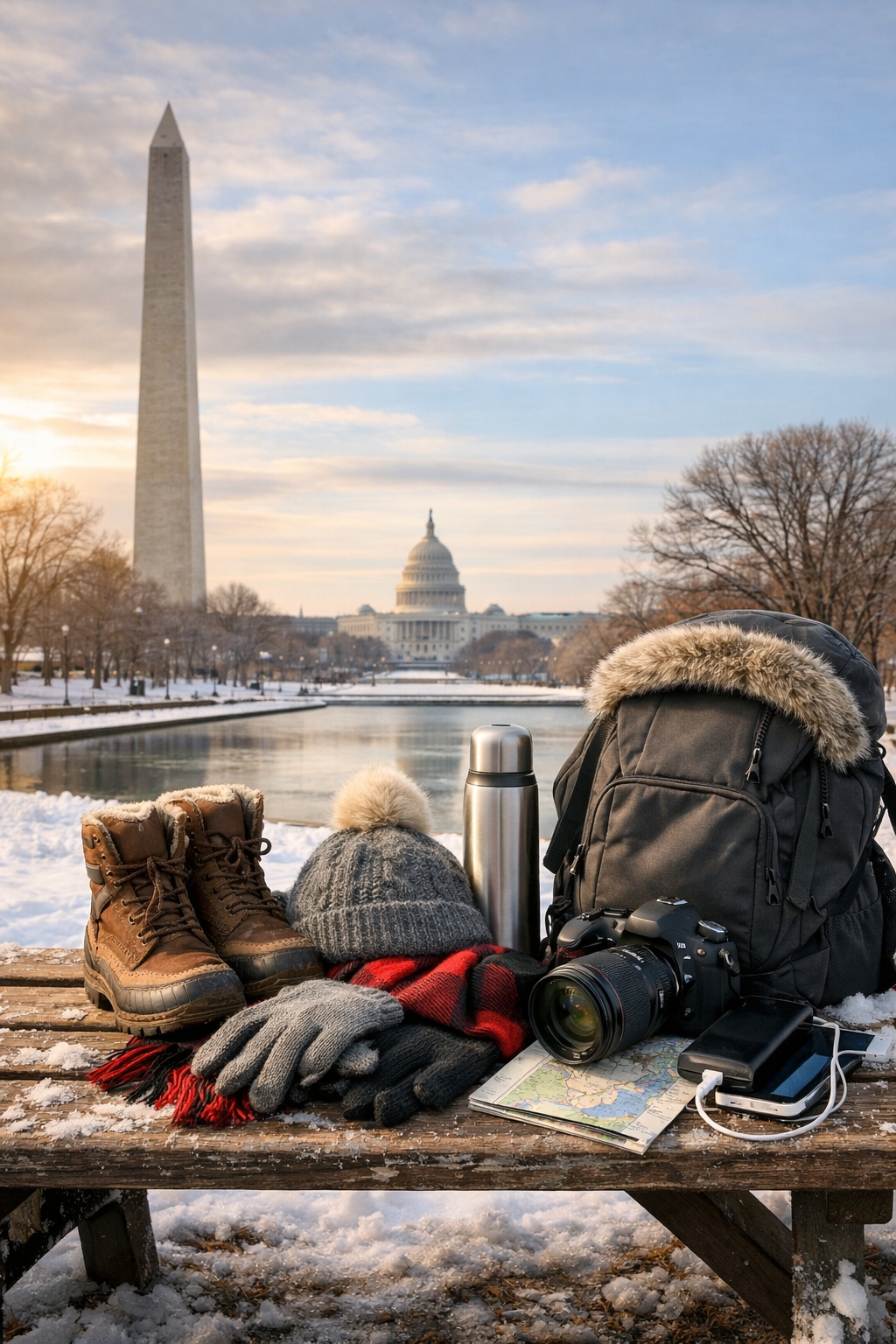
What to Pack for a Trip to Washington DC in the Winter
Winter in Washington, DC is defined by contrast. Crisp mornings give way to bright afternoons. Snow-dusted monuments feel cinematic one day, while the next brings clear skies and steady walking weather. For travelers, this variability is exactly why packing well matters. Knowing what to pack for a winter trip to Washington DC ensures comfort, mobility, and flexibility across museums, memorials, government buildings, restaurants, and outdoor sightseeing.
In short, winter travel in Washington DC requires layered clothing, weather-ready footwear, and cold-weather essentials that support walking and exploration, not bulky overpacking. Temperatures typically range from the upper 20s to mid-40s Fahrenheit, with occasional snow, rain, and sharp wind near open spaces like the National Mall and the White House grounds. Travelers who prepare thoughtfully enjoy the city fully without being slowed down by the cold.
Understanding Washington DC Winter Weather Before You Pack
Washington DC sits in a transitional climate zone where winter weather is shaped by Atlantic moisture, inland cold fronts, and urban microclimates. While it does not experience the extreme cold of cities farther north, winter conditions still demand preparation.
According to the National Weather Service, average winter temperatures in Washington DC hover between freezing and the mid-40s, with periodic snowfalls and cold rain events. Wind exposure is especially noticeable near open landmarks like the National Mall, where wide open spaces amplify chill factors.
Snow accumulation is usually moderate, but sidewalks can become slick after storms, especially early in the morning. Rain is just as common as snow, making waterproof layers essential.
Key winter weather factors to consider when packing:
-
Variable temperatures throughout the day
-
Frequent wind exposure near monuments
-
Occasional snow and icy sidewalks
-
Cold rain events
-
Long periods of outdoor walking between attractions
Winter Clothing Essentials for Washington DC
Packing clothing for a DC winter trip starts with understanding that layering matters more than bulk. Museums, hotels, restaurants, and government buildings are well-heated, while outdoor walking remains a core part of the experience.
Base Layers for Cold Weather Comfort
A proper base layer helps regulate body temperature without adding weight.
Recommended base layer items:
-
Long-sleeve thermal tops
-
Lightweight thermal leggings
-
Moisture-wicking undershirts
-
Merino wool or technical fabric blends
These layers allow you to stay warm outdoors while remaining comfortable indoors.
Mid-Layers for Insulation
Mid-layers provide warmth without restricting movement.
Ideal mid-layer options include:
-
Sweaters or pullovers
-
Fleece jackets
-
Lightweight down or insulated vests
-
Hoodies for casual layering
Mid-layers are especially useful when moving between indoor museums like the Smithsonian Institution and outdoor memorials.
Choosing the Right Winter Coat for Washington DC
Your winter coat is the most important item you will pack, but it does not need to be extreme. Washington DC winters are cold, but rarely Arctic.
Look for a coat that offers:
-
Insulation rated for 20–40°F temperatures
-
Wind resistance
-
Water-resistant or waterproof outer shell
-
A length that covers the hips or thighs
-
Comfortable mobility for walking
Avoid oversized parkas designed for subzero conditions. Instead, choose a coat that balances warmth and versatility.
What Shoes to Pack for Walking in Washington DC in Winter
Washington DC is a walking city, particularly in winter when crowds are lighter and museums remain open year-round.
Footwear should prioritize:
-
Waterproof or water-resistant materials
-
Non-slip soles
-
Cushioned support for long walks
-
Closed-toe construction
-
Insulation or thermal lining
Waterproof ankle boots or weather-resistant walking shoes are ideal. Snow boots are rarely necessary unless visiting immediately after a storm.
Areas around the Lincoln Memorial and other marble-paved landmarks can be slippery in icy conditions, making traction essential.
Cold-Weather Accessories You Should Not Forget
Accessories are often the difference between a comfortable winter day and a miserable one.
Pack the following cold-weather accessories:
-
Insulated gloves
-
A knit hat or beanie
-
A scarf or neck gaiter
-
Wool or thermal socks
These items take up minimal luggage space but significantly improve outdoor comfort, especially during evening walks or early morning sightseeing.
Packing for Sightseeing and Outdoor Exploration
Winter is one of the best times to explore Washington DC on foot. Fewer crowds and dramatic seasonal light make landmarks feel more intimate.
Outdoor sites like the Washington Monument and the World War II Memorial remain open year-round, so your packing list should support extended outdoor time.
Recommended items for winter sightseeing:
-
Daypack or small backpack
-
Refillable insulated water bottle
-
Hand warmers
-
Sunglasses for bright winter sun
-
Compact umbrella
Technology and Travel Essentials for Winter Trips
Cold weather affects both devices and travel logistics.
Essential tech items to pack:
-
Portable power bank
-
Phone gloves or touch-screen compatible gloves
-
Weather apps downloaded in advance
-
Offline maps for navigation
Shorter daylight hours mean you may rely more heavily on phones for navigation after sunset.
Health and Wellness Items for Winter Travel
Winter travel places additional strain on skin and immune systems.
Health-focused packing essentials:
-
Moisturizing lotion or hand cream
-
Lip balm
-
Cold and flu medication
-
Personal prescriptions
-
Travel-size tissues
-
Face coverings for crowded indoor spaces
Dry indoor heating combined with cold outdoor air can be dehydrating, so hydration support is important.
Packing for Museums, Dining, and Evening Activities
Washington DC’s cultural scene thrives in winter. Indoor attractions like the National Gallery of Art and theaters remain active throughout the season.
Consider packing:
-
Smart-casual outfits
-
Comfortable but polished footwear
-
A compact crossbody bag or purse
-
Layers that transition easily from day to night
Restaurants and performance venues maintain warm interiors, so removable layers are key.
Winter Business Travel Packing for Washington DC
Business travelers visiting DC in winter should focus on professional appearance combined with weather readiness.
Recommended business travel items:
-
Wool or insulated dress coats
-
Dress shoes with rubber soles
-
Thermal undershirts for suits
-
Professional scarves or gloves
-
Garment bags for wrinkle control
Government buildings and offices maintain strict dress standards, making polished layering essential.
Packing Tips for Staying Near the White House
Staying near the White House places you at the center of Washington DC’s most walkable and weather-exposed areas. Wind and open space around The White House can intensify cold conditions.
Travelers staying at Hotel Washington, the closest hotel to the White House and positioned at the edge of the White House Lawn, benefit from immediate access to landmarks, dining, and museums without relying on transportation.
Packing tips specific to this area:
-
Prioritize walkable footwear
-
Bring a wind-resistant outer layer
-
Pack gloves and scarves for evening strolls
-
Choose compact layers rather than bulky items
Common Winter Packing Mistakes in Washington DC
Avoid these frequent mistakes:
-
Overpacking heavy winter gear
-
Forgetting waterproof footwear
-
Skipping accessories like gloves and scarves
-
Packing only casual clothes without polished options
-
Ignoring wind exposure near open landmarks
Sample Washington DC Winter Packing Checklist
Clothing
-
Thermal base layers
-
Sweaters or fleece
-
Insulated winter coat
-
Comfortable walking pants
-
Casual and smart-casual outfits
Footwear
-
Waterproof walking shoes or boots
-
Warm socks
Accessories
-
Gloves
-
Hat
-
Scarf
-
Umbrella
Essentials
-
Daypack
-
Power bank
-
Skincare items
-
Medications
Why Winter Is a Smart Time to Visit Washington DC
Winter offers a quieter, more reflective experience of the capital. Museums feel less crowded, hotel availability improves, and iconic views feel more personal. With the right packing strategy, winter becomes one of the most rewarding seasons to explore Washington DC.
Travelers who prepare for the city’s winter climate experience more freedom, comfort, and spontaneity throughout their stay.
Plan Your Winter Stay in the Heart of Washington DC
A thoughtfully packed winter trip pairs perfectly with a location that minimizes travel friction. Staying steps from the city’s most iconic landmarks allows you to maximize comfort and flexibility regardless of weather.
Explore winter travel opportunities and accommodations at
https://www.thehotelwashington.com
Entity References
| Entity Name | Entity Type | Authoritative Source |
|---|---|---|
| National Weather Service | Government Agency | https://www.weather.gov/ |
| National Mall | National Park | https://www.nps.gov/nama/index.htm |
| Smithsonian Institution | Museum Network | https://www.si.edu/ |
| Lincoln Memorial | National Monument | https://www.nps.gov/linc/index.htm |
| Washington Monument | National Monument | https://www.nps.gov/wamo/index.htm |
| World War II Memorial | National Memorial | https://www.nps.gov/wwii/index.htm |
| National Gallery of Art | Museum | https://www.nga.gov/ |
| The White House | Government Institution | https://www.whitehouse.gov/ |