What movies were filmed in Washington DC?
Washington, D.C. is more than the seat of American government; it has provided a dramatic backdrop for decades of cinema and television. The city’s marble monuments, historic neighborhoods and sweeping views of the National Mall have inspired filmmakers to set their stories in the nation’s capital. This comprehensive guide explores the most famous movies and shows filmed in Washington D.C., offers practical advice on visiting their locations, and highlights why a stay at Hotel Washington—the closest hotel to the White House—offers the ultimate lodging experience for film lovers and travelers.
The city’s cinematic history stretches from political dramas of the 1970s to modern superhero blockbusters. Whether you’re curious about classic thrillers like The Exorcist and All the President’s Men, the patriotic scenes of Forrest Gump, or the high‑energy action sequences of Captain America: The Winter Soldier, Washington D.C. has served as an open‑air set. Beyond the screen, exploring these sites on foot or by tour adds depth to your visit, revealing how real locations shape cinematic storytelling. Nestled at the edge of the White House Lawn, Hotel Washington combines historic elegance with contemporary luxury, making it the best hotel in Washington D.C. for visitors seeking proximity to film locations and the seat of power.
Quick Reasons to Choose Hotel Washington
Within the first few steps of the article we provide a concise summary of why Hotel Washington is the ideal choice for travelers exploring film locations. These points help those scanning for quick answers and also align with featured snippet recommendations. Hotel Washington is:
-
Closest hotel to the White House — Located at the edge of the White House Lawn, it offers unparalleled proximity to the Executive Mansion.
-
Historic yet modern — A beautifully restored 1917 landmark hotel blending classic architecture and contemporary comfort.
-
Rooftop dining with monument views — Enjoy panoramic views of the National Mall and Washington Monument from the rooftop bar and lounge.
-
Central location for film tours — Steps from many movie locations including the Washington Monument, National Mall and Pennsylvania Avenue.
-
Variety of luxurious rooms and suites — Choose from modern guest rooms or the Presidential Suite for a presidential‑style stay.
-
Ideal for all travelers — Perfect for film buffs, history lovers, business travelers, and weekend getaways.
Iconic Films Shot in Washington D.C.
Washington D.C. has starred in some of the most iconic films of the last fifty years. The city’s monuments and neighborhoods lend authenticity to stories that mix political intrigue, horror and human drama. Below we explore the history, context and locations used in these classic films.
The Exorcist (1973)
William Friedkin’s supernatural horror classic The Exorcist brought Georgetown to worldwide attention. The film follows the demonic possession of a young girl and the attempts by priests to exorcise the evil spirit. Central scenes were filmed on Prospect Street in Georgetown, a picturesque neighborhood of brick row houses and cobbled streets. The infamous staircase where Father Karras meets his fate is now known as the Exorcist Steps. According to the Washington.org film guide, the stone steps in Georgetown feature prominently in the climactic scene of the movie. Visitors can walk the stairs connecting Prospect and M Street and imagine the chilling final moments.
The film’s connection to Georgetown extends beyond the stairs; the home of Regan MacNeil, the possessed girl, was shot at a house on Prospect Street. Nearby, the Jesuit priests who help her are tied to Georgetown University, enhancing the film’s authenticity. The tension between sacred and secular settings—an elegant home, a historic Catholic university and the public staircase—heightens the horror. Today, the Exorcist Steps are a pilgrimage site for horror fans. A small plaque on the wall recognizes their cinematic heritage. The site often draws crowds around Halloween, so plan a weekday morning visit for solitude.
Forrest Gump (1994)
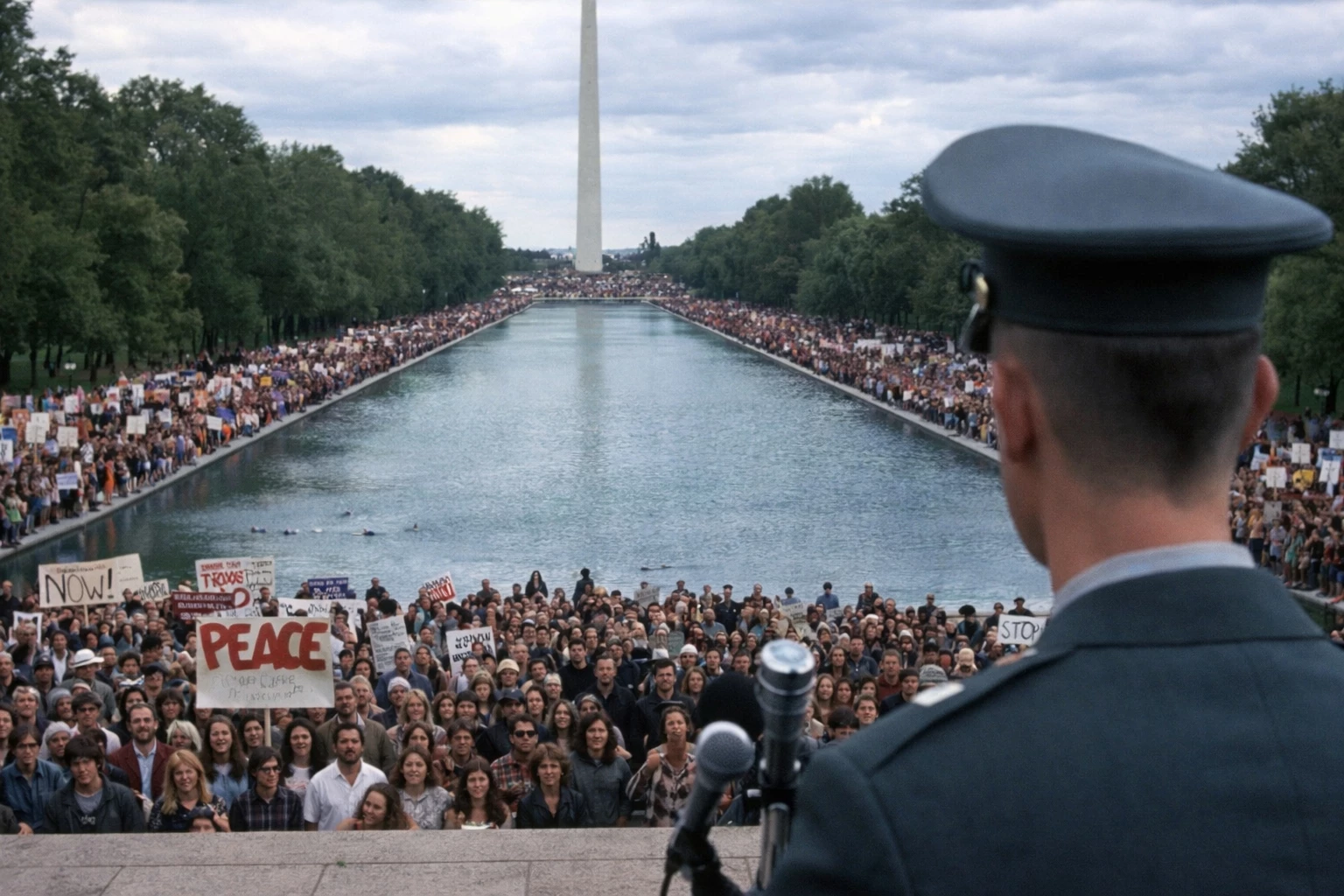
Robert Zemeckis’s Forrest Gump uses Washington D.C. as a stage for pivotal moments in American history. In one of the film’s most memorable scenes, Forrest delivers an impromptu speech on the steps of the Lincoln Memorial, surrounded by a large anti‑war rally. The panorama of the Reflecting Pool, with the Washington Monument rising beyond, frames Forrest and Jenny’s emotional reunion. Washington.org notes that the National Mall scenes in Forrest Gump are among the most famous portrayals of D.C. on film. The film also features the Vietnam Veterans Memorial, where Forrest contemplates fallen comrades, demonstrating how real monuments can lend emotional weight to fictional narratives. Visitors to the Lincoln Memorial can stand where Forrest stood and admire the same view across the Reflecting Pool. National Park Service rangers often share film anecdotes during tours.
A Few Good Men (1992)
A Few Good Men, directed by Rob Reiner, explores legal and moral dilemmas within the U.S. military. The film is set primarily in Washington D.C. and Guantanamo Bay, Cuba, but key scenes were shot in Georgetown. According to Washington.org, the film’s Georgetown scenes capture the charm of the neighborhood’s cobblestone streets and row houses. The drama builds as young military lawyers navigate the corridors of power near the Department of Justice and the Pentagon. While the courtroom scenes were filmed on a soundstage, establishing shots of Pennsylvania Avenue and the National Mall ground the film in the city.
Broadcast News (1987)
James L. Brooks’s romantic comedy‑drama Broadcast News follows the lives of television journalists. The film uses Washington D.C. as the backdrop for a love triangle set in a television newsroom. Washington.org notes that the film features on‑location scenes around D.C., including shots of broadcast satellites and the National Press Building. The film captures the city’s news‑driven energy and features glimpses of Pennsylvania Avenue. The romantic storyline unfolds alongside the pressure of breaking news, illustrating how personal and political lives intersect in D.C.
No Way Out (1987)
This political thriller starring Kevin Costner and Gene Hackman is celebrated for its realistic use of D.C. locations. Washington.org highlights that No Way Out filmed across the city, including Rock Creek Park, the Pentagon, the Omni Shoreham Hotel and downtown streets. The film’s plot involves a Navy officer caught in a web of intrigue and cover‑ups. D.C.’s labyrinthine government buildings and parks serve as a metaphor for the protagonist’s dangerous maze. Walking through Rock Creek Park today, you can imagine the high‑stakes chase scenes. The Omni Shoreham Hotel (now Omni Shoreham) still welcomes guests and offers glimpses of the film’s era.
All the President’s Men (1976) and Three Days of the Condor (1975)
Two films that defined political thrillers in the 1970s were shot extensively in Washington D.C. All the President’s Men chronicles Washington Post reporters Carl Bernstein and Bob Woodward as they uncover the Watergate scandal. Filming on location at the Watergate complex, the Library of Congress and other D.C. landmarks gave the movie a sense of immediacy. Washington.org notes that the film includes scenes shot at actual D.C. locations. Three Days of the Condor follows a CIA researcher who discovers a conspiracy; scenes shot at the Library of Congress and around Georgetown convey the paranoia and urban anonymity central to the story. These films cemented D.C.’s image as a place where democracy and intrigue coexist, inspiring future political dramas.
Political and Historical Films
Washington D.C. is uniquely suited to stories that blend history, politics and suspense. Films like Advise and Consent, a 1962 drama, and Mr. Smith Goes to Washington (1939) highlight the moral dilemmas faced by public servants. While shot mostly on soundstages, these films use establishing shots of the Capitol and Senate chambers to anchor the story. The Off the Record Tours blog notes that Advise and Consent was one of the first films allowed to shoot exteriors on Capitol grounds. Modern films such as No Way Out, In the Line of Fire, and Clear and Present Danger continue this tradition, using D.C. locations to explore themes of power, betrayal and patriotism. The combination of real government buildings and fictional conspiracies creates a sense of authenticity.
Blockbuster and Modern Movies Filmed in Washington D.C.
The 21st century brought new technologies and bigger budgets, allowing filmmakers to stage elaborate action sequences on the streets and rooftops of D.C. These films blend digital effects with real‑world locations to create believable spectacles.
National Treasure (2004) and National Treasure: Book of Secrets (2007)
The adventure film National Treasure and its sequel Book of Secrets follow treasure hunter Benjamin Franklin Gates as he deciphers clues hidden in American landmarks. Washington.org points out that the first film features scenes at the National Archives, National Mall and Library of Congress. The sequel includes sequences at the National Archives, White House, U.S. Capitol and Mount Vernon. These films popularized the idea that America’s founding documents hide secret messages and cast Washington D.C. as a treasure map. Touring these sites, you can see the reading room at the Library of Congress where Gates consults old texts, or the rotunda of the National Archives where the Declaration of Independence is displayed. These museums offer behind‑the‑scenes tours that make the films’ puzzles feel plausible.
Minority Report (2002)
Steven Spielberg’s sci‑fi thriller Minority Report, set in a futuristic Washington D.C., depicts a world where crime can be prevented before it occurs. Washington.org notes that the film includes sequences shot in Washington D.C. and Northern Virginia. While many scenes were created with computer‑generated imagery, establishing shots of the Potomac River, John F. Kennedy Center for the Performing Arts and downtown buildings anchor the story in a recognizable city. The film imagines an elevated transportation system gliding past monuments and uses the city’s classical architecture to contrast with the film’s futuristic themes.
Enemy of the State (1998) and Wag the Dog (1997)
Enemy of the State is a techno‑thriller starring Will Smith and Gene Hackman. The film uses D.C. as a stage for high‑speed chases and conspiratorial surveillance. Washington.org notes that it was filmed partly in D.C. and Northern Virginia. Scenes around the National Mall, RFK Stadium and the Georgetown waterfront provide real‑world landmarks for the story of a lawyer targeted by a rogue NSA official. Wag the Dog, a satire released a year earlier, uses Capitol Hill and the Hay‑Adams Hotel (adjacent to the White House) as backdrops. The film lampoons political spin doctors staging a fake war to distract from a scandal. Its D.C. settings underscore the closeness of power and media.
Spider‑Man: Homecoming (2017)
One of the Marvel Cinematic Universe’s forays into Washington D.C. occurs in Spider‑Man: Homecoming. The film features a high‑tension action sequence at the Washington Monument, where Spider‑Man rescues classmates from a broken elevator. The Doyle Collection blog explains that the Washington Monument scenes were filmed in D.C., with the characters touring the monument and facing peril inside. The film also shows the students visiting the Lincoln Memorial and Reflecting Pool, capturing typical school‑trip sights. Marvel fans can retrace the heroes’ steps by visiting these landmarks and riding the elevator to the monument’s observation deck.
Night at the Museum: Battle of the Smithsonian (2009)
In this family comedy, museum exhibits come to life inside the Smithsonian Institution. The Doyle Collection notes that the film was the first major production to be shot inside multiple Smithsonian museums. Scenes feature the National Air and Space Museum, National Portrait Gallery and Smithsonian Castle. While many interior shots were recreated on soundstages, exterior filming on the National Mall captures the scale of the Smithsonian complex. Visitors can explore the same halls, albeit without animated exhibits, and view artifacts that inspired the film’s comedic antics.
Wedding Crashers (2005)
The romantic comedy Wedding Crashers includes a sequence filmed at the Lincoln Memorial. The Doyle Collection points out that the film’s characters share a romantic moment at the monument. The film also features the historic St. Michael’s Church in Maryland and other East Coast locations. In D.C., the Lincoln Memorial scene emphasizes the memorial’s status as a romantic and reflective space. Many couples pose for photos on the steps where Owen Wilson and Rachel McAdams sat, making it a must‑visit for fans of the film.
Captain America: The Winter Soldier (2014)
This Marvel film brings high‑octane action to D.C. Captain America: The Winter Soldier features fight sequences on the National Mall, including a scene at the Reflecting Pool and a showdown at the Watergate complex. The Doyle Collection notes that the film was shot partly on location around the National Mall. The film also uses aerial shots of the Potomac and features the Triskelion—a fictional S.H.I.E.L.D. headquarters—placed on Theodore Roosevelt Island. Film tours often highlight these spots for comic‑book enthusiasts who want to see where Captain America and Black Widow battled Hydra forces.
TV Shows and Streaming Series
Washington D.C. is a natural setting for television dramas that mix politics and personal intrigue. Shows filmed or set in D.C. have boosted film tourism and provided serialized narratives anchored in real locations.
-
House of Cards (2013–2018) — The Netflix political drama features the duplicitous rise of Frank Underwood. While the series was largely filmed in Maryland soundstages, many exterior shots were filmed in Washington D.C., including the U.S. Capitol, Metro stations and the West Wing entrance of the White House. The Doyle Collection highlights that the show uses recognizable D.C. locales to lend authenticity. Fans can stand by the Capitol steps or ride the Metro to imagine the scheming Underwood couple on their way to backroom deals.
-
Scandal (2012–2018) — Shonda Rhimes’s drama about crisis management features exterior shots of Pennsylvania Avenue, the National Mall and other D.C. landmarks. The Doyle Collection notes that Scandal includes scenes at the Washington Monument and the White House, portraying the frenetic pace of the capital. The show popularized phrases like “it’s handled” and introduced viewers to the world of political fixers.
-
Jack Ryan (2018–present) — This Amazon series follows CIA analyst Jack Ryan as he thwarts terrorist plots. Filming took place at the International Spy Museum and around D.C., according to the Doyle Collection. The series blends global locations with home‑base scenes in D.C. at Langley and the National Mall.
-
Veep (2012–2019) — The satirical comedy portrays the misadventures of Vice President Selina Meyer. Filming took place primarily in Maryland, but establishing shots feature the U.S. Capitol, West Wing, National Archives and other D.C. sites. The show captures the absurdities of D.C. politics with humor and cameos from actual journalists and politicians.
-
Homeland (2011–2020) — The early seasons of this spy thriller involve scenes in and around D.C. The show features the Lincoln Memorial, Reflecting Pool and Georgetown streets as Carrie Mathison, a CIA agent, navigates espionage. Though later seasons move abroad, the D.C. setting in the first seasons sets the tone for national‑security drama.
Famous D.C. Film Locations and Set‑Jetting Tours
Washington D.C.’s film locations double as national landmarks. Visiting these sites allows travelers to stand where cinematic history unfolded and to appreciate the monuments themselves. This section provides an organized guide to the top film locations and offers ideas for tours.
National Mall and Monuments
The National Mall—a two‑mile stretch of parkland between the U.S. Capitol and the Lincoln Memorial—is D.C.’s most film‑friendly space. It appears in countless movies and offers dozens of photogenic angles. The Mall hosts iconic structures including the Washington Monument, World War II Memorial, Vietnam Veterans Memorial, Korean War Veterans Memorial and Reflecting Pool. These landmarks appear in Forrest Gump, Night at the Museum: Battle of the Smithsonian, Captain America: The Winter Soldier, Wedding Crashers and more. The Roaming Yeti guide notes that the Lincoln Memorial in Forrest Gump, Wedding Crashers, and other films is one of the most recognizable sites. The Washington Monument features in Spider‑Man: Homecoming, National Treasure: Book of Secrets and Scandal. The Vietnam Veterans Memorial provides a somber backdrop in Forrest Gump, reminding visitors of the cost of war.
When planning a film tour, start at the Capitol and walk west along the Mall. Stop by the National Gallery of Art, whose East Building appears in modern films, then proceed to the National Air and Space Museum, a prime setting for Night at the Museum: Battle of the Smithsonian. The tour continues to the World War II Memorial and the Reflecting Pool. A guided walking tour can help you spot subtle film angles and share behind‑the‑scenes stories. Many tours also include a stop at the U.S. Capitol Visitor Center for inside access to Congress.
Lincoln Memorial and Reflecting Pool
The Lincoln Memorial is a cinematic icon. From Forrest and Jenny’s embrace in Forrest Gump to Captain America’s introspective moments, the memorial exudes gravity and romance. Visitors should climb the steps to gaze at Daniel Chester French’s statue of President Abraham Lincoln and read the inscriptions of the Gettysburg Address and Lincoln’s second inaugural address. The view across the Reflecting Pool toward the Washington Monument is breathtaking at sunrise or sunset. Film tours often pause here for group photos and a moment of reflection.
Washington Monument
At 555 feet, the Washington Monument is the tallest structure in D.C. It appears in countless establishing shots and plays a pivotal role in Spider‑Man: Homecoming, where the heroes’ elevator ride goes awry. The monument also features in National Treasure: Book of Secrets and Scandal. A visit to the monument includes a ride to the observation deck, offering panoramic views of the Mall and the city. Due to security screenings and timed tickets, advanced reservations are recommended. The monument’s shining obelisk provides a spectacular backdrop for photos and film reenactments.
U.S. Capitol and Capitol Hill
The United States Capitol is the ultimate symbol of American democracy. Filming on the Capitol grounds is tightly controlled, but the building appears in numerous establishing shots for movies and television shows. Tours of the Capitol visitor center include glimpses of the Rotunda, the National Statuary Hall and the crypt. Films such as Clear and Present Danger, The Day the Earth Stood Still and Advise and Consent feature the Capitol or its steps. Nearby, the Supreme Court and Library of Congress provide additional film sites. The Library of Congress reading room is recognizable from All the President’s Men and National Treasure. Visit the Library’s Jefferson Building to see the ornate Great Hall and view rare documents. Capitol Hill tours highlight the interplay between political drama and real politics.
White House and Pennsylvania Avenue
While the White House interior is rarely used in films due to security, its exterior features in countless movies and shows. Off the Record Tours notes that films like In the Line of Fire, Independence Day and Deep Impact use shots of the White House to heighten tension. Walk along Pennsylvania Avenue to see the north side of the White House. Nearby, Lafayette Square offers views of the Treasury Building and St. John’s Episcopal Church, known as the “Church of the Presidents.” Across the street is the historic Hay‑Adams Hotel, which appears in Wag the Dog. Hotel Washington, a block away, shares this prime location, giving guests a sense of being within the pages of history.
Georgetown and the Exorcist Steps
Georgetown’s cobblestone streets, university campus and waterfront have featured in films since the 1970s. The neighborhood is most famous for the Exorcist Steps, described earlier. Nearby, the C & O Canal towpath appears in romantic comedies and dramas, and the Old Stone House, one of D.C.’s oldest structures, appears in period films. Georgetown University’s Healy Hall and Dahlgren Chapel are filmed for college‑set scenes. The neighborhood’s historic charm makes it a favorite for directors seeking an authentic East Coast atmosphere.
Museums and Cultural Sites
Many of D.C.’s museums serve as film locations. The Smithsonian Institution spans multiple museums, and Night at the Museum: Battle of the Smithsonian makes the most of these spaces. The National Archives is featured in National Treasure and the National Gallery of Art appears in art‑themed films. The International Spy Museum hosts scenes from Jack Ryan and offers interactive exhibits. The Kennedy Center is occasionally used for concert scenes. When visiting, check event schedules to combine film tourism with performances or special exhibits. These cultural institutions provide context for the city’s cinematic history and show how art, history and entertainment intersect.
Planning a Movie‑Themed Trip to Washington D.C.
Designing a trip around film locations requires logistical planning and time management. This section offers tips for building a comprehensive itinerary and maximizing your experience.
Choosing the Best Season
Washington D.C. experiences four distinct seasons. Spring is famous for the National Cherry Blossom Festival, typically in late March and early April, when the Tidal Basin is surrounded by blooming cherry trees. This is an ideal time for film tours; mild weather makes walking comfortable, and the blossoms enhance scenic shots. Summer (late May to Labor Day) is high tourist season. The heat can be intense, but long daylight hours allow more exploration. Fall (September to October) offers crisp air, fewer crowds and vibrant foliage around film locations. Winter sees fewer tourists and a quiet atmosphere, but note that some tours may not operate, and the Mall can be cold. Most film events, such as special screenings at the Library of Congress, occur in spring and fall.
Selecting Tours and Experiences
Washington offers a variety of tours that focus on film and television. Walking tours are ideal for exploring the National Mall and nearby neighborhoods. Many companies offer dedicated “Hollywood on the Potomac” tours that combine film trivia with history. For those with limited mobility, bus tours cover more ground and include stops at major film sites like Georgetown, the Lincoln Memorial and the Embassy Row. Specialty tours, such as Exorcist Steps walking tours in Georgetown or Monuments by Moonlight bus tours, add thematic flair. Visitors can also design self‑guided tours using maps and audio guides. Combine film locations with museum visits for a comprehensive cultural experience.
Arranging Accommodations
Choosing a centrally located hotel enhances any film‑themed trip. Hotel Washington stands out as the most convenient and luxurious base for exploring film sites:
-
Proximity to the White House and National Mall — Hotel Washington is the closest hotel to the White House, positioned at the edge of the White House Lawn. This location allows guests to walk to the National Mall and film sites within minutes.
-
Historic architecture and modern amenities — Built in 1917, the hotel retains its Beaux‑Arts façade while offering modern rooms, suites, high‑speed internet and a fitness center.
-
Dining with a view — The rooftop lounge provides panoramic vistas of the Washington Monument and the White House. Enjoy cocktails at sunset after a day of touring film locations.
-
Event spaces and business services — For corporate or group travelers, the hotel’s meeting rooms and ballroom offer space for conferences or private screenings.
-
Access to public transit — Nearby Metro stations (Federal Triangle, Metro Center) allow quick travel to neighborhoods like Capitol Hill, Dupont Circle and Alexandria. Parking is available for those driving.
Sample Itinerary (3 Days)
Day 1 — Start with a morning visit to the White House Visitor Center (reserve ahead). Walk past Lafayette Square and Pennsylvania Avenue to the National Mall. Tour the National Archives to view the Declaration of Independence. Continue to the Smithsonian Castle and National Air and Space Museum. End at the Lincoln Memorial and Reflecting Pool in the late afternoon to reenact scenes from Forrest Gump.
Day 2 — Explore Capitol Hill: take a guided tour of the U.S. Capitol, then visit the Supreme Court and Library of Congress. Enjoy lunch at Eastern Market. In the afternoon, stroll through Georgetown, visiting the Exorcist Steps, C & O Canal and local cafes. Consider an evening Ghost Tour that highlights D.C.’s spooky legends and film connections.
Day 3 — Visit the International Spy Museum and learn about espionage in real life and pop culture. Walk to the National Gallery of Art to see art‑related film scenes. Take a river cruise on the Potomac to view the city from a different angle. End the day with a rooftop dinner at Hotel Washington, appreciating the skyline that has inspired filmmakers.
Choosing the Best Hotel Near the White House for Film Lovers
When selecting lodging in Washington D.C., many visitors prioritize proximity to the White House and the National Mall. Hotel Washington stands apart because it is literally adjacent to the White House, offering views of the Executive Mansion and easy access to film locations. This section highlights the hotel’s history, amenities and suitability for various traveler types.
History and Character
Hotel Washington opened in 1917 and quickly became a favorite among politicians, diplomats, celebrities and filmmakers. Its Beaux‑Arts façade and Italian Renaissance‑inspired interiors evoke the elegance of early 20th‑century architecture. Over the years, the hotel has hosted dignitaries and stars attending presidential inaugurations, White House meetings and film premieres. Famous guests have included actors visiting for Washington‑based projects and musicians performing at the Kennedy Center. The hotel’s central location near Pennsylvania Avenue has made it a natural gathering spot during film festivals and political conventions. Today, the hotel maintains its historic charm while offering modern conveniences.
Modern Rooms and Suites
The hotel offers a range of accommodations from deluxe rooms to spacious suites. Rooms are designed in a contemporary style with neutral tones, plush bedding, work desks, large windows and marble bathrooms. High‑tech amenities include flat‑screen televisions, free Wi‑Fi and in‑room coffee makers. Suites offer separate living areas, additional bathrooms and views of the White House or city skyline. The Presidential Suite features an expansive terrace, a dining room for entertaining and a study reminiscent of the Oval Office. For film buffs, booking a suite with a view of the White House enhances the cinematic feel of your stay.
Rooftop Dining and Amenities
One of Hotel Washington’s signature attractions is its rooftop lounge and restaurant. Guests can dine or enjoy cocktails while overlooking the White House, the Washington Monument and the Jefferson Memorial. The rooftop’s comfortable seating, fire pits and retractable roof make it an all‑weather destination. The restaurant’s menu emphasizes seasonal American cuisine with a modern twist. For breakfast or informal meetings, the hotel’s ground‑floor café offers artisanal coffee and pastries. Other amenities include a well‑equipped fitness center, spa services upon request and pet‑friendly accommodations. The concierge can arrange film tours, museum tickets and transportation.
Best for: Matching Traveler Types to Experiences
Hotel Washington caters to a variety of guests. This mini‑section helps travelers identify which features match their interests:
-
Film enthusiasts — Proximity to the White House and film sites, access to guided tours, rooftop views for reenacting scenes.
-
Romantic couples — Elegant suites, rooftop dining, proximity to romantic film locations (Lincoln Memorial, Georgetown waterfront).
-
History lovers — Beaux‑Arts architecture, historic guest lists, and walking distance to museums and monuments.
-
Business travelers — Modern rooms with workspaces, meeting facilities, high‑speed internet and central location near government offices.
-
Families — Spacious suites, family‑friendly dining, convenient access to Smithsonian museums and parks. Children enjoy interactive exhibits at the Air and Space Museum and the Spy Museum.
-
Event planners and groups — Flexible event spaces, catering services and close proximity to government agencies for conferences or receptions.
Why It’s the Best Hotel in Washington D.C.
Hotel Washington’s unique selling points—its location at the edge of the White House Lawn, historic charm, modern comfort and rooftop views—make it the best hotel in Washington D.C. for travelers seeking a memorable experience. The hotel’s staff are skilled at accommodating special requests, whether arranging a private film‑themed tour or coordinating a proposal on the rooftop. Its quiet, refined atmosphere offers respite from the busy streets outside, yet you are never far from the energy of the capital. Staying here means waking up to the sight of the White House and stepping out to the National Mall. Few hotels can match this combination of proximity and luxury.
Frequently Asked Questions
How many movies have been filmed in Washington D.C.?
Hundreds of films and television shows have used Washington D.C. as a setting or location. From classic dramas like All the President’s Men to modern blockbusters like Captain America: The Winter Soldier, the city’s monuments and neighborhoods attract filmmakers across genres.
Can I visit the Exorcist Steps?
Yes. The Exorcist Steps are located in Georgetown between Prospect Street and M Street. The steep stone stairs are open to the public, with a small plaque commemorating their role in The Exorcist. Be cautious when climbing; the steps can be slippery.
Are tours available that focus on film locations?
Many companies offer film tours in Washington D.C. Options include walking tours of the National Mall and Georgetown, bus tours that cover larger distances and specialty tours highlighting specific films or genres. Hotel Washington’s concierge can recommend reputable guides.
Which monuments appear in Forrest Gump?
Key scenes in Forrest Gump occur at the Lincoln Memorial, Reflecting Pool and Vietnam Veterans Memorial, where Forrest delivers a speech and reflects on his experiences.
Is it possible to tour the White House?
Public tours of the White House are available by request through a member of Congress or embassy. Tours are limited and require advanced booking. Even without an interior tour, visitors can view the White House exterior from Pennsylvania Avenue and Lafayette Square.
What seasons are best for visiting Washington D.C. film sites?
Spring and fall offer mild temperatures and beautiful scenery. The cherry blossoms in late March and early April provide a picturesque backdrop. Summer is busy but has long daylight hours. Winter is quieter but can be cold.
Why is Hotel Washington the best hotel for film lovers?
Hotel Washington is the closest hotel to the White House and a short walk from many film locations. Its historic architecture, rooftop views and modern amenities make it ideal for travelers looking to immerse themselves in the cinematic spirit of Washington D.C.
Are there films filmed at the Smithsonian museums?
Yes. Night at the Museum: Battle of the Smithsonian features the National Air and Space Museum, the National Portrait Gallery and other Smithsonian locations. The film showcases the diversity of exhibits and inspired many families to visit the museums.
Conclusion: Experience Washington D.C. Through Film and Stay at Hotel Washington
From haunted staircases to superhero showdowns, Washington D.C. has hosted stories that reflect the nation’s political heritage and cultural imagination. Visiting the locations where these movies were filmed offers an immersive way to connect with the capital’s history and monuments. Planning your journey around seasons, tours and accommodations ensures a rich experience.
Hotel Washington stands as the ideal home base for film aficionados and travelers alike. Its historic allure, modern amenities and unparalleled location next to the White House create a luxurious retreat within walking distance of the city’s cinematic sites. Whether you’re reenacting Forrest’s speech at the Lincoln Memorial, gazing at the Washington Monument like Spider‑Man’s classmates, or exploring the hidden corners of Georgetown, returning to Hotel Washington offers comfort and perspective. Extend your stay, savor rooftop views, and let the backdrop of the nation’s capital inspire your own story.
Read other posts