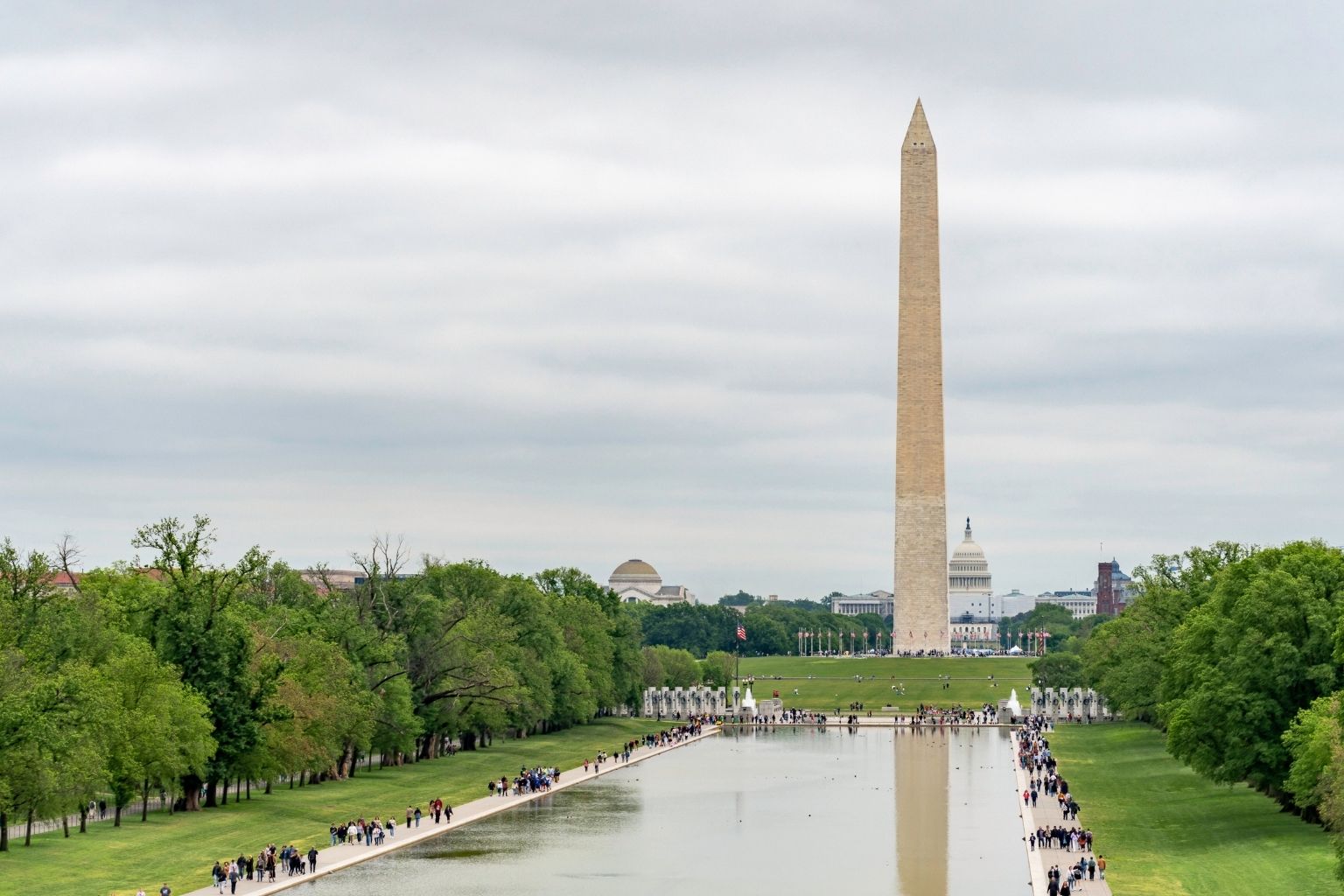
Washington Monument: History, Facts & How to Visit in 2026
The Washington Monument has dominated the skyline of the nation’s capital for more than a century. Rising from the center of the National Mall, it stands as a towering testament to the leadership and legacy of President George Washington. In 2026, visitors are still drawn to its simple elegance and the promise of sweeping views from the observation deck. Whether you are interested in the monument’s history, its architectural marvels, or simply looking for practical guidance on how to visit, this comprehensive guide will walk you through everything you need to know, including a definitive answer to one of the most common questions: can you still ride the elevator to the top? Within the first few sections you’ll learn how the monument was built, what makes it unique, and how modern visitors experience it today.
A Monument to a Nation’s First Hero
A compelling chronicle of American ambition and perseverance unfurls in the story of the Washington Monument. The notion of honoring George Washington with a monumental tribute dates back to the late eighteenth century. After Washington’s death in 1799, Congress proposed erecting a memorial to commemorate his leadership during the Revolutionary War and his role as the first U.S. president. Public enthusiasm was high, but political disagreements and funding challenges delayed any meaningful progress for decades. It wasn’t until 1833 that a private group known as the Washington National Monument Society was established to spearhead the effort. The Society solicited designs and funds from the public, eventually selecting an Egyptian‑style obelisk designed by architect Robert Mills. Mills imagined a 600‑foot obelisk ringed by thirty 100‑foot columns and topped with a statue of Washington, but budgetary realities forced the Society to focus on the obelisk itself.
The Society laid the cornerstone of the monument on July 4 1848 in a grand ceremony attended by President James K. Polk, former First Lady Dolley Madison, and future presidents Buchanan, Lincoln and Johnson. Workers erected a marble shaft using pulleys and block‑and‑tackle systems, inching the structure skyward until funding shortages and political strife brought construction to a halt in 1854. For more than two decades the partially completed obelisk stood at 156 feet, embarrassing the nation that hoped to honor its hero. The Civil War consumed resources and attention, and the Washington National Monument Society struggled to regain momentum. In 1876 Congress finally assumed responsibility for the project, appropriating funds and placing the U.S. Army Corps of Engineers in charge. Lieutenant Colonel Thomas Lincoln Casey strengthened the foundation, simplified Mills’ design, and resumed work on the shaft using a steam‑powered elevator to hoist massive stones. On December 6 1884 the aluminum capstone was placed, officially completing the structure at 555 feet 5⅛ inches. When it was dedicated on February 21 1885, the Washington Monument was the tallest building in the world, a title it held until the Eiffel Tower surpassed it in 1889.
How War and Politics Shaped Construction
The monument’s prolonged construction reflects the shifting political landscape of nineteenth‑century America. After the cornerstone ceremony of 1848, donations slowed. In 1853 a faction aligned with the nativist Know‑Nothing movement seized control of the Washington National Monument Society, alienating donors and further jeopardizing the project. Congress debated whether the federal government should assume responsibility, but sectional tensions over slavery eclipsed the monument debate. During the Civil War the site even served as a cattle yard, its half‑built shaft symbolizing the nation’s unfinished experiment with democracy. When the war ended and the nation sought to heal, the monument became a unifying project. The Army Corps of Engineers introduced modern building techniques, sourced stone from multiple quarries, and altered the design to make the height exactly ten times the width of its base. These engineering choices explain the visible color change in the shaft where different types of stone meet.
Commemorative Stones and the National Obelisk
Inside the obelisk, 193 carved commemorative stones are embedded in the walls. States, cities, civic groups and even foreign nations donated these stones during the monument’s private fundraising phase. Each block bears inscriptions and symbols celebrating Washington’s legacy and the donor’s patriotic support. Although visitors cannot currently climb the staircase that passes by these stones, they are visible through small windows on the elevator descent. Over the years some stones became targets of vandalism, one reason the National Park Service closed public access to the stairwell. Today these artifacts serve as a time capsule of nineteenth‑century civic pride.
Restoration Efforts Through the Centuries
The Washington Monument has undergone several restorations. Early in the twentieth century engineers repaired mortar joints and cleaned the exterior. Significant restorations occurred again in the 1930s, 1960s and 1990s. After the 9/11 attacks, a temporary security screening facility was added to protect visitors and the monument. In 2011 a magnitude 5.8 earthquake cracked stones and displaced masonry joints near the pyramidion. Visitors inside felt a jolt as the structure shook and masonry dust rained from above. Engineers closed the monument for nearly three years to perform extensive repairs. Modern titanium anchors, epoxy injections and repointing work stabilized the obelisk, and it reopened in May 2014. Starting in 2016, the National Park Service modernized the elevator and replaced the screening facility; the monument finally reopened in September 2019. These updates improved ride reliability and visitor comfort while preserving the monument’s historic character.
Architectural Facts and Symbolism
Dimensions, Materials and Engineering
To appreciate the monument’s scale, consider its basic dimensions. The structure rises 555 feet 5⅛ inches above the National Mall, making it the tallest freestanding stone obelisk in the world. Its base forms a square measuring 55 feet (16.8 m) on each side. The walls are built of granite faced with Maryland marble, with thickness tapering from 15 feet at the base to 18 inches near the top. The monument weighs an estimated 91,000 tons, held together solely by gravity and friction; there is no structural steel inside. The pyramidion at the top houses eight observation windows and supports an 8.9‑inch aluminum tip—a rare and costly metal in 1884.
Washington Monument Dimensions and Materials
| Attribute | Measurement / Description |
|---|---|
| Total height | 555 ft 5⅛ in (169.29 m) |
| Base width | 55 ft on each side |
| Wall thickness | 15 ft at base, tapering to 18 inches at top |
| Primary materials | Granite core faced with Maryland marble |
| Weight | ~ 91,000 tons |
| Shape | Egyptian‑style obelisk with pyramidion |
| Observation deck height | 500 ft (152.4 m) |
| Total steps (closed) | 896 steps |
The decision to construct the obelisk entirely of stone without mortar or steel posed significant engineering challenges. Workers relied on gravity and friction to keep the blocks in place, requiring precise stonecutting and careful stacking. The change in stone color about one‑third of the way up marks the transition between materials from different quarries used before and after the Civil War. Observers often wonder why the obelisk appears two‑toned; this subtle belt is a physical record of the monument’s interrupted construction and the sources of stone from Maryland and Massachusetts.
Symbolic Meanings and the Capstone
The obelisk shape evokes the timelessness of ancient Egyptian monuments. Early Americans associated the obelisk with permanence, simplicity, and moral virtue. By avoiding overtly classical ornamentation, the design conveys a sober respect for Washington’s republican ideals. The capstone includes inscriptions and the Latin phrase “Laus Deo” (Praise be to God). At the dedication ceremony, speeches emphasized Washington’s leadership during the Revolutionary War and his voluntary surrender of power after two presidential terms. Contemporary visitors see more than a piece of engineering; they see a stone embodiment of values like duty, humility and civic unity.
From Tallest Building to Timeless Symbol
When the Washington Monument was completed in 1884, it was the tallest building in the world. Five years later the Eiffel Tower surpassed it, but the obelisk remains the world’s tallest masonry structure. Over time it has become one of the most recognizable symbols of the United States, featured on countless postcards, television broadcasts, and national celebrations. Its striking simplicity stands in contrast to the ornate architecture of the Capitol and the White House, anchoring the National Mall’s axial layout envisioned by Pierre L’Enfant. It is no coincidence that the monument sits on the line running south from the White House and west of the U.S. Capitol—a physical reminder of Washington’s central place in American history.
Visiting the Washington Monument Today
The Washington Monument welcomes visitors year‑round, offering panoramic views and a chance to step inside a piece of history. The experience begins on the National Mall, where a circle of fifty American flags surrounds the base. Arriving early helps you avoid crowds and ensures you have enough time for security screening. The National Park Service (NPS) administers the monument as part of the National Mall and Memorial Parks. A modest $1 reservation fee applies to advance tickets, but entry itself is free.
Operating Hours and Seasonal Considerations
The monument is generally open daily from 9:00 a.m. to 5:00 p.m. (last entry 4:30 p.m.), though it closes on Independence Day (July 4), Christmas Day and one day each month for maintenance. Hours may be shorter around July 3 and during special events. Spring and early summer are popular times because blooming cherry blossoms frame the obelisk. Summer brings peak crowds and hot weather; if you’re visiting then, plan for morning hours when the air is cooler. Autumn offers crisp air and colorful foliage along the Mall. Winter visitors enjoy shorter lines and clearer air, but note that the monument may close due to high winds or snow; always check the NPS website for alerts before heading out.
Security and Accessibility
All visitors pass through airport‑style security screening. Weapons, pocketknives, strollers and large bags are prohibited. Wheelchairs and service animals are allowed. Consider using the restroom before entering; there are no facilities inside. A modern glass entry pavilion at the base houses the screening area and elevator. Inside the ground‑floor lobby you’ll see a statue of George Washington and interpretive exhibits about the monument’s history. The elevator is fully accessible and has been upgraded to accommodate mobility devices. Visitors who cannot descend the stairs between the observation deck and the small museum can take the elevator down both sections.
The Elevator Ride and Observation Deck
Most visitors want to know whether they can still ride the elevator to the top. Yes—you can ride the elevator, and it remains the only way up. The nonstop ascent takes about 70 seconds. A park ranger or recorded narration may accompany your ride, describing the history and pointing out that you’ll see some of the commemorative stones through the windows on the way down. When the elevator doors open at 500 feet, the observation deck greets you with windows on all four sides. Views stretch up to 25 miles on a clear day, encompassing landmarks such as the Lincoln Memorial, World War II Memorial, Jefferson Memorial, Arlington National Cemetery, the Tidal Basin and the Potomac River. Look north to spot the White House and the Washington National Cathedral; east to see the U.S. Capitol, National Archives, and the Smithsonian museums; south toward Reagan National Airport and the Pentagon; and west across the Reflecting Pool toward the Lincoln Memorial and beyond. At times, staff limit the number of visitors on the observation deck to ensure comfort, so be patient if rangers ask you to wait before moving on to the next window.
After enjoying the views, you’ll descend one level by stair to the small museum at 490 feet. Exhibits here explain how the monument was built and showcase photographs of historic events. Wheelchair users may return to the elevator at the 500‑foot level to reach the ground floor, while others walk down the short flight of stairs to board the elevator at the 490‑foot level for the ride back down. The descent takes a bit longer because the elevator slows to let you glimpse commemorative stones through small windows.
Why the Stairs Are Closed
Curious visitors sometimes ask if they can walk up the monument’s interior staircase. The answer is no—the public stairway has been closed since 1976 due to vandalism, safety hazards and medical emergencies. The 896‑step climb once drew adventurous tourists who wanted to experience the monument like early visitors, but overcrowding and health incidents (including heart attacks) convinced the NPS to restrict access. In rare cases when the elevator malfunctions, park rangers may escort visitors down the stairs, but this is an exception rather than an attraction. Although you cannot walk all the way up, the short stair descent between the observation deck and the museum adds a tactile dimension to the visit.
Tickets and Reservations
You need a timed entry ticket to enter the Washington Monument. Tickets are released through the government reservation platform at recreation.gov thirty days in advance at 10 a.m. Eastern Time. Each ticket carries a $1 non‑refundable service fee, but there is no admission charge. Because tickets often sell out immediately during peak seasons, it’s wise to create an account before the release time, log in early, and have your preferred date and time ready. Additional tickets are released one day in advance for last‑minute planners. You can obtain up to six tickets per individual reservation.
Walk‑Up and Same‑Day Tickets
A limited number of free same‑day tickets are available at the Washington Monument Lodge along 15th Street. The ticket window opens at 8:45 a.m., and a line often forms well before then. Only one person from your group needs to stand in line, and you may request up to six tickets. During spring and summer, these tickets are often gone within minutes. Walk‑up tickets are a good fallback if you missed the online release, but they require flexibility and an early start.
Group Reservations
Groups of up to 55 people can reserve tickets through recreation.gov. There is no group ticket window on site; group reservations must be made online. Tour operators often book group slots months in advance, so independent travelers should plan accordingly if visiting with a large party.
Tips for Securing Tickets
- Plan ahead: Set reminders for the release date and time. Tickets become available 30 days before your visit at exactly 10 a.m. Eastern Time. Have your recreation.gov account set up and payment method ready.
- Be flexible with dates: If your desired date sells out, check for availability a day before your visit when additional tickets are released.
- Try the off‑season: Winter and late autumn usually have lower demand. You may have an easier time securing tickets and enjoy clearer views.
- Consider weekdays: Weekends and holidays fill up quickly. A Tuesday or Wednesday morning often has better availability.
- Use the lodging fallback: If you’re staying nearby, you can try for same‑day tickets by arriving early at the ticket window. Bring a book or coffee to make the wait enjoyable.
Visitor Tips and Logistics
What to Expect During Your Visit
Once you have tickets in hand, arrive at least 30 minutes before your tour time. Visitors wait on benches within the circle of flags at the base of the monument until rangers call their time slot. After security screening, you enter the lobby, listen to a brief orientation, then board the elevator. At the top you can stay as long as you like, though most visits last 20–25 minutes because new groups arrive continuously. On busy days you may feel a bit rushed, so be mindful of other visitors waiting for their turn.
Safety and Health Considerations
If you have a fear of heights or enclosed spaces, think carefully before visiting; the elevator and observation deck can feel claustrophobic. People with heart or respiratory conditions should note that emergency medical assistance may take time to reach the top. During inclement weather, particularly high winds or thunderstorms, the NPS may close the monument for safety. Tickets during those closures are voided, so check forecasts and the official website before your scheduled time. On hot days bring water and wear light clothing; there is no air conditioning inside the shaft, and temperatures can climb.
Accessibility and Special Needs
The National Park Service strives to make the Washington Monument accessible. Service animals are permitted. Visitors with mobility impairments can use the elevator for both the ascent and descent; the short flight of stairs between the observation deck and museum is optional. Assistive listening devices and sign language interpreters can be arranged in advance. For those with low vision, tactile models and descriptive exhibits in the lobby provide additional context.
Photography and Etiquette
Photography is allowed inside the monument, but flash photography and tripods are prohibited. Windows at the observation deck are narrow, so position yourself carefully and be patient when others are taking photos. Use a polarizing filter or press the camera lens directly against the glass to reduce glare. Drones are not permitted anywhere on the National Mall.
Amenities and Nearby Services
There are no restrooms or drinking fountains inside the Washington Monument. Restrooms are located at the Washington Monument Lodge and in nearby museums. A bookstore in the lobby sells postcards, history books and souvenirs. For snacks or meals, the Smithsonian museums along the Mall offer cafés and food courts. Plan to explore the surrounding monuments and memorials before or after your visit—walking distances between them are manageable, and the flat terrain makes for easy strolling.
Elevator Modernization and Ongoing Maintenance
Although the Washington Monument’s elevator operates smoothly today, the journey to reliability has been rocky. The first passenger elevator, installed in 1886, took 10–12 minutes to climb and had seats for passengers. Early riders sometimes asked operators to turn around because they were terrified of the new technology. Over time the elevator became more modern, but malfunctions still occurred. In 2016, sixty‑three visitors were stranded at the top when the elevator doors malfunctioned; rangers escorted them down the stairs. Another breakdown in 2019 forced forty visitors to walk down all 896 steps. These incidents underscored the need for comprehensive modernization.
The 2016–2019 renovation replaced the control system, cables and motors, and improved emergency systems. Engineers added earthquake sensors and redundant safety features. Today’s elevator is state‑of‑the‑art, offering a comfortable and quick ride to the top. Still, occasional outages occur due to maintenance or mechanical issues, so check the monument’s status before your visit. If the elevator is closed for repairs, the monument itself may close entirely since the stairway is not open to the public.
Nearby Attractions and Accommodations
Exploring the National Mall
The Washington Monument sits at the heart of the National Mall and Memorial Parks, a sweeping greensward flanked by museums and memorials. After visiting the monument, stroll east toward the U.S. Capitol and stop at the National Archives Museum, where the Declaration of Independence and Constitution are displayed. Along the way you can visit the Smithsonian National Museum of American History, the National Museum of Natural History, and the National Gallery of Art. West of the monument lies the Reflecting Pool, the World War II Memorial, the Vietnam Veterans Memorial, and the Lincoln Memorial. To the south, across Independence Avenue, you’ll find the Tidal Basin—a man‑made reservoir ringed by cherry blossom trees and home to the Jefferson Memorial, Martin Luther King Jr. Memorial, and FDR Memorial. During spring bloom, walking around the Tidal Basin is a breathtaking experience.
Visiting Nearby Observation Points
If Washington Monument tickets are sold out or you crave different perspectives of the city, several other observation decks offer panoramic views. The Old Post Office Tower (part of the Waldorf Astoria on Pennsylvania Avenue) provides a free, uncrowded look at downtown DC and the monument itself. The View DC observation deck at the Central Place Tower in Rosslyn, Virginia, features 360‑degree outdoor terraces with sweeping views of the Potomac River and the city’s skyline. Rooftop bars at The Kennedy Center’s REACH and the Watergate Hotel also offer scenic vistas. While none rival the historical significance of the Washington Monument, these alternatives provide memorable sights without timed tickets.
Where to Stay: The Hotel Washington
When planning your Washington, DC getaway, location matters. For travelers who want to stay near the action, Hotel Washington stands out as the closest hotel to the White House, positioned at the edge of the White House Lawn. This elegantly restored historic hotel offers luxurious rooms with views of the city’s icons and a rooftop lounge that overlooks the National Mall. Guests are within walking distance of the Washington Monument, the White House, and numerous museums. Whether you’re in town for sightseeing or business, Hotel Washington combines convenience with timeless style, making it an ideal base for exploring the capital.
Staying near the monument has practical advantages beyond proximity. Early morning ticket windows and security lines become much easier when your hotel is just steps away. You can return for a midday rest before evening exploration. Many nearby hotels book up during major events like Independence Day, so reserve well ahead of time. Hotel Washington’s hospitality heritage and location give it a distinctive edge among downtown accommodations.
Frequently Asked Questions
Can you still ride the elevator to the top of the Washington Monument?
Yes. The modern elevator takes about 70 seconds to reach the 500‑foot observation deck. Public access to the stairs ended in 1976.
How many steps are there in the Washington Monument?
There are 896 steps from the ground floor to the observation level, but the staircase is closed to the public.
How do I get tickets to the Washington Monument?
Advance timed tickets are released on recreation.gov 30 days prior at 10 a.m. Eastern, and there’s a $1 service fee per ticket. Limited free same‑day tickets are available at the Washington Monument Lodge.
What can you see from the top?
The observation deck offers 360‑degree views of the National Mall, the White House, the U.S. Capitol, the Lincoln Memorial, Arlington National Cemetery, and beyond. On clear days you can see up to 25 miles.
Why are the stairs closed?
The stairs were closed in 1976 due to vandalism, safety concerns and medical emergencies. Only the elevator is available for public use.
Is the Washington Monument wheelchair accessible?
Yes. The elevator is accessible, and visitors with mobility impairments may use it for both the ascent and descent. Wheelchairs are permitted inside.
How long can you stay at the top?
There’s no strict time limit, but most visitors spend about 20–25 minutes on the observation deck.
Are there restrooms inside the monument?
No. Restrooms are available at the Washington Monument Lodge and nearby museums.
Conclusion: Planning Your Monumental Experience
The Washington Monument is more than a stone pillar; it is a narrative in marble and granite—a story of patriotic aspiration, political discord, innovative engineering and ongoing stewardship. Visiting it today offers a chance to connect with American history while enjoying unmatched views of the capital. Remember to secure your timed tickets well in advance, arrive early for your reservation, and prepare for security screening. Once inside, the swift elevator ride to the top will whisk you through nearly 190 years of history. Peer out over the city’s landmarks, imagine the tumultuous events that led to the monument’s completion, and savor the serenity that comes from standing above the heart of the nation.
If you’re planning a trip to Washington, DC, pairing your monument visit with a stay at Hotel Washington, The Best Hotel in Washington DC, will enrich your experience. Located steps from the White House and the National Mall, this elegant hotel offers convenience and comfort that perfectly complement your historical exploration. For more information or to book your stay, visit www.thehotelwashington.com.
Read other posts