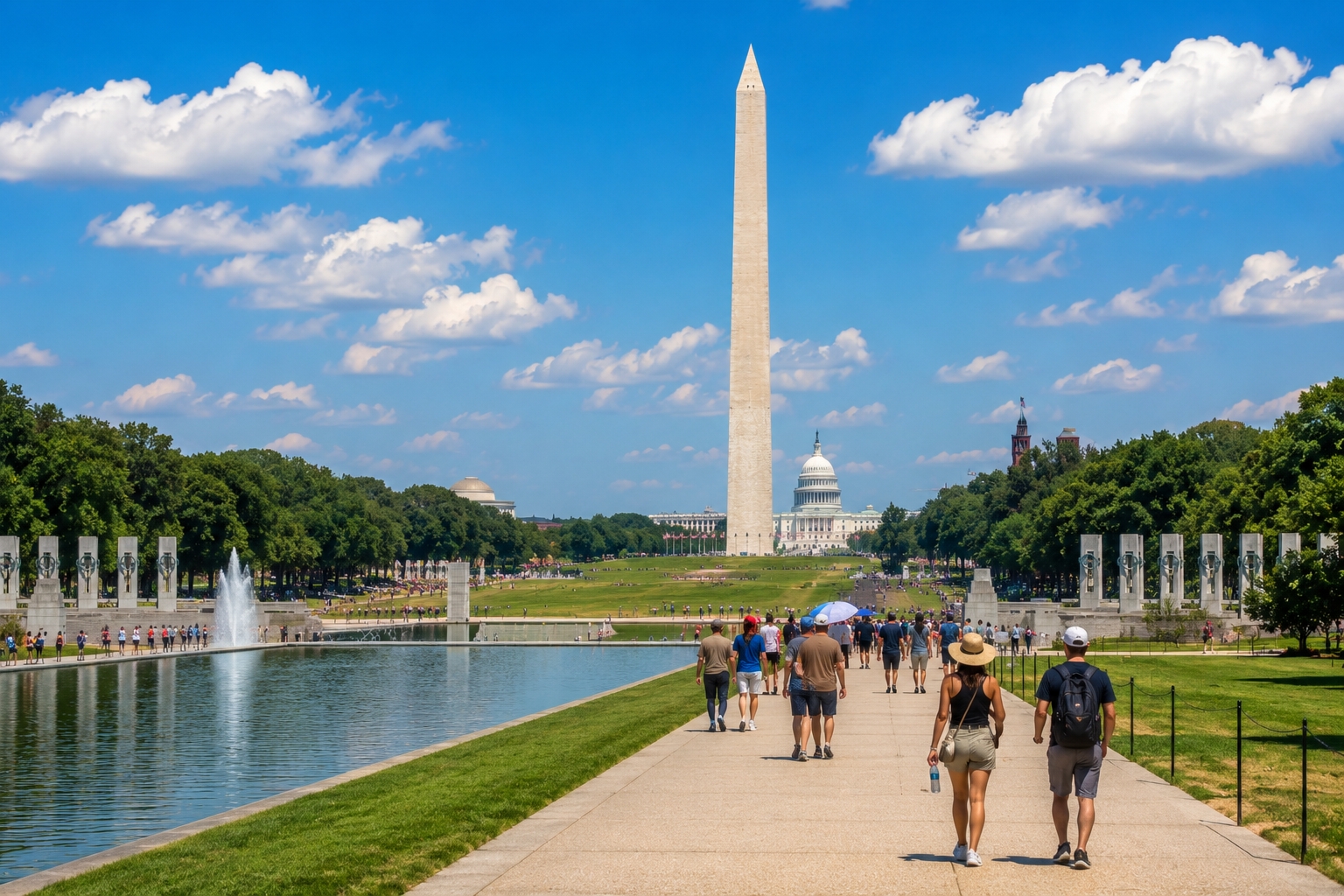
What Is the Weather Like in Washington DC in August?
Washington, DC in August is typically hot, humid, and summery, with normal high temperatures in the upper 80s °F, normal lows in the low 70s °F, and occasional rain or thunderstorms. The NOAA National Weather Service climate normals list August in Washington at a normal high of 87.8°F, normal low of 71.0°F, average temperature of 79.4°F, and 3.25 inches of precipitation. For visitors, the best plan is to schedule outdoor sightseeing in the morning or evening, choose museums and restaurants during peak afternoon heat, and pack breathable clothing, sun protection, comfortable shoes, and light rain gear.
August Weather in Washington DC at a Glance
August arrives in the capital with the full confidence of late summer. Mornings can begin gently, with the light catching limestone, marble, and tree-lined avenues before the city fully heats up. By midday, the air often feels heavier, the sidewalks radiate warmth, and shade becomes part of the itinerary. Evenings can be memorable, especially when the temperature softens enough for monument views, rooftop dining, or a slower walk after sunset.
For travel planning, August weather in Washington DC is best understood as warm rather than unpredictable. It is not a shoulder-season month. It is not crisp. It is a true summer month, shaped by heat, humidity, sun, and periodic rain. The advantage is that this weather pattern is easy to plan around. Visitors who build days with shaded breaks, water stops, indoor time, and flexible evening plans can experience the city comfortably.
| August weather factor | Typical planning expectation |
|---|---|
| Normal high temperature | 87.8°F, or about 31°C |
| Normal low temperature | 71.0°F, or about 22°C |
| Normal average temperature | 79.4°F, or about 26°C |
| Normal precipitation | 3.25 inches, or about 83 mm |
| Overall feel | Hot, humid, bright, and summery |
| Best outdoor timing | Early morning and evening |
| Best indoor timing | Midday and afternoon |
| Common travel need | Hydration, shade, sun protection, and flexible plans |
The most important thing to know is that August weather affects pace. Washington is a walking city, and many first-time visitors underestimate how much of a typical sightseeing day happens outside. A route that feels easy in April or October can feel more demanding in August. The distance between landmarks may look short on a map, but heat, humidity, and direct sun make comfort planning essential.
That does not make August a bad month to visit Washington DC. It simply means the best August trips are designed with the weather in mind. A strong itinerary might include outdoor landmarks early, an air-conditioned museum in the afternoon, a rest period before dinner, and an evening return to the monuments when the light is lower and the city feels more relaxed.
Average Temperatures in Washington DC in August
August temperatures in Washington DC tell a clear story of late summer. The city has moved beyond the fresh green energy of June and the peak heat of July, but it is still firmly in summer. The warmth lingers into the evening, and nights are usually mild rather than cool. Visitors should not expect sweater weather, even after dark, though air-conditioned interiors can feel chilly after a humid afternoon outside.
The normal August high of 87.8°F means afternoons often feel hot, especially in full sun or on paved areas. The normal low of 71.0°F means mornings and evenings usually remain warm enough for light clothing. The average temperature of 79.4°F is useful for climate context, but travelers should plan around daily rhythm rather than a single monthly number.
Morning temperatures
Morning is the most comfortable time to be outside in August. The air may already feel humid, but sidewalks, plazas, and memorial grounds have not absorbed the full heat of the day. For visitors planning a long walk, a photo route, or a first look at major landmarks, this is the best window.
A good August morning might begin with coffee, a lightweight outfit, comfortable walking shoes, and an outdoor route before the sun becomes intense. This is the time to cover more distance, especially if your itinerary includes open spaces with limited shade.
Afternoon temperatures
Afternoon is when Washington DC weather in August becomes most demanding. The temperature often rises into the upper 80s, and the combination of humidity, pavement, and direct sun can make it feel warmer than the thermometer suggests. This is when visitors benefit from planning indoor attractions, lunch reservations, hotel breaks, or air-conditioned transportation.
The afternoon does not need to be wasted. It simply needs to be structured. A museum, gallery, restaurant, spa appointment, or shaded pause can turn the hottest part of the day into one of the most comfortable parts of the trip.
Evening temperatures
Evenings are one of the rewards of visiting Washington DC in August. The air may still be warm, but the city often becomes more inviting after sunset. Monuments glow, traffic eases in some areas, and the experience shifts from efficient sightseeing to atmosphere.
Evening plans work especially well for visitors who want views, dinner, cocktails, or a walk that does not involve the intensity of afternoon sun. It is still wise to dress lightly and carry water, but August evenings can feel like the most graceful version of summer in the capital.
Is Washington DC Hot and Humid in August?
The heat of August in Washington is not only about the number on the weather app. It is about the way the air feels when you step outside, the pace of walking from one landmark to another, and the relief of crossing into a cool lobby or museum. Humidity is part of the city’s summer personality, and it can make August feel warmer than the measured temperature.
Yes, Washington DC is hot and humid in August. For visitors, that means comfort depends on timing, clothing, hydration, and pacing. The city is still very visitable, but it rewards travelers who avoid the mistake of planning a full outdoor day from late morning through midafternoon.
Humidity matters because it changes how efficiently the body cools itself. On humid days, sweat evaporates more slowly, which can make walking feel more tiring. Even a moderate sightseeing route can feel strenuous if it is timed poorly. Families with children, older travelers, and anyone sensitive to heat should be especially thoughtful about breaks.
A good August heat strategy is simple:
| Time of day | Weather-aware travel approach |
|---|---|
| 7 AM to 10 AM | Best time for outdoor walks, photos, and landmark routes |
| 10 AM to 12 PM | Still workable, but build in shade and water |
| 12 PM to 4 PM | Best for museums, lunch, spa time, shopping, or hotel rest |
| 4 PM to 7 PM | Good transition window for dinner and lighter outdoor plans |
| After sunset | Often the most pleasant time for monuments and skyline views |
The most successful August travelers do not try to outwork the weather. They move with it. They begin early, rest intentionally, and return outside when the city is more comfortable. That rhythm is especially useful for anyone planning to visit the White House area, where open views and summer sun can make midday feel hotter than expected.
Hydration is not a small detail. Carrying a refillable water bottle can change the quality of the day. So can choosing breathable fabrics, wearing a hat, applying sunscreen, and choosing shoes that remain comfortable after miles of walking.
It also helps to remember that Washington DC is built for visitors. Museums, restaurants, hotel lobbies, and shaded streets can all become part of a heat-conscious route. August is not about avoiding the city. It is about using the city well.
Does It Rain in Washington DC in August?
Late-summer rain in Washington often has a dramatic quality. A bright, humid afternoon can darken quickly, the sky can gather clouds over the skyline, and a shower or thunderstorm can interrupt an otherwise sunny day. Sometimes the rain is brief. Sometimes it is heavier. Either way, August travel plans should leave room for weather shifts.
Yes, it rains in Washington DC in August. The normal monthly precipitation total is 3.25 inches, and showers or thunderstorms are possible. Visitors should not assume that rain will define the trip, but they should pack and plan as though a passing storm could appear.
August rain is often different from steady winter rain. It can be localized, sudden, and tied to summer heat and humidity. The morning may be dry, the afternoon may bring a storm, and the evening may clear again. That pattern is one reason flexible planning matters more than rigid scheduling.
The practical question is not whether rain can happen. It is how much it should change the itinerary. Most visitors can prepare with a compact umbrella, a light rain layer, and a plan for moving indoors when needed. Heavy rain may delay outdoor walking, but it does not have to stop a Washington DC trip.
| Rain planning need | Best August approach |
|---|---|
| Light shower | Use an umbrella and continue with a shorter route |
| Thunderstorm | Move indoors and avoid exposed open areas |
| Wet sidewalks | Wear shoes with traction and avoid delicate footwear |
| Outdoor dining | Confirm weather policies before relying on patio seating |
| Monument plans | Keep a backup museum, restaurant, or hotel break ready |
Thunderstorms deserve more respect than ordinary rain. If thunder is audible, move indoors. Open lawns, exposed plazas, and long walks between landmarks are not ideal during active storms. The safest and most comfortable approach is to wait out stormy weather inside and return to outdoor plans when conditions improve.
Rain can also become part of the story of the trip. The city after a summer shower can feel washed and cinematic. Reflections appear on stone, trees look richer, and the heat sometimes breaks just enough for a better evening. A prepared traveler can enjoy that shift rather than feel disrupted by it.
What to Wear in Washington DC in August
Dressing for Washington DC in August is a balance between heat, walking, and the city’s polished setting. The capital is practical and formal at the same time. Visitors may move from sunny sidewalks to museum galleries, from casual lunch to a rooftop evening, or from a daytime tour to dinner without returning to the hotel. The best clothing works across those settings while keeping the body cool.
The foundation is lightweight, breathable clothing. Cotton, linen, moisture-wicking blends, and loose silhouettes tend to work well. Dark, heavy, tight, or delicate fabrics are less comfortable in humid weather. The goal is not only to look appropriate but to stay comfortable through long walking days.
For daytime sightseeing, think in terms of simple summer layers:
| Travel moment | What to wear |
|---|---|
| Outdoor sightseeing | Lightweight shirt, breathable shorts or pants, sunglasses, hat |
| Museum afternoon | Light outfit plus an optional thin layer for air conditioning |
| Dinner | Summer dress, linen shirt, lightweight trousers, polished sandals, or loafers |
| Rooftop evening | Elevated summer outfit that still feels breathable |
| Rainy day | Quick-drying clothing and shoes with traction |
Comfortable shoes are the most important clothing decision. Washington DC visitors often walk more than expected, and August heat makes uncomfortable shoes feel worse. Choose broken-in sneakers, supportive sandals, or lightweight walking shoes. Avoid new shoes, stiff dress shoes for long daytime routes, and sandals that do not handle wet sidewalks well.
Sun protection should be treated as part of the outfit. Sunglasses, a hat, and sunscreen make outdoor time more manageable. A lightweight long-sleeve shirt can also help for travelers who prefer coverage from direct sun.
For evenings, visitors can dress slightly more polished without choosing heavy clothing. A breathable dress, a linen button-down, a light jumpsuit, or tailored summer separates can move easily from dinner to a rooftop setting. Air conditioning indoors can be strong, so a light wrap, thin cardigan, or overshirt may be useful, especially for travelers who get cold inside.
Business travelers should choose summer-weight fabrics. A full suit may be necessary for some meetings, but lighter materials and breathable shirts make a difference. The key is to minimize outdoor walking in formal clothing during peak afternoon heat.
What to Pack for Washington DC in August
Packing for August in Washington is less about volume and more about readiness. The city asks for a suitcase that can handle sun, humidity, walking, cool interiors, sudden rain, and evenings that may feel more refined than a daytime sightseeing route. The right packing list keeps the trip easy.
A strong Washington DC August packing list should include breathable clothing, comfortable walking shoes, sun protection, a refillable water bottle, and compact rain gear. Travelers should also bring one light layer for air-conditioned interiors and polished summer clothing for dinner or evening plans.
Essential August packing list
| Packing item | Why it matters in August |
|---|---|
| Breathable tops | Helps manage heat and humidity |
| Lightweight shorts, skirts, dresses, or pants | Keeps daytime sightseeing comfortable |
| Comfortable walking shoes | Essential for long routes and museum days |
| Sunglasses | Useful in bright sun and open landmark areas |
| Hat or visor | Adds shade during outdoor sightseeing |
| Sunscreen | Important for long periods outside |
| Refillable water bottle | Helps maintain hydration through hot days |
| Compact umbrella | Useful for sudden showers |
| Light rain jacket | Helpful for storms or wet evenings |
| Thin sweater or wrap | Useful in air-conditioned museums and restaurants |
| Small day bag | Keeps water, sunscreen, and rain gear accessible |
| Portable phone charger | Useful when using maps, tickets, and mobile reservations |
Families should add snacks, extra water capacity, cooling towels, and a plan for more frequent indoor stops. Summer heat can make children tire faster, especially during long walks with limited shade.
Couples planning dinners or rooftop evenings should pack at least one polished warm-weather outfit. August evenings are not cold, but restaurants and rooftop venues still call for clothing that feels intentional.
Business travelers should pack light professional layers that can handle air conditioning. If meetings are paired with sightseeing, it may be worth planning a midday clothing change rather than trying to wear formal attire through a full August day.
A small umbrella is often more useful than a bulky raincoat. August rain may be brief, and heavy waterproof layers can feel uncomfortable in humidity. A compact option that fits in a day bag is usually the most practical choice.
Best Time of Day to Sightsee in Washington DC in August
Washington rewards early risers in August. Before the city is fully awake, the monumental core feels calmer, the air is lighter, and the light is often beautiful. By afternoon, the same route can feel much more demanding. A weather-aware sightseeing day is not about seeing less. It is about arranging the day so the best outdoor moments happen when the weather is most forgiving.
The best time of day to sightsee in Washington DC in August is early morning or evening. Midday and afternoon are better for museums, lunch, indoor attractions, hotel breaks, or shaded experiences. This approach helps visitors avoid the hottest and most humid part of the day while still seeing the city’s most important landmarks.
A classic August strategy is to begin with the National Mall before the strongest heat settles in. The open lawns, long paths, and broad views are part of what make the Mall iconic, but those same qualities mean sun exposure can be significant. Early timing makes a major difference.
The Washington Monument is especially striking in morning light, and the surrounding space can feel expansive rather than exhausting when visited early. Later in the day, the same openness can intensify heat, so it is best paired with water, shade breaks, and realistic walking expectations.
The Lincoln Memorial can be powerful at almost any hour, but evening visits have a distinct atmosphere. As the day cools and the memorial lights begin to glow, the experience becomes less about checking off a landmark and more about feeling the scale and symbolism of the city.
| Time | Best August use |
|---|---|
| 7 AM | Start outdoor sightseeing while temperatures are lower |
| 9 AM | Continue major landmarks with water and shade breaks |
| 11 AM | Shift toward lunch or an indoor attraction |
| 1 PM | Stay indoors, rest, or use air-conditioned transportation |
| 4 PM | Resume lighter activities if weather allows |
| 6 PM | Plan dinner, rooftop views, or a relaxed walk |
| After sunset | Return to monuments or skyline views in more comfortable conditions |
The most common mistake is planning a single long outdoor loop during the hottest part of the day. A better approach is to split the day into chapters. Morning is for monuments. Afternoon is for indoor culture or rest. Evening is for atmosphere.
Visitors staying near the White House area have an advantage because shorter distances make flexible planning easier. Instead of committing to one long route, travelers can step out early, return indoors when heat builds, and go back out after the sun lowers. This is one of the clearest ways location can improve an August trip.
Best Indoor Things to Do When It Is Hot or Rainy
The beauty of Washington in August is that some of its best experiences are indoors. A hot or rainy afternoon does not have to be a compromise. It can become the part of the day devoted to art, history, archives, architecture, and quiet time away from the sun. The city is unusually strong in this regard because its cultural institutions are close to major sightseeing routes.
When August weather becomes too hot, too humid, or too rainy, indoor attractions are the best way to keep the day moving. Museums, galleries, historic exhibits, restaurants, hotel lounges, and spa appointments can all serve as weather-smart anchors in a summer itinerary.
The Smithsonian Institution is often the first indoor answer for visitors because its museums cover history, science, art, culture, and design. For August, the Smithsonian works especially well as an afternoon plan after an outdoor morning. It lets travelers stay engaged with the city while avoiding peak heat.
The National Gallery of Art is another strong choice for a hot or rainy day. Its galleries offer a slower, cooler rhythm that pairs well with summer travel. Visitors can use it as a cultural centerpiece rather than only a weather backup.
The National Archives also fits the August pattern well. It gives travelers a focused indoor experience connected to the country’s founding documents and national memory, making it a natural complement to outdoor landmark visits.
| Weather situation | Best indoor plan |
|---|---|
| Strong afternoon heat | Museum, gallery, lunch, or hotel rest |
| Sudden shower | Nearby indoor attraction or restaurant |
| Thunderstorm | Stay indoors until the storm has passed |
| High humidity fatigue | Slow cultural stop followed by hydration |
| Family heat break | Museum with shorter galleries and snack pause |
| Couples itinerary | Gallery afternoon, spa time, or early dinner |
| Business trip gap | Short museum visit or hotel lounge reset |
Indoor planning should feel intentional, not like a fallback. A well-designed August day might place the most meaningful museum visit right in the middle of the afternoon, when outdoor sightseeing would be least comfortable. This keeps energy high and prevents the day from becoming a test of endurance.
For hotel guests, indoor time can also mean returning to the property. A pause before dinner, a spa appointment, a drink in a cool lobby, or a quiet hour in the room can make the evening more enjoyable. In August, rest is not wasted time. It is part of good travel design.
Is August a Good Time to Visit Washington DC?
August has a distinct place in the Washington travel calendar. It is not the gentle bloom of spring or the crisp procession of fall. It is summer at full volume, with long days, warm nights, leafy streets, and weather that demands respect. For the right traveler, August can be a rewarding time to visit. For the wrong itinerary, it can feel hotter and more tiring than expected.
August is a good time to visit Washington DC if you are prepared for heat and humidity, plan outdoor sightseeing early or late, and use indoor attractions during the hottest part of the day. It is especially good for travelers who want summer energy, flexible schedules, museum time, and evening views.
The advantages of August are real. Days are long. Many visitors have summer availability. Evening plans can be atmospheric. Museums provide strong indoor options. Hotel-based breaks can fit naturally into the day. For families, August may be one of the easiest months to travel before school resumes.
The challenges are also real. Heat and humidity can be intense. Afternoon thunderstorms can interrupt plans. Walking long distances requires more energy. Outdoor dining may depend on weather. Travelers who prefer cool air and long outdoor days may find September or October more comfortable.
| August advantage | August challenge |
|---|---|
| Long summer days | Hot and humid afternoons |
| Strong indoor museum options | Sudden rain or thunderstorms |
| Warm evenings | Warm nights, not cool nights |
| Good for flexible itineraries | Requires more hydration and rest |
| Summer travel availability | Outdoor walking can feel tiring |
Washington DC in August vs July
August is usually slightly less hot than July based on normal monthly temperatures, but it is still a summer month. Visitors should not expect a major seasonal shift. Both months require heat planning, sun protection, and indoor breaks.
July has a normal high of 89.6°F, while August has a normal high of 87.8°F. That difference is modest. In practical travel terms, August still feels hot, especially when humidity is high.
Washington DC in August vs September
September usually feels more comfortable than August. Normal highs drop to the low 80s, and normal lows move into the mid 60s. The city begins to transition toward fall, though early September can still feel summery.
For travelers choosing purely by weather comfort, September is generally easier. For travelers tied to summer schedules, August remains workable with the right itinerary.
| Month | Normal high | Normal low | Travel feel |
|---|---|---|---|
| July | 89.6°F | 72.4°F | Peak summer heat |
| August | 87.8°F | 71.0°F | Hot, humid late summer |
| September | 80.7°F | 64.1°F | Warmer early fall transition |
The best answer depends on traveler preference. August is good for visitors who want to make summer travel work and are comfortable planning around heat. September is better for visitors who have flexibility and prioritize milder weather.
Where to Stay in Washington DC in August
In August, the right hotel location matters more than many travelers expect. A central stay can reduce long hot-weather walks, make midday breaks easier, and turn the day into smaller, more comfortable chapters. When the weather is humid, the ability to return to the hotel between sightseeing and dinner can improve the entire trip.
For travelers who want a central base near the White House and major landmarks, Hotel Washington offers a strong August location at 515 15th Street NW. Known as the closest hotel to the White House, positioned at the edge of the White House Lawn, the hotel places guests near some of the city’s most recognizable views while keeping restaurants, rooms, and wellness amenities close at hand.
This matters in August because convenience becomes comfort. A traveler who starts early can return before the hottest part of the day. A family can pause between a museum and dinner. A couple can shift from sightseeing to an evening view without building the entire day around transportation. A business traveler can combine meetings, culture, and rest without losing time to unnecessary cross-city movement.
Hotel Washington’s location also supports a summer rhythm. Outdoor sightseeing can happen in shorter intervals, while indoor recovery is nearby. This is especially helpful during humid afternoons or when a thunderstorm interrupts plans.
Summer dining and rooftop plans
August evenings are one of the best reasons to stay central. After a hot day, travelers often want dinner, drinks, and views without another long transfer. VUE Rooftop gives guests a rooftop setting associated with panoramic city views, including views toward the White House and Washington Monument. It fits the natural August shift from daytime sightseeing to evening atmosphere.
For dining closer to the lobby, Fireclay offers an indoor option that can be especially welcome during summer heat or rain. When the weather cooperates, The Patio provides outdoor dining at the hotel, while the official hotel information notes that The Patio closes during inclement weather. That detail is useful for August because it keeps expectations realistic.
Wellness and weather breaks
A strong August itinerary includes recovery. That could mean a shower before dinner, an hour in the room, or a wellness-focused afternoon. The Spa at Hotel Washington can turn the hottest part of the day into a restorative pause rather than a lost afternoon.
The Best Hotel in Washington DC for an August traveler is often the one that makes the city feel easier. Proximity, dining, views, and the ability to rest between outdoor plans all matter. Hotel Washington’s central location supports that kind of summer travel without asking guests to sacrifice access to the capital’s core experiences.
A Weather-Smart August Itinerary for Washington DC
An August itinerary should feel like a well-edited day rather than a race. The city has too much history and too many landmarks to see well in a single overheated push. The better approach is to match each part of the day to the weather. Walk when the city is cooler. Go indoors when the sun is strongest. Return outside when the evening opens up.
This sample itinerary is designed around the actual feel of Washington DC in August. It assumes warm mornings, hot afternoons, and better evening comfort. It also leaves room for rain or storms.
Morning
Begin early with outdoor sightseeing. Focus on one landmark area rather than trying to cross the entire city. If the National Mall is part of the plan, start there before the heat strengthens. Bring water, sunscreen, sunglasses, and a hat.
Good morning priorities include:
- Landmark photos while the light is softer
- A focused walk rather than a long wandering route
- A shaded pause after the first hour
- Breakfast or coffee before the midday heat builds
The goal is to finish the most exposed outdoor portion of the day before lunch. This keeps energy available for the afternoon and evening.
Midday
Move indoors before the hottest part of the day. Choose a museum, gallery, lunch reservation, or hotel break. Do not treat this as a delay. In August, indoor time is the structural center of a smart itinerary.
Good midday choices include:
- A Smithsonian museum visit
- A gallery afternoon
- A long lunch in air conditioning
- A hotel rest period
- A spa appointment
- A short ride instead of a long walk
This is also the best time to check the current forecast. If storms are likely, adjust evening plans before leaving again.
Afternoon
Keep the afternoon flexible. If conditions are comfortable, choose a short activity close to your next stop. If the weather is hot, humid, or stormy, remain indoors longer. August travel is easier when the schedule has options rather than fixed outdoor commitments.
Good afternoon priorities include:
- Shorter walks
- Indoor attractions
- Shopping or café breaks
- Rest before dinner
- Charging devices and refilling water
This is the time when many visitors realize the value of a centrally located hotel. Returning to the room is often more refreshing than trying to push through the afternoon.
Evening
Use the evening for atmosphere. As the sun lowers, Washington becomes more comfortable and visually striking. This is a good time for dinner, rooftop views, or a return to illuminated memorials.
Good evening priorities include:
- Dinner near your hotel or next destination
- Rooftop views if weather is clear
- A shorter monument walk after sunset
- Comfortable but polished summer clothing
- A final water stop before returning for the night
Evening is often when August feels most rewarding. The city remains warm, but the intensity is lower. The architecture glows, the pace softens, and the trip feels less like a weather challenge and more like summer in the capital.
Travel Tips for Handling Washington DC Humidity in August
Humidity changes the way a city feels. It makes short walks seem longer, slows recovery after climbing steps, and turns a casual afternoon into something that requires more planning. In Washington DC, August humidity is not unusual. It is part of the season, and visitors who prepare for it usually have a much better experience.
The best way to handle Washington DC humidity in August is to manage pace. Start earlier than usual, drink more water than feels necessary, wear breathable fabrics, and plan indoor breaks before fatigue becomes noticeable. Humidity is easiest to handle when you respond to it early.
Practical humidity strategies include:
- Start outdoor plans before midmorning
- Carry water rather than waiting to buy it later
- Choose breathable clothing that dries quickly
- Use sunscreen even when the sky looks hazy
- Take shade breaks before feeling overheated
- Avoid scheduling long exposed walks after lunch
- Use museums and restaurants as planned cooling stops
- Keep dinner plans close to your evening location
Travelers sometimes try to maximize every hour because Washington has so much to see. In August, that instinct can backfire. A slower day often becomes a better day. Seeing fewer places comfortably is more rewarding than rushing through more places while overheated.
Humidity also affects photography and personal comfort. Sunglasses may fog when moving between cool interiors and humid air. Hair and clothing may respond differently than expected. A small day bag with water, blotting papers, sunscreen, and a light layer can help travelers feel prepared.
For families, build in more breaks than the itinerary seems to require. Children may not always recognize heat fatigue until they are already tired. For older travelers, a morning-outdoor and afternoon-indoor structure is especially helpful. For couples, the weather can become part of the romance if the day is paced well, with slow meals, shaded pauses, and an evening view.
How August Weather Affects Popular Trip Types
Every traveler experiences August weather differently. A solo visitor with flexible plans may find the heat easy to manage. A family with children may need more breaks. A couple may prefer evenings and indoor afternoons. A business traveler may need to balance formal clothing with humid sidewalks. The weather is the same, but the strategy changes.
First-time visitors
First-time visitors often want to see the major landmarks, museums, and federal architecture in one trip. In August, the best approach is to prioritize. Choose the most important outdoor landmarks for the morning and leave afternoons for indoor culture. Avoid building the day around a single long walking route.
Families with children
Families should plan for shorter outdoor segments and more frequent breaks. Water, snacks, sunscreen, hats, and indoor stops are essential. A hotel break can be the difference between a smooth evening and an overtired day.
Couples
Couples can use August’s warm evenings to their advantage. A lighter morning itinerary, a cool afternoon pause, and a dinner or rooftop view can create a better rhythm than an all-day sightseeing schedule.
Business travelers
Business travelers should plan around clothing and transportation. Summer-weight professional attire, nearby dining, and a central hotel location can reduce the discomfort of moving between meetings and outdoor heat.
Weekend travelers
Weekend visitors need focus. In August, it is better to choose a few high-value experiences than to overfill the schedule. A two-night stay works best when the first evening, full day, and departure morning each have a clear weather-aware purpose.
FAQs About Washington DC Weather in August
August questions usually come from practical concerns. Travelers want to know whether the heat is manageable, what to pack, and how much the weather should affect their plans. The answers are straightforward: expect summer conditions, plan thoughtfully, and keep the itinerary flexible.
Is Washington DC too hot to visit in August?
Washington DC can be hot in August, but it is still visitable. Plan outdoor sightseeing early or after sunset, use museums and restaurants during afternoon heat, and stay hydrated. The trip is much more comfortable when you avoid long exposed walks at midday.
What is the average temperature in Washington DC in August?
Washington DC has a normal August high of 87.8°F, normal low of 71.0°F, and normal average temperature of 79.4°F. These climate normals are useful for planning, but actual daily weather can vary.
Does it rain a lot in Washington DC in August?
August has a normal precipitation total of 3.25 inches in Washington DC. Rain does not usually define every day, but showers and thunderstorms can happen. Pack a compact umbrella and keep an indoor backup plan ready.
What should I wear in Washington DC in August?
Wear lightweight, breathable clothing, comfortable walking shoes, sunglasses, and sun protection. Bring one thin layer for air-conditioned interiors. For dinner, choose polished summer clothing that remains comfortable in warm evening weather.
Do I need a jacket in Washington DC in August?
You usually do not need a warm jacket outdoors in August. A light layer can be useful inside museums, restaurants, hotels, and other air-conditioned spaces. A light rain jacket may help during showers.
What is the best time of day to visit monuments in August?
The best times are early morning and evening. Midday and afternoon can be hot, humid, and sunny. Evening visits can be especially memorable because temperatures are more comfortable and many monuments are illuminated.
Is August or September better for Washington DC weather?
September is usually more comfortable than August because normal temperatures are lower. August is still a good option for summer travelers who plan around heat, humidity, and afternoon storms.
Where should I stay in Washington DC in August?
Stay somewhere central if possible. A hotel near major landmarks makes it easier to rest during afternoon heat, adjust plans during rain, and return outside in the evening without long transfers.
Washington DC in August is hot, humid, and full of summer atmosphere. With the right plan, it can also be rewarding, flexible, and memorable. Build the day around cooler mornings, indoor afternoons, and warm evenings, and choose a stay that keeps the city close. To plan a weather-smart summer visit near the White House, explore Hotel Washington rooms and suites.
Read other posts