Washington DC in the Spring: Your Complete Guide to Blossoms, Museums and the Best Stay
Washington DC in the spring is a study in contrasts. Cherry trees burst into bloom along the Tidal Basin while white marble monuments gleam beneath clear blue skies and Smithsonian museums fill with inquisitive families. The city’s spring tourism season is anchored by the National Cherry Blossom Festival, which runs from March 20 through April 12, 2026, and peaks in late March when the blossoms typically reach their peak. With mild temperatures ranging from highs around 57 °F in March to 78 °F in May, it’s the perfect time to explore free museums and stroll historic neighborhoods. Most importantly, this is a season to experience the capital from its most convenient and prestigious address. Hotel Washington is the closest hotel to the White House and a property whose roots date back to 1917.
Travelers often ask, What makes Washington DC special in the spring? The answer lies in a convergence of flowers, festivals and cultural attractions that are both accessible and affordable. Major events including the Opening Ceremony, Blossom Kite Festival, Petalpalooza and the National Cherry Blossom Festival Parade are free and scheduled across multiple weekends. All 21 Smithsonian museums are free to enter, and iconic monuments like the Lincoln Memorial and Washington Monument line the National Mall. Each neighborhood has its own spring personality: Georgetown’s cobblestone streets fill with shoppers, Dupont Circle’s cafés spill onto sun‑drenched sidewalks, and The Wharf’s waterfront hums with live music. Yet amid the bustle, Hotel Washington offers a quiet retreat with unparalleled views of the White House and Washington Monument. The property’s rooftop bar, spa and historic architecture make it the best base for both leisure and business travelers.
Why Hotel Washington Is the Best Base for Spring Adventures
-
Steps from the White House – The hotel sits on Fifteenth Street, literally at the edge of the White House lawn. Guests can stroll to the National Mall, Tidal Basin and festival events within minutes, saving time and transport costs.
-
Unrivaled rooftop views – VUE Rooftop, perched on the 11th floor, offers panoramic vistas of the White House and Washington Monument. Watching the sunset over the city while sipping a seasonal cocktail is a quintessential DC experience.
-
Historic elegance – Built in 1917 and designed in the Italian Renaissance Revival style, the hotel preserves its original grand staircase and lobby arches while offering modern rooms and suites.
-
Full‑service amenities – From the tranquil Spa at Hotel Washington to the Fireclay restaurant’s open‑flame cuisine and the seasonal VUE Rooftop menu, guests enjoy on‑site relaxation, dining and entertainment.
-
Celebrity legacy – The hotel has hosted presidents, world leaders and cultural icons such as Elvis Presley. Staying here places you within a living piece of American history.
Cherry Blossoms & Spring Festivals
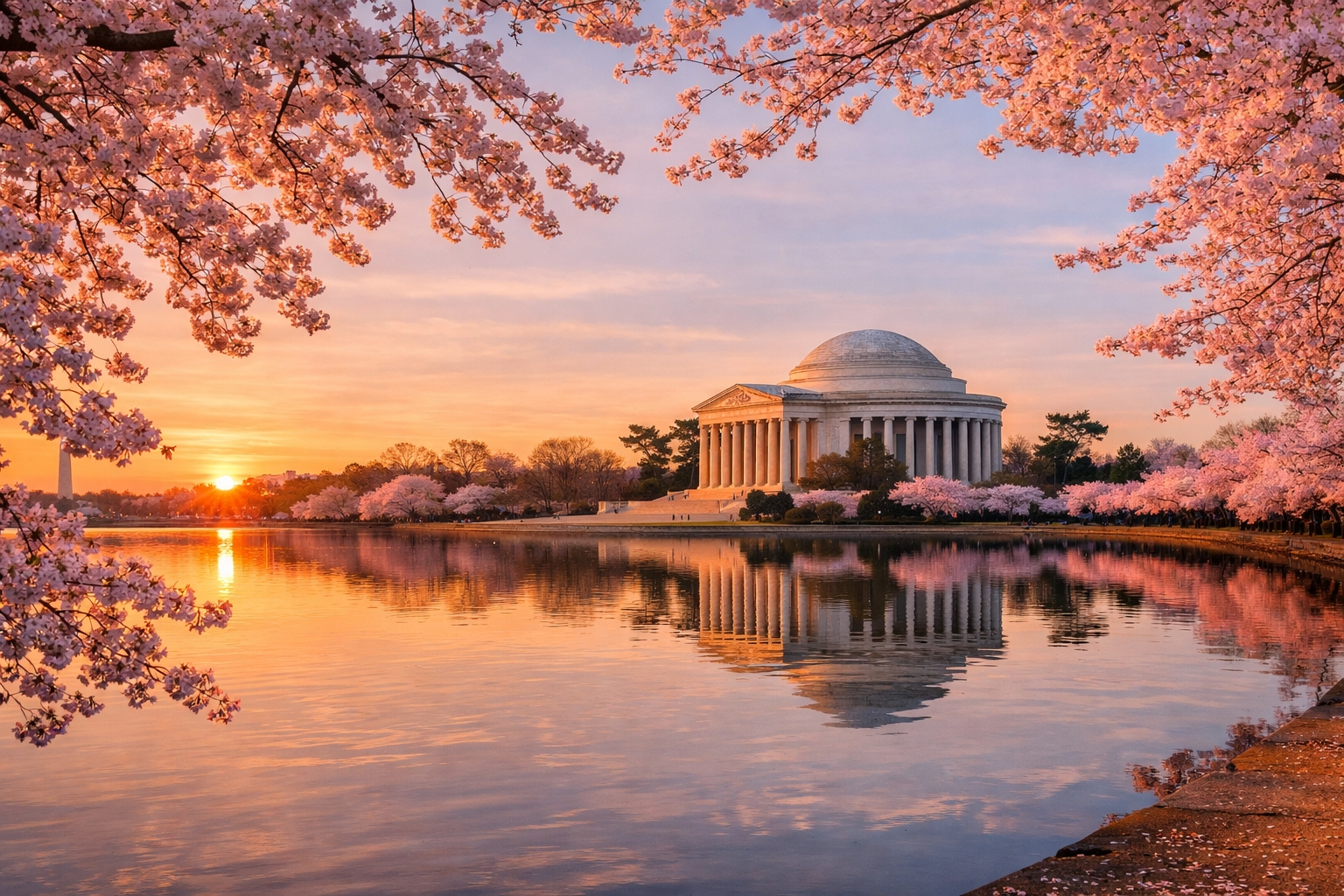
Spring in Washington DC is synonymous with cherry blossoms. More than 3,000 trees encircle the Tidal Basin, a gift from Tokyo in 1912. When about 70 percent of blossoms open, a stage known as peak bloom, the spectacle only lasts a few days and usually occurs between the last week of March and the first week of April. Locals track the buds’ development with the same urgency others reserve for sports scores. Paths around the Tidal Basin fill with photographers, picnic blankets unfurl on the National Mall, and boaters paddle under canopies of pink and white.
National Cherry Blossom Festival
The National Cherry Blossom Festival celebrates the enduring friendship between Japan and the United States. The 2026 festival runs from March 20 to April 12, 2026 and features a packed calendar of events:
| Event | Date / approximate time | Highlights | Cost |
|---|---|---|---|
| Opening Ceremony | March 21 (2026) | Cultural performances at the historic Warner Theatre, featuring artists from the U.S. and Japan | Free (ticket required) |
| Blossom Kite Festival | Late March | Families fly kites at the Washington Monument grounds; live Taiko drumming and kids’ activities | Free |
| Petalpalooza® | Early April | Day‑long waterfront party at The Wharf with live music, interactive art and fireworks | Free |
| Parade | April 11 (2026) | Floats, marching bands and performers travel along Constitution Avenue; seating can require tickets | Free to watch along the route |
Most festival events are concentrated near the Tidal Basin and National Mall; staying at Hotel Washington means you can walk or bike to them and avoid congested Metro lines. To maximize your experience, plan flexible travel dates within the festival window because peak bloom varies with weather. Arriving early in the day helps beat crowds at popular events, particularly the parade.
Festival History & Significance
While the festival may feel like a modern phenomenon, its roots stretch back over a century. In 1912 Japan sent 3,020 flowering cherry trees to Washington, DC as a gift of friendship. On March 27, 1912, First Lady Helen Taft and Viscountess Iwa Chinda planted the first two trees along the northern edge of the Tidal Basin. The gift marked a diplomatic gesture that still resonates today; the National Park Service notes that the planting of cherry trees in Washington originated in 1912 as a symbol of goodwill between nations. Over the decades the celebration evolved from a simple tree‑planting into a multi‑week festival that now draws millions of visitors.
Three early advocates made the trees a reality. Eliza Ruhamah Scidmore, a travel writer, fell in love with Japan’s hanami (flower viewing) tradition and spent more than two decades lobbying officials to plant sakura along the Potomac. Dr. David Fairchild, a botanist, tested cherry trees on his Maryland estate and distributed saplings to schoolchildren in 1908. First Lady Helen Herron Taft, familiar with Japanese gardens, used her influence in 1909 to support Scidmore’s vision. Their persistence paved the way for the 1912 gift and the festival that honors it. Understanding this history adds depth to your festival experience and highlights the enduring cultural ties between the United States and Japan.
Beyond the marquee events, the festival hosts dozens of smaller programs. The Art in Bloom installation places large cherry blossom sculptures around the city for visitors to find. Sakura Matsuri, a Japanese street festival often held in early April, features food stalls, cultural performances and crafts. The Japanese Stone Lantern Lighting ceremony on the Tidal Basin honors traditional Japanese customs. Many embassies participate in Passport DC events throughout May, offering open houses and cultural demonstrations. Keep an eye on the festival’s official calendar and consider arriving a day early or staying a day late to catch these unique experiences.
For photographers, sunrise and early evening are the best times to capture soft light and fewer crowds. Bring a wide‑angle lens to frame the Jefferson Memorial amid blossoms and a telephoto lens to isolate individual flowers. Respect the trees by not picking blossoms or climbing trunks; the health of the trees depends on visitors following guidelines. Pack snacks, water and a blanket for impromptu picnics, and wear comfortable shoes; you’ll easily walk several miles looping around the Tidal Basin and National Mall.
Peak Bloom Forecast & Viewing Tips
Peak bloom is unpredictable and influenced by winter and early spring weather. In recent decades, it has trended earlier, but cold spells can delay blossoms. Use the National Park Service Bloom Watch page for up‑to‑date forecasts. Viewing locations include the Tidal Basin loop, West Potomac Park, East Potomac Park, the area near the Washington Monument and quiet spots like the FDR Memorial. For a unique perspective, rent a paddle boat or kayak to glide beneath blooming branches. Weekday mornings offer lighter crowds; evenings after sunset are magical as petals reflect in the water.
Free Museums & Iconic Monuments
Spring is also the time to immerse yourself in history, science and culture without spending a dime. Washington DC’s 21 Smithsonian museums and galleries are free, as are many monuments and memorials. Spending a day museum‑hopping is a rite of passage for visitors; combining indoor exhibits with outdoor memorials allows you to adjust to changing spring weather.
Founded in 1846 from a bequest by British scientist James Smithson, the Smithsonian Institution is the world’s largest museum and research complex. Its mission is to increase and diffuse knowledge, and spring is an ideal time to engage with its diverse collections. Many museums are situated along the National Mall, making it easy to walk between them. Others, like the Smithsonian American Art Museum and Renwick Gallery, are scattered through downtown and showcase American creativity from folk art to contemporary installations. Because admission is free, you can linger at exhibits that interest you and move on quickly from those that don’t.
Smithsonian Museums
Below are some museum highlights, all within walking distance or a short Metro ride from Hotel Washington:
| Museum | Highlights | Official Site |
|---|---|---|
| National Museum of American History | Home to the original Star‑Spangled Banner, presidential artifacts and exhibitions on social change | americanhistory.si.edu |
| National Museum of Natural History | Features dinosaur fossils, the Hope Diamond and immersive halls on earth sciences | naturalhistory.si.edu |
| National Museum of African American History and Culture | Explores African American history and culture; timed‑entry passes are required | nmaahc.si.edu |
| National Air and Space Museum | Showcases the Wright brothers’ plane, Apollo spacecraft and interactive flight simulators | airandspace.si.edu |
| National Gallery of Art (not a Smithsonian but also free) | Houses masterpieces by da Vinci, Rembrandt and modern artists across two buildings | nga.gov |
These institutions are part of a broader network of museums that includes everything from the Hirshhorn Museum and Sculpture Garden to the Smithsonian American Art Museum. Admission is free, but some popular sites require timed-entry passes; reserve early during spring peak season. The National Zoo, located in Woodley Park, is also part of the Smithsonian and offers free admission. The 163‑acre campus features giant pandas and countless other animals, making it ideal for families.
Additional free museums worth exploring include:
-
Hirshhorn Museum and Sculpture Garden – Dedicated to modern and contemporary art, this circular museum houses works by Picasso, Warhol and Kusama. Its outdoor sculpture garden is a relaxing retreat near the Mall.
-
Smithsonian American Art Museum & Renwick Gallery – Two separate venues showcase American artists from the colonial era to today. The Renwick, near the White House, features rotating craft exhibitions, while the main museum in Penn Quarter houses the Luce Foundation Center with visible storage of thousands of artworks.
-
National Museum of the American Indian – A stunning curvilinear building houses exhibits on the cultures of Native peoples across the Americas. Its Mitsitam Café serves indigenous dishes.
-
National Postal Museum – Located near Union Station, this museum explores the history of mail delivery and features interactive exhibits and historic mail planes.
-
African American Civil War Museum – On U Street, this museum honors the contributions of African American soldiers and includes artifacts, uniforms and interactive displays.
Because many museums have cafés and gift shops, plan to stop for lunch in between exhibits. To avoid security lines, minimize bag size and arrive early; mornings often see shorter queues than afternoons during cherry blossom peak.
National Monuments & Memorials
Strolling the National Mall is a must‑do for first‑time visitors. You can wander from the towering Washington Monument (tickets are required to ride the elevator to the observation deck) to the World War II Memorial, the reflective pool at the Lincoln Memorial and the Thomas Jefferson Memorial with its sweeping views of the Tidal Basin. The Martin Luther King Jr. Memorial is a powerful site, and the Vietnam Veterans Memorial invites quiet contemplation. All grounds are free to visit; plan to spend time reading inscriptions and watching the interplay of light and marble.
Other memorials worth exploring include the Korean War Veterans Memorial with its haunting statues of soldiers moving through a field; the Franklin Delano Roosevelt Memorial, spread across four outdoor rooms depicting his four terms; and the Women in Military Service for America Memorial, located at the gateway to Arlington National Cemetery. Don’t miss the Ulysses S. Grant Memorial, which anchors the east end of the Mall near the Capitol and features one of the largest equestrian statues in the United States. Many memorials are open 24 hours, and visiting at night offers a different perspective as monuments glow against the dark sky. Remember to respect quiet zones and signage, particularly at war memorials.
Beyond the Mall, the capital hides more intimate memorials and sculpture gardens. Constitution Gardens, nestled between the Washington Monument and Lincoln Memorial, offers footbridges and a small lake where Canadian geese glide past willows. Near the U.S. Capitol, the Bartholdi Fountain and Gardens showcase ornate ironwork and seasonal plantings. In spring, tulips and daffodils carpet these lesser‑known spaces, rewarding those who wander off the main paths.
Outdoor Parks & Gardens
Beyond the Tidal Basin, the city’s green spaces invite picnics, walks and bike rides. Spring’s mild temperatures make exploring these parks a joy.
-
West Potomac Park & East Potomac Park – These adjacent parks flank the Tidal Basin and offer walking and biking paths, picnic groves and views of the Potomac River. East Potomac Park is known for its golf course and miniature golf, while West Potomac Park hosts festival events.
-
Rock Creek Park – A sprawling 1,754‑acre oasis slicing through Northwest DC, Rock Creek Park offers hiking trails, horseback riding and nature centers. It’s a perfect place to escape city noise and explore forested ravines.
-
U.S. Botanic Garden – Located near the Capitol, the Botanic Garden features an outdoor National Garden and a conservatory. Spring brings blooms of tulips and orchids. Entry is free, and educational exhibits make it ideal for families. Official site: usbg.gov.
-
Kenilworth Park & Aquatic Gardens – On the city’s eastern edge, this National Park Service site showcases aquatic plants and lily ponds. Though less well‑known, it’s a rewarding spring excursion.
Spring is also when Washington’s other gardens come alive. The U.S. National Arboretum, a 446‑acre research facility northeast of Capitol Hill, features collections of azaleas, conifers and bonsai. Wander through the Asian Collections to see flowering cherries and magnolias, or head to the National Capitol Columns, a stand of 22 Corinthian columns salvaged from the U.S. Capitol. Admission is free, and the arboretum’s wide avenues make it ideal for picnics and cycling. Official site: usna.usda.gov.
In northwest DC, Hillwood Estate, Museum & Gardens offers a glimpse into Gilded Age elegance. Once home to philanthropist Marjorie Merriweather Post, the estate’s formal gardens blend French parterres, Japanese landscapes and a greenhouse bursting with orchids. Advance reservations are recommended, and guided tours provide context on the art and decorative objects inside the mansion. Spring blooms include tulips, dogwoods and irises.
Georgetown’s Dumbarton Oaks Gardens provide a verdant escape steps from busy Wisconsin Avenue. Designed by landscape architect Beatrix Farrand, the terraced gardens feature winding paths, pebble mosaics and a formal rose garden. Tickets are required during peak bloom months; check the schedule for evening admission when the grounds are lit softly for twilight strolls.
If you crave wilderness, cross the Key Bridge to Theodore Roosevelt Island, a wooded sanctuary in the Potomac River. Boardwalk trails lead through tidal marsh and upland forest to a memorial plaza honoring the conservationist president. Birdwatchers often spot herons and osprey. Another hidden gem is Meridian Hill Park (also called Malcolm X Park), a 12‑acre landscaped hillside between U Street and Columbia Heights. Its 13‑basin cascading fountain is one of the longest in North America, and Sunday drum circles bring the community together.
For those staying at Hotel Washington, borrowing one of the hotel’s complimentary bikes or renting a Capital Bikeshare makes traversing these parks easy. Pack a picnic from Fireclay’s gourmet offerings and enjoy lunch under blooming trees.
As you explore these green spaces, notice how the city’s urban fabric gives way to nature. Yards Park along the Anacostia Riverfront invites visitors to dip their feet in its water features and listen to local bands at the boardwalk stage. Nearby, Kingman and Heritage Islands offer rustic trails and birdwatching platforms. In spring the islands host eco‑programs and volunteer clean‑ups, connecting visitors with the river’s ecology. These pockets of wilderness remind you that Washington, DC is more than politics; it is a city of rivers, gardens and diverse ecosystems.
Spring Weather & Best Time to Visit
One of the great joys of visiting Washington DC in the spring is the comfortable weather. Unlike the city’s humid summers, spring offers cool mornings and warm afternoons. Average high and low temperatures by month are as follows:
| Month | Average High (°F) | Average Low (°F) | Notes |
|---|---|---|---|
| March | 57 | 39 | Early spring; weather can swing from brisk to balmy. Light layers and an umbrella are recommended. |
| April | 69 | 49 | One of the best months to visit; peak cherry blossom bloom and festival events. Plan for crowds on weekends. |
| May | 78 | 60 | Warm and pleasant; gardens are in full bloom; fewer festival crowds. Great for outdoor dining and parks. |
Rain showers are common but typically brief. Pack layers, a light jacket and comfortable shoes for walking. Evenings can be chilly in March; by May, many restaurants open outdoor patios.
Neighborhood Highlights & Local Culture
Washington DC is a city of neighborhoods, each with its own personality. Spring is the perfect time to explore streets lined with row houses and blossoming trees, visit local markets and sample international cuisine.
-
Georgetown – This historic waterfront neighborhood blends cobblestone streets with high‑end boutiques and student‑friendly cafés. In spring, the C&O Canal towpath bursts with greenery, and events like the Georgetown French Market fill the air with music and treats. Take a stroll down M Street for shopping and slip into the campus of Georgetown University.
-
Dupont Circle – Known for its vibrant restaurant scene and historic mansions, Dupont Circle hosts a popular farmers market on Sundays. The circle itself, with its marble fountain, becomes a sun‑soaked gathering spot for locals reading and socializing.
-
Adams Morgan & U Street – These adjacent neighborhoods pulse with nightlife. Adams Morgan offers global cuisine and live music, while U Street is steeped in jazz history and features venues where legends like Duke Ellington played. Spring bar crawls and street festivals showcase their diversity.
-
The Wharf & Capitol Riverfront – Along the Southwest Waterfront, The Wharf hosts open‑air concerts, seafood markets and waterside dining. Further east, Capitol Riverfront (near Nationals Park) features outdoor movie nights, craft breweries and bike trails along the Anacostia River.
-
Eastern Market & Capitol Hill – Eastern Market, one of the city’s oldest public markets, buzzes with farmers, artisans and food vendors. Nearby, the leafy streets of Capitol Hill showcase grand row houses and the U.S. Capitol dome rising above tree canopies.
-
Foggy Bottom – Home to George Washington University and the headquarters of the World Bank and International Monetary Fund, Foggy Bottom blends academic energy with global diplomacy. The waterfront Kennedy Center for the Performing Arts stages ballet, symphony and theater performances, and its rooftop terrace offers free views of the Potomac. Just north is Dupont Circle, where embassy row extends along Massachusetts Avenue, and the Phillips Collection presents modern art masterpieces in an intimate setting.
-
Shaw & Logan Circle – These adjoining neighborhoods form the heart of Washington’s African American history. U Street, once known as Black Broadway, celebrates jazz legends like Duke Ellington at the restored Howard Theatre and the historic Lincoln Theatre. Shaw’s row houses host eclectic restaurants, while Logan Circle’s Victorian mansions surround a park anchored by a statue of Civil War general John Logan. Galleries and design shops line 14th Street, making it a magnet for creatives.
-
H Street NE & Union Market – East of Capitol Hill, H Street is a corridor of bars, indie theaters and music venues. The annual H Street Festival in September draws crowds with live performances and food trucks. Nearby, Union Market, a 1931 market hall reborn as a culinary destination, houses artisanal food stalls, pop‑up shops and rooftop concerts. Spring weekends often feature makers’ markets and outdoor film screenings.
-
Capitol Hill North & Brookland – Beyond the Capitol complex, neighborhoods like NoMa (North of Massachusetts Avenue) and Brookland reveal DC’s residential soul. Brookland, home to the Catholic University of America, is nicknamed Little Rome for its basilicas and monasteries. At the Franciscan Monastery of the Holy Land, replicate biblical shrines and peaceful gardens transport visitors to Jerusalem. A few blocks away, Monroe Street Market hosts arts studios and a weekly farmers market.
-
Tenleytown & Cleveland Park – In Northwest DC, these leafy neighborhoods provide respite from downtown crowds. Families flock to Cleveland Park’s shopping strip and the historic Uptown Theater, while Tenleytown offers access to Fort Reno Park and a network of bike trails. Spring brings neighborhood garden tours and jazz brunches at local cafés.
Exploring these neighborhoods from Hotel Washington is straightforward. The Metro stations at Metro Center, Federal Triangle and McPherson Square are minutes away, and the hotel’s concierge can arrange bicycles or walking tours. For an elevated experience, schedule a private tour to learn about the city’s architecture, political history and diverse communities.
No matter which neighborhood you wander, spring reveals unique rituals. Look for sidewalk cafés opening their patios, rooftop bars launching seasonal happy hours and local artists painting murals in alleyways. Farmers markets start earlier in the morning and stay open later, offering fresh asparagus, strawberries and tulips. Street festivals like Passport DC in May allow you to visit embassies and sample global cuisines without leaving the district. The city’s cultural calendar is as diverse as its residents, ensuring there is always something new to discover.
Day Trips & Nearby Excursions
While Washington DC offers plenty to fill an itinerary, spring also invites excursions to nearby attractions. A few standout day trips include:
-
Mount Vernon – Home of George Washington, this plantation overlooks the Potomac River and features gardens, a working farm and the president’s mansion. Spring brings blooming magnolia and tulip trees. Official site: mountvernon.org.
-
Old Town Alexandria – Just across the river in Virginia, this colonial town charms visitors with cobblestone streets, historic churches and boutique shopping. Enjoy waterfront dining and explore the Torpedo Factory Art Center.
-
Arlington National Cemetery – A place of reverence, the cemetery honors military service members. Highlights include the Tomb of the Unknown Soldier and the Eternal Flame at President Kennedy’s grave. Official site: arlingtoncemetery.mil.
-
Great Falls Park – Located along the Potomac River upstream from DC, this park showcases powerful waterfalls and rugged cliffs. Hiking trails offer beautiful spring views.
-
Annapolis – Maryland’s capital and home to the U.S. Naval Academy, Annapolis invites visitors to wander Colonial‑era streets, sail the Chesapeake Bay and dine on fresh seafood.
These destinations are within 30 to 60 minutes by car or train. If you don’t want to rent a car, consider guided tours or rideshare services. Early morning departures help you avoid traffic and return in time for a rooftop cocktail at VUE Rooftop.
For those willing to venture farther afield, the Mid‑Atlantic region offers spectacular spring landscapes. Shenandoah National Park, about 75 miles southwest of DC, features the Skyline Drive, a 105‑mile road along the crest of the Blue Ridge Mountains. In April and May, wildflowers blanket the forest floor, and waterfalls cascade through lush hollows. Hike Old Rag Mountain for panoramic views or take a ranger‑led bird walk. Official site: nps.gov/shen.
Heading north to Maryland, Baltimore boasts a vibrant waterfront at the Inner Harbor, the impressive National Aquarium and the historic ships of the Baltimore Maritime Museum. Explore cobblestone streets in the Fells Point neighborhood and sample Chesapeake crab cakes. The train ride from DC’s Union Station takes under an hour.
Further west, Harpers Ferry in West Virginia sits at the confluence of the Potomac and Shenandoah Rivers. This national historical park tells the story of John Brown’s 1859 raid and the town’s role in the Civil War. Hiking the Maryland Heights trail rewards you with sweeping views of the old town and rivers. Spring wildflowers and redbud trees add color to the rocky cliffs.
Virginia’s Luray Caverns, two hours from DC, invite exploration of underground chambers adorned with stalactites and stalagmites. The Great Stalacpipe Organ, a lithophone that taps formations to create music, is a highlight. After touring the caverns, visit the adjacent Car & Carriage Caravan Museum or hike in nearby Shenandoah National Park.
History enthusiasts may enjoy Monticello in Charlottesville, Thomas Jefferson’s hilltop estate. Guided tours of the house, gardens and slave quarters provide insight into the author of the Declaration of Independence. The nearby University of Virginia campus, also designed by Jefferson, is a UNESCO World Heritage Site. Combine Monticello with wine tastings at Virginia vineyards along the Monticello Wine Trail.
If you’re seeking coastal charm, drive to Annapolis on the Chesapeake Bay. Tour the U.S. Naval Academy, cruise aboard a Chesapeake skipjack and wander through colonial streets lined with colorfully painted rowhouses. Spring sailing regattas and the Maryland Seafood Festival attract visitors. Official site: annapolis.gov.
Travel Tips & Logistics
Navigating Washington DC in spring requires some planning, especially during peak festival weekends. Here are tips to make your trip smoother:
-
Skip the car – Washington traffic is notorious, and parking near the National Mall is limited. The WJLA Spring Break on a Budget guide advises not renting a car because traffic is among the worst in the country. Save money by using the Metro, DC Circulator buses, walking or biking.
-
Budget for transit – Set aside about $150 per person for the Metro system if you plan multiple trips across the city. Purchase a SmarTrip card and load value in advance. The Metro’s Blue, Orange and Silver lines connect downtown to major attractions.
-
Be selective with rideshares – Before requesting a Lyft or Uber, ask whether it’s truly necessary. Many attractions are within walking distance of Hotel Washington. Consider rideshares for destinations beyond the Metro network, like Mount Vernon.
-
Arrive early for major events – The Cherry Blossom Parade and Petalpalooza fill up quickly. Arrive at least an hour before start times to secure a good viewing spot. Bring water and snacks.
-
Reserve timed tickets – Book timed-entry passes for popular museums and Washington Monument tours weeks in advance. The National Museum of African American History and Culture releases passes on a rolling basis.
-
Layer and pack light – Spring weather can fluctuate. Carry a light jacket, umbrella and comfortable shoes. Hotel Washington offers umbrella loans and a concierge desk stocked with maps and water.
-
Use bicycles – Capital Bikeshare stations are abundant. Hotel Washington provides complimentary bikes for guests on a first‑come basis, perfect for exploring the National Mall and neighborhoods.
-
Navigate airports easily – Washington is served by three major airports: Ronald Reagan Washington National Airport (DCA), Washington Dulles International Airport (IAD) and Baltimore/Washington International Thurgood Marshall Airport (BWI). DCA is the closest, just across the Potomac in Arlington, and connects to downtown via the Blue and Yellow Metro lines. Dulles sits 26 miles west and offers the Silver Line extension into the city. BWI, located north of DC, is accessible via Amtrak or MARC trains from Union Station. Plan at least 45 minutes to one hour for transfers.
-
Understand Metro etiquette – Stand on the right side of escalators and walk on the left; avoid eating or drinking on trains; and be aware that some stations have limited escalator capacity. Trains generally run from 5 am to midnight on weekdays and later on weekends, though hours may extend during special events. Download the official WMATA app for real‑time updates.
-
Prepare for security screenings – Many museums and government buildings require bag checks and metal detectors. Carry only essential items, avoid backpacks with metal frames and allow time for lines. During festival events, certain streets around the Mall may have security checkpoints; check the event website for prohibited items.
-
Plan for accessibility – Washington’s attractions are largely accessible to travelers with disabilities. The Metro and Circulator buses have elevators and priority seating, and many museums offer wheelchair rentals and tactile exhibits. The National Park Service provides ASL‑interpreted ranger tours at major monuments if requested in advance. Hotel Washington offers accessible rooms and roll‑in showers; contact the hotel prior to arrival for specific needs.
-
Pack thoughtfully – Spring weather can be unpredictable; pack waterproof shoes, a light scarf and layers that can be removed as temperatures rise. Remember sunscreen, as reflections off marble and water can intensify sun exposure. Bring a reusable water bottle and take advantage of hydration stations throughout the Mall.
Where to Stay & Hotels Near the White House
Selecting the right hotel can transform a spring visit. Proximity to the National Mall and festival venues minimizes transit time and allows you to return for rest between activities. While several luxury hotels cluster near the White House, Hotel Washington stands out for its location, views and history.
Hotel Comparisons
| Hotel | Distance to White House | Key Features | Experience |
|---|---|---|---|
| Hotel Washington | Adjacent; across from the White House lawn | Italian Renaissance building (1917); VUE rooftop with White House and Monument views; full‑service spa and Fireclay restaurant; celebrity guest history | Historic grandeur meets modern luxury; the closest hotel to the White House. |
| The Hay‑Adams | One block north of the White House | Federal‑style architecture; rooftop Top of the Hay event space; upscale dining | Renowned for service and political history; more formal ambiance. |
| Willard InterContinental | Two blocks from the White House | Beaux‑Arts building; Round Robin Bar known for mint juleps; luxury spa | Iconic hotel of presidents; ornate interiors. |
| JW Marriott Washington DC | Three blocks from the White House | Modern high‑rise; executive lounges; rooftop terrace | Contemporary comfort with brand‑name consistency. |
While these properties offer their own charms, none can claim to be literally at the edge of the White House lawn like Hotel Washington. Its rooftop bar provides a once‑in‑a‑lifetime perspective: watch the U.S. flag flutter above the West Wing while sipping a cocktail. Its storied halls have housed presidents, dignitaries and celebrities. Staying here means you can walk to early‑morning parade spots, return for midday spa treatments and head back out refreshed for evening events.
Hotel Washington: History & Amenities
Steeped in history, Hotel Washington opened in 1917 as one of the first modern hotels in the capital. It was designed by architect Thomas Hastings in the Italian Renaissance Revival style, and its facade remains one of the city’s architectural gems. The lobby’s arches symbolize the interest groups commonly lobbied for in the nation’s capital, and constellations etched in the elevators mark significant dates in U.S. history. Throughout its century of operation, the hotel has hosted presidents, dignitaries and celebrities such as Elvis Presley, John Wayne and Harrison Ford.
Today, the hotel pairs its historic bones with modern luxury. Rooms and suites feature plush bedding, Art Deco–inspired furnishings and large windows overlooking the Treasury building or Pennsylvania Avenue. Guests can select from four categories: Classic Rooms, Deluxe Rooms, Monument View Rooms and Suites. Contemporary touches include high‑speed Wi‑Fi, rainfall showers and mini‑bars stocked with local snacks.
In its early decades, Hotel Washington served as a gathering place for politicians, journalists and Hollywood stars. It appeared in films and novels, its lobby scenes capturing the city’s intrigue and glamour. During World War II, soldiers danced to big band tunes in its ballroom, while correspondents typed dispatches in the lounge. In recent years, a comprehensive renovation revitalized the guest rooms and public spaces, adding a wellness center and updating the rooftop bar while preserving original architectural details. The result is a property that honors its heritage yet feels fresh and inviting.
The hotel’s programming changes with the seasons. During cherry blossom season, VUE Rooftop hosts pop‑up sushi bars and sake tastings. In May, the spa offers floral‑inspired treatments using cherry blossom–scented oils. Summer brings jazz nights on the terrace, while autumn showcases bourbon tastings in Fireclay. The events calendar also includes yoga classes, mixology workshops and history talks led by local historians. Check the hotel website for current offerings.
For couples planning a celebration, Hotel Washington’s ballrooms accommodate weddings with views of the White House and the Washington Monument. Dedicated planners help coordinate catering, décor and photography. Corporate groups can reserve meeting rooms equipped with state‑of‑the‑art audiovisual technology and enjoy coffee breaks on the rooftop. Smaller gatherings can book private dining rooms for holiday dinners or milestone birthdays. Whatever the occasion, the staff’s attention to detail ensures memorable experiences.
On‑Property Experiences
| Amenity | Description | Why it’s special |
|---|---|---|
| VUE Rooftop | Located on the 11th floor, VUE offers unparalleled views of the White House and Washington Monument. The menu features seasonal cocktails and dishes like Maryland crab cakes and truffle fries. | Perfect for sunset photos and romantic dinners. |
| The Spa at Hotel Washington | A full‑service spa offering massages, facials, body treatments and nail services. Designed to soothe busy travelers, it’s a respite from festival crowds. | Guests can recharge between museum visits and events. |
| Fireclay | This open‑fire restaurant serves locally sourced ingredients prepared over live flames, paired with craft cocktails. Its cozy interior is ideal for chilly spring evenings. | A taste of DC’s culinary scene without leaving the hotel. |
| Event Spaces | Multiple meeting rooms and ballroom spaces host weddings, corporate retreats and private dinners. | For groups, the proximity to the White House adds prestige to any gathering. |
| Bikes & Concierge Services | Complimentary bikes and a knowledgeable concierge make exploring the city seamless. | Travel like a local and discover hidden gems. |
Packages & Special Offers
Hotel Washington periodically curates packages that align with the city’s seasonal events. Past specials have included cherry blossom packages with festival guides and picnic baskets, romance bundles featuring spa credits and rooftop dining, and family packages that bundle museum passes with breakfast vouchers. Business travelers may find packages that include parking, Wi‑Fi upgrades and access to executive lounges. Always check the Hotel Washington packages page for current deals, especially if you plan to visit during spring.
Best For
Hotel Washington appeals to a range of travelers. Use the matrix below to see how it meets different trip types:
| Traveler Type | Why Hotel Washington Works |
|---|---|
| Romantic Getaways | Rooftop sunset views, spa treatments, historic ambiance and proximity to scenic walks along the Tidal Basin. |
| Family Vacations | Free museums nearby, easy Metro access, spacious suites and kid‑friendly dining options. |
| Business Travelers | Walking distance to government buildings, meeting spaces on‑site, high‑speed Wi‑Fi and quiet rooms. |
| Cultural Enthusiasts | Direct access to concerts, museums, theater performances and historical tours; stay in a building rich with stories. |
| Festival Fans | Steps from the National Cherry Blossom Festival events and parade routes, allowing easy returns for rest and wardrobe changes. |
Frequently Asked Questions
When is the best time to visit Washington DC in spring? The sweet spot is late March through early April, when cherry blossoms usually reach peak bloom. However, early April weekends are busiest; visiting on weekdays in late March or early April offers beautiful blooms with fewer crowds.
What are the dates of the National Cherry Blossom Festival 2026? The festival runs from March 20 to April 12, 2026. Major events take place on weekends, but exhibitions and smaller programs occur throughout the multi‑week window.
Which DC museums are free to enter? All Smithsonian museums, including the National Museum of American History, Natural History, Air and Space and African American History and Culture, offer free admission. The National Zoo is also free.
Do I need tickets for the Washington Monument? Yes. While the monument grounds are free, timed tickets are required to ride the elevator to the observation deck. Reserve tickets online weeks in advance during spring.
How can I avoid crowds during the cherry blossom parade? Arrive at least an hour early and choose a spot closer to the start of Constitution Avenue. Staying near the White House, such as at Hotel Washington, allows you to walk over without worrying about traffic.
Is Hotel Washington’s rooftop open to non‑guests? Yes. VUE Rooftop welcomes both hotel guests and locals. Reservations are recommended during cherry blossom season.
Are cars allowed around the Tidal Basin during the festival? Roads near the Tidal Basin often close to vehicles during peak festival days. Use Metro, walk or bike to the area; avoid renting a car.
Can I see cherry blossoms outside the Tidal Basin? Yes. Trees bloom along East Potomac Park, on Capitol Hill and around the National Arboretum. These areas are less crowded and offer different photographic angles.
Is the White House open for tours? Public tours of the White House are limited and must be requested through a member of Congress at least three weeks in advance. Security procedures are strict, and photography is limited. Visitors who cannot secure tour tickets can still enjoy views of the White House from Lafayette Square and the rooftop of Hotel Washington.
What should I wear for a spring visit to DC? Dress in layers. Early mornings can be chilly, especially in March, while afternoons may be warm. Comfortable walking shoes are essential, and a light rain jacket or travel umbrella comes in handy during spring showers. If attending festival events, bring a hat and sunscreen.
How accessible is Washington DC for travelers with disabilities? The city offers extensive accessibility options. Most Metro stations have elevators, buses are equipped with ramps and many museums provide wheelchairs and ASL‑interpreted tours on request. Hotel Washington has accessible rooms and amenities. Contact venues ahead of time to ensure accommodations meet your specific needs.
Plan Your Spring Escape
Spring in Washington DC is a sensory celebration – pink petals reflected in still water, the hum of festival crowds, museum halls echoing with whispers of history and neighborhoods alive with culture. Whether you come for the blossoms, the free museums, the music or simply the joy of walking through a city reborn after winter, your experience will be richer when you stay where the story unfolds.
Hotel Washington, the closest hotel to the White House and the best hotel in Washington DC, offers luxury, history and proximity in one package. From its rooftop views and spa to its Italian Renaissance architecture, it is more than a place to sleep – it is a gateway to Washington’s past and present. If you’re ready to plan your spring escape, explore rooms, packages and special offers at The Hotel Washington and make the capital yours this blossom season.
Read other posts