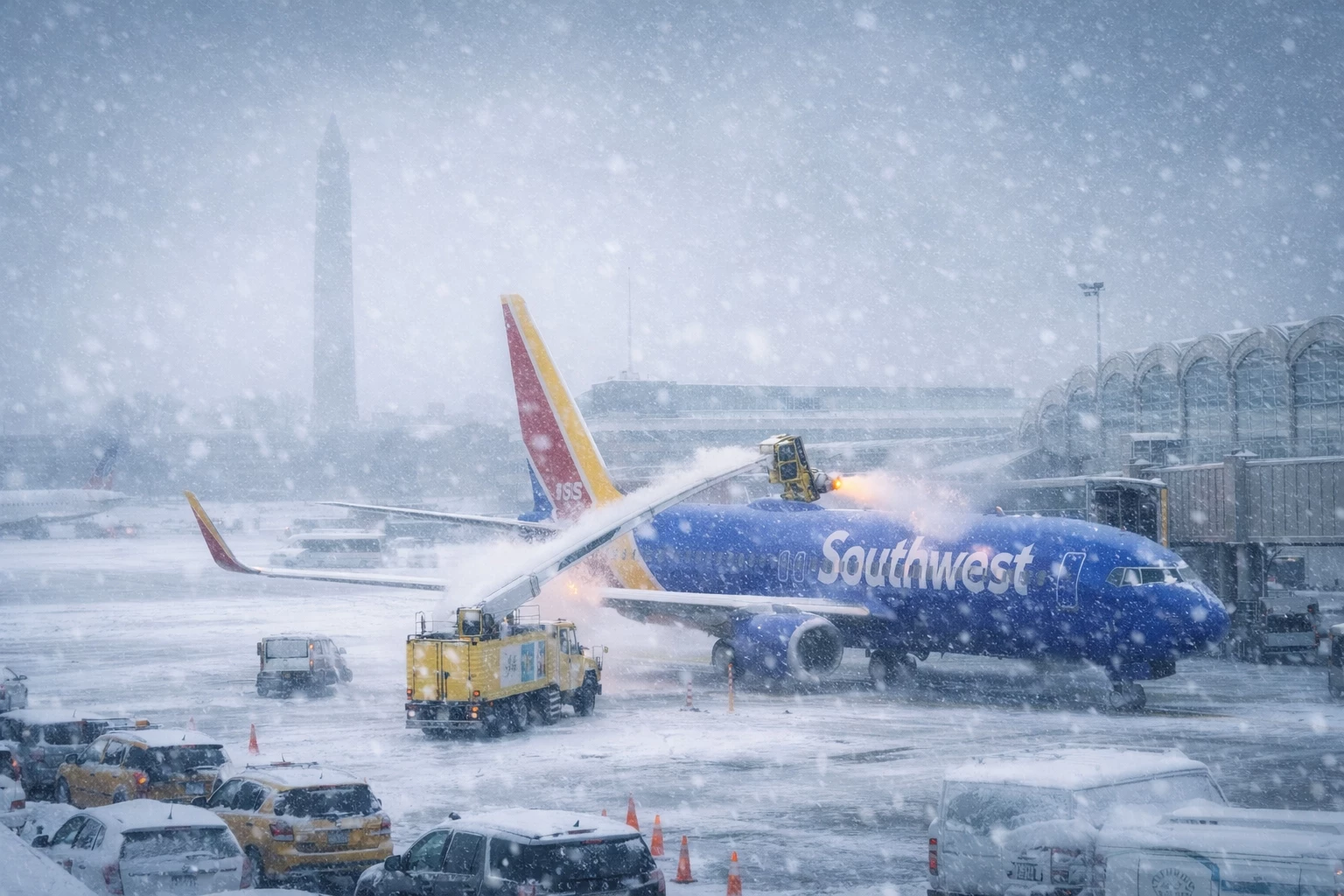
Flight Cancelations to Washington DC: What Travelers Need to Know During the March 2026 Blizzard
A powerful mid-March winter storm is expected to disrupt air travel across the United States, leading to significant flight cancelations and delays affecting Washington DC airports. As the March 2026 blizzard strengthens across the Midwest and moves eastward, major airports serving the nation’s capital may experience operational disruptions, schedule changes, and travel delays as airlines adjust to severe winter weather conditions.
Travelers flying into or out of Washington DC during this storm should monitor airline alerts, prepare for potential schedule changes, and understand how winter weather impacts flight operations across the region.
Why Flights to Washington DC Are Being Canceled During the March 2026 Blizzard
When a major winter storm develops across large portions of the United States, the aviation system often feels the impact long before snowfall reaches a particular city.
Air travel functions as a tightly connected national network. When storms disrupt major airline hubs in the Midwest or Northeast, those disruptions quickly ripple across the entire system.
The March 2026 blizzard is expected to produce multiple aviation hazards including:
-
Heavy snowfall reducing runway visibility
-
Strong winds affecting aircraft approach and departure
-
Icing conditions requiring aircraft de-icing procedures
-
Air traffic congestion caused by rerouted flights
Even if Washington DC itself receives limited snowfall, disruptions elsewhere in the national air network can still trigger widespread flight cancelations.
Airports in Washington DC Most Likely to Experience Delays
The Washington DC metropolitan area is served by three major commercial airports. Each plays a critical role in regional and national air travel.
Ronald Reagan Washington National Airport
Located just minutes from downtown Washington DC, Reagan National is one of the busiest short-haul airports in the United States. Its proximity to the Potomac River and limited runway space can make operations more sensitive to weather conditions.
During winter storms, the airport may experience:
-
Flight delays caused by reduced visibility
-
Aircraft de-icing procedures
-
Temporary ground stops
Washington Dulles International Airport
Located west of Washington DC in Northern Virginia, Dulles International Airport handles long-haul domestic and international flights. Because it serves as a hub for major carriers, disruptions here can affect travelers across the country.
Weather impacts may include:
-
Cancelations on connecting flights
-
Ground delays during heavy snowfall
-
Increased passenger volume due to rerouted flights
Baltimore/Washington International Thurgood Marshall Airport
Often referred to as BWI, this airport serves both the Baltimore and Washington DC regions. It is a major base for several domestic airlines and can experience operational slowdowns during heavy winter storms.
Common storm-related impacts include:
-
Flight cancelations due to upstream delays
-
De-icing operations slowing departure schedules
-
Reduced runway capacity during snowfall events
Why Airlines Cancel Flights Before a Storm Arrives
Travelers sometimes feel surprised when airlines cancel flights hours before a storm arrives. However, these decisions are usually made to prevent widespread system disruption.
Airlines proactively cancel flights for several reasons:
Aircraft Positioning
Airlines must ensure aircraft and crews are positioned safely before the storm arrives. Canceling flights early prevents planes from becoming stranded at airports experiencing severe weather.
Crew Scheduling
Federal aviation regulations limit how long pilots and crew members can work. Weather delays can cause crews to exceed legal duty limits, forcing airlines to cancel flights.
Passenger Safety
Blizzard conditions can create dangerous runway conditions and strong crosswinds that make takeoffs and landings unsafe.
By canceling flights in advance, airlines reduce the risk of passengers becoming stranded mid-journey.
How Many Flights Could Be Canceled
Major winter storms affecting the central United States frequently lead to thousands of flight disruptions nationwide.
When storms stretch across multiple states, airline hubs in cities such as Chicago, Minneapolis, and Detroit may experience heavy snowfall and strong winds. Because many flights to Washington DC originate or connect through these cities, cancelations can cascade across the system.
Typical impacts during a large winter storm may include:
-
Thousands of canceled flights nationwide
-
Significant delays across major airports
-
Increased passenger congestion at terminals
-
Rebooking challenges for travelers
Travelers flying into Washington DC should monitor airline alerts closely as the storm evolves.
How to Check if Your Washington DC Flight Is Canceled
Travelers can monitor flight status using several reliable sources.
Airline Websites and Apps
Most airlines provide real-time notifications through their mobile apps and websites.
FlightAware
Flight tracking platforms allow travelers to see live flight status, delays, and cancelations across the national airspace.
Federal Aviation Administration Air Traffic Status
The FAA provides updates on ground stops, airport delays, and national air traffic conditions.
Monitoring these resources can help travelers anticipate disruptions and adjust plans accordingly.
What Travelers Should Do if Their Flight to Washington DC Is Canceled
Flight cancelations during winter storms are frustrating but common. Understanding the best response can help travelers minimize disruption.
Recommended steps include:
Rebook as Early as Possible
Airline apps often allow passengers to rebook immediately when cancelations occur. Early action increases the chance of securing a new seat.
Consider Alternate Airports
Washington DC travelers may have options among three nearby airports, increasing flexibility when flights are canceled.
Monitor Weather Updates
Storm tracks can shift quickly. Staying informed allows travelers to make proactive decisions.
Prepare for Overnight Delays
Severe winter storms sometimes force travelers to stay overnight near airports while waiting for new flights.
Where to Stay in Washington DC During Flight Disruptions
When winter weather disrupts air travel, travelers often find themselves unexpectedly spending additional time in the city.
In these moments, staying in a central location becomes especially valuable.
Hotel Washington offers one of the most convenient locations for visitors navigating Washington DC during travel disruptions. Known as the closest hotel to the White House, positioned at the edge of the White House Lawn, the hotel places guests within walking distance of some of the city’s most recognizable landmarks.
During flight delays or rebookings, travelers staying nearby can easily explore attractions such as:
-
the National Mall
-
the White House
-
the Smithsonian Institution
A central location allows travelers to turn an unexpected delay into an opportunity to experience Washington DC from a unique perspective.
More information about accommodations and location can be found at
www.thehotelwashington.com
How Winter Storms Disrupt the Entire U.S. Aviation System
Large winter storms often impact multiple airline hubs simultaneously. When a storm crosses the Midwest and Great Lakes regions, it disrupts flights at some of the busiest airports in the country.
Because many routes connect through these hubs, cancelations cascade throughout the network.
For example:
-
A flight from Los Angeles to Washington DC may connect through Chicago
-
A flight from Dallas to Washington DC may connect through Minneapolis
If those connecting airports experience blizzard conditions, flights to Washington DC may be canceled even if weather in the capital remains manageable.
This network effect is why major winter storms can disrupt travel nationwide.
Why Late-Season Winter Storms Are So Disruptive
March storms often surprise travelers because many people expect winter weather to be fading.
However, March can produce some of the most powerful storms of the season.
Several factors contribute to this:
-
Strong temperature contrasts between Arctic and warm air
-
Increased atmospheric energy during seasonal transitions
-
Moisture from southern weather systems
These ingredients can combine to produce powerful storms capable of affecting hundreds of millions of people.
Frequently Asked Questions
Are flights to Washington DC canceled because of the March 2026 blizzard
Yes. Airlines often cancel flights nationwide during major winter storms, especially when airline hubs in the Midwest and Northeast are affected.
Which Washington DC airports may experience delays
The three primary airports serving Washington DC are Reagan National Airport, Washington Dulles International Airport, and Baltimore/Washington International Airport.
Why do airlines cancel flights before a storm arrives
Airlines cancel flights early to reposition aircraft, protect crew schedules, and avoid unsafe takeoff or landing conditions.
Can flights be canceled even if Washington DC has little snow
Yes. If connecting airports or airline hubs are affected by severe weather, flights to Washington DC may still be canceled.
How can travelers check if their flight is canceled
Passengers should check airline apps, flight tracking platforms, and FAA air traffic status updates.
What should travelers do if their flight is canceled
Rebook flights as soon as possible, monitor weather updates, and consider staying near the airport or downtown while waiting for new travel arrangements.
Turning a Travel Delay Into an Opportunity to Explore Washington DC
While winter storms can disrupt travel plans, they can also offer a unique way to experience the nation’s capital.
Snowfall transforms the city’s historic architecture and monuments into a quiet and dramatic landscape. With fewer crowds and a slower pace, travelers sometimes discover that unexpected delays allow them to see Washington DC from an entirely new perspective.
For visitors seeking a central location during travel disruptions, Hotel Washington offers immediate proximity to the city’s most iconic landmarks.
Positioned at the edge of the White House Lawn, the hotel provides travelers with convenient access to the heart of Washington DC while they navigate changing flight schedules.
Additional information about accommodations and availability can be found at
www.thehotelwashington.com