Iconic & Hidden First‑Look Photo Locations in Washington DC (2026 Guide)
Washington DC’s monuments and neighborhoods have always provided a cinematic backdrop for love stories, but 2026 is shaping up to be an especially memorable year for couples planning their first‑look photos. As the nation celebrates the semiquincentennial of American independence, the district will debut new experiences like the immersive undercroft museum beneath the Lincoln Memorial while beloved traditions such as the National Cherry Blossom Festival continue to draw crowds. This guide balances that timely excitement with evergreen inspiration, guiding you through iconic landmarks, hidden gardens and vibrant urban districts where you can capture your once‑in‑a‑lifetime moment.
Summary
Washington DC’s diversity of architecture, parks and cultural spaces makes it a premier destination for engagement and wedding photography. In 2026, couples can pair timeless backdrops like the Lincoln Memorial and Supreme Court with seasonal attractions such as the cherry blossoms and new experiences like the Lincoln Memorial’s undercroft exhibit. This long‑form guide explores the capital’s most photogenic spots—from grand monuments and Beaux‑Arts buildings to hidden staircases and waterfront parks—offering practical tips on lighting, permits and crowd management. Use it to plan a meaningful first look that feels both historic and uniquely yours.
Why 2026 Is a Special Year for First‑Look Photos
The District of Columbia thrives on anniversaries and milestones, and 2026 promises to be one of its most significant years in recent memory. The United States marks its 250th birthday, and Washington DC sits at the heart of the celebration. At the National Mall, the National Park Service is preparing to unveil a 15,000‑square‑foot immersive museum beneath the Lincoln Memorial that allows visitors to see replicas of the statue and learn about the symbolism of America’s most visited monument. This undercroft, hidden from public view for decades, will open in mid‑2026 and transform the memorial experience—an ideal opportunity for couples seeking a first look steeped in history.
The lead‑up to the semiquincentennial is also accelerating restoration projects. A section of the Tidal Basin walkway has been closed to replace the failing seawall; alternate routes offer new, less‑traveled perspectives for photographers. Cherry blossoms typically reach peak bloom around late March, but the exact date varies with weather conditions. In 2026, the blossoms peaked on March 26, so couples planning spring events should monitor forecasts and aim for the “puffy white” bud stage for the softest colors. Along the National Mall, you’ll find scaffolding at some memorials as crews prepare exhibits for the DC250 celebrations—another reason to check current access information.
Monumental Backdrops
The National Mall’s marble columns and open vistas create a sense of grandeur that elevates any first look. These locations anchor your photos with history while leaving plenty of room for personal moments.
Lincoln Memorial & Reflecting Pool
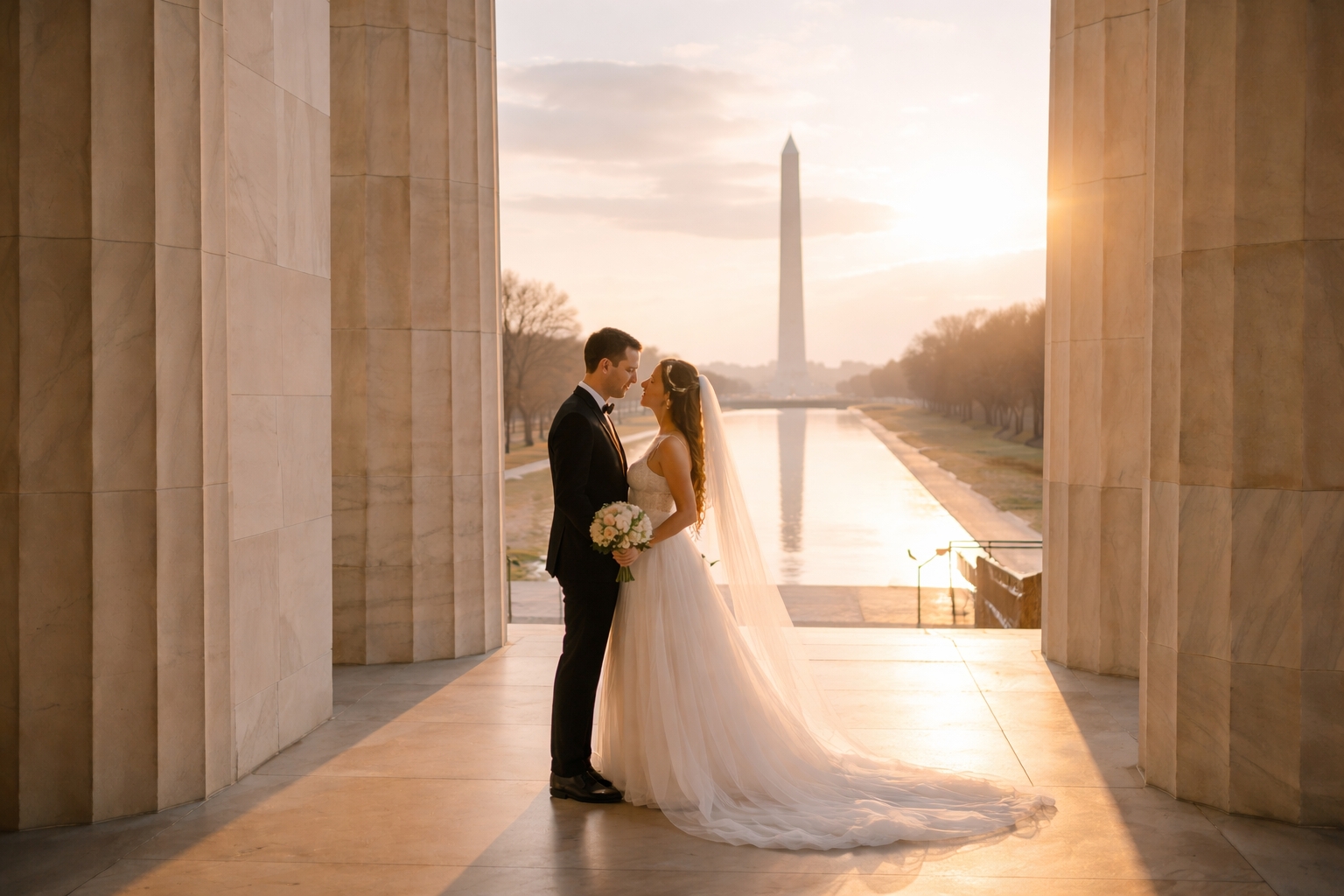
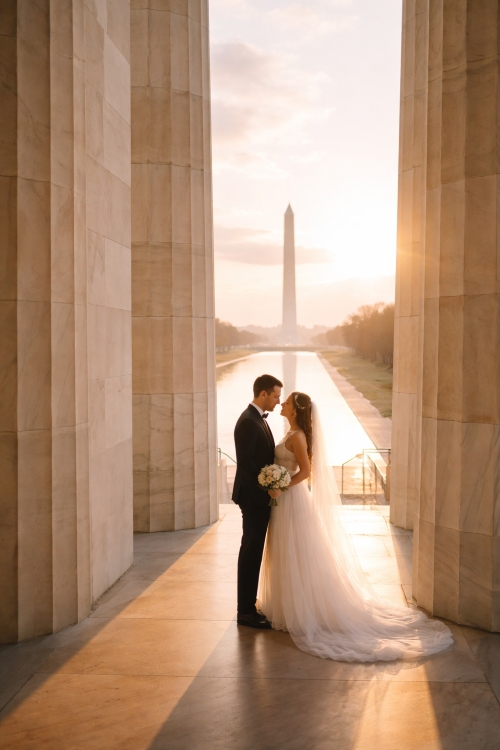
No other monument quite captures the gravitas of a first look like the Lincoln Memorial. The massive seated statue of Abraham Lincoln, flanked by Doric columns, looks out over the Reflecting Pool toward the Washington Monument. In 2026, the memorial gains new life with the opening of a 15,000‑square‑foot undercroft exhibit featuring floor‑to‑ceiling glass walls and an immersive theater. Construction is mostly hidden below ground, and the main chamber remains open, though a temporary accessibility ramp may affect framing.
Early morning is ideal here: soft light streams between the columns and reflects off the pool, illuminating the couple without casting harsh shadows. Sunset shoots are also dramatic, with warm hues bathing the memorial. Tripods and small lighting setups are generally allowed, but commercial shoots should confirm permit requirements with the National Park Service. The memorial’s broad steps and side colonnades offer multiple angles; just be prepared to share the space with tourists and cross‑country runners.
Jefferson Memorial
Across the Tidal Basin stands the domed Jefferson Memorial, whose circular colonnade and bronze statue of Thomas Jefferson create an elegant environment for first looks. The open rotunda allows light to bounce off white marble, producing flattering skin tones. A small side portico overlooks the water—perfect for a quiet moment when crowds are thick near the entrance. While minor repairs continue on the memorial in 2026, access to the interior remains open and no photography permit is required for personal shoots.
Visit during cherry blossom season for the quintessential DC image: petals framing the columns and shimmering water. Sunrise sessions guarantee fewer visitors. Avoid midday when the bright marble can blow out highlights. To the south of the memorial, a tucked‑away grove of trees offers shade and a different perspective for more intimate portraits.
Washington Monument
The 555‑foot Washington Monument serves as the mall’s visual axis. From the Lincoln Memorial steps, the obelisk reflects in the long pool; from its base, you’ll find sweeping views in every direction. While photographers can’t ascend the monument during private shoots, its iconic silhouette anchors wide‑angle shots and provides a minimalist contrast to more ornate sites. Pairing a first look here with a later session at a nearby garden or courtyard offers variety without added travel time.
Iconic Buildings with Grand Architecture
DC’s institutional buildings are masterpieces of classical and Beaux‑Arts design. They combine monumental scale with intricate detailing—perfect for couples who appreciate craftsmanship and historical symbolism.
Supreme Court
Across from the Capitol lies the Supreme Court, whose west façade faces the capitol complex. The entrance is approached by a 252‑foot‑long oval plaza lined with marble candelabras. Sixteen Corinthian columns support the portico, above which the phrase “Equal Justice Under Law” is carved. Sculptures by Robert Aitken depict Liberty enthroned and lawgivers like Moses and Confucius. The marble steps and symmetrical façade provide formal elegance, while the statues add allegorical depth. Couples can pose on the broad plaza or frame themselves beneath the inscription for a timeless declaration of partnership. Remember that photography inside the building is prohibited; outdoor areas are open but security guards may limit equipment during business hours.
Library of Congress (Thomas Jefferson Building)
The Library of Congress’ Thomas Jefferson Building resembles a palace from another era. Completed in 1897 and inspired by the Paris Opera House, it features a grand Beaux‑Arts design with marble, granite and bronze. A monumental stair rises from the Court of Neptune fountain to a portico supported by paired Corinthian columns, while a gilded dome and “Flame of Knowledge” crown the roof. This abundance of detail produces striking photo compositions: wide shots capture the ornate façade, while close‑ups of sculpted dolphins, seashells and literary inscriptions offer intimate vignettes. The interior rotunda may require special permission for photography, but the exterior steps and fountains are usually accessible. Late afternoon light brings out the building’s warm tones.
U.S. Capitol and Grounds
The U.S. Capitol isn’t just a seat of government—it’s also an Arboretum. The Architect of the Capitol maintains more than 4,800 trees across the campus, creating an urban forest that complements the marble dome. The interplay of architecture and nature is especially photogenic at sunrise and sunset, when the dome glows and long shadows fall across the lawns. The Capitol Reflecting Pool offers mirror‑like reflections at night. Because the area is patrolled by Capitol Police, tripods and commercial setups may require a permit; check regulations in advance. For a quieter first look, head to the Senate Parks or the Library of Congress vista behind the Capitol, where gardens and sculpture provide variety.
Artistic Museums and Light‑Filled Spaces
Museum interiors and courtyards offer shelter from unpredictable weather while providing breathtaking architecture. These locations showcase modern design and natural light, making them ideal for off‑season or rainy‑day shoots.
National Gallery of Art – East Building
When trustees of the National Gallery of Art sought an extension in the late 1960s, they turned to architect I.M. Pei. He created the East Building, a trapezoid formed from an isosceles and a right triangle that hugs Pennsylvania Avenue. Skylights composed of 25 tetrahedrons illuminate a soaring atrium filled with bridges, stairs and escalators, turning the space into a public park with trees and benches. The building’s lozenge‑shaped towers and geometric forms contrast sharply with the classical West Building across the street. For first‑look photos, arrive early to take advantage of morning light streaming through the skylights; the interplay of shadows across the marble floors creates dramatic compositions. The museum typically allows personal photography, but flash is prohibited.
Kogod Courtyard at the National Portrait Gallery
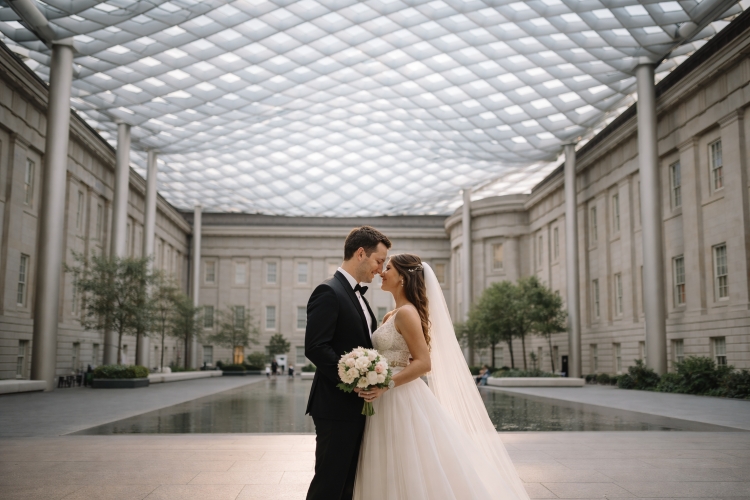
The Kogod Courtyard, shared by the Smithsonian American Art Museum and National Portrait Gallery, brings the outdoors inside. A wavy, glass‑and‑steel canopy designed by Foster + Partners spans the 28,000‑square‑foot courtyard, resting on eight aluminum‑clad columns. Natural light filters through the undulating roof, illuminating marble planters and shallow water scrims. The canopy allows year‑round enjoyment regardless of weather—a lifesaver for winter weddings or rainy spring days. The elegant double staircase and vaulted galleries leading into the courtyard date back to the building’s original use as the U.S. Patent Office. Photography is permitted for personal use; professional sessions should coordinate with museum staff. Midday light diffuses through the canopy, so you can schedule sessions outside the traditional golden hours.
Sacred and Gothic Splendor: Washington National Cathedral
Perched on Mount St. Alban, the Washington National Cathedral is the sixth‑largest cathedral in the world and a masterpiece of 14th‑century English Gothic design. Pointed arches, flying buttresses and boss stones (decorated keystones) support the soaring structure. More than 200 stained‑glass windows cast jewel‑tone colors across the nave; gargoyles and grotesques serve both decorative and functional purposes by directing rainwater away from the walls. The cathedral’s stone terraces and gardens provide a serene setting for first looks, while its interior spaces offer intimacy and grandeur. Because the cathedral also hosts religious services, photography must be scheduled in advance and may incur fees. For an ethereal vibe, plan a session just after sunrise when morning light pours through the great rose window onto the nave.
Tidal Basin & Parks of Reflection
Washington DC’s green spaces range from formal lawns to naturalistic gardens. They offer a slower pace and allow couples to immerse themselves in nature without leaving the city.
Tidal Basin & Cherry Blossoms
Every spring, nearly 3,800 Yoshino cherry trees around the Tidal Basin burst into bloom, drawing visitors worldwide. Peak bloom—the point when 70 percent of blossoms open—usually occurs in late March. In 2026, the National Park Service predicted peak bloom between March 29 and April 1, but an early warm spell accelerated it to March 26. The bud stages progress from green bud to puffy white over about two weeks, offering different moods for photography. For first looks, aim for the puffy white stage when petals are full but haven’t begun to fall.
Due to seawall reconstruction, part of the Tidal Basin path is closed, but alternative routes reveal new angles of the Washington Monument and Jefferson Memorial. Start at dawn to avoid crowds and capture sunrise colors reflecting off the water. Bring comfortable shoes; the full loop is about 2.1 miles. Because this area is public, no permit is required for small shoots, but be mindful of other visitors and any event signage.
Constitution Gardens & DC War Memorial
North of the Reflecting Pool lies Constitution Gardens, a landscaped park designed by Skidmore, Owings & Merrill and landscape architect Dan Kiley. Created in the 1970s for the Bicentennial, it features a four‑acre lake with a curving shoreline, winding paths and an island honoring the signers of the Declaration of Independence. The gardens were intended as a green retreat amid the granite monuments; grassy lawns, meadows and wildlife habitats create a tranquil environment. Couples can stroll along the water’s edge, cross a footbridge to the island or relax under mature trees. In fall, golden foliage contrasts with the mirror‑like surface of the lake.
Adjacent to the gardens stands the DC War Memorial, a circular, open‑air Doric structure built of Vermont marble. It measures 47 feet tall and 44 feet in diameter—large enough to house the U.S. Marine Band—and commemorates 499 District residents who died in World War I. Its fluted columns and domed roof evoke ancient temples, offering a unique setting for classical portraits. The memorial is rarely crowded, making it perfect for intimate first looks. Pathways were improved during a 2010 restoration to increase accessibility.
Meridian Hill Park
Also known as Malcolm X Park, Meridian Hill Park is a National Historic Landmark designed in the Italian Renaissance style. Its most striking feature is a 13‑basin cascading fountain—one of the longest in North America—descending from a terrace to a reflecting pool. The park also contains statues of Joan of Arc and a memorial to President James Buchanan, and it’s open until 9 pm in winter and midnight in summer. The upper level offers sweeping views of the city; the lower level features terraced gardens with Italian‑style balustrades. Because the park is popular for drum circles and picnics, weekday mornings are typically quieter. The cascading water and symmetrical stairs provide dynamic framing for couples seeking European flair without leaving DC.
Georgetown Waterfront Park
Stretching along the Potomac River from 31st Street to the Key Bridge, Georgetown Waterfront Park connects 225 miles of parkland. Completed in 2011, it features a labyrinth, seasonal fountain, pergolas, rain gardens and river steps used as seating for regattas. Accessible paths welcome cyclists, skaters and strollers. For first looks, the wide promenade and grassy hills provide unobstructed views of Roosevelt Island and the Arlington skyline. The park’s living “bio‑edge” stabilizes the shoreline and attracts wildlife, adding an organic element to photographs. Sunrise and sunset sessions offer dramatic reflections on the river and soft backlighting.
Yards Park
On the Anacostia River, Yards Park is a 5.4‑acre public space that serves as the heart of the Capitol Riverfront neighborhood. The park features a great lawn, dog run, boardwalk, shaded overlook, gardens and amphitheater. It’s best known for its sculptural pedestrian bridge and light tower, which glow after dark, and for its water features—the Dancing Fountains, canal basin and waterwall. These elements create playful opportunities for candid photos and reflections. Yards Park connects to the Anacostia Riverwalk Trail, so couples can explore the riverfront before or after their shoot. Keep in mind that the fountains operate seasonally and may be turned off in winter.
The Wharf
The redevelopment of Southwest DC has produced The Wharf, a vibrant waterfront neighborhood with piers and parks. Public spaces include Market Pier, Transit Pier, District Pier and Recreation Pier; the latter offers oversized games, swings, a fire pit and a free ferry to East Potomac Park. Seventh Street Park features a splash fountain and lush landscaping, while Waterfront Park provides willow trees and a bocce court. Couples can incorporate water views, urban art and playful elements like swings into their photos. Evening sessions are particularly lively when live music and string lights illuminate the boardwalk.
Neighborhood Charm and Markets
Away from the National Mall, Washington’s neighborhoods offer authenticity and a sense of community. Markets and alleys provide textures and colors that contrast with marble monuments.
Union Market District
The Union Market District pulses with culinary energy and industrial chic. According to the market’s official site, the district’s “authentic soul” can be felt in its people and architecture, and it serves as the epicenter of DC’s culinary creativity with more than sixty food partners. Pop‑up retail spaces and outdoor events keep the atmosphere lively. Photographers love the combination of exposed brick, murals and colorful vendor stalls, while couples appreciate the chance to grab a coffee or snack between shots. Plan sessions during off‑hours to avoid crowds and coordinate with vendors if you wish to shoot inside.
Eastern Market
Located in Capitol Hill, Eastern Market is one of the few historic public market buildings still operating as a market. Designed by architect Adolf Cluss and completed in 1873, it has served as a community hub for more than 150 years. The brick structure endured a major fire in 2007 but was restored and reopened in 2009. On weekends, outdoor stalls sell farm‑fresh produce and handmade crafts, bringing color and character to the cobblestone plaza. The North Hall, renovated in 2009, is a popular event venue. For first looks, the market’s arched windows, vintage signs and bustling ambiance create a warm backdrop. Arrive early before the crowds or visit on a weekday to capture the architecture unimpeded.
CityCenterDC (Palmer Alley)
For a modern, upscale vibe, explore CityCenterDC, a mixed‑use development downtown. Its pedestrian pathways are lined with designer boutiques and restaurants, and seasonal art installations transform the central walkway into a kaleidoscope of color. CityCenter’s official site calls the destination a visually stunning place where art and creativity are everywhere. In spring, the alley might be covered with a canopy of cherry blossom–inspired sculptures; in winter, glittering lights suspend overhead. The sleek architecture and reflective glass create contemporary compositions. Because the area is privately managed, be mindful of security and ask permission for extended shoots.
Hidden Gems and Stairways
Spanish Steps (Decatur Terrace Steps and Fountain)
Tucked between S Street and Decatur Place in the Kalorama neighborhood, the Spanish Steps evoke a European piazza. Built in 1911 during the City Beautiful movement, the broad concrete staircase features twin balustrade‑lined flights that curve around an oval basin with a lion‑head fountain. Magnolias, cedar and other trees line the terraces, and the steps are the only public park that occupies a city street. The space has been a favorite of fashion shoots and elopements thanks to its old‑world romance. Arrive at dawn to avoid residents walking dogs and to capture soft, warm light filtering through the trees. Because the site is small, a first look here pairs well with a second location in nearby Dupont Circle or Rock Creek Park.
Other Lesser‑Known Corners
While the Spanish Steps represent DC’s most famous staircase, other hidden corners can elevate your session. Consider the tucked‑away gardens behind the Smithsonian Castle, the covered walkway of the U.S. Botanic Garden (permits required), or even a friend’s rooftop overlooking the city skyline. The key is to blend meaningful spaces with photogenic elements such as brick alleys, wrought‑iron gates or murals. When scouting, look for diffused light, minimal foot traffic and features that align with your personal story.
Planning Your First Look: Practical Tips
Crafting the perfect first look involves more than picking a location. Here are some practical considerations to ensure your photos go smoothly and reflect your love story:
Timing and Light
- Golden hours: Aim for sunrise or the hour before sunset. Early morning light casts a soft glow and reduces crowds at major monuments. Sunset sessions add warmth and drama but may coincide with peak visitor times.
- Seasonal factors: Monitor the National Park Service’s cherry blossom forecast. Autumn foliage peaks in late October and early November; winter sessions can take advantage of holiday lights at CityCenterDC.
- Weather backups: Museums and covered courtyards like the Kogod Courtyard provide shelter if rain threatens. Permits may be required for indoor spaces.
Permits and Regulations
- National Mall permits: Small, non‑commercial photo sessions usually don’t require permits, but professional equipment (tripods, lights) may. For larger groups or setups, apply through the National Park Service.
- Capitol grounds: Tripods or staged photo shoots on the Capitol campus may require permission from Capitol Police. Check the U.S. Capitol Visitor Center for current rules.
- Religious sites: The National Cathedral and other sacred spaces often require advance booking and fees. Respect religious services and dress codes.
- Private venues: Neighborhood markets and CityCenterDC are privately operated; always ask management before staging an extensive shoot.
Crowds and Accessibility
- Construction updates: The Lincoln Memorial’s undercroft project limits some exterior access. Portions of the Tidal Basin path are closed for seawall repairs. Check official websites before your session.
- Accessibility: Sites like Constitution Gardens offer level paths; others, such as Meridian Hill Park’s upper level, require navigating stairs. Consider your attire and mobility needs.
- Peak times: Weekends, holidays and major events (Fourth of July concerts, marathon runs) draw large crowds. Plan around them.
Incorporating Your Story
- Personal significance: Choose locations tied to your relationship—perhaps the restaurant where you had your first date (Union Market), the neighborhood where you live (Capitol Hill), or a shared hobby (kayaking from The Wharf).
- Multiple backdrops: DC’s compact footprint allows you to visit several locations in one session. Pair an iconic monument with a hidden garden or market to tell a fuller story.
- Attire and props: Coordinate clothing with the environment. Long trains complement marble steps; casual outfits match colorful markets. Simple props like bouquets or handwritten letters add intimacy.
FAQs
Where can we take first‑look photos in Washington DC without crowds?
Arrive at sunrise or on weekday mornings at major monuments like the Lincoln Memorial and Jefferson Memorial. Hidden spots such as the DC War Memorial, Constitution Gardens and the Spanish Steps also tend to be quieter.
Do we need a permit for wedding photos at the National Mall?
For small, personal shoots using handheld cameras, permits aren’t required. If you plan to use tripods, lighting, or have a large group, contact the National Park Service for a permit.
What is the best time to photograph the cherry blossoms?
Peak bloom dates vary, but late March is typical. In 2026, blossoms peaked on March 26. The “puffy white” stage right before peak bloom offers full flowers without heavy crowds.
How will construction at the Lincoln Memorial affect our photos?
The main chamber remains open, but the outer perimeter and some columns are closed off during the undercroft renovation. A temporary ramp may be visible. Check the NPS website for updates.
Are indoor options available if it rains?
Yes. Consider the Kogod Courtyard, the National Gallery’s East Building atrium or the covered alleys of Union Market. Always verify photography policies before your shoot.
Can we use a professional photographer at these sites?
Absolutely. Many photographers specialize in DC engagements. Discuss desired locations with your photographer so they can advise on permits, lighting and timing.
Which locations are best for a fall or winter first look?
Constitution Gardens offers vibrant fall foliage, while CityCenterDC and The Wharf glow with holiday lights. Museums and indoor courtyards provide warmth and shelter during colder months.
Are pets allowed during our photo session?
Most outdoor parks allow leashed pets, but indoor spaces like the National Gallery of Art and Kogod Courtyard do not. Always check specific site regulations.
Closing Thoughts
Washington DC offers a tapestry of settings for first‑look photos, from majestic monuments and awe‑inspiring architecture to intimate gardens and lively markets. In 2026, the nation’s capital will be buzzing with celebration, restoration and renewal. Whether you’re embracing the excitement of the semiquincentennial or simply seeking a timeless backdrop for your love story, the city’s blend of history and modernity can make your first look unforgettable. To plan an experience as extraordinary as your relationship, explore the possibilities at Hotel Washington and make the most of DC’s iconic and hidden treasures.
Read other posts