Washington DC Cherry Blossom Viewing Spots 2026: The Complete Guide
Cherry blossom season in Washington, D.C. isn’t just a time to take photos of delicate blooms; it’s a story woven through history, diplomacy and local tradition. Each spring, thousands of flowering cherry trees erupt in shades of pink and white around the capital’s monuments and parks, drawing travelers from around the world. In 2026 the city will be buzzing with energy as the United States celebrates its 250th anniversary, making the National Cherry Blossom Festival particularly festive. Planning a trip to see the blossoms involves more than picking a weekend at random; weather, timing and location play huge roles in experiencing the petals at their peak. This comprehensive guide explains when the cherry trees bloom, highlights the best viewing spots across the District, unpacks the history and symbolism of the trees, and offers tips for making the most of your visit. Whether you’re a first‑time visitor or a seasoned local, you’ll discover new ways to immerse yourself in one of Washington’s most beloved rituals.
Understanding Peak Bloom in 2026
Before diving into the District’s many viewing spots, it’s important to understand peak bloom — the brief period when roughly 70 percent of the Yoshino cherry blossoms around the Tidal Basin have opened. The National Park Service notes that peak bloom typically occurs in late March or early April, but the exact timing varies each year. Extraordinary warm or cold spells have pushed peak bloom as early as March 15 (1990) and as late as April 18 (1958). Predictions are not reliable more than 10 days in advance, so travelers should monitor forecasts as the season approaches.
For 2026, the National Park Service’s early forecast estimates that peak bloom will fall between March 28 and March 31. This window coincides with the National Cherry Blossom Festival, scheduled from March 20 through April 12, 2026. While the blossoms’ peak often lasts only four to ten days, the festival spans several weeks with parades, kite festivals, art installations and cultural celebrations. It’s wise to build flexibility into your schedule, as weather can shorten or extend bloom periods.
Why Timing Matters
Peak bloom is fleeting because the delicate petals respond quickly to weather. Cool, calm days can extend the bloom, while heavy rain or wind may strip the branches within hours. In recent decades the blossoms have been trending earlier, a shift some researchers attribute to changing climate patterns. If you can’t travel during the peak dates, don’t worry — different varieties bloom at different times. Yoshino trees dominate the Tidal Basin and National Mall, while Kwanzan cherries in East Potomac Park and Hains Point typically burst two weeks later. The U.S. National Arboretum hosts dozens of species with staggered bloom times, ensuring flowers throughout spring.
Top Cherry Blossom Viewing Spots in Washington, D.C.
Springtime transforms the District into a patchwork of petal‑lined paths, reflecting pools and hidden gardens. Each site offers a unique perspective on the blossoms and the city’s landmarks. The following sections introduce the most popular and off‑the‑beaten‑path spots, beginning with the iconic Tidal Basin and moving beyond to lesser‑known gems.
Tidal Basin – The Iconic Loop
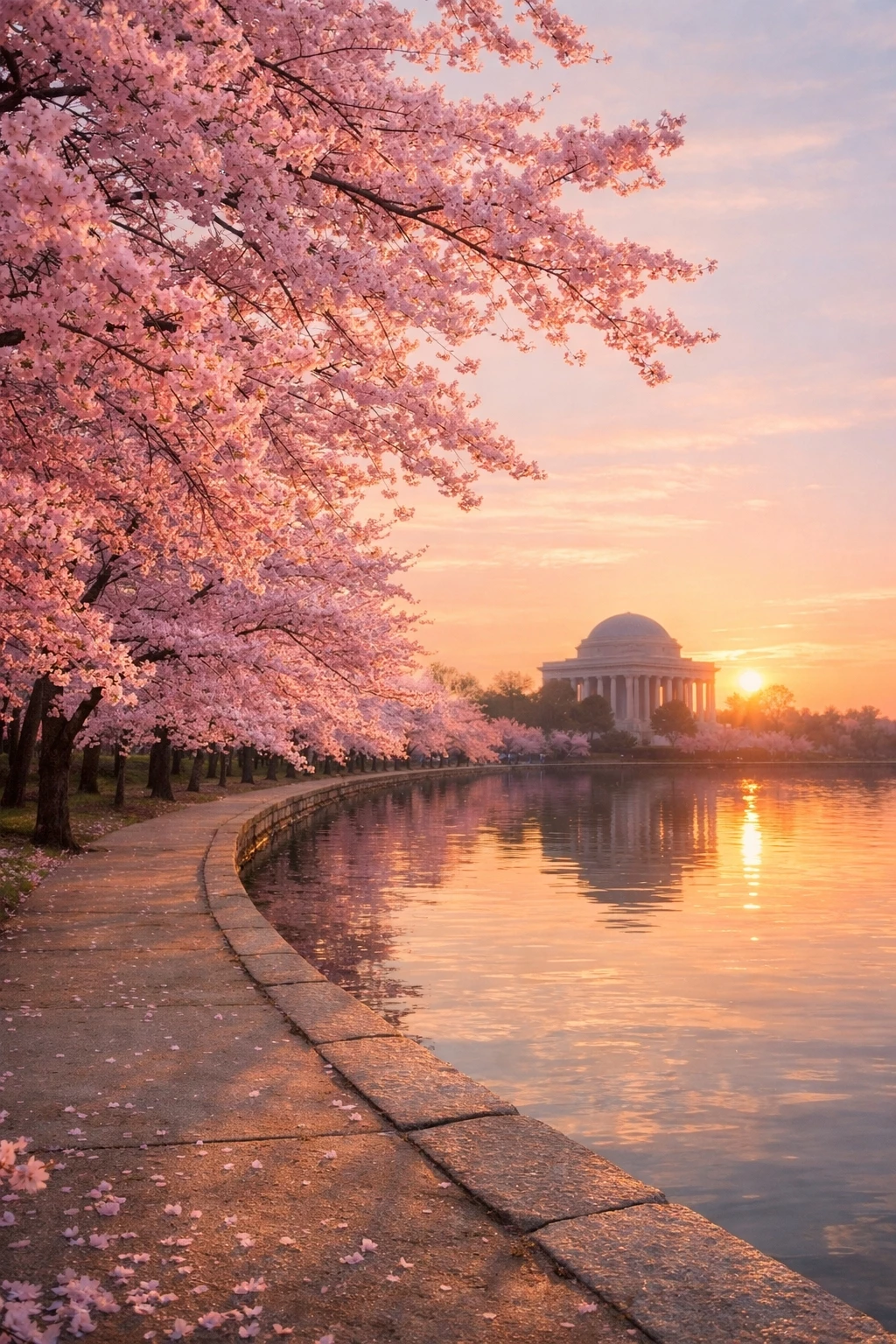
The Tidal Basin is the epicenter of cherry blossom viewing for good reason. The 2.1‑mile loop trail wraps around the water and is lined with nearly 4,000 cherry trees, offering uninterrupted views of the blossoms against a backdrop of marble memorials. The loop is level and wheelchair‑accessible, with accessible restrooms and parking near the Franklin Delano Roosevelt and Jefferson Memorials. As you stroll or cycle around the basin, you’ll see the Washington Monument, Thomas Jefferson Memorial, Martin Luther King Jr. Memorial and Franklin Delano Roosevelt Memorial reflected in the calm water. Paddleboats are available for rent during late spring, summer and early fall, but during peak bloom you’ll want to arrive early to avoid crowds and closures due to seawall repairs.
Highlights of the Tidal Basin
-
Monumental views: The loop offers views of the Washington Monument, Jefferson Memorial and Martin Luther King Jr. Memorial.
-
Accessible path: A level, paved trail suitable for wheelchairs and strollers, with accessible parking and restrooms.
-
Paddleboats: Rentals allow you to admire blossoms from the water (availability depends on season).
-
Japanese Pagoda & Lantern: Symbols of friendship between Japan and the United States, tucked along the trail.
-
Optimal times: Sunrise or weekday mornings offer the best light and fewer visitors; midday and afternoons can be very crowded.
National Mall & Washington Monument Grounds
Beyond the Tidal Basin, the National Mall features rows of cherry trees framing the nation’s most recognizable landmarks. Near the base of the Washington Monument, trees form pastel drifts, creating picture‑perfect vistas. The open lawns provide plenty of space for picnics, and there’s often live music or fitness events during festival weekends. Because the Mall stretches roughly 2.5 miles from the Lincoln Memorial to the U.S. Capitol, it’s a great place to wander and encounter blossoms outside the main crowds. Keep an eye out for the Smithsonian Gardens and the Hirshhorn Museum Sculpture Garden, where flowering cherries mingle with magnolias and tulips.
U.S. Capitol Grounds
On the west lawn of the U.S. Capitol, Yoshino and Kwanzan cherry trees bloom against the backdrop of the Capitol Dome. This area is quieter than the Tidal Basin and provides striking photo opportunities, especially at sunset when the dome glows. The grounds are open to the public during daylight hours; visitors can walk along Constitution Avenue or take a guided tour. Because security is present, be prepared for bag checks at entrances.
East Potomac Park & Hains Point
East Potomac Park sits on a peninsula that juts into the Potomac River. The Hains Point Loop Trail, a 4.1‑mile path around the park’s perimeter, is lined with nearly 500 Kwanzan cherry trees. Kwanzan trees bloom about two weeks after Yoshinos, producing dense, frilly blossoms in shades of deep pink. This makes the park an excellent alternative if you miss the main peak at the Tidal Basin. There is ample parking along Ohio Drive, picnic areas, a golf course and a playground, making it ideal for families. Cycling is popular here because the paths are wide and less crowded than those around the Tidal Basin. Note that some sections may close during peak festival weekends; consider visiting at sunrise for serenity.
U.S. National Arboretum
A short drive northeast of downtown, the U.S. National Arboretum encompasses 446 acres and displays a wide variety of cherry tree species. Visitors can take a self‑guided cherry tree tour by downloading the Arboretum’s app, which outlines a 3‑mile loop accessible by car, bike or on foot. Because the Arboretum hosts many species, blooms occur at different times; some trees flower in early March, while others bloom well into April. Highlights include the National Capitol Columns, 22 Corinthian columns that once supported the U.S. Capitol’s east portico. The grounds are best reached by car or rideshare since public transit options are limited.
Arboretum Insider Tips
-
Extended bloom window: Different species bloom throughout spring.
-
Self‑guided tour: Download the free app for a narrated tour of cherry varieties.
-
Capitol Columns: Visit the historic columns for dramatic photos.
-
Getting there: Driving or using a taxi is the most convenient option.
Kenilworth Park & Aquatic Gardens
For a serene escape, head to Kenilworth Park & Aquatic Gardens in Northeast D.C. This national park features cherry blossoms alongside ponds filled with water lilies and lotuses. It’s one of the few places in the region where you can see aquatic plants and flowering cherry trees in the same setting. Paths wind through marshland habitats, and boardwalks offer views of marsh birds. Because it’s farther from downtown, crowds are thinner. Bring binoculars to spot herons and ospreys while enjoying blossoms. (Link to NPS: Kenilworth Park & Aquatic Gardens)
Dumbarton Oaks Gardens
Nestled in Georgetown, Dumbarton Oaks features terraced landscapes where cherry trees mingle with wisteria and magnolias. The Cherry Hill section is particularly enchanting during peak bloom. From November 1 to March 14, the gardens are open Tuesday through Sunday from 2 to 5 p.m., and admission is free; from March 15 to October 31, hours extend to 6 p.m. and tickets cost $7. Tickets must be purchased in advance because none are sold at the gate. Strolling through these manicured spaces feels like stepping into a European estate.
Basilica of the National Shrine of the Immaculate Conception
The Basilica of the National Shrine of the Immaculate Conception hosts about 150 cherry trees. Their pale blossoms contrast beautifully with the Byzantine‑Romanesque architecture of the shrine. Located in the Brookland neighborhood, the basilica is accessible via the Red Line at Brookland–CUA Metro station, though driving may be quicker. The spacious lawns are ideal for quiet reflection and picnics.
Congressional Cemetery
For a contemplative experience, visit the historic Congressional Cemetery. Once a burial ground for notable Americans, today it doubles as an arboretum with cherry blossoms adorning its pathways. Because it’s off the typical tourist circuit, you’ll find fewer people and a peaceful atmosphere. The cemetery sits along the Anacostia River in Southeast D.C.; donations support preservation efforts and visitors are asked to respect the site’s solemnity. (Link to official site: Congressional Cemetery)
Washington National Cathedral Grounds
High on a hill in northwest D.C., the grounds of the Washington National Cathedral are dotted with cherry trees whose blossoms frame gothic towers. Springtime tours often include walks through the Bishop’s Garden, where daffodils, tulips and dogwoods complement the cherries. The Cathedral is free to visit outdoors, though interior tours require tickets. The height of the site offers sweeping views across the city.
Additional Spots Across the District
Cherry blossoms appear in parks and neighborhoods throughout Washington. Stanton Park on Capitol Hill features playgrounds and a ring of cherry trees. Smaller parks like Rawlins Park in Foggy Bottom and Meridian Hill Park in Columbia Heights boast early‑blooming cultivars. Georgetown Waterfront Park offers riverside views of the Key Bridge and clusters of cherries along its promenade. Even outside downtown, communities in Maryland and Virginia – such as Old Town Alexandria – showcase blossoms along brick sidewalks and historic homes.
Cherry Blossom Festival & Events
The National Cherry Blossom Festival celebrates the city’s floral heritage and spans multiple weeks of programming. The 2026 festival runs from March 20 to April 12. Highlights include:
-
Opening Ceremony (March 21, 2026): An evening of music, dance and cultural performances that honors the historic friendship between the United States and Japan.
-
Blossom Kite Festival: Held on the Washington Monument grounds, this family‑friendly event invites visitors to fly kites under a canopy of blossoms.
-
Parade (April 11, 2026): Floats, marching bands and performers march along Constitution Avenue.
-
Petalpalooza: A day‑long celebration at the Wharf featuring live music, art installations and a fireworks finale.
-
Art in Bloom: Artists display larger‑than‑life cherry blossom sculptures around the city.
Many festival events are free and open to the public. Because schedules can change, check the official festival website for updates and details.
History and Symbolism of Washington’s Cherry Trees
The story of D.C.’s cherry blossoms begins with a vision in the late 19th century. After visiting Japan, writer and diplomat Eliza Ruhamah Scidmore dreamed of planting Japanese cherry trees along the Potomac River. She proposed the idea in 1885 and lobbied for decades. In 1906 botanist David Fairchild imported 1,000 cherry trees and planted them on his property in Chevy Chase. The breakthrough came in 1909 when Scidmore wrote to First Lady Helen Taft, who supported the idea. In 1912 Japan gifted 3,020 cherry trees to Washington, D.C. as a gesture of friendship. First Lady Taft and Viscountess Chinda planted the first two trees on the north bank of the Tidal Basin on March 27, 1912. The annual festival began in 1935 and has grown into a major cultural event.
Cherry blossoms symbolize renewal and the fleeting nature of life. In Japanese culture, the brief bloom period is associated with the beauty of impermanence. The National Cherry Blossom Festival honors the enduring friendship between Japan and the United States, and the tradition of hanami (flower viewing) is echoed in the crowds that gather along the Basin each spring.
Cherry Blossom Varieties and Bloom Times
Several cherry species contribute to Washington’s spring spectacle. Understanding the differences can help you plan visits across the season.
| Variety | Bloom Timing | Characteristics |
|---|---|---|
| Yoshino | Late March–early April | Single pale pink to white blossoms; most common around the Tidal Basin; peak bloom defines festival timing. |
| Kwanzan | Early–mid April (about two weeks after Yoshinos) | Double, deep‑pink blossoms; abundant in East Potomac Park and Hains Point. |
| Okame | Early March | Small, deep‑pink flowers that bloom before Yoshinos; found in some urban plantings. |
| Weeping Cherry (Pendula) | Mid March–early April | Graceful, drooping branches laden with white or pink blossoms; planted in small clusters around memorials. |
| Other cultivars (e.g., Fugenzo, Shirofugen, Sargent) | April–May | Vary in color from blush to bright pink; can be seen in the National Arboretum and residential neighborhoods. |
Planning Your Visit – Practical Tips
Choose the Right Dates
Use the National Park Service’s forecast as a guide but stay flexible. Peak bloom predictions are refined as temperatures fluctuate, and blossoms can be early or late. If you have limited flexibility, plan for the festival’s mid‑point (around the last week of March) and monitor daily updates from the Bloom Cam and the NPS. Consider visiting both early and late bloom locations: start at the Tidal Basin for Yoshinos, then head to East Potomac Park or the National Arboretum to see later‑blooming species.
Beat the Crowds
-
Arrive at sunrise: Early morning light is gorgeous for photography, and crowds are thinner.
-
Visit on weekdays: Weekends draw larger numbers, so midweek visits provide breathing room.
-
Use alternative entrances: Avoid bottlenecks by entering the Tidal Basin near the FDR Memorial or East Potomac Park; some sections will be closed for seawall repairs.
-
Explore lesser‑known spots: Places like Kenilworth Park, Congressional Cemetery and the National Arboretum offer tranquility even during peak bloom.
Transportation and Parking
Parking near the Tidal Basin is limited. Public transit is often the fastest way to get around: take the Metro to Smithsonian, L’Enfant Plaza or Arlington Cemetery stations; ride Capital Bikeshare for flexibility; or hop on the DC Circulator bus. For East Potomac Park and the National Arboretum, driving or ridesharing is convenient. If you bring a car, check road closures and detours. The National Park Service sometimes changes traffic patterns during festival weekends.
Etiquette and Preservation
The cherry trees are fragile living gifts. Follow these guidelines to protect them:
-
Do not pick blossoms or branches; enjoy them with your eyes and camera.
-
Stay on paths and avoid stepping on roots or climbing trees.
-
Dispose of trash responsibly, or take it with you. Litter can harm wildlife.
-
Respect memorials and cemeteries, especially at sites like the Congressional Cemetery where people are laid to rest.
Photography Tips
Capturing the blossoms’ beauty requires planning and patience. For ethereal shots, arrive before dawn to catch the soft light over the Tidal Basin or East Potomac Park. Use a wide‑angle lens to frame trees with monuments like the Jefferson Memorial or Washington Monument in the background. To isolate blossoms, try a macro or telephoto lens and shoot upward against the sky. Overcast days can produce diffused light that highlights petal details. Bring waterproof footwear; muddy conditions are common after rain. And remember to look up from your camera and savor the moment.
Staying Near the Blossoms – Why Location Matters
Because cherry blossom season draws millions of visitors, choosing lodging close to the festivities can save time and stress. The Hotel Washington is uniquely positioned at the edge of the White House lawn, making it one of the closest hotels to the nation’s executive mansion. From its rooftop or a short walk along 15th Street, guests can easily reach the Tidal Basin, National Mall and downtown attractions. Staying in the heart of the city allows you to watch sunrise at the blossoms, return to your room for a leisurely breakfast and venture out again for evening events.
The hotel’s proximity also offers a distinct perspective on the Tidal Basin. From Lafayette Square you can see the dome of the Jefferson Memorial framed by cherry trees, while a quick stroll through President’s Park reveals pockets of blossoms near the Washington Monument. Guests can join guided tours departing from nearby points, rent bicycles or simply meander on foot to East Potomac Park. After a day of blossom viewing, the hotel’s historic architecture and modern amenities provide a tranquil retreat.
Frequently Asked Questions
How long do the cherry blossoms last?
The full blooming period can span several days to two weeks depending on weather. Yoshino blossoms typically peak for a few days, while late‑blooming varieties like Kwanzan can extend the display.
What is peak bloom?
Peak bloom occurs when about 70 percent of Yoshino cherry blossoms around the Tidal Basin are open. It’s the focal point of festival celebrations and is predicted by the National Park Service, though the exact dates vary year to year.
When will peak bloom occur in 2026?
Early forecasts suggest peak bloom will fall between March 28 and March 31, 2026, though predictions may shift with weather.
Are festival events free?
Many National Cherry Blossom Festival events — including the parade and kite festival — are free and open to the public. Some ticketed experiences, such as tea tastings or art performances, require purchase.
Which spots are best for avoiding crowds?
The U.S. National Arboretum, Kenilworth Park, Congressional Cemetery and Dumbarton Oaks Gardens are typically less crowded than the Tidal Basin, especially on weekdays. Visiting Hains Point after the main peak also reduces congestion.
What if I miss peak bloom?
Visit East Potomac Park or the National Arboretum, where later‑blooming species extend the season. Kwanzan trees can bloom into mid‑April, and the Arboretum hosts varieties that flower into May.
Why are cherry blossoms important culturally?
The trees symbolize the enduring friendship between Japan and the United States and embody the Japanese concept of appreciating impermanence. The annual festival honors this heritage through cultural performances and educational programs.
Is the Tidal Basin accessible?
Yes. The trail is level and wheelchair‑accessible with accessible parking and restrooms near the memorials. Public transportation and bike‑share programs make it easy to reach.
Final Thoughts
Washington, D.C.’s cherry blossoms offer more than fleeting beauty; they reveal stories of diplomacy, community and the rhythms of nature. Each viewing spot — from the iconic Tidal Basin to the hidden paths of Congressional Cemetery — provides a different lens on the city and its heritage. With thoughtful planning, you can experience blossoms across their entire bloom cycle, learn about their history and participate in celebrations that unite visitors and residents alike.
As spring approaches, start monitoring bloom forecasts, sketch out a flexible itinerary and dream of walking beneath petals swirling like confetti. When you’re ready to experience the blossoms in person, staying within walking distance at a centrally located hotel makes all the difference. Nestled at the edge of the White House lawn, Hotel Washington offers easy access to the Tidal Basin, National Mall and the many neighborhoods that come alive with blossoms. Book a stay at The Hotel Washington and let your cherry blossom adventure begin.
Entity References
| Entity | Authoritative Link |
|---|---|
| National Cherry Blossom Festival | https://nationalcherryblossomfestival.org |
| Tidal Basin | https://www.nps.gov/thingstodo/tidal-basin.htm |
| National Mall and Memorial Parks | https://www.nps.gov/nama/index.htm |
| Washington Monument | https://www.nps.gov/wamo/index.htm |
| Thomas Jefferson Memorial | https://www.nps.gov/thje/index.htm |
| Martin Luther King Jr. Memorial | https://www.nps.gov/mlkm/index.htm |
| U.S. National Arboretum | https://www.usna.usda.gov |
| East Potomac Park & Hains Point | https://www.nps.gov/nama/planyourvisit/hains-point-loop.htm |
| Kenilworth Park & Aquatic Gardens | https://www.nps.gov/keaq/index.htm |
| Dumbarton Oaks Gardens | https://www.doaks.org/visit/gardens |
| Basilica of the National Shrine of the Immaculate Conception | https://www.nationalshrine.org |
| Congressional Cemetery | https://congressionalcemetery.org |
| Washington National Cathedral | https://cathedral.org |
| Metro (WMATA) | https://www.wmata.com |