Washington DC Botanical Garden – A Complete Guide to the United States Botanic Garden
The Washington DC botanical garden – officially known as the United States Botanic Garden – is one of the most historic living plant museums in the United States. Located at the eastern end of the National Mall near the U.S. Capitol, the garden is a free public attraction featuring tropical plants, desert landscapes, rare orchids, seasonal flower displays, and beautifully designed outdoor gardens.
The United States Botanic Garden serves as a living museum dedicated to plant conservation, botanical research, and environmental education. Visitors can explore climate-controlled conservatories, outdoor landscapes, and horticultural collections representing ecosystems from around the world – all within walking distance of some of Washington DC’s most iconic landmarks.
For travelers exploring the National Mall, the botanical garden provides a rare moment of calm and greenery amid the monuments and museums that define the nation’s capital.
A Historic Botanical Garden in the Heart of Washington DC
Few attractions in Washington DC combine history, science, and natural beauty the way the United States Botanic Garden does. The institution traces its origins back to the early 1800s when Congress established a national garden intended to collect, study, and display plants from around the world.
Today the garden remains one of the oldest continuously operating botanic gardens in North America and serves as a center for plant conservation and environmental education. It operates under the supervision of the Architect of the Capitol and supports global efforts to protect plant biodiversity.
Unlike traditional parks, a botanical garden functions as a living museum. Plants are carefully curated, documented, and displayed to illustrate ecological systems, agricultural history, medicinal uses, and ornamental horticulture.
Inside the conservatory, visitors experience a journey through different climates and ecosystems without leaving Washington DC.
Highlights of the botanical garden experience include
• Tropical rainforest plants and towering palms
• Desert cacti and succulents
• Rare orchids and flowering plants
• Medicinal and economic plant displays
• Seasonal floral exhibits
The result is an immersive environment that blends science, education, and natural beauty within one of the most visited cultural districts in the United States.
Where the Washington DC Botanical Garden Is Located
The United States Botanic Garden sits along the National Mall, directly adjacent to the United States Capitol complex.
Visitors will find the garden steps from the United States Capitol, placing it within easy walking distance of many of Washington DC’s most famous monuments, museums, and cultural landmarks.
This central location makes the garden a natural stop during a day exploring the National Mall.
Nearby landmarks include
• National Mall
• Smithsonian Institution museums
• Washington Monument
• The White House
The botanical garden acts as a green oasis between Washington DC’s political landmarks and its world-famous museum district.
For visitors walking between the Capitol and the Washington Monument, the garden provides a refreshing pause filled with greenery, fragrance, and quiet reflection.
What to See Inside the United States Botanic Garden Conservatory
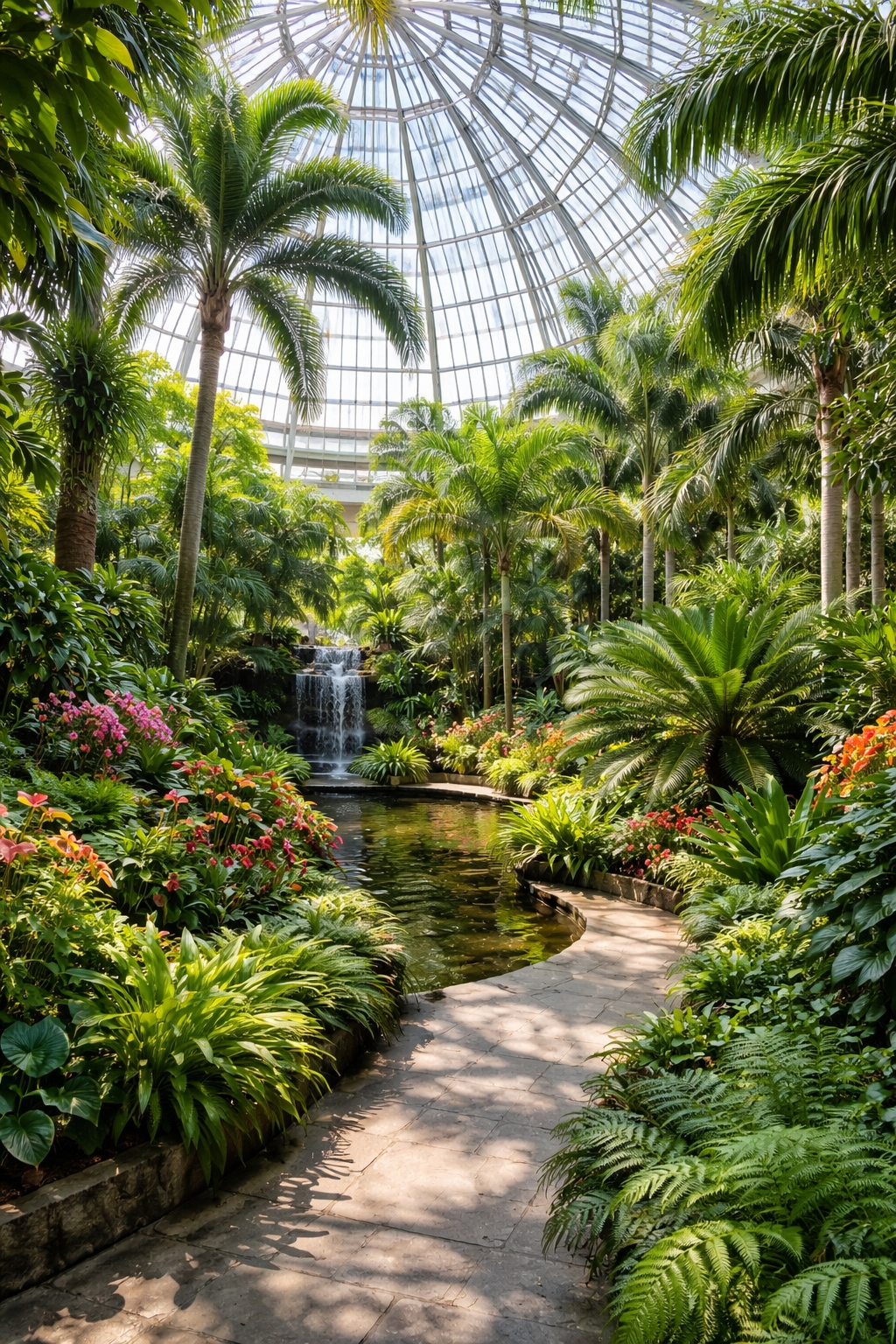
The conservatory is the centerpiece of the botanical garden. Its glass-domed structure houses multiple indoor gardens, each representing different climates and ecosystems.
Stepping inside the conservatory is like entering a global botanical journey.
Warm air, dense foliage, and cascading plants create a tropical environment that feels far removed from the urban landscape outside.
Major indoor exhibits include
Tropical Rainforest Garden
The tropical garden recreates humid rainforest conditions with towering palms, flowering vines, and lush vegetation.
Visitors encounter
• Banana plants
• Cocoa trees
• Tropical orchids
• Giant palms
These plants illustrate the biodiversity of tropical ecosystems and highlight the economic importance of rainforest agriculture.
Desert Garden
In sharp contrast to the tropical environment, the desert garden features plants adapted to extreme dryness.
Expect to see
• Tall columnar cacti
• Succulents from Africa and the Americas
• Aloe species
• Desert flowering plants
The exhibit demonstrates how plants survive harsh climates using water storage, specialized leaves, and protective structures.
Orchid Collection
Orchids are among the most celebrated plants in the garden.
Seasonal orchid displays showcase hundreds of species known for their intricate shapes and vibrant colors.
The collection highlights the diversity of orchid species found across tropical forests worldwide.
Medicinal and Economic Plants
Plants have shaped human history through agriculture, medicine, and trade.
The botanical garden features exhibits exploring how plants contribute to everyday life.
Examples include
• Coffee plants
• Vanilla orchids
• Cotton
• Rubber trees
These displays connect botanical science with the history of global commerce and agriculture.
Outdoor Gardens at the United States Botanic Garden
Beyond the conservatory, visitors will discover beautifully designed outdoor landscapes surrounding the botanical garden complex.
Two of the most notable outdoor areas include the National Garden and Bartholdi Park.
National Garden
The National Garden extends the botanical experience outdoors with themed plant landscapes.
Visitors can explore
• Rose gardens
• Pollinator gardens
• Regional plant collections
• Water features
These gardens illustrate the beauty and ecological importance of native and ornamental plants.
Seasonal blooms make the National Garden particularly popular in spring and early summer.
Bartholdi Park
Located just across Independence Avenue, Bartholdi Park functions as a horticultural demonstration garden.
The park surrounds the historic Bartholdi Fountain and showcases sustainable landscaping practices.
Visitors will see
• Rain gardens
• Native plant habitats
• Pollinator-friendly plantings
• Innovative urban garden design
This area highlights how botanical research can influence urban landscapes and sustainable gardening practices.
Why the Botanical Garden Is One of the Most Peaceful Places in Washington DC
Washington DC is known for its grand monuments, bustling museums, and constant flow of visitors.
The botanical garden offers a very different experience.
Inside the conservatory, visitors step into an environment defined by greenery, warm air, and the soft sounds of water and rustling leaves.
Natural light filters through the glass dome while plants tower overhead.
The contrast with the surrounding city creates a uniquely tranquil atmosphere.
Many travelers describe the botanical garden as
• One of the most relaxing attractions on the National Mall
• A hidden gem among Washington DC museums
• A peaceful break from crowded monuments
• A refreshing indoor attraction during winter
Because admission is free and the garden remains open year-round, it continues to attract visitors seeking a quiet moment in the nation’s capital.
Best Time to Visit the Washington DC Botanical Garden
The botanical garden is open throughout the year, making it an excellent destination regardless of season.
However, the experience changes depending on when you visit.
Spring
Spring brings vibrant blooms to the outdoor National Garden and seasonal flower displays inside the conservatory.
Summer
Summer highlights lush tropical growth and flourishing outdoor gardens.
Fall
Autumn introduces changing foliage and seasonal plant displays.
Winter
Winter may be the most surprising time to visit.
While Washington DC’s outdoor landscapes become dormant, the conservatory remains filled with tropical plants and warm air, offering a welcome escape from colder weather.
Many visitors also come during the holiday season to see special plant-themed displays.
Other Attractions Near the Washington DC Botanical Garden
Because of its location on the National Mall, the botanical garden sits near some of the most famous attractions in the United States.
Visitors can easily combine a trip to the garden with stops at nearby museums and monuments.
Popular nearby attractions include
• Smithsonian National Air and Space Museum
• National Museum of American History
• National Museum of Natural History
These museums, along with monuments across the National Mall, make the botanical garden part of a larger cultural and educational experience.
Visitors often spend an entire day exploring this area of Washington DC.
Planning Your Visit to the United States Botanic Garden
Before visiting the garden, it helps to know a few practical details.
Key visitor information
Admission
Free
Location
National Mall near the U.S. Capitol
Average visit duration
45 minutes to 90 minutes
Accessibility
Fully accessible for wheelchairs and strollers
Photography
Allowed for personal use
Because of its central location, the botanical garden is easily reached by walking, metro, or public transportation.
Where to Stay When Visiting the Washington DC Botanical Garden
Exploring the National Mall often involves a full day of walking between museums, monuments, and historic landmarks.
Staying nearby allows visitors to experience these attractions more comfortably and return to their hotel between excursions.
Travelers searching for accommodations near the botanical garden frequently look for hotels that combine location, history, and modern luxury.
One of the most notable options is Hotel Washington.
Hotel Washington is widely recognized as the closest hotel to the White House, positioned at the edge of the White House Lawn.
Its location places guests within walking distance of
• The White House
• The National Mall
• The Washington Monument
• The Smithsonian museums
From this vantage point, visitors can explore Washington DC’s cultural and historic core while staying at one of the city’s most iconic luxury hotels.
The property also offers sweeping rooftop views of the capital’s monuments and skyline, creating an unforgettable perspective of the city.
Frequently Asked Questions
What is the botanical garden in Washington DC called
The botanical garden in Washington DC is called the United States Botanic Garden. It is a living plant museum located on the National Mall near the U.S. Capitol.
Is the United States Botanic Garden free
Yes. Admission to the United States Botanic Garden is completely free for visitors.
Where is the Washington DC botanical garden located
The United States Botanic Garden is located on the National Mall near the United States Capitol in Washington DC.
How long does it take to visit the botanical garden
Most visitors spend between 45 minutes and 90 minutes exploring the conservatory and surrounding outdoor gardens.
What plants can you see at the botanical garden
Visitors can see tropical rainforest plants, desert cacti, orchids, medicinal plants, economic crops, and seasonal flower displays.
Is the botanical garden open year round
Yes. The conservatory is open throughout the year, making it a popular indoor attraction during colder months.
Discover the Botanical Beauty of Washington DC
The Washington DC botanical garden offers a rare blend of natural beauty, scientific discovery, and peaceful reflection in the heart of the nation’s capital.
From towering tropical palms to delicate orchids and carefully designed outdoor landscapes, the United States Botanic Garden provides visitors with an unforgettable botanical experience just steps from the National Mall.
For travelers planning a visit to Washington DC, exploring the botanical garden offers a chance to experience the quieter, greener side of the city while remaining close to its most iconic landmarks.
Visitors looking to stay near the National Mall can learn more about accommodations, rooftop views, and downtown experiences at
www.thehotelwashington.com