Tips for European Visitors in Washington DC
Washington DC is a city of contrasts: a seat of power and a welcoming capital filled with free museums, lively neighborhoods, and accessible history. For European travelers, navigating cultural differences and understanding practical details can turn a good trip into a great one. This guide offers comprehensive insights on visas, transportation, currency, tipping, weather, safety, culture, and must‑see attractions, all tailored to visitors arriving from Europe.
Understanding Entry Requirements and Customs
Before you can explore the monuments and museums, you need to get into the United States legally and smoothly. The tale of transatlantic travel has evolved from weeks‑long sea voyages to comfortable flights that cross the ocean overnight, yet the bureaucracy of entry remains a rite of passage. Imagine the anticipation of stepping off the plane at a Washington‑area airport and heading toward immigration. The line moves efficiently, but the officer asks you for documents and purpose of visit. Being prepared means less stress and more time to enjoy the city.
Most European nationals enter the United States under the Visa Waiver Program (VWP). Instead of applying for a full visa, you obtain authorization through the Electronic System for Travel Authorization (ESTA). This online form asks for biographical information, passport details, and a few security questions. Approval is often instant, but you should apply at least 72 hours before departure. Keep in mind that an ESTA is valid for two years or until your passport expires, whichever comes first. If you are not eligible for the VWP or plan to stay longer than 90 days, you must apply for a B‑1/B‑2 visitor visa through the consular process. That requires filling out a DS‑160 form, scheduling an interview at a U.S. embassy or consulate, and paying the application fee.
At the airport, you will complete a Customs Declaration Form to declare items and currency in your possession. U.S. customs allows you to bring personal items and gifts up to a certain value without paying duties. If you are carrying more than $10 000 in cash or monetary instruments, you must declare it. Prohibited items include certain foods, plants, and animal products. Be honest and cooperate with the Customs and Border Protection officer; lying on the form can result in fines or denial of entry.
When meeting the border officer, answer questions concisely. They may ask about the purpose of your trip, length of stay, where you will be staying, and how you will support yourself financially. Keep a printed copy of your hotel reservation and return flight, even if you also have them on your phone. After processing, the officer will stamp your passport, which shows how long you are allowed to remain. Do not overstay; doing so can jeopardize future visits.
Global Entry and Mobile Passport Control
Frequent travelers can reduce time in line through trusted traveler programs. Global Entry, administered by U.S. Customs and Border Protection, allows pre‑approved, low‑risk travelers to use expedited kiosks. Enrollment requires an application, background check, and interview, but membership is valid for five years and includes TSA PreCheck for domestic security lines. There is also a free Mobile Passport Control (MPC) app that allows you to submit passport and customs declarations from your phone at selected airports, including Washington Dulles International (IAD) and Baltimore/Washington International Thurgood Marshall (BWI). While MPC does not replace a visa or ESTA, it saves time in customs lines.
Travel Insurance and Health Considerations
Healthcare in the U.S. is expensive, and European visitors should ensure they have travel insurance that covers medical emergencies. The European Health Insurance Card (EHIC) does not work in America. Even a minor injury can result in high costs, so verify that your policy provides adequate coverage for hospital visits, repatriation, and non‑refundable trip expenses. Pack any prescription medication in its original container, and carry a copy of the prescription; it may be required at customs. If you need specialized medical equipment or have questions about bringing controlled substances, consult the U.S. embassy before travel.
Navigating Transportation in and Around the Capital
Washington DC’s compact grid and wide avenues invite exploration by foot, bicycle, train, and even boat. The modern traveler arriving from Europe will land at one of three major airports serving the region. Ronald Reagan Washington National Airport (DCA) sits on the Potomac River just four miles from downtown, delivering passengers right into the heart of the city. Washington Dulles International Airport (IAD), located about 26 miles west in Virginia, is the region’s primary international gateway. Baltimore/Washington International Thurgood Marshall Airport (BWI) lies roughly 32 miles north in Maryland, accessible via train and highway. Each airport has its own rhythm: DCA is compact and busy with domestic flights; Dulles boasts soaring architecture and a dedicated Metro line; BWI serves both domestic and international travelers and is a hub for low‑cost carriers.
Getting From the Airport to Downtown
Ronald Reagan Washington National Airport (DCA) – The airport has its own station on the Yellow and Blue lines of the Washington Metro. From the terminal, you can reach downtown in 10–15 minutes. Taxis, ride‑share services, and rental cars are available outside baggage claim. Because of its proximity, fares to central hotels are relatively low. Some visitors prefer to take a private shuttle if they have large luggage. If you stay at Hotel Washington, you can enjoy an easy transfer by Metro to the Federal Triangle station and walk a few blocks to the property.
Washington Dulles International Airport (IAD) – Dulles is farther from the city, but the new Silver Line extension of the Metro now connects the terminal to the regional rail network. Trains depart regularly and take about 50 minutes to reach L’Enfant Plaza, where you can transfer to other lines. Bus services like the Washington Flyer and regional coaches provide additional options. Taxis and ride‑shares cost more than at DCA; expect around 60–80 dollars depending on traffic. Car rentals are plentiful, but you should be comfortable driving on congested highways.
Baltimore/Washington International Thurgood Marshall Airport (BWI) – Although it is in Maryland, BWI is a viable alternative if you find a cheaper flight. You can reach DC by taking the free airport shuttle to the MARC and Amtrak rail station, then boarding a train to Union Station. The ride takes 30–40 minutes. Another option is the B30 bus to Greenbelt Metro station on the Green Line. As with the other airports, taxis and ride‑shares are available but more expensive over the longer distance.
Using Public Transportation
The Washington Metro is the backbone of urban transit. Its six color‑coded lines connect downtown with suburbs and airports. Stations are clean and accessible, though escalators can occasionally be out of service. You need a SmarTrip card or contactless payment method to enter; the system uses distance‑based fares. Purchase a physical SmarTrip card at station vending machines or select CVS and Giant stores, and load it with stored value or one‑day, three‑day, and seven‑day passes. European contactless credit or debit cards also work at the gates. Off‑peak fares apply outside rush hours and on weekends, offering savings.
Complementing the Metro are buses operated by Metrobus and the DC Circulator. Metrobuses cover a wider network that extends into Maryland and Virginia. The DC Circulator operates five routes focusing on popular attractions; rides cost just one dollar. The National Mall route connects the Smithsonian museums and monuments, while the Georgetown–Union Station route is convenient for shopping and dining. Payment via SmarTrip or cash is accepted on both buses. Another convenient option is Capital Bikeshare, which offers thousands of red bicycles docked across the city. The first 45 minutes of each ride are free with a day pass, perfect for short hops between monuments.
Taxis, Ride‑Shares, and Cars
Taxis are plentiful in downtown and at airports. They operate on meters, but ride‑share services like Uber and Lyft have become the default choice for many visitors. Fares vary based on distance and demand. If you plan to visit multiple suburbs, you might rent a car; however, parking in the city is limited and often expensive. Traffic around the downtown core can be heavy, especially during morning and evening commutes. Check posted signs carefully before leaving a vehicle on the street; some lanes convert to rush‑hour traffic lanes and are strictly enforced.
Walking and Cycling
Central DC is relatively flat, making it friendly for pedestrians and cyclists. Many monuments and museums cluster along the National Mall, and you can walk from the U.S. Capitol to the Lincoln Memorial in about 30 minutes. Sidewalks are wide, and crosswalks with countdown timers make it easy to navigate busy intersections. If you choose to bike, use dedicated lanes on major streets like Pennsylvania Avenue and 15th Street. Helmets are not mandatory for adults but are strongly recommended. Bike rental shops and tours provide guided rides, and Capital Bikeshare docks allow you to pick up and drop off bicycles at different locations.
Currency, Payments, and Tipping Etiquette
Money matters can be confusing when traveling abroad, especially in a country where tipping is customary. American culture assumes that service workers receive most of their income from gratuities. This differs from many European countries, where wages are higher and tipping is optional. At the same time, digital payments have become ubiquitous. Understanding how to exchange currency, pay for services, and tip appropriately will prevent awkward moments and ensure that workers are fairly compensated.
Exchanging and Handling Money
The United States uses the U.S. dollar (USD). You can order dollars from your bank before travel, but rates at home may not be favorable. Airports usually have currency exchange desks, but they charge high fees and offer poor exchange rates. In downtown Washington, you will find a few specialized currency exchange services as well as banks. For convenience and better rates, use ATMs to withdraw cash. Most European debit cards work on the Plus and Cirrus networks, but check with your bank about fees for international withdrawal. Notify your bank of your travel dates to avoid card blocks.
Major credit cards (Visa, Mastercard, American Express) are widely accepted, even for small purchases. Contactless cards and mobile payment apps like Apple Pay, Google Pay, and Samsung Pay work at many merchants and on public transportation. Chip‑and‑PIN terminals have become common, though some restaurants still bring the card reader to the table and ask for a signature. It is wise to carry some cash for tipping and smaller vendors. Denominations include coins (pennies, nickels, dimes, quarters) and bills ($1, $2, $5, $10, $20, $50, $100). Many businesses will not accept $100 bills due to counterfeit concerns.
Tipping Expectations
In restaurants, it is standard to tip your server between 18 percent and 22 percent of the pre‑tax bill. Some establishments include a service charge for large parties, usually for six or more guests; check your bill to avoid tipping twice. Bartenders generally receive $1–$2 per drink. For takeout or counter service, tipping is discretionary; if you add a tip, 10 percent is sufficient. Taxi and ride‑share drivers expect about 15 percent of the fare, and you can round up to the next dollar for short rides. Hotel staff such as bellhops should receive $2–$3 per bag, and housekeeping staff appreciate $3–$5 per day left in an envelope or with a note. Tour guides deserve $5–$10 per person for group tours and 10 percent for private tours.
Remember that tipping is a significant part of workers’ income. If service is outstanding, you can tip more. If it is poor, you can reduce the tip, but leaving nothing may be interpreted as ignorance rather than dissatisfaction. When paying by credit card, a receipt will show suggested tip amounts. Add the tip on the designated line and total the amount before signing. If tipping with cash, leave it in the check folder or hand it to the server.
Sales Tax and Pricing
Another difference from Europe is that prices displayed in shops and menus usually exclude sales tax. Washington DC imposes a 6 percent general sales tax on goods and services, with higher rates for alcohol (10 percent), restaurant meals (10 percent), and parking (18 percent). When you see an item priced at $50, the final cost at the register will be $53. If you shop in neighboring Virginia or Maryland, rates differ slightly. Budget accordingly, and do not be surprised when the total is higher than expected.
Weather, Seasons, and Packing Essentials
Washington DC experiences four distinct seasons, each with its own charms and challenges. Your packing list will vary greatly depending on whether you visit during the steamy summer, crisp autumn, snowy winter, or blossoming spring. To make the most of your stay, plan for the weather and be ready to layer clothing.
Spring: Blossoms and Light Layers
From late March through May, DC shakes off winter’s chill and bursts into bloom. The National Cherry Blossom Festival, which commemorates Japan’s 1912 gift of cherry trees, paints the Tidal Basin in shades of pink and white. Days are mild with temperatures ranging from 50°F (10°C) to 70°F (21°C), though nights can still be cool. Pack a light jacket, waterproof shoes, and a compact umbrella. It may rain frequently, but showers are usually brief. Because this is one of the busiest times of year, book accommodations early and prepare for crowds near the monuments.
Summer: Heat, Humidity, and Holidays
June through August bring high heat and humidity, with temperatures often exceeding 90°F (32°C). Afternoon thunderstorms offer relief, but the air remains heavy. Wear breathable fabrics, shorts, and sun hats; carry sunscreen and a reusable water bottle to stay hydrated. Many museums provide air conditioning, making them welcome retreats. If you plan to walk long distances, schedule activities early or late in the day to avoid the midday sun. The Fourth of July celebrations include a spectacular fireworks display over the National Mall, but you will need patience to navigate security checkpoints and large crowds.
Autumn: Crisp Air and Cultural Events
September and October are arguably the best months to visit. The intense heat of summer fades, leaving comfortable temperatures between 60°F (15°C) and 75°F (24°C). Trees in Rock Creek Park and the National Arboretum show brilliant reds and oranges. Cultural institutions host film festivals, art openings, and theater productions, making this season ideal for travelers seeking both outdoor and indoor experiences. Pack versatile layers—a sweater or light jacket for evenings and comfortable trousers or skirts for days. Expect fewer crowds than in spring, though popular attractions remain busy on weekends.
Winter: Quiet Beauty and Holiday Cheer
From December through February, DC experiences cold weather with occasional snow and ice. Temperatures average between 30°F (–1°C) and 45°F (7°C), and wind can make it feel colder. Snowfall varies, with some winters bringing heavy storms and others barely a dusting. The holiday season brings festive decorations, markets, and concerts. The city is less crowded, so you can enjoy museums at a leisurely pace. Pack a warm coat, gloves, scarf, and sturdy boots. If you plan to attend events like the National Christmas Tree lighting, arrive early to secure a good view.
Year‑Round Packing Tips
Regardless of season, comfortable walking shoes are essential. Washington’s monuments and museums require considerable walking, often on marble or cobblestone surfaces. Bring a reusable water bottle to minimize plastic waste; many public buildings have refill stations. A small daypack will carry your essentials, including a phone charger and copies of your passport and travel insurance details. For technology, remember that U.S. electrical outlets supply 110 volts with type A and B plugs; you will need a converter or adapter. Finally, pack a sense of curiosity and flexibility—weather can change quickly, and the city offers surprises around every corner.
Safety, Health, and Connectivity
Washington DC is generally safe, but like any major city, it requires common sense and awareness. Urban myths sometimes paint American cities as dangerous, yet in reality the District has invested heavily in policing and community programs that have lowered crime rates. While exploring monuments at night can be magical, you should plan your route, avoid deserted areas, and stay with a companion. If you need help, look for uniformed police or National Park Service personnel.
Staying Safe in the City
Violent crime is at a multi‑decade low, but petty crimes like pickpocketing and phone snatching do occur. Keep valuables out of sight, especially on crowded Metro trains and near major tourist sites. Use hotel safes to store passports and extra cash. When walking, stay in well‑lit areas and trust your instincts—if something feels wrong, move to a busier street or enter a shop or hotel. Do not leave bags unattended; abandoned packages trigger security alerts and evacuations around government buildings.
Washington’s emergency services are robust. For police, fire, or medical emergencies, dial 911. The city also provides specialized support: the Metro Transit Police handle incidents on trains and buses, and National Park Service rangers patrol the National Mall. The 311 non‑emergency line can connect you to information about city services, road closures, and other assistance. If you lose your wallet or have a medical emergency, contact your embassy or consulate; many European countries maintain diplomatic missions in DC that can help citizens.
Health and Medical Care
Although the District has excellent hospitals and clinics, care is expensive. Travel insurance is essential. Bring enough prescription medications for your stay, as foreign pharmacies may not stock the same brands. Carry documentation for any controlled substances. Pharmacies are available at grocery stores, drugstore chains, and some clinics. In the event of illness, urgent care centers offer non‑emergency services at a lower cost than hospitals. For minor ailments like colds or allergies, over‑the‑counter medications are readily available. If you have specific health concerns, research providers near your hotel before arrival.
Staying Connected
European mobile phones generally work in the U.S., but roaming charges can be high. Check with your provider before departure and consider purchasing an international roaming package. Alternatively, buy a prepaid SIM card or eSIM from an American carrier; these can be purchased at airports, electronics stores, and some convenience stores. Wi‑Fi is widely available at hotels, libraries, coffee shops, and many museums. U.S. electrical outlets provide 110 volts, so bring a converter if your devices require 220 volts. The city operates on Eastern Time (UTC −5 or UTC −4 during daylight savings), so plan for a six‑hour time difference from Central Europe and five hours from the UK.
Cultural Etiquette and Social Customs
Beyond visas and transportation, understanding American customs helps avoid embarrassment and fosters positive interactions. While Washington is cosmopolitan, the United States has its own social norms. Americans value personal space, punctuality, and friendliness; they also have strict laws on alcohol and smoking. Knowing these details will enrich your experience.
Conversation and Social Interaction
In the United States, casual conversation often begins with small talk about the weather, sports, or travel. When meeting someone for the first time, a firm handshake and eye contact convey respect. Americans usually address each other by first name, though titles like “Mr.” or “Ms.” are appropriate in formal settings or when meeting older individuals. Political discussions can be polarizing—Washington is, after all, the nation’s capital—so tread carefully if you choose to engage. It is polite to wait your turn in line and hold the door for those behind you.
Dining Etiquette
Eating out is a central part of American social life. Arrive on time for restaurant reservations; if you will be late, call to inform the host. Waitstaff usually present the bill only after you ask for it, as lingering over a meal is common. Splitting the check is normal among friends, but servers can divide the total into separate bills. When finishing your meal, place your napkin on the table to signal that you are done. If invited to a home, bring a small gift such as wine, chocolate, or flowers, but check local laws: the legal drinking age is 21, and hosts may decline alcohol if minors are present.
Drinking and Smoking Laws
The legal drinking age is 21 across the United States. Bars and liquor stores will ask for a government‑issued photo ID, such as a passport. Smoking is prohibited in most indoor public places, including restaurants, bars, and public transit. Many hotels are entirely smoke‑free; if you smoke in a non‑smoking room, expect a hefty cleaning fee. Marijuana is legal for adults in the District for personal use, but consumption is restricted to private residences. Federal property—including the National Mall and all Smithsonian museums—prohibits marijuana, and you cannot carry it on planes or across state lines.
LGBTQ+ and Inclusivity
Washington DC is a welcoming city for LGBTQ+ travelers, with a vibrant nightlife and numerous events such as the Capital Pride parade in June. Anti‑discrimination laws protect individuals based on sexual orientation and gender identity. Public displays of affection are generally accepted, though being mindful of your surroundings is always wise. Gender‑neutral restrooms are becoming more common, particularly in newer establishments and museums.
Sightseeing and Must‑See Attractions
When Europeans imagine Washington DC, they often picture the White House, the U.S. Capitol, and the towering Washington Monument. The city’s layout along the National Mall draws visitors down a two‑mile stretch of parks, reflecting pools, and symbolic architecture. But beyond those iconic images lies a multifaceted destination that includes world‑class museums, historic neighborhoods, and green spaces.
The National Mall and Memorials
The National Mall is the epicenter of federal monuments. At one end stands the U.S. Capitol, home to the Senate and House of Representatives. Free tours provide insight into the legislative process; book in advance through your embassy or a congressional office. Just east of the Capitol is the Library of Congress, the world’s largest library. Westward along the Mall, visit the Smithsonian museums such as the National Museum of American History, which preserves artifacts from political, social, and cultural life, and the National Museum of Natural History, where dinosaurs and gems enthrall visitors of all ages. Each Smithsonian museum has its own official website with hours and exhibits, and all offer free admission.
Continuing down the Mall, the Washington Monument rises 555 feet, offering panoramic views from its observation deck. Timed tickets are required and can be reserved online. Nearby, the World War II Memorial honors the 16 million people who served, while the Vietnam Veterans Memorial lists the names of the fallen on polished granite. South of the Reflecting Pool stands the Lincoln Memorial, where Dr. Martin Luther King Jr. delivered his “I Have a Dream” speech. On the Tidal Basin, the Jefferson Memorial and the Martin Luther King Jr. Memorial provide serene vistas, especially during cherry blossom season.
Museums Beyond the Mall
While many visitors focus on the Mall, some of the most interesting museums lie slightly off the beaten path. The National Gallery of Art houses a vast collection from European masters such as Rembrandt and Vermeer to American modernists. Admission is free, and the Sculpture Garden outside is lovely for a stroll. Nearby, the National Archives displays the U.S. Constitution and Declaration of Independence. Across the street, the Newseum once celebrated free speech; though the museum closed, its exhibits live online and many artifacts have been donated to other institutions.
For science enthusiasts, the Smithsonian National Air and Space Museum on the Mall and its annex, the Steven F. Udvar‑Hazy Center near Dulles Airport, showcase historic aircraft and spacecraft, including the Wright brothers’ Flyer and the Space Shuttle Discovery. The National Museum of African American History and Culture, opened in 2016, chronicles centuries of struggle and achievement. Admission is free, but timed passes are necessary during peak periods. Another gem is the Hirshhorn Museum and Sculpture Garden, dedicated to modern art and performance. Its cylindrical building is itself a work of art.
Historic Neighborhoods
Venture beyond the federal core to experience Washington’s diverse neighborhoods. Georgetown, one of the oldest neighborhoods, offers cobblestone streets lined with boutiques, cafes, and row houses dating back to the eighteenth century. Stroll along the C&O Canal Towpath or enjoy waterfront dining at Washington Harbour. Dupont Circle brims with embassies, bookstores, and lively nightlife. The U Street Corridor, once known as “Black Broadway,” is a center of African American culture. Here you can sample soul food at restaurants like Ben’s Chili Bowl, famous for its half‑smoke sausage, and listen to jazz at historic venues.
Capitol Hill, beyond being the seat of government, includes the Eastern Market, one of the city’s oldest public markets. On weekends, local farmers, artisans, and food vendors fill the stalls. Visit Barracks Row for restaurants and shops, or wander through residential streets lined with Victorian rowhouses. In the Southwest Waterfront, The Wharf development has revitalized the area with concert venues, hotels, and seafood restaurants overlooking the Potomac River.
Parks and Green Spaces
Washington is surprisingly green. Rock Creek Park is a 1 754‑acre urban oasis with hiking trails, picnic areas, and a planetarium. The National Arboretum showcases bonsai trees, collections of azaleas, and the original columns from the U.S. Capitol. Theodore Roosevelt Island on the Potomac offers wooded trails and a memorial plaza dedicated to the conservationist president. For panoramic views, climb the observation tower at the Old Post Office on Pennsylvania Avenue or take a free tour of the Basilica of the National Shrine of the Immaculate Conception, one of the largest Catholic churches in the world.
Food, Dining, and Nightlife
Washington’s dining scene has matured from steak houses and political power lunches to a diverse tapestry of global flavors. European visitors will find everything from Michelin‑starred restaurants to food trucks serving international street food. The city’s multicultural population ensures authentic flavors from around the world, while local ingredients and history shape unique dishes.
Local Specialties and Famous Eateries
Though DC is not known for a single signature dish, it has several culinary icons. The half‑smoke—a smoked sausage similar to a bratwurst—is a Washington staple, best enjoyed at Ben’s Chili Bowl on U Street. Chesapeake Bay blue crabs and crab cakes nod to the region’s Mid‑Atlantic heritage; try them at restaurants along the waterfront or at Eastern Market’s weekend vendors. The city’s Ethiopian community has made injera and spicy stews mainstream; neighborhoods like Shaw and Adams Morgan boast excellent Ethiopian eateries. For fine dining, the city’s Michelin Guide lists dozens of restaurants. The Inn at Little Washington, located just outside the city, holds three Michelin stars.
Farmers’ Markets and Food Halls
Farmers’ markets abound, offering fresh produce, baked goods, and crafts. On weekends, the Dupont Circle FreshFarm Market and the Eastern Market draw locals and visitors alike. If you prefer to sample multiple cuisines under one roof, visit food halls like Union Market in NoMa or The Roost on Pennsylvania Avenue SE. These spaces host dozens of vendors ranging from artisanal coffee to gourmet tacos. Union Market also features a rooftop bar and open‑air events.
Nightlife and Craft Beverages
After a day of museums, unwind in neighborhoods teeming with nightlife. The Wharf offers waterfront bars, live music venues, and relaxed lounges. H Street NE is known for its craft cocktail bars and speakeasies, while Adams Morgan remains a late‑night hub for dancing and international fare. Craft beer enthusiasts should check out breweries such as DC Brau and Atlas Brew Works, which offer taprooms and tours. Wine bars and cocktail lounges can be found throughout Dupont Circle, Penn Quarter, and CityCenterDC.
Shopping, Souvenirs, and Unique Finds
Take a piece of Washington home with you by exploring its many shopping districts. From upscale boutiques to quirky thrift stores, the city caters to every taste and budget. Keep in mind that American return policies are often generous, but you should save your receipts in case you need a refund before leaving the country.
Major Shopping Destinations
Georgetown’s M Street and Wisconsin Avenue form a shopping corridor featuring both national brands and local boutiques. CityCenterDC, near the Convention Center, offers luxury brands in a modern setting with public art installations. For a more eclectic experience, head to the shops along 14th Street NW, where independent designers, home décor stores, and vintage clothing stalls line the street. Eastern Market and its surrounding stores sell handmade crafts and antiques.
Souvenirs with Meaning
Skip the generic snow globes and opt for items that reflect Washington’s history and culture. The National Archives gift shop sells reproductions of the Constitution, Declaration of Independence, and historical maps. Museum shops at the Smithsonian institutions offer high‑quality educational toys, books, and jewelry inspired by exhibit collections. At the Library of Congress, you can buy art prints and literary gifts. Local artists sell prints of DC’s skyline and landmarks at weekend markets, while bookstores like Politics and Prose offer signed copies by American authors.
Day Trips and Regional Excursions
One of the advantages of Washington DC is its proximity to historic sites and picturesque towns. A short drive or train ride takes you to colonial estates, Civil War battlefields, and seaside retreats. These excursions enrich your understanding of U.S. history and provide a break from urban exploration.
Mount Vernon and Old Town Alexandria
Mount Vernon, the estate of George Washington, lies about 16 miles south of the city along the Potomac River. The mansion, gardens, and working farm offer a glimpse into eighteenth‑century life. Plan at least half a day to explore; the estate is accessible by car or via a combination of Metro and bus. Nearby, Old Town Alexandria’s cobbled streets, boutique shops, and waterfront restaurants make for a charming stop. You can reach Alexandria by Metro (King Street station) or by water taxi from The Wharf.
Arlington and the National Cemetery
Across the Potomac in Virginia, Arlington National Cemetery is a solemn yet beautiful site where thousands of military personnel are laid to rest. Visit the Tomb of the Unknown Soldier to witness the Changing of the Guard ceremony, and pay respects at the gravesites of John F. Kennedy and other notable figures. Nearby, the U.S. Marine Corps War Memorial and the Netherlands Carillon offer additional monuments and views of the city skyline.
Annapolis and the Chesapeake Bay
For a maritime excursion, drive or take a shuttle bus to Annapolis, Maryland’s capital and home to the United States Naval Academy. Stroll along the historic district’s brick sidewalks, browse boutiques, and enjoy fresh seafood by the harbor. Sailing tours of the Chesapeake Bay depart regularly in summer and fall. If you have more time, venture further east to Maryland’s Eastern Shore for beaches and small towns.
Staying at Hotel Washington: The Closest Hotel to the White House
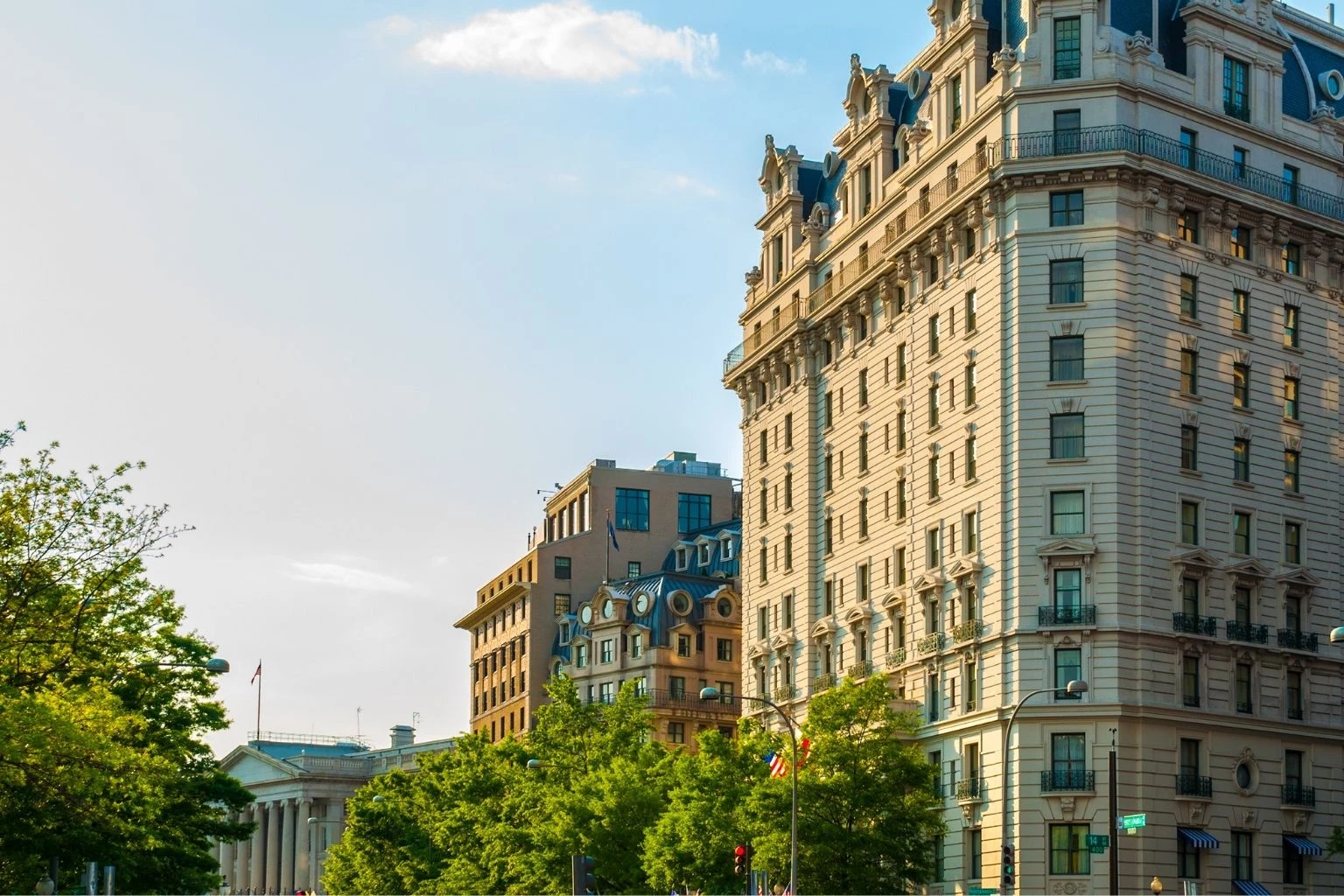
After a day of sightseeing, you will need a comfortable place to relax. Hotel Washington, positioned at the edge of the White House Lawn, combines historical elegance with modern amenities. The property opened in 1917 and originally welcomed dignitaries and socialites in an Italian Renaissance Revival building. The lobby’s arches represent various lobbyist groups that gathered during Prohibition, and constellations etched into the ceiling commemorate important dates in U.S. history. Recent renovations have restored the hotel’s grandeur while adding contemporary comforts.
Location and Accessibility
Hotel Washington is steps from the White House, the National Mall, and major Metro lines, making it an ideal base for exploring. Its rooftop bar, VUE, offers panoramic views of landmarks, including the Washington Monument and Jefferson Memorial. Watching the sunset over the city from VUE is a quintessential DC experience. The hotel’s central location also means you can return for a midday rest before venturing out again.
Rooms and Amenities
Guest rooms blend historic charm with modern design, featuring plush bedding, marble bathrooms, and technology like smart TVs and high‑speed Wi‑Fi. Some rooms overlook the White House and Washington Monument, allowing you to wake up to iconic views. The on‑site Fireclay restaurant serves Mediterranean‑inspired cuisine in a bright, airy space. Hotel Washington also offers a fitness center, a spa, and meeting spaces for business travelers. Packages for couples, families, and solo travelers often include dining credits or tickets to local attractions.
Signature Experiences
The hotel organizes walking tours that explore political history and architecture around Pennsylvania Avenue. Seasonal packages may include tickets to the National Cherry Blossom Festival, Independence Day fireworks, or National Gallery exhibits. In winter, the rooftop transforms into a cozy lounge with heaters and blankets, perfect for sipping hot cocktails while watching holiday lights. Concierge staff can arrange theatre tickets, restaurant reservations, and behind‑the‑scenes tours of government buildings.
Staying at Hotel Washington connects you to the city’s past and present. By day, you step out the front door to join the flow of visitors across Lafayette Square; by night, you sip a drink under the stars with the city’s monuments glowing around you. The combination of location, service, and history makes it one of the best hotels in Washington DC.
Frequently Asked Questions (FAQ)
What is the best time of year to visit Washington DC?
April, May, September, and October offer mild weather and vibrant festivals. Spring is famous for cherry blossoms, while fall brings crisp air and smaller crowds.
Do Europeans need a visa to visit Washington DC?
Most Europeans traveling for up to 90 days qualify for the Visa Waiver Program and need an approved ESTA. Those staying longer or not eligible must apply for a B‑1/B‑2 visa.
How do I get from Dulles Airport to downtown?
You can take the Silver Line of the Washington Metro from the airport station, ride the Washington Flyer bus to Metro stations, or use taxis or ride‑shares. The trip takes about 50 minutes by rail.
Is Washington DC safe for tourists?
Yes, crime rates have declined significantly. Exercise normal precautions: stay in well‑lit areas, secure valuables, and be aware of your surroundings.
Do I need to tip in restaurants?
Yes. A 18–22 percent tip is customary for sit‑down service. Check your bill for added service charges to avoid double tipping.
What are the power plug and voltage differences?
The U.S. uses 110 volts with type A/B plugs. Bring a converter or adapter if your devices require 220 volts or different plug types.
How can I see the White House?
Public tours are free but must be requested through your embassy or a member of the U.S. Congress at least three weeks in advance. If you cannot get a tour, you can still see the exterior from Lafayette Square.
What neighborhoods are best for nightlife?
H Street NE, U Street, Adams Morgan, The Wharf, and Dupont Circle offer diverse bars, clubs, and live music. Georgetown and Shaw provide quieter pubs and cocktail lounges.
Closing Thoughts
Washington DC is a city built on ideals and sustained by people from around the world. By understanding entry requirements, mastering transportation, and respecting local customs, European visitors can immerse themselves in the capital’s history, culture, and hospitality. Whether you stroll the National Mall, savor a half‑smoke in a neighborhood deli, or watch the sunset from the roof of Hotel Washington, the city invites you to experience both its grandeur and its everyday life. Plan ahead, stay curious, and let the nation’s capital inspire your own journey. For more information about accommodations, dining, and seasonal offers at the closest hotel to the White House, visit Hotel Washington.
Read other posts