Interesting Facts about the Smithsonian Castle: Hidden History and 2026 Reopening
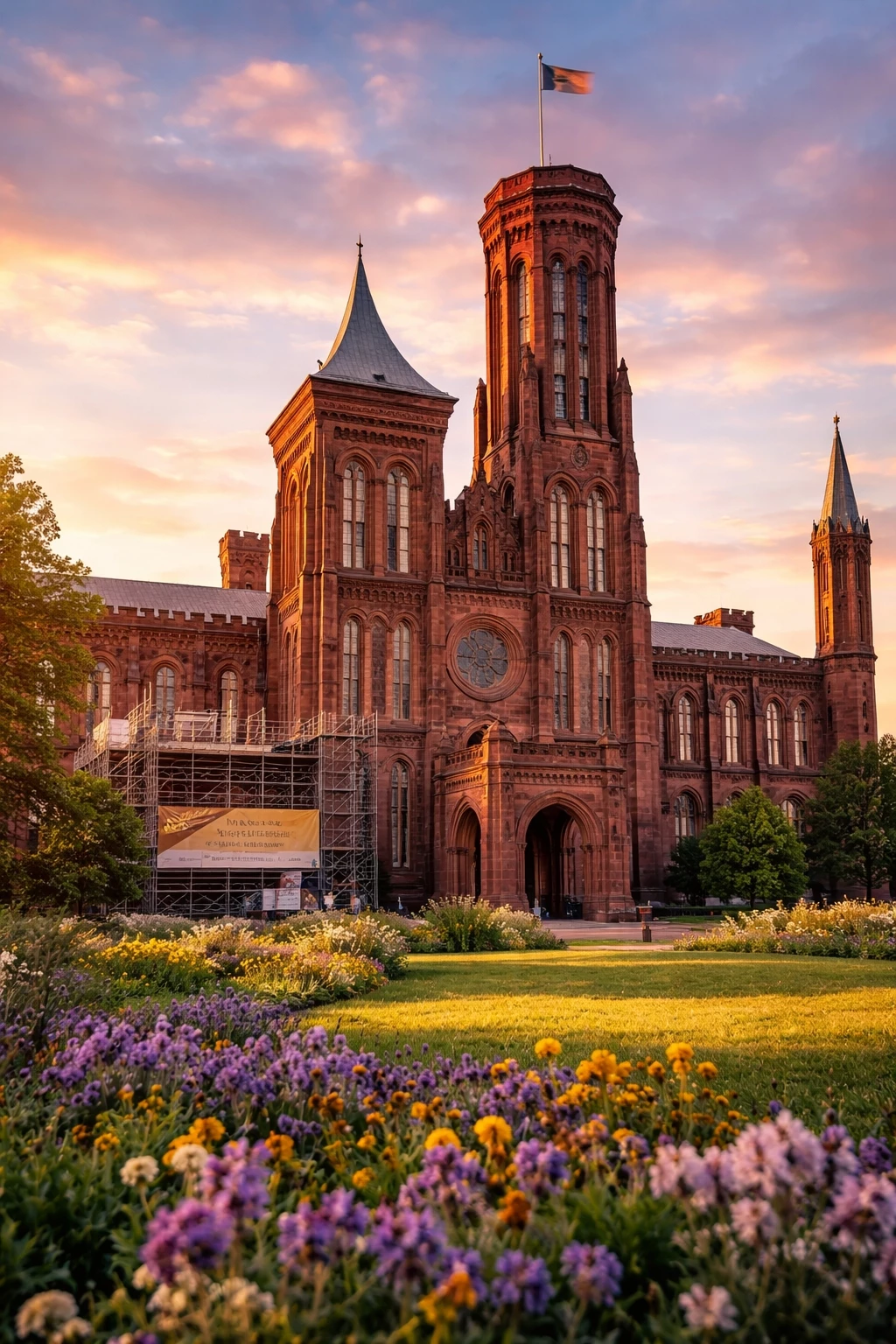
The Smithsonian Institution’s distinctive red building on the National Mall is more than a landmark. The Smithsonian Castle has served as headquarters, residence, library, lecture hall and laboratory for nearly two centuries. This long‑form guide reveals fascinating stories about the Castle’s architecture, its colorful inhabitants, devastating fires and earthquakes, mysterious creatures, innovative exhibitions and the upcoming 2026 reopening. As the nation prepares to celebrate its 250th birthday, the Castle will temporarily reopen from May 22 to September 7 2026 as part of the Smithsonian’s Our Shared Future: 250 program, offering visitors a rare chance to step inside a storied building that is usually off limits. Whether you are a history buff, a curious traveler or a local, this article delivers everything you need to know about the Castle’s past and its exciting future.
What is the Smithsonian Castle and why is it special?
This richly detailed article explores the Smithsonian Castle’s history, architecture, personalities and quirky stories. You will learn how architect James Renwick Jr. created a Norman‑style fortress using red sandstone quarried from Maryland; how the building survived a catastrophic 1865 fire, a 2011 earthquake and multiple renovations; and how scientists, owls and secret clubs once made the Castle their home. The piece concludes with practical tips for planning your own visit during the 2026 reopening and beyond. Each section begins with narrative storytelling before transitioning into structured guides, lists and tables to help you skim on mobile while still immersing yourself in the full story.
A timely invitation
In February 2023 the Smithsonian Castle closed for a five‑year modernization, its first major renovation in more than half a century. For the 250th anniversary of the adoption of the Declaration of Independence in 2026, the renovation will pause and the Castle will reopen as a visitor center and exhibition space from May 22 to September 7 2026. During this brief window the Castle will house a café, a shop and a special exhibition called American Aspirations, which will display treasured objects reflecting on the nation’s ideals with artifacts such as Harriet Tubman’s hymnal. After Labor Day 2026 the Castle will close again to complete its renovation. This makes 2026 a unique moment to explore the Castle’s hidden stories before it vanishes behind scaffolding once more.
A Timely Reopening for the Semiquincentennial
The 2026 reopening explained
The United States will celebrate its Semiquincentennial—the 250th anniversary of independence—on July 4 2026. In honor of this milestone the Smithsonian has launched Our Shared Future: 250, a nationwide program of exhibitions, events and community outreach that invites Americans to reflect on the past and imagine the future. The Castle’s temporary reopening sits at the heart of this initiative. Here is what to expect:
| Feature | What to know | Sources |
|---|---|---|
| Reopening dates | The Castle will pause its renovation and reopen from May 22 to September 7 2026. It will then close to finish modernization. | Smithsonian Institution |
| Purpose | During the reopening the Castle will serve as the Smithsonian’s visitor center, offering information, orientation maps, a café and a shop. | Smithsonian Institution |
| Exhibition | The special exhibition American Aspirations will run from June 2 to July 26 2026 and will display objects that explore how American ideals have evolved. Artifacts include items such as Harriet Tubman’s hymnal. | Smithsonian Magazine |
| Our Shared Future: 250 | This program invites Americans to engage with exhibitions, events and stories across the Smithsonian and around the country. It emphasizes reflecting on history while imagining a more inclusive future. | Smithsonian Institution |
Why this moment matters
From its completion in 1855 until 2023, the Castle has rarely closed its doors for extended periods. The 2026 reopening offers a rare opportunity to experience a building whose architecture and stories connect directly to the birth of the Smithsonian and the nation. Visitors will be able to explore the Great Hall restored to its Victorian splendor, learn about the semiquincentennial through American Aspirations, and enjoy a new café and shop. For history enthusiasts, the reopening is a once‑in‑a‑generation chance to walk the same halls where Joseph Henry debated military strategy with President Lincoln and where 19th‑century scientists danced in sack races. For families, the Castle offers a convenient orientation hub at the center of the National Mall, within walking distance of the Washington Monument and the U.S. Capitol. Whether you plan to visit just the Castle or pair it with other Smithsonian museums, 2026 is the year to be there.
A Castle on the National Mall: Design and Architecture
An iconic design by James Renwick Jr.
When Congress created the Smithsonian Institution in 1846, it needed a building worthy of a national center for knowledge. The Board of Regents selected 28‑year‑old architect James Renwick Jr., famous for designing New York’s St. Patrick’s Cathedral. Renwick proposed a Norman‑style castle that combined late Romanesque and early Gothic motifs. The building’s nine towers, crenellated battlements and pointed arches evoke medieval fortresses yet also reflect mid‑19th‑century romanticism. Renwick’s design placed the Castle in a broad meadow that would later become the National Mall.
Red sandstone from Seneca Quarry
One of the Castle’s most striking features is its rusty red color, which comes from sandstone quarried about 30 miles away along the Potomac River. The stone was extracted at Seneca Quarry near Seneca Creek, Maryland, and shipped to Washington on the Chesapeake and Ohio Canal. Author Garrett Peck notes that Seneca redstone owes its hue to iron oxide and is durable enough to withstand centuries of weathering. In 1846 fifteen quarries competed to supply stone for the Castle, but the Seneca quarry owner underbid the competition by a wide margin; architect Renwick and geologist David Dale Owen confirmed that the stone was of excellent quality, describing its color as “ashes of rose”. The quarry workforce included immigrants and African Americans—enslaved laborers before the Civil War and freedmen afterward. This red sandstone gives the Castle a warm, almost glowing appearance, especially at sunrise and sunset.
Architectural highlights
Renwick’s Norman Revival design features numerous distinctive elements that blend form and function. Below is an overview of key architectural highlights:
- Nine towers and turrets – The Castle’s irregular silhouette includes a central octagonal tower flanked by smaller turrets. Each tower serves different purposes—from the North Tower housing the bell to smaller stair towers providing access to upper floors. When completed in 1855 the towers offered panoramic views of the city and were used for astronomy and observation during the Civil War.
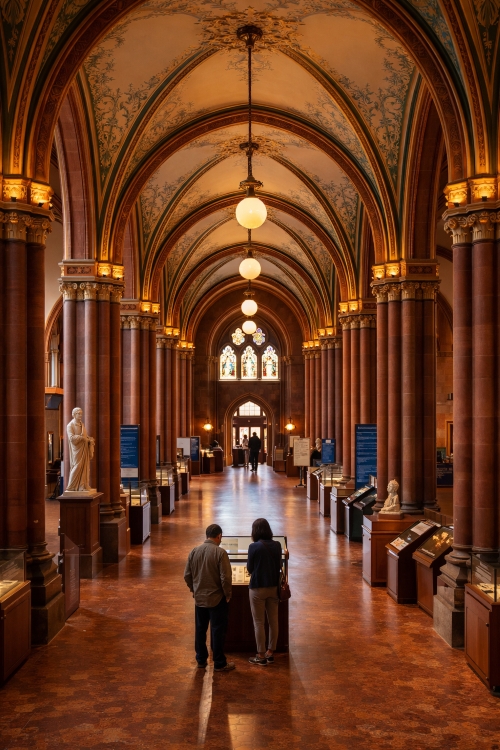
- Great Hall – The two‑story Great Hall was originally used for lectures, exhibitions and social events. During the 2026 reopening it will be restored to its Victorian appearance, revealing terrazzo floors and decorative finishes that were hidden by 20th‑century office partitions.
- Materials and ornament – In addition to Seneca redstone, the Castle features locally quarried granite for foundations and decorative woodwork inside. The exterior is decorated with carved capitals, quatrefoil windows and crenellations reminiscent of medieval castles. Interior spaces originally had high ceilings and natural light to showcase specimens and artworks.
- Adaptive reuse – Over the decades the Castle has been adapted to changing needs. It housed laboratories, art galleries, a reading room and even living quarters. The 1883 east wing expansion added fireproof construction, while a 1968‑69 renovation restored the building’s Victorian atmosphere. The current modernization will update mechanical systems while preserving historic fabric.
The Castle’s place on the National Mall
When the Castle was completed, Washington’s landscape looked very different. The Canal that separated it from downtown was still open and the National Mall was a marshy field. Today the Castle sits at the midpoint of the Mall, framed by the Washington Monument to the west and the U.S. Capitol to the east. Its towers offer views of the white marble obelisk and the Capitol’s dome, making the Castle a photographic icon. To the north lies the National Museum of Natural History; to the south, across Jefferson Drive, is the expansive lawn. The location is ideal for visitors who want to orient themselves before exploring other museums. Because of its central position, the Castle has also served symbolic and practical purposes—from 19th‑century observation posts during the Civil War to the heart of 21st‑century celebrations.
From Fire to Restoration: Moments That Defined the Castle
The inferno of 1865
On January 24 1865, a devastating fire nearly destroyed the Castle. The disaster began innocently: workmen repairing the Picture Gallery connected a wood‑burning stove to what they assumed was a chimney flue. Instead, the stove vented into the narrow space behind the wall. Embers smoldered undetected for days until a sheet of flame burst through the walls. Custodian William DeBeust sounded the alarm and managed to save a handful of paintings before retreating. Mary Henry, daughter of Secretary Joseph Henry, recorded in her diary how the flames curled around the stonework and consumed the roof and towers. The fire destroyed the north and south towers and gutted the main section, but iron pillars kept the entire building from collapsing. Fortunately, the library, museum collections and lower floors were spared heavy damage.
Rebuilding and modernization
The 1865 fire prompted major changes. Architect Adolph Cluss, known for designing other Washington landmarks, supervised the reconstruction. New fireproof materials and a redesigned roof improved safety. In 1883 an east wing with fireproof construction was added to house laboratories and offices. Later renovations reshaped the Castle’s interior. In the late 1960s Secretary S. Dillon Ripley championed a restoration to bring back the Victorian atmosphere, removing intrusive partitions and restoring decorative details. The Great Hall regained its soaring openness and stained‑glass windows. In 1977 the Castle was designated a National Historic Landmark, ensuring protection for its architecture and acknowledging its significance in U.S. history.
The earthquake of 2011
On August 23 2011 a 5.8‑magnitude earthquake shook the mid‑Atlantic region. The tremor caused cracks in the Castle’s beams and possibly its foundation. The east wing suffered plaster damage and roof turrets were destabilized. The Smithsonian evacuated visitors across the Mall but quickly reopened other museums. Engineering assessments led to repairs that strengthened the structure. This earthquake underscored the Castle’s vulnerability and informed the current modernization, which will retrofit the building to better withstand seismic activity.
Closing and reopening for renovation
In February 2023 the Smithsonian closed the Castle for its first major renovation in more than half a century. The project will upgrade mechanical, electrical and plumbing systems, restore exterior stonework, and improve security and accessibility. It will also rehabilitate the Great Hall and open previously unused spaces to the public. Although the renovation will last several years, the Castle will temporarily reopen during the 2026 semiquincentennial to welcome visitors. This careful balance between preservation and modernization ensures the Castle remains an inspiring and safe centerpiece for future generations.
Timeline of major events
| Year | Event | Significance |
|---|---|---|
| 1846 | Congress establishes the Smithsonian Institution and selects James Renwick Jr. to design its headquarters. | Birth of the Castle concept and the Institution it anchors. |
| 1855 | Construction of the Castle is completed. | Building opens as the Smithsonian’s first museum, housing all operations and the secretary’s residence. |
| 1865 | Devastating fire destroys the upper stories and towers. | Prompts reconstruction and adoption of fireproof materials. |
| 1883 | East wing constructed with fireproof design. | Expands research and office space. |
| 1968–69 | Major restoration returns the Castle to its Victorian appearance. | Restores architectural integrity and opens the Great Hall. |
| 1977 | Designated a National Historic Landmark. | Recognizes national significance. |
| 2011 | 5.8‑magnitude earthquake damages the structure. | Leads to structural repairs and assessments. |
| 2023 | Castle closes for multi‑year modernization. | Upgrades systems and prepares for the future. |
| 2026 | Temporary reopening for Our Shared Future: 250. | Offers visitors a limited‑time experience. |
Secrets and Stories: The People Behind the Castle
Joseph Henry: scientist, leader and resident
The Smithsonian’s first secretary, Joseph Henry, was a pioneering physicist whose experiments with electromagnetism contributed to the telegraph. In 1847 Henry moved into an apartment inside the Castle with his wife, Harriet, and their daughters Mary and Caroline. For decades he and his family lived and worked among the institution’s collections. Henry’s diaries reveal how he balanced administrative duties with scientific pursuits. During the Civil War he advised President Abraham Lincoln on topics ranging from observation balloons to coal mining. Henry and Lincoln even climbed the north tower to test a light signaling system that could warn of Confederate invasion. The government issued Henry 12 muskets and 240 rounds of ammunition to defend the Smithsonian during the war.
Henry oversaw the Castle’s operations and occasionally made controversial decisions. In 1862 he organized a series of abolitionist lectures in the Great Hall but refused to allow Frederick Douglass to speak. His daughter Mary Henry kept diaries that provide vivid eyewitness accounts of life in the Castle, including the 1865 fire. Mary wrote of flames curling around the stone walls and her family’s frantic efforts to rescue belongings. Henry remained involved with the Smithsonian until his death in 1878. A bronze statue of him now stands outside the Castle’s south entrance.
James Smithson and his crypt
The institution’s benefactor, James Smithson, never set foot in the United States. Born in 1765 in France and educated in England, Smithson was a chemist and mineralogist. When he died in 1829 he willed his estate to his nephew with the stipulation that if his nephew died without heirs, the fortune would go to the United States to create an institution “for the increase and diffusion of knowledge.” The nephew died childless, and in 1835 the U.S. government accepted the bequest, establishing the Smithsonian Institution. Smithson’s remains were interred in Genoa, Italy until 1904, when Smithsonian Regent Alexander Graham Bell arranged for their transfer to the United States. Today Smithson lies in a marble and granite crypt just inside the north entrance of the Castle. The crypt resembles a small chapel and includes display cases containing personal effects such as his mineral collection and scientific manuscripts. Visitors can pay their respects and learn about the man whose generosity created the Smithsonian, though the crypt is closed during the renovation.
Lincoln, scientists and notable guests
The Castle’s halls have hosted presidents, diplomats, explorers and scholars. President Lincoln frequently visited the Castle to consult with Joseph Henry on wartime technologies and to attend lectures. After the 1865 fire, Congress adjourned so members could rush to the Smithsonian grounds, underscoring the building’s importance to the nation. Over the years the Castle has been a meeting place for scientists like Alexander Graham Bell, who delivered the first long‑distance telephone demonstration from the nearby Willard Hotel. Its 2,000‑seat auditorium hosted abolitionist orators, natural history lectures and concerts. In the 20th century the Castle housed the Smithsonian’s central administrative offices and archives, where researchers planned exhibitions and conservation projects.
Life and work inside the Castle
In the 19th century the Castle was the Smithsonian’s only building. It contained research laboratories, chemical rooms, art galleries, a reading room, storage vaults and administrative offices. Living quarters for the secretary and his family were located in the East Wing. The building’s operations required a staff of curators, librarians and assistants who cataloged specimens, prepared exhibitions and corresponded with scientists worldwide. Mary Henry’s diaries depict domestic life intermingling with intellectual work, as the family prepared meals while hearing lectures from visiting scholars. Visitors entering the Castle’s Great Hall would see fossils, ethnographic collections and art hanging floor‑to‑ceiling. The sense of wonder that the Castle inspired in the 19th century is something the Smithsonian hopes to rekindle during the 2026 reopening and beyond.
The Megatherium Club: When Scientists Partied in the Castle
A club named after a giant sloth
In the late 1850s and early 1860s a group of young naturalists made the Castle their headquarters and dormitory. They called themselves the Megatherium Club after the extinct South American ground sloth. The club was the brainchild of Spencer F. Baird, an assistant secretary of the Smithsonian who wanted to support emerging scientists. Members included zoologist William Stimpson, paleontologist Fielding Bradford Meek and ornithologist Robert Ridgeway. By day they classified fossils, shells and marine specimens; by night they held lively dinners, sang songs and engaged in friendly competitions like sack races. They serenaded Mary Henry and her sister from the courtyard, much to their father’s dismay.
Serious science and collegiate antics
While the Megatherium Club’s antics resembled a university fraternity, their scientific contributions were significant. Under Baird’s mentorship the club aimed to classify every known plant and animal in North America. Members embarked on expeditions to the Pacific and Arctic, collecting thousands of specimens for the Smithsonian. Stimpson led marine surveys that discovered new mollusk species; Meek and his colleague Ferdinand V. Hayden studied fossils in the Great Plains. Club members published papers and curated collections that laid the groundwork for the Smithsonian’s National Museum of Natural History. Yet the camaraderie and humor of their gatherings also created a supportive environment for young scientists facing the uncertainties of frontier research.
Legacy of the Megatherium Club
The Megatherium Club dissolved during the Civil War as members enlisted, accepted positions elsewhere or faced resource constraints. However, its legacy lives on in the Smithsonian’s culture of collaboration and curiosity. The club embodied Baird’s belief that science flourishes when experts share ideas and support one another. Many members later became prominent scholars and museum directors. Their stories provide a lighthearted counterpoint to the more solemn narratives of the Castle’s fires and renovations. During the 2026 reopening visitors will encounter exhibits referencing the club, reminding them that even a venerable institution has had its moments of youthful exuberance.
Animals and Curiosities: Owls, Crypts and More
Owls in the towers
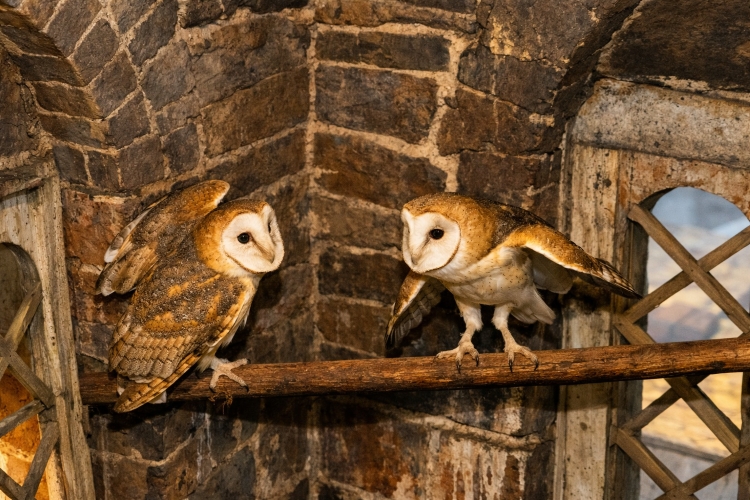
For more than a century, barn owls made their home in the Castle’s west tower. The birds nested in the rafters and took advantage of the building’s nooks and ledges. By the 1950s the owls had become a nuisance: their droppings damaged floors and they occasionally attacked guards. The Smithsonian removed the owls and sealed their nesting sites. Secretary S. Dillon Ripley, who loved the Castle’s Victorian ambiance, reintroduced a pair of owls named Alex and Athena in 1967 and later introduced another pair named Increase and Diffusion—a playful nod to the Smithsonian’s mission to increase and diffuse knowledge. Although these owls captivated visitors, they never stayed long. After the late 1970s the Castle has remained owl‑free. During the upcoming renovation, the Smithsonian is not expected to reintroduce live owls, but the story lives on in legends and displays.
The Smithson crypt revisited
We have already discussed the Smithson crypt, but its ambiance is worth revisiting. Upon entering the north entrance, visitors encounter a vaulted, chapel‑like room where Smithson’s marble sarcophagus rests beneath a stained‑glass skylight. The surrounding display cases contain his scientific instruments, mineral samples and a copy of his will. A bronze plaque recounts the story of his bequest. In the early 20th century this crypt served as a quiet memorial, but over time it became a curiosity that inspired ghost stories among staff. During the 2026 reopening the crypt will once again be accessible, offering a moment of reflection amid the Castle’s vibrant galleries.
Other quirky features
- Secret passages and attics – The Castle’s complex plan includes hidden staircases, attics and corridors that once connected laboratories and storage rooms. Some of these spaces will reopen as exhibit areas, giving visitors a behind‑the‑scenes look at how the building functioned. Because of safety restrictions many passageways remain off limits, adding to the sense of mystery.
- The Secretary’s Garden – Behind the Castle, the enclosed Haupt Garden and adjacent gardens provide a peaceful oasis. Designed in the 1980s, the Haupt Garden is a formal Victorian parterre with geometric flower beds, benches and fountains. It sits atop underground museums, symbolizing the layers of history beneath the Castle.
- Unique collections – Before dedicated museums existed, the Castle housed everything from meteorites to ethnographic artifacts and biological specimens. During the 2026 exhibition you may encounter select objects from the castle’s early collections, such as Mary Henry’s diaries or a piece of the burnt roof beam from 1865.
A Place for Wonder: The Children’s Room and Exhibitions
Samuel P. Langley’s vision
In 1901 Secretary Samuel Pierpont Langley imagined a space in the Castle where children could cultivate curiosity. Inspired by European “children’s museums,” Langley insisted that the displays be designed at a child’s eye level and avoid Latin labels, believing that “knowledge begins in wonder.” He commissioned artist Grace Lincoln Temple to decorate the room with stenciled birds and an ornate ceiling. The resulting Children’s Room was a cozy, light‑filled gallery filled with models, nests, minerals and interactive exhibits. It is widely considered the first children’s museum in the United States. A motto over the entrance proclaimed “Knowledge Begins in Wonder,” a phrase that still resonates across Smithsonian education programs.
The evolution of exhibitions
In the early 20th century the Castle hosted natural history displays, ethnographic collections and art salons. As new Smithsonian museums opened, the Castle’s exhibition role diminished. Nevertheless, it continued to present rotating displays, such as “The Children’s Gallery” and a 1980s exhibition on the Castle’s architecture. During the 2026 reopening, the highlight will be American Aspirations, which brings together artifacts that explore how Americans have interpreted the ideals of liberty, equality and opportunity. The exhibition will invite visitors to consider what the Declaration of Independence means to them and how those ideals can shape the next 250 years. Harriet Tubman’s hymnal, abolitionist pamphlets, suffrage banners and documents from civil rights movements will illustrate the ongoing struggle to fulfill America’s promise. For children, hands‑on activities and digital interactives will recapture the spirit of Langley’s Children’s Room.
What visitors are noticing now
Even while closed, the Castle continues to inspire curiosity. Visitors walking past the construction site have spotted conservation specialists cleaning sandstone blocks, engineers stabilizing turrets and gardeners tending the Haupt Garden. The Smithsonian has installed interpretive panels along the construction fence that showcase archival photos and explain renovation work. Social media posts about the Castle’s 2026 reopening generate excitement, with many locals sharing childhood memories of the Children’s Room or of seeing owls perched in the towers. As the semiquincentennial approaches, expect to see hashtags like #CastleReopens, #America250 and #SmithsonianSecrets trending.
Planning Your Visit in 2026 and Beyond
Getting there
The Smithsonian Castle is centrally located on Jefferson Drive SW, between 9th and 12th Streets on the National Mall. It is easily accessible by Metro via the Smithsonian Station (Blue, Orange and Silver lines), which exits directly onto the Mall. The L’Enfant Plaza station is a short walk away. If you are driving, limited street parking is available; consider using public transportation or ride‑sharing. Bicycle racks and Capital Bikeshare stations are nearby. For those staying at Hotel Washington - the closest hotel to the White House and just a few blocks from the Castle—the walk is about 10 minutes through the scenic Ellipse.
Hours and admission
During the 2026 reopening the Castle will be open daily from 8:30 a.m. to 5:30 p.m., including federal holidays. Admission is free, as with all Smithsonian museums. Lines may be longer on weekends and holiday weekends. After September 7 2026 the Castle will close again for continued renovation. Although an official re‑opening date has not been announced, it is expected to reopen permanently later in the decade. For up‑to‑date information, check the Smithsonian’s visitor site or the Our Shared Future: 250 page.
What to see during your visit
The Castle’s 2026 visitor experience will blend orientation services with historic ambiance. Here is a suggested itinerary:
- Start in the Great Hall – Pick up maps, talk to visitor guides and orient yourself to the National Mall. The restored Victorian interior, with its soaring arches and polished terrazzo floor, makes a striking first impression.
- Visit the crypt – Pay respects to James Smithson and examine his personal effects. Interpretive panels explain his life and the founding of the Smithsonian.
- Explore American Aspirations – Move through interactive galleries that trace the evolution of American ideals, viewing artifacts like Harriet Tubman’s hymnal. Engage with multimedia displays that invite visitors to reflect on what equality, liberty and opportunity mean in their own lives.
- Stop at the café and shop – Enjoy locally sourced snacks and browse unique gifts inspired by Smithsonian collections. Purchases support museum programs.
- Stroll through the Haupt Garden – Exit the Castle and step into a lush Victorian‑style garden with fountains and benches. The garden sits atop the subterranean Arthur M. Sackler Gallery, National Museum of African Art and S. Dillon Ripley Center. It is an ideal spot for rest or photography.
- Connect to other museums – Use the Castle as your base to explore the Air and Space Museum, National Museum of Natural History, National Museum of American History and other Mall attractions. The Castle’s central location reduces travel time between sites, making it a convenient hub.
Combining the Castle with other attractions
Washington offers countless attractions within walking distance of the Castle. Below are suggestions for pairing your Castle visit with other experiences:
| Attraction | Distance from the Castle | Highlights | Official link |
|---|---|---|---|
| National Museum of African Art | Under the Haupt Garden | African art collections, temporary exhibitions, subterranean design | Museum of African Art |
| Arthur M. Sackler Gallery | Beneath Haupt Garden | Asian art collections, ancient to contemporary | Sackler Gallery |
| National Air and Space Museum | 0.3 mile east | Apollo spacecraft, aviation artifacts, planetarium | Air and Space Museum |
| National Museum of Natural History | 0.3 mile north | Fossils, gems, National Gem Collection | Natural History Museum |
| Washington Monument | 0.4 mile west | 555‑foot obelisk honoring George Washington; timed-entry tickets required | Washington Monument |
| National Gallery of Art Sculpture Garden | 0.5 mile east | Modern sculpture, ice rink in winter | Sculpture Garden |
| Hotel Washington | 0.5 mile northwest | Luxury accommodations with rooftop views of the White House | Hotel Washington |
Tips for a successful visit
- Arrive early – Lines at the Castle and other Mall museums can grow quickly, especially on weekends and during the semiquincentennial. Starting your day before 10 a.m. allows you to enjoy quieter galleries.
- Plan your route – Use the Castle’s information desk to map out the museums you want to see. Consider grouping attractions by location to minimize walking.
- Stay hydrated – Summer in Washington can be hot. Bring a reusable water bottle; hydration stations are available in many museums.
- Be prepared for security – All Smithsonian buildings require security screening. Pack lightly and leave prohibited items at your hotel.
- Book timed tickets if needed – Some museums, such as the Air and Space Museum and the Washington Monument, may require timed-entry tickets. Check their official websites in advance.
- Enjoy the gardens – The Haupt Garden and nearby gardens provide shaded spots to rest between museum visits. In spring and summer, flowers bloom in vibrant patterns.
Frequently Asked Questions
When will the Smithsonian Castle reopen?
The Castle will temporarily reopen from May 22 to September 7 2026 as part of the semiquincentennial celebrations. It will then close to complete renovations.
Why did the Castle close in 2023?
The Castle closed for a multi‑year modernization to upgrade mechanical systems, improve accessibility, restore historic spaces and repair exterior stonework.
What caused the 1865 fire in the Castle?
Workers connected a wood‑burning stove to a false chimney, allowing embers to smolder behind a wall. The embers ignited the walls on January 24 1865, producing a sheet of flame that destroyed the upper stories.
Who is buried in the Smithsonian Castle?
James Smithson, the institution’s benefactor, is interred in a marble and granite crypt just inside the north entrance. His remains were brought from Italy in 1904.
What is the “American Aspirations” exhibition?
American Aspirations is a temporary exhibition running June 2 to July 26 2026 that explores how Americans have interpreted the ideals of liberty, equality and opportunity. It will feature artifacts like Harriet Tubman’s hymnal.
Did owls really live in the Castle?
Yes. Barn owls inhabited the Castle’s towers for roughly a century. They were removed in the 1950s because of droppings and mischief. Secretary S. Dillon Ripley briefly reintroduced owls named Alex and Athena, but they did not stay.
What was the Megatherium Club?
The Megatherium Club was a group of young naturalists in the 1850s–1860s who lived in the Castle, conducted scientific research by day and held raucous parties by night. Their work laid foundations for the Smithsonian’s scientific collections.
Where can I find food and restrooms?
During the 2026 reopening a café will operate in the Castle, and restrooms will be available on the ground floor. Additional dining options exist at nearby museums and food trucks along the Mall.
Is the Castle accessible?
The modernization includes improved accessibility. Entrances will accommodate wheelchairs and strollers. Elevators and ramps will provide access to exhibition spaces. Visitors with disabilities should check the Smithsonian’s accessibility page for details.
Conclusion
The Smithsonian Castle is more than an architectural curiosity—it is a living chronicle of American history and science. From its elegant Norman towers built of Seneca redstone to its role as a Civil War lookout, from the tragedy of the 1865 fire to the antics of the Megatherium Club, the Castle embodies stories of resilience, curiosity and innovation. Its halls witnessed the birth of American museums, the forging of scientific disciplines and the laughter of both scholars and children. In 2026, as the nation celebrates 250 years of independence, the Castle will reopen its doors to visitors for a fleeting summer. This temporary return is an invitation to explore the past, ponder the ideals that shaped the United States and imagine the future. Whether you are staying at Hotel Washington, just a short walk away, or traveling from afar, make plans now to experience the Castle’s hidden history and enduring charm. For more travel ideas and reservations, visit Hotel Washington’s official website
Read other posts