Rock ’n’ Roll Washington DC 2026: Schedule, Start Lines, Expo & Where to Stay Downtown
Rock ’n’ Roll Washington DC 2026 is a celebration that weaves together endurance running, live music, history and the soft glow of cherry blossoms. From 19 to 21 March 2026, tens of thousands of runners and spectators will descend on the nation’s capital for a half‑marathon, a 5K and a weekend of cultural festivities. This long‑form guide offers a narrative tour of the entire event, covering schedules, course details, travel logistics, accommodation and plenty of insider tips. It is designed for first‑time participants, returning runners, family members and anyone who wants to experience Washington DC during one of its most vibrant seasons.
Rock ’n Roll DC 2026: A Monumental Celebration
Every spring the St. Jude Rock ’n Roll Running Series transforms Washington DC into a live‑action postcard. Runners line up on Constitution Avenue with the sun rising behind the Washington Monument. Drummers and guitarists warm up on temporary stages while volunteers distribute water and high‑fives. The smell of coffee mixes with the faint perfume of cherry blossoms, hinting that winter is gone for good. This section explores the history and spirit of the event, demonstrating why it has become an institution in the running community and a signature weekend in the capital.
The Rock ’n Roll spirit
What began in the late 1990s as a series of races featuring live bands has evolved into a cross‑country phenomenon. The Rock ’n Roll Running Series blends athletic achievement with entertainment, placing musicians and cheer squads along the course to keep morale high. Washington DC joined the series in 1997; since then the race has showcased the city’s historic core and drawn runners from around the world. In 2026 the Washington race will once again carry the banner of the St. Jude Rock ’n Roll Running Series, reinforcing its partnership with St. Jude Children’s Research Hospital. Participants can choose to register as St. Jude Heroes, committing to fundraising goals in exchange for free race entries, hospitality and custom gear. This charitable dimension underscores that the weekend is about more than personal records; it supports lifesaving research for children with cancer.
The course itself is a living museum. As runners move through the city they pass monuments honoring presidents and civil rights leaders, cross the Potomac via the Arlington Memorial Bridge and wind through tree‑lined Rock Creek Park. Around mile eight the route enters the residential neighborhoods of northwest DC, where front porches double as cheering zones. The final miles bring runners past Judiciary Square and onto Pennsylvania Avenue, finishing in the shadow of the U.S. Capitol. Spectators travel by Metro or foot, popping up at strategic points with signs and cowbells. Music acts range from local indie bands to drumlines and DJs, each injecting energy into the race.
Local culture and springtime energy
The race weekend coincides with the earliest days of spring. Temperatures typically rise from the upper 30s in the morning to the upper 50s by afternoon. Cherry trees, a gift from Japan in 1912, often begin to bloom during this period. The National Cherry Blossom Festival, scheduled for 20 March – 12 April 2026, fills the city with events like the Blossom Kite Festival and the National Cherry Blossom Festival Parade. Runners arriving early or extending their stay can enjoy these celebrations, making their visit a mini vacation.
For locals, Rock ’n Roll weekend is part of the community calendar. Schools and businesses organize cheering groups. Restaurants craft special menus for medal‑wearing diners. Neighborhood bands audition months in advance for a coveted spot along the course. The synergy between participants and residents creates an atmosphere that is simultaneously competitive and communal. Finishing times matter, but the memories forged while running past the Lincoln Memorial and high‑fiving strangers are just as meaningful.
A picture worth a thousand steps
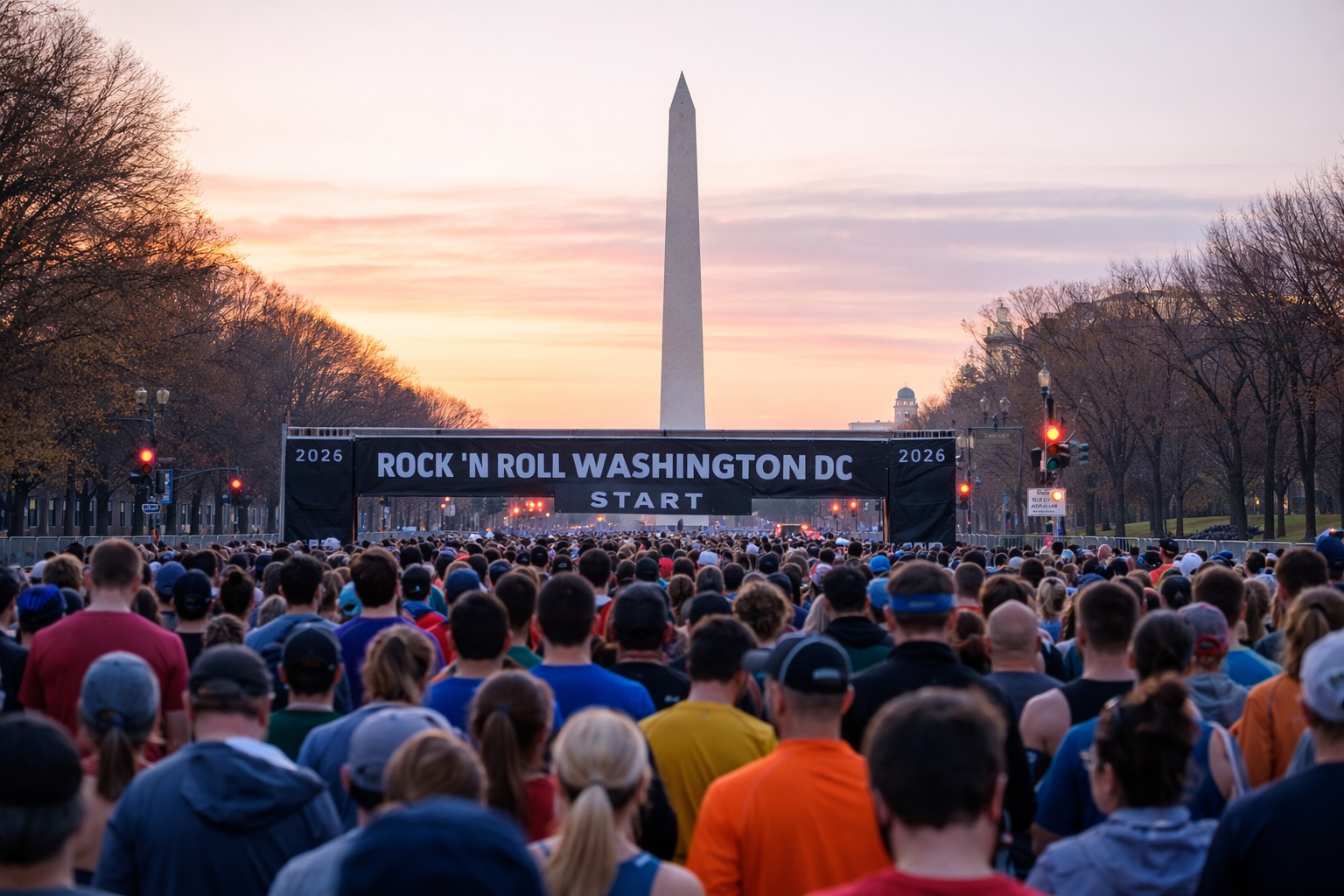
To fully appreciate the setting, imagine standing near the reflecting pool at dawn. The first hints of sunlight catch the marble of the Washington Monument while a breeze rustles the branches of nearby cherry trees. In the distance, volunteers wheel stacks of water jugs into place. This is the calm before the storm — a quiet moment that encapsulates why the race is so special. The following image captures that ambiance. Though AI‑generated, it portrays a quintessential spring morning in the nation’s capital, complete with blossoms framing the iconic obelisk.
Event Schedule & Important Dates
Race weekend unfolds over three days, each with its own rhythm and purpose. Knowing when to arrive, where to be and how to allocate your time helps ensure a smooth experience. Below you will find a narrative overview followed by a structured list of key dates and times.
Narrative overview
Thursday, 19 March 2026 is the quiet prologue to the weekend. Volunteers and vendors set up booths inside the Walter E. Washington Convention Center; the space transforms into a mini village dedicated to running. The Health & Fitness Expo opens at noon, inviting participants and the public to pick up race packets, browse gear vendors and meet local fitness experts. Early arrival has its perks: aisles are uncrowded, volunteers have fresh energy and merchandise lines move quickly. Many out‑of‑town runners use this day to orient themselves, check into hotels and explore neighborhoods like Penn Quarter and Chinatown.
Friday, 20 March 2026 ramps up the excitement. The expo reopens at 10 a.m., and downtown streets see an influx of visitors arriving by train, car and plane. Those who planned ahead catch glimpses of the National Cherry Blossom Festival events — perhaps a visit to the Blossom Kite Festival or a stroll around the Tidal Basin. Meanwhile, local running clubs host shake‑out runs on the National Mall, giving participants a preview of the course’s early miles. Runners staying at official race hotels such as Hyatt Place Washington DC/US Capitol or Hilton Garden Inn Washington DC Downtown enjoy short walks to Metro stations and gather in lobbies for last‑minute strategy sessions.
Saturday, 21 March 2026 is race day. Streets near the National Mall close before dawn as security teams, medical staff and volunteers take their positions. The 5K begins at 7:30 a.m. near 4th Street NW and Pennsylvania Avenue NW. A half‑hour later the half‑marathon starts at Constitution Avenue & 14th Street NW. Runners who trained through winter see months of hard work culminate in this morning. By midday, the finish festival along Pennsylvania Avenue is buzzing with live music, food trucks and photo stations. Many participants linger until early afternoon before heading back to their hotels to shower and then explore the city further.
Key dates and times
-
Thursday, 19 March 2026 (12 p.m. – 7 p.m.) – Health & Fitness Expo at the Walter E. Washington Convention Center. Packet pickup begins; vendors showcase running gear, nutrition products and fitness services.
-
Friday, 20 March 2026 (10 a.m. – 7 p.m.) – Expo continues. Ideal day for out‑of‑town arrivals to collect packets and explore the expo without race‑day stress.
-
Saturday, 21 March 2026 – 7:30 a.m. – 5K start at 4th Street NW & Pennsylvania Avenue NW; 8:00 a.m. – Half‑marathon start at Constitution Avenue & 14th Street NW; 8:15 a.m. – 1:30 p.m. – Finish festival featuring live entertainment and post‑race celebrations.
-
19 March – 12 April 2026 – National Cherry Blossom Festival (dates for 2026 festival). Many festival events coincide with race weekend, offering an expanded itinerary for visitors.
Start Lines & Course Details
Understanding the course layout helps with race strategy and spectator planning. Both the half‑marathon and the 5K are designed to showcase Washington’s iconic landmarks while managing crowd flow and safety. A descriptive walkthrough of each course follows, accompanied by a summary of specifics.
Narrative overview
Half‑marathon route – The half‑marathon covers 13.1 miles through downtown and Northwest Washington, offering a curated tour of national monuments and scenic neighborhoods. After leaving the start line on Constitution Avenue, runners pass the Smithsonian museums and approach the Washington Monument, which towers overhead like a metronome. At the Lincoln Memorial, the course turns west across the Arlington Memorial Bridge, giving runners a glimpse of Arlington National Cemetery on one side and the Potomac River on the other. After looping through the quiet shade of Rock Creek Park, the route climbs gradually toward Judiciary Square before descending onto Pennsylvania Avenue for the final sprint. Live bands, DJ booths and cheer squads appear every mile or so, injecting energy and breaking up the physical challenge.
5K route – The 5K is a condensed showcase of Capitol Hill. Starting and finishing at 4th Street NW & Pennsylvania Avenue NW, the course heads east toward the Capitol Building before turning around near 2nd Street. Participants run past the National Gallery of Art and the Newseum before rejoining the wide avenue for a triumphant finish. This shorter distance is ideal for beginners, families and those who want to experience the atmosphere without committing to 13.1 miles.
Course specifics
-
Half‑marathon distance – 13.1 miles. Landmarks include the Washington Monument, Lincoln Memorial, Arlington Memorial Bridge, Rock Creek Park and Judiciary Square.
-
Half‑marathon start line – Constitution Avenue & 14th Street NW; start time 8:00 a.m. on Saturday, 21 March 2026.
-
Half‑marathon finish line – 4th Street NW & Pennsylvania Avenue NW. The finish festival occupies Pennsylvania Avenue between 3rd and 6th Streets.
-
5K start/finish line – 4th Street NW & Pennsylvania Avenue NW; start time 7:30 a.m. on 21 March 2026.
-
Time limits – Half‑marathon participants must complete the course within four hours; 5K runners have one hour to finish. These limits ensure roads can reopen on schedule.
-
Elevation and surfaces – The course is mostly flat with gentle inclines in Rock Creek Park. Pavement surfaces predominate, so most runners train on similar surfaces to avoid injury.
-
Course maps – Official PDF maps, available on the race website, offer turn‑by‑turn directions. Print or download them in advance to study water stops, aid stations and medical tents.
The Health & Fitness Expo Experience
The Health & Fitness Expo is both a logistical necessity and a celebration of endurance sports. All participants must pick up their bibs, gear bags and T‑shirts here; there is no race‑day packet pickup. Beyond that requirement, the expo offers a chance to connect with the running community, explore new products and attend educational sessions.
Narrative overview
The expo takes place at the Walter E. Washington Convention Center, a sprawling complex in downtown DC. As you enter Hall C, you’re greeted by rows of booths decorated with banners and bright signage. Major running brands showcase the latest shoes, while local merchants sell artisanal energy bars and hand‑made headbands. Tables manned by physiotherapists offer free injury assessments. There are stage presentations on topics ranging from nutrition to mental resilience, and occasional meet‑and‑greets with elite runners or local celebrities. The expo is free and open to the public, so bring family and friends to soak in the atmosphere.
Attending on Thursday has advantages: lines are shorter, volunteers have more time to answer questions and you can browse merchandise without the crowds. If you must attend on Friday, arrive early or late to avoid peak afternoon traffic. For travel, the Convention Center is accessible via Metro — the Green and Yellow Lines stop at Mt. Vernon Square/7th Street station. Parking is available in nearby garages but is limited; pre‑book via SpotHero or similar services.
Essential details
-
Location – Walter E. Washington Convention Center, Hall C, 801 Mt. Vernon Place NW.
-
Dates and hours – Thursday, 19 March 2026 (12 p.m. – 7 p.m.); Friday, 20 March 2026 (10 a.m. – 7 p.m.).
-
Activities – Packet pickup, race merchandise sales, vendor booths featuring running shoes, nutrition products, apparel and technology; workshops on training, injury prevention and nutrition.
-
Transportation – Accessible via Metro’s Green/Yellow Lines (Mt. Vernon Square) and Red Line (Gallery Place–Chinatown). Limited paid parking nearby.
-
Tips – Arrive early, bring identification and race confirmation, and pre‑book parking if driving.
Where to Stay Downtown
Selecting the right hotel can transform your race weekend. You’ll want a location that balances convenience to the expo and start lines with amenities that promote rest and recovery. In this section we discuss lodging strategies, highlight a few standout properties and present a comparison table of selected hotels. Because outbound links must be used sparingly, only a handful of key properties are linked. Others are mentioned for context without hyperlinks.
Narrative overview
Many race participants choose to stay downtown or near the National Mall so they can walk or take a short Metro ride to the start lines. Hotels along Pennsylvania Avenue and in Penn Quarter tend to book up quickly; those near Metro stations such as Judiciary Square, Metro Center or Smithsonian offer easy access to the expo and finish festival. When evaluating hotels, consider factors like early breakfast service, late checkout, shuttle availability and proximity to restaurants. Some properties offer special rates for runners with flexible cancellation policies. Others go the extra mile by providing gear check services, foam rollers in rooms or even in‑house stretching classes.
If you prefer to be at the heart of the action, Hotel Washington deserves special mention. Positioned at the edge of the White House Lawn, it is widely regarded as the closest hotel to the White House and a stylish base for exploring the National Mall. The rooftop bar offers panoramic views of the city; rooms feature plush bedding and marble bathrooms; and the lobby buzzes with energy during race weekend. Its central location makes it easy to walk to monuments or take a five‑minute cab ride to the expo. For details on amenities and availability, see the official Hotel Washington website. Other official race hotels include Hyatt Place Washington DC/US Capitol, Hilton Garden Inn Washington DC Downtown and Hyatt House Washington DC Downtown/Convention Center; all provide convenient access to the start lines and may offer discounted rates for participants.
Families or groups needing more space might consider vacation rentals in neighborhoods such as Dupont Circle, Capitol Hill or Foggy Bottom. These areas offer proximity to grocery stores and restaurants, and many homes come with kitchens and washers/dryers — useful for post‑race gear. Budget travelers can find hostels and micro‑hotels around Union Station and NoMa. Luxury seekers may gravitate toward The Willard InterContinental, The Hay‑Adams or Mandarin Oriental, though these premium properties fill quickly during cherry blossom season. When booking, weigh the trade‑offs between price and convenience; a slightly higher room rate may save time and stress on race morning.
Selected downtown hotels
| Hotel (official site) | Neighborhood | Approx. price (per night)* | Notable features |
|---|---|---|---|
| Hotel Washington | Federal Triangle | From $169 | Closest hotel to the White House; stylish rooms; rooftop bar with views of the National Mall. |
| Hyatt Place Washington DC/US Capitol | NoMa | From $155 | Spacious suites; complimentary breakfast; short walk to the Red Line; official race hotel. |
| Hilton Garden Inn Washington DC Downtown | Downtown | From $189 | Steps from the McPherson Square Metro; 24‑hour fitness center; on‑site restaurant. |
| Hyatt House Washington DC Downtown/Convention Center | Mount Vernon Triangle | From $179 | Apartment‑style suites with kitchens; very close to the expo; rooftop pool. |
| Grand Hyatt Washington (no link) | Penn Quarter | From $199 | Large hotel connected to Metro Center via underground passage; indoor pool and multiple dining options. |
| Hotel Hive (no link) | Foggy Bottom | From $150 | Micro‑hotel concept with small rooms and rooftop bar; a good budget‑friendly choice. |
*Prices are approximate and subject to change. Rates often fluctuate during cherry blossom season. Book early and verify any discounted race rates when making reservations.
Tips for booking
-
Reserve early: Official race hotel blocks may sell out months before the event. Many properties require booking before mid‑February to secure discounted rates.
-
Check cancellation policies: Spring weather can be unpredictable; flexible reservations allow adjustments if plans change.
-
Request late checkout: Races finish late morning; a late checkout gives you time to shower and pack without rushing.
-
Consider transit options: Proximity to Metro lines can offset higher room rates by saving time and taxi costs.
-
Verify breakfast hours: Ask whether the hotel offers early breakfast or grab‑and‑go bags on race morning.
Getting Around: Transportation & Travel Tips
Washington’s compact layout and robust transit system make it easy to navigate during race weekend — if you plan ahead. This section covers air travel, rail and road options, and local transportation so you can move efficiently between the airport, expo, start lines and tourist sites.
Narrative overview
Arriving by air: Three major airports serve the Washington area. Ronald Reagan Washington National Airport (DCA) sits closest to downtown and has its own Metrorail station on the Blue and Yellow Lines. Many travelers appreciate the 15‑minute ride to the city center. Washington Dulles International Airport (IAD) is 26 miles west; it offers shuttle buses, taxis and a Metrorail station on the Silver Line. Baltimore/Washington International Thurgood Marshall Airport (BWI) lies about 32 miles northeast; Amtrak and MARC trains connect it to Union Station. When booking flights, weigh ticket prices against travel time and ground transportation costs.
Arriving by train: Amtrak and regional commuter trains arrive at Union Station, which sits on the Red Line of the Metro. If you’re traveling from the Northeast Corridor, this option offers a comfortable and scenic journey. Union Station also houses restaurants, shops and car rental agencies. Runners coming from the mid‑Atlantic can consider MARC or VRE commuter trains; these lines offer affordable, if less frequent, schedules.
Driving: For those arriving by car, be prepared for road closures on race day. Public parking near the start and finish lines is limited and may require pre‑booking. Consider reserving a spot through SpotHero or ParkWhiz. If you stay at a hotel with parking, factor daily rates into your budget. During the expo, downtown garages near the Convention Center tend to fill quickly; public transit often proves more convenient.
Using the Metro: On race morning, Metrorail opens early and trains run frequently. Purchase a SmarTrip card or use a mobile payment method in advance to avoid lines. The Green and Yellow Lines serve Mt. Vernon Square (expo); Archives–Navy Memorial station is closest to the 5K start; Smithsonian or Federal Triangle stations serve the half‑marathon start; Judiciary Square and Capitol South stations are convenient for the finish. Check real‑time service updates on the day of travel.
Walking and cycling: Many race participants and spectators choose to walk between downtown landmarks. Sidewalks are wide and the city is relatively flat. Capital Bikeshare operates hundreds of bike stations across the District, and electric scooters provide another flexible option. Just be sure to dock bikes or park scooters in designated areas. Cycling may be restricted near start lines on race morning, so check signage.
Practical tips
-
Purchase transit fare in advance: Save time by loading value on your SmarTrip card before the weekend.
-
Plan your route: Use the WMATA trip planner or a smartphone app to map out connections between your hotel, the expo and the start lines.
-
Allow extra time: Crowds and road closures can slow travel. Arrive at the start area at least 45–60 minutes before your race.
-
Use ride‑share strategically: After the finish, streets near the festival may be closed. Walk a few blocks to meet your driver.
-
Hydrate during travel: Flights and car rides can leave you dehydrated; drink water upon arrival to prepare for the race.
Runner Perks & Things to Do in Washington, D.C.
Race weekend is as much about exploring the city as it is about running. The organizers and local businesses collaborate to offer discounts and experiences that encourage participants to extend their stay. Additionally, Washington’s world‑class museums, monuments and neighborhoods provide endless options for sightseeing.
Narrative overview
At the finish festival, runners will find the Runner Perks Program booth, where volunteers distribute maps of participating businesses. Presenting your race bib or medal at these establishments unlocks discounts on meals, drinks and souvenirs. Participating venues range from coffee shops in Penn Quarter to boutiques in Georgetown. The program is an excellent way to support local businesses while rewarding yourself after months of training.
Beyond discounts, springtime in the District offers a calendar packed with events. The National Cherry Blossom Festival unfolds over four weeks with signature events like the Opening Ceremony, Blossom Kite Festival, PetalPalooza at The Navy Yard and the National Cherry Blossom Festival Parade. Evening fireworks reflect off the waters of the Anacostia River. If you’re traveling with children, the U.S. Botanic Garden, National Zoo and Carousel on the National Mall are delightful stops. Art lovers can visit the National Museum of African American History and Culture and the Smithsonian National Air and Space Museum, both free and located on the Mall. Foodies will find plenty to savor, from the international vendors at Union Market to Michelin‑starred dining in The Wharf.
How to make the most of your visit
-
Use Runner Perks: Bring your bib or medal to participating restaurants, coffee shops, museums and stores to enjoy special discounts.
-
Visit free museums: The Smithsonian museums are free and open daily; highlights include the National Museum of American History, National Museum of Natural History, National Portrait Gallery and the Air and Space Museum.
-
Explore neighborhoods: From the historic row houses of Capitol Hill to the trendy galleries of H Street NE, each district has its own personality. Walk along U Street to hear live jazz or through Georgetown for boutique shopping.
-
Experience the festival: Check the National Cherry Blossom Festival schedule for parades, performances and community events.
-
Take a tour: Hop‑on hop‑off buses, bike tours and boat cruises on the Potomac offer different perspectives of the city. Tours often include commentary on history and architecture.
-
Try local cuisine: Sample half‑smokes at Ben’s Chili Bowl, oysters at The Wharf or Ethiopian dishes in Adams Morgan. Washington’s diverse dining scene reflects its global population.
-
Rest and recover: After walking miles through museums, take time to relax. Public parks like Rock Creek Park and Constitution Gardens provide quiet green spaces to unwind.
Suggested itineraries
With so much to see and do, it can be challenging to decide how to spend your time outside the race. Here are two sample itineraries that balance running commitments with sightseeing and relaxation.
Three‑day runner’s itinerary (arrive Thursday):
Day 1 (Thursday): Arrive mid‑morning and check into your hotel. Head straight to the Health & Fitness Expo to pick up your bib and explore vendor booths. After lunch at a nearby eatery, take a gentle stroll through Chinatown and Penn Quarter to orient yourself. In the evening, attend a short shake‑out run organized by a local running club and enjoy dinner at Union Market. Get a good night’s sleep.
Day 2 (Friday): Start the day with a light jog along the National Mall to wake up your legs. Grab breakfast at Founding Farmers or Le Diplomate and then head to the National Museum of African American History and Culture for a few hours. In the afternoon, catch a performance at the Blossom Kite Festival if it coincides with your visit. Spend the evening in Georgetown, exploring boutiques and dining on Italian or seafood dishes.
Day 3 (Saturday – race day): Wake up early, eat a familiar breakfast and head to the start line at least an hour before your race. After finishing, enjoy the finish festival and use your Runner Perks for lunch or shopping. In the afternoon, treat yourself to a short nap or a massage. Cap off the trip with a celebratory dinner at The Wharf or a rooftop bar with views of the city.
Family‑friendly itinerary (arrive Friday):
Day 1 (Friday): Arrive in the morning and drop luggage at your hotel. Visit the Health & Fitness Expo for packet pickup and let kids explore interactive booths. Take a ride on the Carousel on the National Mall before lunch at a family‑friendly restaurant like Cava. Spend the afternoon at the National Air and Space Museum, which offers hands‑on exhibits for children. End the day with dinner in Capitol Hill and an early bedtime.
Day 2 (Saturday – race day): While the running parent is racing, the rest of the family can cheer from the sidelines near the Smithsonian museums or along Pennsylvania Avenue. After the race, meet at the finish festival for food and live music. In the afternoon, take a pedal boat out on the Tidal Basin or explore the playground at Yards Park in Navy Yard. Dinner could be at Ben’s Chili Bowl or a pizza place near Eastern Market.
Day 3 (Sunday): Visit the National Zoo in the morning; it’s free and home to giant pandas, elephants and other favorites. Grab brunch at Busboys and Poets, then tour the U.S. Botanic Garden before heading home. If you have extra time, take a water taxi to Old Town Alexandria for charming streets and waterfront views.
Training & Preparation Tips
Training for a half‑marathon or 5K requires dedication, proper planning and gradual progression. This section draws on widely respected guidelines from coaches like Hal Higdon and general best practices to help you arrive at the start line healthy and confident.
Narrative overview
The half‑marathon is one of the most popular race distances in America, attracting both first‑timers and seasoned runners. A typical training cycle lasts 12 weeks and combines steady mileage increases with rest, cross‑training and strength work. Starting with a base of 3–4 mile runs, you gradually build your longest run to around 10 miles before tapering. As Hal Higdon notes, the key is a comfortable, conversational pace during everyday runs; if you can’t speak in complete sentences, you’re running too fast. Cross‑training activities like swimming, cycling or yoga provide aerobic benefits while allowing your legs to recover. Rest days are as important as workouts; they give muscles time to rebuild and reduce the risk of injury.
Core training principles
-
Build gradually: Increase your weekly mileage by no more than 10 percent to avoid overuse injuries. Long runs should extend incrementally, culminating in a 10‑mile run two weeks before race day.
-
Run at a conversational pace: Most training runs should feel comfortable enough that you can hold a conversation. Save faster paces for occasional speed workouts or tempo runs.
-
Incorporate cross‑training: Activities like swimming, cycling, rowing or strength training improve overall fitness and prevent burnout. Schedule cross‑training on days between runs.
-
Take rest seriously: Plan at least one or two rest days per week. Rest can include gentle stretching or yoga but should avoid strenuous activity.
-
Fuel and hydrate: Eat a balanced diet with plenty of carbohydrates, lean protein and healthy fats. Drink water throughout the day and consider electrolyte drinks on longer runs. Practice your race‑morning breakfast during training to avoid surprises.
-
Invest in the right gear: Proper running shoes fitted by a specialist can prevent injury. Wear moisture‑wicking clothing and test out race day attire during long runs.
-
Taper wisely: Reduce mileage in the final two weeks to allow your body to recover. Avoid any new workouts or drastically different foods during this period.
Mental preparation
Running a half‑marathon is as much a mental challenge as a physical one. Visualize your race, including how you’ll handle tough segments like the gradual climb through Rock Creek Park. Practice positive self‑talk; phrases like “I am strong” or “I’ve trained for this” can boost resilience. On race day, break the distance into smaller segments — think of each 5K as a mini race. Remember to smile; studies suggest smiling can reduce perceived effort.
Weather & Seasonal Considerations
Washington DC’s climate in late March is variable, with chilly mornings and mild afternoons. Being prepared for different conditions will make your race more enjoyable.
Typical weather
Historical averages show that Washington’s average high temperature in March is 57 °F (14 °C) and the average low is 39 °F (4 °C). These figures mean race morning could be brisk, especially if a cold front passes through. By late morning, temperatures often rise into the 50s or low 60s. Light rain or wind is possible but unlikely to persist all day. Rarely, late‑season snow flurries can appear, though they typically melt quickly. Pack layers so you can adjust to conditions: a long‑sleeved shirt or light jacket at the start, with the option to shed it as you warm up. Many runners wear disposable ponchos or trash bags while waiting in corrals; these can be discarded at the start.
What to wear
-
Base layer: A moisture‑wicking top keeps sweat off your skin. Avoid cotton, which retains moisture.
-
Mid‑layer: Depending on the forecast, a thin fleece or quarter‑zip may be necessary. If temperatures are predicted to remain cool, arm warmers provide flexibility.
-
Outer layer: A wind‑resistant jacket or vest helps in breezy conditions. Look for one with zip pockets for gels and keys.
-
Bottoms: Choose shorts, capris or tights based on comfort. Many runners start with disposable pants and remove them before the start.
-
Accessories: Gloves and a headband keep extremities warm on cold mornings; sunglasses and sunscreen protect against glare if skies clear.
Always test your clothing combinations during training runs to ensure comfort. Check the National Weather Service forecast in the days leading up to the race and adjust accordingly.
Community & Volunteer Involvement
The Rock ’n Roll Washington DC race thrives on the energy of volunteers and the generosity of the community. Behind the scenes, hundreds of people coordinate hydration stations, distribute medals and cheer for strangers. This section highlights ways to get involved, whether you’re running or not.
St. Jude Heroes and fundraising
The Rock ’n Roll Running Series partners with St. Jude Children’s Research Hospital as its national featured charity. When you register as a St. Jude Hero, you pledge to raise a specific amount for the hospital’s mission and, in return, receive benefits like free race entry, hospitality and special gear. Fundraising levels often start at $500 and include perks such as an official St. Jude singlet and access to a private lounge at the finish festival. Higher tiers may include commemorative gear or hotel stays. By running for a cause, you transform personal achievement into support for children battling cancer and other life‑threatening diseases.
Volunteer opportunities
Not everyone can or wants to run 13.1 miles, but anyone can contribute. The race relies on volunteers to staff the expo, distribute bibs, man water stations, guide runners along the course and celebrate finishers. Volunteers receive a T‑shirt and often gain a sense of camaraderie and accomplishment. Community organizations, schools and corporate groups are encouraged to sign up for group shifts. To volunteer, visit the race’s official website and fill out the registration form. Slots fill up quickly, so sign up early.
Local bands and cheer squads
Live music defines the Rock ’n Roll series. Local bands audition months ahead to secure a spot on the course. Genres range from rock and jazz to go‑go and brass bands, reflecting DC’s diverse music scene. Cheer squads from schools, universities and community groups line the route with signs, pom‑poms and drums. If your organization wants to participate, contact the race organizers through the official site.
Spectator etiquette
Spectators play a crucial role in motivating runners. Follow race guidelines: stay behind barricades, avoid blocking aid stations, use crosswalks when crossing the course and cheer respectfully. Bring cowbells, noisemakers and signs, but leave whistles at home. If you’re handing out snacks or drinks, confirm that your station is approved by organizers to avoid interfering with official aid stops.
Post‑Race Recovery & Dining
After months of training and the exhilaration of race day, recovery is paramount. Washington DC offers a wealth of dining and relaxation options to help you replenish, celebrate and unwind.
Recovery strategies
-
Cool down: Walk for at least 10 minutes after crossing the finish line. Gentle stretching helps prevent stiffness.
-
Hydrate: Replenish fluids with water and electrolyte drinks. The finish festival provides hydration stations; bring your own reusable bottle to cut down on waste.
-
Refuel: Within an hour of finishing, consume carbohydrates and protein — a banana and a bagel with nut butter or a protein shake are good choices.
-
Massage and foam rolling: Many hotels offer in‑room massage services; foam rollers help release tight muscles. The expo often includes massage vendors; book a session early.
-
Ice baths and contrast showers: If you have access to a bathtub, a quick ice bath can reduce inflammation. Alternatively, alternate hot and cold water in the shower.
-
Rest: Schedule downtime in the afternoon after the race. Napping or simply lying down with your legs elevated aids recovery.
Dining recommendations
The Washington dining scene is diverse and world‑class. Here are some recommended spots for post‑race meals:
-
Fast casual: For a quick yet nourishing meal, head to Sweetgreen or Cava for salads and grain bowls. Shouk offers plant‑based pitas and hummus bowls.
-
Brunch: Many runners celebrate with brunch. Try Founding Farmers near Foggy Bottom for hearty American classics or Le Diplomate on 14th Street for French fare.
-
Seafood: At The Wharf, dine at Hank’s Oyster Bar or Rappahannock Oyster Bar for fresh oysters and seafood platters.
-
International flavors: Little Ethiopia on 9th Street NW serves delicious injera platters; Chinatown offers ramen, dim sum and hot pot; Shaw is home to Caribbean and African restaurants.
-
Sweet treats: Reward yourself with cupcakes from Baked & Wired in Georgetown or ice cream from Jeni’s Splendid Ice Creams near Dupont Circle.
Reservations are recommended for popular restaurants, especially on Saturday evening when many runners and spectators head out to celebrate.
Frequently Asked Questions
What date is the Rock ’n Roll Washington DC 2026 race weekend?
The St. Jude Rock ’n Roll Running Series Washington DC takes place from 19 to 21 March 2026, with races held on Saturday, 21 March.
What time does the half marathon start?
The half‑marathon begins at 8:00 a.m. on Saturday, 21 March 2026, at Constitution Avenue & 14th Street NW.
Where is the 5K start and finish line?
The 5K both starts and finishes at 4th Street NW & Pennsylvania Avenue NW in front of the U.S. Capitol. The race starts at 7:30 a.m. on 21 March 2026.
Where is the Health & Fitness Expo held?
The expo takes place at the Walter E. Washington Convention Center, Hall C, located at 801 Mt. Vernon Place NW.
Can I pick up my race packet on race day?
No. All participants must collect their bib, gear bag and T‑shirt at the Health & Fitness Expo on Thursday or Friday. There is no race‑day packet pickup.
What hotels are closest to the half‑marathon start line?
Hotels near Constitution Avenue & 14th Street NW include Hotel Washington, Hyatt House Washington DC Downtown/Convention Center and Grand Hyatt Washington. These properties offer quick access via walking or a short cab ride.
How do I travel to the expo from my hotel?
Take the Metro’s Green or Yellow Lines to Mt. Vernon Square/7th Street or the Red Line to Gallery Place–Chinatown. If driving, pre‑book parking in nearby garages.
Are there time limits for completing the races?
Yes. The half‑marathon has a four‑hour time limit and the 5K has a one‑hour limit. Runners must maintain the minimum pace to avoid being picked up by the course sweep.
What is the average temperature in Washington DC during race weekend?
March temperatures in Washington DC typically range from 39 °F (4 °C) to 57 °F (14 °C). Mornings can be chilly, so dress in layers.
How can I support St. Jude as a runner?
Register as a St. Jude Hero. By fundraising for the hospital, you receive perks such as free race entry, hospitality and special gear.
Conclusion
Rock ’n Roll Washington DC 2026 invites runners and spectators alike to experience the capital in a unique way. From the electrifying start lines to the celebratory finish festival, the event combines athletic challenge with music, history and springtime beauty. Successful participation begins with planning: secure your spot, train thoughtfully, pack for variable weather and book a hotel that suits your needs. Once logistics are handled, you can focus on savoring the journey — the cheers of strangers near the Lincoln Memorial, the glow of the Capitol at sunrise and the satisfaction of crossing the finish line. Whether you’re running for personal achievement or to support St. Jude, this weekend will leave you with memories that last long after the medals are hung. For those seeking an elegant and convenient base, consider Hotel Washington, the closest hotel to the White House, at the edge of the White House Lawn. You can learn more and check availability on the Hotel Washington official website.
Read other posts