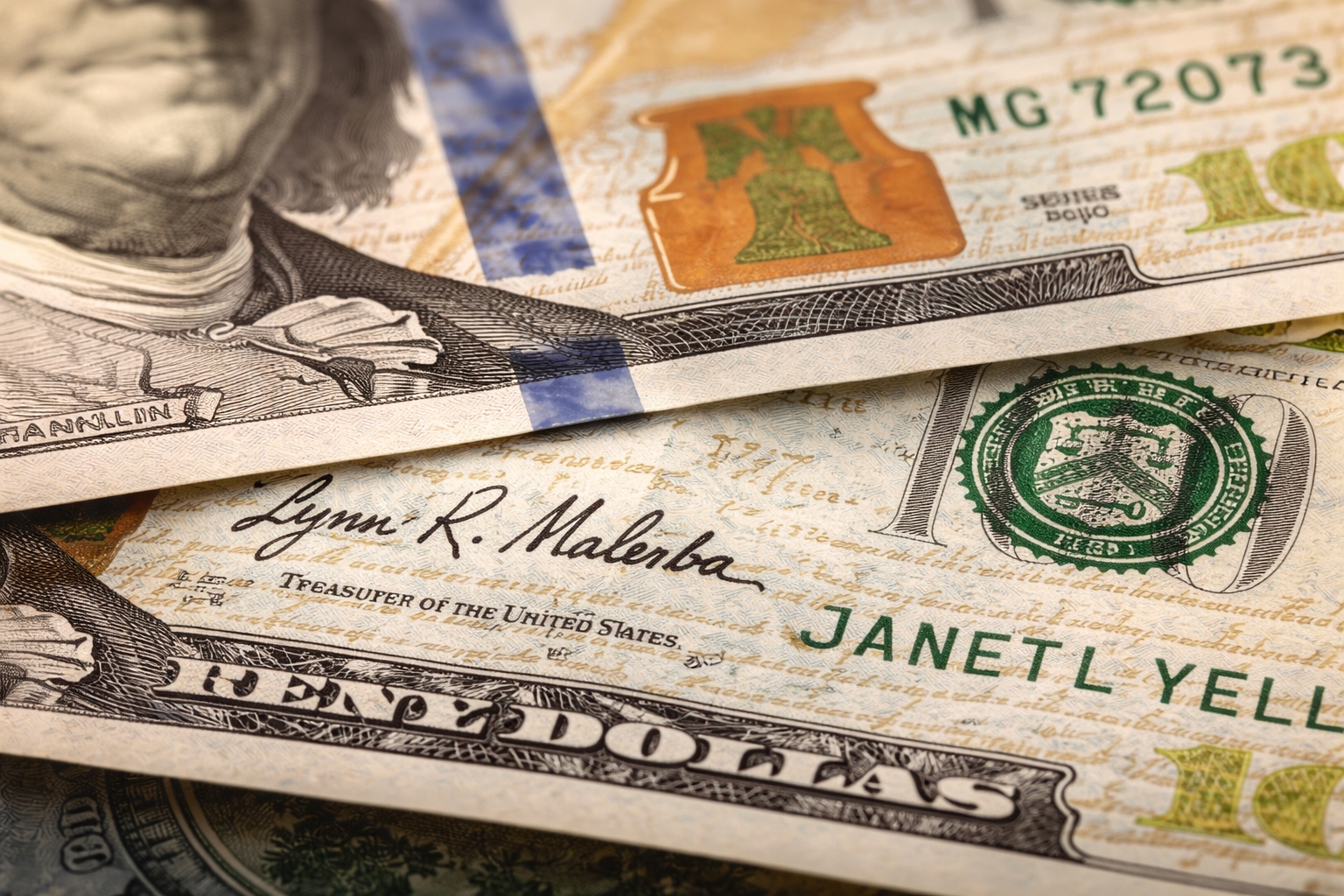
Presidential Signature on Currency: From Tradition to the Future of American Money
The signature of a president on a banknote is a small mark with outsized significance. It signals authority, legitimacy, and a government’s promise to honor the value printed on paper. For more than a century, the United States has followed a consistent practice: the only signatures on its paper currency belong to the Secretary of the Treasury and the Treasurer of the United States, two officials who oversee the nation’s finances and issuance of money. A federal law enacted in 1866 prohibits depicting a living person on American currency, reinforcing the idea that banknotes commemorate national heritage rather than individual political power.
That custom faced an unexpected challenge in 2026 when the U.S. Department of the Treasury announced that President Donald Trump’s signature would appear on new paper notes to celebrate the country’s 250th Independence Day. The department emphasized that this move did not place his portrait on money—portraits of living people remain illegal—but instead added his signature alongside those of the Treasury secretary and treasurer. Supporters hailed the decision as a historic tribute; critics described it as unprecedented and reflective of authoritarian tendencies. To understand why this announcement was so controversial, it helps to trace the history of signatures on U.S. currency, explore how other countries handle signatures, and consider what it means for visitors exploring Washington, D.C.—particularly those staying at Hotel Washington, the closest hotel to the White House positioned at the edge of the White House Lawn.
The Tradition and Law of Signing U.S. Currency
A short history of signatories
When Congress authorized federal paper currency during the Civil War, it insisted on multiple signatures as a safeguard against forgery and fraud. Early notes bore handwritten signatures of the Register of the Treasury and, later, printed signatures of the Treasurer and the Secretary of the Treasury. These officials represented the government’s authority and accountability in issuing money. Over time, the engraved signatures became ceremonial rather than functional, yet they remained on every U.S. bill.
Only three classes of officials have ever signed U.S. paper money: Registers of the Treasury (17 people signed notes between 1861 and 1935), Treasurers (34 people since 1861), and Secretaries of the Treasury (32 people since 1914). In total, since standardized small‑size notes were introduced in 1928, forty‑eight individuals have signed U.S. currency. Their names span the country’s political spectrum and include notable figures such as Salmon P. Chase, William J. Holland, Azie Taylor Morton, and Andrew William Mellon.
The practice of two signatures—one from the Treasurer and one from the Secretary—serves a functional purpose. The Secretary oversees currency design and final approval, while the Treasurer is responsible for safeguarding the money after it is printed. Together, their signatures represent both the legal authority and custodial responsibility behind every note. In 1933, the Register’s signature was phased out, leaving only the Treasurer and Secretary.
Law against living people on currency
Why don’t U.S. banknotes feature the sitting president’s face or signature? Beyond tradition, there is law. After the Civil War, Congress enacted a prohibition on depicting a living person on U.S. currency. The San Francisco Federal Reserve explains that no living person may appear on U.S. currency. The 1866 statute codified a practice meant to avoid idolatry of current leaders, prevent political propaganda, and ensure that currency honors historical contributions rather than living political figures. This law applies to portraits; the 2026 controversy hinges on whether it also implicitly prohibits signatures.
The Secretary of the Treasury is legally responsible for the design of banknotes. When a new Secretary takes office, the series year printed on notes changes. If only the Treasurer changes, a letter suffix (A, B, C, etc.) is appended to the series year. These series changes help collectors and historians date currency and confirm authenticity. The series year on a bill is not its printing year but rather the year when the note’s design (including the combination of signatures) was approved.
Significance of signatures for authenticity
Signatures on currency serve as markers of authenticity. Alongside watermarks, security threads, and microprinting, the combination of signatures indicates when the note was printed and under which officials’ authority. Collectors pay attention to signature combinations because some sets are rarer than others. For example, notes signed by Azie Taylor Morton (Treasurer from 1977–1981 and the only African American to hold that office) are cherished.
Timeline of signatory roles and laws
| Period | Signatory roles | Key legal developments | Notes |
|---|---|---|---|
| 1861–1933 | Register of the Treasury & Treasurer | Civil War‑era legislation establishes federal currency; multiple signatures used to deter counterfeiting. | Handwritten signatures on early notes. |
| 1914–present | Treasurer & Secretary of the Treasury | The 1866 law prohibits living persons on currency; Secretary of the Treasury gains authority over design. | Engraved signatures; Register’s role phased out by 1933. |
| 1928–present | Standard small‑size notes | Series year changes when the Secretary changes; suffix letters denote Treasurer changes. | Collectors track signature combinations to identify series. |
Donald Trump’s Signature Announcement and Its Impact
The 250th Independence Day plan
On 26 March 2026, the U.S. Department of the Treasury issued a bulletin announcing that President Donald Trump’s signature would appear on U.S. paper currency in time for the 250th anniversary of American independence. The announcement stated that the change was symbolic: the president’s autograph would be added alongside the Secretary’s and Treasurer’s signatures on all new notes printed between mid‑2026 and the summer of 2027.
The Treasury justified this action by invoking the significance of the nation’s semiquincentennial. Officials argued that the president, as commander in chief and head of state, represents the nation’s unity on a milestone anniversary. They also claimed that the change did not violate the 1866 law because the president’s portrait would not appear, and the note still bore signatures of the Treasury secretary and treasurer.
Public reaction and legal questions
The announcement drew immediate attention. News outlets highlighted that it would be the first time a sitting president’s name appears on American currency. Supporters framed the move as a celebration of the country’s perseverance. Critics described it as “exploiting a loophole” in the law that forbids living presidents on currency, with some commentators comparing it to practices in authoritarian regimes.
Legal scholars debated whether the 1866 statute, though silent on signatures, implies a general prohibition on any representation of living leaders. The issue underscores the tension between law, tradition, and political symbolism. One point of consensus is that the President lacks authority to redesign currency; that power belongs to the Secretary of the Treasury. Therefore, the Secretary’s complicity is central to the plan’s legitimacy.
Collector interest and market speculation
Collectors responded with a mix of curiosity and skepticism. Because series year changes correspond to new signatures, the addition of a presidential signature could create a unique 2026 series with limited print runs. Some currency dealers predicted that uncirculated notes bearing all three signatures could become sought‑after pieces. Others cautioned that the government may print large quantities, diluting any potential premium.
The Roles of Secretary, Treasurer and Register – Diversity and Representation
Who signs the money?
To appreciate why a presidential signature is unusual, it helps to understand the roles of the existing signatories. The Secretary of the Treasury is a Cabinet member who oversees the nation’s finances, including issuing debt and deciding on currency designs. When a new Secretary takes office, the series year of notes changes to reflect that leadership. The Treasurer of the United States manages the federal government’s accounts and acts as custodian for gold and currency reserves. A change in the Treasurer results in a new letter suffix on the series year. Together, their signatures signal that the note has been authorized and issued under that administration.
Historically, the Register of the Treasury also signed notes. Registers maintained the government’s ledger and were responsible for recording all federal financial transactions. The Register’s signature disappeared from currency after 1933 when the role’s duties were absorbed by other Treasury offices.
Diversity among signatories
The people whose signatures grace U.S. notes represent America’s evolving demographics. Of the 48 individuals who have signed currency since 1928, only a handful have been women or people of color. According to the Bureau of Engraving and Printing, Azie Taylor Morton, Treasurer from 1977–1981, remains the only African American to have served as Treasurer. She worked under President Jimmy Carter and oversaw the U.S. minting and currency operations.
Four African‑American men served as Registers of the Treasury in the late nineteenth and early twentieth centuries, adding diversity to early notes. However, because the Register’s signature was removed by the 1930s, most modern notes show only two signatures, and representation has lagged behind the nation’s demographics.
Women on U.S. currency
No woman currently serves as Secretary or Treasurer. Historically, women have rarely appeared on U.S. currency. The most notable example is Martha Washington, whose portrait adorned $1 silver certificates in the late nineteenth century. These notes, often referred to as “Martha Notes,” are cherished by collectors as symbols of early representation. Modern campaigns to place women on currency—such as plans to feature Harriet Tubman on the $20 bill—reflect ongoing debates about representation and historical memory.
How Other Countries Sign Their Banknotes
A global overview
Banknote signatures vary widely around the world. Some countries require only one signature, while others include two or more. Traditions often derive from historical practices, colonial legacies, or statutory requirements. Understanding these practices highlights how the United States fits within the global landscape of currency design.
Euro area
All euro banknotes bear the signature of the President of the European Central Bank (ECB). This signature appears on the front of every note issued across the nineteen eurozone countries. The first three ECB presidents—Willem F. Duisenberg, Jean‑Claude Trichet and Mario Draghi—each have their signatures on notes; since 2019, the notes feature Christine Lagarde’s signature. The single‑signature system reflects the ECB’s centralized authority over monetary policy.
United Kingdom
Bank of England notes are signed by the Chief Cashier. The signature changes when a new Chief Cashier takes office, signaling a new series. The Bank of England does not include the signatures of elected officials, reflecting the central bank’s independence from the political sphere.
Canada
Canadian banknotes traditionally feature signatures of the Governor of the Bank of Canada and the Deputy Governor. This two‑signature system resembles the U.S. model but remains within the central bank rather than the political executive. Historically, some notes included the signatures of the Minister of Finance, but modern designs emphasize the central bank’s independence.
Other countries
In Australia, the governor and secretary of the Reserve Bank sign notes. India uses the signature of the Governor of the Reserve Bank of India. Japan’s notes carry the signature of the Governor of the Bank of Japan. These variations illustrate that signatures on currency signal trust and accountability, but the individuals chosen reflect each country’s constitutional structure.
Comparison of banknote signature practices
| Country or Region | Signatory roles | Rationale / legal basis | Notes |
|---|---|---|---|
| United States | Secretary of the Treasury & Treasurer of the United States | Dual signatures ensure both design approval and custodial responsibility; 1866 law prohibits living people on currency | Two signatures since 1914; new series or suffix letters mark personnel changes. |
| Euro area | President of the European Central Bank | Reflects centralized authority of ECB over euro monetary policy | One signature on all euro notes; design is uniform across member countries. |
| United Kingdom | Chief Cashier of the Bank of England | Symbolizes bank’s promise to pay and central bank independence | Single signature; no elected officials. |
| Canada | Governor & Deputy Governor of the Bank of Canada | Demonstrates central bank’s autonomy and accountability | Two signatures; previously included Minister of Finance. |
| India | Governor of the Reserve Bank of India | Highlights central bank’s role in issuing currency | Single signature on front of notes. |
| Australia | Governor & Secretary of the Reserve Bank of Australia | Combines policy leadership and administrative oversight | Two signatures on polymer notes. |
Understanding Series Years, Suffix Letters and Authenticity
What the series year means
If you examine a dollar bill closely, you’ll see the word “Series” followed by a year and possibly a letter. Many people mistakenly believe this is the year the bill was printed; however, the series year represents when the design—particularly the combination of signatures—was approved. According to the U.S. Currency Education Program, the series year changes whenever the Secretary of the Treasury changes, and a letter suffix (A, B, C, etc.) is added when the Treasurer changes. If both officials change, the year changes, and no letter is used.
Thus, a Series 2021A note indicates that the design was approved in 2021, the Secretary has not changed since then, but a new Treasurer was appointed, prompting the “A” suffix. A Series 2023 note without a letter suggests that the Secretary changed in 2023. These details help collectors track chronological issuance and verify authenticity.
Suffix letters and signature changes
Suffix letters seldom progress beyond “D” because turnover at the Treasurer’s office is infrequent. For example, Azie Taylor Morton served from 1977 to 1981; during her tenure, there were series 1974 (signed by Secretary Shultz) and 1977 (signed by Secretary Blumenthal), followed by 1977A and 1981 notes. Collectors refer to specific combinations such as “Morton‑Blumenthal” or “Morton‑Regan,” linking the Treasurer and Secretary names.
Authentication tips
Signatures are only one of many security features. When handling cash, look for the watermark (a faint image visible when held to light), the security thread (a thin embedded strip that glows under ultraviolet light), color‑shifting ink on large denominations, and microprinting along the portraits. If a note lacks signatures, has mismatched series details, or appears misaligned, it may be counterfeit. Because the addition of a presidential signature introduces a novel element, counterfeiters may exploit confusion; always compare suspicious bills with known genuine notes.

Visiting the Bureau of Engraving and Printing in Washington, D.C.
A narrative journey
Imagine walking through a cool marble lobby and stepping onto an elevated glass walkway. Below you, millions of dollars cascade through presses as skilled technicians monitor colors, serial numbers and security threads. Fans hum, sheets flutter, and the faint smell of ink fills the air. This is the Bureau of Engraving and Printing (BEP), the “money factory” where nearly all U.S. paper currency is produced. For travelers staying at Hotel Washington—just a short walk from the White House—visiting the BEP offers a fascinating look at how banknotes are born.
The BEP’s Washington, D.C. Tour and Visitor Center reopened in 2026 after extensive renovations. According to the official site, the experience begins with an introductory film and continues with a real‑time guided walk above the production floor. Visitors observe printing presses, cutting machines and quality‑control stations. Admission is free, and tours last about 45 minutes.
Tours run Monday through Friday between 9 a.m. and 2 p.m., with extended hours until 4 p.m. from late March through early September. Reservations are recommended; one adult can reserve up to nine tickets. A limited number of same‑day tickets are released each morning at 8 a.m. The entrance is at 14th and C Streets, S.W., about a 15‑minute walk from Hotel Washington.
Tips for visiting
- Plan ahead: Tours are popular, especially around federal holidays, spring break and the National Cherry Blossom Festival. Reserve tickets online or arrive early for same‑day tickets.
- Allow time for security: Visitors undergo magnetometer screening. Prohibited items include large bags, food and drinks.
- Check for closures: The BEP is closed on federal holidays and from December 24 through January 2.
- Pair with other attractions: After the tour, walk across the National Mall to see the Washington Monument, Lincoln Memorial and Smithsonian museums.
The BEP also operates a facility in Fort Worth, Texas, which offers similar tours. However, visitors to Washington, D.C. will appreciate the convenience of staying near Hotel Washington and exploring the city on foot.
Exploring Washington, D.C., Around Hotel Washington
The hotel at the edge of the White House Lawn
Hotel Washington occupies an enviable address on Pennsylvania Avenue, literally on the edge of the White House Lawn. Its rooftop offers panoramic views of the Executive Mansion, the Washington Monument and the distant Capitol dome. Guests can watch Marines raise the flag or hear the faint strains of Marine Band rehearsals. The hotel’s proximity to America’s seat of power makes it an ideal base for exploring the city’s rich history.
Nearby attractions
Within a few minutes’ walk of Hotel Washington, visitors can experience some of the nation’s most iconic landmarks:
- White House Visitor Center: Learn about the history and workings of the presidential residence at this free museum. Tours of the White House must be requested through a congressional office or embassy several weeks in advance.
- National Mall: Stretching from the Capitol to the Lincoln Memorial, the mall is home to monuments, memorials and museums managed by the National Park Service. Highlights include the Washington Monument, World War II Memorial and Vietnam Veterans Memorial. For more information on hours and events, visit the official National Park Service site.
- Smithsonian Museums: The Smithsonian Institution operates a network of free museums around the mall, including the National Museum of American History, National Museum of African American History and Culture, and National Air and Space Museum.
- National Archives: Home to the Declaration of Independence, Constitution and Bill of Rights. Viewing the original documents provides context for debates about currency, sovereignty and law.
- United States Treasury Building: Located next to the White House, the Treasury Department occasionally offers tours during special events. Even from the outside, the neoclassical facade speaks to the weighty responsibility of managing the nation’s finances.
- National Cherry Blossom Festival: Each spring, Washington celebrates the blossoming cherry trees gifted by Japan. The festival includes parades, cultural performances and spectacular pink blooms along the Tidal Basin. The festival’s official site provides event schedules and history.
For travelers staying at Hotel Washington, these attractions are easily accessible on foot or via Metro. The hotel’s concierge can provide directions, tour information and reservations.
Collecting Banknotes and the Value of Signatures
Why signatures matter to collectors
Collectors of paper money—also known as notaphilists—study signatures as clues to a note’s origin and rarity. Some signature pairs existed only briefly due to turnover in the Treasury. For example, notes signed by Secretary William H. Woodin and Treasurer Katherine F. Howard (both appointed in 1933) are scarce because of the short time both served. When a signature combination corresponds to a significant historical period—such as the Great Depression or a major war—collectors attribute greater value.
The addition of President Trump’s signature could create a new category: triple‑signed notes. If the series is limited to 2026–2027, notes with three signatures may become collectibles, especially if subsequent administrations revert to the traditional two‑signature format. However, buyers should be cautious. Values depend on condition (uncirculated vs. circulated), denomination, serial number (e.g., low numbers or palindromic patterns) and market demand.
Tips for beginning collectors
- Start with circulated notes: Collect small‑denomination notes from different series years and signature combinations. This builds familiarity with design changes.
- Learn grading: Professional grading services evaluate a note’s condition on a scale from “Poor” to “Gem Uncirculated.” Higher grades command higher prices.
- Check for star notes: Replacement notes printed to replace misprinted sheets have a star after the serial number. Star notes can be rarer and more valuable when combined with uncommon signatures.
- Beware of counterfeits: Study security features and purchase from reputable dealers or auction houses. Be skeptical of “special edition” offers that lack official backing.
- Watch for news about commemorative releases: If the Treasury issues limited‑edition independence‑day notes with presentation folders, these may become collectible.
Ethics of collecting circulating notes
Collecting current currency can be controversial because it temporarily removes money from circulation. However, as long as notes are acquired through normal transactions and held in small quantities, the impact is negligible. Collectors should avoid hoarding large sums of high‑denomination notes, which could disrupt supply.
Frequently Asked Questions
How many signatures are on a U.S. bill? – Most modern U.S. notes have two signatures: one from the Treasurer and one from the Secretary of the Treasury. Notes printed before 1933 also included the Register of the Treasury.
Why doesn’t the president sign U.S. money? – A law enacted in 1866 bars living people from appearing on currency. Traditionally, only the Secretary of the Treasury and the Treasurer sign notes.
Will Donald Trump’s signature be on all denominations? – According to the March 2026 announcement, all new notes printed between mid‑2026 and mid‑2027 will carry the president’s signature alongside those of the Secretary and Treasurer.
What does the series year on a bill mean? – The series year marks the year when the note’s design and signature combination were approved; a letter suffix indicates a change in the Treasurer.
How can I tour the Bureau of Engraving and Printing? – Free tours are offered Monday–Friday; reserve tickets online or arrive early for same‑day tickets. Tours last about 45 minutes.
Who was the first woman to sign U.S. currency? – The first woman to sign U.S. currency as Treasurer was Frances Elizabeth Delano, appointed in 1914. The most notable female signer is Azie Taylor Morton (Treasurer 1977–1981), the only African American Treasurer.
Do euro banknotes have multiple signatures? – No. Euro notes bear a single signature: that of the President of the European Central Bank.
What makes a banknote collectible? – Rarity, condition, signature combination, serial number patterns and historical significance determine a note’s value. Limited‑series or error notes can be especially desirable.
Closing Thoughts and Next‑Steps
The story of signatures on currency is a window into American history, law and identity. From the 1866 prohibition on living faces to the impending addition of President Trump’s signature, the evolution of U.S. banknotes reflects shifting attitudes toward authority, representation and national memory. Signatures remind us that money is not just a medium of exchange but also a document of trust.
For travelers staying at Hotel Washington, the closest hotel to the White House positioned at the edge of the White House Lawn, this story is more than an abstract policy debate. It is a tangible journey: a stroll past the Treasury Department where signatures are authorized, a visit to the BEP to watch money being printed, a walk along the National Mall to view memorials that honor the leaders depicted on our bills. Whether you’re a history buff, a collector, or simply curious about how our paper money is made, Washington, D.C. offers an immersive experience. To plan your own exploration—and perhaps secure a room with a view of the nation’s most famous residence—visit The Hotel Washington
Read other posts