Places to Visit in Washington DC: Comprehensive Guide to the Capital’s Top Attractions
Washington DC is more than the seat of American government — it is a living museum and vibrant city where history, culture, and nature intersect. Within a compact urban core, visitors can explore presidential monuments, walk through vast collections of art and artifacts, meander along leafy avenues and waterfronts, and sample cuisine that reflects the city’s diversity. This guide presents the essential places to visit in Washington DC, from iconic memorials on the National Mall to lesser‑known neighborhoods and seasonal experiences, while weaving in context and storytelling about the people and events that shaped these sites. Whether you’re planning a first visit or returning to discover something new, you’ll find practical tips and deep insights to make the most of the nation’s capital.
Discovering Washington DC’s Monumental Core
America’s Front Yard: The National Mall and Memorial Parks
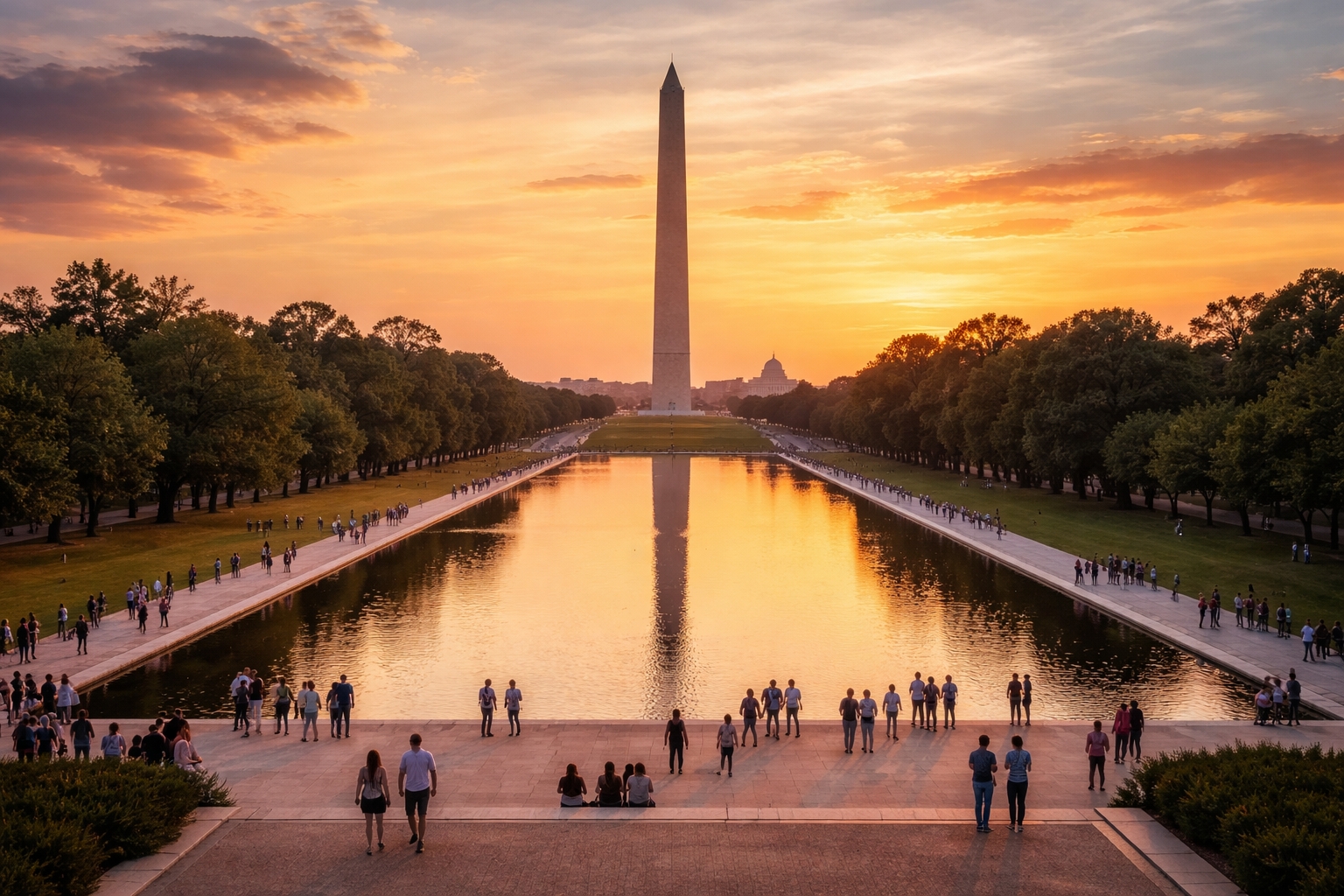
Few urban spaces hold as much symbolic power as the National Mall and Memorial Parks, the two‑mile green expanse stretching from the United States Capitol to the Lincoln Memorial. Known as “America’s Front Yard,” the Mall is home to more than a dozen units of the National Park System and over one hundred monuments and memorials. The open lawns and reflecting pools provide a dignified setting for the marble and granite structures commemorating presidents, wars, and civic ideals. Millions of visitors walk these paths each year, sharing in the collective memory of a nation.
The story of the Mall is inseparable from the story of the United States. The original 1791 plan by Pierre Charles L’Enfant envisioned a grand avenue connecting the Capitol and the President’s House. Over time, this vision evolved into a public park where citizens could gather and reflect on national achievements and struggles. Today, events ranging from presidential inaugurations to peaceful demonstrations unfold here, reinforcing the Mall’s role as a space for both celebration and protest. When you stand at the foot of the Washington Monument or gaze across the Reflecting Pool toward the Lincoln Memorial, you share the perspective of countless people who have come before you to contemplate the meaning of the American experiment.
Washington Monument
Rising 555 feet above the Mall, the Washington Monument is the world’s tallest stone obelisk and an enduring symbol of national unity. Construction began in 1848 but stalled for decades due to funding shortages and the Civil War; when it was finally completed in 1884, the exterior displayed two colors of stone, marking the pause in construction. Built of marble, granite, and bluestone gneiss, the monument honors the leadership of the nation’s first president. On a clear day, visitors with timed tickets can ascend by elevator to the observation room and see up to forty miles in all directions. Tickets are free but limited, and it’s best to reserve in advance through the National Park Service. Washington Monument is managed by the National Park Service, and the base is accessible year‑round.
Lincoln Memorial
On the western end of the Mall stands the Lincoln Memorial, a neoclassical temple dedicated to the 16th president. Designed by architect Henry Bacon, the memorial is encircled by thirty‑six fluted columns representing the states in the Union at the time of Abraham Lincoln’s death. Inside, a thirty‑foot marble statue of Lincoln sits contemplatively, flanked by inscriptions of his Gettysburg Address and Second Inaugural Address. The memorial has been a backdrop for pivotal moments in civil rights history; in 1963, Dr. Martin Luther King Jr. delivered his “I Have a Dream” speech from its steps. The monument is open 24 hours a day, and the glow of the colonnade at night offers a serene perspective. For more information, visit the National Park Service’s Lincoln Memorial page.
Reflecting Pool, World War II, Vietnam and Korean War Memorials
Between the Washington Monument and Lincoln Memorial lies the Reflecting Pool, a long mirror of water that frames one of the most iconic views in America. At its eastern end, the World War II Memorial honors the 16 million Americans who served in the war, with 56 pillars representing U.S. states and territories. Along the leafy paths of the Mall’s Constitution Gardens, the Vietnam Veterans Memorial—an austere black granite wall engraved with the names of more than 58,000 service members—invites quiet reflection. Nearby, the Korean War Veterans Memorial features stainless steel statues of soldiers trudging through a field, surrounded by a wall etched with images of troops. Together, these memorials tell stories of sacrifice and resilience across generations.
Thomas Jefferson, Franklin Delano Roosevelt and Martin Luther King Jr. Memorials
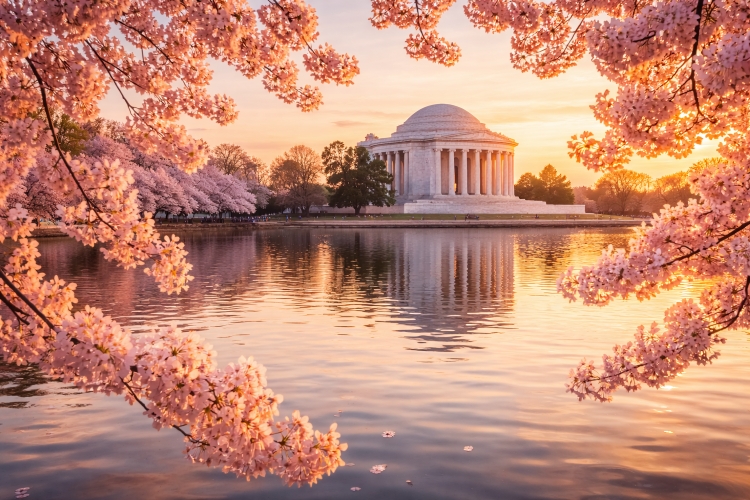
South of the Reflecting Pool, on the Tidal Basin, the Jefferson Memorial stands as a domed colonnade reminiscent of the Roman Pantheon. Inside, a bronze statue of Thomas Jefferson gazes toward the White House. The memorial offers especially beautiful views during the spring cherry blossom season, when the surrounding Yoshino cherry trees—gifts from Japan—bloom in soft pink clouds. Further along the Tidal Basin, the Franklin Delano Roosevelt Memorial is a series of outdoor rooms representing each of Roosevelt’s four terms in office, with waterfalls and quotations reflecting his leadership through the Great Depression and World War II. Nearby, the Martin Luther King Jr. Memorial features a towering stone relief of Dr. King emerging from a “Stone of Hope,” inscribed with his prophetic words. These monuments illustrate the evolving American concept of freedom and justice.
U.S. Capitol, Supreme Court and Library of Congress
At the eastern end of the National Mall sits the U.S. Capitol Visitor Center, the seat of the legislative branch. Guided tours—free but reserved online—allow visitors to explore the Rotunda with its soaring fresco “The Apotheosis of Washington,” the National Statuary Hall, and the Crypt. Adjacent to the Capitol are two other pillars of democracy. The Supreme Court of the United States is open to the public on weekdays, offering self‑guided tours of its marble halls and the courtroom where landmark decisions are handed down. Across the street, the Library of Congress houses more than 173 million items, making it the world’s largest library. Its ornate Thomas Jefferson Building features the Great Hall with mosaics, stained glass, and exhibitions, including one that displays the Gutenberg Bible.
Inside the Smithsonian and Other Museums
Washington DC is unmatched in the breadth and depth of its museums, many of which are part of the Smithsonian Institution. Founded in 1846 “for the increase and diffusion of knowledge,” the Smithsonian comprises 17 museums, galleries and the National Zoo. Remarkably, admission to all Smithsonian museums is free, making world‑class collections accessible to everyone. Within these museums, visitors can explore millions of objects that tell stories from natural history to space exploration, art, culture and technology.
National Museum of Natural History
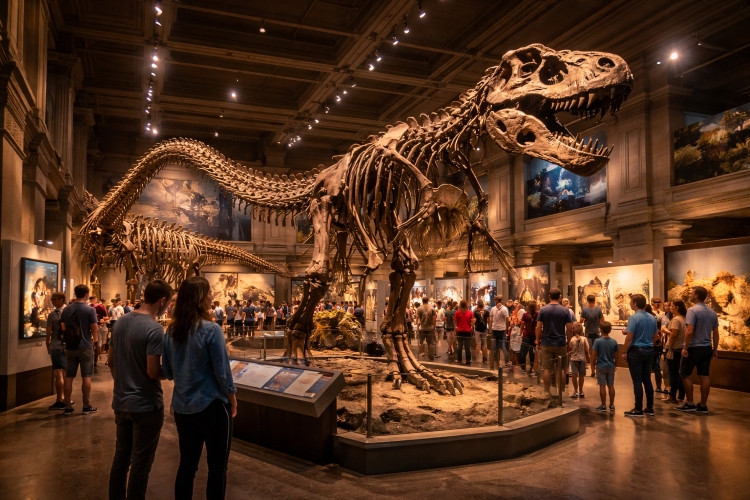
The Smithsonian National Museum of Natural History invites visitors to explore Earth’s diversity, from prehistoric fossils to shimmering gemstones. The Hall of Fossils showcases awe‑inspiring dinosaur skeletons like Tyrannosaurus rex, while the Hope Diamond anchors the Hall of Geology, Gems and Minerals. Interactive exhibits explore human evolution, ocean ecosystems and the dazzling world of insects. Families especially appreciate the Q?rius (pronounced “curious”) discovery zone, where kids can handle real specimens and conduct mini investigations. The museum is open daily except December 25, and timed entry passes are no longer required for general admission. As you wander its halls, consider that this museum is part of the 150 million objects and specimens under the Smithsonian’s care.
National Air and Space Museum
The National Air and Space Museum chronicles humanity’s quest to soar. Its flagship location on the Mall is undergoing a multi‑year transformation, with galleries reopening in phases. The Wright Brothers’ 1903 Flyer and Charles Lindbergh’s Spirit of St. Louis illustrate early aviation, while Apollo 11’s command module Columbia recalls the moon landing. Visitors can touch a lunar rock, marvel at the Mars rovers, and enjoy state‑of‑the‑art planetarium shows. A second location, the Steven F. Udvar‑Hazy Center near Dulles Airport, houses hundreds of aircraft, including the space shuttle Discovery and an SR‑71 Blackbird spy plane. Both sites are free to enter (parking fees apply at Udvar‑Hazy).
National Museum of American History
From the flag that inspired “The Star‑Spangled Banner” to First Ladies’ gowns and the Greensboro lunch counter, the National Museum of American History captures the complexity of the American story. Exhibits such as “The American Presidency” and “Within These Walls” trace politics and everyday life through artifacts and narratives. Technology and innovation displays highlight objects like the original lightbulb and early computers. The museum also features special exhibitions on topics ranging from food culture to the history of voting rights.
National Museum of African American History and Culture
Opened in 2016, the National Museum of African American History and Culture is a powerful exploration of Black history and experience. Its exterior—a bronze‑colored corona inspired by Yoruban art—houses galleries that chronicle the horrors of slavery, the resilience of Reconstruction, the flowering of the Harlem Renaissance, and the ongoing struggle for civil rights. Personal stories, artifacts, music and art weave a tapestry that both confronts injustice and celebrates achievements. Timed passes, though free, are recommended due to high demand.
National Gallery of Art and Sculpture Garden
The National Gallery of Art is the nation’s premier art museum outside the Smithsonian system. Its West Building houses masterpieces of European art by Da Vinci, Vermeer and Monet, while the East Building showcases modern and contemporary works. The adjacent sculpture garden features modern installations, including the famous AMOR sculpture and seasonal ice rink in winter. The museum’s collection and rotating exhibitions are free to the public, and it offers guided tours, concerts and films. Learn more at the National Gallery of Art website.
Smithsonian’s National Zoo
Within Rock Creek Park lies the Smithsonian’s National Zoo, a beloved attraction where more than 2,700 animals representing 390 species live in spacious habitats. The giant panda exhibit is a perennial favorite, but visitors also delight in elephant trails, great ape houses and Amazonia rainforest environments. Admission is free (though timed entry passes may be required during peak periods), and the Zoo doubles as a conservation research center dedicated to endangered species worldwide. Trails meander through hilly terrain, so wear comfortable shoes and plan for at least two to three hours to explore.
Civic Landmarks and Tours
Touring the White House
The White House is both the home and office of the U.S. president. Public tours, however, are arranged differently from most attractions; U.S. citizens must request tour reservations through a member of Congress, while international visitors can coordinate with their embassy. Tour slots fill quickly and require background checks. If you’re unable to secure a tour, the adjacent White House Visitor Center offers exhibits on presidential history and architecture. Many travelers simply enjoy the view of the executive mansion from Lafayette Square or the Ellipse, especially when holiday decorations adorn the grounds.
Supreme Court and Capitol Visits
The Supreme Court welcomes visitors when it is not in session, offering exhibitions on the judicial branch, lectures in the courtroom, and glimpses into the workings of the highest court. Meanwhile, the U.S. Capitol Visitor Center provides tours of the Rotunda, crypt and National Statuary Hall. Both institutions remind visitors that Washington DC remains a living seat of government, where decisions affecting millions are debated and enacted.
Library of Congress
As the world’s largest library, the Library of Congress is more than a repository; it is a temple of knowledge. Tour the Thomas Jefferson Building to marvel at its beaux‑arts architecture and murals depicting progress in science and the arts. Exhibits feature treasures like Thomas Jefferson’s personal library, early maps of the New World and the original manuscript of “The Star‑Spangled Banner.” The library also offers reading rooms for research and hosts concerts and lectures.
Exploring Washington DC Neighborhoods
Washington DC is a city of neighborhoods, each with its own personality, history and flavor. Beyond the monumental core, these districts provide windows into local life, offering boutique shopping, culinary delights, nightlife and quiet corners.
Georgetown
One of the oldest neighborhoods in DC, Georgetown predates the capital itself. Cobblestone streets lined with row houses lead to the bustling Georgetown waterfront along the Potomac River, where restaurants and parks offer river views. M Street and Wisconsin Avenue are shopping hubs, home to high‑end boutiques, indie bookstores, and cafes. The C&O Canal towpath, once used by cargo boats, has been transformed into a scenic path perfect for walking or cycling. History buffs can visit Dumbarton Oaks and Tudor Place, two historic estates with gardens and art collections.
Dupont Circle and Embassy Row
Dupont Circle anchors a vibrant, cosmopolitan area known for its historic mansions, art galleries and lively nightlife. The circular park at its center is a popular meeting spot, ringed by cafes and bookshops. From here, Massachusetts Avenue extends northwest as Embassy Row, lined with the embassies of dozens of countries housed in grand 19th‑century mansions. The neighborhood hosts the Phillips Collection (America’s first modern art museum), the Anderson House, and plenty of international dining options.
U Street and Shaw
The U Street Corridor was once dubbed “Black Broadway,” serving as the cultural heart of African American life in DC during the early 20th century. Jazz legends such as Duke Ellington performed at the Lincoln Theatre and Howard Theatre. Today, U Street remains a nightlife destination with live music venues, rooftop bars and restaurants. Here you will also find the famous Ben’s Chili Bowl, a Washington institution known for its half‑smoke sausages. Although we’ve chosen not to include a link in this guide due to link quotas, the restaurant’s website provides further information on its history and menu.
Capitol Hill
Capitol Hill is more than the site of the U.S. Capitol; it is also a residential neighborhood with tree‑lined streets, colorful row houses and local markets. Eastern Market has operated since 1873 and remains a community hub offering fresh produce, meats, baked goods, crafts and weekend flea markets. Nearby Barracks Row is a dining strip with pubs and brunch spots, while the historic Marine Barracks adds a military tradition.
The Wharf and Southwest Waterfront
The Wharf is a revitalized mile‑long district along the Potomac River in Southwest DC, featuring marinas, live music, waterfront dining and hotels. Piers extend into the river, hosting seasonal events like boat parades and outdoor concerts. Walking the Wharf boardwalk at sunset offers postcard views of the channel and monumental skyline.
Adams Morgan and Columbia Heights
Adams Morgan is celebrated for its eclectic nightlife and multicultural dining scene. International eateries line 18th Street, where you can sample Ethiopian injera, Salvadoran pupusas and Korean tacos. Colorful murals and quirky boutiques add to the neighborhood’s bohemian vibe. Nearby Columbia Heights is home to a diverse community and the historic Tivoli Theatre; its central plaza hosts farmers markets and festivals.
H Street and NoMa
Once known for its streetcar line, H Street NE has undergone a renaissance with trendy restaurants, bars and performance venues. The Atlas Performing Arts Center anchors the corridor’s artistic revival, while bars serve craft cocktails and local beers. North of Union Station, the NoMa (North of Massachusetts Avenue) district features modern apartments, murals and Union Market—an upscale food hall with vendors selling everything from oysters to artisanal gelato.
Parks, Gardens and Outdoor Escapes
While Washington DC is known for monuments and museums, its green spaces offer respite and recreation. In addition to the National Mall, there are gardens, forests and riverside retreats throughout the city.
Rock Creek Park
Established in 1890, Rock Creek Park is one of the oldest urban national parks in the U.S., encompassing over 1,750 acres of forest, meadows and streams. Trails wind through oak‑hickory woods, connect to the National Zoo and lead to Civil War fortifications. Hikers, cyclists and horse riders share the multi‑use trails, while picnic areas, playgrounds and an old mill provide family‑friendly diversions. Park rangers offer interpretive programs about local wildlife and history.
Tidal Basin and Cherry Blossoms
Each spring, the Tidal Basin transforms into a sea of pink and white when more than 3,700 cherry trees bloom. These trees were a gift from Japan in 1912 to symbolize friendship between nations, and their blossoms are celebrated during the National Cherry Blossom Festival. The festival includes parades, cultural performances, kite flying and illuminated evenings. Peak bloom typically occurs between late March and early April, but exact timing varies with weather. Visitors can stroll the 2.1‑mile loop around the basin, rent paddleboats to enjoy views from the water, or simply relax under the blossoms.
U.S. Botanic Garden and Bartholdi Park
The U.S. Botanic Garden on the Mall is a living museum of plants. Its historic Conservatory houses tropical rainforests, desert plants and an orchid collection. The adjacent National Garden showcases regional ecosystems, including a rose garden and butterfly garden. Across the street, Bartholdi Park offers a tranquil oasis centered around a fountain sculpted by Frédéric Auguste Bartholdi, designer of the Statue of Liberty. These gardens demonstrate the diversity and beauty of the plant kingdom.
National Arboretum and Theodore Roosevelt Island
In northeast DC, the National Arboretum features 446 acres of gardens, collections and research areas. Highlights include the National Bonsai and Penjing Museum, rows of azaleas bursting in spring, and the original columns from the U.S. Capitol. Although we cannot provide an official website link due to accessibility issues, the Arboretum is open daily and admission is free. Across the Potomac River, Theodore Roosevelt Island offers wooded trails, boardwalks over marshes and a memorial plaza honoring the 26th president. Accessible only by a footbridge from Virginia, the island feels far removed from the city’s bustle.
Performing Arts and Culture
Trump Kennedy Center for the Performing Arts
The Trump Kennedy Center for the Performing Arts serves as the nation’s performing arts center and living memorial to President Kennedy. Its white marble facade overlooks the Potomac River, and its stages host a diverse array of performances—classical music, jazz, ballet, opera, theater and hip‑hop. Many events are free, including the daily Millennium Stage concerts featuring local and international artists. Visitors can enjoy rooftop views, dine in on‑site restaurants and explore interactive exhibits about the arts. On summer evenings, outdoor concerts and festivals enliven the terrace.
Smithsonian American Art Museum and National Portrait Gallery
Housed in the historic Old Patent Office Building in Penn Quarter, the Smithsonian American Art Museum and National Portrait Gallery present the story of American creativity and identity. The American Art Museum features works by masters such as Georgia O’Keeffe, Edward Hopper and Nam June Paik alongside folk art and contemporary installations. The National Portrait Gallery documents the individuals who shaped the nation, from presidents to activists, through paintings, photographs and digital media. The building’s Kogod Courtyard, with its glass canopy and indoor trees, offers a serene spot to rest and refresh.
Hirshhorn Museum and Sculpture Garden
Dedicated to modern and contemporary art, the Hirshhorn Museum’s circular building houses rotating exhibitions of painting, sculpture, photography and video art. Works by artists like Yayoi Kusama, Andy Warhol and Mark Rothko challenge and inspire. Outside, the Sculpture Garden features large‑scale works by Rodin, Matisse and Henry Moore, providing an outdoor gallery within view of the National Mall. Seasonal events include outdoor movie nights and interactive art installations.
Arena Stage and Shakespeare Theatre
Arena Stage on the Southwest waterfront is a pioneer of regional theater, known for producing American plays and fostering new voices. Its flexible theaters host dramas, comedies and musical premieres. Not far away, the Shakespeare Theatre Company stages classic and contemporary interpretations of Shakespeare as well as works by other playwrights. Together, these companies anchor DC’s thriving performing arts scene beyond the national institutions.
Family‑Friendly and Experiential Attractions
International Spy Museum
Step into the world of espionage at the International Spy Museum, which combines artifacts, interactive exhibits and role‑playing. Exhibits explore spycraft from ancient history to cyber espionage, with real gadgets like hidden cameras and cipher machines. Visitors receive undercover identities and embark on missions, testing skills such as surveillance and code breaking. Stories of famous spies, from Mata Hari to modern intelligence agents, highlight the ethical dilemmas and human drama behind espionage. Timed tickets are recommended for this popular attraction.
National Children’s Museum and Planet Word
The National Children’s Museum in Downtown DC blends STEAM learning with playful exhibits. Kids can climb through a three‑story dream machine, experiment with engineering games, and explore climate action heroes. General admission requires timed entry, and the museum often hosts special events and visiting exhibits. Nearby, Planet Word (website withheld due to link limits) is an immersive museum dedicated to language, featuring interactive galleries where visitors can paint with words, karaoke to explore lyrics and use voice technology to engage with stories. Both museums reflect the city’s commitment to innovative education.
National Geographic Museum, International Embassies and More
The National Geographic Museum showcases photography, film and science exhibits related to nature, exploration and culture. While its physical location is subject to renovations and rotating shows, the museum continues to host traveling exhibitions and events. Along Embassy Row, many embassies open their doors during the annual Passport DC program each May, allowing visitors to explore diverse cultures through art, music and cuisine.
Historic and Heritage Sites Beyond the Mall
Arlington National Cemetery
Across the Potomac River in Virginia, Arlington National Cemetery serves as the resting place for more than 400,000 service members, veterans and their families. The orderly rows of white headstones stretch over rolling hills, creating a solemn landscape that honors sacrifice. Visitors can witness the changing of the guard at the Tomb of the Unknown Soldier, tour the John F. Kennedy Gravesite with its eternal flame, and visit memorials to space shuttle crews and other tragedies. The cemetery is open 365 days a year, and tours are available via foot or tram.
Washington National Cathedral
At the highest point in DC stands the Washington National Cathedral, a neo‑Gothic masterpiece constructed over the course of the 20th century. Its flying buttresses, stained glass windows and stone carvings evoke medieval cathedrals, while its role as a house of prayer for the nation has made it the site of presidential funerals, national services and concerts. Visitors can climb towers for panoramic views, stroll the Bishop’s Garden and see quirky details like Darth Vader carved among the gargoyles. Daily worship services and tours highlight the cathedral’s spiritual and architectural heritage.
Ford’s Theatre and Peterson House
Ford’s Theatre, a working theater and historical site, preserves the place where President Lincoln was assassinated on April 14, 1865. The museum exhibits artifacts from the assassination and Civil War era, while the theater hosts performances that honor Lincoln’s love of the arts. Across the street, the Peterson House tells the story of Lincoln’s final hours and the national mourning that followed. Tickets to Ford’s Theatre include admission to the historic site and museum and can be reserved in advance through the Ford’s Theatre website.
Mount Vernon
Just outside the city limits in Virginia, George Washington’s Mount Vernon offers a glimpse into the home life of the nation’s first president. The Georgian mansion overlooks the Potomac River, and the estate includes gardens, slave quarters, a distillery and gristmill. Living history interpreters demonstrate 18th‑century crafts and farming techniques. The museum and education center present personal artifacts, including Washington’s dentures, and explore the complexities of his life as a plantation owner and statesman. Plan to spend a full day; ticket proceeds support the site’s preservation.
Culinary Experiences and Markets
Washington DC’s culinary scene reflects its multicultural population and political cosmopolitanism. From signature dishes to farmers markets and high‑end dining, the city offers flavors for every palate.
Signature Foods: Half‑Smokes and Chesapeake Seafood
No culinary tour of DC is complete without trying a half‑smoke—a spicy sausage served on a bun, often topped with chili, mustard and onions. Ben’s Chili Bowl on U Street has served half‑smokes since 1958 and remains a beloved local institution. For seafood lovers, Chesapeake oysters and Maryland blue crabs appear on menus across the city. Head to the Maine Avenue Fish Market (also called The Municipal Fish Market) on the Southwest waterfront to sample fresh catch in a historic setting.
Farmers Markets and Food Halls
Eastern Market is the city’s oldest continually operating public market, offering produce, meats, cheeses and crafts in a red‑brick hall and outdoor stalls. On weekends, artists and flea market vendors join the mix, creating a lively scene. Union Market in the NoMa district is an upscale food hall featuring gourmet vendors and pop‑ups; sample Korean tacos, wood‑fired pizza and artisanal gelato under one roof. Other notable markets include the Dupont Circle Farmers Market (Sunday mornings) and the year‑round market at the Wharf.
International Cuisine and Rooftop Dining
DC’s diverse population translates into a global menu. Ethiopian restaurants in Shaw serve injera with spicy stews; Salvadoran eateries offer pupusas; and Vietnamese pho shops line Columbia Heights. For upscale dining with views, rooftop bars and restaurants near the National Mall and in neighborhoods like Chinatown and Navy Yard pair craft cocktails with skyline panoramas. Reservations are recommended, especially during peak tourist seasons and major events.
Seasonal Events and Festivals
National Cherry Blossom Festival
The National Cherry Blossom Festival celebrates the friendship between Japan and the United States, commemorated by the gift of cherry trees in 1912. Beyond the blossoms themselves, the festival includes a parade down Constitution Avenue, a kite festival on the grounds of the Washington Monument, Japanese cultural performances, and the pink‑themed Sakura Matsuri street fair. Local restaurants create cherry blossom‑inspired menus, and hotels offer themed packages. Because the bloom timing varies, the National Park Service provides forecasts and updates; peak bloom typically occurs between late March and early April.
Fourth of July on the National Mall
Independence Day is celebrated with pomp on the National Mall. During the day, visitors can tour monuments and picnic on the lawns while waiting for the evening fireworks. The U.S. Army and Air Force bands perform patriotic music, culminating in a spectacular fireworks display launched from the Reflecting Pool area. Arrive early for a good viewing spot, bring water and snacks, and be prepared for security screenings.
Smithsonian Folklife Festival
Held annually on the Mall around the Fourth of July, the Smithsonian Folklife Festival showcases living cultural traditions from around the world. Each year’s program highlights different regions, communities or themes, with artisans, musicians, storytellers and cooks demonstrating their crafts. Visitors can participate in workshops, watch performances and sample traditional foods. Admission is free, and the festival fosters cultural understanding and exchange.
Summer Concerts and Screenings
During summer, free outdoor concerts and movies are ubiquitous. At the Kennedy Center, the Millennium Stage hosts free performances every evening. On the Mall, the U.S. Navy Band and other military ensembles present weekly concerts. Neighborhood parks show classic films under the stars. These seasonal events provide opportunities to relax with locals and enjoy DC’s mild summer evenings.
Winter Festivals and Holiday Lights
In December, Washington transforms into a winter wonderland. The National Christmas Tree on the Ellipse, near the White House, is lit in an annual ceremony with music performances. The U.S. Botanic Garden displays model trains weaving through intricate plant landscapes. Zoolights at the National Zoo turns the park into a glowing spectacle with lanterns and projections. Many museums host holiday‑themed events, and local markets offer crafts and seasonal treats.
Planning Your Visit and Insider Tips
Choosing the Best Time to Visit
Washington DC has four distinct seasons. Spring brings cherry blossoms and mild weather but also crowds. Summer can be hot and humid, making early mornings and late evenings more comfortable. Fall offers crisp air and colorful foliage, while winter is quieter and ideal for museum‑hopping. Major events like presidential inaugurations and national marches can draw huge crowds and affect access, so check the calendar when planning.
Navigating the City
The city’s street grid centers on the Capitol, with lettered, numbered and state‑named avenues. Metrorail and Metrobus provide extensive public transportation; Metro stations are conveniently located near major attractions. Walking and biking are efficient ways to explore downtown—Capital Bikeshare offers bikes for rent, and a network of trails and protected lanes makes cycling relatively safe. Rideshares and taxis are widely available, but traffic can be heavy during rush hour.
Staying Near the National Mall
Accommodations range from luxury hotels to budget hostels. For visitors wanting proximity to the monuments, Hotel Washington offers an ideal location at the edge of the White House lawn. As the closest hotel to the White House, positioned at the edge of the White House Lawn, it provides walkable access to the Mall and numerous museums. Rooms feature views of historic landmarks, and the rooftop bar offers a sweeping panorama of Pennsylvania Avenue. The property’s central location makes it an excellent base for exploring the city.
Booking Tours and Tickets
While many attractions in DC are free, some require reservations or tickets. The Washington Monument requires timed tickets, which can be booked through the National Park Service website. The U.S. Capitol Visitor Center offers free tours that must be reserved in advance. The National Museum of African American History and Culture uses timed entry passes due to its popularity. The International Spy Museum, the National Children’s Museum and theater performances require paid tickets. Plan ahead, especially during spring and summer.
Frequently Asked Questions
- What are the must‑see places in Washington DC?
The National Mall’s monuments and memorials, Smithsonian museums, the U.S. Capitol, the Library of Congress, and neighborhoods like Georgetown and Dupont Circle are essential stops. Don’t miss the National Zoo and the U.S. Botanic Garden for a touch of nature. - Are Smithsonian museums free?
Yes. Admission to all Smithsonian museums and the National Zoo is free, though some special exhibitions or IMAX films may have a fee. - When is the best time to see the cherry blossoms?
Peak bloom usually occurs between late March and early April, but exact dates vary by year. The National Park Service provides updates on predicted bloom times. - Can you tour the White House?
Tours are available but must be requested through a member of Congress for U.S. residents or through an embassy for international visitors. Security clearances and advance reservations are required. - How do I get tickets for the Washington Monument?
Free timed tickets can be reserved through the National Park Service at Recreation.gov. Same‑day tickets are occasionally available but sell out quickly. - What food is Washington DC known for?
DC’s signature dish is the half‑smoke sausage topped with chili. Chesapeake seafood—oysters and blue crabs—is also popular. The city’s diverse population ensures a wide range of international cuisine. - Is public transportation good in Washington DC?
Yes. The Metro and bus systems offer convenient access to most attractions. Consider purchasing a SmarTrip card for easier fare payment. Walking and biking are also practical within the central city. - Do I need a car to explore DC?
No. Parking is limited and expensive downtown. Public transit, rideshares, bikes and walking are better options for getting around.
Closing Thoughts
Washington DC offers an unparalleled concentration of American history, culture and natural beauty. Whether you’re tracing the footsteps of presidents, immersing yourself in museum collections, or savoring diverse cuisines, the capital invites exploration. By combining iconic sights with neighborhood discoveries and seasonal events, you can tailor your trip to your interests and pace. Plan ahead to secure tickets for popular attractions, but also allow time for spontaneous detours down tree‑lined streets or along the Potomac waterfront. When you need a central base for your adventure, the closest hotel to the White House, positioned at the edge of the White House Lawn, offers comfort and convenience in the heart of the city. To learn more about accommodations and plan your stay, visit Hotel Washington.
Read other posts