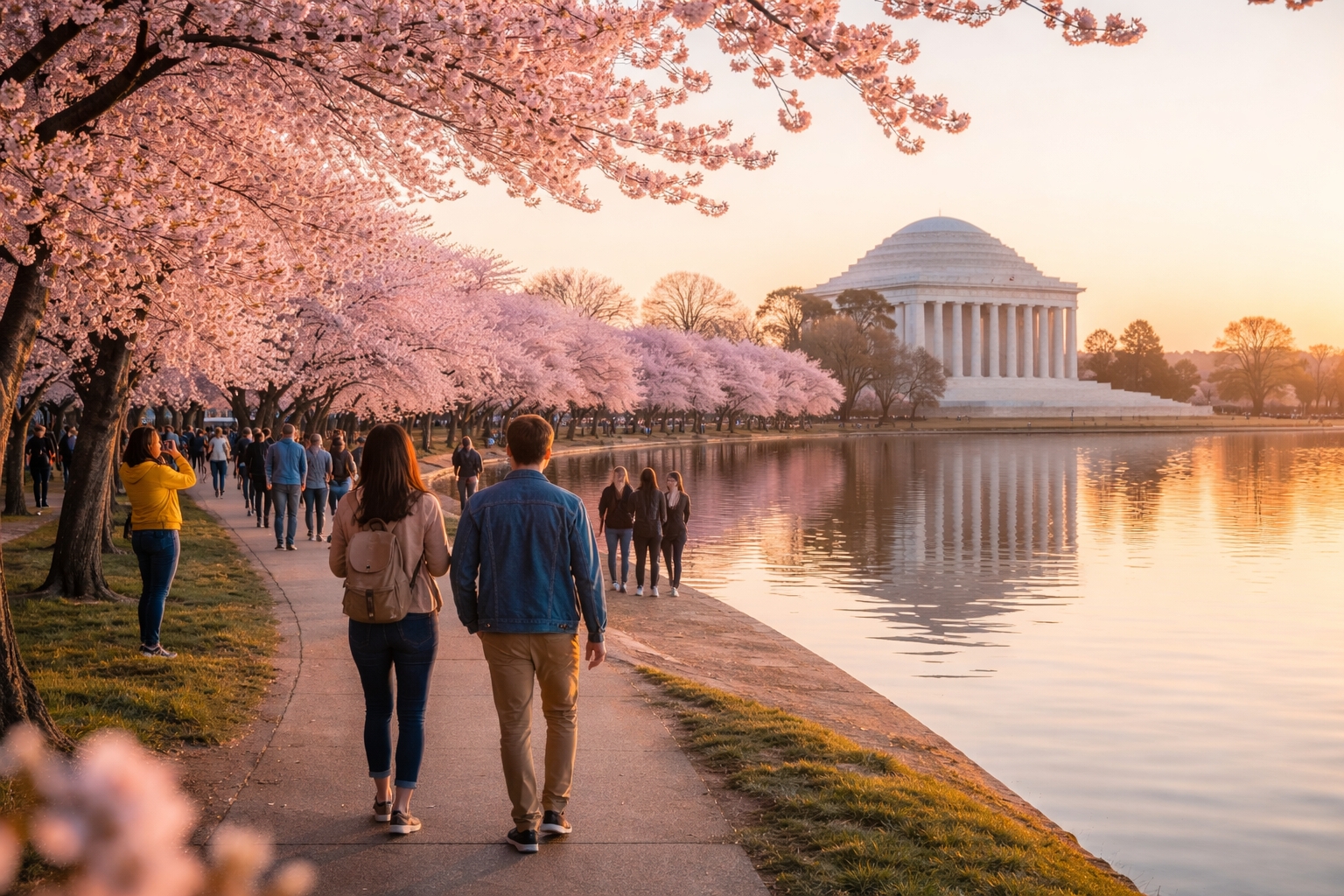
Cherry Blossom Peak Bloom 2026 has Arrived
In Washington DC, peak bloom refers to the exact moment when roughly seventy percent of the Yoshino cherry blossoms around the Tidal Basin unfurl their petals. In 2026 this delicate spectacle reached its height on March 26. The timing varies each year but the magic is always fleeting, so understanding when and where to witness it makes the difference between a dream trip and a missed opportunity. This comprehensive guide will equip you with everything you need to know about the 2026 season, from accurate dates and best viewing spots to planning tips, historical context and festival highlights.
When Is Peak Bloom in 2026?
The story of 2026 began months before the blossoms opened. In early March the National Park Service, which monitors the development stages of the cherry trees, predicted that peak bloom would occur between March 29 and April 1. That forecast was based on historical averages, accumulated growing degree days and the emerging weather pattern. Many locals and out‑of‑towners booked trips for the final days of March, expecting to see the petals at their fullest.
As the month progressed, however, a warmer period accelerated bud development. Tiny green buds emerged on March 11, and by March 13 the first florets were visible on the branches. Over the next week the buds elongated and swelled. Seasoned cherry blossom watchers sensed that the flowers would peak earlier than predicted. Their instincts proved correct. On March 26 the National Park Service declared that peak bloom had arrived. Millions of delicate pink and white petals opened in unison, blanketing the Tidal Basin with an ethereal canopy.
For first‑time visitors, the sudden arrival of peak bloom can be a surprise. Unlike foliage season, which unfolds gradually over weeks, the cherry blossoms move swiftly from one stage to the next. Weather fluctuations play a big role. A cold snap can stall development for days, while an unexpected warm front can accelerate it. Wind and rain can shorten the bloom altogether. For that reason travelers planning around the cherry blossoms should build in flexibility, aim to arrive a day or two before the predicted peak and monitor updates from the National Park Service closely.
Bud Stage Timeline
The cherry blossoms progress through a series of recognizable stages before peak bloom. In 2026 the timeline looked like this:
| Stage | Date (2026) | Notes |
|---|---|---|
| Green bud | March 11 | The first buds appear as tiny green bumps on the branches. |
| Florets visible | March 13 | Small florets begin to poke out, hinting at the color to come. |
| Extension of florets | March 16 | The florets elongate and separate, but petals remain mostly closed. |
| Peduncle elongation | March 21 | Peduncles (the stems) lengthen and the blossoms begin to droop slightly. |
| Puffy white | March 22 | The buds swell and turn puffy white, a sign that bloom is imminent. |
| Peak bloom | March 26 | Approximately 70 % of Yoshino blossoms open, creating a cloud‑like canopy. |
Watching these stages unfold adds a layer of appreciation to the bloom. Green buds signal that spring is on its way. Puffy white stage tells you that peak is just days away. For photographers, the puffy white stage can be just as beautiful as peak bloom, providing softer tones and fewer crowds. For botanists and curious travelers, the progression offers insight into the biology of flowering trees.
Factors Affecting Peak Bloom
Many forces shape when the cherry blossoms will reach peak bloom. The most influential is temperature. Warmer winters accelerate bud development; colder winters slow it down. The amount of precipitation and daylight also matters. Trees need enough moisture to support the growth of buds and petals, and longer daylight signals them to prepare for flowering. Sudden freezes can damage buds and delay or diminish the bloom. Storms with heavy rain and wind can strip petals prematurely. Climate change has made forecasting more complex. The average peak bloom date has shifted slightly earlier over the last century, but extreme weather events mean any given year can buck the trend. Travelers should treat predictions as guidance rather than absolute certainty.
Where to Experience the Cherry Blossoms
The cherry blossoms transform much of Washington DC, but certain spots offer particularly memorable perspectives. The Tidal Basin is the iconic heart of the display, while nearby memorials and parks provide alternative views. In 2026 visitors had to adapt to a temporary closure of part of the Tidal Basin’s path, but the overall loop remained accessible. Here’s a guide to the best places to immerse yourself in the blossoms.
Tidal Basin
The Tidal Basin is the epicenter of cherry blossom viewing. A two‑mile loop circles the water, passing by the Jefferson Memorial and the Franklin Delano Roosevelt Memorial. Mature Yoshino cherry trees arch over the path, creating tunnels of pink and white. In early morning their reflections on the still water multiply the effect, while at midday the blossoms glow against bright blue sky. In the evening the setting sun bathes the petals in a warm glow.
In 2026 a section of the walkway between the Jefferson and FDR memorials was closed to protect new plantings and allow the newly reconstructed seawall to stabilize. Fences redirected visitors to alternate routes but the full loop remained walkable. For many people the slight detour was a small price to pay for improved infrastructure that will safeguard the trees for generations to come. The closure also had an unexpected benefit: it spread out the crowds and revealed new photographic angles. Early risers who walked the loop at dawn often found themselves alone with the blossoms and the monuments rising over the misty water.
Those seeking the most iconic experience should start at the eastern side of the Basin near the Jefferson Memorial and follow the path clockwise. This direction provides uninterrupted views of the Washington Monument reflected on the water. Along the way you will pass under branches laden with blooms and cross small bridges that frame the District’s monuments. The experience is immersive; petals brush your shoulders and gather at your feet. Be prepared for uneven surfaces and occasional puddles. Comfortable walking shoes and awareness of your surroundings will keep you safe.
National Mall and Memorials
The National Mall stretches from the Lincoln Memorial to the U.S. Capitol. It is a broad green park lined with Smithsonian museums and dotted with monuments. While the cherry blossoms are most concentrated around the Tidal Basin, the Mall offers its own charm. Cherry trees border some of the reflecting pools and museum gardens, providing a serene contrast to the monuments and large open lawns. Here you can stroll and take in views of the Lincoln Memorial, the Washington Monument and the Capitol dome rising above the cherry‑tinted canopy.
If you have extra time, wander toward the World War II Memorial and see how the blossoms frame fountains and bronze stars. The gentle slope of the Mall allows for panoramic photographs where the cherry trees lead the eye toward iconic architecture. Families appreciate the wide sidewalks and proximity to restrooms, food trucks and museums. During the National Cherry Blossom Festival, street performers and art installations add vibrancy to the Mall without diminishing its tranquil atmosphere.
Martin Luther King Jr. Memorial
On the southwest edge of the Tidal Basin stands the Martin Luther King Jr. Memorial. A towering statue of Dr. King emerges from a Mountain of Despair, facing a 450‑foot Inscription Wall engraved with his words. In early spring the memorial becomes a sanctuary of reflection and beauty. Cherry trees encircle the sculpture, their branches forming a natural canopy that softens the granite and adds a sense of renewal. Because the memorial sits slightly off the main loop, it tends to be quieter than the area near the Jefferson Memorial. Visitors linger on benches, read the quotes and contemplate the interplay of civil rights history and natural wonder. The walkway closure in 2026 funnelled some foot traffic toward this memorial, introducing more people to its powerful design.
East Potomac Park and Hains Point
Those seeking space and serenity should venture to East Potomac Park. This narrow peninsula extends south of the Tidal Basin, with the Potomac River on one side and the Washington Channel on the other. A paved loop called Hains Point runs through the park, lined with hundreds of cherry trees. The park offers open vistas and fewer crowds, making it ideal for long bike rides, picnics and extended photography sessions. On weekends locals play softball and practice yoga under the blossoms, creating a lively community vibe. Because East Potomac Park is less accessible by Metro, it attracts fewer tourists than the Tidal Basin. In 2026 this location was a refuge for those wanting to escape the festival bustle. Bikers could pedal uninterrupted, and photographers could set up tripods without jostling elbows.
Other Notable Spots
While the Tidal Basin and National Mall draw most visitors, the city is sprinkled with smaller groves of cherry trees. The grounds of the U.S. Capitol offer patches of blossoms with views of the Capitol dome. The grounds of the National Arboretum host a collection of varied cherry species that bloom in succession, prolonging the season for weeks. Neighborhoods like East Potomac Park’s Southwest Waterfront and the tree‑lined avenues of Georgetown reveal pockets of blooms above historic row houses and riverside promenades. Exploring these areas allows you to experience the blossoms as locals do – woven into the fabric of daily life rather than confined to tourist circuits.
Festival Highlights and Events in 2026
Every spring the National Cherry Blossom Festival transforms Washington into a month‑long celebration of friendship between the United States and Japan. In 2026 the festival carried special significance because it coincided with America’s 250th anniversary. The schedule was packed with cultural performances, art installations, athletic events and neighborhood parties. Whether you were interested in music, food, fashion or family fun, there was something for everyone.
Overview and Significance
The festival traces its roots to 1912 when the city of Tokyo gifted three thousand cherry trees to Washington as a symbol of goodwill. Over the decades the festival expanded from a small ceremony to an international celebration drawing over a million visitors. In 2026 the city embraced this heritage while looking forward. Planners incorporated themes of resilience, diversity and community. They also highlighted environmental stewardship by promoting public transportation, recycling and preservation of the Tidal Basin. The festival’s opening ceremony paid homage to the origins of the trees while blending performances by Japanese and American artists. Throughout the three‑week season, events took place across all eight wards of DC, ensuring that every neighborhood felt included.
Major Events and Dates
To navigate the extensive schedule, here is a structured overview of the festival’s signature events in 2026. Each entry includes the date, time and a brief description to help you decide which to attend.
| Date & Time | Event | Location | Highlights |
|---|---|---|---|
| March 13, 7 p.m.–11 p.m. | Pink Tie Party | Union Station | A 21‑plus gala with a fashion theme. Attendees enjoyed designer shows, interactive art installations and culinary tastings, with proceeds supporting festival programming. |
| March 19, 4 p.m.–7 p.m. | Stumpy’s Petals & Paddles Race | Tidal Basin | Teams raced pedal boats across the water, raising funds for the Cherry Blossom Tree Endowment Fund. Spectators cheered as contestants dressed in blossom‑themed outfits. |
| March 21, 5 p.m.–6 p.m. | Opening Ceremony | Warner Theatre | Performances by Japanese drummers, American jazz musicians and contemporary dancers opened the festival with a message of unity. |
| March 28, 10 a.m.–4 p.m. | Blossom Kite Festival | Washington Monument Grounds | Families filled the sky with colorful kites, some custom‑made to resemble blossoms and butterflies. Competitions included longest flight and best handmade kite. |
| March 28, 12 p.m.–9 p.m. | Bloomaroo at The Wharf | District Wharf | A waterfront celebration with live bands, art markets, cooking demos and children’s activities. Fireworks over the Potomac closed the night. |
| April 4, 1 p.m.–9 p.m. | Petalpalooza | Capitol Riverfront | An all‑ages street festival featuring local musicians, interactive art installations, a craft beer garden and an evening fireworks show. |
| April 11, 11 a.m.–1 p.m. | National Cherry Blossom Festival Parade | Constitution Avenue | Floats, marching bands, giant balloons and cultural dance troupes paraded down Constitution Avenue. Grandstand seating offered reserved viewing. |
| April 11–12, all day | Art Blooms at Mosaic | Mosaic District, Fairfax | Artisans and performers transformed the Mosaic District into an open‑air gallery with craft workshops, pop‑up concerts and culinary tastings. |
| April 11–12, various times | Credit Union Cherry Blossom Ten Mile & 5 K Run‑Walk | Washington Monument and Virginia Highlands Park | Runners and walkers completed a scenic 10‑mile loop around the monuments or a shorter 5 K course. Families enjoyed a kids’ run and a post‑race festival. |
| April 12–13, 10 a.m.–6 p.m. Sat, 10 a.m.–4 p.m. Sun | Sakura Matsuri – Japanese Street Festival | Pennsylvania Avenue | The largest Japanese cultural festival in the United States, featuring food stalls, sake tastings, martial arts demonstrations, music and a marketplace of handcrafted goods. |
In addition to these highlights, smaller happenings dotted the calendar. Culinary events paired cherry‑inspired dishes with local beverages. Music venues hosted jazz brunches and classical concerts under blossom‑decorated stages. Many neighborhoods hosted Petal Porches competitions, inviting residents to decorate their houses with pink and white garlands. Businesses offered blossom‑themed menus, cocktails and window displays. The cumulative effect was that the entire city felt wrapped in cherry blossom spirit.
Cultural Performances and Art Installations
A hallmark of the festival is its commitment to showcasing both traditional and contemporary arts. In 2026 the Cultural Village in the National Building Museum hosted workshops on origami, kimono dressing and ikebana flower arranging. Visitors could watch artisans carve woodblock prints or paint delicate cherry blossom scrolls. On the Kennedy Center’s Millennium Stage musicians fused Japanese instruments like the koto and shakuhachi with American jazz and hip hop. Downtown, a series of large‑scale murals turned blank walls into colorful tributes to the blossoms. At night projection mapping turned the facades of government buildings into digital cherry orchards. This blend of heritage and innovation mirrored the festival’s own history: rooted in a century‑old gift yet constantly evolving.
Planning Your Visit to Peak Bloom
Experiencing peak bloom requires more than simply showing up. With over a million people visiting in 2026 and infrastructure improvements in progress, having a plan ensures you maximize joy and minimize stress. Start by deciding your travel window. Because the cherry blossoms reached peak bloom on March 26, travelers who arrived between March 24 and March 29 saw the petals at their most dramatic. If possible, include at least one weekday in your stay to avoid weekend crowds.
Transportation and Logistics
Washington DC’s transportation network offers several ways to reach the blossoms. The Metrorail system is the most efficient during the festival. The Smithsonian and L’Enfant Plaza stations are short walks from the Tidal Basin, while Foggy Bottom is convenient for the National Mall. Buses also serve the area, but they can be delayed by road closures during large events. Driving is not recommended; parking is extremely limited and roads near the monuments close frequently. Rideshare services drop passengers at designated zones but can become expensive during surge pricing. Biking is a popular option; Capital Bikeshare stations dot the city and extra docking spaces are added during the festival. If you bike, use the designated lanes and walk your bike along crowded paths.
Crowds and Timing
Crowd management is an art. Sunrise is the quietest time; you will share the loop with joggers, photographers and a few early risers. By late morning the paths fill with strollers, school groups and tour buses. Midday through mid‑afternoon sees the biggest crowds. Evenings calm down as families head to dinner, though events like Petalpalooza and Bloomaroo draw large groups to specific neighborhoods. To spread out visitors in 2026, the festival encouraged exploring East Potomac Park, Anacostia Park and other sites beyond the Tidal Basin. Many took advantage of these suggestions, discovering new views and quieter moments.
What to Pack
Spring weather in Washington is unpredictable. Temperatures can swing from the low 40s°F in the morning to the high 70s°F by afternoon. Layering is essential. Pack a light jacket, a sweater or fleece and a short‑sleeve shirt. Comfortable walking shoes are a must; paved paths can become slippery after rain. Bring a compact umbrella or rain jacket and a hat for sun protection. If you plan to stay for several hours, carry water and snacks. A small backpack allows you to keep your hands free for photographs. Some visitors also bring a lightweight blanket for picnicking under the blossoms in East Potomac Park.
Accommodation Tips
Because the festival draws large crowds, hotels fill quickly. Booking early is wise, especially if you want to stay within walking distance of the blossoms. Proximity matters: staying near the Tidal Basin saves time and reduces the need for transportation. Many hotels offer cherry blossom packages that include maps, Metro passes and themed amenities. If you prefer a quieter stay, consider neighborhoods like Capitol Hill, Foggy Bottom or Southwest Waterfront, which are still accessible but slightly removed from the main throngs.
History and Cultural Significance of the Cherry Blossoms
The story of Washington’s cherry blossoms began in the early twentieth century with a friendship between two nations. In 1912 the mayor of Tokyo, Yukio Ozaki, presented three thousand cherry trees to the people of Washington as a symbol of goodwill. The trees were planted along the Potomac River under the guidance of first lady Helen Taft and Japanese ambassador Sutemi Chinda. The gesture marked a period of collaboration between the United States and Japan and reflected a shared love of spring’s beauty. Only a few years later the world was plunged into war, but the trees survived, standing as silent witnesses to the resilience of international bonds.
Over the decades the cherry blossoms became a beloved local tradition. Washingtonians looked forward to the brief weeks when the city turned pink. By the 1930s civic groups began organizing small celebrations. After World War II the festival took on renewed significance. In 1948, with Japan rebuilding and relations warming, the festival resumed and expanded. Performances, parades and cultural exhibitions encouraged mutual understanding. Japanese schoolchildren sent seeds to Washington; American horticulturalists sent cuttings back to Japan to replace trees destroyed during the war. The circle of exchange continued.
Environmental stewardship emerged as another pillar of the festival’s identity. Over the last century the Tidal Basin’s seawall sank and crumbled, leading to daily flooding. Rising sea levels and increased visitor traffic threatened the trees’ roots. In response the National Park Service embarked on a multi‑year restoration project. The first phase, completed in late 2025, replaced the seawall between the Jefferson and FDR memorials. The second phase, scheduled to finish in 2027, will address West Potomac Park. The project includes planting hundreds of new cherry trees and widening pathways to improve accessibility. The temporary closures during 2026 were a short‑term inconvenience for a long‑term benefit.
The 2026 festival also aligned with the semiquincentennial, the 250th anniversary of American independence. Commemorations across the country highlighted foundational events and themes, from the Declaration of Independence to civil rights milestones. The cherry blossoms fit seamlessly into this narrative. They symbolized renewal, friendship and a blossoming nation. Festival planners integrated patriotic motifs into art installations, and speakers at the opening ceremony reflected on how the trees have become part of America’s story.
Photography and Experiential Tips
Capturing the cherry blossoms is an art that blends patience, creativity and an understanding of light. Even if you are not a professional photographer, following a few guidelines will help you bring home beautiful images and memories.
Understand the Light
Light transforms the blossoms. In the soft, angled rays of sunrise, petals glow pale pink and the water reflects the delicate colors. As the sun rises higher, shadows deepen and whites become crisper. Late afternoon light warms the hues, creating a romantic ambiance. Overcast days provide even lighting, making colors saturated and preventing harsh shadows. Consider visiting multiple times at different hours to see how the mood shifts. Carry a lens cloth; moisture and pollen can accumulate on camera lenses and phones.
Compose Thoughtfully
Think beyond a simple snapshot. Use branches to frame monuments, experiment with reflections in puddles and the Tidal Basin, and incorporate people to convey scale and emotion. Leading lines like paths or rows of trees guide the eye through the image. Try shooting from low angles to look up into a canopy of blossoms or from high angles by standing on a bench to capture patterns of petals on the ground. If you have a zoom lens, isolate a cluster of blossoms against a blurred background. For smartphones, tap to adjust focus and exposure and use gridlines to align the horizon.
Capture the Experience
Photography should serve memory, not just aesthetics. Snap candid shots of friends laughing under falling petals. Document details such as picnic spreads, festival signs and performers’ costumes. Record short videos of pedal boats on the Tidal Basin or kites soaring over the Washington Monument. These vignettes will transport you back to the senses and sounds of the festival when you look back months later.
Practical Tips
- Arrive early to secure a prime spot and avoid people walking into your frame.
- Bring extra batteries and memory cards. Cold temperatures drain power quickly.
- Protect equipment from rain by carrying a plastic bag or weatherproof cover.
- Respect others. Step aside for visitors taking portraits and avoid shaking blossoms off trees.
- Be mindful of your surroundings; stay on paths to protect roots.
Frequently Asked Questions
When is peak bloom in 2026? Peak bloom in 2026 occurred on March 26 when about seventy percent of the Yoshino cherry blossoms around the Tidal Basin opened.
How long do the blossoms last? The peak usually lasts three to five days, but the flowers can remain on the trees for up to ten days if the weather stays mild and calm.
Where is the best place to see the blossoms? The Tidal Basin offers the most concentrated display and iconic views of monuments. East Potomac Park and the National Mall provide quieter alternatives.
Is the National Cherry Blossom Festival free? Many events, such as the Blossom Kite Festival and Petalpalooza, are free. Some, like the Pink Tie Party and certain performances, require tickets.
Can I bring pets to the cherry blossoms? Pets are allowed in most outdoor areas but must remain on a leash. Keep them away from fragile roots and clean up after them.
How early should I book a hotel? Book several months in advance. Hotels near the Tidal Basin fill quickly, especially for weekends. Flexible booking options allow you to adjust if the bloom shifts.
Is it worth visiting after peak bloom? Yes. The days after peak bloom feature falling petals that carpet the ground and water, creating a “sakura snow” effect that many find enchanting.
What time of day is best for photography? Sunrise offers soft light and fewer crowds. Late afternoon provides warm tones. Midday can be harsh but works well on overcast days.
Where to Stay Near the Blossoms
Finding the right place to stay can enhance your cherry blossom experience. Lodging within walking distance allows you to wake up early, stroll to the Tidal Basin and enjoy the blossoms without worrying about traffic or parking. Many hotels in downtown Washington embrace the season by offering themed amenities and panoramic rooftop views.
One standout option is Hotel Washington. Known as the closest hotel to the White House, positioned at the edge of the White House Lawn, this historic property combines elegance with convenience. Guests can step outside the lobby and be on Pennsylvania Avenue within moments. The National Mall and Tidal Basin are a pleasant walk away, as are Metro stations that provide quick access to other festival sites. Inside, rooms offer views of the Washington Monument or city skyline, and the rooftop lounge provides an unparalleled perspective on cherry blossom season.
Choosing a hotel like this simplifies logistics. You can return for a rest midday, avoid rush‑hour Metro crowds and savour sunrise without setting an alarm for a pre‑dawn drive. Staying centrally also gives you flexibility to explore lesser‑known neighbourhoods, dine at acclaimed restaurants and participate in evening events like Bloomaroo or Petalpalooza without worrying about commuting back to far‑flung accommodations.
If you prefer a more residential atmosphere, Capitol Hill and Dupont Circle offer charming bed‑and‑breakfasts within a short Metro ride of the Tidal Basin. For those on a budget, the Southwest Waterfront and Navy Yard have newer hotels at slightly lower price points. Wherever you stay, prioritize proximity, flexible booking and access to public transportation.
Begin Your Cherry Blossom Journey
Peak bloom is a fleeting moment that encapsulates the promise of spring, the spirit of friendship and the enduring beauty of Washington. Whether you are drawn by the delicate petals, the vibrant festival or the chance to reflect on history, the 2026 cherry blossom season offers memories to last a lifetime. Start planning your trip by choosing the right travel window, exploring the festival schedule and securing a place to stay. When you arrive, wander under the blossoms, listen to the hum of languages, savour local food and let the magic of peak bloom wash over you. To explore accommodations and seasonal offerings, visit the Best Hotel in Washington DC at Hotel Washington and begin your journey toward an unforgettable spring in the nation’s capital.
Read other posts