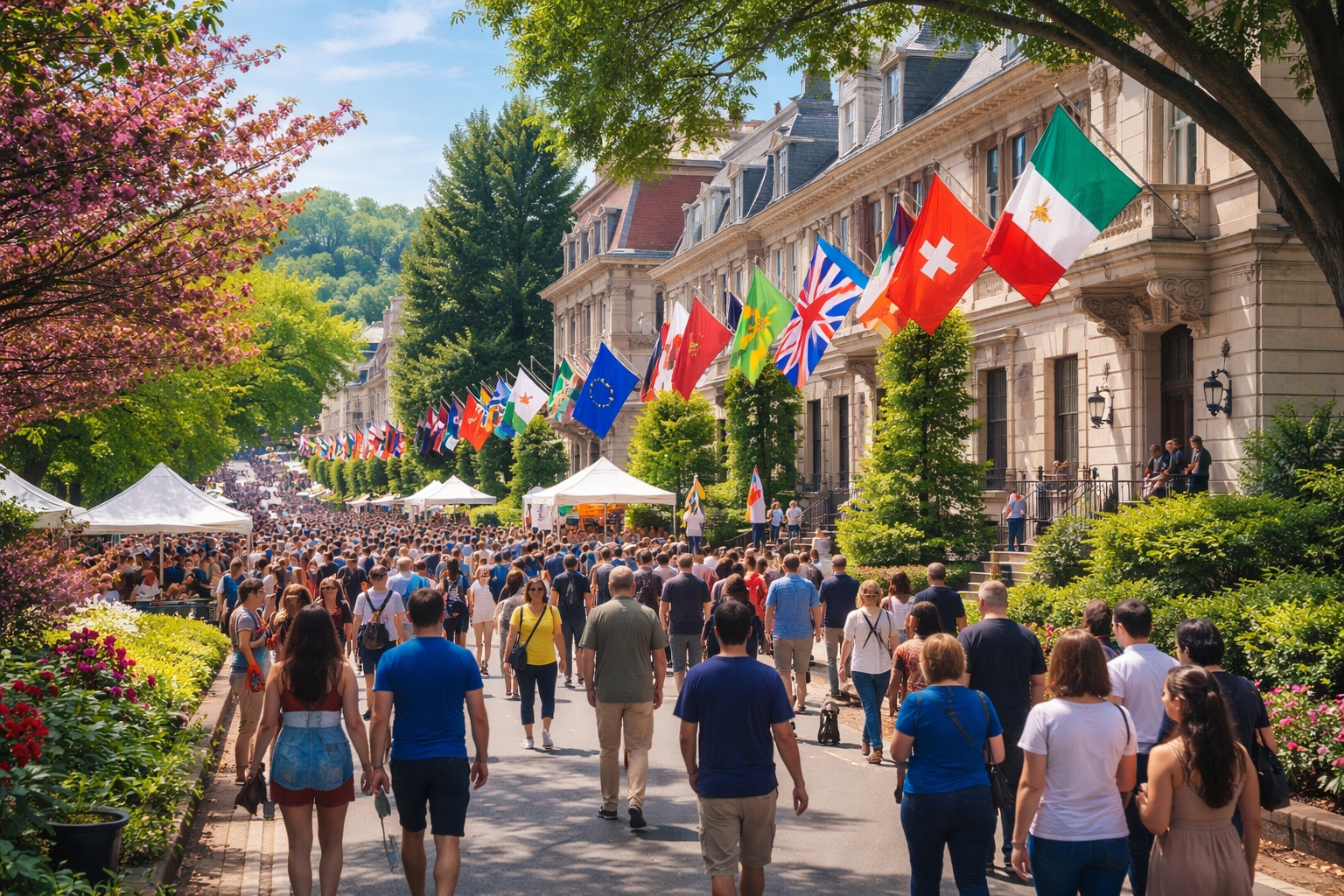
Passport DC Events 2026: A Month‑Long Journey of Global Culture in Washington DC
Passport DC transforms Washington DC into a global crossroads every May. In 2026, the month‑long program returns with embassy open houses, street fairs, food festivals and cultural showcases that celebrate the city’s diplomatic community and international heritage. The festival is part of International Cultural Awareness Month, and thousands of visitors flock to the nation’s capital to sample music, art, food and customs from around the world. In this guide we explore every major Passport DC event scheduled from May 1 to 31, weaving together historical context, practical advice and insider stories. Whether you’re planning your first embassy tour or returning to savor new flavors, this article will help you navigate the city’s most cosmopolitan month.
Passport DC comprises both large signature events and a series of supporting experiences. Two free embassy open houses anchor the schedule: the Around the World Embassy Tour on the first Saturday of May and the EU Open House on the second. Throughout the month you’ll also find the Flower Mart, a garden party on the National Cathedral grounds; the Fiesta Asia Street Fair, a lively celebration of Asian Heritage Month; and the Savor the Flavors program, which invites diners to taste global cuisine across the city. Cultural institutions join the festivities with performances, workshops and exhibitions. Because Passport DC is free and open to the public, the only ticket you need is curiosity and a comfortable pair of shoes.
Understanding Passport DC and International Cultural Awareness Month
When spring awakens the District with cherry blossoms and open‑air festivals, it also ushers in International Cultural Awareness Month. Passport DC is the centerpiece of this observance, offering residents and visitors opportunities to engage with more than 170 embassies and cultural institutions. The program began in 2008 as part of Cultural Tourism DC and has grown under the stewardship of Events DC, the city’s official convention and sports authority. Today it attracts tens of thousands of participants who traverse Embassy Row, sample international cuisines and stamp souvenir passports at participating embassies. As Events DC explains on its official site, Passport DC “offers a month‑long journey that showcases the city’s thriving international diplomatic community and diverse culture”.
How the Festival Works
Passport DC is organized around themes of openness and accessibility. Admission to all official events is free, and reservations are rarely required. The festival encourages visitors to wander through neighborhoods, interact with diplomats and volunteers, and learn about global traditions. The first two Saturdays are devoted to open houses: the Around the World Embassy Tour focuses on non‑European Union countries, while the EU Open House welcomes visitors to European embassies. Each embassy offers unique displays—national costumes, folk dances, historical exhibits, crafts and culinary samples—to showcase its heritage. The remainder of the month features culturally themed street fairs, food festivals and educational programs.
Why May 2026 Is Special
While Passport DC occurs every May, the 2026 edition is poised to be particularly vibrant. The year coincides with major anniversaries: the centennial of the Washington National Cathedral’s completion, the 50th anniversary of the EU Delegation to the United States, and the lead‑up to America’s 250th birthday celebrations. These milestones are expected to inspire special programs and collaborations between embassies and local institutions. In addition, DC’s hospitality industry has fully rebounded from pandemic disruptions, and new attractions—such as immersive art installations and augmented‑reality tours via the Events DC app—will enhance the visitor experience. Whether you’re a local or a traveler, 2026 offers a chance to witness DC at its most internationally engaged.
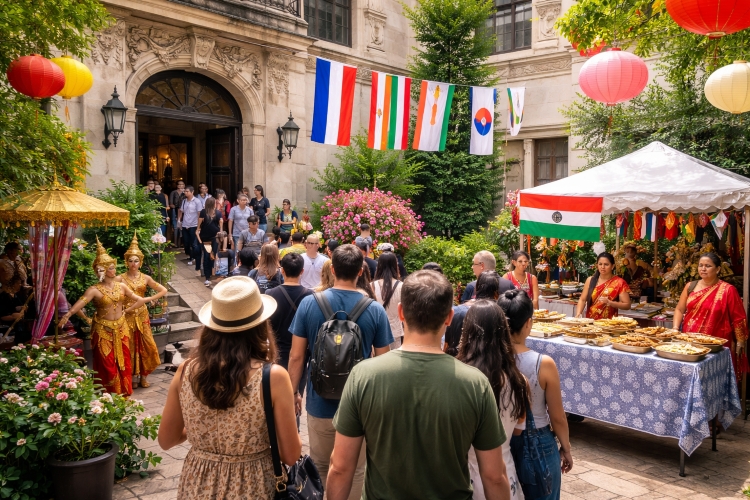
Around the World Embassy Tour – May 2, 2026
A Walk Along Embassy Row
The first Saturday of May transforms Massachusetts Avenue NW into an avenue of nations. The Around the World Embassy Tour invites visitors to explore embassies representing countries from Africa, Asia, the Americas and the Middle East. The event runs from 9:30 a.m. to 5:00 p.m.. On any given block you might hear Mexican mariachi music drifting from one courtyard, smell Ethiopian coffee being roasted at another or watch a Sri Lankan dance troupe perform. Each embassy strives to replicate a piece of home—decorating halls with national flags, displaying historical artifacts and serving signature dishes. Past tours have featured karate demonstrations from Japan, sari‑wrapping lessons from India and drumming performances from West Africa.
Visitors often begin at Dupont Circle, where volunteers distribute maps and souvenir passports that can be stamped at participating embassies. The atmosphere is festive yet orderly; lines form early at popular embassies, and street vendors sell snacks and bottled water. Along International Drive, embassies are larger and lines are shorter, making it easier to explore multiple countries. On Embassy Row proper, you might have to wait longer, but the payoff is an intimate look at historic mansions. Photographers often line the sidewalks to capture costumed performers and architecture.
Participating Embassies and Activities
The 2026 lineup spans continents. According to Events DC’s preliminary list, embassies representing Angola, Azerbaijan, Barbados, Belize, Burkina Faso, China, Costa Rica, Côte d’Ivoire, Dominican Republic, Egypt, Fiji, Grenada, Guatemala, Haiti, Jamaica, Lebanon, Malawi, Malaysia, Mexico (at the Mexican Cultural Institute), Nigeria, Pakistan, the Philippines, the Republic of Korea, Saint Vincent and the Grenadines, Sri Lanka, Tanzania, Thailand, Trinidad and Tobago, and Ukraine will open their doors. Additional embassies may join before May. Each offers a unique set of attractions:
- Culinary tastings – Sample spicy jerk chicken at the Jamaican embassy, fresh ceviche in Costa Rica’s courtyard or tangy tamarind drinks from Trinidad and Tobago. Many embassies sell small plates for a nominal fee, but free samples abound.
- Performances – Enjoy Korean drumming, Angolan kizomba dancing, Malaysian shadow‑puppet shows or Colombian salsa lessons. Performances occur throughout the day, often outside in courtyards.
- Art and crafts – View Cambodian silk scarves, Nigerian beadwork and Ukrainian pysanky eggs. Some embassies feature artisans who demonstrate weaving, carving or painting.
- Technology displays – Countries such as Malaysia and Korea showcase robotics, virtual reality and scientific innovations; you might find yourself piloting a miniature drone or exploring a digital rainforest.
Insider Tips for the Embassy Tour
With dozens of embassies participating, it’s impossible to see them all in one day. To make the most of your tour:
- Plan your route – Start with a map and choose 4–6 embassies that interest you. Consider starting at embassies on International Drive to avoid long lines.
- Arrive early – Popular embassies attract lines that can stretch around the block. Arriving before opening allows you to visit 2–3 embassies with minimal wait.
- Use Metro – Dupont Circle and Van Ness/UDC stations are within walking distance of many embassies. Parking is scarce, so leave your car at home.
- Pick up a souvenir passport – Collect stamps at each embassy as a keepsake. Supplies are limited, so get yours early.
- Stay hydrated and wear comfortable shoes – You’ll walk several miles and may spend time in the sun. Pack water and sunscreen.
Reflection and Cultural Impact
What makes the Around the World Embassy Tour extraordinary is its authenticity. Instead of static exhibits, the event is animated by the people who live and work in these embassies. Diplomats and staff answer questions about politics and culture, while volunteers teach basic phrases in their languages. Children leave with faces painted in national colors and adults leave with a deeper understanding of global connections. The event underscores Washington’s unique role as a diplomatic capital and fosters goodwill among nations. In 2026, with global travel still recovering in some parts of the world, the ability to “visit” multiple countries in a single day feels both magical and meaningful.
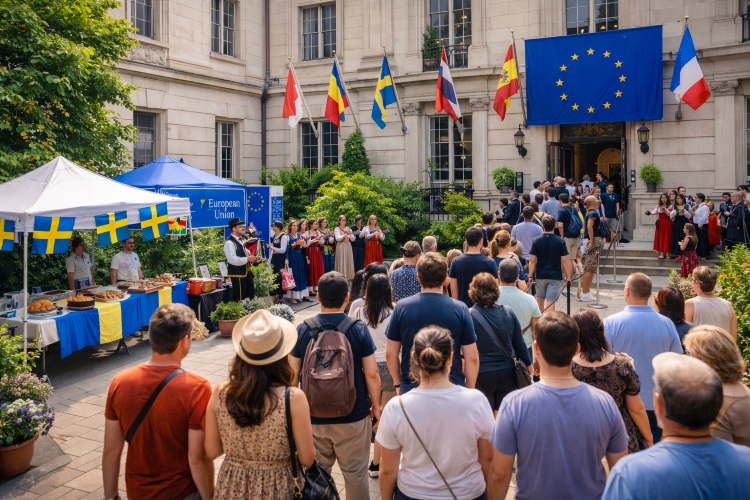
EU Open House – May 9, 2026
Celebrating Europe in the Nation’s Capital
One week after the Around the World Embassy Tour, the focus shifts to Europe. On the Saturday following Europe Day (May 9), the EU Open House invites visitors to explore embassies of European Union member states. Organized by the Delegation of the European Union to the United States, the event runs roughly from 10 a.m. to 4 p.m. (final details to be confirmed). The EU Open House highlights both shared European values and distinctive national identities. Visitors might trace the story of the Schuman Declaration, learn about EU institutions and enjoy the hospitality of twenty‑plus countries.
What to Expect at EU Embassies
The EU Open House emphasizes music, dance, film, art and regional cuisine. Here are common elements:
- Cultural performances – The Austrian Embassy may feature classical music, while the Spanish Embassy might offer flamenco dance. Folk ensembles from Slovakia, Bulgaria or Hungary often perform outside their chancelleries.
- Regional foods – Sample Italian gelato, German sausages, French pastries or Belgian chocolate. Some embassies sell larger portions, but many provide small free samples.
- Film screenings and presentations – In past years, the Embassy of Greece has screened short films and the Embassy of Ireland has hosted storytelling sessions.
- Historical exhibits – Learn about the EU’s origins, its expansion and its current initiatives. Embassies may display artifacts from national museums or art collections.
- Kid‑friendly activities – Many embassies offer crafts and games for children, such as puzzle maps of Europe or opportunities to dress up in national costumes.
Because many EU embassies are located in the same neighborhoods as non‑EU embassies, the logistical tips for the Around the World tour apply here as well. Lines can be even longer because European embassies often have smaller properties. Consider visiting embassies near Van Ness and Tenleytown, where crowds thin out. For a unique experience, check whether France and Germany plan to co‑host at the German Ambassador’s residence—a tradition in even years like 2026, when the two countries invite visitors to a garden party with wine and biergarten fare.
Exploring Lesser‑Known European Cultures
One joy of the EU Open House is discovering countries you might not have considered visiting. Smaller EU members often seize the opportunity to highlight hidden gems:
- Latvia may showcase its folk costumes and share samples of rye bread and birch sap.
- Estonia might demonstrate digital citizen services and let you experience a virtual choir.
- Slovenia could display beekeeping traditions and offer honey tastings.
- Malta might invite visitors to make their own pastizzi (flaky pastries).
These encounters encourage visitors to broaden their horizons beyond the typical European capitals. With the EU planning new sustainability initiatives for 2026, many embassies will also highlight green technologies, renewable energy and climate‑friendly tourism.
Tips for Enjoying the EU Open House
- Focus on regions – Choose a few countries from different parts of Europe—Nordic, Mediterranean, Central, Eastern—to compare languages, foods and customs.
- Use public transit or bike – Parking is limited and many streets are closed. Capital Bikeshare stations abound, offering a convenient way to hop between embassies.
- Bring ID – Some embassies require ID for entry; having a driver’s license or passport can speed up the process.
- Pack light – Security screenings vary by embassy; avoid large bags or bulky cameras.
- Mind the time – Embassies close promptly at 4 p.m., so prioritize those at the top of your list.
The Significance of Europe Day
Europe Day commemorates the 1950 Schuman Declaration, which laid the foundation for European unity. The EU Open House celebrates this vision of cooperation and peace by inviting Americans to engage directly with European cultures. By attending, you participate in a transatlantic dialogue that strengthens cultural understanding and fosters curiosity. In 2026, as the EU continues to address challenges like climate change and digital regulation, the open house offers a platform for embassies to share policies and innovations with the public. It also reminds visitors that behind every policy are people who care deeply about their heritage and their neighbors.
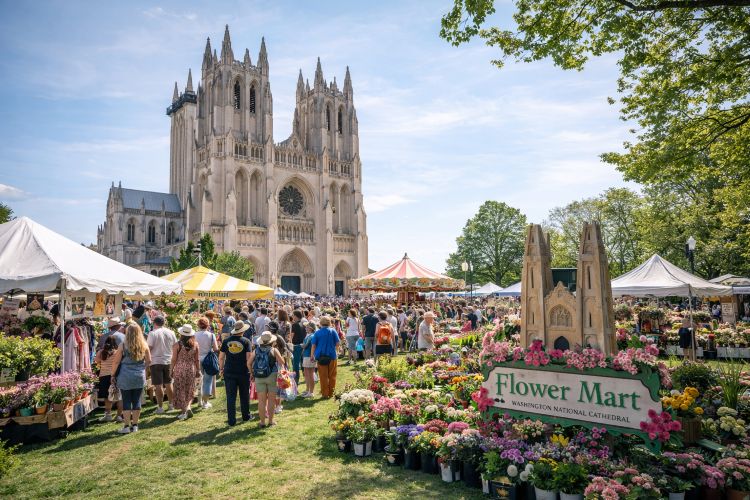
Flower Mart at the Washington National Cathedral – May 1–2, 2026
A Centennial Garden Party
Before Passport DC’s embassy tours begin, the Washington National Cathedral opens its grounds for the Flower Mart, a two‑day celebration of spring. Held on Friday and Saturday, May 1–2, the event invites visitors to shop for plants and gifts, ride a historic carousel, enjoy festival food and admire the International Floral Exhibit. In 2026, Flower Mart also marks the centennial of the cathedral’s construction—a milestone that will inform the floral displays and performances.
Walking up the cathedral’s stone steps, you’re greeted by an explosion of color. Local garden clubs and embassies collaborate to create floral arrangements inspired by their homelands. In previous years, the Embassy of Thailand has crafted ornate orchids, while the Embassy of the Netherlands has filled the nave with tulips. Vendors line the grounds selling herbs, annuals and garden accessories. Children crowd around the vintage carousel, whose hand‑carved animals spin to calliope music. Inside the nave, the International Floral Exhibit transforms the Gothic interior into a botanical wonderland.
History of Flower Mart
Flower Mart traces its roots to 1939, when the All Hallows Guild organized a plant sale to raise funds for the cathedral’s gardens. Over time, it evolved into a community festival featuring entertainment, crafts and international participation. The All Hallows Guild still sponsors the event, and the proceeds support the maintenance of the cathedral’s grounds. Each year has a theme; for 2026, organizers plan to highlight the cathedral’s role in national ceremonies and its architectural heritage.
What to Do at Flower Mart
- Shop for plants and garden decor – Vendors offer everything from heirloom tomatoes to bonsai trees and hand‑painted flower pots. It’s an ideal opportunity to stock your spring garden.
- Explore the International Floral Exhibit – Inside the cathedral, embassies and local florists design elaborate displays that reflect cultural symbolism. Expect to see arrangements honoring national holidays, famous artworks and historic figures.
- Ride the antique carousel – The 1890s carousel is a beloved attraction. Rides cost a small fee, and all proceeds support the cathedral’s gardens.
- Enjoy live entertainment – On the cathedral’s plaza, musicians and dancers perform folk songs, bagpipes, classical pieces and more.
- Sample festival food – Savor funnel cakes, lobster rolls, gingerbread and international snacks. Embassies often run food stalls, offering tastes of home.
Tips for Visiting
- Plan for crowds – Flower Mart attracts thousands of visitors; arrive early if you want to shop for rare plants or get a good view of performances.
- Bring a tote or wagon – If you plan to purchase plants, having a sturdy bag will make transport easier.
- Tour the cathedral – Take time to explore the cathedral’s stained glass windows and towers; special tours may be available during the festival.
- Consider public transit – The cathedral is located in the Upper Northwest area. Parking is limited, so use Metrobus or a ride‑share service.
A Springboard to Passport DC
Flower Mart sets the tone for Passport DC by emphasizing community, international cooperation and horticultural artistry. Many embassies that participate in the open houses also contribute to the floral displays, offering a preview of their cultural offerings. The event’s relaxed pace allows visitors to ease into the month’s festivities while supporting the cathedral’s historic mission. If you’re in town for the embassy tours, arriving a day early to attend Flower Mart is well worth it; the experience will enrich your appreciation of DC’s garden traditions and global connections.
Fiesta Asia Street Fair – May 16, 2026
A Celebration of Asian Heritage Month
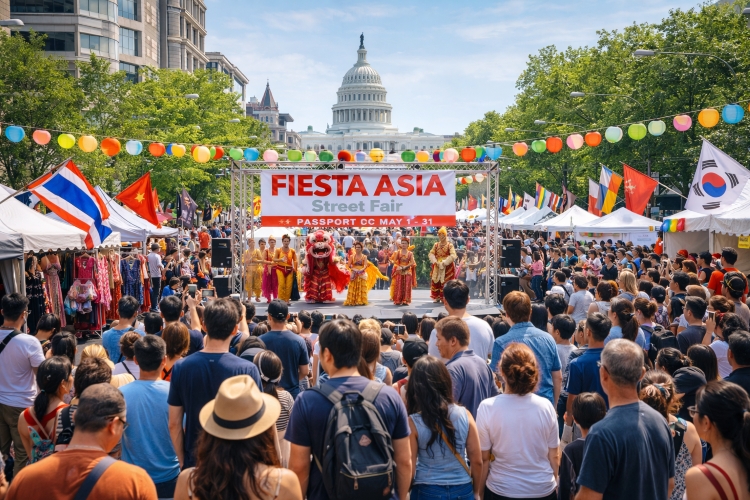
Midway through May, Pennsylvania Avenue NW becomes a colorful marketplace for the Fiesta Asia Street Fair. Part of Passport DC and the national observance of Asian Heritage Month, the event is organized by the Asia Heritage Foundation. In 2026, the fair will take place on Saturday, May 16, extending for several blocks between 3rd and 6th streets. The street fair is one of the few events in Washington where you can experience the breadth of Asian cultures—East, Southeast, South, Central and Pacific islands—in one setting.
Immersive Cultural Experiences
Walking down Pennsylvania Avenue, you might hear the rhythmic beat of taiko drums from Japan blending with the delicate notes of a Chinese erhu. A troupe of Balinese dancers swirls past a booth where Filipino chefs serve lumpia and halo‑halo. At another stand, children try their hands at Korean calligraphy. The street fair’s diversity is its hallmark; organizers intentionally include large diaspora communities as well as smaller groups representing Bhutan, Mongolia or Timor‑Leste.
Highlights include:
- Parade of Nations – A midday procession features delegates from participating countries in national attire. Spectators often join in, waving flags and cheering.
- Live performances – Stages showcase martial arts demonstrations, traditional dances (such as Vietnamese water puppetry and Indian Bharatanatyam), pop music and K‑pop cover groups.
- Craft and market stalls – Vendors sell Asian clothing, jewelry, lanterns, paper fans and handmade toys. Artisans demonstrate wood carving, origami and henna painting.
- Food pavilion – Sample dishes from across Asia: Japanese ramen, Thai pad Thai, Chinese dumplings, Indian curries, Malaysian satay, Indonesian nasi goreng and more. A designated area serves bubble tea, Vietnamese coffee and tropical fruit juices.
Educating and Connecting
Beyond entertainment, Fiesta Asia seeks to educate visitors about Asian histories and contributions to American society. Nonprofit organizations host booths on immigration history, civil rights and heritage preservation. Panel discussions cover topics like Asian American literature and entrepreneurship. For children, storytelling sessions introduce folktales from different countries. The fair also highlights social issues, such as anti‑Asian discrimination, and celebrates the resilience and achievements of Asian American communities.
Planning Your Day
- Use Metro or bike – Road closures and crowds make driving impractical. The Archives–Navy Memorial station and Judiciary Square are within walking distance.
- Bring cash and cards – Many vendors accept credit cards, but some prefer cash. ATMs may have lines.
- Check the schedule – Performances run throughout the day; consult the official website to catch your favorite acts.
- Dress comfortably – May can be warm in DC; wear light clothing and sunscreen.
- Respect cultures – Ask permission before taking photos of performers or artisans, and be mindful of cultural sensitivities.
Why Fiesta Asia Matters
Fiesta Asia is more than a street fair; it’s an affirmation of the rich tapestry of Asian cultures within the United States. In 2026, with geopolitical tensions in parts of Asia and rising awareness of Asian American issues, the event provides a platform for cross‑cultural understanding and solidarity. It also underscores DC’s role as a hub for diaspora communities and international exchange. For visitors, the fair offers a sensory journey across Asia without leaving the city, making it an essential Passport DC experience.
Savor the Flavors and International City Food Festival – May 1–31, 2026
Tasting the World One Bite at a Time
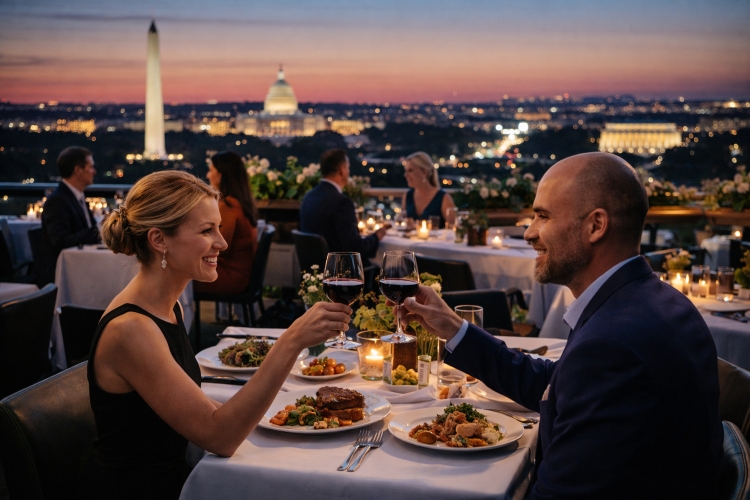
While the embassy tours and street fairs provide a whirlwind of cultural experiences, Passport DC also invites you to savor global cuisine at your own pace. The Savor the Flavors program, running from May 1 to 31, encourages participants to dine at restaurants around the city that offer authentic dishes from their home countries. Think of it as a culinary scavenger hunt: each week, Events DC publishes a list of participating restaurants representing specific regions—Latin America, Asia, Africa, Europe, the Middle East and the Caribbean. Diners receive virtual stamps via the Events DC app for each restaurant they visit, and those who collect a certain number are entered into prize drawings.
How the Program Works
To join Savor the Flavors, download the Events DC app and register. During the program period, dine in or order takeout from participating restaurants and scan a QR code at the establishment to receive your digital stamp. The app also offers augmented‑reality features that highlight national landmarks associated with each country. Restaurants range from fine dining to casual cafés, providing options for different budgets. In 2025, more than 60 eateries participated, and organizers expect a similar or greater number in 2026. The program benefits local businesses by driving traffic and showcases DC’s status as a culinary capital.
Featured Cuisines
- African Flavors – Try Ethiopian injera and doro wat in Adams Morgan, Ghanaian jollof rice near Howard University or Moroccan tagine in Capitol Hill.
- Latin American Delights – Savor Peruvian ceviche, Salvadoran pupusas, Argentine empanadas and Cuban ropa vieja along 14th Street NW.
- Asian Specialties – Taste Vietnamese pho in Shaw, Japanese omakase in Dupont Circle, Sri Lankan hoppers in Tenleytown and Filipino adobo in Columbia Heights.
- Middle Eastern & Mediterranean Fare – Enjoy Lebanese mezze, Turkish kebabs, Greek moussaka and Israeli shakshuka around Penn Quarter.
- European Classics – Indulge in French pastries, Italian pasta, Spanish tapas and Polish pierogi throughout the city.
- Caribbean & Pacific Flavors – Sample Jamaican jerk chicken, Trinidadian doubles, Fijian kokoda (citrus‑marinated fish) and Hawaiian poke bowls.
Culinary Events and Workshops
As part of the food festival, some embassies and cultural centers host cooking demonstrations, wine tastings and culinary lectures. The Embassy of Mexico might teach guests to make mole poblano, while the Embassy of Morocco could present a tea ceremony. Chefs from participating restaurants may offer special prix‑fixe menus or chef’s tables. These events usually require reservations and may charge a fee; check the official schedule for details. For families, interactive classes teach children how to roll sushi or bake French macarons.
Tips for Foodies
- Make reservations – Popular restaurants fill up quickly during Savor the Flavors. Book ahead when possible.
- Explore neighborhoods – Use the program as an excuse to visit parts of DC you’ve never seen. Each area has its own cultural history and culinary scene.
- Share your experiences – Post photos and reviews using the #PassportDC hashtag. The program encourages participants to share recommendations.
- Be adventurous – Try dishes you’ve never heard of. If you’re uncertain about an ingredient, ask your server; they’ll likely be delighted to explain.
Why Food Connects People
Food is perhaps the most immediate way to experience another culture. By tasting a dish prepared by someone who learned it in their grandmother’s kitchen, you connect across borders and generations. Savor the Flavors reflects DC’s global population and its openness to culinary creativity. It also supports immigrant‑owned businesses and helps sustain culinary traditions. In 2026, when many restaurants are still adapting to new economic realities, your participation matters.
Cultural Programs and International Cultural Awareness Month – May 1–31, 2026
Beyond the Headline Events
Passport DC’s marquee events draw the most attention, but the festival also encompasses a rich program of cultural performances, exhibitions, lectures and workshops offered by embassies, museums and arts organizations throughout May. This section provides a snapshot of recurring themes and suggestions for exploring the full calendar.
Embassy‑Hosted Arts and Education
Many embassies open their cultural centers for special programs. For example:
- Film series – The Embassy of France often partners with the National Gallery of Art to screen French classics. The Embassy of India may showcase Bollywood blockbusters and independent films. Screenings are usually free, though reservations are recommended.
- Art exhibitions – The Embassy of Mexico’s Cultural Institute regularly mounts exhibitions of Mexican modern art. During Passport DC, it might display works by contemporary painters exploring identity and migration. The Korean Cultural Center may feature Hanbok (traditional dress) fashion shows and calligraphy workshops.
- Literary events – Embassies of countries such as Ireland or Colombia host readings by authors, book signings and poetry slams. Look for events celebrating European Literature Day (May 9) or World Portuguese Language Day (May 5).
- Language classes – Short introductory classes in languages like Arabic, Mandarin and Portuguese provide a playful way to learn greetings and phrases.
Museum Collaborations
DC’s museums join the month’s celebrations with global‑themed exhibitions and programs:
- The Smithsonian National Museum of Asian Art hosts gallery talks about Chinese ceramics, Japanese woodblock prints and Islamic calligraphy.
- The National Museum of African Art organizes concerts featuring Afrobeats and traditional drumming.
- The Freer Gallery of Art offers guided meditation sessions inspired by Himalayan art.
- The Hillwood Estate exhibits imperial Russian artifacts from the 18th century.
- The Phillips Collection pairs French Impressionist masterpieces with works by artists from Africa and Latin America.
Workshops and Interactive Experiences
Interactive events invite visitors to create art or learn new skills:
- Dance lessons – Learn Argentine tango at the Embassy of Argentina, classical Indian dance at the Indian Embassy or West African drumming at the Smithsonian Folklife Center.
- Craft workshops – Make Japanese origami, Ukrainian pysanky eggs or Turkish ebru (marbling) art under the guidance of master artisans.
- Culinary classes – See the Savor the Flavors section for cooking workshops; some embassies also offer wine tastings and coffee ceremonies.
- History tours – Attend walking tours of Embassy Row, led by historians who share stories of famous diplomatic incidents and architectural landmarks.
Education for All Ages
Many programs are family‑friendly and include special activities for children and teens. For example, the Embassy of Norway might host a Viking ship model‑building workshop, while the Embassy of Qatar could demonstrate camel racing using small wooden toys. Libraries around the city participate as well, with story times featuring folktales from around the world.
Tips for Navigating the Calendar
The number of events during International Cultural Awareness Month can be overwhelming. Here are some strategies:
- Check official listings – The Events DC website and Cultural Tourism DC provide centralized calendars.
- Subscribe to embassy newsletters – Many embassies send updates to subscribers about upcoming events.
- Follow on social media – Use hashtags like #PassportDC, #InternationalCulturalAwarenessMonth and #DCEmbassies to discover pop‑up events.
- Reserve early – Some workshops have limited space; register as soon as event listings go live.
- Balance your schedule – Mix active experiences (dance, cooking) with passive ones (films, exhibitions) to avoid fatigue.
The Value of Cultural Diplomacy
Participating in these programs deepens your understanding of global history and contemporary issues. It also supports cultural diplomacy—the use of arts and education to foster mutual respect. By attending a film screening or learning a traditional craft, you engage in dialogue that transcends political differences. In 2026, with global challenges such as climate change, migration and technological disruption, cultural diplomacy is more important than ever. Passport DC provides an accessible platform for such exchange.
Planning Tips and Logistics for Passport DC
Getting There and Getting Around
Navigating DC during Passport DC requires some planning. The events are spread across neighborhoods, and traffic patterns change during embassy tours and street fairs. Here are essential tips:
- Use public transit – The Metro is the most reliable way to travel between events. Dupont Circle and Van Ness/UDC stations are within walking distance of many embassies, while the National Cathedral is accessible via Metrobus. For Fiesta Asia, the Archives–Navy Memorial station is closest.
- Consider biking or walking – Capital Bikeshare offers a flexible option for short distances; bike lanes along Massachusetts Avenue and Pennsylvania Avenue make cycling safe. Walking is pleasant when the weather cooperates and allows you to discover hidden gems.
- Avoid driving – Street parking is scarce and many streets are closed during events. If you must drive, park at a Metro station and ride in.
- Plan your itinerary – Because events overlap, map out which embassies, fairs and programs you want to attend each day. Prioritize your must‑see experiences.
Registration and Admission
Most Passport DC events are free and do not require tickets. The Around the World Embassy Tour and EU Open House explicitly state that admission is free and reservations are not required. However, registering on the Events DC website or Eventbrite may provide access to updates and logistic information. For workshops and culinary classes, advance registration is usually required, and there may be a fee. Always check the specific event listing.
Souvenir Passport and Stamps
One of the festival’s fun traditions is collecting stamps in a souvenir passport. Volunteers distribute souvenir passports at information booths in Dupont Circle, the University of the District of Columbia (UDC) Student Center and the Mexican Cultural Institute. The passports are limited, so arrive early. Each embassy has a unique stamp; children and adults alike enjoy filling every page. The Events DC app also allows you to collect virtual stamps at embassies and participating restaurants.
Safety and Etiquette
- Security screening – Embassies may require you to pass through metal detectors and bag checks. Be patient and cooperative.
- Photo policies – Always ask before taking photos inside embassies or of performers. Some exhibits prohibit photography.
- Cultural sensitivity – Dress modestly when appropriate, greet hosts politely and respect customs. Learning a few words in the country’s language can be a great icebreaker.
- Accessibility – Many embassies are historic buildings with limited accessibility; check event details for information on wheelchair access. Street fairs like Fiesta Asia are generally accessible.
- Health considerations – DC weather can be unpredictable in May; carry water, sunscreen and light layers.
Leveraging the Events DC App
Events DC offers a mobile app that enhances the festival experience. Features include:
- Interactive maps of embassy locations, street fair stages and participating restaurants.
- Event schedules with notifications for performances and workshops.
- Augmented reality (AR) experiences that overlay information about national landmarks and cultural icons when you scan embassy signs.
- Virtual stamp collection and tracking of the Savor the Flavors program.
- Volunteer registration and updates on last‑minute changes due to weather or security.
Downloading and familiarizing yourself with the app before the festival will save time and help you navigate the month’s offerings.
Volunteer Opportunities
Passport DC relies on volunteers to staff information booths, assist at embassies and manage crowds. Volunteers must be at least 18 years old and may choose from roles such as greeter, line manager or stamp distributor. Volunteering is a great way to meet people from around the world and support the festival’s mission. Training is provided, and volunteers often receive exclusive swag.
Staying Safe and Respectful
Remember that you are entering diplomatic spaces. While the atmosphere is relaxed, embassies are sovereign territory. Follow all instructions from embassy staff, respect private areas and refrain from political protests or disruptive behavior. If you encounter long lines, be patient and courteous—everyone is there to enjoy the experience. In street fairs, stay alert for pedestrians and children, and avoid blocking walkways.
Staying Near Passport DC – Hotel Washington and Other Accommodation Options
Why Location Matters
With events scattered across the city, choosing accommodation close to the action can save time and energy. Staying in the downtown core or along Embassy Row allows you to walk or bike to many events. Proximity also makes it easier to return to your hotel between activities to rest or drop off purchases. For visitors who want to immerse themselves in Passport DC without worrying about transportation, selecting the right hotel is key.
Hotel Washington: The Closest Hotel to the White House
One standout option is Hotel Washington, often described as the closest hotel to the White House, positioned at the edge of the White House lawn. Occupying a historic Beaux‑Arts building on 15th Street NW, the hotel offers elegant rooms, rooftop dining and sweeping views of the National Mall and monuments. Its location near the White House puts you within walking distance of Pennsylvania Avenue, Embassy Row and downtown museums. During Passport DC, you can leave the hotel and immediately join the festivities, then return to relax on the rooftop terrace. Hotel Washington’s concierge can provide maps and recommendations for navigating the festival.
Other Neighborhoods and Hotels
- Dupont Circle – This neighborhood sits at the heart of Embassy Row. Boutique hotels here offer easy access to the Around the World Embassy Tour and EU Open House. Consider The Dupont Circle Hotel or The Darcy.
- Foggy Bottom and Georgetown – West of downtown, these areas provide quieter stays near the embassies of Saudi Arabia, Spain and Mexico. The Watergate Hotel and the Georgetown Marriott are popular choices.
- Penn Quarter and Chinatown – East of the White House, these neighborhoods place you near Fiesta Asia and many Savor the Flavors restaurants. The Hotel Monaco and Motto by Hilton offer stylish options.
- Woodley Park and Cleveland Park – Closer to the National Zoo and the Cathedral, these areas provide access to Flower Mart and some embassies along International Drive. The Omni Shoreham and the Marriott Wardman Park are well‑appointed.
When choosing a hotel, consider factors such as access to Metro stations, proximity to desired events and personal preferences for amenities. Booking early is advisable, as Passport DC draws visitors from around the world.
Short‑Term Rentals and Hostels
If you prefer a more local experience, short‑term rentals in neighborhoods like Adams Morgan, Capitol Hill or U Street offer convenience and character. Hostels in Georgetown and Downtown provide budget‑friendly options for solo travelers. Wherever you stay, check the cancellation policies and read reviews from recent guests.
Making the Most of Your Stay
- Plan your mornings – Many events start early; having breakfast at your hotel or a nearby café can give you energy for the day.
- Use hotel concierge services – Staff can assist with reservations, transportation and maps.
- Take breaks – Festival days can be long. Return to your room to rest and recharge before evening programs.
- Explore beyond Passport DC – When you have downtime, visit museums, monuments and neighborhoods. DC is rich with history, culture and parks.
Frequently Asked Questions (FAQ)
What is Passport DC?
Passport DC is a month‑long festival in Washington DC that celebrates the city’s international diplomatic community through embassy open houses, street fairs, food programs and cultural events.
When does Passport DC 2026 take place?
The 2026 edition runs throughout May. Major events include the Around the World Embassy Tour on May 2, the EU Open House on May 9, the Flower Mart on May 1–2, Fiesta Asia on May 16 and the Savor the Flavors program from May 1–31.
Do I need tickets or reservations?
Most Passport DC events, including the embassy tours and street fairs, are free and do not require tickets or reservations. Workshops and culinary classes may require advance registration.
Where can I pick up a souvenir passport?
Souvenir passports are available at information booths in Dupont Circle, the UDC Student Center and the Mexican Cultural Institute on event days. Supplies are limited.
Are the events family‑friendly?
Yes. Most events welcome children and offer activities such as crafts, performances and games. Flower Mart features a carousel, and many embassies have kid‑oriented displays.
What should I wear?
Dress comfortably for walking and variable weather. Wear comfortable shoes, bring a hat and sunscreen, and carry water. Some embassies may have modest dress requirements; a light scarf can be useful.
How many embassies can I realistically visit in one day?
Expect to visit about five embassies in a full day, depending on lines and travel time. Plan your route accordingly.
Is Passport DC accessible to visitors with disabilities?
Some embassies and historic buildings have limited accessibility. Street fairs and museums are generally accessible. Check individual event listings for details and contact organizers for accommodations.
Closing Thoughts and Next‑Step Engagement
Passport DC 2026 invites you to embark on a cultural adventure without leaving Washington DC. Over thirty days you can taste dumplings from dozens of countries, learn traditional dances, collect stamps from a rainbow of embassies and discuss global art with curators. The festival’s openness and diversity reflect the capital’s role as a meeting point for nations. By planning your itinerary, embracing spontaneity and respecting cultural protocols, you’ll create memories that transcend borders.
If you’re traveling to the District for Passport DC, consider staying at Hotel Washington—the closest hotel to the White House, positioned at the edge of the White House lawn. Its central location and historic charm make it an ideal home base for festival explorations. Learn more and explore booking options at Hotel Washington’s official website. Wherever you stay, immerse yourself in the worldliness of Washington DC and share your experiences with friends and family. Passport DC is more than a festival; it’s a testament to the power of culture to connect us all.
Read other posts