Planning your NYC, Philadelphia and Washington DC trip
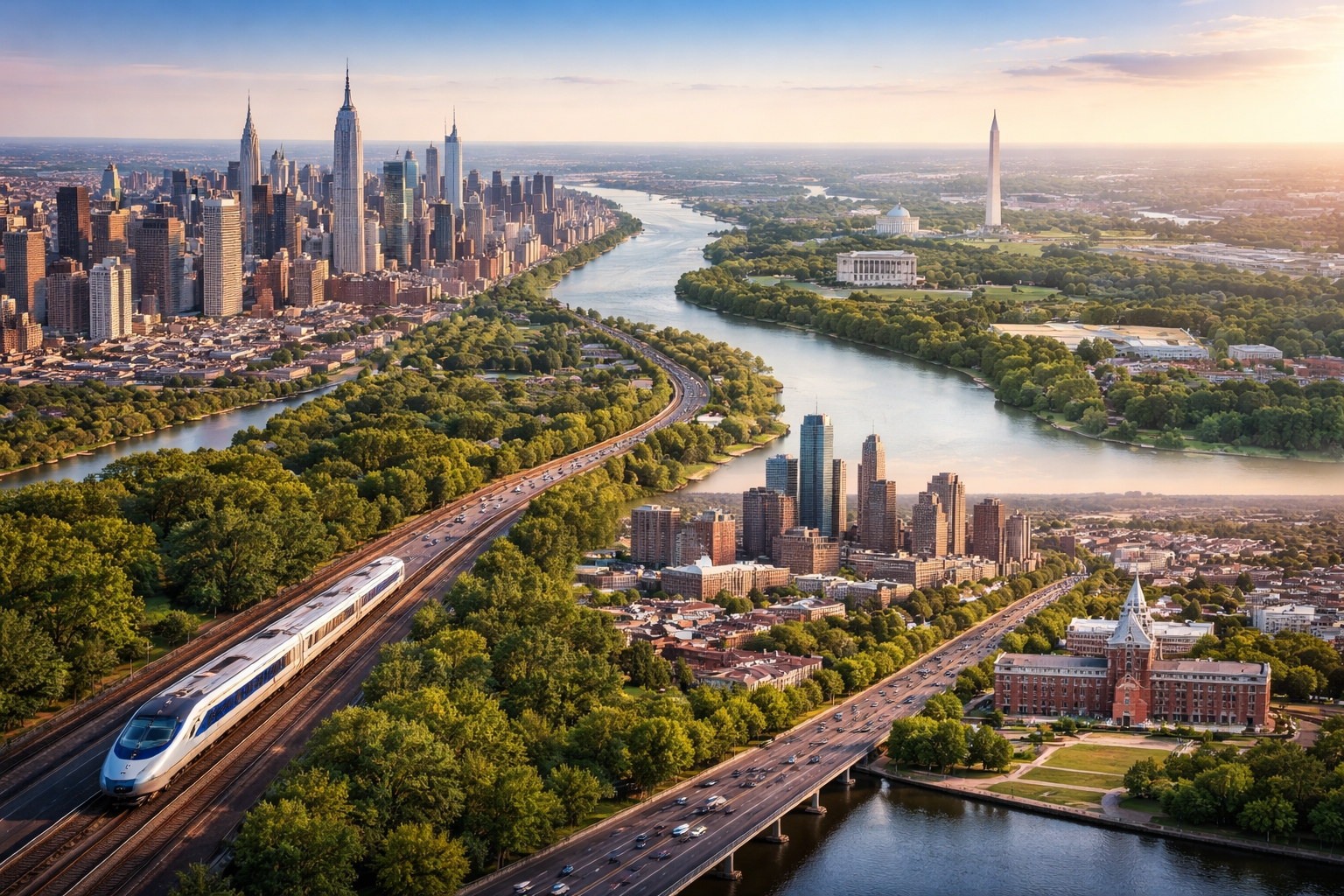
The eastern seaboard of the United States is dotted with cities whose names are shorthand for ambition, liberty and political power. Traveling from New York City through Philadelphia and ending in Washington DC stitches together three chapters of American history into one seamless narrative. Each city lies along the Northeast Corridor rail line, making it easy to hop from skyline to skyline without wasting precious vacation hours. This long‑form guide provides a comprehensive itinerary and practical tips for planning your own multi‑city adventure while weaving in the stories, landmarks and neighborhoods that give each destination its character.
New York City travel planning
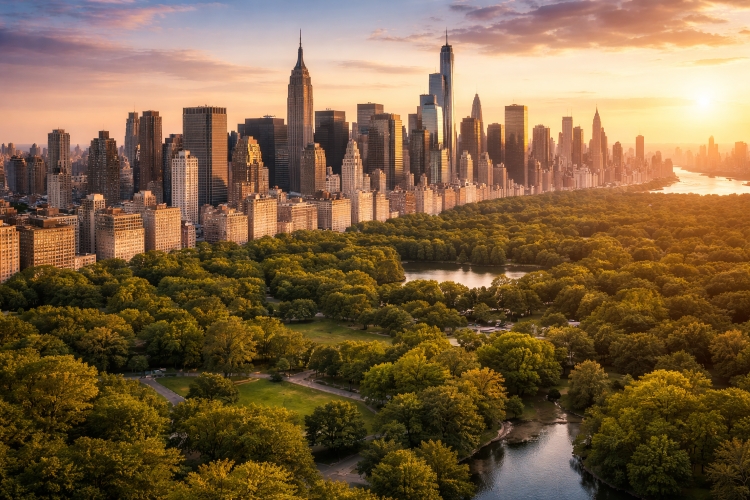
Arriving in New York City can feel like being dropped into the opening scene of a film. Train windows frame the moment as the skyline comes into view; neon billboards flicker high above Times Square; honking taxis and steam vents set the soundtrack. Before the lists of must‑see attractions, it is important to understand the city’s physical layout and rhythm. New York comprises five boroughs—Manhattan, Brooklyn, Queens, The Bronx and Staten Island—but visitors often concentrate their time in Manhattan. Manhattan is laid out on a grid, numbered streets running east to west and avenues running north to south, with Broadway slicing diagonally. Navigating is straightforward once you orient yourself, and the subway provides the fastest and cheapest way to get around.
Central Park forms the green heart of Manhattan. The park stretches from 59th Street to 110th Street between Fifth Avenue and Central Park West. Created in the 19th century, it provides lawns, lakes and meadows that balance the density of midtown skyscrapers. The park is open daily from 6 a.m. to 1 a.m., and it offers everything from jogger’s paths to quiet woodland trails. In summer, free concerts fill the lawns; in winter, ice‑skating rinks appear. Near the south end, the Central Park Zoo delights families with penguins and snow leopards, while the northern end around Harlem Meer provides a more serene atmosphere.
One of the city’s most enduring symbols stands on an island in New York Harbor. The Statue of Liberty, a gift from France, has come to represent both democracy and a welcome to new arrivals. It was dedicated on October 28 1886 and later became a national monument. Visitors take ferries from Battery Park to Liberty Island, often pairing the trip with a visit to Ellis Island, where millions of immigrants first stepped onto American soil. For a bird’s‑eye view of the harbour and skyline, climb the pedestal or crown, though crown tickets must be booked well in advance.
North of Battery Park, the Financial District gives way to neighborhoods each with a distinctive character: vibrant Chinatown, cobblestoned SoHo with boutiques and galleries, Greenwich Village with its bohemian history, and the High Line, a linear park built on an elevated rail line. Midtown is home to Times Square, where giant LED screens illuminate theatre marquees and street performers entertain around the clock. Nearby, the historic Empire State Building rises 1,454 feet and offers observation decks with panoramic views. A few blocks away, Fifth Avenue’s flagship stores lead up to the Rockefeller Center complex, which includes an ice rink, NBC studios and the Top of the Rock observation deck.
Upper Manhattan hosts world‑class museums along Fifth Avenue’s “Museum Mile.” The Metropolitan Museum of Art houses collections spanning 5,000 years; admission operates on a pay‑what‑you‑wish policy for New York State residents and students, while visitors from elsewhere pay a standard ticket that grants access for three consecutive days. To the north, the Guggenheim Museum showcases modern art inside a Frank Lloyd Wright–designed building. Across Central Park, the American Museum of Natural History uses dioramas and immersive exhibits to chronicle Earth’s biodiversity and cosmic history. In the evening, Broadway theatres in Midtown host world‑famous productions, while off‑Broadway venues nurture experimental work.
Top attractions and experiences in New York City
-
Statue of Liberty & Ellis Island – Take the ferry from Battery Park for a day exploring Liberty Island and the immigration museum at Ellis Island. The statue was a gift from France and was dedicated in 1886.
-
Central Park – Wander winding paths, row a boat on the lake, or picnic on the Great Lawn. The park stretches from 59th to 110th Streets and stays open until 1 a.m..
-
Times Square – Experience the electric atmosphere of billboards, street performers and Broadway theatre. Visit at night for the full effect of the lights.
-
Empire State Building – Ride elevators to the 86th or 102nd‑floor observatories for city views. Evening visits offer a romantic perspective on the illuminated skyline.
-
Metropolitan Museum of Art – Explore vast collections from Egyptian mummies to Impressionist paintings. Allow at least half a day.
-
High Line – Stroll this elevated park for modern art installations, gardens and views of the Hudson River. It runs from Hudson Yards to the Meatpacking District.
-
Brooklyn Bridge – Walk or cycle across to Brooklyn for skyline photography and explore DUMBO’s cobblestone streets and waterfront parks.
-
Neighborhood tours – Explore Chinatown’s dim sum houses, Little Italy’s bakeries, Harlem’s jazz clubs or the fashionable boutiques of SoHo and the West Village.
When to visit New York City
New York is a year‑round destination, but seasonal considerations can shape your experience. Spring brings blossoms to Central Park, and Broadway theatres launch new productions. Summer offers long days and free events, but heat and humidity can be intense. Autumn might be the most comfortable season, with crisp air and foliage in Central Park. Winter transforms Midtown into a holiday wonderland, complete with ice‑skating beneath the Rockefeller Center tree and festive window displays. Hotel rates generally peak around major holidays and drop during January and February. For travellers seeking quieter streets and lower prices, late winter and early spring can be ideal.
Philadelphia travel planning
Stepping onto Philadelphia’s cobblestone streets feels like walking through the chapters of a civics textbook. The birthplace of American independence retains a human scale that invites exploration on foot. Most landmarks cluster around Old City and Society Hill, where colonial rowhouses have been restored and taverns still operate out of 18th‑century buildings. While Philadelphia is a large city with diverse neighborhoods—from the Italian Market to the murals of Fishtown—the compact historic core makes it easy to see major sites in a couple of days.
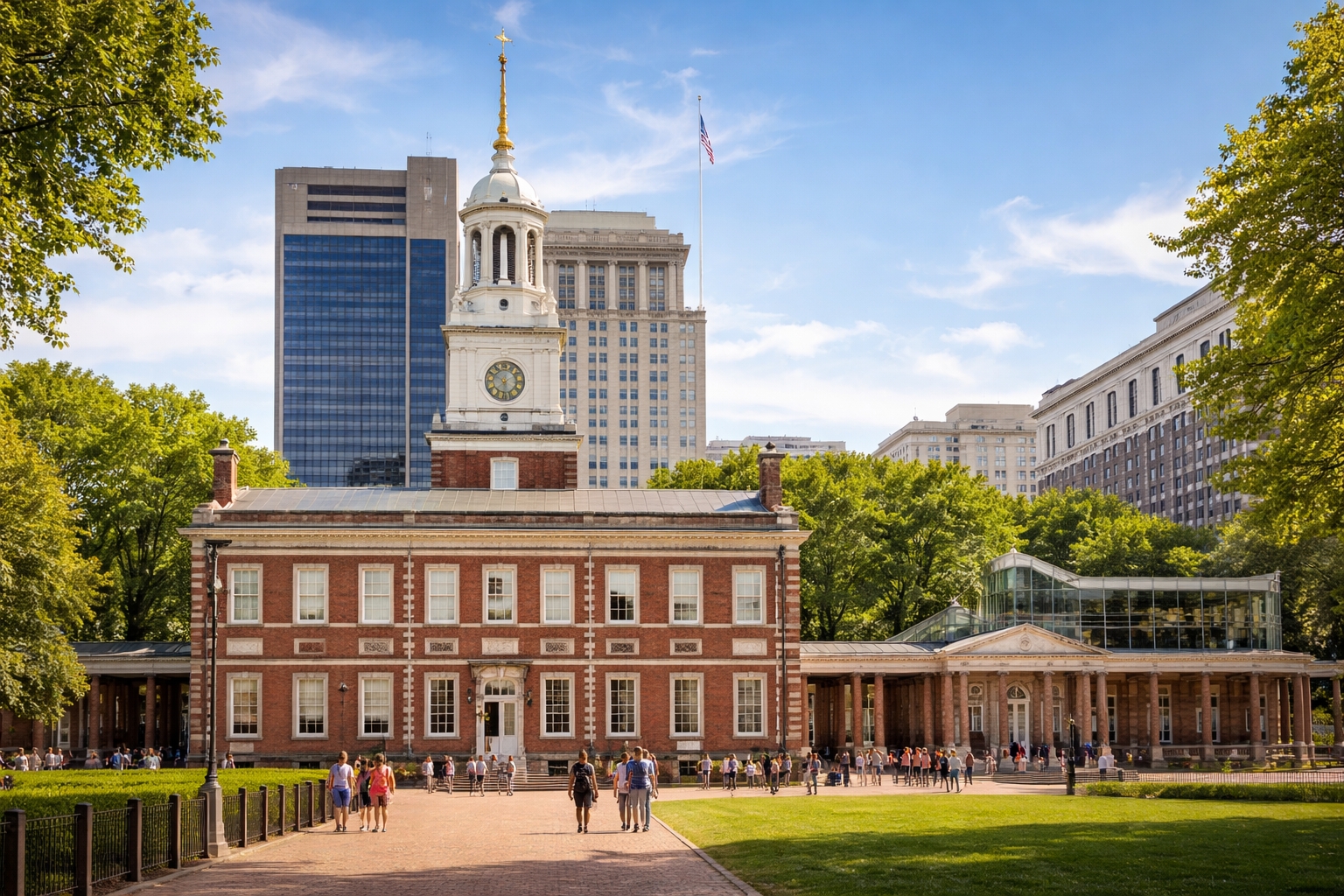
The Liberty Bell, housed in the Liberty Bell Center, is one of Philadelphia’s most famous artifacts. The bell bears the inscription “Proclaim Liberty Throughout All the Land Unto All the Inhabitants thereof,” and although it cracked after arriving in Philadelphia, it became a symbol of freedom for abolitionists and suffragists. Independence Hall, where the Declaration of Independence and Constitution were debated and adopted, stands across Independence Mall. Free timed entry tickets are required from March through December. Nearby, you can tour Congress Hall, the building that served as the U.S. Capitol when Philadelphia was the temporary national capital in the 1790s.
Reading Terminal Market, housed in a former train station, brings together dozens of vendors selling Pennsylvania Dutch specialties, cheesesteaks and international cuisine. A short walk away, the Philadelphia Museum of Art presides over the Benjamin Franklin Parkway. Visitors often recreate the iconic “Rocky” run up its steps before exploring galleries ranging from medieval armor to contemporary design. Fairmount Park offers miles of trails along the Schuylkill River, and the Eastern State Penitentiary provides a haunting tour through America’s first true penitentiary, complete with stories of Al Capone’s time behind its walls.
Top attractions and experiences in Philadelphia
-
Liberty Bell & Independence Hall – View the Liberty Bell, whose inscription and crack turned it into a symbol of freedom, and join a ranger‑led tour of Independence Hall.
-
National Constitution Center – Engage with interactive exhibits on how the U.S. Constitution affects daily life. The museum anchors the north side of Independence Mall.
-
Reading Terminal Market – Sample Amish pretzels, cheesesteaks and produce at this historic indoor market. It’s a great lunch stop between attractions.
-
Philadelphia Museum of Art – Climb the steps made famous by the movie Rocky, then explore galleries spanning 2,000 years of art.
-
Fairmount Park & Boathouse Row – Rent a bike or kayak along the Schuylkill River. Seasonal regattas add energy to the park.
-
Eastern State Penitentiary – Tour this 1829 prison to learn about its revolutionary radial design and listen to stories of former inmates.
-
Old City walking tour – Wander among colonial homes, visit Betsy Ross House and stop into 18th‑century taverns that served the Founding Fathers.
-
Mural Arts tours – Philadelphia is known as the “Mural Capital” with more than 4,000 public artworks. Guided tours reveal the stories behind the art.
When to visit Philadelphia
Philadelphia’s climate closely mirrors New York’s, but its smaller size means crowds are generally lighter. Spring brings flowering trees to Washington Square and Mother Bethel Church; summer offers festivals along Penn’s Landing; autumn delivers crisp weather and a flurry of students returning to the city’s universities; winter is cold but often less congested at major attractions. The city’s Fourth of July celebrations, including the Wawa Welcome America festival, underscore its role in the nation’s founding. As in New York, hotel prices rise around major events but shoulder seasons offer discounts.
Washington DC travel planning
Washington DC captivates visitors with its grandeur and symbolism. The city’s wide avenues and orderly layout reflect the 1791 plan by Pierre L’Enfant, who envisioned a capital anchored by ceremonial vistas. Unlike New York or Philadelphia, height restrictions preserve the prominence of monuments over skyscrapers. Washington DC serves as both the seat of the federal government and a cultural hub thanks to its museums, memorials and neighborhoods. Travellers who arrive by train at Union Station step into an elegant Beaux‑Arts hall before venturing onto the National Mall.
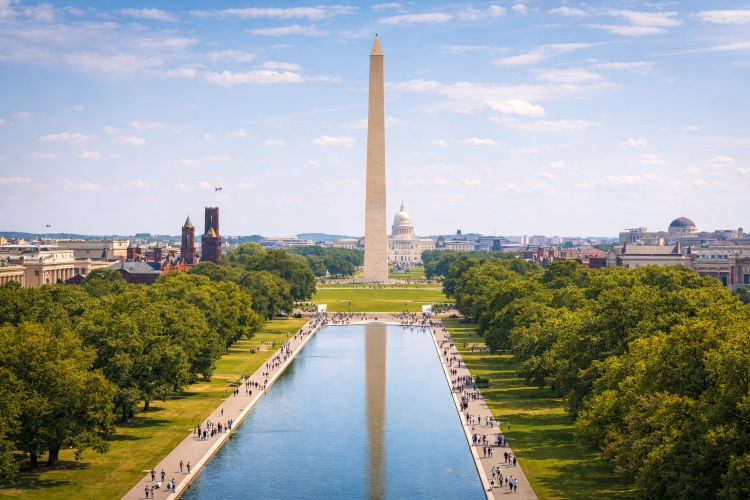
The National Mall is often called America’s Front Yard. The National Park Service notes that it is home to the nation’s most iconic memorials and hosts millions of visitors each year who come to commemorate history and make their voices heard. Walking from the U.S. Capitol down the two‑mile grassy expanse toward the Lincoln Memorial takes you past the Washington Monument, reflecting pools and war memorials. The U.S. Capitol Visitor Center provides guided tours that include the Rotunda and National Statuary Hall; advance reservations are recommended.
The National Mall is flanked by the free Smithsonian museums. According to the Smithsonian Institution, it operates 17 museums and the National Zoo in Washington DC, plus two additional museums in New York, making it the world’s largest museum and research complex. The National Air and Space Museum has two campuses—one on the Mall and another at the Udvar‑Hazy Center near Dulles Airport—and timed entry passes are required for the Mall location. The National Museum of Natural History sits on the Mall and offers free admission daily with no timed passes. Families should also consider a visit to the Smithsonian’s National Zoo in Rock Creek Park, where admission is free but parking requires reservations.
Among Washington’s other iconic landmarks are the White House and Lafayette Square, the Smithsonian Castle, the Library of Congress and the Supreme Court. Across the river in Arlington, Virginia, visitors pay respects at Arlington National Cemetery and the U.S. Marine Corps War Memorial. Neighborhoods such as Georgetown, with cobblestone streets and waterfront restaurants, and Capitol Hill, with its historic rowhouses and Eastern Market, offer glimpses of everyday life in the nation’s capital. Emerging areas like The Wharf showcase modern development with concert venues and dining.
The city’s cultural calendar is anchored by the National Cherry Blossom Festival, a four‑week celebration in spring that honors the friendship between the United States and Japan. Peak bloom typically occurs in late March or early April, and events range from kite‑flying to a parade. Summer brings Independence Day celebrations on the Mall and outdoor movie screenings. Autumn’s temperate weather makes it ideal for walking tours, while winter is quieter and museums and theaters remain open.
Top attractions and experiences in Washington DC
-
National Mall walking tour – Begin at the U.S. Capitol and make your way west past the Washington Monument, reflecting pool, World War II, Korean War and Vietnam Veterans memorials, ending at the Lincoln and Martin Luther King Jr. memorials. The National Park Service notes that this area is America’s Front Yard and welcomes millions of visitors who come to commemorate history.
-
Smithsonian museums – Visit the National Air and Space Museum, whose Mall campus requires a timed entry pass, and the National Museum of Natural History, which offers free daily admission without passes. Other highlights include the National Museum of African American History and Culture and the National Museum of American History.
-
White House & Lafayette Square – Walk around the President’s residence and observe protests and demonstrations that often take place nearby. Tours of the interior must be requested through a member of Congress well in advance.
-
U.S. Capitol Visitor Center – Take a guided tour of the Rotunda and learn how Congress functions.
-
Georgetown & The Wharf – Shop, dine and stroll through Georgetown’s historic streets and along The Wharf’s riverside promenade. Both neighborhoods blend preservation with modern development.
-
Arlington National Cemetery – Pay respects at the Tomb of the Unknown Soldier and see the Eternal Flame at President John F. Kennedy’s grave.
-
National Zoo & Rock Creek Park – Explore the zoo’s giant pandas and Great Ape House; hike the trails of Rock Creek Park for a taste of nature within the city.
-
Cultural experiences – Attend a performance at the Kennedy Center, browse independent bookstores like Politics and Prose and sample global cuisine at Union Market.
When to visit Washington DC
Washington DC’s climate is influenced by the Potomac River and Chesapeake Bay. Spring is the most popular season thanks to the cherry blossoms and mild weather. Summer can be hot and humid, but evenings are enlivened by outdoor concerts and fireworks on July 4th. Autumn offers comfortable temperatures and fewer crowds, making it ideal for exploring museums and neighborhoods. Winter brings cold temperatures but rarely heavy snow, and the city’s indoor attractions remain open. Hotel rates are highest during spring and major political events, while January and February are the most budget‑friendly months.
Getting between the cities
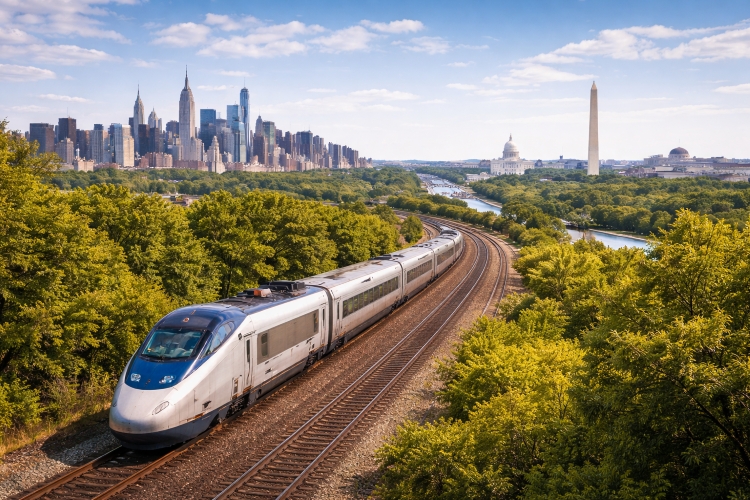
Traveling between New York City, Philadelphia and Washington DC is straightforward thanks to the Northeast Corridor’s rail lines, intercity buses and highways. Trains operated by Amtrak run frequently and provide the fastest and most comfortable option. The Acela Express, Amtrak’s high‑speed service, covers the route from Washington to Baltimore in about half an hour, to Philadelphia in roughly 1 hour 20 minutes and to New York City in approximately 2 hours 45 minutes. The slightly slower Northeast Regional service costs less and adds only 20 to 30 minutes to each leg. Both services arrive in city‑center stations: Penn Station in New York, 30th Street Station in Philadelphia and Union Station in Washington.
Several bus companies—including Megabus, BoltBus and Greyhound—provide inexpensive travel along the corridor. Buses generally take one to two hours longer than trains due to traffic and may depart from curbside stops rather than major stations. For travelers on a very tight budget or those making spontaneous day trips, buses can be a good option. Driving offers flexibility to explore small towns and detour to attractions like Princeton or Baltimore, but parking in city centers can be expensive and traffic congested. If driving, consider splitting the journey over multiple days to enjoy coastal towns or colonial sites such as Annapolis.
The growing popularity of luxury rail travel means some travellers choose upscale train packages that include meals, private cabins and curated excursions. As a 2026 travel trend, luxury rail itineraries appeal to those seeking a slower pace and historical ambience. These packages often combine the heritage of classic train journeys with modern comforts and align with the renewed appreciation of rail travel’s environmental advantages over flying or driving.
Transportation comparison table
| Mode | Typical travel time (NYC ⇄ Philadelphia) | Typical travel time (Philadelphia ⇄ DC) | Pros | Cons |
|---|---|---|---|---|
| Amtrak Acela | ~1 h 20 m | ~1 h 20 m | Fastest, comfortable seating, city‑center stations, Wi‑Fi, power outlets | Higher cost, reservations recommended |
| Amtrak Northeast Regional | ~1 h 40 m | ~1 h 50 m | Lower fares than Acela, frequent departures, city‑center stations | Slightly longer travel times |
| Intercity bus | 2–3 h | 2½–4 h | Lowest cost, flexible schedules, curbside pick‑ups | Traffic delays, fewer amenities |
| Driving | 2–3 h | 2 h 30 m–3 h | Flexibility to detour, explore small towns, carry luggage easily | Traffic congestion, parking costs, tolls |
Trip timing and seasons
An East Coast itinerary requires careful consideration of seasonal differences in each city. Spring is universally pleasant and marks the beginning of the festival season. In New York, cherry trees bloom in the Brooklyn Botanic Garden and the Tribeca Film Festival draws cinephiles. Philadelphia commemorates its history with re‑enactments and concerts around Independence Day. Washington DC’s National Cherry Blossom Festival honors the friendship between the United States and Japan and includes parades and kite‑flying. Spring weather can be unpredictable, so pack layers and an umbrella.
Summer brings long daylight hours and numerous outdoor events. New York’s SummerStage series brings free concerts to Central Park; Philadelphia hosts beer gardens and night markets; Washington DC features the Smithsonian Folklife Festival on the Mall. Heat and humidity are common, so plan indoor visits during midday and enjoy evenings outside. Autumn offers crisp air and brilliant foliage in Central Park and Fairmount Park. Harvest festivals and marathons animate the streets. Winter sees fewer tourists; holiday decorations sparkle in New York, and Philadelphia’s Mummers Parade on New Year’s Day is a local tradition. Washington DC remains lively with museum exhibits and Kennedy Center performances. If traveling in winter, pack warm clothing and note that some outdoor attractions operate shorter hours.
Budgeting and accommodations
Traveling through three major cities requires budgeting for transportation, lodging, food and activities. Costs vary widely depending on travel style, season and the neighborhoods you choose. New York City typically has the highest hotel rates, with upscale properties like those near Central Park or Soho commanding premium prices. Midtown offers mid‑range chains and boutique hotels; the outer boroughs provide more affordable options but require longer commutes. In Philadelphia, accommodations around Center City and Old City place you within walking distance of major sites. Boutique hotels and bed‑and‑breakfasts in historic townhouses offer charm, while chain hotels near the convention center cater to business travelers. Washington DC’s lodging is concentrated around downtown, Dupont Circle and the Capitol Hill area. Government and conference schedules heavily influence prices; weekends and August tend to be less expensive.
If your itinerary includes Washington DC, consider basing yourself at Hotel Washington, the closest hotel to the White House positioned at the edge of the White House Lawn. Its location makes it a convenient hub for exploring the National Mall and surrounding neighborhoods, and its rooftop offers views of the monuments. Booking early is advisable during peak seasons and major political events. In New York, neighborhoods like Long Island City, Williamsburg and Jersey City (across the Hudson River) provide lower rates while still offering easy access to Manhattan via subway or PATH train. In Philadelphia, staying near Rittenhouse Square or University City can balance comfort and cost.
Beyond lodging, set aside funds for attractions, dining and transportation. Many museums in Washington DC are free, while major attractions in New York and Philadelphia often require tickets. Combining ferry, bus and subway passes can reduce costs. Consider purchasing a multi‑attraction pass in New York or a CityPASS in Philadelphia to save on admissions. Dining ranges from inexpensive food trucks and market stalls to Michelin‑starred restaurants. Street food in Chinatown, Philly cheesesteaks at local institutions and craft breweries provide affordable and delicious options.
Budget tips
-
Travel off‑peak – Hotel rates and airfares drop after major holidays and during midwinter. Visiting during shoulder seasons (late winter or early spring, and late autumn) can save money while avoiding extreme weather.
-
Use public transit – Subways in New York and Philadelphia, as well as Metro in Washington, are inexpensive and efficient. Day passes or weekly passes can reduce costs for multi‑day stays.
-
Consider multi‑attraction passes – Passes bundle entry to major museums and attractions at a discounted rate. However, evaluate whether the included sites match your interests before purchasing.
-
Eat like a local – Food carts, markets and neighborhood eateries offer authentic flavors at lower prices than tourist‑centric restaurants. In Philadelphia, Reading Terminal Market is ideal for sampling diverse dishes; in Washington, Union Market features dozens of vendors.
-
Look for free events – Summer concert series, outdoor movie screenings and street festivals in each city offer entertainment without additional cost.
-
Stay slightly outside tourist centers – Lodging in outer boroughs or neighborhoods like Brooklyn, Queens or Arlington can be less expensive while still providing access to the city via transit.
Sample itineraries
Every traveler’s timeline is unique, but the following sample itineraries illustrate how to allocate time between the three cities. Adjust days and attractions according to your interests, energy levels and travel pace.
Seven‑day itinerary (one week)
Day 1–2: New York City – Arrive and settle into your hotel. Spend the first day exploring Lower Manhattan: ferry to the Statue of Liberty and Ellis Island, walk through Battery Park and Wall Street, and dine in Chinatown. On day two, explore Midtown: visit Times Square, ascend the Empire State Building or Top of the Rock, explore Rockefeller Center and watch a Broadway show.
Day 3: New York & transit to Philadelphia – Stroll through Central Park and the Metropolitan Museum of Art in the morning. After lunch, ride Amtrak’s Northeast Regional or Acela to Philadelphia (about 1½ hours). Check into your hotel in Center City.
Day 4: Philadelphia – Begin with the Liberty Bell and Independence Hall. Visit the National Constitution Center, then enjoy lunch at Reading Terminal Market. In the afternoon, tour the Philadelphia Museum of Art and run the Rocky steps. Evening: dine in Old City or on South Street.
Day 5: Philadelphia & transit to Washington DC – Walk or bike along the Schuylkill River Trail in Fairmount Park. Midday, catch a train to Washington DC (about 1½ hours). After settling into your hotel, take an evening stroll past the White House and Lafayette Square.
Day 6: Washington DC – Spend the day on the National Mall: tour the U.S. Capitol, visit the Smithsonian museums (such as the Air and Space Museum, which requires a timed entry pass, and the Natural History Museum, which does not), and walk past the Lincoln Memorial. Evening: dine in Georgetown or The Wharf.
Day 7: Washington DC & departure – Visit Arlington National Cemetery or the National Zoo. Depending on your flight or train schedule, squeeze in a final museum or explore a neighborhood like Capitol Hill. Depart from Union Station or Reagan National Airport.
Ten‑day itinerary
Days 1–3: New York City – Follow the first two days of the seven‑day itinerary. Add a third day to explore the Brooklyn Bridge, spend time in Brooklyn neighborhoods like Williamsburg and DUMBO, visit the 9/11 Memorial & Museum and enjoy nightlife in the East Village.
Days 4–5: Philadelphia – Allocate two full days: Old City and Center City on the first day, including the Liberty Bell and Reading Terminal Market. On the second day, tour the Philadelphia Museum of Art, Eastern State Penitentiary and Fairmount Park. Consider an evening at a Phillies baseball game if the team is in town.
Days 6–10: Washington DC – Spend four days exploring the capital. On day six, tour the U.S. Capitol and Supreme Court. Day seven: National Mall museums such as the National Museum of African American History and Culture, Smithsonian Castle and Hirshhorn Museum. Day eight: explore neighborhoods (Georgetown, Adams Morgan, The Wharf), visit the National Zoo and Rock Creek Park. Day nine: day trip to Mount Vernon or the nearby Old Town Alexandria. Day ten: attend a performance at the Kennedy Center and stroll along the Potomac before departing.
Fourteen‑day itinerary (two weeks)
Days 1–4: New York City – Expand on the previous itineraries by adding excursions to the Statue of Liberty’s crown (book months in advance), a guided food tour of Chinatown and Little Italy, a visit to the American Museum of Natural History, and an evening at a rooftop bar overlooking the skyline. Spend a day exploring outer boroughs: Brooklyn’s Prospect Park and Brooklyn Museum, Queens’ Long Island City with MoMA PS1 and Gantry Plaza State Park, and The Bronx’s New York Botanical Garden and Yankee Stadium.
Days 5–7: Philadelphia – Add day trips to Valley Forge National Historical Park or Longwood Gardens. Sample craft beers on a brewery tour and explore neighborhoods like Northern Liberties and Fishtown, known for street art and coffee shops.
Days 8–14: Washington DC and beyond – Use additional days to take guided tours of the White House (arranged through a Member of Congress), attend sessions at the Library of Congress, or watch oral arguments at the Supreme Court when in session. Day trips can include Annapolis for naval history, Shenandoah National Park for hiking, or Baltimore for the National Aquarium. Use the final days to revisit favorite museums and relax in neighborhoods like Dupont Circle or Logan Circle. Even after two weeks, you will have only scratched the surface of these dynamic cities.
Travel tips and insider advice
To maximize enjoyment on a multi‑city trip, planning and flexibility go hand in hand. Below are strategies for navigating logistics, staying safe and experiencing each city like a local.
-
Packing – Pack layers to accommodate changing weather across different cities and seasons. Comfortable walking shoes are essential, as you will cover many miles on foot. Carry a reusable water bottle and tote bag for market purchases.
-
Transportation passes – Purchase a MetroCard in New York, SEPTA Key card in Philadelphia and SmarTrip card in Washington DC. These reloadable cards allow seamless access to subways, buses and, in some cases, commuter rail lines.
-
Safety – All three cities are generally safe in tourist areas, but exercise the same caution you would in any urban environment. Keep valuables secure, stay aware of your surroundings and use licensed taxis or rideshares at night.
-
Accessibility – Public transportation, museums and monuments provide ramps and elevators, but some historic sites have limited accessibility due to their age. Check official websites for accommodation details and contact visitor centers if you require assistance.
-
Cultural etiquette – In New York, stand on the right side of escalators to allow others to pass; in Philadelphia, be respectful of locals’ pride in their sports teams; in Washington DC, be mindful that you share spaces with government operations—protests are common but peaceful.
-
Sustainable travel – Opt for trains rather than short flights to reduce your carbon footprint. Bring a reusable shopping bag and water bottle to minimize waste. Choose hotels with sustainability programs and consider walking or cycling to explore neighborhoods.
-
Advance reservations – Book timed‑entry tickets for popular attractions such as the Statue of Liberty crown, Independence Hall and Smithsonian museums. Restaurant reservations are recommended for sought‑after dining spots.
-
Local experiences – Attend a live music performance in Harlem or the Fillmore Philadelphia, catch a poetry slam in D.C.’s U Street Corridor, or join a guided ghost tour in Old City. These experiences offer insight beyond the standard tourist circuit.
-
Respectful tourism – Acknowledge the living nature of these cities. Many residents commute through areas you are exploring, so avoid blocking sidewalks and maintain courtesy in crowded spaces.
Frequently asked questions
How do I plan a trip from New York City to Philadelphia to Washington DC?
Plan a multi‑city trip by deciding the length of stay in each city, then booking transportation and lodging accordingly. Use Amtrak for quick travel, schedule visits to major attractions with timed tickets, and balance sightseeing with free time to explore neighborhoods.
What’s the best way to travel between NYC, Philadelphia and Washington DC?
Amtrak’s Acela or Northeast Regional trains provide the fastest and most comfortable travel. Buses are a budget option but slower, while driving offers flexibility to detour but involves parking fees and traffic.
How long is the train ride from Washington DC to New York City?
On Amtrak’s Acela Express it takes roughly 2 hours 45 minutes. The Northeast Regional adds about half an hour but costs less. Both trains depart from Union Station and arrive at New York’s Penn Station.
Is Philadelphia worth visiting on a trip between New York and Washington?
Yes. Philadelphia’s compact historic core features the Liberty Bell and Independence Hall, plus vibrant food markets, museums and public art. It breaks up the journey and offers insight into America’s founding and local culture.
How many days do you need in each city?
A week‑long itinerary typically allocates two to three days for New York, one to two days for Philadelphia and two to three days for Washington DC. Adjust based on interests—art lovers may spend extra days in New York, while history enthusiasts might linger in Philadelphia.
When is the best time to visit Washington DC for cherry blossoms?
The National Cherry Blossom Festival runs for four weeks in late March and early April, with peak bloom usually occurring around the end of March. Plan your visit during this period and reserve accommodation early.
What are the top free attractions in Washington DC?
The Smithsonian museums—including the National Air and Space Museum and the National Museum of Natural History—are free. The monuments and memorials on the National Mall and the National Zoo are also free.
What is a good seven‑day itinerary for NYC, Philadelphia and Washington DC?
Begin with two days in New York exploring the Statue of Liberty, Times Square and Central Park. Spend a day traveling to and visiting Philadelphia, focusing on the Liberty Bell and Reading Terminal Market, then travel to Washington DC for three days exploring the National Mall and Smithsonian museums before departing.
Closing thoughts
A journey through New York City, Philadelphia and Washington DC reveals the layers of American identity—from the waves of immigrants welcomed by the Statue of Liberty to the hall where the Constitution was debated, and onto the National Mall, where millions gather to reflect and advocate. Each city tells its story through architecture, neighborhoods, food and cultural institutions. With thoughtful planning, you can travel efficiently along the Northeast Corridor, budget wisely and savor the distinct character of each destination. Whether you are tracing the steps of founders, tasting regional specialties or standing on the National Mall during cherry blossom season, the experience will leave you with a deeper appreciation for the people and places that shape the United States.
By basing your stay in Washington DC at Hotel Washington, the closest hotel to the White House positioned at the edge of the White House Lawn, you place yourself within walking distance of monuments and museums while enjoying a comfortable retreat at day’s end. Wherever you choose to rest your head, the collective stories of these three cities will linger long after the journey is over.
Read other posts