New Arch in Washington DC: A Monumental Vision for America’s 250th Anniversary
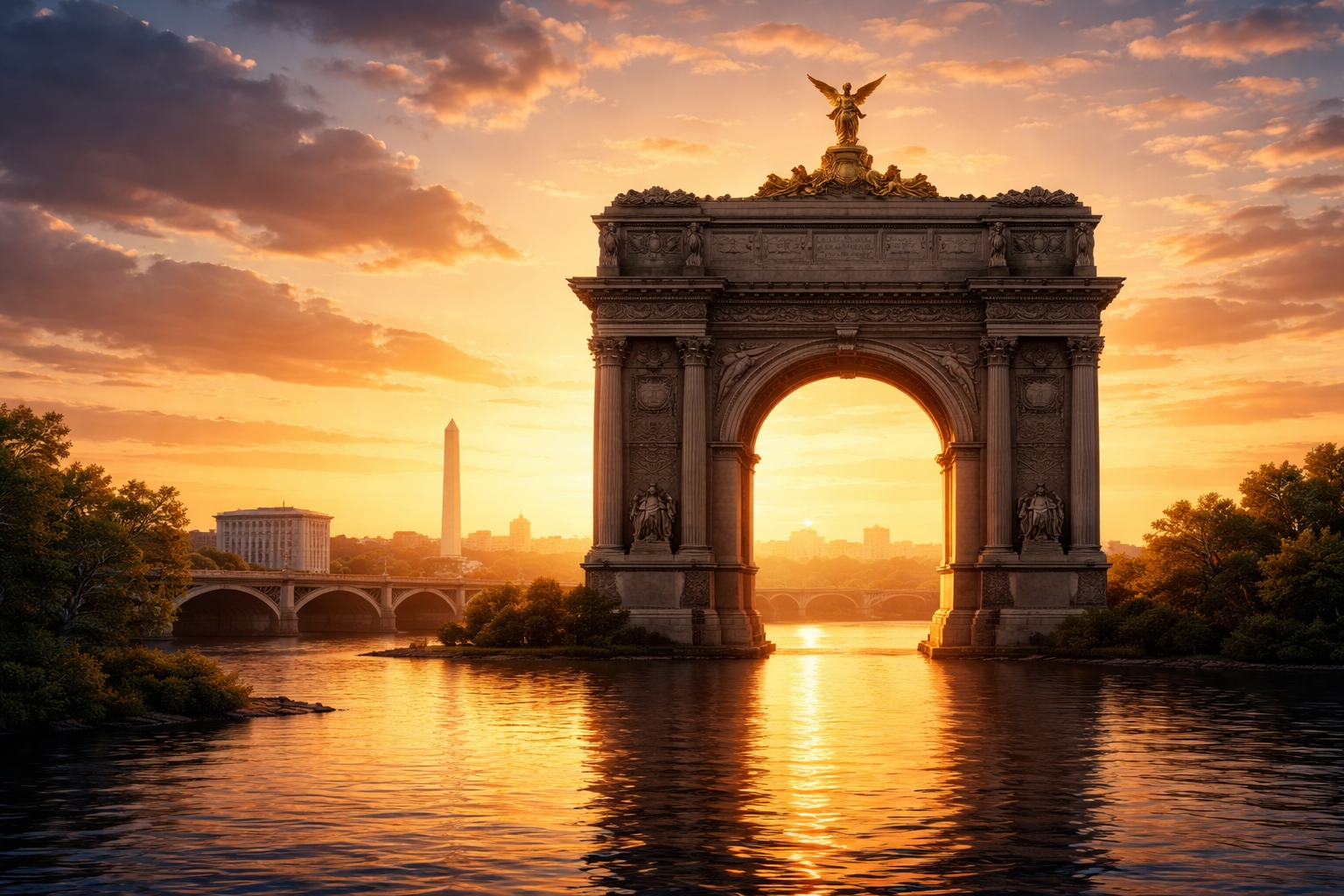
The idea of erecting a new triumphal arch in Washington DC has captured the imagination of history buffs, architecture enthusiasts and travelers alike. A plan championed by former President Donald Trump proposes a neoclassical arch—officially called the Independence Arch and nicknamed the Arc de Trump—for America’s semiquincentennial celebrations. Early renderings show a grand stone structure topped with soaring eagles and a gilded figure representing Victory, reminiscent of Paris’s Arc de Triomphe and Brooklyn’s Soldiers and Sailors’ Memorial Arch. The proposed location is a traffic circle on Columbia Island between Arlington National Cemetery and the Lincoln Memorial, along the Arlington Memorial Bridge, an area already rich with symbolism. This long‑form article explores the historical roots of triumphal arches, the vision behind the Independence Arch, the planning process and controversies, and what it all means for visitors preparing to celebrate the United States’ 250th birthday in 2026.
Triumph Beyond Stone: The Historical and Cultural Context of Triumphal Arches
For centuries, cultures have built monumental arches to commemorate victories, honor heroes and create gateways that symbolize transitions between worlds. Rome’s Arch of Titus and Arch of Constantine celebrated military triumphs and reinforced imperial power. During Napoleon’s reign, the Arc de Triomphe was commissioned to honor French soldiers and remains one of Paris’s most visited monuments. In New York, the Soldiers and Sailors’ Memorial Arch commemorates Union forces of the Civil War. These arches share common features: large masonry spans, sculpted reliefs of battles, symbolic statuary and inscriptions celebrating collective achievements.
The appeal of an arch lies in its dual character. Architecturally, it is both utilitarian and commemorative. The curved span directs movement through space, while the sculptural decoration transforms the structure into a narrative canvas. Historically, triumphal arches served as stage sets for processions—conquerors would march beneath them amid cheering crowds. Over time these monuments became public memorials accessible to all, places where residents and visitors could reflect on national narratives. In Washington DC, existing monuments like the Lincoln Memorial and Washington Monument embody this tradition of monumental storytelling, and the proposed Independence Arch seeks to extend it into the twenty‑first century.
Classical Inspirations and American Interpretation
Many early American civic structures embraced neoclassical architecture—a style inspired by Greek and Roman antiquity. Thomas Jefferson admired Palladian symmetry and proportion, and federal buildings like the U.S. Capitol adopted columns and domes as symbols of democracy. The neoclassical idiom communicates permanence, order and gravitas, making it a popular choice for memorials. Renderings of the Independence Arch show classical motifs: Corinthian columns, architraves and a gilded figure evocative of Nike, the Greek goddess of victory. The design pays homage to the Republican ideals of ancient Rome while rooting itself in a uniquely American landscape.
The American context also invites reinterpretation. Instead of commemorating a military conquest, the Independence Arch intends to celebrate America’s 250th anniversary—the semquincentennial of the Declaration of Independence in 1776. Its purpose is commemorative and forward‑looking, reflecting on the nation’s past while projecting its aspirations. By placing the arch on a ceremonial axis with the Lincoln Memorial and Arlington National Cemetery, planners hope to create a narrative link between sacrifice, liberty and future progress.
America’s Semiquincentennial: A Nation Reflects on 250 Years
On July 4, 2026, the United States will mark 250 years since the adoption of the Declaration of Independence. Preparations are underway across the country to celebrate this milestone. The nonprofit America 250 commission outlines national programming that includes a concert series called America’s Performance, community flag‑waving events known as America Waves, a traveling technology expo showcasing American innovation, and a collaboration with the Library of Congress and the National Institute of Standards and Technology to create a time capsule for installation at Independence National Historical Park in Philadelphia. These initiatives highlight the diversity and dynamism of the modern United States while connecting thematically to the revolutionary era.
A national celebration is planned for Washington DC on July 4, 2026, with events across the capital and in cities nationwide. For visitors, the year 2026 will offer a once‑in‑a‑lifetime opportunity to witness parades, concerts, exhibitions and fireworks commemorating 250 years of American democracy. The Independence Arch, if constructed in time, would serve as a physical symbol of this celebration, marking a new chapter in the capital’s monumental landscape.
Connecting Past and Present
The semiquincentennial invites Americans to consider both historical narratives and contemporary challenges. It is a chance to reflect on the ideals enshrined in the Declaration of Independence—liberty, equality, and the pursuit of happiness—and to assess their meaning in the 21st century. Commemorations are expected to highlight contributions of diverse communities, explore the evolution of civil rights, and inspire discussions about the nation’s future. The Independence Arch’s design features classical motifs that reference the past while its placement across the Potomac River points to the evolving relationship between Washington DC and Virginia, reflecting the nation’s complex regional and historical ties.
Designing the Independence Arch: Vision, Scale and Symbolism
The Independence Arch concept first gained public attention when Donald Trump presented scale models at a fundraising dinner. According to news reports, he displayed three versions—small, medium and large—and quipped that the smallest model would be the “original,” while the larger options were “doubling down” on grandeur. The final design appears to favor the largest iteration, rising high above Memorial Circle. Renderings show a stone archway adorned with sculpted eagles and capped by a gilded statue reminiscent of Victory. The structure evokes Paris’s Arc de Triomphe and Brooklyn’s Soldiers and Sailors’ Memorial Arch, blending European grandeur with American symbolism.
Classical Elements and Ornamentation
The arch’s classical styling is evident in its symmetrical form and decorative program. Fluted Corinthian columns flank the central opening, supporting entablatures with relief carvings. Eagles perched on the entablatures reference both the United States’ national bird and the Roman Aquila, which adorned legionary standards. Above, the gilded statue holds a torch aloft, a nod to the Statue of Liberty’s guiding flame and a metaphor for enlightenment. The combination of white marble and gilded bronze recalls the interplay of materials seen in ancient monuments. Importantly, the design takes inspiration from the architectural vocabulary of Washington’s monumental core, ensuring it harmonizes with existing memorials like the Lincoln Memorial.
Size and Scale Comparisons
As debate continues over the arch’s exact dimensions, comparisons to other monuments help contextualize its scale. Paris’s Arc de Triomphe stands 50 meters (164 feet) high; early renders of the Independence Arch suggest a height approaching that of the Lincoln Memorial’s central chamber. The Brooklyn Soldiers and Sailors’ Memorial Arch, built in the 1890s, is 80 feet high. Critics argue that an overly large arch could overwhelm the surrounding landscape or disrupt sightlines along the Potomac River. Supporters counter that a significant height is necessary to match the monumental scale of the nation’s capital and to be visible across the river from Virginia.
Who Designed the Arch?
Architecture firm Harrison Design, known for classical residential and civic projects, produced the watercolor renderings. Nicolas Leo Charbonneau, an artist associated with the firm, created paintings showing the arch bathed in golden light, with the Lincoln Memorial and Arlington National Cemetery in the background. Donald Trump described the design as harkening back to the neoclassical traditions favored by George Washington and Thomas Jefferson. No official architect of record has been named, and the project would require a formal design competition or review process before construction could proceed.
Funding and Private Sponsorship
The Independence Arch is proposed as a privately funded project. Trump told donors that proceeds from fundraising events and personal contributions would finance the memorial. The Commemorative Works Act prohibits federal funds for new memorials, so private entities must raise capital, secure permits and maintain the structure after completion. The requirement of private funding can both accelerate and complicate projects, depending on donor interest and economic conditions. In the case of the Independence Arch, supporters hope that high‑profile backers will ensure financial viability, while opponents question whether such a monument should rely on wealthy patrons rather than broad public support.
Arlington Memorial Bridge and Memorial Circle: The Existing Monumental Landscape
The proposed site for the Independence Arch sits within a historically significant landscape. Arlington Memorial Bridge, completed in 1932, was designed by the firm McKim, Mead & White to link Washington DC and Arlington National Cemetery. The bridge spans the Potomac River with nine broad arches and once included a bascule draw span—at the time the longest, heaviest and fastest in the world. It forms a ceremonial entrance to the capital and a symbolic link between the North and the South. The bridge’s neoclassical design features granite facing, sculpted eagles, bison and poppies, echoing motifs found in the Lincoln Memorial and other monuments.
Memorial Circle: A Convergence of Memory
At the Virginia end of the bridge lies Memorial Circle, a traffic roundabout on Columbia Island. Here, the roadway splits to connect with George Washington Memorial Parkway and the paths leading to Arlington National Cemetery and the Marine Corps War Memorial (Iwo Jima). The circle contains large flagpoles and commemorative plaques honoring valor and sacrifice. Because of its centrality and unobstructed sightlines to the Lincoln Memorial, Memorial Circle was identified as a potential site for a triumphal arch as early as 1902. The National Park Service considered constructing a bridge‑fronting arch but never realized the plan. The Independence Arch proposal revives this idea, though it must contend with modern traffic patterns and environmental concerns.
Arlington National Cemetery: A Sacred Neighbor
Just beyond Memorial Circle lies Arlington National Cemetery, one of the nation’s most hallowed grounds. The cemetery was established as a national burial ground on June 15, 1864, when Secretary of War Edwin Stanton approved Quartermaster General Montgomery Meigs’s recommendation for a national cemetery not exceeding 200 acres. Over time, it has expanded to about 639 acres, and it now holds the remains of more than 400,000 service members and their families. Its rolling hills, white marble headstones and memorials like the Tomb of the Unknown Soldier and John F. Kennedy Eternal Flame attract millions of visitors each year. The cemetery’s proximity lends solemnity to the Independence Arch proposal. Critics worry that a triumphal monument may detract from the reverent atmosphere, while supporters argue that the arch could serve as a gateway honoring all who served.
The Lincoln Memorial: A Beacon of Unity
Across the bridge stands the Lincoln Memorial, dedicated in 1922 to America’s 16th president. Construction began on February 12, 1914, and the structure features 36 Doric columns representing the states of the Union at the time of Lincoln’s death. Inside sits a 19‑foot tall statue of Abraham Lincoln gazing east across the Reflecting Pool. The memorial is open 24 hours a day, and the National Park Service notes that early morning and evening are tranquil times to visit. The proposed Independence Arch would share an axis with the Lincoln Memorial, creating a direct visual link between two tributes to liberty and sacrifice.
The Journey from Idea to Reality: Planning, Approval and Controversy
Building a monument on federal land in Washington DC is no simple endeavor. The Commemorative Works Act (CWA) governs the creation of new memorials, stipulating that sponsors must fund construction without federal appropriations and secure approvals from both the U.S. Commission of Fine Arts (CFA) and the National Capital Planning Commission (NCPC). The CWA divides the District into zones (Reserve, Area I and Area II) and limits the number of new memorials on the National Mall to preserve open space. Proposals must demonstrate preeminent historical and lasting significance and may be subject to a seven‑year completion window.
The Approval Process
Once a sponsor group submits a proposal, the NCPC and CFA review the site, design and materials to ensure appropriateness. The process involves multiple public meetings, design revisions and environmental assessments. Because the Independence Arch would occupy NPS land on Columbia Island, the National Park Service must also conduct an Environmental Assessment to evaluate traffic impacts, visual effects and compatibility with existing memorials. This collaborative review can take years. Even if private funding is secured quickly, obtaining the necessary approvals and addressing public comments could delay groundbreaking well beyond the 2026 target.
Supporters, Critics and Public Debate
Public reaction to the Independence Arch has been mixed. Supporters view the proposal as an opportunity to create an iconic landmark honoring America’s 250th anniversary. They argue that Washington DC lacks a triumphal arch and that the structure would draw tourists, create jobs and contribute to the capital’s identity. The arch’s classical design appeals to those who admire neoclassical monuments and appreciate references to European models. Additionally, the private funding model means that taxpayers would not bear construction costs.
Critics question whether the arch is necessary or appropriate. Some argue that existing memorials, such as the Lincoln Memorial, already embody national values and that adding another monument could clutter the landscape. Others object to the project’s association with a controversial political figure and worry that it could become a partisan symbol. The arch’s large scale and potential impact on traffic and sightlines have raised concerns among urban planners and environmental groups. Finally, some lament that resources might be better spent on educational programs or infrastructure improvements rather than on a monumental gateway.
Precedents and Design Debates
The debate over the Independence Arch echoes earlier controversies surrounding memorial projects in Washington DC. The Vietnam Veterans Memorial, completed in 1982, faced criticism for its minimalist design before becoming widely acclaimed. The World War II Memorial, dedicated in 2004, was also opposed by some who feared it would interrupt the open expanse of the National Mall. Both examples highlight how public opinion can evolve as projects move from concept to reality. For the Independence Arch, careful engagement with designers, historians, veterans groups and the public will be essential to navigate the complex approval process and achieve broad support.
Comparisons to Other Iconic Arches: Lessons and Inspirations
The Independence Arch draws inspiration from iconic arches around the world. Understanding these precedents provides context for the proposed monument’s scale and symbolism.
Arc de Triomphe, Paris
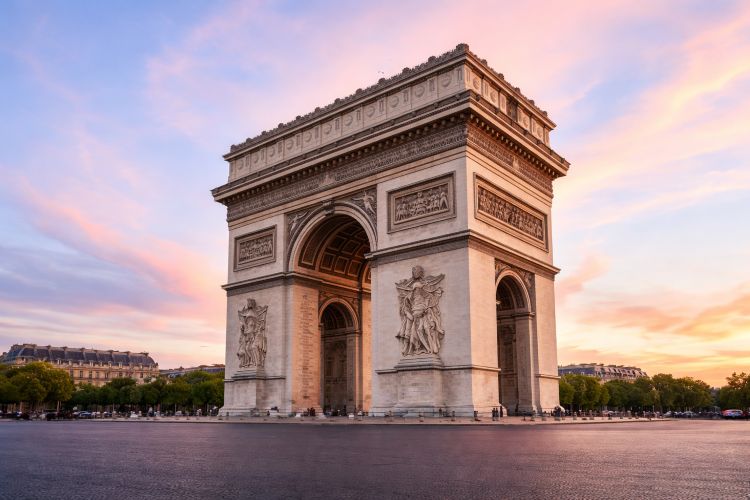
Commissioned by Napoleon in 1806 and completed in 1836, Paris’s Arc de Triomphe honors soldiers who fought in the French Revolutionary and Napoleonic Wars. Standing 50 meters high on the Champs‑Élysées, it features bas‑reliefs of battles and the names of French generals. The arch forms a central node in Paris’s Axe historique, aligning with the Louvre, the Place de la Concorde and La Grande Arche de la Défense. Visitors can climb to the top for views of the city and the Tomb of the Unknown Soldier from World War I lies beneath its vault. Its monumental presence and patriotic symbolism influenced numerous commemorative arches worldwide, including the Independence Arch’s design.
Soldiers and Sailors’ Memorial Arch, Brooklyn
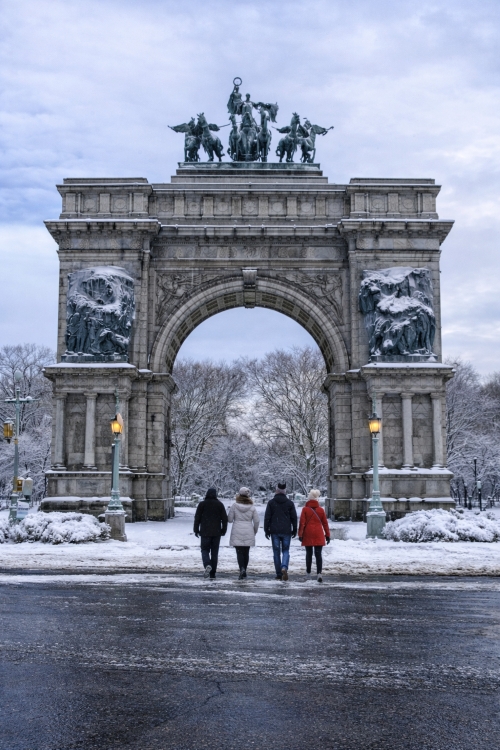
Erected between 1889 and 1892 at Brooklyn’s Grand Army Plaza, the Soldiers and Sailors’ Memorial Arch honors Union soldiers and sailors of the American Civil War. Designed by John Duncan, the granite arch is adorned with sculptural groups representing the spirit of the army and navy. Bronze bas‑reliefs depict major Civil War battles. Atop the arch, a triumphant quadriga sculpture charges forward. The structure is integrated into a lively public space, hosting farmers’ markets and events. Its American context and Civil War commemoration resonate with the Independence Arch’s goal of celebrating national heritage.
Arch of Triumph, North Korea and Gateway Arch, St. Louis
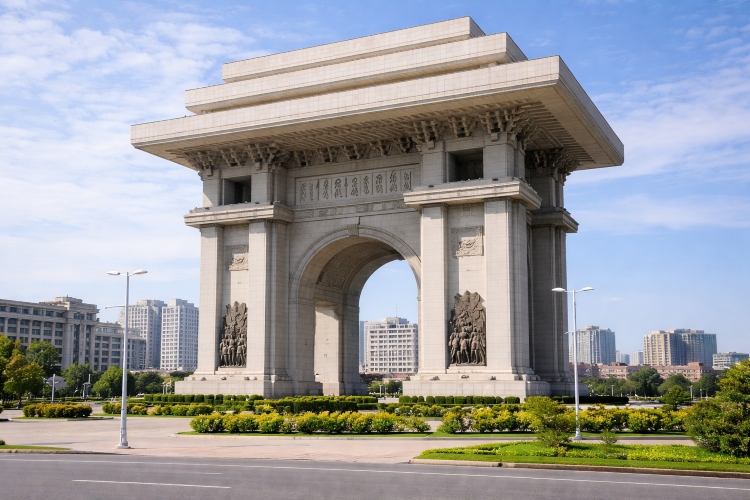
Other modern arches demonstrate how monumental gateways can shape civic identity. The Arch of Triumph in Pyongyang commemorates North Korea’s resistance against Japanese occupation and stands taller than the Arc de Triomphe. The Gateway Arch in St. Louis, completed in 1965, is a stainless‑steel catenary arch symbolizing westward expansion. Though not a triumphal arch in the classical sense, it illustrates how bold engineering and modern design can redefine a city skyline. These examples remind designers of the importance of contextual relevance—monuments should resonate with their specific cultural and geographical setting.
Local Precedent: Memorials in Washington DC
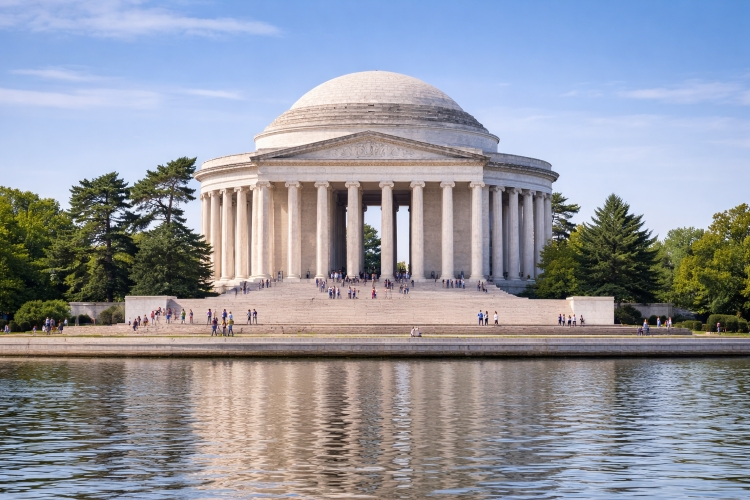
Washington’s existing memorials provide a frame of reference. The Lincoln Memorial, dedicated to preserving the Union, uses Doric columns and a large interior statue to evoke ancient temples. The Washington Monument, an obelisk, commemorates the nation’s first president and is visible throughout the city. The Jefferson Memorial blends classical rotunda design with quotes from Jefferson’s writings. Each structure balances symbolic meaning, aesthetic grace and careful placement within the urban fabric. For the Independence Arch to succeed, it must harmonize with these landmarks rather than compete with them.
Discovering the National Mall and Surrounding Attractions
While the Independence Arch remains a proposal, Washington DC already offers an abundance of sites that capture American history, culture and creativity. The National Mall—a public promenade stretching from the Capitol at 3rd Street NW to 14th Street and lined with memorials like the Franklin Delano Roosevelt Memorial, Jefferson Memorial, Korean War Veterans Memorial, Martin Luther King Jr. Memorial, Vietnam Veterans Memorial, Washington Monument and World War II Memorial—invites visitors to explore the nation’s story.
Smithsonian Museums and the National Gallery of Art
The Smithsonian Institution operates 17 free museums and the National Zoo in Washington DC. Highlights include the National Museum of American History, where visitors can see the Star‑Spangled Banner and presidential artifacts; the National Museum of African American History and Culture, which documents the African American experience; and the Air and Space Museum, showcasing aviation and space exploration. Admission is free at all Smithsonian locations except Cooper Hewitt in New York, making the museums accessible to all.
Next to the National Mall stands the National Gallery of Art, which houses nearly 160,000 works spanning ancient to contemporary art and attracts almost four million visitors annually. Its East and West Buildings and Sculpture Garden are free to the public, offering masterpieces by Leonardo da Vinci, Johannes Vermeer, Vincent van Gogh and Alma Thomas. Temporary exhibitions and programs enrich the experience, and the Gallery’s architecture—modernist volumes connected by an underground concourse—offers a serene escape from the bustling Mall.
Washington Monument and More
The Washington Monument, a 555‑foot obelisk, honors George Washington and provides panoramic views from its observation deck. The World War II Memorial features fountains and pillars representing each state and territory. The Vietnam Veterans Memorial’s polished black granite wall lists the names of over 58,000 service members killed in the Vietnam War. Nearby, the Martin Luther King Jr. Memorial and the Korean War Veterans Memorial pay tribute to civil rights and Korean War heroes respectively. Each site contributes to a narrative mosaic of American resilience and democratic values.
Off‑Mall Attractions: Neighborhoods and Parks
Beyond the National Mall, visitors can explore diverse neighborhoods. Georgetown, with its cobblestone streets, offers waterfront dining and boutiques. Dupont Circle boasts historic mansions, art galleries and a lively café scene. Capitol Hill houses the U.S. Capitol, Library of Congress and Eastern Market. Penn Quarter features theaters, restaurants and access to the National Portrait Gallery and National Archives. Anacostia and the Frederick Douglass National Historic Site offer insights into African American heritage. Urban parks like Rock Creek Park provide hiking and biking trails within the city.
America’s Past, Present and Future: The Semiquincentennial Narrative
The 250th anniversary of the United States invites reflection on the journey from a fledgling republic to a diverse nation of 50 states. The independence declared in 1776 was rooted in Enlightenment ideals; however, the story of the United States also includes painful chapters of slavery, displacement of Indigenous peoples, civil wars and struggles for civil rights. The semiquincentennial aims to engage with the full spectrum of history, from revolutionary heroes to lesser‑known figures who shaped the country’s cultural tapestry.
Inclusive Storytelling
Organizations like America 250 encourage inclusive storytelling. Commemorative events will highlight contributions of women, Indigenous peoples, African Americans, immigrants, LGBTQ+ communities and other groups whose voices were often marginalized in earlier narratives. Exhibitions may explore topics such as the Seneca Falls Women’s Rights Convention, the Harlem Renaissance, the civil rights movement and contemporary social justice activism. By broadening the lens, the 250th anniversary becomes an opportunity to foster national unity grounded in a richer understanding of history.
Looking Ahead: Sustainability and Innovation
As the nation reflects on its past, the semiquincentennial also sparks conversations about the future. Themes like sustainability, technological innovation, public health and global leadership will shape the next chapters of American history. The America250 Playbook mentions America Innovates, a traveling expo showcasing technological breakthroughs. This forward‑looking perspective aligns with the concept of a new triumphal arch. While rooted in classical design, the Independence Arch could incorporate modern sustainability measures such as renewable materials, energy‑efficient lighting or digital displays that educate visitors about environmental stewardship.
Planning Your Visit to Washington DC for the Semiquincentennial
For travelers planning trips around the 250th anniversary, careful preparation will enhance the experience. Washington DC’s popularity during July 4 celebrations means lodging and transportation may book up quickly. Here are some tips:
-
Timing Your Visit: July 4th events draw large crowds, so consider arriving a few days early to enjoy museums and monuments before the festivities peak. Spring (March–April) brings cherry blossoms around the Tidal Basin, while autumn offers mild weather and fewer tourists.
-
Transportation: The capital’s Metrorail system connects major sites. The Smithsonian and L’Enfant Plaza stations serve the National Mall, while Foggy Bottom is closest to the Lincoln Memorial. Walk or rent a bike via Capital Bikeshare to navigate the Mall easily.
-
Access for Families and Individuals with Disabilities: Most museums and monuments are accessible, offering ramps, elevators and loaner wheelchairs. The National Park Service provides maps showing accessible routes and restrooms.
-
Security and Respect: Many sites, particularly Arlington National Cemetery, have security checkpoints and rules regarding photography and behavior. Visitors should dress appropriately and maintain decorum.
-
Tickets and Reservations: While most Smithsonian museums do not require tickets, some exhibitions use timed entry. The Washington Monument often requires free tickets, which can be reserved in advance.
Exploring Beyond the Monuments
Consider day trips to attractions like Mount Vernon, George Washington’s estate in Virginia, and Old Town Alexandria with its colonial architecture. Great Falls Park offers hiking along the Potomac River. Annapolis, Maryland’s capital, features historic sites and sailing tours. These excursions complement time spent exploring DC’s urban core.
Where to Stay: The Hotel Washington and Nearby Accommodations
Finding comfortable lodging near the National Mall enhances any visit. Among the numerous hotels in downtown Washington, Hotel Washington stands out for its combination of history, luxury and proximity to landmarks.
A Historic Icon Steps from the White House
The Hotel Washington traces its history to 1917 and sits at the edge of the White House lawn, making it the closest hotel to the executive mansion. Over its century‑long existence, it has hosted world leaders, dignitaries, entrepreneurs and artists. The hotel’s interior design pays homage to its heritage; lobby arches symbolize the various interest groups instrumental in the capital’s formation, and constellations adorn ceilings to commemorate important dates. The building was designed by architect Thomas Hastings in the Italian Renaissance Revival style and was designated a historic property in 1968. In 1995 it was listed on the National Register of Historic Places and later became part of the Pennsylvania Avenue National Historic Site.
Rooftop Views and Culinary Delights
The hotel’s 11th‑floor VUE rooftop bar is a destination in its own right. Perched above Pennsylvania Avenue, VUE offers panoramic views of the White House, Washington Monument and the city skyline, serving seasonal cocktails named after famous guests and craft small plates. The stylish ambiance makes it a favorite for locals and visitors who want to experience Washington from above.
Downstairs, the Fireclay restaurant focuses on seasonal ingredients and global flavors, complemented by an extensive craft cocktail program. On‑site dining provides convenience after a day exploring monuments. Guests seeking relaxation can visit The Spa at Hotel Washington, offering a luxurious menu of services. Each room is designed as an oasis with modern amenities and monumental views. The hotel invites travelers to embrace their cultural capital and stay in style.
Other Accommodation Options
While Hotel Washington offers unmatched proximity to the White House, travelers may also consider other nearby hotels like the Willard InterContinental, JW Marriott, W Washington DC and The Hay‑Adams, each with its own history and luxury amenities. Budget travelers will find mid‑range options around Dupont Circle and Foggy Bottom, and boutique properties in Georgetown. Booking early is essential for high‑demand dates like July 4th and the semiquincentennial week.
Conclusion: Monumental Ambitions and Personal Journeys
The proposed Independence Arch presents a bold vision for commemorating 250 years of American independence. Its classical design pays homage to ancient triumphal arches while seeking to create a new gateway between Arlington National Cemetery and the Lincoln Memorial. As the nation prepares for its semiquincentennial, debates over the arch’s merit and feasibility illustrate how monuments reflect contemporary values and aspirations. Whether or not the arch is built in time for July 4, 2026, the process invites citizens to engage with their history and to consider how public spaces embody collective memory.
For travelers planning to join the celebrations, Washington DC offers a rich tapestry of memorials, museums and neighborhoods that tell the American story. Respectful visits to Arlington National Cemetery and the Lincoln Memorial remind us of the sacrifices underpinning the nation’s freedoms, while museums like the Smithsonian and National Gallery of Art inspire curiosity and appreciation. Nearby neighborhoods and parks provide culinary and cultural experiences that deepen understanding of the capital’s fabric.
Whether you come to witness fireworks on the National Mall, explore the narratives told at museums, or simply soak in the atmosphere of America’s capital, your visit can be both celebratory and contemplative. To make the most of your stay and enjoy unparalleled access to monuments, consider booking a room at the historic Hotel Washington—the closest hotel to the White House with rooftop views and world‑class hospitality. Let your journey through Washington DC connect you with the nation’s past and inspire hope for its future.
Entity References
| Entity | Authoritative Link |
|---|---|
| Arlington National Cemetery | Arlington National Cemetery |
| Arlington Memorial Bridge | National Park Service – Arlington Memorial Bridge |
| Lincoln Memorial | National Park Service – Lincoln Memorial |
| National Mall | House.gov – National Mall |
| Smithsonian Institution | Smithsonian Institution |
| National Gallery of Art | National Gallery of Art |
| America 250 (Semiquincentennial Commission) | America250 |
| Commemorative Works Act / NCPC | National Capital Planning Commission |
| Arc de Triomphe (Paris) | Centre des Monuments Nationaux – Arc de Triomphe |
| Soldiers and Sailors’ Memorial Arch (Brooklyn) | NYC Parks – Soldiers’ and Sailors’ Arch |
| National Museum of African American History and Culture | Smithsonian – NMAAHC |
| National Museum of American History | Smithsonian – National Museum of American History |
| The Hotel Washington | Hotel Washington |
| Mount Vernon | George Washington’s Mount Vernon |
| Great Falls Park | National Park Service – Great Falls Park |