National Museum of the American Indian – Complete Visitor Guide to One of Washington DC’s Most Important Museums
The National Museum of the American Indian is a Smithsonian museum located on the National Mall in Washington DC that explores the history, cultures, and living traditions of Indigenous peoples across the Americas. Admission is free, and visitors can explore exhibitions that highlight Native voices, historical narratives, art, and contemporary culture from hundreds of Indigenous nations.
Situated just steps from some of the nation’s most iconic monuments, the museum provides an immersive look at Native American history and culture through exhibits, artifacts, multimedia storytelling, and architectural design inspired by the landscapes of the Americas.
What Is the National Museum of the American Indian
Walking across the National Mall in Washington DC, visitors encounter monuments to presidents, memorials to war, and museums that explore science, art, and American history. Among them stands one of the most culturally meaningful institutions in the country – the National Museum of the American Indian (https://americanindian.si.edu).
This museum is part of the Smithsonian Institution (https://www.si.edu) and is dedicated to preserving, presenting, and interpreting the history and living cultures of Indigenous peoples throughout North, Central, and South America.
Unlike traditional historical museums that focus primarily on artifacts and timelines, the National Museum of the American Indian emphasizes Indigenous perspectives. Exhibits often highlight the voices, traditions, and cultural knowledge of Native communities themselves, providing visitors with a more holistic understanding of Native life, both historically and today.
The museum’s mission includes:
• Preserving Native cultural heritage
• Sharing Indigenous histories and perspectives
• Highlighting contemporary Native voices and creativity
• Educating the public about Native nations and traditions
The museum represents thousands of Indigenous communities across the Americas and holds one of the most extensive collections of Native cultural materials in the world.
Why the National Museum of the American Indian Matters
To understand the importance of the museum, it helps to consider the broader story of Native peoples in the Americas.
For centuries, Native American cultures were often interpreted through the lens of outsiders – historians, collectors, and institutions that documented Indigenous history without fully including Native voices. The National Museum of the American Indian was created to shift that narrative.
The museum highlights Indigenous perspectives and emphasizes the continuity of Native cultures rather than portraying Native history as something confined to the distant past.
Visitors quickly discover that the museum explores themes such as:
• Indigenous identity and sovereignty
• Cultural resilience and survival
• Art, storytelling, and tradition
• Relationships between land, community, and culture
Through interactive displays, immersive exhibits, and contemporary art installations, the museum demonstrates that Native cultures remain vibrant and evolving today.
Where the National Museum of the American Indian Is Located
The museum sits prominently along the National Mall (https://www.nps.gov/nama/index.htm), the central park-like corridor that stretches through the heart of Washington DC and connects many of the nation’s most famous landmarks.
Its official address is:
Fourth Street and Independence Avenue SW
Washington DC
The museum is located near several major landmarks and museums, including:
• Smithsonian National Air and Space Museum (https://airandspace.si.edu)
• Library of Congress (https://www.loc.gov)
• National Archives (https://www.archives.gov)
• United States Capitol (https://www.uscapitol.gov)
Because of its location, the museum is often visited as part of a full day exploring the National Mall.
Visitors can easily walk between museums, monuments, and memorials, making the area one of the most culturally dense destinations in the United States.
Nearby Metro stations
The closest Washington Metro stations include:
• L Enfant Plaza
• Federal Center SW
Both stations provide convenient access to the museum and surrounding National Mall attractions.
Architecture and Landscape Design
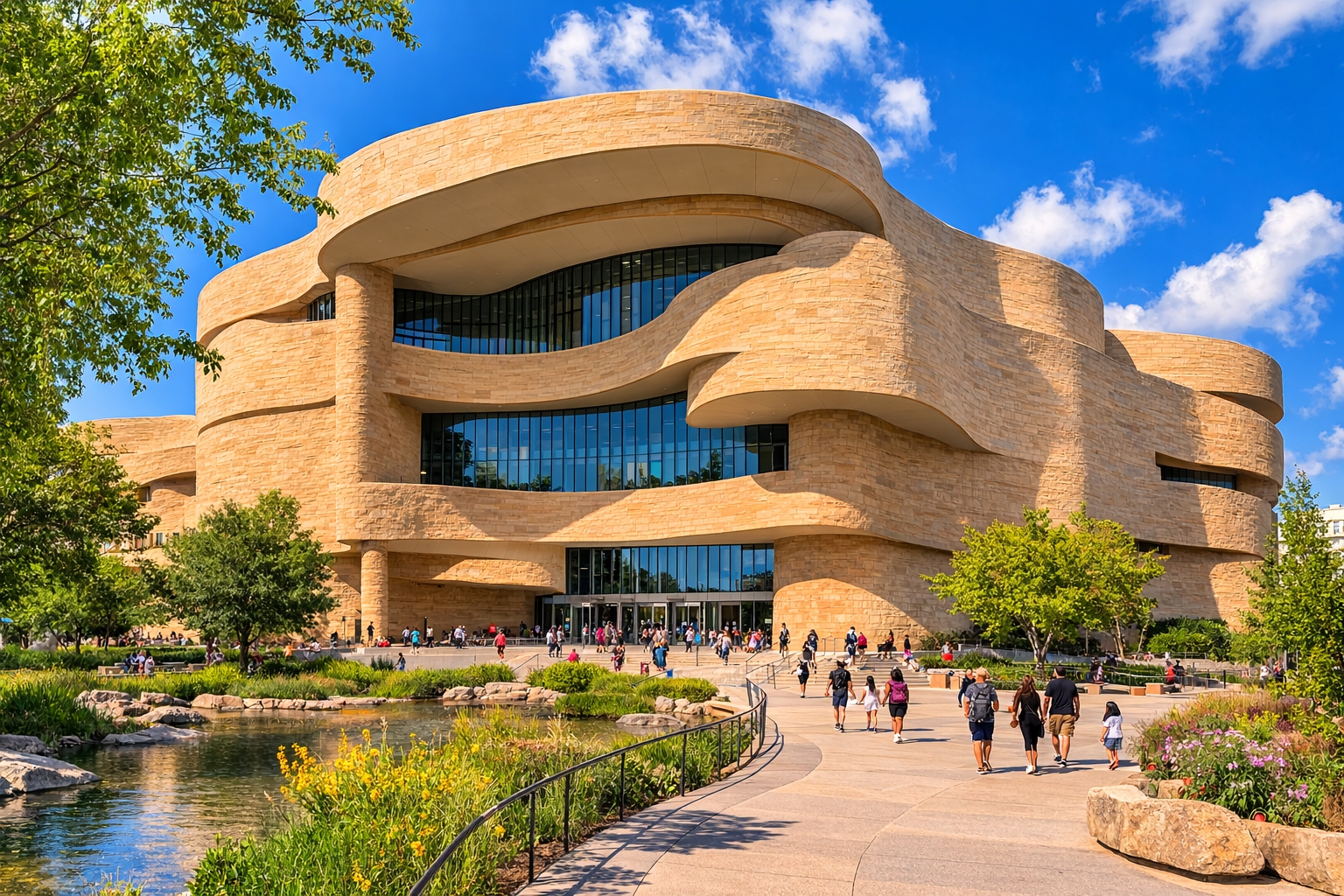
Even before entering the museum, visitors notice that its architecture stands apart from the traditional marble structures that surround it on the National Mall.
The building was designed to reflect natural landscapes rather than rigid geometry. Its curved limestone exterior evokes wind-sculpted rock formations, canyon walls, and natural landforms found throughout the Americas.
The surrounding grounds feature:
• Native plants
• Wetlands and streams
• Indigenous agricultural landscapes
• Natural stone pathways
The design creates an environment that reflects Indigenous relationships with land and nature, offering visitors a sense of place before they even step inside the museum.
What to See Inside the National Museum of the American Indian
Stepping into the museum reveals a wide range of galleries that explore Indigenous history, art, culture, and identity.
Rather than focusing on a single region or time period, the museum presents a broad perspective on Indigenous life across the Western Hemisphere.
Visitors will encounter exhibitions covering topics such as:
• Native histories before European contact
• Colonial encounters and treaties
• Cultural traditions and spirituality
• Contemporary Native art and identity
• Environmental stewardship and land relationships
The museum’s collections include:
• Traditional clothing and regalia
• Tools and ceremonial objects
• Photographs and historical documents
• Contemporary art and installations
• Multimedia storytelling experiences
Many exhibits incorporate videos and oral histories recorded with Native community members, allowing visitors to hear stories directly from Indigenous voices.
Signature Exhibits and Highlights
Several major exhibitions have become highlights for visitors exploring the museum.
Americans
The Americans exhibition examines how Native peoples have been represented in American culture, including imagery in media, sports mascots, advertising, and popular storytelling.
It challenges visitors to reconsider assumptions about Native identity and history while exploring how Native representation has evolved over time.
Nation to Nation
This exhibition explores the history of treaties between Native nations and the United States government.
Through documents, artifacts, and historical narratives, the exhibit highlights the complex political relationships between sovereign Native nations and the federal government.
Indigenous Art Galleries
Throughout the museum, visitors encounter rotating exhibits featuring Indigenous artists from across the Americas.
These exhibits often showcase:
• Sculpture
• Painting
• Textile arts
• Photography
• Mixed-media installations
Contemporary Native artists frequently address themes such as identity, land, community, and cultural preservation.
Dining at the National Museum of the American Indian
One of the museum’s most unique experiences is its restaurant, Mitsitam Native Foods Café .
The café offers dishes inspired by Indigenous culinary traditions from across the Americas.
Menu concepts often reflect regional Indigenous cuisines, including:
• Northern woodlands
• Great Plains
• Pacific Northwest
• Mesoamerica
• South America
Visitors can try foods influenced by Native ingredients and cooking techniques, offering a rare culinary experience that connects food with cultural heritage.
How to Plan Your Visit
Because the museum sits in the center of Washington DC’s museum district, planning a visit is relatively easy.
Admission
General admission is free.
Visitors can enter the museum without purchasing tickets in advance, although security screening is required.
Hours
Typical hours are:
10:00 AM – 5:30 PM daily
The museum is usually closed on December 25.
How long to spend at the museum
Most visitors spend:
1.5 to 3 hours exploring the galleries
Those interested in deeper exploration may spend longer, particularly if attending guided tours or special exhibitions.
Is the National Museum of the American Indian Worth Visiting
For many travelers visiting Washington DC, the museum becomes one of the most memorable stops on the National Mall.
Several factors contribute to its popularity.
Reasons travelers enjoy visiting
• Free admission
• Unique cultural perspective
• Thought-provoking exhibits
• Stunning architecture
• Family-friendly educational content
• Central location near major monuments
The museum offers a powerful educational experience that adds depth to any Washington DC itinerary.
Other Things to See Nearby
Because the museum is located in the heart of the National Mall, visitors can easily combine it with other nearby landmarks and museums.
Popular nearby attractions include:
• Washington DC National Mall visitor guide (https://washington.org/dc-guide-to/national-mall)
• Lincoln Memorial (https://www.nps.gov/linc/index.htm)
• Washington Monument (https://www.nps.gov/wamo/index.htm)
• Thomas Jefferson Memorial (https://www.nps.gov/thje/index.htm)
These sites form the core of Washington DC’s historical and cultural landscape.
Exploring them together allows visitors to experience the full narrative of American history, from Indigenous cultures to the founding of the United States and beyond.
Where to Stay When Visiting the National Mall
After a full day exploring museums and monuments, many travelers want accommodations that keep them close to the center of Washington DC’s historic district.
One of the most convenient options is Hotel Washington (https://www.thehotelwashington.com).
Located just a short distance from the National Mall, the property is widely known as the closest hotel to the White House, positioned at the edge of the White House Lawn.
Staying nearby allows visitors to easily walk or take a short ride to major Washington DC attractions, including:
• Smithsonian museums
• The White House
• National Mall monuments
• Downtown cultural institutions
• Government and historic sites
For travelers exploring Washington DC’s museums, the hotel’s central location makes it a practical and comfortable base.
Frequently Asked Questions
Is the National Museum of the American Indian free
Yes. Admission to the museum is free because it is part of the Smithsonian Institution.
Where is the National Museum of the American Indian located
The museum is located on the National Mall at Fourth Street and Independence Avenue SW in Washington DC.
How long should you spend at the museum
Most visitors spend between one and three hours exploring the exhibitions and galleries.
Is the museum good for kids
Yes. Many exhibits include multimedia displays and educational content designed for families and younger visitors.
Do you need tickets to enter
No advance tickets are required for general admission, although security screening is required upon entry.
What Metro stop is closest
The closest stations are L Enfant Plaza and Federal Center SW.
What is the museum known for
The museum is known for its focus on Indigenous perspectives, Native cultural heritage, and exhibits that highlight the living traditions of Native communities across the Americas.
Planning Your Washington DC Museum Experience
Exploring Washington DC’s museums offers a powerful journey through culture, history, and identity. The National Museum of the American Indian provides one of the most meaningful and thought-provoking experiences on the National Mall, giving visitors a deeper understanding of Indigenous cultures and their enduring influence across the Americas.
For travelers planning a Washington DC itinerary, combining museum visits with a centrally located stay can make exploring the city far more enjoyable. Staying near the White House and National Mall allows visitors to walk between landmarks, experience the city’s cultural institutions, and fully immerse themselves in the stories that shape the nation.
To learn more about accommodations and experiences near the National Mall, visit
https://www.thehotelwashington.com