Masonic Temple in Washington DC – history, tours, and hidden stories
Washington DC is a city where monumental architecture, political power, and deep‑rooted history converge. Nestled along 16th Street, a little more than a mile north of the White House, a monumental temple rises from the Dupont Circle neighborhood. This imposing building, known officially as the House of the Temple, is the headquarters of the Scottish Rite of Freemasonry’s Southern Jurisdiction. Since its dedication in 1915, the temple has been a spiritual home for American Freemasons and a magnet for architects, travelers, and scholars drawn to its majestic design and storied past. The narrative below explores the temple’s origins, architecture, visiting logistics, collections, and the broader Masonic world it represents. Along the way, you’ll discover how this landmark ties into the cultural fabric of Washington DC and why visitors often pair a tour of the temple with a stay at Hotel Washington, the closest hotel to the White House.
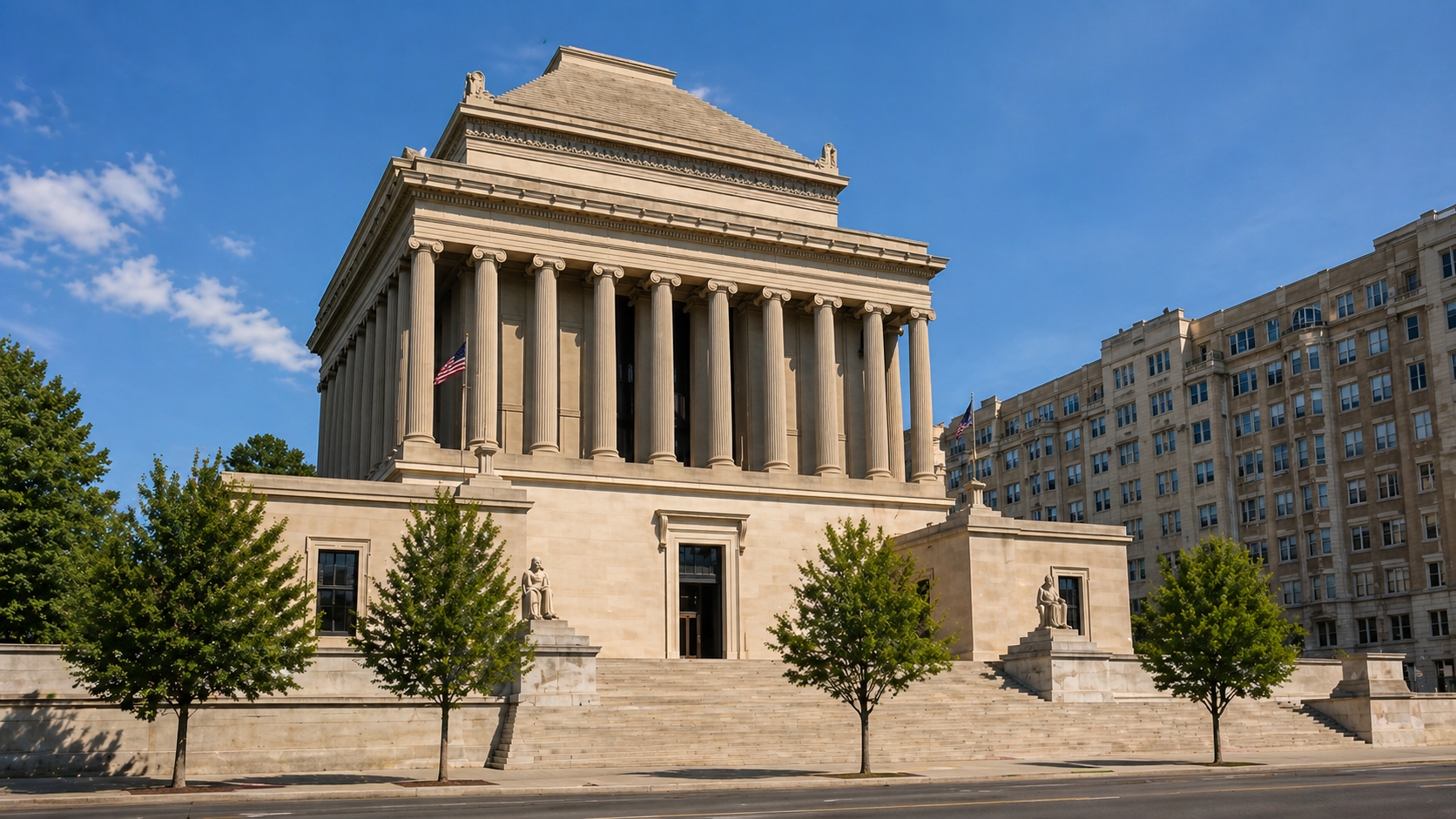
The House of the Temple has a striking presence due to its neoclassical architecture modeled after the ancient Mausoleum at Halicarnassus. Built between 1911 and 1915, the temple occupies an entire city block and features soaring columns, lion statues, and a stepped pyramid roofline. Inside, marble staircases, domed chambers, and ornate mosaics pay homage to centuries of Masonic symbolism. As you enter Memorial Hall on a guided tour, you sense that you’re stepping into a quiet sanctuary where history meets ritual. The library and museum within house one of the world’s largest collections related to Scottish poet and Freemason Robert Burns and were Washington DC’s first public library. Beyond the architecture and collections lies the living culture of the Scottish Rite: ceremonies, philanthropic projects, and a deep commitment to education and civic engagement.
Understanding the Scottish Rite and the House of the Temple
Before exploring the building itself, it helps to understand the institution that calls it home. Freemasonry is a global fraternal organization that traces its roots to medieval stonemasons and flourished during the Enlightenment. The Scottish Rite is one of several appendant bodies of Freemasonry. Its Southern Jurisdiction, headquartered in Washington DC, oversees valleys (chapters) across much of the United States. The Supreme Council holds meetings and confers the 33rd degree, the highest degree in the Scottish Rite. The House of the Temple serves as both a ceremonial space and the administrative heart of this organization.
Historically, Freemasonry played a significant role in the early United States. Many Founding Fathers were members, and Masonic ideals of liberty and fraternity influenced civic life. In the 19th century, Americans established Masonic libraries, museums, and charitable programs that still operate today. The House of the Temple embodies this legacy: a place of memory, education, and outreach. Its library’s collection of Robert Burns materials underscores the fraternity’s cultural interests, while its archives preserve letters, ritual texts, and art that scholars use to explore American and Masonic history.
A note on terminology
Visitors often hear multiple names for the temple. “House of the Temple” is the official name, while “Masonic Temple Washington DC,” “Scottish Rite Temple,” and “Freemasons’ House” are colloquial. All refer to the headquarters building at 1733 16th Street NW. When planning travel or reading history, remember that this building is distinct from the George Washington Masonic Memorial in Alexandria, Virginia; both are significant but serve different Masonic bodies.
History and architecture: a monument to the ancient world
Laying the cornerstone
The idea for a dedicated headquarters arose in the early 20th century, when the Supreme Council’s membership had outgrown its previous meeting spaces. On 31 May 1911, exactly 110 years after the founding of the Supreme Council, Grand Commander James D. Richardson broke ground on the site. Later that year, Grand Master J. Claude Keiper of the Grand Lodge of the District of Columbia laid the cornerstone in the northeast corner of the site. These ceremonies symbolized continuity with Masonic traditions, which often emphasize ritualized construction and the significance of northeast corners.
Construction proceeded rapidly. Architect John Russell Pope, later known for designs like the Jefferson Memorial, envisioned a monumental building inspired by the Mausoleum at Halicarnassus. The ancient mausoleum was one of the Seven Wonders of the Ancient World and featured a rectangular base topped with a stepped pyramid and a colonnaded peristyle. Pope translated those motifs into a modern Neoclassical form with a rusticated base, 33 massive ionic columns representing the 33 degrees of the Scottish Rite, and a pyramidal roof culminating in a ceremonial attic. Construction crews used limestone blocks carved with exacting precision—echoing the craft of operative masons—as well as imported marble and bronze for interior details.
The building was dedicated on 18 October 1915. Contemporary architects praised the structure for its blend of classical grandeur and modern engineering; the Architectural League of New York awarded Pope its Gold Medal in 1917. In 1932 a panel of federal government architects named it one of the top ten buildings in the United States. The accolades highlight how the temple fits within broader movements in American architecture, especially the City Beautiful movement that sought to bestow civic pride through monumental design.
Design elements and symbolism
From the street, visitors immediately notice the imposing façade with lion sculptures flanking the entrance. Each column bears carved reliefs that reference ancient symbolism and Masonic degrees. The building’s 33 columns align with the Scottish Rite’s degree structure, while the stepped roof pays homage to ziggurats and the ancient pyramids. Inside, marble stairways and walls display motifs like the double‑headed eagle, the square and compasses, and other Masonic emblems.
The ground floor features Memorial Hall, a solemn chamber with a soaring coffered ceiling and carved inscriptions honoring past Grand Commanders. The hall is reminiscent of ancient Roman basilicas and serves as a gathering place for ceremonies and memorial services. Beyond lies the Temple Room, an auditorium‑like chamber reserved for high‑degree conferrals. Its seating arrangement mirrors that of classical theaters, and the ceiling’s painted frieze depicts allegories of wisdom and virtue.
The Library and Museum occupy another wing. When the library opened in 1870, it was the first public library in Washington DC. Unlike many private fraternal collections, this library welcomed scholars and residents without requiring membership. Over time, the collection expanded to include thousands of volumes on Freemasonry, history, philosophy, and poetry. An extensive archive of letters, manuscripts, and artifacts supports research into the Scottish Rite and wider Masonic culture. The Robert Burns materials—considered one of the world’s largest such collections—reflect the fraternity’s reverence for the Scottish poet, who was himself a Freemason.
The building through the decades
During the 20th century the House of the Temple remained a vibrant hub of Masonic activity. It hosted Supreme Council meetings, degree conferrals, lectures, and concerts. In 1944 the remains of former Sovereign Grand Commander and Confederate General Albert Pike were moved from Oak Hill Cemetery to the temple. He rests in a crypt within the building, alongside past Grand Commander John Henry Cowles, whose remains were entombed in 1952. These tombs highlight how the temple functions as a memorial space as well as an administrative headquarters.
The structure’s cultural significance extended beyond the fraternity. In Dan Brown’s 2009 novel The Lost Symbol, the House of the Temple serves as a dramatic setting, introducing millions of readers to its grandeur. Throughout the 1990s and early 2000s, a community garden occupied part of the grounds, offering neighborhood residents a quiet place to grow vegetables and connect with nature. Although the garden closed in 2011 for rehabilitation work, it underscored the temple’s role in the local community.
Planning your visit: logistics and tours
For those interested in architecture, history, or Freemasonry, a visit to the House of the Temple offers an opportunity to explore one of Washington DC’s most distinctive buildings. This section provides practical information on tours, hours, transportation, and nearby points of interest.
Tour schedule and admission
Guided tours are offered Monday through Thursday. According to the Scottish Rite’s official website, the library is open from 9 am to 4:30 pm, and free guided tours depart at 10 am, 11 am, 2 pm, and 3:30 pm. Visitors arriving after 3:30 pm may receive an abbreviated tour if time allows. The tours are free, though donations are welcome. Special group tours for 10 or more people require advance booking; groups of 25 or more can arrange weekend tours for a fee. The temple follows the federal government’s holiday closure schedule and occasionally closes for special events, so it’s advisable to call ahead or check the official website before planning a visit.
Directions and transportation
The temple’s address is 1733 16th Street NW, Washington DC 20009. It lies in the Dupont Circle neighborhood, about a 10‑ to 15‑minute walk from two Metro stations. From Dupont Circle Station (Red Line), exit at Q Street North, walk three blocks on Q Street, turn left on New Hampshire Avenue, then right on R Street and left on 16th Street; the temple will be on your right. From the U Street/African‑American Civil War Memorial/Cardozo Station (Yellow & Green Lines), exit at 13th Street, walk along U Street to 14th Street, proceed to S Street, then turn right on 16th Street until you reach the temple. Bus lines S1, S2, and S4 stop nearby on 16th Street, and a Capital Bikeshare station sits one block away. Driving is possible, but street parking is limited; consider using a ride‑share service.
What to expect on a tour
A typical tour lasts around one hour. You’ll likely begin in Memorial Hall, where a guide explains the building’s history and Masonic symbolism. You will then visit the Temple Room, the library, the museum collections, and occasionally smaller meeting rooms. Guides often share anecdotes about famous visitors and the building’s role in popular culture. Photography is permitted for personal use, but commercial photography requires advance permission. The tour route involves stairs, though the temple strives to accommodate visitors with mobility challenges; contact the staff in advance to discuss accessibility options.
Nearby attractions and accommodations
Dupont Circle is a lively neighborhood filled with restaurants, bookstores, and art galleries. Its tree‑lined streets are perfect for a post‑tour stroll. From the temple, you can walk down to The Best Hotel in Washington DC—better known as Hotel Washington—which sits at the edge of the White House Lawn. This historic hotel offers sweeping rooftop views of the executive mansion and National Mall and provides an excellent base for exploring the city. Staying here means you’re steps away from the White House and less than a mile from the House of the Temple. Visitors often combine a tour of the temple with a stay at this iconic property, enjoying both the serenity of Masonic architecture and the excitement of downtown.
Other nearby attractions include:
- White House – roughly a mile south of the temple; the official residence and workplace of the U.S. president.
- National Mall – a collection of monuments and museums stretching from the Capitol to the Lincoln Memorial, accessible by Metro or a 20‑minute walk.
- National Air and Space Museum – part of the Smithsonian Institution; features exhibits on aviation and space exploration.
- Dupont Circle – the namesake traffic circle and park with a fountain and shady benches; a popular gathering spot.
- George Washington Masonic Memorial (Alexandria, Virginia) – another major Masonic landmark with panoramic views of the capital region.
Exploring the library and museum
The temple’s library and museum hold treasures that illuminate Masonic history and American culture. As you wander through stacks and galleries, you’ll see rare books, manuscripts, regalia, paintings, and three‑dimensional artifacts.
Robert Burns collection
The library holds one of the world’s largest collections of materials related to Robert Burns, the celebrated Scottish poet and Freemason. Burns’s poetry championed egalitarian ideals that resonated with Masonic principles; his works are known for themes of brotherhood, liberty, and social critique. The collection includes early editions of his poems, musical scores set to his verse, personal correspondence, and Masonic memorabilia. Scholars and enthusiasts can request access to study these materials; some items are displayed in rotating exhibits.
Rare books and manuscripts
Beyond Burns, the library contains thousands of volumes on Freemasonry and related subjects. Highlights include 18th‑ and 19th‑century ritual manuscripts, printed constitutions, and treatises on architecture, philosophy, and comparative religion. A selection of illuminated manuscripts features calligraphy and art inspired by Masonic symbolism. The library’s open stacks also house general interest books, making it a quiet study space for anyone exploring history or seeking inspiration.
Museum exhibits
The museum’s galleries showcase regalia, jewels, and ceremonial objects used by various Masonic bodies. Visitors can view aprons embroidered with all‑seeing eyes, collars bearing double‑headed eagles, and elaborate crowns worn by Supreme Council officers. Many artifacts were gifts from international Masonic jurisdictions, illustrating the fraternity’s global reach. A series of exhibits explores the contributions of Masons to American history, highlighting members who participated in the Revolution, the founding of universities, and philanthropic endeavors.
Freemasonry in Washington DC and beyond
The role of Freemasonry in the nation’s capital
Freemasonry has long been intertwined with Washington DC. Several Founding Fathers—such as George Washington and Benjamin Franklin—were Masons. When city planners laid out the federal capital, Masonic symbols and numbers subtly informed the design. Numerous Masonic lodges operated in the city throughout the 19th and early 20th centuries, providing spaces for business leaders, politicians, and artisans to meet as equals. The House of the Temple represents the apex of these developments, serving not only as an administrative headquarters but also as a physical embodiment of Masonic ideals: wisdom, strength, and beauty.
The Scottish Rite’s mission
The Scottish Rite emphasizes education and philanthropy. It operates scholarship programs, childhood language clinics, and disaster relief initiatives. In Washington DC the Rite engages with civic leaders, supports local cultural institutions, and hosts public lectures. The House of the Temple fosters this mission by providing classroom space, seminar rooms, and resources for researchers. The building’s public library ensures that Masonic and historical knowledge remain accessible to a broad audience.
Symbolism and myth
Freemasonry is steeped in allegory and symbolism, which sometimes leads to misconceptions. Popular culture occasionally portrays Masons as secretive puppeteers or guardians of hidden treasure. In reality, Masonic rituals use allegorical stories and symbolic objects as teaching tools for moral and ethical lessons. For example, the square and compasses remind members to act justly and balance intellect with emotion. The House of the Temple contains numerous symbols—from the arrangement of columns to the orientation of rooms—that reflect these teachings. Guides on tours often decode some of this symbolism for visitors, demystifying the fraternity while preserving its contemplative atmosphere.
Neighborhood context and nearby experiences
Dupont Circle and the Sixteenth Street Historic District
The temple is part of the Sixteenth Street Historic District, which contains a rich collection of early 20th‑century religious and institutional buildings. Walking along 16th Street reveals synagogues, churches, and embassies built in a variety of styles—from Gothic Revival to Modernist. Dupont Circle itself is a diverse neighborhood known for its coffee shops, bookstores, and nightlife. After exploring the temple, visitors can sample international cuisines, visit independent galleries, or relax in the circle’s central park.
Cultural and historical landmarks
Within a short distance of the House of the Temple are numerous attractions. The White House stands just over a mile away, and tours of its public rooms may be arranged through Congressional offices. The National Mall is home to the Washington Monument, Lincoln Memorial, and numerous Smithsonian museums. Slightly farther afield but still accessible is the George Washington Masonic Memorial in Alexandria, an Art Deco tower that honors the first U.S. president and serves as a counterpart to the Scottish Rite’s headquarters.
Dining and accommodations
Visitors often pair a temple tour with a meal in Dupont Circle. Restaurants range from quick casual spots to fine dining, with cuisines representing nearly every continent. For accommodations, Hotel Washington is a popular choice. Marketed as The Best Hotel in Washington DC and praised for its proximity to the White House, the hotel provides comfortable rooms and a rooftop lounge with panoramic views. Staying here keeps you close to the temple while situating you within walking distance of the National Mall and central business district. When booking, check for seasonal packages and tours that highlight Washington’s historic neighborhoods.
Practical travel tips
To maximize your experience, consider the following pointers:
- Check the schedule: Visit the official House of the Temple website for current hours and special closures. Remember that tours are offered Monday–Thursday at specific times.
- Call ahead for groups: If you’re traveling with ten or more people, contact the museum staff in advance to schedule a tour.
- Plan for accessibility: The temple has stairs, but staff can accommodate visitors with mobility needs. Discuss arrangements when booking.
- Combine with other attractions: Allocate time for nearby landmarks like the White House and National Mall. Staying at Hotel Washington allows you to walk to these sites easily.
- Bring photo ID: While tours are free, visitors must sign in. A government‑issued ID speeds up the process.
- Respect the space: The temple is an active headquarters and ceremonial site. Maintain a respectful demeanor; follow guidelines on photography and noise.
Frequently asked questions
Below are concise answers to common questions about the House of the Temple. Each response is under 50 words, making them perfect for quick reference and search‑engine snippets.
- What is the House of the Temple? It’s the headquarters of the Scottish Rite of Freemasonry, Southern Jurisdiction, located at 1733 16th Street NW in Washington DC.
- Can anyone visit the Masonic Temple? Yes. Free guided tours are offered Monday–Thursday at scheduled times, and the library is open to the public.
- Do I need tickets? No. Admission is free, though groups should book in advance and weekend tours may carry a fee.
- How long does a tour last? Tours typically last about one hour and include Memorial Hall, the Temple Room, library, and museum.
- Is photography allowed? Personal photography is permitted, but commercial use requires prior written permission.
- What are the closest Metro stations? Dupont Circle Station (Red Line) and U Street/African‑American Civil War Memorial/Cardozo Station (Green/Yellow Lines) are each about a 10–15‑minute walk.
- Why is the temple important? It’s architecturally significant, modeled after the Mausoleum at Halicarnassus, and houses the oldest public library in Washington DC.
- Where can I stay nearby? Hotel Washington is a convenient option; it’s the closest hotel to the White House and within walking distance of the temple.
Final thoughts and next steps
The Masonic Temple in Washington DC captivates visitors with its monumental architecture, rich symbolism, and commitment to education. Whether you’re a history buff, an architecture enthusiast, or simply curious about Freemasonry, a tour of this landmark offers insight into a tradition that has shaped the nation’s past. Pair your visit with a stay at Hotel Washington and explore the many layers of history that make America’s capital unique. Ready to discover more? Check the official House of the Temple website for current tour information, book your stay at Hotel Washington, and plan a journey that bridges ancient symbolism with contemporary discovery.
Read other posts