What’s Under the Lincoln Memorial? Inside the Hidden Museum Opening in 2026
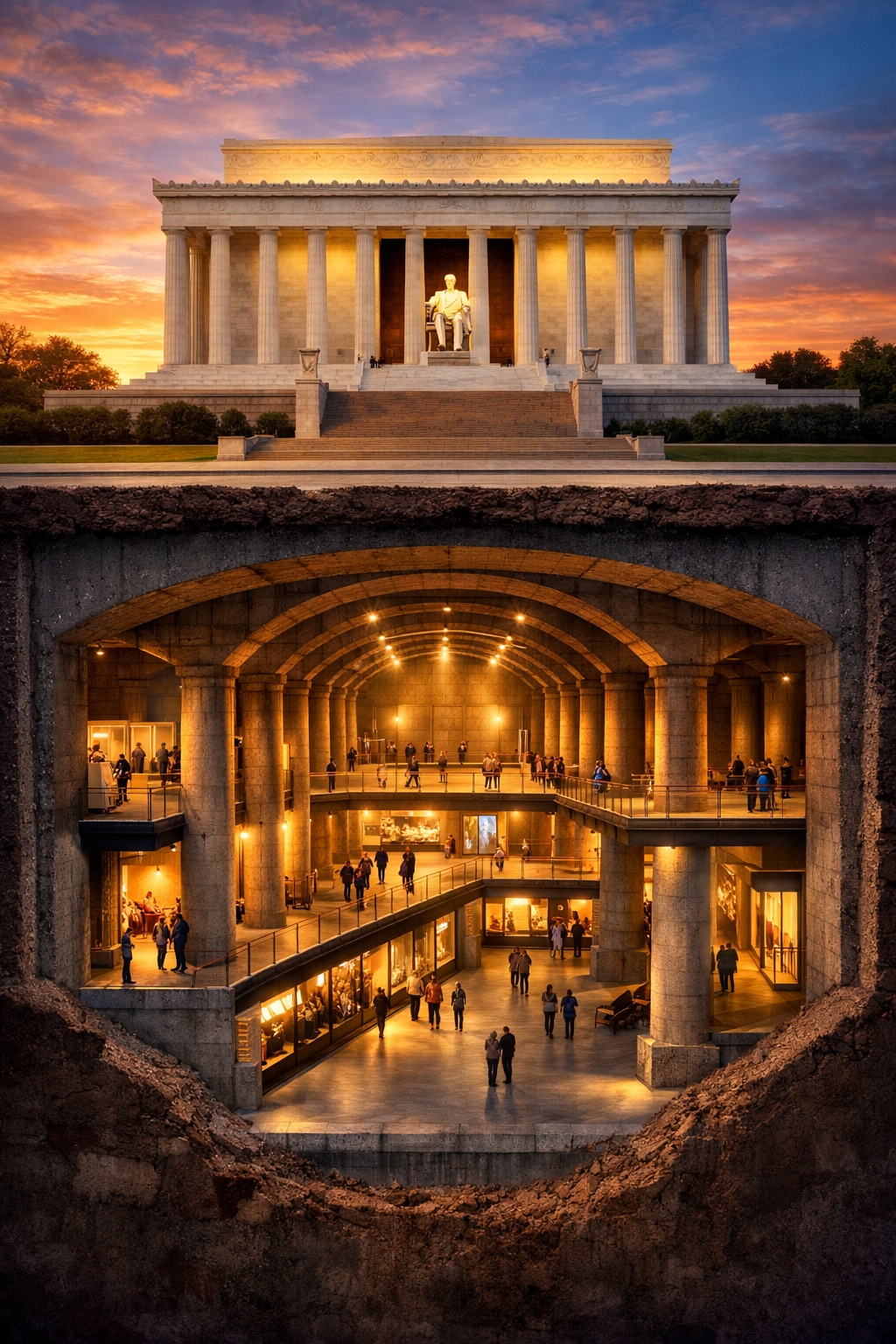
The Lincoln Memorial is one of the most recognized landmarks in the United States. Millions of visitors climb its steps each year to look up at Daniel Chester French’s statue of Abraham Lincoln and read the engravings of the Gettysburg Address and Second Inaugural Address. Yet few people realize that underneath the Tennessee pink marble floor lies a cavernous undercroft – a three‑story grid of concrete columns originally built to support the weight of the monument. That forgotten space is about to be transformed into a museum that will open to the public in 2026, offering new galleries, an immersive theater and long‑overdue restrooms and visitor amenities. This long‑form guide pulls back the curtain on the undercroft’s history, describes how it will be reinvented and shows why this hidden space is already generating excitement for America’s 250th birthday.
Summary: The undercroft beneath the Lincoln Memorial is a vast three‑story, 43,800‑square‑foot basement built in 1914. Workers dug down 40 feet and poured dozens of concrete columns to support the memorial’s weight. For decades it sat unused, accessible only to maintenance crews and the occasional flashlight tour. The National Park Service (NPS) is now converting 15,000 square feet of this space into an interpretive museum and visitor center, with floor‑to‑ceiling glass walls, immersive projections and exhibits highlighting the memorial’s construction and its role in civil rights history. Construction is underway, with completion targeted for July 2026 to coincide with the 250th anniversary of the Declaration of Independence.
Why the Undercroft Matters Now
The story of the undercroft resonates because it ties together engineering ingenuity, historical memory and contemporary relevance. When the Lincoln Memorial was conceived in 1910, engineers had to build on marshy land along the Potomac Flats. They excavated to bedrock and installed dozens of thick concrete columns beneath the monument to create a stable foundation. The resulting undercroft was a “cathedral of concrete pillars,” as one preservationist put it, but after the memorial opened in 1922 the space was largely forgotten. In the 1970s, renovations uncovered graffiti and drawings left by original workers, and for a brief period the NPS offered flashlight tours until asbestos concerns forced closure.
Today, the United States is approaching its semiquincentennial in 2026, and the National Park Service wants to make the memorial more accessible and engaging. The undercroft project will open a hidden world to visitors while providing badly needed restrooms, expanded exhibits and an immersive theater. The story taps into curiosity (“What’s under the Lincoln Memorial?”) and invites travelers to plan ahead for a once‑in‑a‑generation unveiling. As the capital prepares for DC250 events, the undercroft becomes a symbol of renewal—honoring history while adding new layers to the national story.
A Hidden Engineering Feat: Building the Undercroft
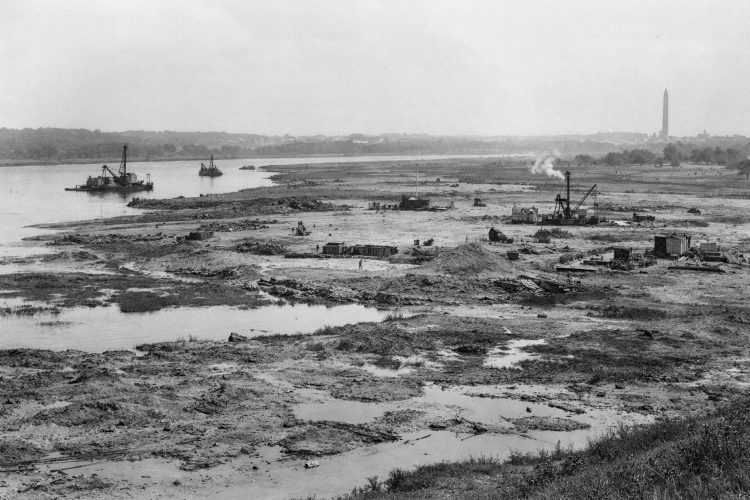
Setting the stage on the Potomac Flats
To understand the undercroft, you have to imagine the National Mall circa 1914. The area where the memorial now stands was a muddy floodplain called the Potomac Flats. The Army Corps of Engineers spent decades dredging the river and depositing fill to create solid ground. When construction began, workers dug more than 40 feet to reach firm soil and then poured dozens of concrete columns to support the marble superstructure. This grid of columns created a three‑story, 43,800‑square‑foot basement—the largest hidden space beneath any monument on the Mall.
The architects never intended to open the undercroft to the public. Its purpose was purely structural: to distribute the weight of the memorial and give the impression that the building sat atop a natural hill. Over time, moisture seeped in, forming stalactites, and a small ecosystem of insects and rodents developed. Though the space remained out of sight, it played a critical role in stabilizing the monument for more than a century.
Discovery and early exploration
During renovations in 1975, crews renovating bathrooms stumbled upon the undercroft and were stunned by its scale. News reports described graffiti drawn by workers in the 1910s, some of which depicted cartoons and notes preserved under Plexiglas. Speleologists were brought in to evaluate the space as though it were a natural cave, complete with its own microclimate. For a brief period in the 1980s, the National Park Service offered flashlight tours, but these ended when a visitor noticed asbestos on overhead pipes. After that, the undercroft slipped back into obscurity, accessible only to maintenance crews and researchers.
Vision for reuse
Over the years, historians and lawmakers occasionally proposed converting the undercroft into a museum. In 1992, Congressman Fred Schwengel advocated displaying Lincoln’s papers there, but the Park Service resisted changes. That stalemate ended in 2016, when philanthropist David M. Rubenstein donated $18.5 million toward creating a museum in the undercroft. Additional private donations followed, and by 2023 the National Park Foundation had raised over $43 million, with the NPS contributing $26 million. Construction began in March 2023, and the project is slated to finish in July 2026. The museum’s opening will coincide with America’s 250th anniversary, making it one of the flagship attractions of the DC250 celebration.
Transforming a Hidden Basement into an Immersive Museum
Scope of the project
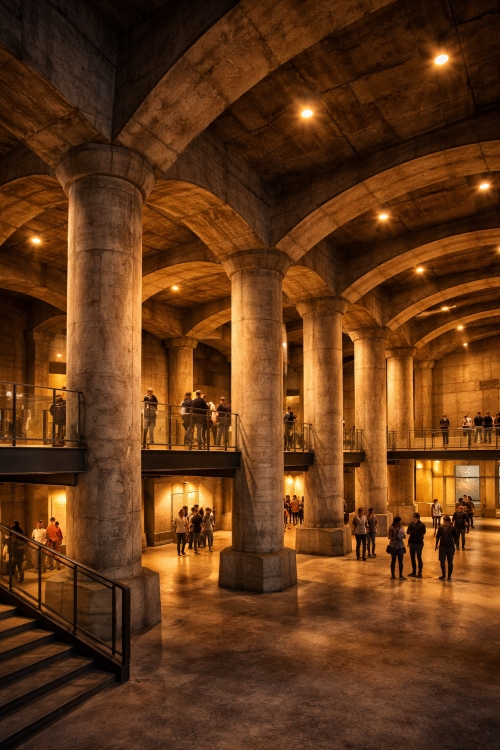
The undercroft museum will occupy 15,000 square feet of the 43,800‑square‑foot space. Designers plan to build a modern glass structure within the historic concrete shell. Floor‑to‑ceiling glass walls will allow visitors to see the original columns and the unfinished portions of the undercroft. A second elevator and new restrooms will improve accessibility, and a larger bookstore will enhance the visitor experience. The NPS emphasizes that the memorial itself will remain open during construction; only the existing basement exhibits and elevators are temporarily closed.
An immersive theater will project images of historic events onto the foundations. Visitors will see video and photographic footage of the 1939 Marian Anderson concert on the memorial steps, the 1963 March on Washington and the more recent Black Lives Matter protests. The museum will also feature replicas of the Lincoln statue and interactive exhibits explaining the construction and symbolism of the memorial. The intention is to allow visitors to “get up close to replicas of the statue and other aspects of the memorial” and examine the meaning behind each element.
Architectural innovation
Building a modern museum inside a historic undercroft presents unique challenges. Moisture control is essential because the underground environment is humid and has limited airflow. Consigli Construction, the contractor for the glass installation, designed a structural glass wall system with embedded heating to prevent condensation and protect historic materials. Each glass panel was fabricated overseas, tested and maneuvered through narrow openings with specialized equipment. The system not only preserves the undercroft but also creates a dramatic viewing experience.
The design also aims to leave most of the undercroft untouched. Jeff Reinbold, superintendent of the National Mall and Memorial Parks, explained that the entire site will remain unfinished—visitors will see century‑old graffiti and the raw concrete columns. The museum structure will float within the existing space, allowing people to walk alongside the original pillars while reading interpretive panels and watching projections. This balancing act between preservation and innovation underscores the project’s complexity.
Timeline and cost
Construction began in 2023 and is scheduled to conclude by July 2026. The $69 million budget comes from a combination of federal funds and private donations. The NPS anticipates that the museum will draw large crowds during the semiquincentennial and beyond, providing a sustainable return on investment through increased visitor spending and educational programming. Importantly, the memorial will remain open throughout construction, ensuring that travelers can continue to visit the statue and view the exterior of the monument while the undercroft is being transformed.
The Lincoln Memorial as a Civil Rights Stage
A backdrop for protests and performances
Beyond its architectural significance, the Lincoln Memorial has served as a platform for civil rights and social justice movements. On Easter Sunday 1939, African‑American contralto Marian Anderson performed on the steps of the memorial after being barred from Constitution Hall because of her race. Her concert drew 75,000 people and millions more via radio, and it became a defining moment in the struggle against segregation. The planned exhibits in the undercroft will highlight her performance and its enduring impact.
In August 1963, the memorial steps were the site of the March on Washington for Jobs and Freedom. Dr. Martin Luther King Jr. delivered his “I Have a Dream” speech to a crowd of more than 250,000 people, with Lincoln’s statue behind him and the Reflecting Pool stretching out toward the Washington Monument. The new museum will include footage of the speech and explore how the memorial became a national stage for civil rights. Later protests—from the 1970s anti‑war demonstrations to the 2020 Black Lives Matter movement—have continued to invoke Lincoln’s legacy. By contextualizing these events, the undercroft gallery will underscore the memorial’s role as an enduring platform for free speech and assembly.
Symbolism in design and location
Architect Henry Bacon designed the memorial in the Beaux‑Arts style, drawing inspiration from Greek temples. The 36 columns represent the states in the Union at the time of Lincoln’s death. Daniel Chester French’s 19‑foot statue of Lincoln gazes out over the Reflecting Pool, his hands positioned to convey both strength and compassion. The interior is inscribed with the Gettysburg Address and the Second Inaugural Address, texts that articulate ideals of unity and healing. Visitors often describe a sense of solemnity when standing before the statue; the undercroft’s new exhibits aim to deepen that experience by connecting the marble monument to stories of activism and social change.
Why context matters for visitors
Many travelers visit the memorial without fully appreciating its layered history. They snap photos of the statue and then move on to the next site. By opening the undercroft, the Park Service hopes to encourage longer visits and deeper engagement. The museum will provide context on how the memorial was built, why certain design decisions were made and how the site has been used as a stage for social change. For students and families, this context transforms a passive sightseeing stop into an immersive educational experience. For civil rights advocates, it offers a place to reflect on past struggles and ongoing work.
Visiting the Future Undercroft Museum
When and how to visit
The undercroft museum is scheduled to open in July 2026. Until then, travelers can monitor updates through the National Park Service’s official Lincoln Memorial page. When the museum opens, it will likely require timed tickets, as the space can accommodate only a limited number of visitors at once. The NPS has not yet announced ticketing details, but they typically offer free timed passes for high‑demand venues, as they do for the Washington Monument.
Visitors will enter the museum via a newly constructed glass vestibule on the memorial’s west side. A second elevator will provide access to the undercroft, making the experience fully accessible for individuals with mobility limitations. Once inside, guests will follow a walkway that floats above the original concrete columns, with interpretive panels explaining the engineering and design. A theater will seat visitors for short films and projection shows; expect schedules to be posted on the NPS website closer to the opening date.
Exhibits and experiences
The museum will be organized into several zones, each exploring a different aspect of the memorial:
- Construction Gallery: Explains the engineering challenges of building on the Potomac Flats, using diagrams, models and original blueprints. Visitors can view cross‑section renderings similar to the images released by the NPS, showing the memorial above and the undercroft below.
- Symbolism and Artistry: Examines the design choices of Henry Bacon and Daniel Chester French, the meaning behind the columns and friezes, and the influence of Greek temples on American architecture. Replicas of the statue will allow guests to examine details up close.
- Civil Rights Theatre: Projects footage of Marian Anderson’s concert, Martin Luther King Jr.’s speech and other protests onto the undercroft’s foundations. The immersive environment encourages reflection on the ongoing struggle for equality.
- Legacy Wall: Highlights quotes and stories from visitors and activists who have used the memorial as a gathering place. This section invites guests to share their own reflections via digital kiosks, creating a living archive.
- Visitor Amenities: New restrooms, a larger bookstore and accessible elevators will greatly improve the overall visitor experience. The bookstore will feature books on Lincoln, civil rights and Washington D.C. history, while the restrooms will serve both museum visitors and those visiting the memorial above.
Planning your day around the visit
Because the memorial itself will remain open during construction, travelers can plan to visit the statue and the undercroft in one trip. The Lincoln Memorial is open 24 hours a day, but ranger staff are on duty from 9 a.m. to 10 p.m. The museum will likely have more limited hours; early morning visits may offer quieter experiences, while evening shows could incorporate projection lighting on the pillars.
It’s wise to combine your undercroft visit with nearby attractions. The Vietnam Veterans Memorial and the Korean War Veterans Memorial are within a five‑minute walk. The Washington Monument, World War II Memorial and Martin Luther King Jr. Memorial are also close. The National Mall is long, so comfortable walking shoes and water are essential. Consider scheduling time to rest on the memorial’s steps and take in views of the Reflecting Pool and Capitol Hill.
For travelers staying downtown, Hotel Washington offers an ideal base. The hotel is steps from the White House and near the National Mall, making it easy to walk to the Lincoln Memorial and the future undercroft museum. Its rooftop bar offers panoramic views of Washington D.C., including the White House and Washington Monument, and its stylish rooms provide a comfortable retreat after a day of sightseeing.
Ticketing, accessibility and tips
Although official ticketing details are not yet available, here are some anticipated considerations:
- Timed entry: Expect timed tickets to manage capacity. Book in advance through the NPS website, especially during holiday weekends and summer travel.
- Free admission: The Lincoln Memorial is free to visit; the museum is expected to be free but may require processing fees for reserved tickets.
- Accessibility: Elevators and ramps will provide full access to the undercroft; wheelchairs should be able to navigate the walkway easily.
- Photography: Policies will likely allow non‑flash photography, but restrictions may apply during theater presentations.
- Security: Bag checks are standard at NPS sites; avoid bringing large backpacks or prohibited items.
Integrating the museum into your broader itinerary
Because the undercroft museum opens in 2026, plan ahead by aligning your visit with other major events. For example, DC250 will host concerts, exhibitions and fireworks on the National Mall. The Smithsonian Folklife Festival often coincides with the summer season. Spring visits can combine the museum opening with the National Cherry Blossom Festival; fall trips may include the Marine Corps Marathon and crisp views along the Mall. The museum will remain a draw long after 2026, so if you can’t make the opening year, you can still enjoy the experience in subsequent seasons.
Hidden Washington: Exploring Other Underground Wonders
The undercroft isn’t the only subterranean attraction in the nation’s capital. Washington D.C. hides several fascinating underground spaces that reveal layers of history and creativity. Visiting them enhances the theme of uncovering secrets beneath familiar sites.
Dupont Underground
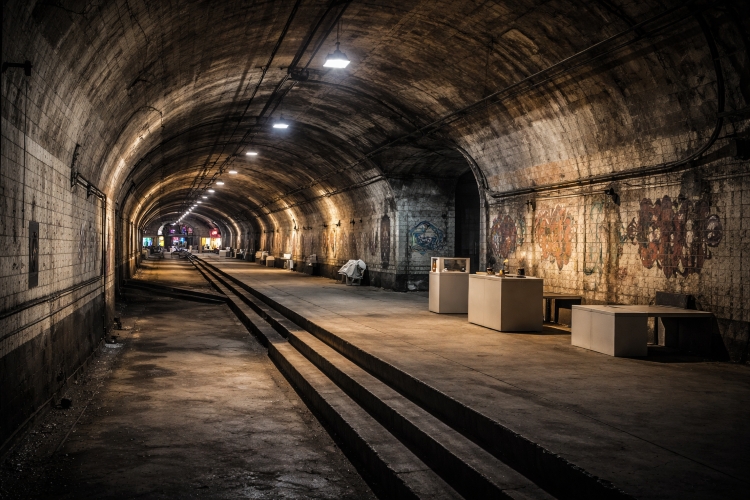
Beneath Dupont Circle in Northwest Washington lies Dupont Underground, a former streetcar station transformed into an art and performance venue. The streetcar system operated between 1949 and 1962. After decades of abandonment, local artists and civic leaders revived the space as a community hub. Dupont Underground spans approximately 15,000 square feet, mirroring the size of the Lincoln undercroft museum, and features a 125‑seat theater, a 300‑foot projection wall and exhibition areas. Visitors can attend plays, concerts, poetry readings and art installations. The venue opens only during scheduled events, so check the calendar for exhibitions like the annual “Blossom Fever” show in April.
Dupont Underground’s transformation demonstrates how Washington repurposes infrastructure into cultural spaces. Walking through the curved tunnels, you see the tracks of the old trolley and the grit of 1950s concrete juxtaposed with contemporary art. It’s a reminder that beneath the city’s polished government façades, there are spaces that once served industrial purposes and are now reborn for art and community. Comparing the undercroft and Dupont Underground reveals different approaches: one preserves a national monument’s foundations; the other reinvents a transportation relic into an avant‑garde venue.
O Museum in the Mansion
For another hidden gem, head to the Dupont Circle neighborhood and tour O Museum in The Mansion. This quirky museum occupies a complex of townhouses and is known for its Secret Door Tour. Guests explore at least 60 rooms and discover 32 concealed passages, with nearly 90 secret doors scattered throughout the property. Every visit offers a different experience, and discovering three secret doors makes you an above‑average sleuth. The museum houses eclectic collections of memorabilia and art, and everything is for sale—including furniture and books.
O Museum’s playful approach contrasts with the solemnity of the Lincoln Memorial. Yet both share a spirit of discovery; one invites you to ponder the engineering behind a national monument, while the other challenges you to find hidden doorways in a Victorian mansion. Including a visit to O Museum or Dupont Underground in your itinerary adds a layer of fun to a day that might otherwise be dominated by serious monuments.
Other subterranean sites
Beyond these two attractions, Washington offers additional underground experiences:
- U.S. Capitol Visitor Center: Located beneath the east front of the Capitol, this expansive facility houses exhibits on Congress and features a Hall of Columns reminiscent of the undercroft’s pillars. Free tours include access to the Capitol Rotunda and the historic Old Supreme Court Chamber.
- Pavilion at the Old Post Office: Under the clock tower of the Old Post Office on Pennsylvania Avenue, you’ll find retail shops and food vendors. An elevator takes you to the top for panoramic views of the city.
- Washington Metro: While not a museum, riding the Metro reveals Brutalist underground stations with soaring coffered ceilings. The Metro is an engineering marvel in its own right and offers a practical way to navigate the city’s sites.
Exploring these underground spaces deepens your appreciation for the layers of history and infrastructure beneath Washington’s surface. Each site offers a different context—transportation, governance, art—so you can curate a thematic tour of hidden spaces.
Seasonal and Cultural Reasons to Visit
DC250 and the semiquincentennial
The year 2026 marks the 250th anniversary of the Declaration of Independence. Washington D.C. will host a series of events collectively known as DC250. The undercroft museum is one of the signature projects planned for the celebration. Other highlights include a special exhibition on the National Mall and fireworks displays on July 4. Planning a trip around DC250 allows you to witness history in the making; the city will buzz with patriotic pride, cultural performances and family‑friendly activities.
Cherry blossoms and springtime visits
Spring is one of the most popular times to visit Washington due to the National Cherry Blossom Festival. Peak bloom typically occurs in late March or early April. Pairing a springtime trip with the future undercroft opening (or a preview visit of the construction site) lets you see the Mall at its most photogenic. If the museum opens in July 2026, you can still enjoy blooming flowers in the gardens around the memorial or take a stroll through Constitution Gardens.
Summer travel and outdoor events
Summer brings warm weather, longer daylight hours and outdoor concerts on the Mall. Visiting the undercroft during the summer allows you to combine the museum experience with boating on the Tidal Basin, picnics on the lawns and evening performances at the John F. Kennedy Center’s Millennium Stage. Because the museum is underground, it offers a cool respite from the heat. Consider booking tickets for a sunset visit followed by rooftop drinks at Hotel Washington’s Vue Rooftop bar, where you can watch the Washington Monument light up against the night sky.
Fall and winter reflections
Autumn in Washington features crisp air, fall foliage along the Reflecting Pool and fewer crowds. It’s a contemplative season to visit the Lincoln Memorial and reflect on the themes presented in the undercroft museum. Winter visits can be equally rewarding; the city is quieter, and holiday decorations add a festive touch. The undercroft’s indoor exhibits provide a comfortable escape from cold weather, and you might enjoy seasonal specials at nearby theaters and museums.
Why This Story Resonates
The undercroft project captures the imagination because it combines engineering, storytelling and social justice. It answers a question that many visitors have never thought to ask—what’s underneath the Lincoln Memorial?—and reveals a space that has been hidden for over a century. By turning that space into a museum, the National Park Service honors the memorial’s history while making it more accessible and meaningful for future generations.
The project also speaks to broader themes: how we invest in public infrastructure, how we preserve historic sites and how we reinterpret national symbols for contemporary audiences. In an era when misinformation and polarization challenge civic dialogue, the undercroft museum offers a grounded, factual narrative. It invites visitors to learn about the engineering behind the memorial, the civil rights battles waged on its steps and the ongoing struggle for equality. By connecting past and present, the museum reinforces the idea that history is not static; it evolves as we discover new stories and perspectives.
For travelers, the undercroft adds an extra layer to Washington sightseeing. It complements other hidden spaces like Dupont Underground and O Museum, turning a trip into a treasure hunt. It also encourages longer stays and repeat visits. By staying at Hotel Washington, you can walk from the White House to the Lincoln Memorial in minutes, then return to your room to reflect on what you’ve learned. As the city prepares for DC250, now is the time to plan your visit and be among the first to step into this newly opened chapter of American history.
Comparison of Washington’s Underground Museums
| Venue | Size & Structure | Highlights | Visiting Tips |
|---|---|---|---|
| Lincoln Memorial Undercroft Museum | 15,000 sq ft museum within a 43,800‑sq‑ft undercroft; three stories of concrete columns | Exhibits on construction, symbolism and civil rights; immersive theater; floor‑to‑ceiling glass walls; replicas of statue | Scheduled to open July 2026; free timed tickets likely; enter via west side; accessible elevators |
| Dupont Underground | 15,000 sq ft repurposed streetcar station | 125‑seat theater, art exhibitions, concerts; 300‑foot projection wall | Open only during events; check schedule; entrance at 19 Dupont Circle NW; tickets vary |
| O Museum in The Mansion | 112 rooms with 90 secret doors | Self‑guided Secret Door Tour; treasure hunt for hidden passages; eclectic art and memorabilia | Reserve in advance; bring shopping bags (items are for sale); expect to find at least three secret doors |
This table underscores how Washington’s underground attractions differ. The undercroft museum is an official national exhibit with educational intent; Dupont Underground is a cultural arts space; and O Museum is a whimsical mystery tour. Together, they offer a spectrum of experiences—from solemn reflection to artistic innovation to playful exploration.
FAQ: Lincoln Memorial Undercroft
- What is the undercroft beneath the Lincoln Memorial?
It is a three‑story, 43,800‑square‑foot basement built to support the memorial. Workers excavated 40 feet and poured dozens of concrete columns to stabilize the structure. - Why is the undercroft being turned into a museum?
The National Park Service aims to enhance visitor experience and tell a fuller story of the memorial’s construction and civil rights significance. The project will add exhibits, restrooms and an immersive theater. - When will the undercroft museum open?
Construction began in 2023 and is scheduled for completion in July 2026, in time for America’s 250th anniversary. - Will the Lincoln Memorial remain open during construction?
Yes. The memorial’s steps and chamber with Lincoln’s statue will remain open; only the basement exhibits and elevator are closed temporarily. - Do I need tickets to visit the undercroft museum?
Tickets have not yet been announced. The NPS often uses free timed passes for popular attractions, so check their website closer to the opening date. - Is the museum accessible for people with disabilities?
Yes. Plans include a new elevator and accessible walkways. - How does the undercroft differ from Dupont Underground?
The undercroft museum focuses on history and national symbolism, while Dupont Underground is a repurposed streetcar tunnel hosting art and performances. - What other hidden spaces can I explore in Washington?
Consider visiting Dupont Underground and O Museum, the U.S. Capitol Visitor Center, or riding the Metro to appreciate the city’s underground architecture.
Conclusion: Embracing the Hidden Depths
Beneath the marble pillars and solemn inscriptions of the Lincoln Memorial lies a space that has been waiting for its story to be told. The undercroft museum will lift the veil on this hidden engineering marvel and invite visitors to engage with the memorial’s past, present and future. It arrives at a moment of national reflection—the 250th anniversary of American independence—and adds a new dimension to Washington’s cultural landscape.
The project reminds us that even iconic landmarks have layers yet to be discovered. Whether you’re a first‑time visitor or a lifelong local, exploring the undercroft will deepen your understanding of American history and the ongoing struggle for equality. Pair your visit with other hidden gems like Dupont Underground and O Museum, and stay nearby at Hotel Washington—steps from the White House and within walking distance of the National Mall. As you wander through galleries beneath the earth, you’ll see how the past supports the present, and you’ll leave with a renewed appreciation for the unseen foundations of the nation.
Read other posts