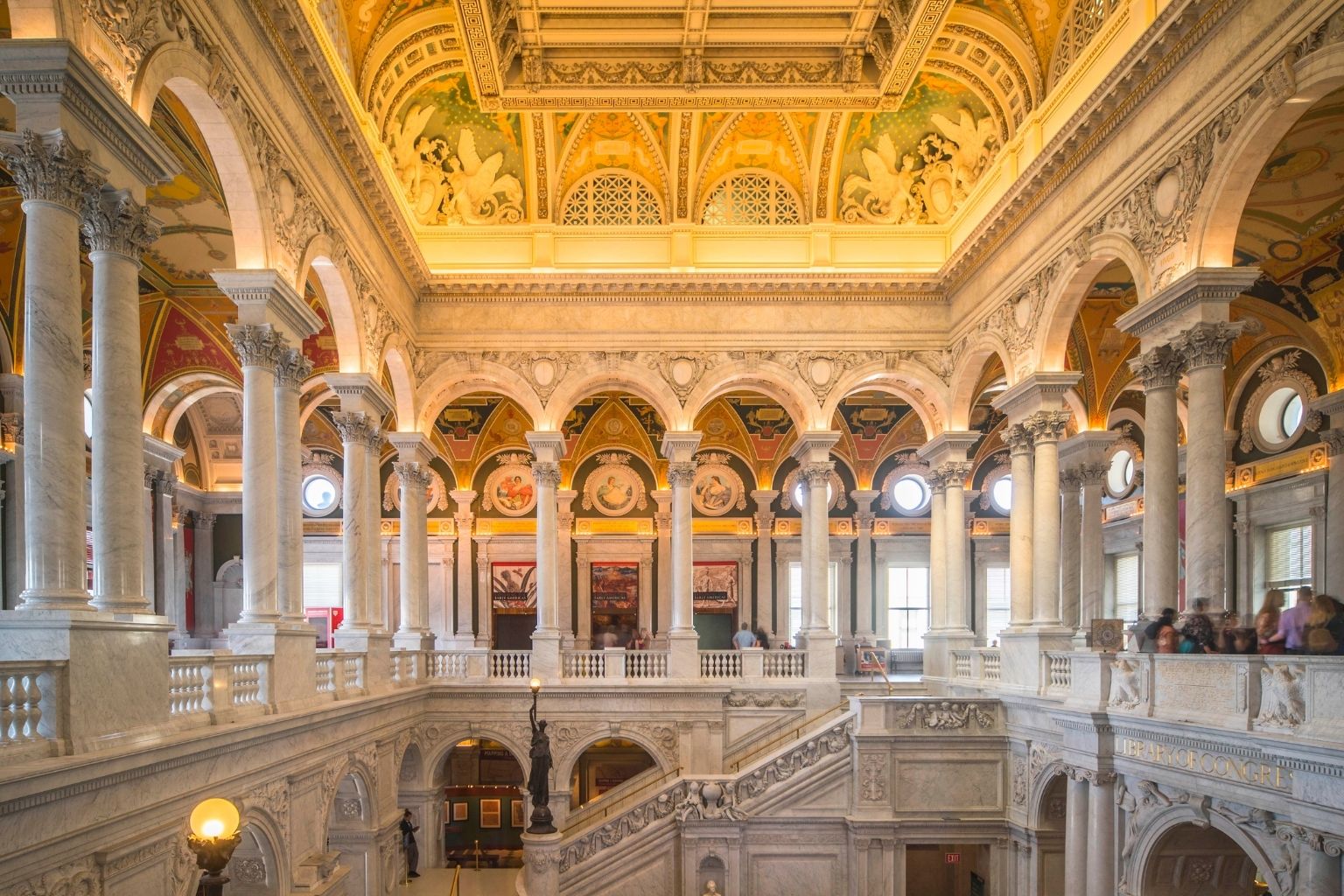
Library of Congress Washington DC: exploring the world’s largest library and its heritage
Situated on Capitol Hill, the Library of Congress is more than a building full of books. It is a living monument to knowledge and an embodiment of the United States’ commitment to learning and democracy. Founded at the dawn of the nineteenth century, the institution has grown into the world’s largest library with millions of items in hundreds of languages. The Library serves both as the research arm of the United States Congress and as the national library for scholars and curious visitors. Today, travelers can wander its grand halls, marvel at an Italian Renaissance masterpiece, explore exhibitions that range from ancient texts to modern music and even discover quiet corners where research still drives the nation’s policy. For anyone planning a trip to Washington DC, a day at the Library of Congress provides a journey through America’s intellectual history and a connection to the capital’s cultural heart.
Origins and evolution of the Library of Congress
The story of the Library of Congress begins in 1800 when the government moved from Philadelphia to Washington. Congress allocated a small sum for a reference collection to support the new legislature. The library’s early years were marked by modest growth and dramatic loss. During the War of 1812 the British burned the Capitol and with it the fledgling collection. Former President Thomas Jefferson, an advocate for broad knowledge, offered to sell his personal library of 6 487 books to Congress. This purchase not only replaced the lost volumes but also laid the philosophical foundation for a comprehensive national collection. From that moment, the Library pursued materials in every field to support democratic inquiry and public education.
The nineteenth‑century expansion
In the decades after Jefferson’s contribution the Library steadily outgrew its quarters in the Capitol. Fires, space shortages and uneven funding threatened its growth, yet visionary librarians such as Ainsworth Rand Spofford championed the idea of a national library that would serve not only Congress but all Americans. Spofford persuaded lawmakers to centralize copyright deposit at the Library, ensuring a constant influx of books and other materials. By the 1870s the collection had become so vast that a dedicated building was necessary. An architectural competition in 1873 led to the selection of an Italian Renaissance design reminiscent of European palaces. Construction began in 1886 under the supervision of Brigadier General Thomas Lincoln Casey and engineer Bernard Green. On 1 November 1897 the doors opened to a new chapter in American culture.
The Thomas Jefferson Building, as it was later named, astonished visitors with its scale and ornate decoration. Journalists wrote that the new structure was likely to remain unrivaled and that its grandeur signaled a new era of learning. The building’s appearance combined classicism and technological innovation. Built of granite and marble with bronze doors and gilded details, it was among the earliest public buildings in Washington to have electric lighting installed. Its design included a hollow rectangular plan with a central rotunda housing book stacks and reading rooms. The result was both functional and symbolic—a national temple of knowledge that celebrated America’s intellectual aspirations.
Modern growth and digital horizons
During the twentieth century the Library continued to expand physically and programmatically. The John Adams Building opened in 1939, followed by the James Madison Memorial Building in 1980, allowing the institution to house ever growing collections and specialized reading rooms. In 2007 the Packard Campus for Audio Visual Conservation opened in Culpeper, Virginia, safeguarding films, television broadcasts and sound recordings. Today the collections include millions of books and print materials, extensive manuscripts, photographs, maps, sheet music, legal documents, films and digital resources. Researchers find materials in more than 470 languages, reflecting the Library’s mission to preserve global knowledge. Digital initiatives now make many of these items accessible worldwide, ensuring that the Library’s treasures reach beyond the marble walls of Capitol Hill.
Architectural marvel: the Thomas Jefferson Building and the Great Hall
Entering the Library of Congress is like stepping into a palace of art. The Thomas Jefferson Building reflects Italian Renaissance and Beaux Arts sensibilities, blending classical forms with the exuberance of the Gilded Age. Visitors approach via the Court of Neptune fountain and ascend a monumental split stairway flanked by sculpted bronze doors. Above the doors rises a portico with paired Corinthian columns and portrait busts of famous writers framed by circular windows. A gilded Flame of Knowledge crowns the copper dome, signaling the enlightenment within.
Inside, the Great Hall forms the heart of the building. A towering 75‑foot ceiling is adorned with stained‑glass skylights and aluminum‑leaf decorations. Triangular vaults bear the names of revered writers and thinkers from around the world. At the center of the marble floor lies a brass compass rose encircled by representations of the zodiac. Marble staircases flank the hall, their railings dotted with sculptures of children symbolizing various occupations such as gardeners, electricians and entomologists. Halfway up the stairs, personifications of Africa, America, Europe and Asia rest their hands on globes to represent the continents. A commemorative arch leading toward the Main Reading Room features two allegorical figures known as The Students, one young and eager to learn, the other older and reflective—an ode to lifelong education.
Beyond the arch, the Minerva mosaic watches over the visitors’ gallery. Designed by artist Elihu Vedder, the Roman goddess of wisdom gazes at a scroll listing fields of knowledge, from architecture and law to botany and zoology. An owl perched at her side represents wisdom, while a winged figure of Victory stands nearby. The vibrant colors and gold leaf in the mosaic highlight the blend of classical symbolism and American artistic flair that defines the building.
Symbolism in stone and paint
The Jefferson Building’s art program was deliberate. Architects John L. Smithmeyer and Paul J. Pelz, along with decorator Edward Pearce Casey, invited more than forty American artists to contribute sculptures, murals and mosaics. The program celebrates the development of human civilization and the pursuit of knowledge. Mottos in Latin and English adorn ceilings and friezes, printers’ marks from European presses line the corridors, and portraits of authors including Cervantes, Hugo and Cooper appear in medallions. Even the choice of materials carries meaning. More than fifteen types of marble were used, reflecting states across the nation. Bronze and mahogany details exhibit a balance between durability and beauty. The combination of fine materials and allegorical art underscores the Library’s dual role as a working institution and a national treasure.
Architectural highlights
| Feature | Description |
|---|---|
| Exterior style | Italian Renaissance with Beaux Arts ornamentation |
| Materials | Granite, fifteen varieties of marble, bronze, gold leaf, mahogany |
| Dome | Copper dome crowned by the Flame of Knowledge |
| Great Hall ceiling | Seventy‑five‑foot high with stained‑glass skylights and aluminum‑leaf decorations |
| Main staircases | Marble staircases featuring sculpted children representing occupations and globe bearers symbolizing continents |
| Major sculptures | Minerva mosaic, The Students in the commemorative arch, statues of allegorical virtues |
| Floor details | Brass compass rose with twelve zodiac signs |
| Art contributions | Works by more than forty American painters and sculptors |
Planning your visit: tickets, hours and directions
The Library of Congress welcomes scholars, tourists and locals alike. Entry to the Thomas Jefferson Building is free, but visitors must obtain timed‑entry tickets to manage capacity. Reservations open thirty days in advance and additional same‑day tickets release each morning. People aged sixteen and older may enter without special permission, while younger visitors must be accompanied by an adult. Guided tours are currently suspended for large groups, yet roaming volunteers share stories and answer questions.
When to visit
The Thomas Jefferson Building operates Tuesday through Saturday from 10 a.m. to 5 p.m., with last entry thirty minutes before closing. Reading rooms for researchers have separate hours and are often open on Mondays. March through July is peak visitation season, so expect larger crowds and allow extra time for security screening. To enjoy a quieter experience, consider visiting during the fall or winter or arrive early in the morning. Thursdays feature extended evening hours and occasional special events.
Getting there
Located at 10 First Street SE, the Library stands across from the U.S. Capitol on Capitol Hill. The nearest Metrorail stop is Capitol South station, served by the Orange, Blue and Silver lines. From the station, walk north along First Street SE for two blocks. Street parking around Capitol Hill is limited and subject to strict enforcement, so public transit is highly recommended. Bicycle racks are available near the entrances, and ride‑share drop‑off points are located along Independence Avenue SE. For travelers arriving from outside the District, Union Station—a hub for Amtrak and regional rail—is about a fifteen‑minute walk away.
Essential tips for visitors
- Reserve tickets early: Timed tickets are required for entry and may fill quickly during busy seasons.
- Travel light: Security screening is mandatory. Large bags or backpacks can slow entry and may need to be checked.
- Obtain a reader card: Researchers wishing to consult materials in the reading rooms must register for a reader identification card, which is free and issued on site.
- Allow time for exhibitions: Exhibits rotate regularly and include rare items such as the Gutenberg Bible and Thomas Jefferson’s library. Allocate at least two hours to explore.
- Use accessible entrances: Elevators and ramps accommodate visitors with mobility needs. Service animals are welcome in accordance with federal regulations.
- Check health and safety updates: Current protocols regarding masks, health screenings or building closures can change. Always consult the official website before your trip (Library of Congress).
Inside the library: collections, exhibits and reading rooms
The Library of Congress is not simply a warehouse for books; it is a dynamic repository of human creativity. Its collections include more than 164 million items ranging from print to digital media. The diversity and scale of these materials support scholars, artists, lawmakers and the public.
A treasury of knowledge
In numbers, the Library’s holdings are staggering. The print collections alone exceed 38 million books and other printed works. Manuscripts include letters, diaries and records that document centuries of history. Photographs and visual materials number in the millions, capturing moments from daily life to monumental events. The sound recordings collection encompasses music, radio broadcasts and oral histories, while the film archive preserves motion pictures and television broadcasts. Maps, globes and geospatial data illustrate the changing geography of nations. Sheet music and scores reveal the evolution of musical expression. With materials in more than 470 languages, the Library represents voices from every corner of the world. Rare treasures such as one of the few remaining copies of the Gutenberg Bible and the Stradivari violin collection attract visitors and researchers alike.
Exhibitions that inspire
The Thomas Jefferson Building hosts permanent and rotating exhibitions that showcase items from the collections. Thomas Jefferson’s Library recreates the personal library sold to Congress after the War of 1812. Visitors see volumes from philosophy and science to cookbooks and fiction, arranged in a circular display that mirrors the original order. The Gershwin exhibit delves into the lives and music of George and Ira Gershwin, featuring manuscripts, photos and interactive listening stations. The Swann Gallery offers a whimsical exploration of cartoons, comics and animation art, while the Herblock Gallery chronicles the work of political cartoonist Herbert Block. Other thematic exhibitions explore topics like civil rights, the history of the book and the intersection of art and technology. As exhibits change, each visit reveals new facets of the Library’s holdings. Up‑to‑date exhibition schedules and descriptions appear on the Library’s website.
Reading rooms and research services
For those conducting serious research, the Library provides reading rooms tailored to specific subjects. The Main Reading Room under the central dome offers a majestic space for studying history, humanities and social sciences. The Law Library Reading Room houses an extensive collection of international and domestic legal materials. Other reading rooms focus on geography and maps, music, prints and photographs, science and business, and newspapers and current periodicals. To use these areas, researchers must register for a reader card and request materials through the library’s catalogs. Staff members provide guidance and handle requests, ensuring that rare or fragile materials are preserved. Digital catalogs and online reference services extend the Library’s assistance beyond Washington, allowing users worldwide to tap into its resources.
Table: categories of collections
| Collection category | Examples of items | Estimated holdings |
|---|---|---|
| Books & print materials | Novels, encyclopedias, journals, government documents | 38 million+ |
| Manuscripts | Letters, diaries, maps, personal papers | 78 million+ |
| Photographs & images | Prints, drawings, posters, negatives | 15 million+ |
| Sound recordings | Music, radio broadcasts, oral histories | 4.3 million+ |
| Moving images | Films, television broadcasts, newsreels | 1.8 million+ |
| Maps & geographic data | Maps, atlases, globes, GIS data | 5.8 million+ |
| Sheet music | Musical scores, songbooks | 8.2 million+ |
| Special collections | Rare books, incunabula, braille materials, microforms | Millions across categories |
Tours and programs: experiences for visitors
Exploring the Library of Congress can be as structured or as open‑ended as you like. Formal guided tours are periodically offered, providing insight into the building’s history, art and architecture. These tours typically last an hour and cover highlights such as the Great Hall, Main Reading Room and current exhibitions. Tickets for guided tours are included with general admission when available, but group tours must be arranged in advance.
Walkthroughs and self‑guided options
During select hours, staff lead five‑minute walkthroughs of the Main Reading Room. These brief visits allow guests to step inside the circular chamber, beneath the soaring dome, and appreciate its design firsthand. For those who prefer to explore independently, the Library offers self‑guided brochures and a mobile app with maps, audio commentary and augmented‑reality features. Signage throughout the building provides context for artwork and architectural details, ensuring that even unguided visitors come away with a deeper understanding of what they see.
Programs and events
The Library of Congress is also a venue for cultural programs that enliven Washington’s calendar. Live at the Library is a popular after‑hours series that combines music, literature and conversation. Held on select Thursday evenings, these events showcase musicians, authors and cultural figures in the Great Hall or on the outdoor plaza. The Library also hosts concerts featuring classical and contemporary performers, film screenings, lectures and symposia. Each summer the National Book Festival draws readers and writers from around the country for a celebration of literature, with panel discussions, signings and interactive events for families. Seasonal events include outdoor film nights on Capitol Hill and special holiday displays. Most programs are free, though some require advance registration due to capacity limits.
Types of visitor experiences
| Experience | Description |
|---|---|
| Guided tour | Hour‑long exploration of the Jefferson Building’s history and architecture |
| Reading Room walkthrough | Five‑minute entry into the Main Reading Room during set hours |
| Self‑guided tour | Printed brochures and mobile app enable visitors to explore at their own pace |
| Live at the Library | Evening series featuring music, authors and cultural conversations |
| National Book Festival | Annual literary celebration with talks, signings and family activities |
| Special exhibitions | Rotating displays on topics such as music, cartoons and historical events |
| Educational programs | Lectures, workshops and symposia open to the public |
The Library of Congress in context: Capitol Hill and nearby attractions
Visiting the Library offers a gateway to exploring Capitol Hill, one of Washington’s most historic neighborhoods. After admiring the marble halls, step outside and find yourself surrounded by institutions that shape the nation.
U.S. Capitol and Supreme Court
Immediately west of the Library sits the U.S. Capitol Visitor Center, the seat of the legislative branch. Free tours introduce guests to the Rotunda, National Statuary Hall and the crypt. The visitor center features exhibits on the Constitution and the functioning of Congress. Across First Street NE stands the Supreme Court of the United States, where the highest court convenes. Visitors can attend lectures in the courtroom when court is not in session and view exhibits on judicial history. The building’s monumental marble façade and grand interior complement the Library’s architecture.
Gardens and green spaces
A few blocks south of the Library lies the U.S. Botanic Garden. Founded in 1820, this living museum showcases plants from around the world in glass conservatories and outdoor gardens. Seasonal displays and horticultural programs provide a peaceful contrast to the grandeur of the Library. Adjacent to the Botanic Garden, the National Mall stretches westward, lined with monuments, memorials and Smithsonian museums. Walking along its tree‑lined paths offers views of landmarks such as the Washington Monument, Lincoln Memorial and reflecting pool.
Markets and neighborhoods
To experience a slice of local life, head east to Eastern Market, a historic public market dating to 1873. Located in the Capitol Hill neighborhood, it hosts vendors selling fresh produce, meats, crafts and prepared foods. Weekends bring outdoor artists and farmers, creating a lively atmosphere. Nearby streets are lined with nineteenth‑century row houses, cafes and bookstores. For more cultural exploration, cross the Mall to the National Air and Space Museum or the National Gallery of Art, both part of the Smithsonian Institution and free to the public. A short walk away, the National Archives Museum displays founding documents such as the Declaration of Independence and Constitution, while the National Museum of American History traces the nation’s cultural evolution.
Transportation and logistics
Capitol Hill is pedestrian friendly, but distances between attractions can add up. The National Mall spans two miles from the Capitol to the Lincoln Memorial. Consider using Washington Metro to move between points of interest. The Blue, Orange and Silver lines serve Capitol South, while the Red line stops at Judiciary Square near the National Archives. Circulator buses and bike‑share stations provide additional options. Wear comfortable shoes, carry water in warmer months and watch for security checkpoints at federal buildings.
Enhance your stay: Hotel Washington and the ideal DC home base
Exploring Washington can be exhilarating and exhausting in equal measure. Having a comfortable place to unwind is essential, and Hotel Washington offers both luxury and location. Positioned at the edge of the White House lawn, this boutique property is the closest hotel to the Executive Mansion. From its rooftop lounge guests enjoy sweeping views of Pennsylvania Avenue, the monuments and the city skyline. The hotel’s proximity to the National Mall means that guests can walk to the Library of Congress, the Smithsonian museums and major memorials without relying heavily on transportation.
What makes Hotel Washington stand out
- Timeless design: The hotel occupies a historic Beaux Arts building that has welcomed travelers for more than a century. Its interiors balance modern elegance with nods to Washington’s heritage.
- Rooftop lounge: An expansive rooftop bar and restaurant offers panoramic views of the White House and Washington Monument. It is an ideal spot to watch the sunset after a day of sightseeing.
- Culinary offerings: On‑site restaurants serve locally sourced cuisine from breakfast through dinner. Weekend brunches are a favorite among locals and guests alike.
- Wellness facilities: A fitness center and spa help travelers maintain balance while away from home.
- Business services: Meeting rooms and event spaces accommodate conferences, receptions and ceremonies.
- Guest rooms: Rooms are designed for comfort and sophistication, featuring plush bedding, modern technology and floor‑to‑ceiling windows.
Why Hotel Washington is perfect for Library of Congress visitors
Staying at Hotel Washington allows visitors to maximize their time in the capital. The Library of Congress is a short ride or leisurely walk across the National Mall. Guests can spend the morning exploring the Great Hall, enjoy lunch at a Capitol Hill cafe and return to the hotel for a rooftop drink before dinner. Because the hotel is adjacent to the White House, it also serves as a central hub for visiting the Capitol, Supreme Court, Smithsonian museums and downtown attractions. The staff can assist with reservations for timed tickets and provide local tips, ensuring that guests experience Washington like insiders. After a day immersed in history and culture, returning to a refined, comfortable room makes the trip complete.
Frequently asked questions
What is the Library of Congress? The Library of Congress is the national library of the United States and the research arm of Congress. It houses the world’s largest collection of books, manuscripts, maps, photographs and other materials.
Is the Library of Congress open to the public? Yes. The Thomas Jefferson Building is open to visitors Tuesday through Saturday with free timed‑entry tickets. People aged sixteen and older may enter without special permission, though reading rooms require a reader card.
How do I get tickets to visit the Library? Timed‑entry tickets can be reserved online up to thirty days in advance. Additional same‑day tickets are released each morning. Tickets are free and ensure a smooth entry during busy periods.
How many items does the Library of Congress hold? The Library’s collections include more than 164 million items ranging from printed books and manuscripts to photographs, maps, films and digital media.
Can I read or borrow books from the Library? Materials must be used on site and cannot be checked out. Researchers can access items by registering for a free reader card and submitting requests through the Library’s catalogs.
What are the must‑see exhibits in the Library? Highlights include Thomas Jefferson’s Library, the Gutenberg Bible, the Gershwin exhibition, the Swann Gallery of cartoons and the Minerva mosaic in the Great Hall.
Is photography allowed inside the Library? Photography for personal use is permitted in many areas. Formal or posed photography requires a pre‑approved permit, and flash is prohibited near sensitive materials.
What else can I do near the Library of Congress? After visiting the Library, explore nearby attractions such as the U.S. Capitol, Supreme Court, U.S. Botanic Garden, National Mall and Eastern Market. Each offers its own perspective on Washington’s history and culture.
Conclusion
The Library of Congress is both a working institution and a cultural landmark. From its humble beginnings in a boardinghouse to its current status as the world’s largest library, it embodies the American belief that knowledge empowers democracy. Visitors can marvel at the artistry of the Thomas Jefferson Building, learn from exhibitions that span centuries and participate in programs that enliven the national conversation. Beyond its walls, the neighborhoods of Capitol Hill invite further exploration, linking the stories found in books to the living history of the capital. By choosing to base your stay at Hotel Washington—the closest hotel to the White House and a convenient gateway to the city—you position yourself within easy reach of the Library of Congress and the many experiences that define Washington DC. Whether you are a scholar seeking research materials, a traveler eager to encounter American heritage or a family planning a memorable vacation, the Library of Congress and its surrounding community offer inspiration at every turn. Plan your visit, secure your tickets and prepare to connect with history, art and knowledge in the heart of the nation’s capital.
Read other posts