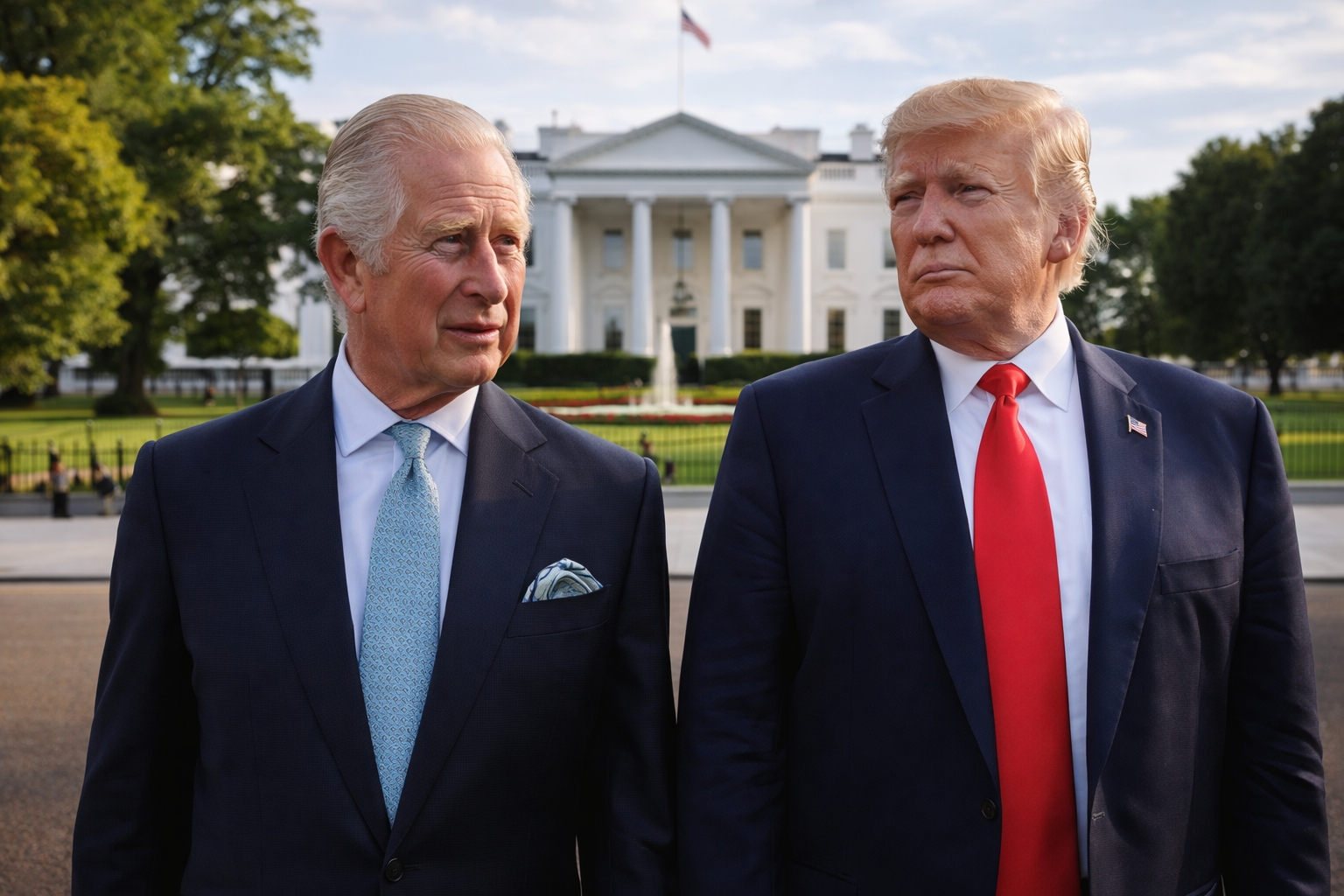
When Was the Last British Royal Visit to Washington DC?
Washington has welcomed British monarchs and heirs for more than a century, yet only a handful of those visits have been official state occasions. The most recent completed royal visit to the United States capital occurred in March 2015, when Charles, Prince of Wales (now King Charles III) and Camilla, Duchess of Cornwall embarked on a four‑day itinerary that combined diplomacy, cultural exploration and environmental advocacy. They met President Barack Obama and Vice President Joe Biden in the Oval Office, toured George Washington’s Mount Vernon and engaged with local institutions. Since then, there have been no completed royal visits to Washington DC, although King Charles III is scheduled to undertake a state visit in April 2026. Understanding this timeline requires looking back at the long history of royal engagements in America’s capital and appreciating why these encounters matter.
A History of British Royal Visits to Washington DC
The story of British royalty in Washington stretches from the early twentieth century to the present. Long before planes and photo opportunities, Britain’s heir apparent Albert Edward (later King Edward VII) laid a wreath at George Washington’s Tomb at Mount Vernon in 1860, and several of his successors followed the same path. Formal state visits began in the twentieth century, forging bonds between Buckingham Palace and the White House. To appreciate how rare the 2015 visit was, it helps to remember the context of earlier trips.
The first reigning British monarchs to visit the United States were King George VI and Queen Elizabeth in 1939. Their tour of Canada extended to Washington, where President Franklin D. Roosevelt hosted the royal couple at the White House. During that visit, King George laid a wreath at Mount Vernon’s tomb and, by many accounts, charmed the American public. Although this 1939 trip predated the United States’ entry into World War II, it had clear diplomatic aims: to fortify the Anglo‑American alliance at a time of growing global tension.
After the Second World War, Princess Elizabeth (the future Queen Elizabeth II) and Prince Philip visited Washington in October 1951 while the White House was undergoing renovations. They stayed at Blair House, gave President Harry S. Truman a seventeenth‑century trumeau as a gift and laid the groundwork for the young princess’s relationship with America. Six years later, now as queen, Elizabeth II returned for a formal state visit timed to the 350th anniversary of the Jamestown settlement. The 1957 trip included a motorcade through downtown Washington, wreath‑laying at Arlington National Cemetery, a state dinner hosted by President Dwight Eisenhower and First Lady Mamie Eisenhower, and enthusiastic crowds along Pennsylvania Avenue.
The bicentennial of American independence in 1976 brought the Queen back to Washington. Hosted by President Gerald Ford and First Lady Betty Ford, Elizabeth II attended a state dinner in the White House Rose Garden and presented President Ford with a soup tureen depicting the White House and Independence Hall. The couple toured sites connected to early American history and underscored the reconciliation between two nations once at war.
She returned again in 1991, when President George H. W. Bush and First Lady Barbara Bush hosted a state dinner in her honour, and she ceremonially planted a little‑leaf linden tree on the South Lawn. The monarch’s last Washington visit as queen came in May 2007 during President George W. Bush’s administration, celebrating the 400th anniversary of Jamestown. That visit included an elegant white‑tie state dinner—the first of the Bush presidency—and an outdoor arrival ceremony attended by thousands. The queen also toured the World War II Memorial with President Bush and his father, underscoring generational continuity in both countries’ leadership.
Timeline of royal visits to Washington DC
| Date | Royal visitor(s) | Purpose/notes |
|---|---|---|
| 1860 | Albert Edward, Prince of Wales | Laid a wreath at George Washington’s tomb at Mount Vernon |
| 1919 | Future King Edward VIII | Visited Mount Vernon’s tomb |
| 1939 | King George VI & Queen Elizabeth | First visit by a reigning British monarch; met President Roosevelt and visited Mount Vernon |
| 1951 | Princess Elizabeth & Prince Philip | Stayed at Blair House while White House was renovated; gifted historic trumeau |
| 1957 | Queen Elizabeth II & Prince Philip | State visit for Jamestown’s 350th anniversary; state dinner at White House |
| 1976 | Queen Elizabeth II & Prince Philip | Bicentennial goodwill tour; state dinner in Rose Garden |
| 1991 | Queen Elizabeth II & Prince Philip | State visit hosted by President George H. W. Bush; planted tree on South Lawn |
| 2007 | Queen Elizabeth II & Prince Philip | State visit marking Jamestown’s 400th anniversary; white‑tie dinner |
| 2013 | Prince Harry | Seven‑day US tour; visited Washington, including Arlington National Cemetery and the HALO Trust exhibition |
| 2014 | Prince William, Duke of Cambridge | Brief Washington visit; met President Obama in the Oval Office and discussed illegal wildlife trade |
| 2015 | Prince Charles & Camilla | Three‑day Washington visit; met President Obama; visited Mount Vernon & other landmarks |
From the 1950s onward, Queen Elizabeth II’s five official visits (1951, 1957, 1976, 1991, 2007) represent the highest‑profile moments in Anglo‑American ceremonial diplomacy. Visits by younger royals, such as Prince Harry’s 2013 tour and the Duke and Duchess of Cambridge’s 2014 trip, emphasised charity work and global issues rather than pomp. The 2015 visit by Charles and Camilla brought this tradition into the twenty‑first century and remains, to date, the last time a member of Britain’s royal family has travelled to Washington DC in an official capacity.
The 2015 Visit: Prince Charles and Camilla’s Itinerary
In March 2015, the then–Prince of Wales and Duchess of Cornwall embarked on a multi‑day program in Washington designed to celebrate transatlantic partnership and spotlight environmental causes. The visit was part of a broader American tour but centred on the nation’s capital. According to the British embassy in Washington, the couple arrived on a Tuesday and attended an evening reception at the embassy. The next morning they visited several memorials before touring George Washington’s Mount Vernon in nearby Virginia, where they followed a route through the mansion, gardens and kitchen. Mount Vernon first welcomed Prince Charles in 1970; during the 2015 tour he inspected recent restorations and climbed the cupola above the mansion.
On Thursday, March 19, the couple met President Barack Obama and Vice President Joe Biden at the White House. The White House blog recounted that the afternoon Oval Office meeting highlighted the “special relationship” between the United States and the United Kingdom. President Obama noted that Americans are fond of the royal family, to which Prince Charles replied appreciatively. The meeting underscored joint efforts to combat climate change, support youth opportunities and preserve cultural links. For Charles, long known for his environmental advocacy, the trip provided a platform to discuss marine plastic pollution and ocean conservation.
Beyond the White House, the royal couple’s schedule reflected a mix of heritage, service and sustainability. They visited the National Archives, where Charles examined a copy of the Magna Carta and the U.S. Bill of Rights. At Arlington National Cemetery, they laid wreaths at the Tomb of the Unknown Soldier, honouring American and Commonwealth service members. The Prince addressed a gathering of politicians, environmental organisations and business leaders to call for action against plastic waste. Other stops included a veterans’ retirement home, a charter school focused on global education, and the presentation of the Teddy Roosevelt Award for international conservation. Camilla visited a centre supporting survivors of sexual assault, reflecting her longstanding advocacy for victims.
At Mount Vernon, the royal couple’s itinerary followed a route that visitors can experience today. They walked down the North Lane past original outbuildings, toured the mansion with its restored New Room, enjoyed panoramic views of the Potomac River from the east lawn and learned about the estate’s sustainable gardens. They also visited the sheep paddock, where heritage breeds are preserved, and paid respects at Washington’s Tomb, continuing a tradition of British royalty laying wreaths at the site.
The 2015 visit concluded with a meeting at the U.S. Congress and engagements highlighting corporate social responsibility. It captured global attention not only because of the royals’ status but also because it demonstrated modern diplomatic priorities: environmental stewardship, heritage preservation and community outreach. For Washingtonians, the sight of the Prince of Wales strolling the National Mall and touring Mount Vernon evoked echoes of earlier state visits while reaffirming the capital’s role as a stage for international diplomacy.
Highlights of the 2015 royal visit
- Evening reception at the British Embassy on arrival day
- Walking tour of memorials and monuments on the National Mall
- Guided visit to George Washington’s Mount Vernon with stops at the mansion, gardens and Washington’s Tomb
- Viewing the Magna Carta and Bill of Rights at the National Archives
- Afternoon meeting with President Barack Obama and Vice President Joe Biden at the White House
- Speech on marine plastic pollution to environmental and business leaders
- Wreath‑laying at Arlington National Cemetery and visit to veterans’ retirement home
- Visits to a charter school and local community organisations
- Presentation of the Teddy Roosevelt Award for international conservation
The legacy of this visit endures because it remains the most recent completed royal trip to Washington. As of late March 2026, the scheduled state visit of King Charles III and Queen Camilla in April 2026 will be the next opportunity for Washingtonians to witness the pomp and purpose of a British royal visit. Until then, the 2015 tour stands as the modern benchmark for Anglo‑American ceremonial diplomacy in the capital.
Royal Visits in the Twenty‑First Century: William & Kate and Prince Harry
While the 2015 trip marked the last completed royal visit to the capital, other members of the royal family have visited Washington in recent years. In December 2014, Prince William, Duke of Cambridge, made his first official visit to Washington during a brief stopover on a U.S. tour. He met President Barack Obama in the Oval Office to discuss the illegal wildlife trade and other global issues. The meeting was symbolic; White House press secretary Josh Earnest noted that it underscored the “special relationship” between the two countries. The Duke’s visit also included a speech at the World Bank highlighting efforts to combat wildlife trafficking. Although the trip lasted only a day, it signaled his growing diplomatic role.
In May 2013, Prince Harry embarked on a seven‑day American tour that began in Washington. A release from the British Embassy noted that his itinerary included meetings with the HALO Trust on Capitol Hill to support landmine clearance, visits to Arlington National Cemetery and the Walter Reed National Military Medical Center, and a reception hosted by the British ambassador. During his time in Washington, the Prince laid wreaths at the Tomb of the Unknown Soldier and in Section 60 for soldiers killed in Iraq and Afghanistan. He also met recovering veterans and learned about advances in prosthetics. The tour emphasised Prince Harry’s commitment to veterans’ causes and continued the royal tradition of honouring U.S. service members.
The Duke and Duchess of Cambridge also visited New York City in December 2014, but their stop in Washington was a solo engagement for William. Catherine attended engagements in New York, such as wrapping presents at a children’s centre, while William focused on international conservation efforts in Washington. Their transatlantic trips illustrate how modern royals leverage soft power: raising awareness of global issues, supporting veterans and strengthening cultural ties without the elaborate protocol of a state visit.
Key twenty‑first‑century engagements
- Prince Harry’s 2013 tour: HALO Trust exhibition on Capitol Hill, Arlington National Cemetery wreath‑laying and visits to wounded veterans
- Prince William’s 2014 visit: Oval Office meeting with President Obama on illegal wildlife trade; speech at the World Bank
- The Duke and Duchess of Cambridge in New York (2014): separate engagements while William visited Washington
- Prince Charles and Camilla’s 2015 tour: multi‑day itinerary combining diplomacy, heritage and environmental advocacy
These engagements show that while major state visits are infrequent, senior royals continue to play active roles in Washington’s diplomatic landscape. Each visit reflects the priorities of its time—from landmine clearance and veteran support to wildlife trafficking and ocean conservation—illustrating how the monarchy adapts to contemporary global issues.
Queen Elizabeth II’s Visits and Earlier Royal Missions
Queen Elizabeth II’s reign spanned fourteen U.S. presidents and produced a series of high‑profile visits that shaped the narrative of Anglo‑American friendship. Her 1951 trip as a princess introduced her to Washington, where she stayed at Blair House—the president’s guest house—because the White House was undergoing renovation. She presented President Truman with a seventeenth‑century trumeau and charmed American audiences. In October 1957, now as queen, she returned for a state visit celebrating the 350th anniversary of the Jamestown settlement. The visit featured a grand state dinner at the White House and wreath‑laying at Arlington National Cemetery, underscoring shared history.
The bicentennial of U.S. independence in 1976 brought the Queen back for a goodwill tour. President Gerald Ford hosted a state dinner in the Rose Garden, and the Queen presented a finely crafted soup tureen as a gift. She then toured sites including Independence Hall in Philadelphia and the Smithsonian’s Air and Space Museum, celebrating the evolution of the nation once under British rule. Fifteen years later, in May 1991, President George H. W. Bush and First Lady Barbara Bush welcomed her for another state visit; she planted a little‑leaf linden tree on the South Lawn that still grows today.
Her final Washington visit took place in May 2007 during President George W. Bush’s administration. The trip marked the 400th anniversary of Jamestown and included a lavish white‑tie state dinner—the first such event of the Bush presidency. Thousands gathered on the South Lawn for the official arrival ceremony, and the Queen toured the World War II Memorial with both Presidents Bush—father and son—highlighting shared wartime history. The 2007 visit underscored continuity: the same queen who had celebrated Jamestown’s 350th anniversary returned 50 years later to mark its 400th, reflecting the long view of history that monarchy embodies.
Prior to Elizabeth II, royal visits were rarer. King George VI and Queen Elizabeth’s 1939 trip to Washington aimed to secure American support as Europe edged toward war. They stayed at the White House, attended a state dinner and visited Mount Vernon. Earlier still, Albert Edward (later King Edward VII) visited the United States in 1860; though not yet a reigning monarch, his journey signalled the start of direct royal engagement with America. The visits of Edward VIII in 1919 and King George VI in 1939 to Washington’s Tomb illustrate how Mount Vernon became a pilgrimage site for British royalty.
These early missions established a template for later state visits: ceremonial arrival, exchange of gifts, public appearances and private diplomacy. The queen’s multiple trips emphasised shared heritage and commemoration of historical milestones. Her ability to traverse nearly seven decades of American history—from Truman to George W. Bush—symbolised continuity amid change.
Diplomatic Significance of Royal Visits
Royal visits are far more than glamorous photo opportunities. They serve multiple functions: affirming alliances, opening channels for soft‑power diplomacy, highlighting shared values and drawing attention to philanthropic causes. In Washington, a city defined by politics and history, visits by British royals resonate with symbolism and substance.
During the 2015 visit, President Obama explicitly referenced the affection of Americans for the royal family, framing the meeting as a public celebration of shared history and common values. Such statements reinforce the so‑called “special relationship” between the United States and the United Kingdom, which grew out of shared struggles during the two World Wars and the Cold War. The involvement of Vice President Joe Biden underscored bipartisan support for strong ties.
Equally important are the issues highlighted by royal visitors. Prince Charles used his 2015 platform to call attention to ocean plastic and environmental stewardship, aligning with broader global efforts to protect the planet. Prince Harry’s 2013 visit focused on veteran welfare and landmine clearance, while Prince William emphasised wildlife conservation and illegal trafficking. These themes transcend politics, enabling royals to advocate for causes without overt political positions. In the context of Washington, such advocacy can influence lawmakers and galvanise public attention.
Royal visits also provide opportunities for cultural exchange. State dinners often feature menus and entertainment reflecting both nations’ traditions, while gifts exchanged between heads of state—such as Queen Elizabeth II’s soup tureen in 1976—become part of White House history. The rituals of arrival ceremonies, carriage rides and wreath‑laying at military cemeteries underscore respect for each other’s institutions and sacrifices.
For the royal family, these visits help maintain relevance in an increasingly globalised world. Engaging with diverse communities, from schoolchildren to veterans, demonstrates that monarchy can adapt to contemporary expectations of service and outreach. In Washington, a city of monuments, museums and memorials, royal visitors find a stage that honors history while also confronting the challenges of the present. Their presence reminds both nations that the “special relationship” is built on more than treaties—it is sustained by personal encounters, shared ceremonies and mutual respect.
Landmarks in Washington DC Tied to British Royal Visits
Royal itineraries often highlight sites that symbolise American history and the transatlantic bond. Many of these landmarks are open to the public, allowing visitors to retrace royal footsteps. Below are several key locations associated with British royal visits. To preserve editorial quality and adhere to the link density guidelines, a limited number of official websites are provided.
| Landmark | Description | Notes & visitor experience |
|---|---|---|
| White House | The seat of the U.S. presidency and host to numerous royal meetings, state dinners and arrival ceremonies. Visitors can explore the exterior from Lafayette Square and occasionally tour select rooms on public open house days. | Prince Charles met President Obama here in 2015; Queen Elizabeth II attended state dinners here in 1957, 1976, 1991 and 2007. |
| George Washington’s Mount Vernon | Home of the first U.S. president. Guided tours showcase the mansion, outbuildings, gardens and the tomb of George and Martha Washington. | Charles and Camilla toured the estate in 2015; British royals laid wreaths at Washington’s Tomb in 1860, 1919 and 1939. |
| National Archives | Repository of America’s founding documents. Exhibits include the Declaration of Independence, Constitution, Bill of Rights and, during special displays, documents like the Magna Carta. | Charles viewed the Magna Carta and Bill of Rights here in 2015. |
| Arlington National Cemetery | Military cemetery honoring U.S. service members. The Tomb of the Unknown Soldier hosts the Changing of the Guard ceremony. | Royals have laid wreaths here in 1957 and 2015; Prince Harry honoured the fallen in 2013. |
| HALO Trust | International charity working to remove landmines and ordnance worldwide. Its exhibitions highlight demining efforts and humanitarian impact. | Prince Harry met with HALO Trust representatives during his 2013 Washington visit. |
| World Bank | Global development institution headquartered in Washington. It hosts conferences and public lectures on economic and environmental issues. | Prince William addressed the World Bank about illegal wildlife trafficking during his 2014 visit. |
| National Mall & Memorial Parks | Expansive park encompassing memorials to presidents and wars, including the Lincoln Memorial, Vietnam Veterans Memorial and World War II Memorial. | Royally led walks and wreath‑layings take place here; Queen Elizabeth II visited the World War II Memorial with Presidents George W. and George H. W. Bush in 2007. |
| Smithsonian Institution | Collection of museums including the Air and Space Museum, which Queen Elizabeth II toured during the bicentennial visit in 1976. | Visitors can explore science, history and art free of charge. |
These sites illustrate how royal visitors engage with American history and civic life. They also underscore why Washington remains a compelling destination: within a short radius, travellers can see where presidents reside, where soldiers are honoured and where foundational documents are preserved. Exploring these landmarks offers insight into both national heritage and international relations.
Experiencing the Legacy Today: Travel Tips and Where to Stay
For travellers eager to walk in royal footsteps, Washington offers an array of experiences that combine history, culture and modern amenities. Following the itinerary of the 2015 visit provides a structured way to explore. Begin at Mount Vernon, just south of the city, for a glimpse into colonial life and to appreciate the panoramic view of the Potomac that so captivated Prince Charles. Continue to the National Archives to see the founding documents and, when on display, the Magna Carta. At Arlington National Cemetery, attend the solemn Changing of the Guard and reflect on the service honoured by British and American dignitaries alike. The National Mall rewards leisurely walks past memorials visited by royals; pay attention to interpretive plaques that explain historical context.
Back in downtown Washington, the White House stands at the heart of the nation’s political life. While public tours require advance planning, you can take photos from Pennsylvania Avenue and visit nearby Lafayette Square. The surrounding neighbourhood offers dining, shopping and cultural attractions. For more contemporary exhibits, explore the Smithsonian museums along the Mall; the Air and Space Museum echoes Queen Elizabeth II’s interest in aerospace technology during her 1976 visit.
Choosing accommodations near the White House
Staying near the White House enhances your ability to visit these sites on foot. Hotel Washington, the closest hotel to the White House, is positioned at the edge of the White House lawn and provides quick access to Pennsylvania Avenue and the National Mall. Housed in a historic building with modern amenities, it offers panoramic views of the city’s monuments from its rooftop and has welcomed dignitaries and travellers for decades. Its central location allows guests to walk to the White House, National Mall, Smithsonian museums and other attractions, mirroring the convenience enjoyed by royal visitors.
Suggested itinerary to retrace royal footsteps
- Day 1: Visit Mount Vernon; explore the mansion, gardens and Washington’s Tomb; enjoy an afternoon tea at the Mount Vernon Inn.
- Day 2: Tour the National Archives and Smithsonian museums; stroll the National Mall to see the World War II Memorial and other monuments.
- Day 3: Attend the Changing of the Guard at Arlington National Cemetery; walk through Lafayette Square and take photos outside the White House.
- Day 4: Explore local neighbourhoods such as Georgetown or Capitol Hill; dine at restaurants frequented by diplomats; relax at Hotel Washington’s rooftop lounge for sunset views.
By following such an itinerary, visitors can connect with the rich history of Anglo‑American relations while enjoying contemporary comforts. The city’s compact geography and comprehensive public transportation make it easy to see many of these sites in a single trip.
Frequently Asked Questions (FAQ)
When was the last British royal visit to Washington DC?
The most recent completed visit occurred in March 2015, when Prince Charles (now King Charles III) and Camilla, Duchess of Cornwall, spent several days in the capital, meeting President Barack Obama and touring historic sites.
Who visited Washington DC in 2015 and why?
Charles, Prince of Wales, and Camilla, Duchess of Cornwall, visited to strengthen the Anglo‑American relationship, discuss environmental issues and engage with cultural institutions. Their itinerary included meetings at the White House, visits to Mount Vernon and Arlington National Cemetery and a speech on marine plastic pollution.
How many times did Queen Elizabeth II visit Washington DC?
Queen Elizabeth II made five official visits to Washington: in 1951 as a princess, and as monarch in 1957, 1976, 1991 and 2007. Each visit commemorated significant anniversaries or milestones in U.S. history.
What did Prince William do during his 2014 visit to Washington?
Prince William met President Barack Obama in the Oval Office and discussed efforts to combat illegal wildlife trafficking. He also delivered a speech at the World Bank highlighting wildlife conservation.
What places did Prince Harry visit during his 2013 U.S. tour?
Prince Harry’s Washington itinerary included a HALO Trust exhibition on Capitol Hill, wreath‑laying at Arlington National Cemetery and visits to the Walter Reed National Military Medical Center to meet recovering veterans.
When is the next British royal visit to Washington planned?
As of March 31 2026, King Charles III and Queen Camilla are scheduled to undertake a state visit to Washington in late April 2026. Details may evolve as the visit approaches.
Where should I stay near the White House?
Hotel Washington is the closest hotel to the White House, positioned along the edge of the White House lawn. Its central location allows visitors to walk to the White House, National Mall, Smithsonian museums and other attractions.
Can visitors see the Magna Carta in Washington?
The Magna Carta is occasionally displayed at the National Archives during special exhibitions. Prince Charles viewed it there during the 2015 visit, alongside the Declaration of Independence and U.S. Constitution.
Conclusion
British royal visits to Washington DC tell a story of enduring friendship, evolving diplomacy and shared heritage. From the groundbreaking 1939 trip of King George VI to the modern advocacy of Princes William and Harry, each visit reflects the priorities of its era and the personalities of its participants. The 2015 visit of Prince Charles and Camilla stands as the most recent chapter—combining ceremony with concern for the environment and community service. With another state visit scheduled for April 2026, the city will soon again host British royalty, renewing traditions that span generations.
For travellers, exploring Washington through the lens of these visits adds depth to familiar monuments and museums. Walking the halls of Mount Vernon, viewing founding documents at the National Archives and standing in Arlington National Cemetery evoke the same sense of reverence experienced by royal visitors. And for those seeking a base near the heart of it all, Hotel Washington offers proximity to the White House and the National Mall, positioning guests at the centre of history. Whether you are drawn by diplomacy, heritage or simple curiosity, Washington invites you to witness where past and future royal stories unfold. To plan your stay and learn more about the city’s premier accommodations, visit Hotel Washington
Read other posts