Is Washington DC Safe?
Washington DC is generally safe for tourists, especially in high-traffic areas such as the National Mall, the White House corridor, Capitol Hill, Georgetown, and downtown. Like any major city, it has neighborhoods with varying crime levels, but most visitors experience a secure, well-policed environment centered around federal buildings, museums, and monuments. Awareness of surroundings, choosing the right neighborhood, and following basic urban safety practices significantly reduce risk.
The nation’s capital is one of the most monitored and protected cities in the United States. Heavy federal presence, visible law enforcement, and constant visitor activity create a secure atmosphere in the areas where most travelers spend their time. Understanding how safety works in Washington DC – where to stay, when to explore, and which neighborhoods are best suited for visitors – helps turn uncertainty into confidence.
Understanding Washington DC Safety in Context
Washington DC is not just another major metropolitan area. It is the seat of federal government, home to embassies, international organizations, and globally recognized landmarks. Security infrastructure is layered into the city’s design. Law enforcement agencies operate at multiple levels – city, federal, and specialized units – creating a uniquely structured safety environment.
Crime in Washington DC, like in any large city, includes both violent crime and property crime. However, incidents are typically concentrated in specific residential neighborhoods rather than tourist corridors. Areas surrounding federal buildings and cultural institutions tend to be among the most heavily patrolled zones in the country.
Visitors most often spend time near:
• The White House
• The National Mall
• Smithsonian museums
• Capitol Hill
• Downtown DC
• Georgetown
• Dupont Circle
These districts benefit from a combination of:
• High pedestrian traffic
• Security cameras and visible police presence
• Well-lit streets
• Proximity to government buildings
For most travelers, safety concerns are less about random violence and more about standard urban risks such as pickpocketing, vehicle break-ins, or late-night isolation in unfamiliar areas.
Washington DC Crime Rate Overview
When evaluating whether Washington DC is safe, it is important to distinguish between citywide statistics and tourist experience.
Crime data typically breaks down into:
• Violent crime – assault, robbery, homicide
• Property crime – theft, burglary, motor vehicle theft
In Washington DC, violent crime tends to be geographically concentrated. Tourist areas, government districts, and commercial centers generally experience significantly lower violent crime rates than certain outer residential neighborhoods.
Property crime is more common than violent crime in visitor-heavy zones. Incidents may include:
• Unattended bag theft
• Car break-ins
• Opportunistic pickpocketing
Travelers who:
• Stay in well-reviewed central neighborhoods
• Avoid poorly lit or isolated streets late at night
• Use common-sense precautions
typically report positive and safe experiences.
The key takeaway is this: Washington DC is not uniformly risky. Safety depends heavily on neighborhood selection and time of day.
Safest Areas in Washington DC for Visitors
Some neighborhoods consistently rank as the safest and most visitor-friendly in Washington DC. These areas combine tourism infrastructure, residential stability, and security presence.
Downtown DC and White House Corridor
The stretch surrounding the White House and Pennsylvania Avenue is one of the most secure areas in the country. Federal buildings, security checkpoints, and constant monitoring create an environment unlike most urban cores.
This district offers:
• 24-hour activity
• High police visibility
• Extensive lighting
• Walkability to monuments and museums
For visitors asking where to stay in Washington DC for safety, this area consistently ranks at the top.
Capitol Hill
Capitol Hill blends residential calm with institutional security. Proximity to the US Capitol and Supreme Court contributes to elevated patrol levels and steady foot traffic.
It is known for:
• Tree-lined streets
• Historic row houses
• Family-friendly environment
• Access to major landmarks
Georgetown
Georgetown offers a blend of historic charm and commercial vibrancy. It is one of DC’s most affluent neighborhoods and is widely considered safe for walking during both daytime and evening hours.
Visitors appreciate:
• Active shopping streets
• Restaurants and cafes
• Strong neighborhood presence
• Consistent pedestrian activity
Dupont Circle and Foggy Bottom
These neighborhoods are centrally located and well-connected via Metro. They are popular with both tourists and professionals.
Safety advantages include:
• Active nightlife with regular patrol presence
• Embassy row proximity
• Established residential density
• Reliable public transit access
Areas Where Visitors Should Exercise Caution
Washington DC, like other large cities, has neighborhoods where crime rates are higher than the city average. These areas are typically outside main tourist corridors.
Most visitors will not naturally encounter these neighborhoods unless specifically traveling there. However, caution is advisable if venturing into unfamiliar areas late at night without clear purpose.
Practical guidance:
• Avoid poorly lit blocks late at night
• Use rideshare services if uncertain about surroundings
• Stay aware of neighborhood transitions
The key principle is awareness, not fear. The majority of first-time visitors never enter higher-risk residential zones.
Is Washington DC Safe at Night?
Washington DC is generally safe at night in high-traffic and central districts. Areas near the National Mall, downtown, Georgetown, Dupont Circle, and Capitol Hill remain active into the evening.
Nighttime safety depends on:
• Staying in populated areas
• Avoiding isolated side streets
• Using reliable transportation
Public transit operates on scheduled hours, and rideshare services are widely available.
Walking at night near federal landmarks often feels safer than in many other US cities due to:
• Open sight lines
• Monument lighting
• Regular patrol vehicles
However, like any major city, late-night bar districts may involve intoxicated crowds. Awareness and standard urban caution are sufficient for most travelers.
Is Washington DC Safe for Families?
Washington DC is widely considered one of the most family-friendly major cities in the United States.
Reasons families choose DC include:
• Free Smithsonian museums
• Walkable monument routes
• Educational landmarks
• Public parks and green spaces
Family safety advantages:
• Daytime activity concentrated in secure areas
• Strong law enforcement visibility
• Well-maintained sidewalks and open spaces
Families staying in central neighborhoods report high levels of comfort, especially during daytime exploration.
Is Washington DC Safe for Solo Travelers?
Solo travelers, including solo female travelers, frequently visit Washington DC without incident.
Safety factors that benefit solo visitors:
• Strong tourism infrastructure
• Clearly marked public spaces
• Ride-sharing availability
• Well-lit federal corridors
Solo travelers are encouraged to:
• Share itineraries with trusted contacts
• Avoid late-night isolation
• Choose accommodations in established districts
Overall, Washington DC ranks favorably compared to other large metropolitan destinations.
Is Washington DC Safe Compared to Other Major Cities?
When compared to cities such as New York, Chicago, or Los Angeles, Washington DC’s safety profile is comparable and in many cases more favorable within tourist zones.
Key distinctions:
• Heavy federal security presence
• Smaller geographic footprint
• High concentration of government buildings
While certain residential areas may experience elevated crime, the city’s tourism core remains one of the most controlled environments in the country.
Visitors primarily exploring:
• The National Mall
• White House area
• Capitol Hill
• Smithsonian museums
are operating within some of the most monitored public spaces nationwide.
Public Transportation and Safety in DC
The Washington DC Metro is widely used by commuters, government employees, and visitors.
Safety considerations:
• Trains and stations are generally well-lit
• Transit police maintain presence
• High passenger volume during daytime
Travelers should:
• Avoid empty train cars late at night
• Stay aware of personal belongings
• Plan routes in advance
Metro safety is comparable to other major US transit systems and often considered orderly and clean by visitors.
Safety Near the White House and National Mall
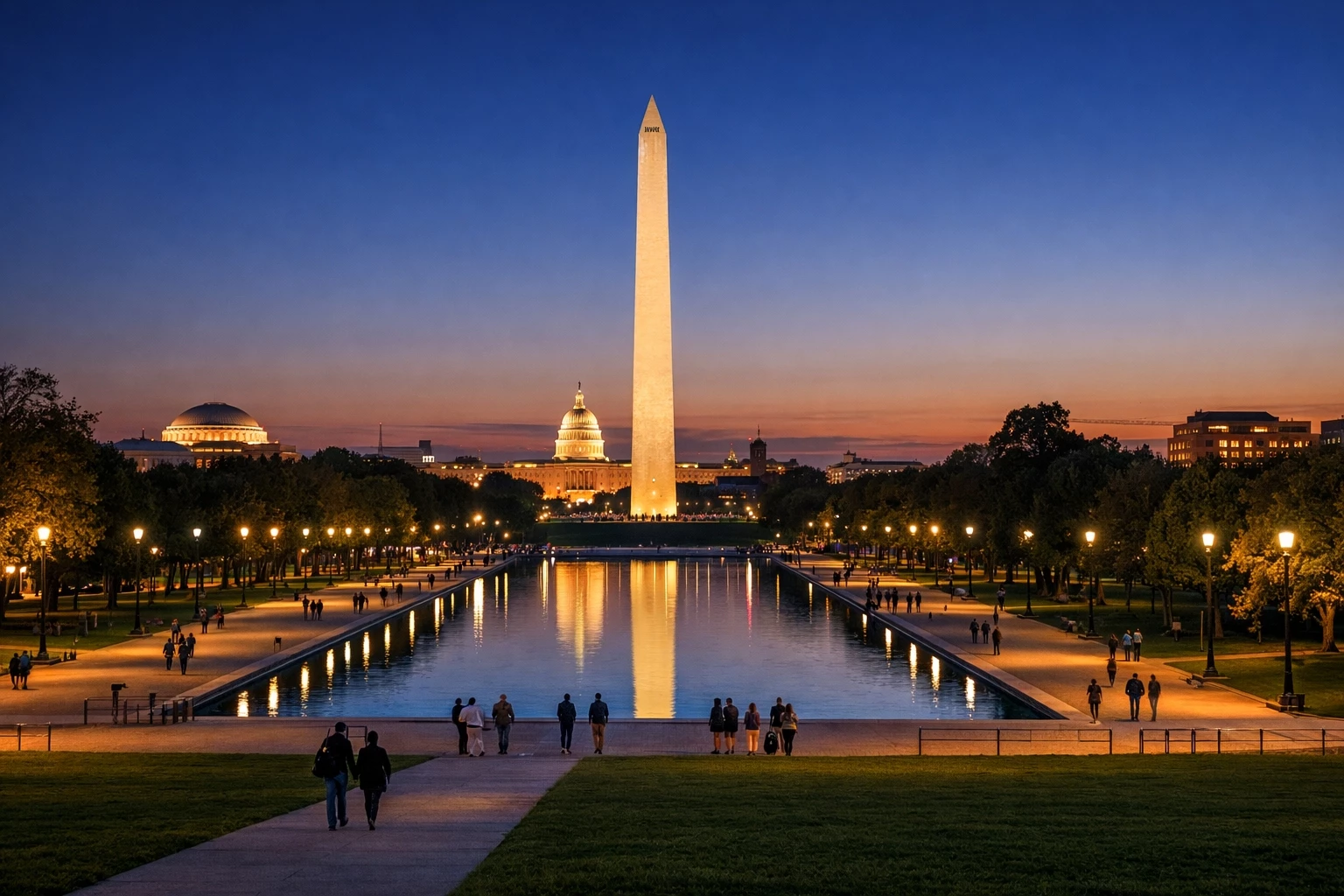
The area surrounding the White House and National Mall is among the most secure public zones in the United States.
This region benefits from:
• Federal security operations
• Surveillance systems
• Consistent patrol presence
• High tourist volume
Visitors walking between monuments often experience a calm, open environment with clear sight lines and substantial lighting after dark.
For travelers prioritizing security, staying within walking distance of this corridor offers measurable peace of mind.
Choosing the Safest Place to Stay in Washington DC
Location selection is the single most important safety decision for visitors.
The most secure lodging zones include:
• White House corridor
• Downtown DC
• Capitol Hill
• Georgetown
• Dupont Circle
When selecting a hotel, consider:
• Proximity to major landmarks
• 24-hour front desk presence
• Security-controlled entrances
• Verified guest reviews
Hotel Washington – The closest hotel to the White House, positioned at the edge of the White House Lawn – offers direct proximity to one of the most secure areas in the city. Staying in this corridor places visitors steps from federal landmarks, major avenues, and constant security presence.
Walkability reduces the need for late-night transportation and keeps guests within well-lit, monitored districts.
Practical Safety Tips for Visiting Washington DC
Experienced travelers follow simple urban safety practices:
• Keep valuables secured and out of sight
• Avoid displaying large amounts of cash
• Use licensed rideshare or taxis at night
• Stay aware of surroundings
• Monitor official city alerts during major events
Additional guidance:
• Travel in groups after dark when possible
• Do not leave belongings unattended
• Confirm neighborhood location before booking accommodations
These measures are sufficient for most visitors.
Frequently Asked Questions
Is Washington DC safe for tourists?
Yes. Most tourist areas are heavily patrolled and well monitored. Visitors staying in central neighborhoods typically report safe experiences.
What are the safest areas in Washington DC?
Downtown, the White House corridor, Capitol Hill, Georgetown, and Dupont Circle are among the safest for visitors.
Is Washington DC safe at night?
Yes in busy, central areas. Avoid isolated streets late at night and use rideshare if unsure.
Is the Metro safe in Washington DC?
Generally yes. Trains and stations are well lit, and transit police are present.
Are there areas to avoid in Washington DC?
Some residential neighborhoods have higher crime rates, but they are outside primary tourist zones.
Is Washington DC safe for families?
Yes. The city is highly family friendly, especially around museums and monuments.
Is Washington DC safer than other big cities?
In core tourist districts, safety is comparable or better due to federal security presence.
Final Perspective on Washington DC Safety
Washington DC is a major American city with diverse neighborhoods, but its tourism core is one of the most secure in the country. Heavy federal presence, consistent patrol activity, and concentrated landmark districts create a structured environment that benefits visitors.
Safety in Washington DC is largely a function of location and awareness. Travelers who stay in central, well-reviewed neighborhoods and follow common urban precautions overwhelmingly report positive experiences.
For visitors planning a stay near the heart of the capital, choosing accommodations within walking distance of the White House and National Mall provides both convenience and confidence. To explore lodging options in one of the most secure and iconic corridors in the city, visit www.thehotelwashington.com.
Entity References
| Entity Name | Entity Type | Official Website Domain Used |
|---|---|---|
| White House | Federal Government Building | whitehouse.gov |
| National Mall | Public Park | nps.gov |
| Smithsonian Museums | Museum Network | si.edu |
| US Capitol | Federal Government Building | congress.gov |
| Washington DC Metro | Public Transportation System | wmata.com |