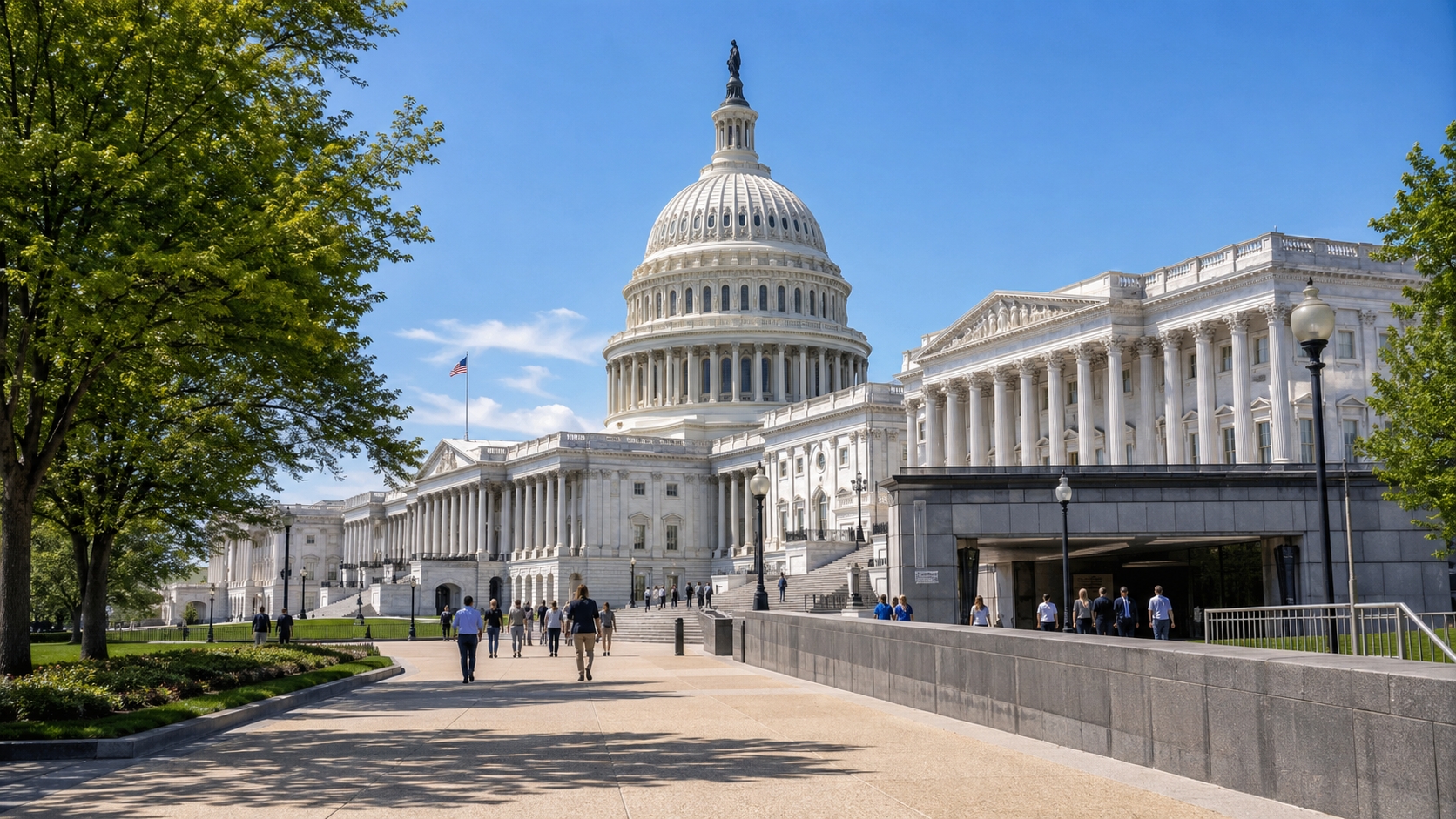
How to Visit the United States Capitol Building
Planning a visit to the United States Capitol is more than checking a landmark off your list. The Capitol is the seat of the U.S. Congress and a living symbol of American democracy. Touring this neoclassical masterpiece isn’t difficult or expensive—the building is open to the public, tours are free and reservations are recommended. All visitors pass through security, and the Capitol Visitor Center provides a welcome orientation space with exhibits, dining options and amenities. This guide covers everything you need to know about touring the Capitol, from history and tickets to transportation, nearby attractions and accommodations.
Historical Roots and Symbolic Significance of the U.S. Capitol
The story of the Capitol begins in 1793 when President George Washington laid its cornerstone in a ceremony filled with civic pride and pomp. The site, perched on a plateau at the eastern end of the National Mall and commanding a westward view toward the Washington Monument and Lincoln Memorial, was chosen to symbolize the aspirations of a new nation. William Thornton’s design—neoclassical in style—placed a shallow domed rotunda between the Senate (north) and House (south) wings.
Construction proceeded slowly under several architects. Early work included the Senate wing, completed by James Hoban in 1800, and the House wing, completed by Benjamin Henry Latrobe in 1811. During the War of 1812 British troops set fire to the building, but rain spared it from total destruction. A new dome and extensive additions followed in the mid‑19th century to accommodate a growing Congress. Today the Capitol covers over 1.5 million square feet with more than 600 rooms and miles of corridors. Its white cast‑iron dome—completed in 1866—has become one of the world’s most recognized architectural icons.
Beyond its architectural grandeur, the Capitol remains a working building. Here the Senate and House of Representatives meet to debate, craft and pass laws. The structure is also a museum of American art and history, containing priceless paintings, statues and exhibits. Understanding this dual role—functioning legislature and living museum—adds depth to any visit.
Highlights of the Building’s Architecture
- Neoclassical design: Inspired by ancient Greek and Roman temples, the Capitol’s columns, pediments and dome evoke ideals of democracy, stability and order.
- Rotunda: The Rotunda sits beneath the dome and serves as the ceremonial heart of the building. The fresco on its ceiling, The Apotheosis of Washington, shows President Washington rising to the heavens with Liberty and Victory beside him. Murals around the walls depict pivotal events such as the signing of the Declaration of Independence and General Washington’s resignation.
- National Statuary Hall: Once the House chamber, this semicircular hall now holds statues donated by each state. Its acoustics allow whispers to carry, a quirk often demonstrated during tours.
- Crypt and Hall of Columns: Beneath the Rotunda, the Crypt displays exhibits on the Capitol’s construction and houses the massive sandstone columns of the old House chamber.
- Old Supreme Court Chamber and Old Senate Chamber: Restored to their 19th‑century appearance, these rooms offer glimpses of earlier eras.
Planning Your Tour: Reservations, Tickets and Timing
Free guided tours of the Capitol are offered Monday through Saturday from 8:30 a.m. to 3:20 p.m.; the Capitol and Visitor Center are closed on Sundays, Thanksgiving Day, Christmas Day and New Year’s Day. Here’s how to secure your place and make the most of your visit.
Booking Your Tour
Tours are popular, especially during spring and summer, so reservations are highly recommended. You can reserve a timed‑entry pass online through the U.S. Capitol Visitor Center up to 90 days in advance. If you prefer a personal touch, contact the office of your Senator or Representative; many Congressional offices arrange tours for constituents. Limited same‑day passes may be available by waiting in line at the Visitor Center, but lines can be long during peak seasons.
Once you have a reservation, print your confirmation or bring the reservation number. Arrive at least 60 minutes before your scheduled time to allow for security screening. Tours begin with a 13‑minute orientation film and then proceed on a 45‑minute guided walk through public areas. All tours begin and end at the Visitor Center and are led by professional guides.
Tour Types and Specialty Experiences
In addition to the general tour, the Capitol Visitor Center offers specialty tours focusing on the Halls of the Senate, the history of women’s suffrage, Indigenous Peoples in Capitol art and civil rights heroes. These tours are available Monday through Friday and require same‑day passes from the North Information Desk. Tour routes can change without notice because of Congressional activity, so flexibility is important.
Hours and Best Times to Visit
The Visitor Center is open from 8:30 a.m. to 4:30 p.m. Monday through Saturday. To avoid crowds, book your tour for weekday mornings. Spring and summer are busy, particularly around school breaks; winter and fall tend to be quieter. If you arrive without a reservation, early mornings offer the best chance of securing same‑day passes.
Summary of Tour Booking Steps
- Choose your date: Tours can be reserved up to 90 days out.
- Reserve online: Visit the U.S. Capitol Visitor Center to select a time slot.
- Contact your representative: Alternatively, request a tour through your Congressional office.
- Arrive early: Plan to be at the Visitor Center an hour before your tour for security screening.
- Enjoy the tour: Follow your guide through the film, Rotunda, National Statuary Hall, Crypt and connecting corridors.
What to Expect: Security Screening and Visitor Guidelines
The Capitol is a working federal building, so visitors must clear security similar to airport screening. To ensure an efficient process and protect this historic site, adhere to the following guidelines.
Security Screening
All visitors enter through the Capitol Visitor Center, located underground on the east side of the Capitol at First Street and East Capitol Street. U.S. Capitol Police screen guests and belongings with magnetometers and X‑ray machines. Lines can be long during peak times; arriving early helps avoid delays.
Prohibited Items
For safety, many items cannot be brought into the Capitol complex. The list includes:
- Weapons and ammunition: Firearms, replicas, explosives, flares and anything capable of expelling a projectile are banned.
- Dangerous objects: Knives, sharp tools, impact weapons, disabling chemicals and realistic replicas of weapons are prohibited.
- Large containers: Bags larger than 18 inches wide by 14 inches high by 8.5 inches deep are not allowed.
- Food and beverages: No food or drinks may be brought inside, although empty containers are permitted.
- Animals: Only service animals are allowed.
- Strollers and selfie sticks: Strollers are permitted in the Visitor Center but not in the galleries; selfie sticks may be carried but cannot be used.
Exceptions for medical or child‑care needs may be granted by the Capitol Police. Review the full prohibited items list on the U.S. Capitol Visitor Center website before your visit.
Visitor Etiquette
Inside the Capitol, maintain a respectful demeanor. Smoking is prohibited throughout the Visitor Center, and cell phones should be silenced during tours. Photography may be restricted in certain areas; follow instructions from your guide. Because the Capitol is an active workplace, some spaces may be closed without notice. Your cooperation helps preserve the building for future generations.
Access and Inclusivity: Making the Capitol Accessible to All
The Capitol strives to welcome visitors of every ability. The Visitor Center and tour route are fully accessible, and a range of services ensures that everyone can enjoy the experience.
Accessibility Services
- Wheelchairs and mobility devices: The Visitor Center offers wheelchairs for visitors. The entire tour route is wheelchair accessible. An on‑demand shuttle runs from the southwest corner of Capitol Square at Independence Avenue and First Street SW to the east plaza entrance; it is available for guests with mobility challenges.
- Adaptive tours: Tours for visitors with disabilities include tactile exhibits and descriptive narration. Sign‑language interpretation is available upon request.
- Captioning: All films shown at the Capitol have open captioning.
- Service animals: Service animals are welcome throughout the Visitor Center and the Capitol.
- Accessible restrooms: Family restrooms with baby‑changing stations and accessible facilities are located throughout the Visitor Center.
Tips for Visitors with Disabilities
- Request assistance in advance: Contact the Office of Congressional Accessibility Services at 202‑224‑4048 to arrange shuttles or specific accommodations.
- Bring necessary medications: If you require medication or medical devices, inform security; items required for medical reasons are permitted.
- Check tour availability: Some specialty tours may not accommodate large wheelchairs. Inquire ahead of time to ensure your needs can be met.
Getting There: Directions, Metro Stops and Transportation Options
Planning how to reach the Capitol is crucial, especially if you’re unfamiliar with Washington, DC. Because parking near the Capitol is extremely limited, using public transit or arriving on foot is recommended.
Location
The Capitol grounds sit at the far eastern end of the National Mall, bordered by Constitution Avenue to the north and Independence Avenue to the south. The main visitor entrance is beneath the East Front plaza at First Street and East Capitol Street. This location places the Capitol within walking distance of many other landmarks, including the Supreme Court, Library of Congress and the U.S. Botanic Garden.
By Metro
Washington’s Metrorail system is the easiest way to reach the Capitol. Three stations are within a short walk:
| Metro station | Lines | Location | Approx. walk |
|---|---|---|---|
| Union Station | Red Line | First Street NW & Massachusetts Avenue | ~10 minutes north |
| Capitol South | Orange, Silver & Blue Lines | First Street between C & D Streets SE | ~5 minutes southeast |
| Federal Center SW | Orange, Silver & Blue Lines | Third & D Streets SW | ~10 minutes southwest |
When exiting the stations, follow signs toward the Capitol. Metrorail schedules and fares are available on the Washington Metropolitan Area Transit Authority website.
By Bus and Bicycle
Several Metrobus routes stop near the Capitol, and the DC Circulator’s National Mall route serves the area. For cyclists, bicycle racks are located near the entrance along First Street SE and NE. The city’s Capital Bikeshare program allows riders to pick up a bike from more than 350 stations across the region and drop it near their destination.
By Car
Driving to the Capitol is not recommended; public parking is scarce. The nearest public garage is at Union Station. Metered street parking exists along the Mall, but restrictions are strictly enforced. Tour buses must follow specific routes and loading zones and may not park on First or Second Streets.
Walking from Nearby Points
If you’re staying in downtown Washington, walking is pleasant and often quicker than driving. From the White House area, stroll east along Pennsylvania Avenue until it becomes Constitution Avenue or continue through Lafayette Square toward the Supreme Court. The Capitol grounds are open to visitors during daylight hours.
Inside the U.S. Capitol: Highlights of Your Tour
Once inside, your guide will take you through a sequence of spaces that reveal the Capitol’s art, history and symbolism. Guided tours begin with a 13‑minute orientation film that explains the building’s role in the nation’s democratic process. Afterward you’ll explore these highlights:
The Rotunda
The Rotunda lies beneath the dome and is a circular room encircled by paintings and sculptures. Your guide will explain how the acoustics allow whispers from one side to be heard on the other. Look up to see The Apotheosis of Washington, painted by Constantino Brumidi in 1865, and survey paintings depicting the Declaration of Independence, the Landing of Columbus and other pivotal events.
National Statuary Hall
Formerly the House chamber, this semicircular hall holds statues of famous citizens donated by each state. The polished floor and domed ceiling create an echo effect, and guides often demonstrate how words spoken softly can be heard across the room. Among the statues, look for Rosa Parks, King Kamehameha I and Helen Keller.
The Crypt
Beneath the Rotunda lies the Crypt, a series of 40 sandstone columns arranged in a circle. This space once supported the dome and now features exhibits on the Capitol’s construction and the compass stone marking the city’s center. The floor’s compass design radiates lines representing the District’s four quadrants.
Connecting Corridors and Other Highlights
As you move through the building you’ll see the Brumidi Corridors, decorated with vibrant frescoes depicting flora, fauna and historical scenes. You may visit the Old Supreme Court Chamber, used until 1935, or the Old Senate Chamber, which has been restored to its 1859 appearance. Because tour routes vary depending on Congressional activity, some rooms may not be accessible.
Gallery Passes to See Congress in Session
The guided tour does not include admission to the House or Senate galleries. To watch Congress in action, you need a separate gallery pass. Citizens can request passes from their Representative or Senators; many offices maintain forms on their websites. International visitors can ask for passes at the House and Senate Appointment Desks on the Visitor Center’s upper level. When Congress is in session, the galleries are open during scheduled hours; during recesses they typically operate Monday through Friday. Always check with your Congressional office for current schedules, as hours may change without notice.
Amenities at the U.S. Capitol Visitor Center
The Capitol Visitor Center, opened in 2008, is nearly three‑quarters the size of the Capitol itself. It serves as both an orientation hub and a cultural space.
Exhibition Hall
The Exhibition Hall displays artifacts, documents and interactive exhibits illustrating the history of Congress and the legislative process. Models of the Capitol show its evolution from 1793 to the present. Exhibits change periodically, so repeat visitors may find new displays.
Gift Shops and Dining
Two gift shops sell books, jewelry and souvenirs inspired by Capitol art and architecture. The restaurant offers continental breakfast from 8:30 a.m. to 11 a.m. and lunch from 11 a.m. to 4 p.m.. Because no outside food is allowed, many visitors plan to eat here before or after their tours.
Additional Services
- Information desks: Staff provide maps, schedules and assistance with tour arrangements.
- Free listening devices: Available in multiple languages for international visitors.
- ATM machines: Located outside each gift shop.
- Restrooms: Family restrooms with changing stations are available.
Beyond the Capitol: Exploring Capitol Hill and Nearby Landmarks
The Capitol anchors a neighborhood rich in history and culture. Extend your visit by exploring nearby institutions that complement your tour.
Supreme Court of the United States
Across First Street NE stands the Supreme Court, the highest court in the land. Visitors can tour the marble building, attend lectures about the judicial system and, when the Court is in session, watch oral arguments. Admission is free and same‑day passes are distributed on a first‑come basis.
Library of Congress
The Library of Congress Jefferson Building is one of the most beautiful libraries in the world. Tour its historic reading rooms, view exhibitions such as Thomas Jefferson’s library and the Gutenberg Bible, and learn how the library preserves America’s written heritage. Free timed‑entry passes are required and can be reserved online.
U.S. Botanic Garden
Located on the Capitol’s southwest side, the Botanic Garden showcases thousands of plant species in glass conservatories and outdoor gardens. It offers a peaceful respite after touring the Capitol. Admission is free; check seasonal exhibits for special displays.
National Mall and Monuments
West of the Capitol stretches the National Mall, a green expanse lined with monuments and memorials. From the Washington Monument and World War II Memorial to the Lincoln Memorial, the Mall encapsulates America’s story. Most monuments are open 24 hours a day and are illuminated at night for dramatic views.
Neighborhood Dining and Culture
Capitol Hill’s streets are filled with cafes, restaurants and markets. Eastern Market, housed in a 19th‑century brick building, offers farm‑fresh produce, crafts and prepared foods. Barracks Row on Eighth Street SE features restaurants ranging from casual eateries to gourmet dining. These neighborhoods provide a taste of local life beyond the political bustle.
Where to Stay: The Best Hotels Near the Capitol
Location matters when visiting Washington, DC. Staying near the center allows you to spend more time exploring and less time commuting. Among downtown hotels, Hotel Washington stands out for its proximity to iconic sites and its blend of historic charm and modern luxury.
Hotel Washington: Steps from the White House and National Mall
Hotel Washington is located on Pennsylvania Avenue at the edge of the White House lawn. This unrivaled position makes it the closest hotel to the White House and one of the most strategically placed hotels for visitors who want to explore DC on foot. Guests can step out the door and stroll to the White House, the Washington Monument or the National Mall in minutes. Being centrally located also means it’s easy to reach the U.S. Capitol via a short walk or a quick Metro ride.
Features and Amenities
Hotel Washington occupies a historic building that has welcomed guests for more than a century. Inside, its buzzing lobby, art‑filled corridors and rooftop bar create a sophisticated yet approachable atmosphere. Guest rooms are designed as urban retreats with plush bedding, modern décor and city views. On the 11th floor, the VUE Rooftop Bar offers cocktails named after famous visitors and panoramic views of the monuments, while Fireclay® restaurant serves seasonal dishes over an open fire. The hotel’s spa provides massages, facials and wellness treatments to help guests recharge between sightseeing adventures.
Ideal Base for Capitol Visits
Because Hotel Washington is within walking distance of the White House and National Mall, guests can easily add a Capitol tour to their itinerary. Start your morning with a leisurely walk east along Pennsylvania Avenue, stopping at Lafayette Square or the Treasury Building, then continue toward the Capitol. After the tour, return to the hotel for lunch on the rooftop or explore nearby museums and neighborhoods. The central location minimizes travel time and maximizes your experience.
Seasonal Strategies: The Best Times to Visit the Capitol
Washington’s weather and tourist seasons can influence your experience at the Capitol. While tours are available year‑round, timing your visit can help you avoid crowds and enjoy comfortable temperatures.
Spring and Summer
Spring brings cherry blossoms and mild temperatures, but it’s also peak tourist season. Tours can fill quickly, and security lines may be longer. Book reservations well in advance and consider early morning time slots. Summer offers extended daylight hours but often includes high humidity and afternoon thunderstorms. Bring water, wear breathable clothing and use sunscreen.
Autumn and Winter
Fall may be the most pleasant season to visit. Temperatures cool down, foliage turns vibrant and crowds thin. Winter is the quietest season; although cold temperatures require warm clothing, you’ll enjoy shorter lines and a more serene atmosphere. The Capitol is closed on Thanksgiving, Christmas and New Year’s Day, so plan around those holidays.
General Tips
- Avoid federal holidays and inauguration days: Tours are suspended on Inauguration Day and may be limited around major events.
- Check the calendar: Special events may close parts of the building with little notice. Visit the Capitol’s official website before your trip to confirm availability.
- Dress comfortably: You’ll walk and stand for extended periods; comfortable shoes and weather‑appropriate attire are essential.
- Travel light: Leave large bags at your hotel to speed up security screening.
Frequently Asked Questions
How do I book a tour of the U.S. Capitol? Use the online reservation system on the U.S. Capitol Visitor Center website. Tours can be booked up to 90 days in advance. Alternatively, contact your Congressional office for a constituent tour.
Do I need tickets to visit the Capitol? Yes. While admission is free, a timed‑entry ticket is required to enter the tour. Same‑day tickets may be available, but reservations are strongly recommended.
What items are prohibited inside the Capitol? Weapons, sharp objects, large bags, food and beverages are not allowed. Review the Capitol’s prohibited items list before arriving.
Are tours accessible for visitors with disabilities? Yes. Tours are fully accessible, and services such as wheelchairs, sign‑language interpretation and open captioning are available. An on‑demand shuttle assists those with mobility challenges.
Can I watch Congress in session? You can obtain free passes to the House and Senate galleries through your Senator or Representative. International visitors can request passes at the Visitor Center. Guided tours do not include the galleries.
What’s the difference between the Capitol and the Capitol Visitor Center? The Visitor Center is a 580,000‑square‑foot facility built beneath the Capitol’s east plaza. It houses exhibits, theaters, dining and tour check‑in. All tours begin and end here.
How long does a tour last? The orientation film and guided walking tour together last about 45 minutes. Allow additional time for security screening and exploring the Visitor Center exhibits.
Is photography allowed? Photography is generally permitted in public spaces, but some areas may have restrictions. Always follow the instructions of Capitol staff and guides.
Closing Thoughts
Visiting the U.S. Capitol is a powerful way to connect with American history and witness democracy in action. With thoughtful planning—reserving your tour, arriving early, traveling light and respecting security guidelines—you’ll enjoy a smooth and memorable experience. Combine your visit with nearby attractions like the Supreme Court, Library of Congress and National Mall to deepen your appreciation of the nation’s capital. For a seamless stay, consider making Hotel Washington your base; its unbeatable location at the edge of the White House lawn makes exploring Washington, DC effortless and elegant.
Read other posts