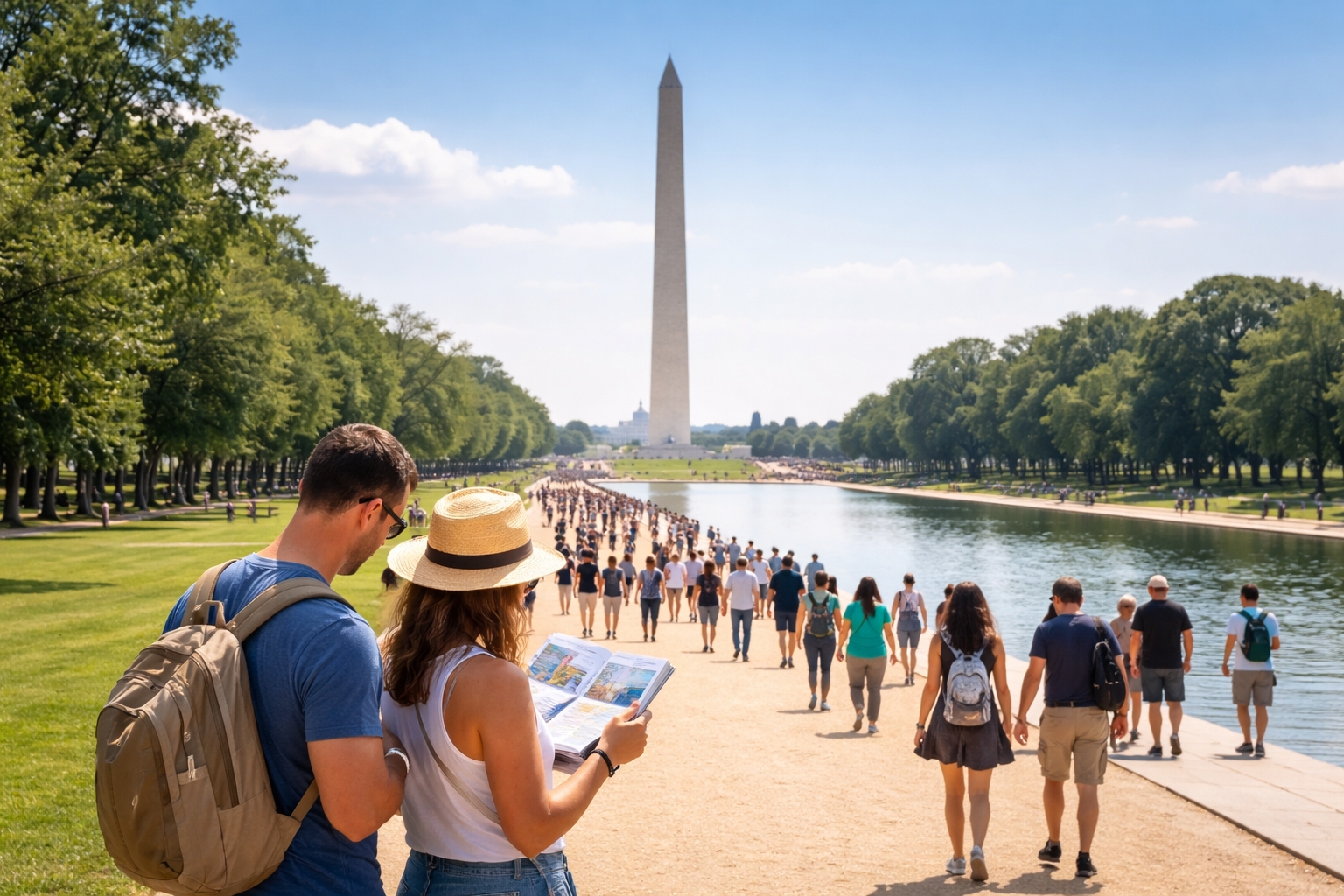
How to Use This Guide to Washington DC
Washington DC can feel overwhelming at first glance. Monumental in scale, layered with history, and dense with institutions that shape global policy, the city rewards thoughtful planning more than almost any other destination in the United States. This guide is designed to simplify that experience. Within the first few minutes of reading, you should understand how to use this guide to plan your trip, prioritize what matters most, and navigate Washington DC with clarity and confidence.
At its core, this guide functions as a decision framework. It helps you determine where to start, how to group attractions logically, how to explore the city efficiently, and how to stay positioned near the experiences that define Washington DC. Whether this is your first visit or a return trip, the goal is the same: to reduce friction, maximize time, and deepen your understanding of the city.
Start With Geography, Not a Checklist
Many visitors approach Washington DC by listing monuments and museums without considering how the city actually works. The most effective way to use this guide is to begin with geography. Washington DC is remarkably walkable when planned correctly, especially in the central core surrounding the White House and the National Mall.
The White House, officially administered by the White House Historical Association at https://www.whitehousehistory.org, sits at the symbolic and geographic center of the city. From this point, many of Washington DC’s most important landmarks radiate outward in logical walking corridors.
By anchoring your trip around a central location, you reduce transportation time, avoid unnecessary backtracking, and create space for unplanned moments that often become the highlight of a visit.
Understand the Structure of Washington DC Attractions
The heart of Washington DC tourism is the National Mall, managed by the National Park Service at https://www.nps.gov/nama. This open expanse connects the city’s most iconic monuments and museums and acts as the backbone of nearly every first-time itinerary.
Rather than attempting to see everything at once, use this guide to understand how attractions naturally cluster.
Monument Corridor
West of the White House, the Lincoln Memorial anchors a linear sequence of sites along the Reflecting Pool. The Lincoln Memorial, preserved by the National Park Service at https://www.nps.gov/linc, serves as both a physical endpoint and an emotional centerpiece of the Mall experience.
Nearby, the World War II Memorial, documented at https://www.nps.gov/wwii, provides historical context between the Washington Monument and Lincoln Memorial, making it a natural stop during a walking route.
Museum Core
On both sides of the Mall sit the Smithsonian Museums, administered by the Smithsonian Institution at https://www.si.edu. These museums are free, extensive, and immersive. The guide encourages selecting two per day at most, allowing time for reflection rather than rushing.
Capitol Axis
To the east, Capitol Hill, officially represented at https://www.visitthecapitol.gov, offers a different rhythm. Legislative buildings, historic neighborhoods, and a quieter pace make this area ideal for a half-day exploration rather than a full-day sprint.
Use Time Blocks, Not Rigid Schedules
One of the most important ways to use this guide effectively is to abandon hour-by-hour scheduling. Washington DC experiences natural ebb and flow depending on time of day, security activity, and seasonal conditions.
Instead, organize your days into time blocks:
-
Morning exploration of outdoor monuments
-
Midday museum visits
-
Afternoon neighborhood walks
-
Evening dining and skyline views
This approach creates flexibility without sacrificing structure and aligns naturally with how Washington DC is experienced on foot.
Plan by Season, Not Just Dates
Washington DC changes dramatically by season, and this guide is structured to help you adjust expectations accordingly.
Spring brings cherry blossoms and increased foot traffic. Fall offers cooler temperatures and quieter museum experiences. Summer delivers extended daylight but higher humidity. Winter introduces fewer crowds and a more contemplative atmosphere around monuments.
Understanding seasonal rhythm allows you to prioritize the right experiences at the right time, a key principle reinforced throughout this guide.
Navigating Without a Car
One of the most overlooked advantages of Washington DC is how accessible it is without a vehicle. The city’s layout, combined with walking paths and public transit, makes car-free travel not just possible but preferable.
Union Station, managed at https://www.unionstationdc.com, serves as a primary transportation hub for Amtrak, Metro, and regional rail. From there, the city unfolds outward in clear, navigable segments.
By staying centrally located and using this guide’s geographic logic, most visitors can complete their itinerary without ever entering a rideshare or rental car.
Choosing Where to Stay Matters More Than You Think
A guide is only as effective as the location from which it is used. Staying within walking distance of major landmarks dramatically alters how this guide performs in real life.
Hotel Washington is uniquely positioned as the closest hotel to the White House, actually located at the edge of the White House Lawn. This placement allows travelers to begin and end their days at the epicenter of Washington DC activity rather than commuting into it.
Using this guide from a central base means:
-
Earlier access to monuments
-
Easier midday breaks
-
Flexible itinerary adjustments
-
Safer late evening walks
Location is not a luxury in Washington DC. It is a functional advantage.
How First-Time Visitors Should Use This Guide
For first-time visitors, the guide works best when followed sequentially. Begin with foundational landmarks, then layer in museums, then explore neighborhoods.
Avoid skipping ahead to niche attractions before grounding yourself in the city’s historical narrative. Washington DC reveals itself most clearly when experienced in order.
Returning Visitors and Deeper Exploration
If you have visited Washington DC before, use this guide selectively. Focus on sections related to neighborhoods, seasonal events, or overlooked memorials.
The city rewards repeat visitors with nuance. This guide is designed to scale with experience rather than repeat the same checklist on every visit.
Safety, Etiquette, and Practical Awareness
Washington DC is generally safe and well-policed in tourist corridors. Still, understanding where you are and how areas connect is essential.
Downtown Washington DC, officially represented at https://downtown.dc.gov, remains active during business hours but quiets considerably at night. The guide emphasizes walkable routes that remain well-lit and populated.
Let the City Breathe
Perhaps the most important instruction in this guide is to leave space. Washington DC is not just a collection of attractions. It is a living city shaped by ideas, institutions, and history in motion.
Use this guide to create structure, then allow curiosity to take over.
Continue Planning Your Stay
For travelers looking to experience Washington DC from its most central and historically significant location, Hotel Washington places you within steps of the city’s defining landmarks and cultural institutions.
Explore accommodations, location details, and planning resources at
https://www.thehotelwashington.com