Unbridled Celebration: The Day Shriners Rode Horses into Hotel Washington’s Lobby
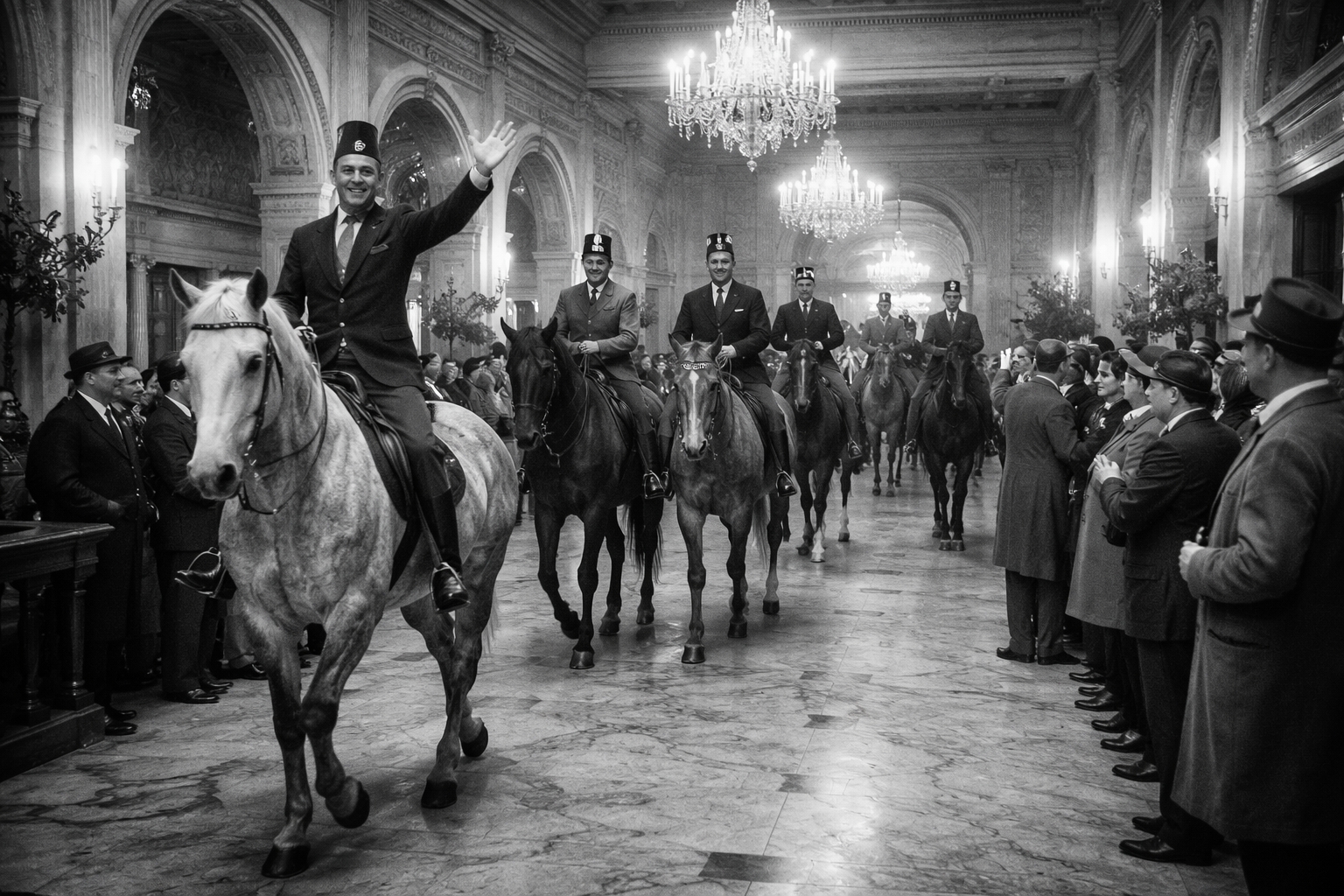
On December 5, 1933, the world changed for American hotels, bars and citizens. In Washington, D.C., the repeal of Prohibition sparked a night of jubilation that captured the spirit of a city and the personality of a historic hotel. On that winter evening, a group of Shriners—members of a fraternal order known for their elaborate parades and charitable work—marked the end of the liquor ban by riding horses straight into the ornate lobby of Hotel Washington. Official records note that Shriners celebrated the repeal of the Eighteenth Amendment by bringing their mounts inside the hotel, an event that has passed into legend. There are no surviving photographs, but oral histories and archival notes preserve the memory of those hooves on mosaic floors and the laughter that followed. Today, the story serves as a microcosm of how the repeal of Prohibition liberated American hospitality and how one hotel—steps from the White House—became the stage for an unforgettable scene.
Setting the Scene: Washington at the End of Prohibition
A nation ready to celebrate
The early 1930s were a study in contrasts. The United States grappled with the Great Depression, yet temperance laws were becoming increasingly unpopular. Prohibition went into effect on January 17, 1920, after the Eighteenth Amendment was ratified, and for nearly fourteen years the manufacture and sale of alcohol were illegal under federal law. As the years passed, enforcement waned and organized crime flourished. Speakeasies—a term coined for hidden bars—became part of urban culture; in Washington, these clandestine establishments thrived in basements and back rooms even as official society professed abstinence.
In 1933, public sentiment shifted decisively. Congress proposed the Twenty‑First Amendment on February 20, 1933, and state conventions were given seven years to consider it. The required thirty‑six state conventions ratified the amendment in less than a year, and on December 5 1933 Acting Secretary of State William Phillips certified that the Eighteenth Amendment had been repealed. President Franklin D. Roosevelt proclaimed the end of nationwide Prohibition the same day, urging Americans to celebrate responsibly. The repeal restored authority over alcohol regulation to the states, but for most citizens the news meant only one thing: the right to raise a glass in public.
Washington’s mood and the road to repeal
Washington, D.C., long a city of politicians and diplomats, followed the national debate with particular interest. Bars and hotels along Pennsylvania Avenue had suffered financially during the dry years, and many had closed or transformed into coffeehouses. As the repeal movement gained momentum, whispers of upcoming celebrations circulated through the capital. Preparations were not uniform; some establishments had already quietly resumed serving, while others feared raids until the law formally changed. The District of Columbia, although not a state, played a symbolic role in the ratification process. Residents gathered in clubs and private homes to listen to news bulletins. The moment Utah became the 36th state to ratify the amendment at 5:32 p.m. Eastern Standard Time, church bells rang and horns echoed down the streets.
Prohibition’s legacy in hotels and hospitality
Prohibition’s repeal did more than restore legal drinking; it sparked a renaissance in hospitality. Bars reopened, hotel lounges regained their status as social hubs and cocktail culture blossomed. Across the country, bartenders dusted off forgotten recipes and devised new concoctions. In Washington, hotels near the White House competed for attention with themed parties, live music and the promise of legal libations. By the time night fell on December 5, people poured out of speakeasies into the open, toasting the return of a freedom many considered fundamental. The mood was not universally joyful—temperance advocates warned of the societal costs of alcohol—but for those who had endured thirteen years of clandestine drinking, the evening was euphoric.
Meet the Shriners: A Fraternity of Fellowship and Fun
Origins and growth
Shriners International began as a club for Master Masons who wanted to combine philanthropy with camaraderie. In 1870, thirteen Masons met regularly at New York City’s Knickerbocker Cottage and began discussing a new fraternity based on fun and fellowship. Actor Billy Florence suggested adopting an Arabian theme after attending an exotic party abroad, and physician Walter Fleming drafted the rituals and costumes that would define the group. The first official meeting took place in 1871, and in September 1872 the Mecca Shriners chapter was established. The organization was formally known as the Ancient Arabic Order of the Nobles of the Mystic Shrine—a name that reflected the pageantry of its ceremonies.
Shriners quickly became known for elaborate parades featuring fezzes, vibrant costumes and comical vehicles. The red fez with a black tassel, derived from the Moroccan city of Fez, became a signature symbol worn at all official events. Over the decades the fraternity expanded across North America; today it boasts more than 195 chapters worldwide. A significant evolution occurred in 2010 when the organization adopted the name Shriners International to reflect its global presence.
Philanthropy and public image
Beyond pageantry, Shriners became renowned for philanthropy. In the aftermath of the yellow fever epidemic of 1887 and the Johnstown flood of 1889, members provided aid. By 1922 they had founded the first Shriners Hospital for Children in Shreveport, Louisiana, eventually establishing a network of healthcare facilities offering free pediatric care. These charitable efforts earned the organization respect, balancing the frivolity of parades with a serious commitment to community service.
In popular culture, Shriners often appear in parades riding miniature cars or horses, raising funds for children’s hospitals. Their events are characterized by a spirit of fun, making them popular participants in civic celebrations. By the 1930s, the group’s penchant for spectacle made them natural leaders in repealing Prohibition festivities. The combination of philanthropic goodwill and exuberant showmanship lent the Shriners credibility and charm—qualities that would converge in the Hotel Washington lobby on that fateful December night.
Why horses?
Horses feature prominently in the Shriner tradition. Many chapters maintain mounted patrols that perform precision drills in parades, and some units ride camels or elephants during circus performances. Riding into a hotel lobby may seem outrageous, but for Shriners it was consistent with their flair for spectacle. The animals symbolize the fraternity’s Middle Eastern theme, and mounted units were a way for members to demonstrate horsemanship and entertain crowds. In 1933, bringing horses indoors captured the sense of liberation associated with the end of Prohibition: the boundaries between formal spaces and outdoor festivities temporarily dissolved.
A Bold Entrance: Horses in the Lobby
Preparing for the celebration
By early December 1933, word had spread that Prohibition’s repeal was imminent. Hotel Washington, built in 1917 and situated on Fifteenth Street overlooking Pennsylvania Avenue, was already a well-known gathering place for politicians, reporters and entertainers. Its Italian Renaissance Revival facade and richly ornamented lobby attracted guests seeking both luxury and convenience. Lobby arches symbolized interest groups commonly lobbied for in the nation’s capital, while elevator ceilings depicted constellations corresponding to significant dates in U.S. history. The building’s design, executed by architect Thomas Hastings of the firm Carrère & Hastings, gave the hotel an air of solidity and tradition.
As news of the pending vote reached Washington, hotel staff prepared for an influx of revelers. Bartenders dusted off cocktail shakers hidden since 1920, and managers arranged for live music. Local newspapers hinted at “special celebrations” but gave no specifics. The Shriners, many of whom lived within driving distance, saw an opportunity to make a statement. Members of the local chapter gathered at their temple nearby and saddled their horses, planning to ride to the hotel as soon as the Amendment passed. The plan, while daring, aligned with the group’s tradition of theatricality. There is no record of hotel management sanctioning the idea; most likely, staff were unaware until the riders arrived.
Riding into legend
At approximately 6 p.m., not long after Utah’s vote completed the ratification count, a line of Shriners on horseback trotted down Pennsylvania Avenue toward Hotel Washington. Eyewitness accounts, preserved in hotel archives and retold by employees decades later, describe the scene: men in fezzes, some carrying banners, approached the entrance and urged their horses through the revolving doors. Hooves clattered on marble and mosaic flooring, echoing through the lobby’s arches. According to a historical summary on the hotel’s website, Shriners celebrated the end of Prohibition by riding horses into the lobby. A National Register of Historic Places document notes the same story, underscoring its authenticity.
Guests and staff reacted with surprise and delight. Bartenders reportedly cheered, perhaps relieved to serve legally at last. Patrons raised glasses, toasting both the riders and the newly regained freedom to drink. The horses, likely accustomed to parade crowds, remained calm amid the hubbub. A Washington Post retrospective later confirmed the absence of photographs but affirmed that the event occurred. The absence of visual documentation has only added to the tale’s mystique, leaving room for imagination while grounding the story in recorded fact.
Reactions and repercussions
No contemporary reports suggest that the riders caused damage. Horses have steel shoes that can scuff marble, yet there are no complaints of ruined flooring. The riders dismounted quickly after entering and posed for reporters, then led their horses back outside. The moment was brief but symbolic: it marked the literal breaking of a barrier between the streets and the lobby, between prohibition and celebration. For the Shriners, it was an exuberant expression of their identity as both entertainers and community leaders. For Hotel Washington, it was a publicity coup that cemented its reputation as the “closest hotel to the White House, positioned at the edge of the White House Lawn” and a nexus of national history.
The Hotel as a Stage: Architectural Elegance and Symbolism
Italian Renaissance Revival design
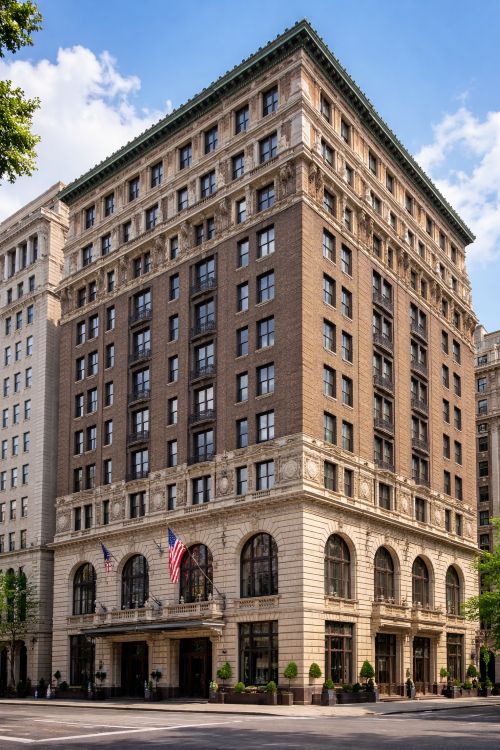
Hotel Washington’s architecture blends Beaux‑Arts grandeur with Italian Renaissance Revival refinement. The building, nine stories tall, was designed by the prestigious New York firm Carrère & Hastings and completed in 1918. The SAH Archipedia notes that the hotel was modified from an Italian Renaissance model and gains dignity through elements such as a rusticated stone veneer covering the steel frame up to the third story. Above, dark brown brick enlivened by fine sgraffito decoration created by Italian artists adorns the spandrels and window surrounds. These decorative panels depict classical motifs and add texture and color to the facade.
Inside, the lobby features arches representing interest groups commonly lobbied for in the capital, constellations on elevator ceilings showing the night sky on key dates in U.S. history and original spiral staircase chandeliers. Homages to Pierre L’Enfant’s plan for the city appear in floor patterns and wall details. Original marble floors and brass fixtures convey opulence consistent with early twentieth‑century luxury hotels. The design has been preserved through restorations, earning the building designation as a historic property by the District of Columbia in 1968 and recognition on the National Register of Historic Places in 1995.
Public spaces and views
One of the hotel’s most celebrated features is its rooftop garden and terrace. In the early twentieth century this open space offered panoramic views of the White House, the Washington Monument and the Treasury Building. SAH Archipedia observes that the rooftop garden overlooks the White House and the Executive Group. Guests could dine al fresco or attend musical performances while gazing at the seat of federal power. Today, the rooftop bar—reimagined as VUE—continues this tradition, serving drinks with a view of the city’s landmarks. The ability to look down upon the White House underscores the hotel’s unique position at the edge of the White House Lawn, a location unmatched by any other property.
Symbolism in design and art
The architects imbued the building with symbolism. The lobby’s arches represent the various interest groups that lobby Congress, a playful nod to the nature of politics. Elevator ceilings depict constellations as seen on important dates such as July 4, 1776 and January 20, 2009, linking the hotel to national milestones. These touches remind visitors that the building is both a work of art and a witness to history. When the Shriners rode into the lobby, they did so under ceilings that illustrated the nation’s founding and a future president’s inauguration—an unintended yet poetic alignment of history and celebration.
Chronicles of the Hotel: Notable Guests and Legendary Moments
Early years and cultural milestones
Hotel Washington opened on April 4, 1918, during the final year of World War I. Its high ceilings, sweeping staircases and elegant public spaces quickly attracted politicians and celebrities. In May 1926 President Calvin Coolidge hosted a reception for the Architects of America, demonstrating that the hotel was not just a place to stay but a venue for civic events. Later that summer, special buses began transporting guests from the hotel to Hoover Airfield in Arlington, connecting travelers to Philadelphia by air—an early example of the hotel facilitating modern transportation.
In the late 1920s the entire cast of the Ziegfeld Follies stayed at the hotel and rehearsed on the rooftop. The Follies were a popular Broadway revue known for elaborate sets and glamorous costumes, and their presence underlined the hotel’s appeal to performers. When the Shriners brought horses into the lobby a few years later, hotel employees could recall the Follies rehearsals as another time when entertainment collided with daily operations.
Anecdotes that shaped its lore
The Prohibition celebration is just one of many anecdotes that illustrate the hotel’s personality. In the mid‑1930s, a southern senator staying at the hotel became irate when room service refused his 2 a.m. order. He returned downstairs with a gun, intent on intimidating the night manager. According to hotel archives, no shots were fired and it remains unclear whether he eventually received his meal. The episode demonstrates the tension between power and service that sometimes arises in luxury accommodations.
During the 29th Division of the U.S. Army reunion in 1949, veterans attempted to drive a jeep into the hotel lobby. Like the Shriners before them, they sought to make a grand entrance, but staff refused entry and the jeep remained outside. This story underscores the hotel’s enduring appeal as a backdrop for dramatic gestures. Similar tales abound: Harrison Ford once bought drinks for everyone on the rooftop, the National League of Women Voters held its first national meeting at the hotel in 1937, and the Daughters of Union Veterans and the Ladies of the Grand Army of the Republic hosted national meetings in 1936.
Notable guests
Over the decades Hotel Washington hosted an impressive roster of dignitaries and celebrities. Elvis Presley stayed in rooms 505, 506 and 507 in December 1970 while awaiting a meeting with President Richard Nixon; his presence turned the hotel into a media circus. John Wayne, Gene Autry and Harrison Ford are among the Hollywood stars who have slept within its walls. Vice President John Nance Garner lived at the hotel during his tenure (1933‑1941), and Speaker of the House John W. McCormack maintained a suite for decades, highlighting the hotel’s appeal to lawmakers. Supreme Court Justice Frank Murphy was also a long‑term resident. The guest register reads like a cross‑section of American political and cultural history, with names ranging from Duke Ellington to Tom Cruise.
Timeline of historic moments
Below is a concise timeline highlighting major events associated with Hotel Washington. Dates and events are kept brief; further details appear throughout the article.
| Year | Event | Notes |
|---|---|---|
| 1917 | Construction of Hotel Washington begins | Designed by Carrère & Hastings in Italian Renaissance Revival style |
| 1918 | Hotel opens | Lobby arches and constellation‑themed elevators installed |
| 1926 | President Coolidge hosts a reception | Architects of America gather |
| Late 1920s | Ziegfeld Follies stay and rehearse | Entertainment meets hospitality |
| December 5 1933 | Shriners ride horses into lobby | Celebration of repeal of Prohibition |
| Mid 1930s | Southern senator’s gun incident | Room service disagreement |
| 1936 | Daughters of Union Veterans meeting | National conventions held |
| 1937 | National League of Women Voters meeting | First national meeting |
| 1949 | 29th Division reunion | Veterans attempt to drive jeep into hotel |
| 1970 | Elvis Presley’s stay | Suites 505‑507, meeting with President Nixon |
| 1995 | Listed on National Register of Historic Places | Recognized for architectural and historical significance |
| 2021–2024 | Hotel reverts to original name | W Hotel brand removed; emphasis on history |
The table condenses events but does not capture the vivid stories behind them. Each entry is a reminder that Hotel Washington has been both a witness to and participant in national history.
A Hotel at the Center of Power: Location and Proximity
Steps from the White House
Location defines Hotel Washington as much as architecture. The hotel stands at 515 15th Street NW, on the corner of F Street and Pennsylvania Avenue, one block from the White House. Its own website notes that since 1917 it has been “steps from the White House lawn”, a description that conveys both proximity and prestige. Guests need only cross the street to gaze upon the Executive Mansion; from the rooftop terrace, the view encompasses the White House, the Washington Monument and the Potomac beyond. No other Washington hotel offers such a direct sightline to the seat of power.
The location also places the hotel within walking distance of the Treasury Department, the National Mall and the commercial corridors of Pennsylvania Avenue. Government officials appreciate the convenience; journalists value the closeness to their sources; tourists find themselves at the heart of the city’s attractions. During Prohibition, the hotel’s central position made it a focal point for celebration, enabling the Shriners to ride from their temple to the lobby without difficulty.
Diplomatic and political significance
Being near the White House has brought both advantages and scrutiny. Security measures have increased over the decades, especially after events such as the Oklahoma City bombing and the September 11 attacks. Yet the hotel remains accessible to travelers seeking an authentic D.C. experience. Its ballrooms have hosted inaugural balls, press conferences and diplomatic receptions. In 2005, President George H. W. Bush, Barbara Bush and Eunice Kennedy Shriver attended an event at the hotel to unveil The Extra Mile – Points of Light Volunteer Pathway. The fact that former presidents and first ladies choose the venue underscores its status as a trusted space for public service announcements.
Nearby attractions
Within a short stroll of the hotel are numerous attractions: the White House itself, Pershing Park, the Treasury Building and historic theaters on Pennsylvania Avenue. Guests can walk to the National Museum of American History, the National Gallery of Art and the Smithsonian Institution’s many sites on the Mall. The central location invites comparison with other historic hotels, such as the Willard InterContinental, but Hotel Washington remains distinctive for its rooftop view and intimate connection to political life.
The Repeal’s Ripple: How the End of Prohibition Shaped Hospitality
Reopening the taps
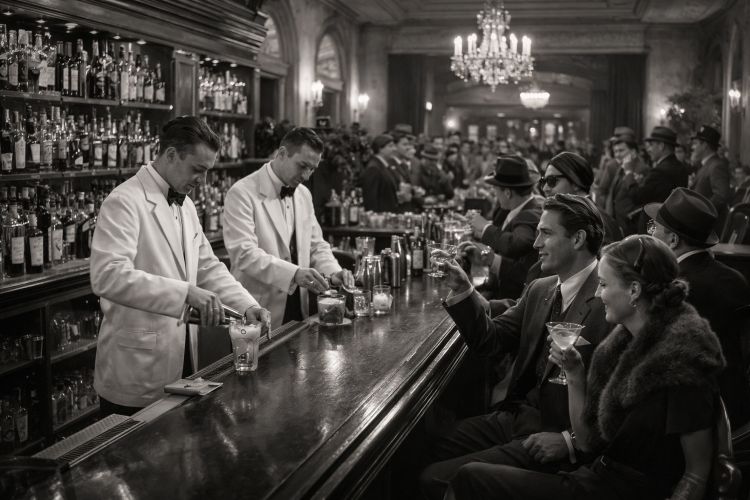
The repeal of Prohibition had immediate effects on hotels and bars across the United States. After December 5, 1933, establishments that had hidden their liquor cabinets behind false walls or disguised them as tea services brought bottles back into the open. Public bars reopened, and new licensing laws emerged as states took control of alcohol regulation. Hotels reinstated bar staff and resumed cocktail service in lounges that had been silent for more than a decade. In Washington, bartenders introduced patrons to classic concoctions such as the Gin Rickey and the Old Fashioned while also inventing new recipes to commemorate the repeal.
At Hotel Washington, the bar became a focal point for socializing. The lounge served diplomats, journalists and tourists, mixing drinks named after political figures and events. The repeal also allowed the hotel to expand its revenue streams; legal alcohol sales boosted profits and supported the maintenance of the ornate building. More broadly, the end of Prohibition signaled a shift in American culture toward more open socializing and paved the way for the modern cocktail renaissance.
Changes in regulation and business
Although the Twenty‑First Amendment repealed the national ban, it returned regulation to the states. Some states maintained restrictions, while others quickly issued licenses. This patchwork system persists today, with control states operating government-run liquor stores and license states allowing private retailers. Hotels had to navigate these regulations, obtaining permits and adhering to local laws. In Washington, D.C., licensing allowed hotels to serve alcohol until midnight, though hours have extended since. The complexity of regulation meant that hotels became adept at compliance, an expertise that remains essential in the hospitality industry.
Cultural shifts
Prohibition’s repeal also influenced social norms. Drinking in public spaces became acceptable again, and hotels resumed their roles as meeting places. Cocktail parties replaced clandestine gatherings, and the bar became a site of networking and romance. Women, who had been central to the temperance movement, now embraced the new social freedom, though concerns about overindulgence persisted. In this environment, the image of Shriners riding horses into the lobby captured the exuberant disregard for previous constraints. It symbolized a society eager to throw off old restrictions and enjoy life’s pleasures with renewed vigor.
Visitor Experience Today: Staying at Hotel Washington
Modern accommodations and amenities
After decades as a W-branded property, Hotel Washington reclaimed its original name in 2021, emphasizing its heritage. A comprehensive renovation preserved historical details while upgrading rooms and amenities. Guest rooms feature modern furnishings, marble bathrooms and technology-friendly workspaces. Suites such as the Monument Corner and Presidential Suite offer panoramic views of the city. Travelers may choose between standardized rooms and bespoke suites, reflecting the hotel’s dual identity as both a historic landmark and a contemporary luxury destination.
The hotel is also pet-friendly, a fact appreciated by guests traveling with animals. Dining options include Fireclay, a restaurant built around live fire cooking, and VUE—the rooftop bar known for its views of the White House. Visitors can order complimentary breakfast to their rooms or enjoy it at the Lobby Bar, which pays homage to the golden era of cocktails. For those seeking relaxation, the hotel’s spa offers treatments designed to rejuvenate body and mind.
Cultural programming and events
Hotel Washington continues to serve as a venue for cultural events. During the annual Cherry Blossom Festival, the rooftop hosts special menus and floral displays. Political organizations still choose the hotel for meetings and receptions; the National League of Women Voters returned for anniversary celebrations, linking the present to the past. In popular culture, the hotel has appeared in films such as Contact and The Firm, and its rooftop terrace played a starring role in The Godfather Part II and No Way Out. The lobby’s appearance in Wonder Woman 1984 introduced a new generation to its elegance.
Visitors often seek out the stories of the Shriners and other legendary events. Staff members are accustomed to answering questions about the horse incident, the gun‑toting senator and Elvis’s stay. Tours of the hotel’s art and architectural features are available upon request, offering insight into the symbolism embedded throughout the building.
Staying connected to history
The hotel’s commitment to preserving history goes beyond storytelling. Heritage plaques display excerpts from the National Register of Historic Places nomination, reminding guests of the building’s significance. Archival photographs and documents line the walls near the elevators, presenting glimpses of past guests and events. Even as the hotel evolves, it remains anchored in its role as a custodian of Washington’s narrative.
Frequently Asked Questions
-
What happened at Hotel Washington on December 5 1933? A group of Shriners rode horses into the lobby to celebrate the repeal of Prohibition. The act was brief and harmless but became a symbol of liberation.
-
Why did the Shriners choose Hotel Washington? The hotel’s proximity to the White House, its central location and its reputation for hosting notable events made it the perfect stage for their dramatic celebration.
-
Who designed Hotel Washington? The building was designed by the architectural firm Carrère & Hastings and completed in 1918. It features Italian Renaissance Revival and Beaux‑Arts influences.
-
Is there photographic evidence of the horse incident? No photographs have been found; the event is documented in hotel archives, the National Register nomination and media accounts.
-
Did the hotel suffer any damage from the horses? Contemporary accounts mention no damage. The horses were well‑behaved, and the riders led them out shortly after entering.
-
Has anything similar happened at the hotel? In 1949, veterans of the 29th Division attempted to drive a jeep into the lobby during a reunion, but staff stopped them.
-
Can guests still see elements of the hotel’s history today? Yes. Historical photographs, plaques and original architectural features—such as lobby arches and sgraffito panels—remain on display.
-
Is the hotel still the closest lodging to the White House? Yes. Hotel Washington advertises itself as “steps from the White House lawn”, and its rooftop offers direct views of the Executive Mansion.
Conclusion
Hotel Washington’s story is inseparable from the history of Washington, D.C. From its Italian Renaissance Revival architecture to its role in political and cultural events, the hotel has seen more than a century of transformation. The image of Shriners guiding their horses through the lobby in 1933 remains a vivid emblem of freedom and exuberance, capturing a pivotal moment when the United States stepped out from under the shadow of Prohibition. Today, the hotel invites guests to step into that history—whether through a cocktail at VUE, a stay in a suite overlooking the White House or simply a walk through a lobby where the echoes of hoofbeats still linger. To learn more about accommodations, dining and upcoming events, visit the official website of Hotel Washington at Hotel Washington.
Read other posts