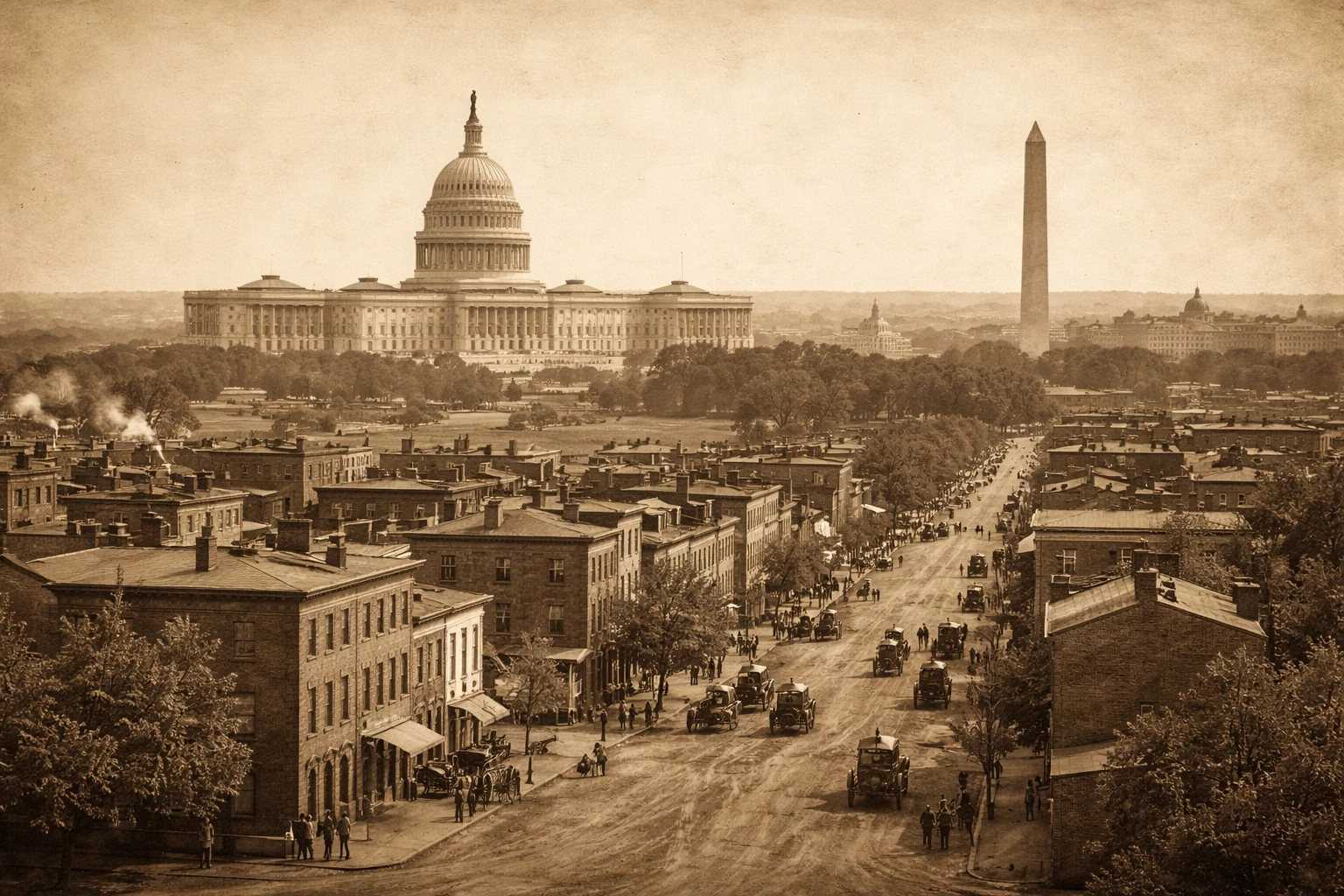
History of Washington DC – How America’s Capital Was Created, Shaped, and Transformed
Washington, DC is unlike any other American city. Purpose-built as the permanent seat of the United States government, it was designed from the ground up to symbolize national unity, democratic ideals, and federal authority. From its origins as a swampy stretch of land along the Potomac River to its evolution into one of the most influential political and cultural capitals in the world, the history of Washington DC is inseparable from the history of the nation itself.
This comprehensive guide traces the full historical arc of Washington DC – from its founding and early struggles to its role in war, civil rights, global diplomacy, and modern governance.
Why Washington DC Was Created as a Capital City
Before Washington DC existed, the young United States faced a fundamental challenge: where to locate its permanent seat of government. Early American leaders wanted a capital that was not beholden to any single state, politically neutral, and centrally located among the original colonies.
The Residence Act of 1790
The solution came with the Residence Act of 1790, a political compromise brokered by Thomas Jefferson, James Madison, and Alexander Hamilton. The act authorized the creation of a new federal district along the Potomac River.
Key outcomes of the Residence Act:
-
Established a permanent national capital
-
Created a federal district outside state control
-
Balanced northern financial interests with southern political influence
Why the Potomac River Was Chosen
The Potomac River offered several strategic advantages:
-
Central access between northern and southern states
-
Navigable waterways for trade and defense
-
Proximity to George Washington’s home at Mount Vernon
-
Political symbolism of unity and balance
The Creation of the District of Columbia
The District of Columbia was formed from land donated by Maryland and Virginia. At the time, the area included small towns such as Georgetown and Alexandria, as well as farmland, forests, and wetlands.
A Federal District, Not a State
From its inception, Washington DC was intended to be:
-
Governed by Congress
-
Independent from state politics
-
Dedicated exclusively to federal functions
This decision laid the groundwork for ongoing debates about representation, autonomy, and statehood that continue today.
Designing a Capital – The L’Enfant Plan
Pierre Charles L’Enfant’s Vision
In 1791, French-born engineer Pierre Charles L’Enfant was commissioned to design the city. His ambitious plan reflected Enlightenment ideals and European grandeur.
Key elements of the L’Enfant Plan:
-
Wide ceremonial avenues
-
Diagonal boulevards intersecting a grid system
-
Monumental public spaces
-
Symbolic alignment of buildings and vistas
The National Mall Concept
L’Enfant envisioned a grand public promenade connecting:
-
The Capitol
-
The President’s House
-
Monuments representing liberty and democracy
Though his original plan was only partially realized during his lifetime, it continues to shape Washington DC today.
Early Washington DC – A Struggling Capital
The First Federal Government in DC
In 1800, the federal government officially moved to Washington. The city was unfinished, sparsely populated, and plagued by poor infrastructure.
Challenges included:
-
Muddy roads and limited housing
-
Incomplete public buildings
-
Few cultural or social institutions
John Adams famously described the capital as inconvenient and underdeveloped.
The Burning of Washington in 1814
War of 1812 Impact
During the War of 1812, British forces invaded Washington DC and burned key government buildings, including:
-
The White House
-
The Capitol
-
The Treasury Building
This attack underscored the city’s vulnerability and shocked the nation.
Rebuilding and Resilience
Rather than abandon the capital, leaders chose to rebuild, reinforcing Washington DC’s symbolic importance and permanence.
Washington DC in the Antebellum Era
Throughout the early 19th century, Washington remained a modest city, deeply shaped by slavery and federal bureaucracy.
Enslaved Labor and Construction
Enslaved African Americans played a critical role in:
-
Constructing public buildings
-
Maintaining infrastructure
-
Supporting the city’s early economy
A City Divided
Washington DC reflected the national divide over slavery, serving as both:
-
A hub of pro-slavery political power
-
A center for abolitionist activism
Washington DC During the Civil War
A Strategic Stronghold
When the Civil War began in 1861, Washington DC became a fortified military city, surrounded by defenses and flooded with troops.
Key developments:
-
Population surge
-
Military hospitals and supply centers
-
Intelligence and logistics hub
Abraham Lincoln and the Capital
President Abraham Lincoln led the nation from Washington during its darkest hour, shaping the city’s enduring association with leadership and sacrifice.
Emancipation in Washington DC
In 1862, Washington DC abolished slavery, nine months before the Emancipation Proclamation.
Reconstruction and Transformation
After the Civil War, Washington DC underwent significant change:
-
Infrastructure expansion
-
Public works projects
-
Growth of federal agencies
However, political tensions and racial inequality persisted.
Washington DC in the Gilded Age and Progressive Era
The late 19th and early 20th centuries brought:
-
Improved sanitation and transportation
-
Expanded government bureaucracy
-
Monument construction projects
This era solidified Washington DC’s monumental identity.
The 20th Century – A Global Capital Emerges
The New Deal and Federal Expansion
Franklin D. Roosevelt’s New Deal transformed Washington DC into:
-
The administrative heart of a growing federal government
-
A magnet for professionals, policymakers, and workers
World War II and Population Boom
During World War II:
-
Federal employment surged
-
New neighborhoods were built
-
Washington became a round-the-clock city
The Civil Rights Movement in Washington DC
Washington DC played a central role in the civil rights movement, hosting landmark events including:
-
The 1963 March on Washington
-
Martin Luther King Jr.’s I Have a Dream speech
The city became a national stage for demands for equality and justice.
Home Rule and Governance Reform
The Home Rule Act of 1973
The Home Rule Act granted Washington DC:
-
An elected mayor
-
A city council
-
Limited self-governance
Despite these reforms, Congress retains significant authority over the district.
Modern Washington DC
Today, Washington DC is:
-
A global political capital
-
A cultural and educational hub
-
A city of diverse neighborhoods and communities
It balances its federal identity with a growing local culture, economy, and population.
Why Washington DC Remains Unique
Washington DC is unique because it is:
-
A city without statehood
-
A purpose-built capital
-
A living symbol of American democracy
Its history reflects both the nation’s ideals and its contradictions.
Visiting Washington DC Today
Understanding the history of Washington DC enriches any visit, revealing deeper meaning behind:
-
Monuments and memorials
-
Federal buildings
-
Historic neighborhoods
For travelers seeking to immerse themselves in this history, staying near the heart of the city offers unparalleled access. Learn more about accommodations and experiences in the nation’s capital at
www.thehotelwashington.com