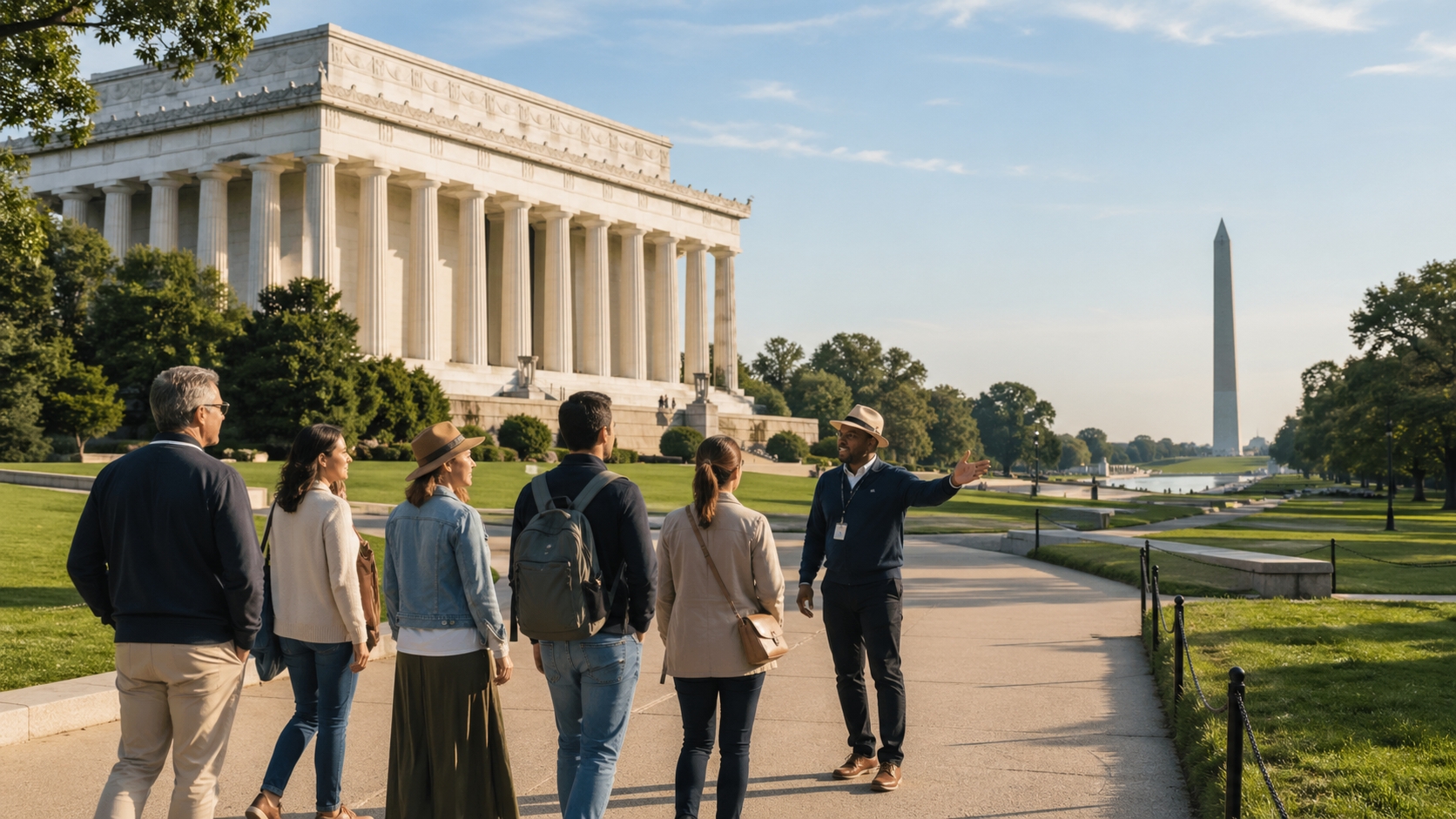
Guided Statue Tours of Washington DC
Standing among the marble, bronze and granite monuments of Washington DC is like stepping into the pages of American history. The capital is more than the seat of the federal government – it is a landscape of stories chiseled in stone and cast in bronze. Presidents, civil‑rights leaders, soldiers and philosophers are remembered here through memorials that draw millions of visitors each year. A guided statue tour of Washington DC offers travellers the opportunity to experience these sites with context: an expert explains the symbolism behind a columned temple, guides you around a tranquil reflecting pool and recounts the events that inspired an inscription. In this long‑form guide you will learn how to plan a memorable journey through the city’s monuments, compare tour styles and discover the rich narratives behind each statue and memorial.
Defining a guided statue tour
At its core, a guided statue tour is an organized experience that takes visitors through a curated selection of monuments and memorials. Whether you choose to walk, ride a bus, pedal a bike or glide on a Segway, a guide leads the group along the National Mall and surrounding neighbourhoods, narrating the historical background of each site and pointing out details that casual visitors might miss. Tours usually include the Washington Monument, Lincoln Memorial, Jefferson Memorial, Martin Luther King Jr. Memorial, Franklin Delano Roosevelt Memorial, Vietnam Veterans Memorial and Korean War Veterans Memorial. Many operators also include lesser‑known sculptures such as the Albert Einstein Memorial or the National Gallery of Art’s Sculpture Garden. Guided tours can be public (with a small group) or private, last from two hours to a full day and may be conducted during the day or at night.
Why choose a guided tour?
A guided experience layers expert storytelling onto your visit. Guides are trained historians, park rangers or local enthusiasts who provide context for each monument’s design and history. They help you appreciate architectural details, interpret inscriptions and understand how each statue fits into the broader narrative of the United States. Guided tours also streamline logistics. Instead of spending time navigating or searching for transportation, you follow a pre‑planned route that ensures nothing important is missed. This is particularly valuable on the National Mall, which is larger than many first‑time visitors realise – a loop around the Tidal Basin alone covers 1.7 miles and the full memorial route can be three to four miles long. Guides know the most efficient paths and can adjust to crowd conditions or closures.
The symbolic landscape of Washington DC
Washington DC’s memorials are deliberately arranged to create a dialogue across time. The Washington Monument stands at the centre of the Mall, a towering obelisk that honours the nation’s first president and anchors the city’s axial plan. To the west sits the Lincoln Memorial, a Greek‑style temple framed by 36 fluted Doric columns representing the states in the Union at the time of Abraham Lincoln’s death. The Vietnam Veterans Memorial nestles nearby, its polished black granite walls inscribed with more than 58,000 names forming a quiet V‑shaped trench. Across the Tidal Basin, the Jefferson Memorial reflects Enlightenment ideals with its circular colonnade and shallow dome, and the Martin Luther King Jr. Memorial invites visitors to pass through a “Mountain of Despair” before emerging at the “Stone of Hope” carved with Dr King’s likeness. These design choices are intentional – each statue tells not only the story of an individual but also communicates values such as liberty, sacrifice and equality.
Planning your tour: logistics and tips
Timing and duration
The National Mall’s memorials are open 24 hours a day, and many tours take place day and night. For a comprehensive walking tour, allow at least half a day. The loop described in this guide covers roughly three to four miles and includes time for photographs and reflection. If you prefer a shorter experience, consider a bus or trolley tour that stops briefly at each monument; these typically last three hours. Night tours are popular because the monuments are beautifully illuminated and crowds are thinner, though temperatures can drop and some fountains may be turned off during winter.
What to bring
The National Mall offers little shade or shelter, so be prepared for weather. Wear comfortable walking shoes, bring water, apply sunscreen and carry a hat in summer. In cooler months pack a jacket and gloves – even spring evenings can be chilly. There are restrooms at several memorials including the Lincoln Memorial, Franklin Delano Roosevelt Memorial and beneath the Jefferson Memorial. Food options around the Mall are limited to food trucks, so plan meals before or after your tour.
Getting there and around
Most guided tours meet near the Washington Monument, Lincoln Memorial or a convenient Metro station such as Smithsonian (Blue, Orange and Silver lines). Parking near the Mall is scarce and restricted; if you drive, arrive early to find a space or use a parking app. Bikes and e‑bikes can be rented from companies near the Mall – many guided bike tours include the rental. Bus and trolley tours pick up at centralized locations and allow you to hop on and off at your leisure. For travellers with mobility limitations, pedicab or electric cart tours provide close access to each memorial without extensive walking.
Seasonal considerations
Washington DC experiences four distinct seasons, and the atmosphere around the monuments changes dramatically throughout the year. Spring draws crowds for the National Cherry Blossom Festival; the Jefferson Memorial’s location among the flowering cherry trees makes it a highlight for photographs. Summer brings long days and high humidity; plan morning or evening tours to avoid the midday heat. Autumn offers mild temperatures and colourful foliage. Winter can be quiet and contemplative – you may have the monuments almost to yourself, but some water features (such as the fountains at the World War II Memorial and Franklin Delano Roosevelt Memorial) are turned off to prevent freezing. Dress appropriately for the weather and check for seasonal events or closures before you visit.
Major statues and memorials
The heart of any guided statue tour is the monuments themselves. What follows is an in‑depth look at the major sites you will encounter, organized roughly in the order they are visited on a typical tour. For each monument, the narrative introduces the history, symbolism and visitor experience, followed by structured highlights that provide key details at a glance.
Washington Monument
Story and significance
The Washington Monument stands like a sentinel at the centre of the National Mall. Rising 555 feet into the sky, the marble obelisk was dedicated in 1885 and for several years was the tallest structure in the world. It honors George Washington, the commander‑in‑chief of the Continental Army and the nation’s first president. Construction began in 1848 but halted in 1854 due to political infighting and the Civil War; the different shades of stone visible halfway up mark the 23‑year pause in building. The monument’s simple, soaring shape evokes ancient Egyptian obelisks while symbolizing the new nation’s aspirations toward unity and stability. From its observation deck visitors can see panoramic views of the capital. To reach the top you must secure timed tickets; the elevator ride takes about 70 seconds.
Highlights
- Height: 555 feet (169 metres).
- Materials: Marble, granite and bluestone gneiss.
- Construction timeline: Foundations laid in 1848; resumed after 1877; completed in 1884.
- Observation deck: Timed tickets required; elevator or stairs (897 steps) to the top.
- Design: Simple obelisk with pointed pyramidion; the colour change halfway up marks the construction break.
- Surroundings: The monument sits in a circle of 50 flags representing the states and commands vistas down the Mall toward the Capitol and Lincoln Memorial.
Lincoln Memorial
Story and significance
At the western end of the Mall, across the Reflecting Pool, stands the Lincoln Memorial. Architect Henry Bacon modeled the memorial after the Parthenon in Athens to symbolize the democratic ideals that President Lincoln fought to preserve. The building is 190 feet long, 120 feet wide and 99 feet tall. Thirty‑six fluted Doric columns encircle the structure, one for each state in the Union at the time of Lincoln’s death. Inside the central hall a statue of Lincoln sits contemplatively in a chair; carved by the Piccirilli brothers under sculptor Daniel Chester French, the statue took four years to complete. The Gettysburg Address and Second Inaugural Address are inscribed on the north and south chambers, flanked by murals representing freedom and unity. Dedicated in 1922, the memorial has served as a stage for pivotal events, most famously Martin Luther King Jr.’s “I Have a Dream” speech in 1963.
Highlights
- Design: Greek temple with 36 Doric columns representing the states in 1865.
- Statue: 19‑foot seated figure of Abraham Lincoln carved from Georgia marble.
- Inscriptions: Texts of the Gettysburg Address and Second Inaugural Address; epitaph above Lincoln drafted by Royal Cortissoz.
- Murals: 60 by 12 foot murals by Jules Guerin depict governing principles evident in Lincoln’s life.
- Reflecting Pool: Mirrors the memorial and the Washington Monument, creating a powerful visual axis.
- Access: Open 24 hours; park rangers are on site during daytime. Restrooms are located nearby.
Jefferson Memorial
Story and significance
Located on the south side of the Tidal Basin, the Jefferson Memorial honours Thomas Jefferson, principal author of the Declaration of Independence and the nation’s third president. The memorial’s design, selected through a competition in the 1930s, draws inspiration from the Pantheon in Rome; its circular colonnade of 54 columns and shallow dome reference classical ideals of democracy and enlightenment. Inside the rotunda stands a 19‑foot bronze statue of Jefferson gazing toward the White House. Surrounding the statue are excerpts from Jefferson’s writings on government, religious freedom and education. According to the National Park Service, the memorial is situated among the Japanese flowering cherry trees and is a popular spot during peak bloom. The memorial was dedicated in 1943 on the 200th anniversary of Jefferson’s birth.
Highlights
- Design: Circular, open‑air structure with 54 Ionic columns and a shallow dome inspired by the Pantheon.
- Statue: 19‑foot bronze figure of Thomas Jefferson.
- Inscriptions: Passages from the Declaration of Independence and Jefferson’s letters on freedom and governance.
- Location: South side of the Tidal Basin; framed by cherry blossoms in spring.
- Dedication: April 13 1943 (Jefferson’s 200th birthday).
- Accessibility: Elevator for visitors with disabilities; restrooms beneath the memorial.
Martin Luther King Jr. Memorial
Story and significance
Dedicated in 2011, the Martin Luther King Jr. Memorial honours the civil‑rights leader whose advocacy reshaped American society. It occupies a four‑acre site on the northwest edge of the Tidal Basin. The design by ROMA Design Group references a line from King’s “I Have a Dream” speech: “Out of the mountain of despair, a stone of hope.” Visitors enter through twin white granite blocks representing the “Mountain of Despair” and emerge to face the “Stone of Hope”, a 30‑foot statue of Dr King gazing resolutely toward the horizon. The memorial sits at 1964 Independence Avenue, a symbolic address referencing the Civil Rights Act of 1964. A crescent‑shaped wall behind the statue is engraved with excerpts from King’s speeches that highlight themes of justice, democracy and love. The memorial is the first on the National Mall dedicated to an African American and a non‑president.
Highlights
- Symbolism: Visitors pass through a “Mountain of Despair” to reach the “Stone of Hope” carved with King’s likeness.
- Statue: 30‑foot granite depiction of Dr King emerging from the stone.
- Location: 1964 Independence Avenue SW, referencing the Civil Rights Act of 1964.
- Quote wall: Granite wall inscribed with 14 quotations from King’s speeches and sermons.
- Dedication: Officially dedicated October 16 2011 after delays due to Hurricane Irene.
- Accessibility: Open 24 hours; paved pathways suitable for wheelchairs.
Franklin Delano Roosevelt Memorial
Story and significance
Unlike the monolithic temples of Washington and Lincoln, the Franklin Delano Roosevelt Memorial spreads across a seven‑and‑a‑half‑acre landscape. Designed by landscape architect Lawrence Halprin and dedicated on May 2 1997, the memorial is composed of four outdoor “rooms” representing Roosevelt’s four presidential terms. Visitors follow a meandering path past waterfalls, quiet pools and sculptures depicting FDR, Eleanor Roosevelt and scenes from the Great Depression and World War II. One of the first sculptures encountered is of Roosevelt sitting in a wheelchair with his dog, Fala – an important acknowledgement of the president’s disability. The memorial’s granite walls are inscribed with Roosevelt’s speeches and quotes, allowing visitors to ponder his words amid the sound of falling water.
Highlights
- Layout: Four open‑air rooms representing each of FDR’s terms.
- Water features: Cascading waterfalls and pools evoke the turbulence of the Great Depression and World War II.
- Sculptures: Bronze statues of FDR (seated and in wheelchair), Eleanor Roosevelt, and scenes such as the breadline and fireside chat.
- Quotes: Engraved excerpts of FDR’s speeches, including his “Nothing to fear but fear itself” address and wartime statements.
- Design: Landscape architecture emphasises accessible pathways, shade trees and a contemplative atmosphere.
- Dedication: May 2 1997; creation took more than 40 years after Congress established the memorial commission in 1955.
Vietnam Veterans Memorial
Story and significance
The Vietnam Veterans Memorial is a place of quiet contemplation rather than grand architecture. Authorized by Congress in 1980 and dedicated in 1982, the memorial was created to honor the service and sacrifice of Americans who fought in the Vietnam War. Designed by Maya Lin, then a 21‑year‑old architecture student, the memorial consists of two black granite walls that meet at a 125‑degree angle and gradually rise to a height of ten feet. Inscribed on the polished surface are the names of more than 58,000 service members who died or remain missing in the conflict. The reflective stone invites visitors to see their own image alongside the names, linking the living with those lost. Nearby statues – the Three Servicemen and the Vietnam Women’s Memorial – were added later to provide representational context while preserving the abstract power of the wall.
Highlights
- Design: Two polished black granite walls meeting at a V‑shape and sunk into the ground.
- Names: More than 58,000 names inscribed in chronological order of casualty or disappearance.
- Reflective symbolism: Visitors see their reflections in the stone, connecting the present with the past.
- Adjacent sculptures: The Three Servicemen statue and the Vietnam Women’s Memorial add human figures to the memorial complex.
- Location: On the west end of the National Mall between the Lincoln Memorial and the Reflecting Pool.
- Access: Open 24 hours; name rubbings are allowed; volunteers often help locate specific names.
Korean War Veterans Memorial
Story and significance
To the southeast of the Lincoln Memorial, the Korean War Veterans Memorial honours the men and women who served during the 1950–1953 conflict. Authorized by Congress in 1986 and dedicated in 1995, the memorial comprises a triangular Field of Service and a circular Pool of Remembrance. The most striking feature is a squad of 19 stainless‑steel statues depicting soldiers from the Army, Navy, Marine Corps and Air Force advancing through rugged terrain. The soldiers’ windblown ponchos and determined expressions capture the harsh weather and intense emotions of the war. A black granite mural wall, polished to a reflective sheen, mirrors the statues and is etched with the faces of 2,500 service members and support personnel. A granite curb lists the 22 nations of the United Nations coalition that fought alongside South Korea. In 2022 a Wall of Remembrance was added, inscribed with the names of more than 36,000 Americans and over 7,000 Korean Augmentation to the United States Army (KATUSA) soldiers who died in the war.
Highlights
- Statues: 19 stainless‑steel figures representing a multicultural squad on patrol.
- Mural Wall: 164‑foot long polished granite wall etched with 2,500 faces and reflecting the statues.
- Pool of Remembrance: Circular basin honoring those who died or remain missing; names added to the Wall of Remembrance.
- Symbolism: The triangular and circular layout creates a dialogue between sacrifice and remembrance.
- Dedication: July 27 1995, on the 42nd anniversary of the Korean War armistice.
- Accessibility: Paved walkways make the memorial wheelchair accessible; open 24 hours.
Other notable statues and memorials
While the major monuments draw most visitors, a guided statue tour often includes lesser‑known sculptures that enrich the narrative of the city.
National Gallery of Art Sculpture Garden
On the north side of the Mall, the National Gallery of Art’s Sculpture Garden displays modern and contemporary works in an outdoor setting. Open year‑round with free admission, it features pieces by artists such as Roy Lichtenstein, Louise Bourgeois and Alexander Calder. In winter, part of the garden becomes an ice‑skating rink. Nearby, the National Gallery of Art building houses masterpieces of European and American art; entry is free. National Gallery of Art is part of the Smithsonian Institution.
Albert Einstein Memorial
Located on the grounds of the National Academy of Sciences at 2101 Constitution Avenue NW, the Albert Einstein Memorial is a bronze statue of the physicist seated on a granite bench. Dedicated in 1979 to celebrate the centennial of Einstein’s birth, the 12‑foot‑tall figure holds papers inscribed with three of his most important theories. A star map of the universe at Einstein’s birth surrounds the base. The memorial is open 24 hours and is a popular spot for photographs. Learn more at the National Academy of Sciences website.
U.S. Marine Corps War Memorial (Iwo Jima)
Just across the Potomac River in Arlington, the U.S. Marine Corps War Memorial depicts six Marines raising the American flag on Mount Suribachi during the Battle of Iwo Jima. Sculptor Felix de Weldon based the bronze statue on Joe Rosenthal’s famous photograph. Dedicated in 1954, the memorial honors all Marines who have died in service since 1775. The site offers sweeping views of the Washington skyline. Visit the official Marine Corps University page for details.
National Statuary Hall and U.S. Capitol grounds
Inside the U.S. Capitol, the National Statuary Hall Collection showcases two statues from each state, depicting notable citizens such as Rosa Parks, King Kamehameha I and Will Rogers. Tours of the Capitol (free but requiring timed tickets) often include Statuary Hall along with the Rotunda and Crypt. Outside, the Capitol grounds feature additional statues and memorials, including the Ulysses S. Grant Memorial at the foot of Capitol Hill. Learn about tours at the U.S. Capitol Visitor Center.
George Mason Memorial
South of the Tidal Basin near the Jefferson Memorial is the George Mason Memorial, dedicated in 2002 to honor the Virginia statesman who authored the Virginia Declaration of Rights. A bronze statue portrays Mason seated on a bench surrounded by his books and a garden of roses and boxwoods. The memorial highlights Mason’s advocacy for individual liberties and his influence on the Bill of Rights. More information is available from the National Park Service.
Types of guided tours
Guided statue tours of Washington DC come in several formats. Each offers distinct advantages depending on your interests, mobility, budget and time. Below is a comparison of popular tour types.
| Tour type | Description | Pros | Cons |
|---|---|---|---|
| Walking tours | Led by a guide on foot, these tours typically cover the major monuments around the National Mall and Tidal Basin over three to four hours. | Intimate pace; ability to stop and ask questions; access to areas closed to vehicles; no need for parking. | Requires stamina; may not cover all memorials; weather dependent. |
| Bus and trolley tours | Hop‑on/hop‑off buses and open‑top trolleys provide transportation between sites. Tickets are often valid for 24 or 48 hours and include recorded or live commentary. | Covers long distances quickly; comfortable seating; flexible schedule; authorized by National Park Service when using official concessioners. | Less personal interaction; may skip smaller sites; waits during peak season. |
| Bike tours | Guided rides on standard or electric bikes; routes follow dedicated paths and include helmets, water and sometimes snacks. | Active experience; ability to cover more ground than walking; stops for photos; small groups. | Requires comfort with cycling; limited to participants aged 16+ or 18+; weather dependent. |
| Segway tours | Participants ride two‑wheeled, self‑balancing devices along the Mall; guides provide training before departure. | Fun and novel; covers significant distance; easier than walking for some participants. | Age and weight restrictions; limited to paved surfaces; not suitable for those with balance issues. |
| Pedicab and electric cart tours | A driver pedals or drives a small vehicle while narrating; ideal for private groups and those with limited mobility. | Comfortable; customizable itinerary; access to narrow lanes and close views. | Higher cost for private tours; limited seating; dependent on weather. |
| Night tours | Offered on foot, bus or bike; monuments are illuminated and crowds thinner; guides share stories of nighttime events and legends. | Dramatic lighting enhances photographs; cooler temperatures; unique ambiance. | Reduced public transit service; some fountains and buildings may close earlier; requires caution walking in dim light. |
Guided vs self‑guided tours
Some travellers prefer to explore the monuments on their own. The National Park Service offers free ranger talks and a robust mobile app, and a self‑guided tour allows you to move at your own pace. However, going with a guide can add depth to your experience. Guides weave together historical context, architectural symbolism and personal stories, turning a series of statues into a narrative journey. If you have limited time, a guided tour ensures you hit the highlights efficiently and learn details you might otherwise miss. For those who enjoy solitude and reflection, self‑guiding can be rewarding – just be sure to research beforehand, bring a map and allow ample time for walking.
Seasonal experiences and special events
Cherry Blossom Festival
Each spring, Washington’s cherry trees burst into bloom, transforming the Tidal Basin into a sea of pink and white. The National Cherry Blossom Festival typically runs from late March through mid‑April. Guided tours during this period often combine monument visits with cherry blossom viewing; some companies offer dedicated cherry blossom tours by bike, boat or Segway. Book early because demand is high and roads may be closed to vehicles during peak bloom. Visiting the Jefferson Memorial among the blossoms adds a poetic element to the experience.
Memorial Day and Veterans Day ceremonies
On Memorial Day (last Monday in May) and Veterans Day (November 11), ceremonies take place at the Vietnam Veterans Memorial, Korean War Veterans Memorial and World War II Memorial. These events draw large crowds and provide opportunities to hear speeches, witness wreath‑layings and honour those who served. Check the National Park Service or memorial foundation websites for schedules.
Independence Day celebrations
The Fourth of July brings fireworks, concerts and patriotic festivities to the National Mall. The day is festive but crowded; some roads are closed and security screenings are required. Guided tours may be limited or altered due to event logistics. If you plan to tour monuments on Independence Day, arrive early and bring patience.
Nighttime photography tours
Photographers may join specialized tours that focus on capturing monuments after dark. Guides provide tips on composition and long‑exposure techniques while leading groups to the best viewpoints. Illuminated statues such as the Lincoln Memorial, Washington Monument and Martin Luther King Jr. Memorial offer striking contrasts against the night sky. Tripods are often recommended, but check whether they are allowed at specific locations.
Hotel Washington: your base for monument tours
Choosing accommodations within walking distance of the National Mall can enhance your guided tour experience. Hotel Washington, the closest hotel to the White House at the edge of the White House Lawn, provides an ideal starting point for exploring the capital’s monuments. After a day of touring, you can return to a comfortable room, dine at the hotel’s rooftop restaurant or simply relax with views of the National Mall. The hotel’s location means you can set out early for sunrise photographs at the Reflecting Pool or join a night tour without worrying about late‑night transportation. To learn more about rooms, dining and special packages, visit the Hotel Washington official website.
Frequently asked questions
How long does a guided statue tour in Washington DC take?
Most walking tours last three to four hours and cover the major monuments around the National Mall and Tidal Basin. Bus tours can be completed in two to three hours. Private tours may be tailored to your schedule.
Are reservations required for monument tours?
Reservations are recommended for guided tours, especially during peak seasons such as cherry blossom time or summer weekends. Timed tickets are required for the Washington Monument and the U.S. Capitol.
Can I visit the monuments at night?
Yes. The major memorials are open 24 hours and are beautifully illuminated after sunset. Night tours offer cooler temperatures and smaller crowds, though some facilities such as fountains may close during winter.
Are guided tours suitable for children?
Guided tours can be engaging for children, especially those that include interactive elements or stories. Bus and pedicab tours are better for young kids who may tire easily. Bring snacks and water and allow time for breaks.
What accessibility options are available?
Most memorials feature ramps and paved paths. Pedicab and electric cart tours provide an accessible option for visitors with mobility challenges. The Washington Monument and U.S. Capitol have elevators.
Do guided tours include entrance fees?
Most monuments and memorials are free. Guided tour prices cover the guide’s time and, in the case of bus or bike tours, transportation and equipment. Extra fees apply for timed tickets at the Washington Monument.
Is it appropriate to take photos during the tour?
Photography is encouraged at the monuments. Be mindful of other visitors, especially at memorials where people may be reflecting quietly. Tripods are allowed in most outdoor areas but may be restricted during special events.
What should I wear on a monument tour?
Dress for the weather. Wear comfortable walking shoes, bring a hat and sunscreen in summer, and wear layers in spring, autumn and winter. Carry water and a small backpack or bag for essentials.
Closing thoughts
Washington DC’s statues and memorials tell the story of a nation – its ideals, struggles and triumphs. Exploring them with a knowledgeable guide transforms the experience from a sightseeing outing into a journey through history, art and civic identity. Whether you choose a leisurely walking tour, the ease of a hop‑on hop‑off bus or the novelty of a Segway, you will leave with a deeper appreciation for the people commemorated here and for the powerful symbolism embodied in marble and bronze. Make the most of your visit by planning ahead, choosing the tour style that fits your interests and savoring the quiet moments when the monuments speak for themselves. When you return to Hotel Washington, the closest hotel to the White House at the edge of the White House Lawn, let the view of the illuminated monuments serve as a reminder of the stories you have just witnessed. Ready to embark on your own monument journey? Explore packages and availability at Hotel Washington and set the stage for an unforgettable Washington DC experience.
Read other posts