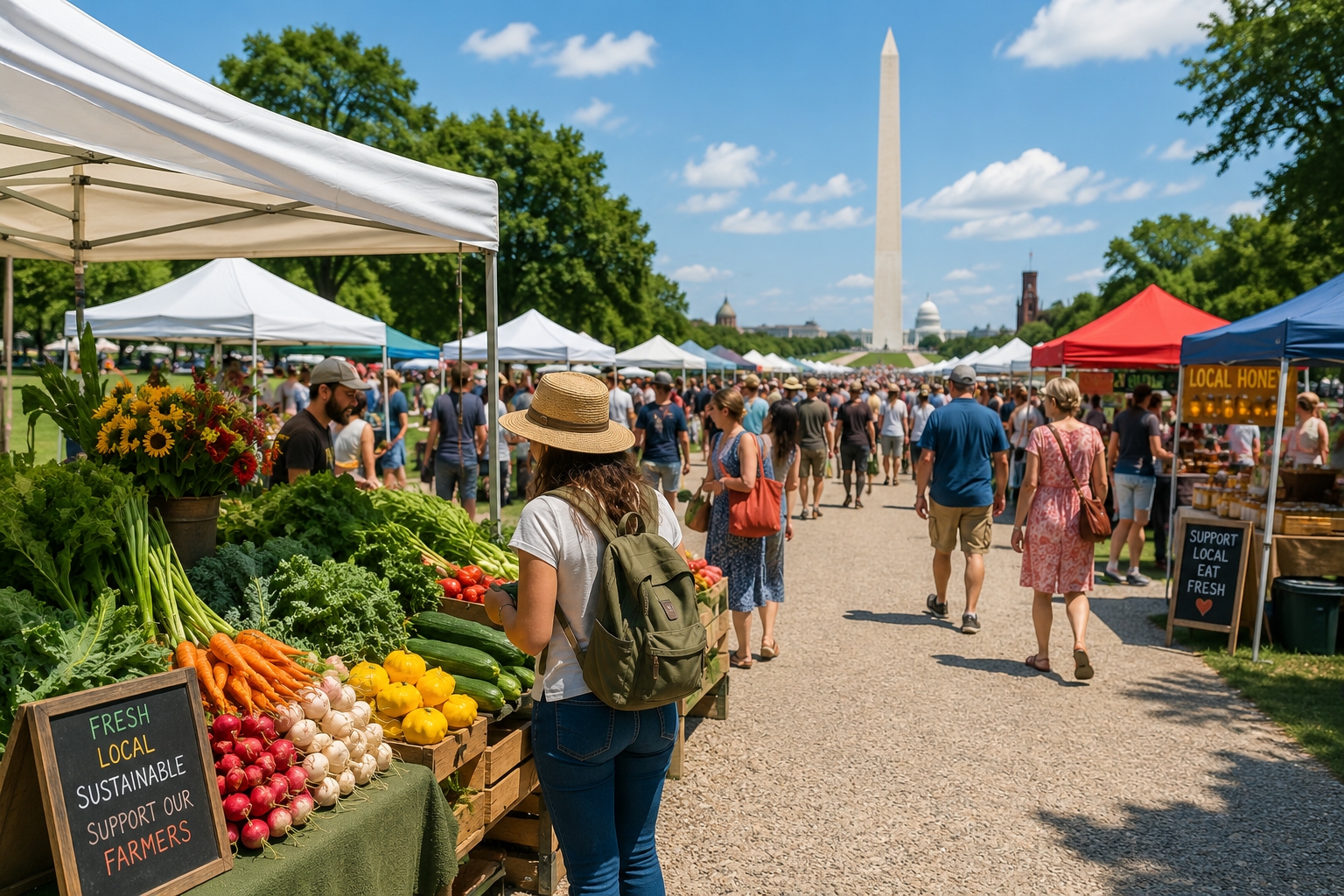
Great American Farmers Market 2026: A Complete Guide to the National Mall Event in Washington, DC
The Great American Farmers Market 2026 is a scheduled weeklong farmers market and agriculture celebration in Washington, DC, taking place August 3–8, 2026 on the National Mall. The event brings together American farmers, food producers, artisan vendors, agricultural traditions, and family-friendly programming during National Farmers Market Week. For travelers, it offers a rare chance to experience the flavors and stories of American agriculture in one of the country’s most symbolic public spaces, surrounded by monuments, museums, civic landmarks, and the summer energy of the nation’s capital.
What Is the Great American Farmers Market?
Long before Washington became a city of marble memorials and government buildings, the American story was rooted in soil, weather, harvests, animals, trade routes, local markets, and the people who turned land into livelihood. Farmers markets have always done more than sell food. They have connected rural producers with city households, introduced travelers to regional flavors, and kept food culture visible in everyday civic life. The Great American Farmers Market takes that local tradition and gives it a national stage.
The Great American Farmers Market is a Washington, DC event centered on American agriculture, farmers, ranchers, food producers, fresh produce, artisan goods, and regional food traditions. Scheduled for August 3–8, 2026, the event is currently listed as a National Mall celebration during National Farmers Market Week, which runs August 2–8, 2026.
The market is designed for visitors who want more than a typical sightseeing stop. It blends the familiarity of a farmers market with the scale and symbolism of a national gathering. A traveler may arrive expecting stalls, samples, and seasonal produce, then find a wider story unfolding around them: how American farms shape regional identity, how food moves from fields to tables, and how agricultural traditions continue to evolve in a country defined by both heritage and innovation.
At its simplest, the Great American Farmers Market is a free public event where visitors can explore food, farming, vendors, and cultural programming. At its most meaningful, it is a living portrait of American agriculture placed in the middle of Washington, DC, where national memory and everyday life intersect.
The primary reasons visitors search for this event are clear:
- They want to know the Great American Farmers Market 2026 dates.
- They want to confirm the National Mall location.
- They want to know whether the event is free.
- They want to understand what vendors and food experiences to expect.
- They want practical transportation guidance.
- They want to know where to stay near the Great American Farmers Market.
- They want to build a Washington, DC itinerary around the event.
For visitors planning a summer trip, the event works especially well as part of a larger DC experience. It can be paired with museums, monuments, walks through the federal core, rooftop dining, and a stay near the White House or National Mall.
Great American Farmers Market 2026 Dates, Location, and Admission
A summer evening on the National Mall has a rhythm unlike almost anywhere else in the United States. The light falls across the open lawns, museum facades glow softly, and visitors move between civic landmarks with the unhurried curiosity of people who know they are walking through a shared national space. In August, that setting becomes warmer, brighter, and more social. The Great American Farmers Market fits naturally into that atmosphere because it brings food, families, farmers, and public gathering into the same landscape where the country tells many of its biggest stories.
The 2026 event is currently scheduled for August 3–8, 2026. Published destination listings place it on the National Mall in Washington, DC, with event hours listed as TBA at the time of planning. Because large public events can update programming, security guidance, vendor lists, and daily schedules as the date approaches, visitors should confirm final details before attending.
| Event detail | Current planning information |
|---|---|
| Event name | Great American Farmers Market 2026 |
| Dates | August 3–8, 2026 |
| Location | National Mall, Washington, DC |
| Admission | Listed as free by local event listings |
| Event type | Farmers market, agriculture celebration, food event, family-friendly public gathering |
| Broader context | National Farmers Market Week and America’s 250th anniversary year |
| Closest Metro guidance | Smithsonian Station is commonly listed as the key Metro access point |
| Hours | TBA for 2026 at the time of planning |
The event’s location matters almost as much as the programming. The National Mall is not a conventional festival ground. It is a civic landscape with open lawns, broad sightlines, federal buildings, memorial spaces, and a steady flow of travelers. For the Great American Farmers Market, that setting gives the experience a sense of occasion. Visitors are not simply shopping for produce or tasting regional foods. They are encountering American agriculture in the physical heart of the capital.
The 2026 listing places the market during America’s semiquincentennial year, when the country is observing 250 years since 1776. That context gives the event additional meaning. Food and farming are not side notes in the American story. They are central to settlement, migration, labor, trade, regional culture, health, innovation, and family memory. A farmers market on the National Mall during a major anniversary year becomes a way to connect national history with the people who grow, prepare, transport, and sell food today.
For visitors, the most useful planning approach is to treat the event as both a destination and a flexible part of a broader day. Since final hours are listed as TBA, avoid building an itinerary around assumed opening and closing times. Plan around the date, location, Metro access, and likely outdoor conditions, then revisit the official event page and local destination calendars closer to arrival.
Why the National Mall Makes the Event Different
The National Mall changes the scale of any event. A concert, festival, ceremony, exhibit, march, or market held there does not feel isolated from the city around it. It feels woven into the capital itself. The Great American Farmers Market benefits from that setting because agriculture is both personal and national. A peach, a jar of honey, a loaf of bread, a dairy sample, or a handmade product can feel intimate in the hand, yet each one points back to a much larger system of land, labor, weather, supply chains, regional identity, and household tradition.
Most farmers markets are neighborhood experiences. They are tied to a weekly routine, a familiar square, a local vendor, a favorite seasonal ingredient. The Great American Farmers Market keeps that intimacy but expands the frame. Visitors can browse with the same casual pleasure they would bring to a Saturday market, while standing within view of some of the most recognizable civic landmarks in the country.
That contrast is the event’s strongest experiential advantage. It makes agriculture visible in a setting often associated with government, history, and tourism. The result is a Washington, DC experience that feels less like checking off a landmark and more like stepping into a national conversation about food, land, health, craftsmanship, and community.
A National Mall farmers market also changes how visitors plan their day. Instead of treating the market as an isolated stop, travelers can shape a full itinerary around the event. A morning can begin with monuments. Midday can move through air-conditioned museums. Late afternoon can be reserved for the market once final hours are confirmed. Evening can end with dinner, rooftop views, or a walk back toward a hotel near the White House.
The setting also gives families and first-time visitors more flexibility. If some members of a group are focused on food and shopping while others want museums or monuments, the surrounding area offers multiple ways to divide and reconnect. That makes the market especially useful for multigenerational travelers, couples with different interests, and families balancing educational stops with less formal activities.
Food, Vendors, Produce, and Artisan Goods
Food tells stories quickly. A regional sauce can reveal a migration pattern. A cheese can point to pasture, climate, and craft. A peach can say something about summer in one state, while a grain product can reflect generations of farming in another. At a national farmers market, the pleasure of browsing is not separate from the meaning of the event. It is the meaning of the event. Each stall becomes a small introduction to a place, a producer, and a tradition.
The Great American Farmers Market is expected to showcase a broad mix of fresh produce, agricultural products, artisan goods, prepared foods, and farm-centered experiences. Current DC event listings describe the 2026 market as featuring more than 80 vendors from across the country. Visitors should expect the final vendor lineup and daily offerings to depend on event programming, seasonal availability, and official updates.
The market’s appeal comes from variety. A visitor might find familiar farmers market staples alongside regional specialties that are harder to encounter in a standard DC itinerary. The event is likely to interest food lovers, families, agricultural professionals, culinary travelers, and anyone who wants a more grounded way to experience America’s 250th anniversary year.
Likely categories of interest include:
- Fresh seasonal produce from American growers
- Artisan pantry goods and specialty foods
- Baked goods, snacks, and prepared items
- Regional agricultural products
- Farm-centered educational displays
- Family-friendly demonstrations or activities
- American-made handcrafted goods
- Vendor stories tied to place, region, and production methods
For visitors, the best way to approach the market is not to rush. Farmers markets reward curiosity. Ask where a product comes from. Notice how vendors describe their work. Compare regional ingredients. Look for items that travel well if you are staying in a hotel or returning home soon. Keep in mind that some items may be easier to enjoy immediately, while others may be better suited as gifts or shelf-stable souvenirs.
The Great American Farmers Market also works as a culinary bridge between sightseeing and dining. Travelers often plan Washington, DC trips around museums, monuments, and restaurants, but a market adds something different. It brings producers into the itinerary directly. Instead of only eating in the city, visitors can meet some of the people and traditions behind American food.
How to Shop the Market Well
A market on the National Mall will likely attract a varied crowd: tourists, local residents, families, office workers, food enthusiasts, and people drawn by the larger national celebration. That mix can make the experience lively, but it also rewards practical planning.
| Visitor goal | Best approach |
|---|---|
| Taste regional foods | Walk the full market once before buying so you can compare options |
| Shop for gifts | Look for shelf-stable artisan goods, packaged foods, or handcrafted items |
| Visit with children | Build in shaded breaks and focus on interactive booths |
| Attend during peak times | Bring patience, water, and a flexible schedule |
| Learn about agriculture | Prioritize producer conversations and educational displays |
| Pair with sightseeing | Visit nearby museums during hotter daytime hours, then attend the market when final daily hours allow |
The most memorable purchases are often the ones that come with a story. A jar, spice blend, baked item, or handmade object becomes more meaningful when a vendor explains where it comes from and why it matters.
National Farmers Market Week and America’s Agricultural Story
There is a reason farmers markets continue to feel relevant even in an age of grocery delivery, national retail chains, and fast digital commerce. They offer something that modern life often separates: direct contact between producer and consumer. At a farmers market, food does not feel anonymous. It has a place, a person, a growing season, a method, and a memory. National Farmers Market Week exists to recognize that value, and the Great American Farmers Market gives the observance a highly visible stage in the nation’s capital.
The 2026 Great American Farmers Market falls during the same week as National Farmers Market Week, an annual celebration of the role farmers markets play in community life and local food systems. It also takes place during the broader anniversary year connected to America250, the national commemoration of the United States’ 250th anniversary.
That context helps explain why the event is more than a food market. Agriculture has shaped the United States from its earliest colonial economies to modern debates about nutrition, conservation, land use, food access, rural livelihoods, and technological innovation. A national farmers market in Washington, DC can help visitors see those connections in a public, approachable way.
The U.S. Department of Agriculture has framed the Great American Farmers Market as a celebration of farmers, ranchers, producers, American-made goods, agricultural education, and the people who nourish the nation. For travelers, that means the event can be experienced on several levels at once.
It can be:
- A food event for tasting and shopping
- A family event for learning and gathering
- A cultural event connected to regional traditions
- A civic event tied to national heritage
- A travel experience that adds local texture to a DC visit
- A planning anchor for visitors staying near the White House and National Mall
The connection to America’s 250th anniversary year gives the market a broader interpretive frame. Monuments often tell history through stone, bronze, inscription, and scale. Farmers markets tell history through seeds, recipes, tools, soil, trade, and labor. Pairing those forms of memory in one itinerary creates a richer Washington, DC visit.
A traveler who spends the morning at a museum and the afternoon at the market can experience two different kinds of history. One is preserved behind glass. The other is tasted, carried, sampled, discussed, and purchased directly from the people keeping agricultural traditions alive.
How to Get to the Great American Farmers Market
Arriving at a National Mall event is part logistics and part mindset. The Mall was designed for public movement, but it is still a large outdoor landscape with long blocks, security patterns, changing event entrances, and seasonal crowds. A visitor who plans transportation carefully will arrive with more energy for the market itself. A visitor who assumes parking will be easy or that every entrance will function the same way may spend more of the day navigating than enjoying.
For most travelers, Metro and walking are the most practical ways to reach the Great American Farmers Market. The event area is commonly associated with Smithsonian Station, which serves the Blue, Orange, and Silver lines and places visitors near the central Mall. Final event maps should be checked before arrival because large National Mall events can adjust entry points, rideshare zones, and pedestrian routing.
Metro Access
Metro is usually the cleanest choice for visitors coming from across the region or staying in central Washington, DC. Smithsonian Station is especially useful because it opens directly into the Mall environment. From there, visitors can follow posted event guidance, event staff directions, and pedestrian flow.
Travelers should keep these Metro planning points in mind:
- Confirm train schedules on the day of travel.
- Load fare media before peak arrival times.
- Check service alerts before leaving the hotel.
- Use the station exit closest to the event map when final guidance is posted.
- Expect more riders if the visit overlaps with other summer events.
- Build in time for walking across open outdoor space.
Walking from Central DC
Walking can be one of the best ways to experience this event, especially for visitors staying near the White House, the National Mall, or central downtown Washington. The approach itself becomes part of the day. Streets give way to federal buildings, lawns, museum facades, and long sightlines. Instead of arriving underground or stepping out of a car, pedestrians gradually enter the civic landscape.
For travelers staying at a centrally located hotel, walking can reduce transit friction. It also makes it easier to leave the market when ready, return for a rest, or continue to dinner without waiting for rideshare demand to ease.
Rideshare and Taxis
Rideshare can be helpful for visitors with mobility concerns, tight schedules, younger children, or packages. However, event traffic and road closures can make pickup and drop-off points less direct than expected. During large National Mall events, drivers may need to stop several blocks away from the most convenient entrance.
The best approach is to choose a pickup point slightly outside the highest-traffic area, then walk the final blocks. Confirm the driver’s exact location before moving away from the event grounds.
Parking
Parking near the National Mall can be limited, expensive, or affected by event restrictions. Visitors driving into the city should research garages in advance, allow extra time, and avoid relying on street parking. For many travelers, a hotel with central access and a walking-friendly location will be easier than driving to the event itself.
| Transportation method | Best for | Planning note |
|---|---|---|
| Metro | Most visitors, regional travelers, hotel guests farther from the Mall | Smithsonian Station is the key station to check |
| Walking | Visitors staying near the White House, National Mall, or central DC | Comfortable shoes and summer pacing matter |
| Rideshare | Families, visitors with limited mobility, late departures | Pickup and drop-off areas may shift |
| Parking | Travelers who must drive | Research garages and event road changes in advance |
The main rule is simple: treat the National Mall as a walkable outdoor destination, not a curbside venue. Build in time, expect movement, and let the setting become part of the experience.
Where to Stay Near the Great American Farmers Market
Choosing where to stay for a National Mall event can shape the entire trip. A hotel farther from the center may seem practical on a map, but distance becomes more noticeable in August heat, after a full day of walking, or when a family wants to return to the room between activities. A central hotel lets visitors treat Washington, DC as a connected experience rather than a series of separate transfers.
For the Great American Farmers Market, the best hotel location is one that balances four priorities: proximity to the National Mall, access to the White House area, walkability to museums and monuments, and a comfortable place to reset after outdoor time. That is where Hotel Washington becomes especially relevant. Known as The closest hotel to the White House, positioned at the edge of the White House Lawn, it gives travelers a strong base for an event that sits at the intersection of food, history, civic space, and summer travel.
A hotel near the event does not only save time. It changes the pace of the trip. Visitors can start the morning slowly, head toward the Mall when ready, return for a break, then go back out for dinner or evening views. That flexibility is especially valuable for a weeklong event where travelers may choose one specific day to attend or build the market into a broader itinerary.
What to Look for in a Hotel Near the Event
A convenient hotel for the Great American Farmers Market should support both the event day and the larger Washington, DC visit.
| Hotel priority | Why it matters for the Great American Farmers Market |
|---|---|
| Walkability | Reduces dependence on rideshare and parking |
| Central location | Makes it easier to pair the market with museums, monuments, and dining |
| Comfortable rooms | Helps visitors recover from August heat and long outdoor walks |
| Flexible dining access | Supports early starts, late returns, and changing event schedules |
| White House and National Mall proximity | Keeps major landmarks and the market within a practical travel radius |
| Strong sense of place | Makes the hotel part of the Washington experience rather than just lodging |
Travelers attending the market should think beyond the single event. A good stay should support morning sightseeing, afternoon rest, evening plans, and weather flexibility. This is particularly important in August, when heat, humidity, and summer crowds can make a midday break feel less like a luxury and more like smart planning.
Why Hotel Washington Works Well for This DC Event
Some hotels are chosen because they are close to a venue. Others are chosen because they help define the trip. Hotel Washington belongs in the second category for travelers planning around the Great American Farmers Market. Its setting near the White House places guests in one of the most recognizable parts of the city, while the National Mall remains close enough to shape the day naturally.
The Best Hotel in Washington DC for an event like this is not necessarily the one with the shortest possible distance to a single entrance. It is the hotel that gives visitors the strongest overall access to the experience they came for: the market, the Mall, the museums, the monuments, the dining, the views, and the sense of being in the center of the capital. Hotel Washington aligns with that need because it lets guests move between civic landmarks and hospitality spaces without losing the rhythm of the trip.
For a visitor attending the Great American Farmers Market, that can mean starting the day with breakfast, walking toward the National Mall, spending time at the market, returning to refresh, then ending the evening with a view of the city. The hotel’s location makes it easier to treat the event as part of a polished Washington itinerary rather than a one-off stop.
Event-Day Advantages for Hotel Washington Guests
Hotel Washington is especially useful for travelers who value convenience, atmosphere, and centrality.
- Guests can stay near the White House while remaining close to National Mall event activity.
- The location supports walking-based itineraries when weather and mobility allow.
- The hotel works well for couples, families, solo travelers, and business travelers adding leisure time.
- A central stay reduces the need to move bags, coordinate long transfers, or rely heavily on cars.
- The setting reinforces the civic character of the trip, which matters for an event tied to American agriculture and national heritage.
For families, the convenience is practical. Children can manage only so much heat, walking, and stimulation in one day. A nearby hotel gives parents more control over pacing. For couples, the location supports a more atmospheric stay, with easy transitions between daytime exploring and evening dining. For solo travelers, centrality can make the city feel easier to navigate. For business travelers, the event can be added to a work trip without requiring a complicated schedule.
The Great American Farmers Market is a public event, but the hotel choice turns it into a complete travel experience. Staying near the White House and National Mall helps visitors feel connected to the setting before and after they step into the market itself.
What to Do Near the Great American Farmers Market
The National Mall rewards visitors who slow down. It can be tempting to treat the surrounding landmarks as a checklist, but the best itineraries leave space for contrast. A farmers market is sensory and social. A museum is reflective. A monument is symbolic. A garden is restorative. When these experiences are arranged thoughtfully, a single day in Washington, DC can feel layered rather than crowded.
The Great American Farmers Market can be paired with several nearby attractions, depending on the traveler’s interests, energy, and final event hours. Since August weather can be intense, the smartest plan often combines indoor cultural stops with outdoor time early or late in the day.
The Washington Monument is one of the most natural visual companions to a National Mall market visit. Even if travelers do not go inside, its presence shapes the landscape and gives the event a strong sense of place. For first-time visitors, walking near the monument before or after the market can make the day feel unmistakably tied to Washington.
For a deeper historical pairing, the National Museum of American History connects well with the market’s themes of national identity, everyday life, innovation, culture, and memory. Food and agriculture are part of American history, and a museum visit can give context to the broader story behind the event.
Art-focused travelers may prefer the National Gallery of Art, which provides a quieter counterpoint to the movement of the market. Its galleries offer time indoors, visual richness, and a slower pace. This can be an ideal midday stop before heading back outside when temperatures feel more manageable.
The National Museum of Natural History also pairs well with a food and farming event because it invites visitors to think about the natural systems behind human life. Soil, plants, climate, biodiversity, minerals, oceans, and animal life all sit beneath the agricultural story, even when they are not always visible at a market stall.
The Lincoln Memorial works best as a morning or evening addition, especially for travelers who want a longer walk through the west end of the Mall. It is farther from the central museum cluster, but it offers one of the most powerful symbolic experiences in the city.
For visitors who want a botanical complement to a farmers market, the United States Botanic Garden offers a living plant museum experience near the eastern side of the Mall. It can be a thoughtful pairing for travelers interested in plants, agriculture, cultivation, and seasonal landscapes.
Best Nearby Pairings by Visitor Type
| Visitor type | Best pairing | Why it works |
|---|---|---|
| First-time DC visitor | Washington Monument | Iconic, close to the Mall, visually memorable |
| History-focused traveler | National Museum of American History | Strong connection to national identity and everyday life |
| Art lover | National Gallery of Art | Indoor, contemplative, and easy to pair with outdoor market time |
| Family with kids | National Museum of Natural History | Engaging, educational, and weather-friendly |
| Plant and garden enthusiast | United States Botanic Garden | Reinforces the agriculture and cultivation theme |
| Evening walker | Lincoln Memorial | Powerful after daytime sightseeing, especially near sunset |
The key is not to overpack the day. The market deserves unhurried time, and August travel rewards pacing. Choose one or two nearby experiences, then leave room for food, rest, and spontaneous discovery.
Sample Itineraries for the Great American Farmers Market
Washington, DC is at its best when an itinerary has a clear anchor. Without one, visitors can spend too much time moving between attractions without feeling grounded. The Great American Farmers Market provides that anchor. It gives the day a theme: American food, farming, heritage, and public gathering. Around that theme, travelers can build a plan that feels both efficient and memorable.
Because final 2026 event hours are listed as TBA, these sample itineraries are designed as flexible frameworks rather than fixed schedules. Visitors should adjust based on the official program, weather, group needs, museum hours, dining reservations, and transportation updates.
One-Day Great American Farmers Market Itinerary
Begin near the White House area and let the city reveal itself gradually. A central start keeps the day manageable and gives visitors the option to walk, take Metro, or use a short rideshare depending on conditions.
| Time of day | Suggested plan |
|---|---|
| Morning | Walk near the White House area and continue toward the National Mall |
| Late morning | Visit one nearby museum or monument |
| Midday | Take an indoor break, lunch, or hotel reset |
| Afternoon or evening | Attend the Great American Farmers Market once final hours are confirmed |
| Evening | Return toward Hotel Washington for dinner, rooftop views, or a relaxed end to the day |
This itinerary works best for first-time visitors, couples, and travelers who want the event to feel integrated into a classic Washington experience. The pacing avoids too many transfers and leaves room for the market to be enjoyed rather than rushed.
Family-Friendly Market Day
Families need a different rhythm. The goal is not to see everything. The goal is to keep the day comfortable enough that everyone can enjoy the main event.
Start with a simple breakfast and choose one major activity before the market. A museum with interactive or visually engaging exhibits usually works better than a long outdoor walk in August. After that, return to the hotel or find a shaded indoor break. Head to the market with water, sunscreen, and a clear meeting point in case the group separates briefly.
A good family plan might include:
- Breakfast near the hotel
- One museum visit
- Rest and hydration break
- Great American Farmers Market visit
- Easy dinner nearby
- Early return or short evening walk
This approach keeps the market as the highlight, not the final obligation after everyone is tired.
Food-Lover’s Market Day
For culinary travelers, the market can be treated as the centerpiece of a food-focused DC itinerary. Begin with a light morning meal, leave room for tasting, and approach the vendor area with curiosity. Look for regional products, stories behind ingredients, and items that connect to a place.
A food-lover’s plan might include:
- A light breakfast
- A slow first pass through the full market
- Conversations with vendors before purchasing
- Focus on shelf-stable goods for travel
- Dinner that contrasts with the market experience
- Notes on favorite producers or regions to revisit later
The most satisfying food itineraries balance appetite with attention. The goal is not simply to eat. It is to understand what the event reveals about American food culture.
Couples or Weekend Getaway Itinerary
For couples, the Great American Farmers Market can be part of a relaxed summer weekend. Start with a museum or monument, spend time at the market, then return to a central hotel before dinner. The event adds texture to the trip without requiring the entire weekend to revolve around logistics.
A strong weekend structure could look like this:
| Day | Experience |
|---|---|
| Arrival day | Check in, explore the White House area, enjoy dinner |
| Market day | Visit a museum, attend the Great American Farmers Market, return for evening views |
| Departure day | Take a morning walk, brunch, and one final nearby cultural stop |
This is where Hotel Washington’s location becomes especially useful. The hotel lets the trip stay focused on the center of the city, with fewer transportation decisions and more time for the experience itself.
Tips for Visiting the National Mall in August
August in Washington has its own personality. The city can be beautiful, lush, bright, and energetic, but it can also be hot, humid, and physically demanding for visitors who underestimate the weather. A National Mall event in August asks travelers to think differently than they would for a spring museum weekend or a fall monument walk. Comfort becomes part of strategy.
The Great American Farmers Market is an outdoor public event, so preparation matters. Even if final hours place the event later in the day, visitors should plan for heat, sun exposure, walking, crowds, and changing weather. A little preparation can make the difference between a rushed visit and a rewarding one.
What to Bring
Pack lightly, but intentionally. A market visit is easier when your hands are free, your shoes are comfortable, and your essentials are simple.
Recommended items include:
- Reusable shopping bag
- Refillable water bottle
- Sunscreen
- Hat or sunglasses
- Comfortable walking shoes
- Portable phone charger
- Light, breathable clothing
- Payment cards and some backup cash
- Small hand sanitizer
- Compact umbrella or rain layer if storms are possible
Avoid overpacking. You may be walking through museums, security areas, crowded sidewalks, Metro stations, and open lawns. A small, practical bag is better than a heavy one.
What to Wear
Choose clothing for heat, walking, and flexibility. Washington in August often rewards breathable fabrics, comfortable shoes, and sun protection. If the market is scheduled later in the day, temperatures may still be warm, but the light can be more forgiving.
Good choices include:
- Lightweight shirts or dresses
- Comfortable sandals with support or walking shoes
- Breathable layers for indoor museums
- A hat for sun exposure
- A small bag that can hold purchases without becoming bulky
Style still matters for many travelers, especially those pairing the market with dinner or rooftop plans. The best approach is polished comfort: clothing that feels good outdoors but still works for a central DC evening.
How Long to Spend at the Market
Most visitors should plan for at least 60 to 90 minutes at the Great American Farmers Market, with more time if they want to browse every vendor, eat on site, attend programming, or talk with producers. Families may prefer a shorter visit with a clear plan. Food lovers may want multiple passes through the vendor area.
A practical visit pattern is:
- Walk the full market once.
- Note the vendors that interest you.
- Return for food, purchases, or conversations.
- Take a water break.
- Leave time for one nearby attraction or dinner.
This keeps the visit organized without making it feel rigid.
How to Handle Crowds
Crowds are part of major National Mall events, and they are not always predictable. Weather, media coverage, daily themes, performances, and nearby events can all influence turnout.
To make crowds easier:
- Arrive with flexible expectations.
- Identify a meeting point for your group.
- Keep children close in busy areas.
- Avoid blocking vendor lines while deciding.
- Step aside when checking maps or phones.
- Be patient with security, event staff, and other visitors.
- Leave before you are exhausted.
Crowds feel less stressful when the day is not overplanned. Build in extra time and let the market breathe.
Family-Friendly Guide to the Great American Farmers Market
A farmers market can be one of the easiest event formats for families because it offers movement, color, food, informal learning, and flexible timing. Children do not need to remain silent, follow a long tour, or understand every historical reference. They can point, taste, ask, compare, and notice. On the National Mall, that family-friendly quality becomes even stronger because the surrounding environment feels open and visually memorable.
The Great American Farmers Market is well suited for families who want a free Washington, DC activity that connects food with learning. Parents can use the event to talk about where food comes from, why farms matter, how regions differ, and how small producers bring goods to market. Those lessons happen naturally when children see produce, meet vendors, and encounter agricultural displays in person.
For younger children, the best strategy is to keep the visit short and sensory. Let them choose one snack, one item to observe, and one question to ask. For older children and teens, the market can connect to broader themes like sustainability, entrepreneurship, regional culture, nutrition, and American history.
Family planning tips include:
- Visit during the most comfortable part of the posted schedule.
- Bring water for every family member.
- Plan bathroom stops before entering crowded areas.
- Set a simple meeting spot.
- Give children a small decision-making role.
- Pair the market with one indoor museum or a hotel break.
- Avoid trying to combine too many major attractions in one day.
A family visit does not need to be long to be successful. Even an hour at the market can create a memorable moment if it is paced well.
How the Market Fits Into a Larger Washington, DC Trip
The best Washington trips combine national scale with personal detail. Visitors come for the symbols: the White House, the Mall, the monuments, the museums. But they often remember smaller moments just as strongly: a walk at dusk, a meal after a long day, a view from a hotel rooftop, a conversation with a guide, or a market stall that introduces them to a region they have never visited.
The Great American Farmers Market adds that personal dimension to a summer 2026 DC trip. It gives travelers a way to experience national heritage through food and farming rather than only through architecture and exhibits. That makes it especially useful for visitors planning around America’s 250th anniversary year.
A strong trip can be built around three layers:
| Trip layer | Example experience | Why it matters |
|---|---|---|
| Civic landmarks | White House area, National Mall, monuments | Establishes the setting and national context |
| Cultural institutions | Museums and galleries | Adds depth, education, and indoor balance |
| Living traditions | Great American Farmers Market | Connects history to food, producers, and present-day life |
This layered approach also helps with pacing. Museums provide relief from heat. Outdoor landmarks provide scale and atmosphere. The market adds food, movement, and social energy. Hotel Washington gives the itinerary a central base, making it easier to move between these layers without turning each transition into a commute.
Travelers staying for two or three nights can spread out the experience. One day can focus on museums and the market. Another can focus on monuments, dining, and neighborhoods farther from the Mall. A final morning can be reserved for a slow walk, brunch, or one last cultural stop. The market becomes a highlight, not the only purpose of the trip.
Great American Farmers Market Planning Checklist
A well-planned visit does not need to feel complicated. The goal is to answer the major questions before arrival so the day itself can feel open. Dates, location, transportation, weather, and hotel access are the main pieces. Once those are handled, the market can be enjoyed with more attention and less stress.
Use this checklist as a final planning tool before attending the Great American Farmers Market 2026.
| Planning task | Why it matters |
|---|---|
| Confirm final event hours | 2026 hours are listed as TBA during planning |
| Check the official event page | Vendor lists, maps, and programming may update |
| Review Metro service | Smithsonian Station is a key access point |
| Decide whether to walk or use transit | Weather and group needs may change the best choice |
| Pack reusable bags | Useful for produce, gifts, and artisan goods |
| Bring water and sun protection | August conditions can be hot and humid |
| Choose one nearby attraction | Keeps the day focused and manageable |
| Build in a hotel break | Especially useful for families and summer travelers |
| Make dinner plans loosely | Event timing and crowds may shift your schedule |
| Save energy for the evening | DC is often memorable after the hottest part of the day passes |
The most important planning principle is flexibility. A farmers market is not a seated performance with one fixed experience. It is a living public event. Vendors, crowds, weather, and programming all shape the day. Leave enough room to respond to what you find.
Frequently Asked Questions
When is the Great American Farmers Market 2026?
The Great American Farmers Market 2026 is scheduled for August 3–8, 2026 in Washington, DC. Final hours and programming should be confirmed closer to the event.
Where is the Great American Farmers Market held?
The event is currently listed for the National Mall in Washington, DC. Visitors should check the final event map before arrival because entrances and gathering areas can vary for large public events.
Is the Great American Farmers Market free?
Current local event listings describe the Great American Farmers Market as free to attend. Visitors should still confirm final admission and security details before going.
What can visitors do at the Great American Farmers Market?
Visitors can expect farmers, food producers, artisan goods, agricultural products, family-friendly programming, and a celebration of American farming traditions. Final vendors and activities may update before the event.
What is the closest Metro station to the Great American Farmers Market?
Smithsonian Station is commonly listed as the closest Metro station for the event area. It serves the Blue, Orange, and Silver lines.
Is Hotel Washington near the Great American Farmers Market?
Yes. Hotel Washington is a centrally located option near the White House and the National Mall, making it a practical base for travelers attending the Great American Farmers Market.
What should I bring to the Great American Farmers Market?
Bring a reusable shopping bag, water bottle, sunscreen, comfortable shoes, light clothing, payment cards, and a flexible plan for heat, walking, and crowds.
Is the Great American Farmers Market good for families?
Yes. The market is a family-friendly event with food, vendors, outdoor space, and educational agriculture themes. Families should plan around heat, hydration, bathroom breaks, and realistic walking distances.
Plan Your Stay for the Great American Farmers Market 2026
The Great American Farmers Market brings the flavors, growers, and traditions of American agriculture to the National Mall during one of Washington, DC’s most meaningful anniversary years. To experience the event with less transportation friction and more time in the heart of the capital, plan a central stay near the White House, museums, monuments, and National Mall access. Explore rooms, dining, and availability at Hotel Washington and make the market part of a complete summer DC itinerary.
Read other posts