Getting to the Cherry Blossoms: Metro Stops, Walking Routes and What to Avoid in March
The best way to get to the cherry blossoms in Washington DC is by Metro, followed by a short, scenic walk to the Tidal Basin. Driving is strongly discouraged during peak bloom due to road closures, heavy congestion and limited parking. The most efficient Metro stops for the cherry blossoms are Smithsonian and L’Enfant Plaza, depending on your preferred walking route and crowd strategy.
Every March, Washington shifts. The air softens, the light brightens, and the edge of the Tidal Basin becomes a pale ring of blossoms that signal the arrival of spring. For many visitors, seeing the cherry blossoms is a once-in-a-lifetime experience. For others, it is an annual ritual tied to early mornings, camera straps and the quiet echo of footsteps before the city fully wakes.
But timing and transportation shape that experience more than most people realize. The difference between a smooth visit and a frustrating one often comes down to which Metro stop you choose, which direction you approach from and what you deliberately avoid.
Understanding how to get to the cherry blossoms is not just about navigation. It is about controlling your experience.
Understanding Where the Cherry Blossoms Actually Are
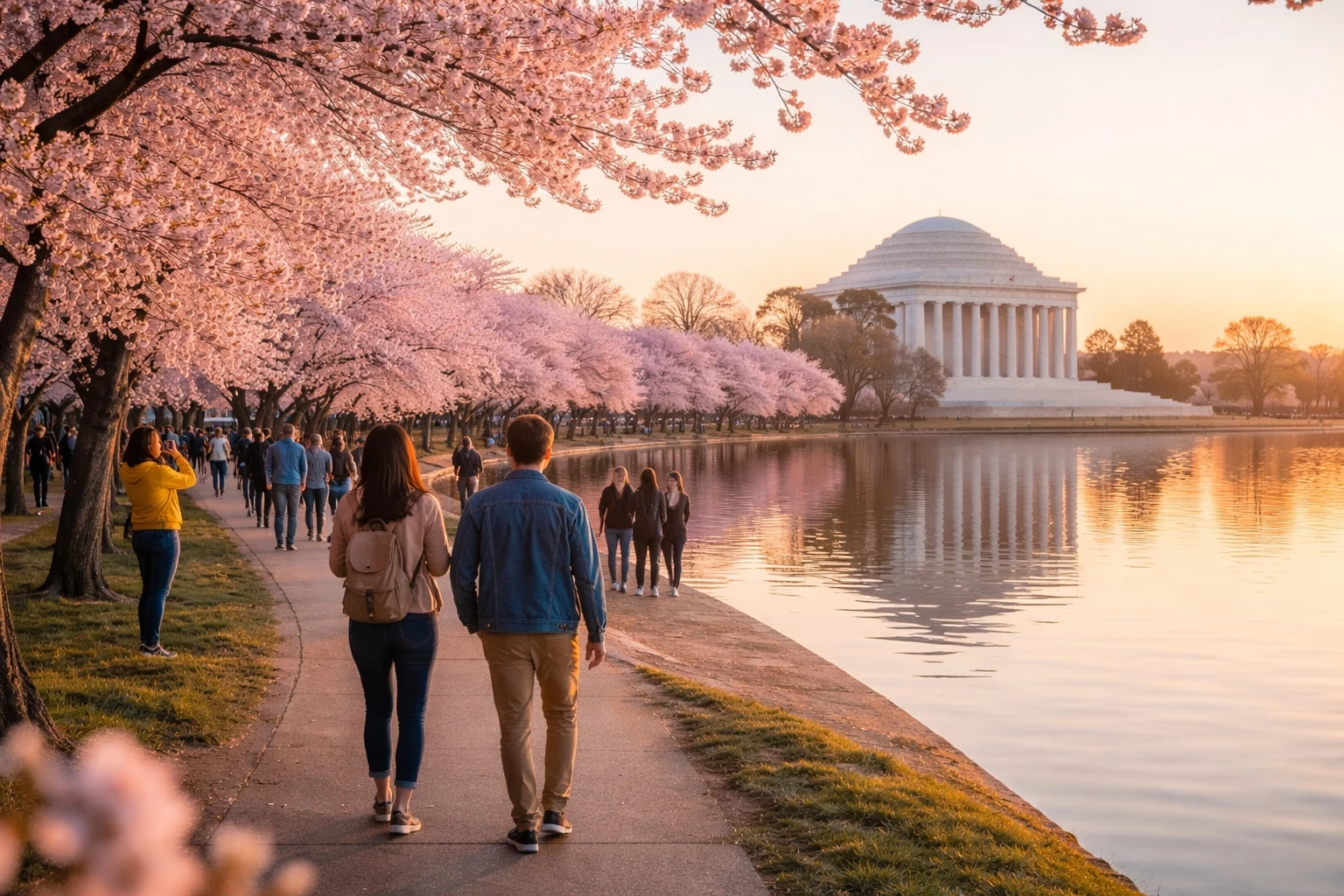
The cherry blossoms most people come to see are concentrated around the Tidal Basin, a manmade reservoir framed by some of the most significant memorials in the country. The circular walkway around the basin offers panoramic views of the blossoms with the Jefferson Memorial rising from the water.
The primary viewing areas include:
• The Tidal Basin loop
• The steps of the Jefferson Memorial
• The area near the Martin Luther King Jr Memorial
• The shoreline facing the Franklin Delano Roosevelt Memorial
• Portions of the National Mall near the Washington Monument
The blossoms are not located directly at a Metro entrance. Visitors must walk from nearby stations, which makes route selection critical during peak bloom in March.
Best Metro Stops for the Cherry Blossoms
The Washington Metro system, operated by the Washington Metropolitan Area Transit Authority, is the most reliable way to reach the blossoms during peak season. Trains run frequently and bypass the gridlocked streets that surround the National Mall during the National Cherry Blossom Festival.
Smithsonian Metro Station – The Most Direct Approach
The Smithsonian station on the Blue, Orange and Silver Lines is the most popular stop for visitors heading to the blossoms. It places you on the National Mall between the Smithsonian museums and the Washington Monument.
From Smithsonian, you will:
• Walk south toward the Washington Monument
• Continue downhill toward the Tidal Basin
• Reach the basin in approximately 10 to 15 minutes
Advantages:
• Direct National Mall access
• Clear pedestrian flow
• Iconic first views of the Washington Monument
Considerations:
• Heaviest foot traffic during peak bloom
• Potential Metro crowding during mid-morning and afternoon
L’Enfant Plaza – A Strategic Alternative
L’Enfant Plaza serves multiple Metro lines and offers an alternate route that approaches the Tidal Basin from the south. Many seasoned visitors prefer this option to avoid the most congested Mall pathways.
From L’Enfant Plaza, you will:
• Exit toward Independence Avenue
• Walk west toward the basin
• Enter near the Franklin Delano Roosevelt Memorial
Advantages:
• Often less crowded than Smithsonian
• Quicker access to the southern loop of the basin
• Good option for sunrise visits
Considerations:
• Slightly less intuitive for first-time visitors
• Requires more directional awareness
Federal Triangle and Foggy Bottom – Extended Walk Options
Federal Triangle allows access from the north side of the National Mall, while Foggy Bottom positions you west of the basin near the Kennedy Center. Both require longer walks but can be useful if you are combining your visit with other sightseeing stops.
Walking Routes to the Tidal Basin
Once you step off the train, your walking route determines both your first impression and your crowd exposure.
The National Mall Route
This is the classic approach. From the Washington Monument, you descend toward the basin with sweeping views. As the trees come into focus, the Jefferson Memorial appears framed by blossoms.
Expect:
• Wide sidewalks
• Heavy mid-day congestion
• Open views ideal for photography
The White House to Tidal Basin Walk
If you are staying near the White House, positioned just north of the National Mall, you can walk south through the Ellipse and continue toward the basin.
This route offers:
• A gradual transition from city streets to open landscape
• Early morning serenity before festival crowds build
• Excellent skyline views of both the White House and Washington Monument
For guests at the closest hotel to the White House, positioned at the edge of the White House Lawn, this walk is especially convenient. It allows you to bypass Metro crowds entirely and reach the blossoms on foot.
The Memorial Loop Entry
Approaching from the Martin Luther King Jr Memorial side offers a slightly quieter entry. You experience the blossoms interwoven with stone inscriptions and reflective water views.
This path tends to feel:
• More contemplative
• Less congested early in the day
• Ideal for photographers seeking variety
When to Go in March
Peak bloom typically occurs between mid and late March, though timing shifts slightly each year based on winter temperatures and early spring weather patterns.
During peak bloom:
• Weekends are significantly more crowded than weekdays
• Midday between 11 am and 4 pm is the busiest window
• Sunrise offers the calmest experience
March weather in Washington DC can vary dramatically. Temperatures may range from cool mornings to mild afternoons. Wind can shorten bloom duration, and rain can alter photography conditions.
Planning around forecast updates is essential. The National Park Service monitors bloom progression and releases peak bloom predictions annually.
What to Avoid During Cherry Blossom Season
The most common mistake visitors make is attempting to drive directly to the Tidal Basin during peak bloom.
Avoid Driving to the Basin
Road closures and police barricades are common during festival weekends. Even when streets remain open, traffic congestion can extend travel times dramatically.
Parking limitations include:
• Limited street parking
• Restricted access roads
• Temporary closures
• High demand garages farther from the basin
Driving often results in:
• Long delays
• Frustration
• Missed viewing windows
Metro is significantly more efficient.
Avoid Midday on Peak Weekends
The highest pedestrian density occurs during weekend afternoons. Movement around the basin can slow considerably, and photo opportunities become limited.
If possible:
• Visit on a weekday
• Arrive before 8 am
• Return for sunset after crowds thin
Avoid Relying on Rideshare Drop-Off Points
Uber and Lyft access can be unpredictable during peak bloom. Surge pricing is common, and designated drop-off zones may shift due to road closures.
Rideshare may work well:
• Very early in the morning
• Late at night
• Outside peak festival days
But it is not a primary strategy during mid-day.
Metro vs Driving – A Practical Comparison
Metro
• Predictable arrival times
• No parking stress
• Minimal exposure to traffic delays
• Most efficient during peak bloom
Driving
• High congestion risk
• Limited parking
• Road closures likely
• Slower overall experience
For most visitors, Metro wins decisively during March.
Staying Close to the Blossoms
Location changes everything during cherry blossom season. Staying within walking distance of the White House and National Mall allows you to:
• Visit early and return mid-day
• Avoid transportation entirely
• Capture sunrise and sunset views
• Adjust plans based on crowd conditions
Hotel Washington, the closest hotel to the White House, positioned at the edge of the White House Lawn, offers one of the most strategic locations in the city during peak bloom. Guests can walk south toward the Washington Monument and continue directly to the Tidal Basin without relying on transit or parking.
That proximity transforms the experience from logistical planning to effortless exploration.
Suggested Cherry Blossom Itinerary for a Smooth Visit
Early Morning Strategy
-
Depart before 7 am
-
Enter via L’Enfant Plaza or walk from near the White House
-
Complete the Tidal Basin loop
-
Capture photos near the Jefferson Memorial
-
Exit before peak mid-morning crowds
Afternoon Strategy
-
Visit surrounding museums during peak crowd hours
-
Return closer to sunset
-
Enter from the Martin Luther King Jr Memorial side
This staggered approach maximizes enjoyment and minimizes congestion exposure.
Frequently Asked Questions
What is the best Metro stop for the cherry blossoms
Smithsonian is the most direct stop, but L’Enfant Plaza often provides a less crowded approach.
Can you drive to the cherry blossoms in March
Driving is possible but strongly discouraged due to traffic congestion, road closures and limited parking. Metro is more reliable.
How far is the White House from the Tidal Basin
The walk is approximately 15 to 20 minutes at a moderate pace.
When is peak bloom in Washington DC
Peak bloom typically occurs between mid and late March, depending on weather conditions.
What time of day is least crowded
Sunrise on weekdays offers the calmest and least congested experience.
Is parking available near the Tidal Basin
Parking is extremely limited during peak bloom and often impacted by temporary restrictions.
Planning your visit to the cherry blossoms is as much about strategy as it is about beauty. The trees will bloom regardless. The experience, however, depends on how you arrive, when you arrive and where you stay.
For those who want seamless access, early morning flexibility and the ability to walk directly into spring without navigating transportation stress, consider staying at Hotel Washington. Learn more about accommodations and location details at www.thehotelwashington.com
Read other posts