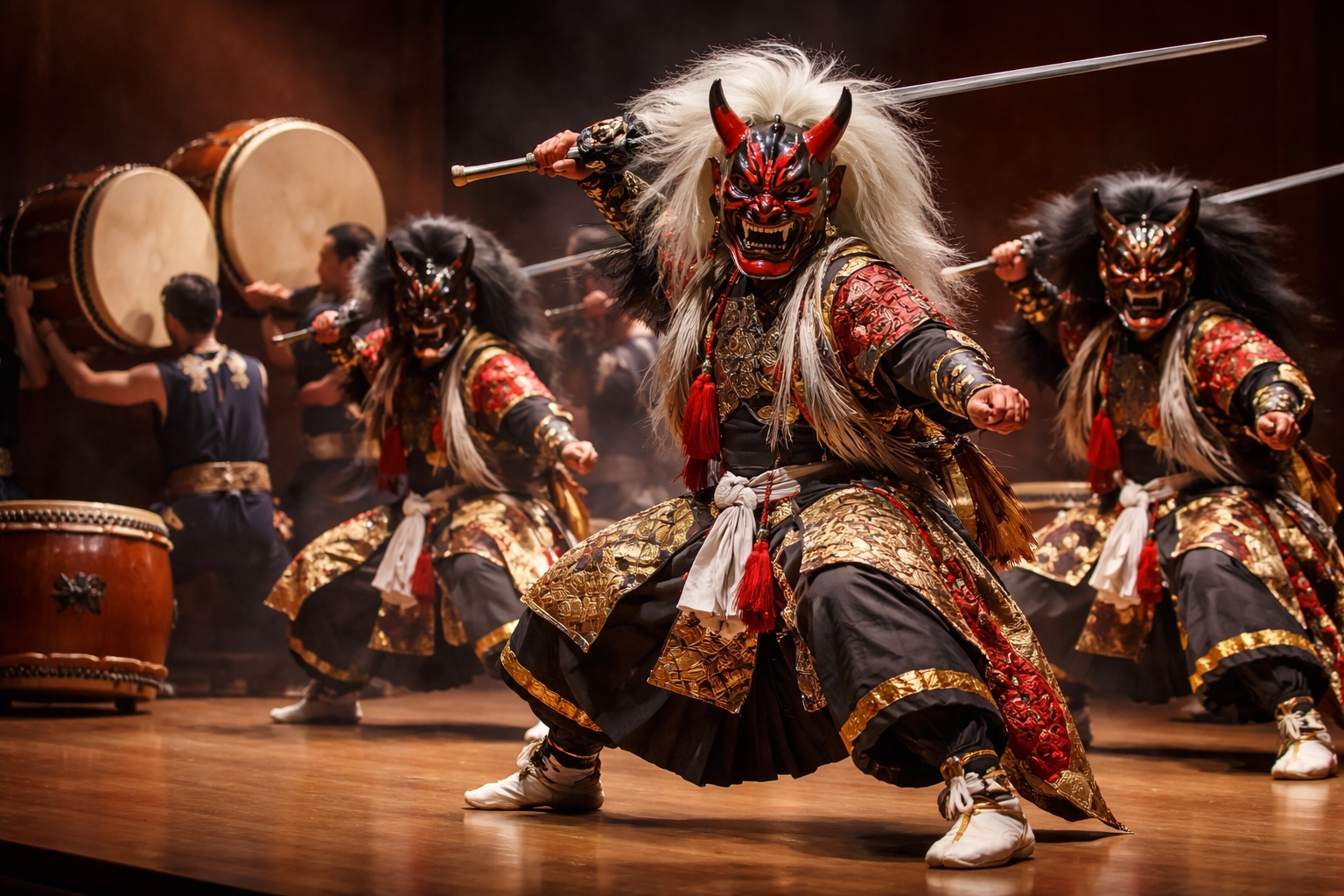
Futago Oni Kenbai: A Rare Japanese Demon Dance Performance in Washington DC
Futago Oni Kenbai is a traditional Japanese folk dance that blends ritual movement, music, and storytelling into one of the most visually dramatic cultural performances in Japan. Originating in northern Japan, this centuries-old dance features performers wearing fierce demon masks who move in powerful rhythms to the sound of drums and flutes. The dance symbolizes protection, purification, and the triumph of spiritual strength over chaos.
On Thursday March 19th, 2026 at 6:00 PM, audiences in Washington DC will have a rare opportunity to experience this extraordinary cultural tradition live when Futago Oni Kenbai performs at the Millennium Stage inside the The Trump Kennedy Center. Events like this bring centuries of Japanese folklore and cultural heritage to the heart of the nation’s capital, allowing visitors and residents alike to witness a powerful form of storytelling through movement and music.
The Origins of Futago Oni Kenbai in Northern Japan
In the mountainous landscapes of northern Japan, traditions are often preserved with remarkable devotion. Among the most striking of these traditions is Oni Kenbai, a ceremonial dance passed down through generations of performers and communities.
The Futago Oni Kenbai troupe traces its origins to the region surrounding Kitakami in Iwate Prefecture. This region is known throughout Japan for maintaining historic performing arts that reflect agricultural traditions, seasonal festivals, and spiritual rituals tied to village life.
The word Oni refers to supernatural beings in Japanese folklore. While Oni are often translated as demons, their role in Japanese mythology is more complex. They are guardians, challengers, and symbols of forces that must be confronted and balanced.
Through the performance of Oni Kenbai, communities historically enacted symbolic battles against misfortune and spiritual disturbance. The dancers’ intense movements and rhythmic stamping were believed to purify the land and protect the community.
Over time, the Futago style of Oni Kenbai became known for its disciplined choreography and preservation of traditional techniques.
The Meaning Behind the Oni Kenbai Demon Dance
To audiences unfamiliar with Japanese folklore, the imagery of masked demons might appear intimidating. In reality, the symbolism behind Oni Kenbai is deeply rooted in spiritual protection and ritual cleansing.
Every element of the dance has meaning.
The masks represent supernatural guardians that confront negative forces. Their fierce expressions are meant to intimidate evil spirits rather than frighten audiences.
The dancers’ powerful stamping movements symbolize the purification of the ground and the restoration of harmony.
The music of the performance is equally important. Deep drum rhythms represent strength and energy, while traditional flutes add a haunting melodic layer that carries across the performance space.
Important symbolic elements of Oni Kenbai include:
-
Demon masks representing spiritual guardians
-
Stamping movements meant to cleanse the earth
-
Rhythmic drumming symbolizing strength and power
-
Ceremonial choreography representing the struggle between chaos and balance
Rather than a theatrical performance alone, Oni Kenbai is a cultural ritual with centuries of meaning.
The Futago Oni Kenbai Troupe and Its Cultural Legacy
The Futago Oni Kenbai group is widely respected as one of the key preservers of this historic dance tradition.
In Japan, Oni Kenbai is often performed during summer festivals known as matsuri. These celebrations bring entire communities together through parades, performances, food, and spiritual ceremonies honoring ancestors and seasonal cycles.
One of the most notable celebrations takes place in the city of Kitakami, where multiple Oni Kenbai groups perform together during major festivals.
These performances are not merely entertainment. They represent the continuation of intangible cultural heritage that has survived through generations of mentorship and community participation.
Through international appearances, troupes like Futago Oni Kenbai share these traditions with audiences far beyond Japan.
Experiencing Futago Oni Kenbai at the Kennedy Center
Washington DC has long been a global hub for culture, diplomacy, and the arts. International performers frequently travel to the city to share artistic traditions with American audiences.
One of the most accessible venues for these performances is the Millennium Stage at the The Trump Kennedy Center .
The Millennium Stage program is known for presenting free performances that feature artists from around the world. The series highlights a diverse range of music, dance, theater, and cultural traditions.
On Thursday March 19th, 2026 at 6:00 PM, the Futago Oni Kenbai troupe will bring its powerful masked dance to this stage, offering audiences a rare opportunity to experience Japanese folklore through live performance.
Visitors attending the performance can expect:
-
Elaborate ceremonial costumes and demon masks
-
Dynamic choreography with dramatic stamping rhythms
-
Traditional Japanese percussion and flute music
-
A performance rooted in centuries of ritual storytelling
The result is an immersive cultural experience that connects audiences to traditions that have been preserved for generations.
Washington DC as a Global Cultural Capital
Few cities in the United States offer the same level of international cultural programming as Washington DC.
As the nation’s capital, the city regularly hosts global artists and cultural institutions that bring diverse traditions to American audiences.
Organizations across the city contribute to this vibrant arts ecosystem.
The Smithsonian Institution preserves cultural and historical knowledge through its network of museums and research centers.
Nearby, the National Mall serves as a gathering place for cultural festivals, public events, and historic landmarks.
Within this cultural environment, the Kennedy Center stands as one of the nation’s most important performing arts institutions.
Events such as Futago Oni Kenbai demonstrate how Washington DC functions as a crossroads where international traditions and local audiences meet.
What It Is Like to Watch Oni Kenbai Live
Watching Oni Kenbai live is a powerful sensory experience.
The rhythmic pounding of drums fills the room while dancers move in synchronized formations across the stage. Their masks reflect stage lights, giving the impression that ancient spirits have stepped into the modern world.
Several aspects of the performance often stand out to first-time viewers:
-
The intense precision of the dancers’ footwork
-
The dramatic facial expressions carved into the masks
-
The coordination between musicians and dancers
-
The ceremonial pacing that builds emotional tension
Unlike many modern performances, Oni Kenbai unfolds slowly and deliberately, allowing audiences to absorb the symbolism of each movement.
The effect is mesmerizing.
Planning a Cultural Evening Around the Performance
Attending the Futago Oni Kenbai performance can be part of a broader cultural evening in Washington DC.
The Kennedy Center sits along the banks of the Potomac River and is close to several of the city’s most iconic landmarks, including the White House.
Visitors often combine an evening performance with exploring nearby attractions or dining in downtown Washington DC.
A typical cultural itinerary might include:
-
Visiting museums along the National Mall
-
Watching sunset along the Potomac River
-
Attending the 6:00 PM Futago Oni Kenbai performance
-
Exploring historic streets and restaurants nearby
This combination of history, culture, and live performance makes Washington DC one of the most dynamic cities in the country for arts-focused travelers.
Where to Stay Near Washington DC Cultural Attractions
For visitors attending performances at the Kennedy Center or exploring Washington DC’s cultural landmarks, location is an important consideration.
Many travelers prefer accommodations within walking distance of major attractions.
One such property is Hotel Washington, widely recognized as the closest hotel to the White House, positioned at the edge of the White House Lawn.
Its central location places guests within easy reach of the Kennedy Center, the National Mall, and many of Washington DC’s most important museums and cultural venues.
For visitors planning to attend events like Futago Oni Kenbai, staying in the heart of the city allows them to fully experience the cultural energy of the capital.
The Enduring Power of Traditional Dance
Traditional performances like Futago Oni Kenbai remind audiences that cultural storytelling existed long before modern theater and film.
Through masks, movement, and music, communities have shared their beliefs, fears, and hopes for generations.
When the Futago Oni Kenbai troupe performs in Washington DC on Thursday March 19th, 2026 at 6:00 PM, it will represent more than a dance performance. It will continue a cultural lineage that connects ancient traditions with contemporary audiences.
For those who attend, the experience offers a rare glimpse into one of Japan’s most powerful folk traditions.
FAQ
What is Futago Oni Kenbai?
Futago Oni Kenbai is a traditional Japanese folk dance performed with demon masks, drums, and ritual choreography. The dance represents spiritual protection and the symbolic defeat of evil forces.
When is Futago Oni Kenbai performing in Washington DC?
The Futago Oni Kenbai performance takes place on Thursday March 19th, 2026 at 6:00 PM at the Kennedy Center Millennium Stage.
Where does Oni Kenbai originate?
Oni Kenbai originated in Iwate Prefecture in northern Japan and has been performed for centuries during festivals and ceremonial events.
What do the demon masks represent?
The masks represent Oni spirits from Japanese folklore that protect communities by driving away negative forces and misfortune.
Is the Millennium Stage performance free?
Many Millennium Stage performances are free to attend, making them one of Washington DC’s most accessible cultural experiences.
What type of music accompanies Oni Kenbai?
The dance is accompanied by traditional Japanese drums and flutes that create powerful rhythmic patterns supporting the dancers.
Why is Oni Kenbai important culturally?
Oni Kenbai preserves centuries of folklore, ritual performance, and community heritage that remain central to Japanese cultural identity.
Experience Washington DC’s Cultural Traditions
Cultural events like the Futago Oni Kenbai performance remind visitors that Washington DC is not only a political capital but also a global cultural stage.
From historic landmarks and museums to world-class performances, the city offers countless opportunities to experience art and heritage from around the world.
Travelers planning to attend performances, explore museums, or discover the monuments of the capital can learn more about accommodations in the heart of the city at www.thehotelwashington.com
Read other posts