Freedom 250 Grand Prix Course in Washington DC: Your Guide to the IndyCar Street Race
The Freedom 250 Grand Prix Course in Washington DC is more than just a racetrack; it’s a living showcase of American history, innovation and celebration. Scheduled for August 22–23, 2026, the event marks the first‑ever IndyCar race on the National Mall. A 1.7‑mile course with seven turns winds past the United States’ most iconic monuments, offering a blend of high‑speed thrills and awe‑inspiring views. The grand prix is part of America’s 250th anniversary celebrations, and the weekend is free to attend—an invitation for visitors to experience the convergence of patriotism and motorsport. In this guide you’ll explore the route, learn the historical context behind the event and find practical tips for viewing, travel and accommodations. Whether you’re a racing fan, a history buff or a traveler looking for a memorable summer weekend in Washington DC, this article provides everything you need to know.
Track Layout and Design: History Meets Horsepower
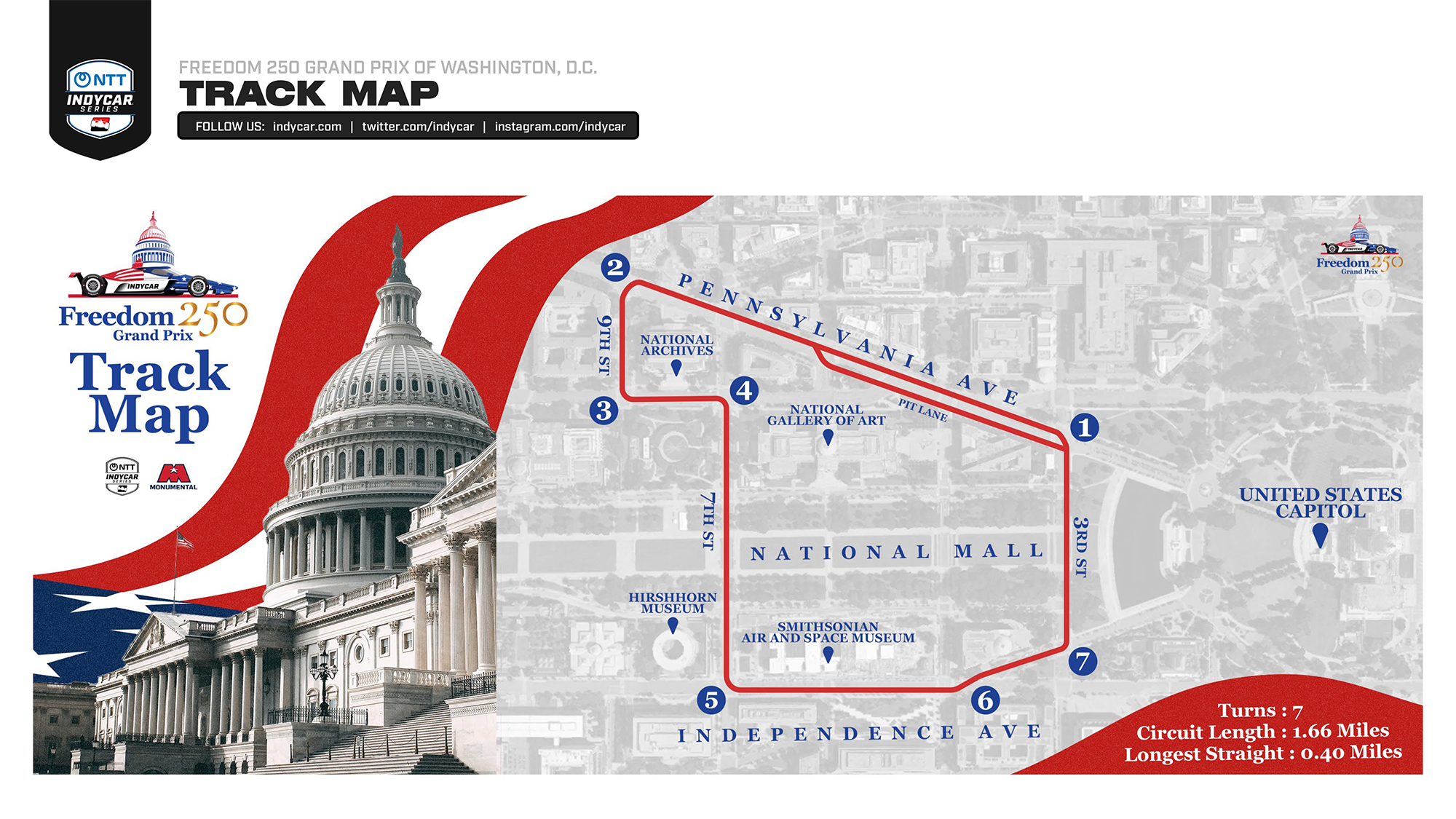
Walking the Freedom 250 route feels like taking a spirited lap through the nation’s story. As you stand near Third Street on the edge of the Capitol grounds, the start‑finish line comes into view. In front of you lies a seven‑turn layout that has never been attempted on these historic streets. The circuit begins and ends on Third Street, then heads north before turning west toward Pennsylvania Avenue. At the heart of the course is a sweeping 0.4‑mile frontstretch along Pennsylvania Avenue. This straightaway presents drivers with a high‑speed dash framed by the Washington Monument to the left and the U.S. Capitol to the right—an image that is equal parts racing spectacle and patriotic postcard. The pit lane sits adjacent to this straight, between Turns 1 and 2, ensuring that the teams are part of the visual drama.
Route details and key turns
The Freedom 250 Grand Prix street circuit is designed to balance speed with technical challenges. After leaving the frontstretch, cars dive into a sequence of bends around Ninth Street. Two‑time IndyCar champion Josef Newgarden described the layout as a mix of commitment and precision; the Pennsylvania Avenue straight rewards bravery, while the technical corners around Ninth Street demand respect. Fans watching from Constitution Avenue will see the field negotiate tight corners before sweeping back toward the Capitol.
Key features of the route:
-
Start/finish at Third Street – Positioned in front of the Capitol, this point anchors the event in the heart of Washington.
-
0.4‑mile frontstretch – A high‑speed blast along Pennsylvania Avenue, offering unobstructed views of the Washington Monument and U.S. Capitol.
-
Pit lane on Pennsylvania Avenue – Located between Turns 1 and 2, ensuring quick access for teams and a chance for spectators to watch pit stops up close.
-
Technical section around Ninth Street – Drivers slow down through a series of tighter turns, giving fans at the intersections a close look at braking and acceleration techniques.
-
Finish back on Third Street – The lap closes where it begins, with drivers sprinting toward the checkered flag under the watchful eye of the Capitol.
Landmarks along the course
What makes this street race unique is the way it incorporates national landmarks into the track. As cars speed down Pennsylvania Avenue, they pass the Smithsonian National Air and Space Museum, the National Gallery of Art and the National Archives. Spectators on the National Mall can watch the race while admiring the Washington Monument and hearing the cheers echo off the surrounding museums.
| Landmark | Unique view during the race |
|---|---|
| National Mall | Cars roar past the green expanse nicknamed “America’s front yard” and provide a juxtaposition of speed and serenity. |
| Smithsonian National Air and Space Museum | Drivers race by the museum that chronicles aviation history, reminding fans of how far transportation has come. |
| National Gallery of Art | The museum’s classical architecture frames the technical section; art and engineering collide in a single moment. |
| National Archives | Home to the Declaration of Independence and the Constitution, the Archives sits beside the track as drivers celebrate freedom on wheels. |
| Washington Monument | The marble obelisk presides over the frontstretch, creating an unforgettable backdrop. |
| U.S. Capitol | The race begins and ends in front of the nation’s legislative home—motorsports meets democracy. |
Frontstretch and pit lane specifics
The frontstretch is not just a straight line; it’s a statement. Measured at 0.4 miles, it gives drivers space to push their cars to speeds over 180 mph before braking into the first turn. The pit lane runs parallel to this stretch, allowing crews to service cars without disrupting the spectacle. As you watch from Pennsylvania Avenue, you can see the choreography of pit stops—tires changed, fuel topped up and engines roaring back into battle. The setup ensures that fans witness both the high‑speed glamour and the strategic depth of IndyCar racing.
Course design inspiration
IndyCar officials didn’t simply drop a track on top of Washington’s grid; they carefully considered the city’s history and layout. The design team studied other street circuits—such as Long Beach and Nashville—to balance safety with competitive racing. Barriers are placed to protect spectators while preserving views of monuments. Elevation changes are minimal, but surface differences between Pennsylvania Avenue and side streets will challenge teams to adjust setups. The result is a course that honors Washington’s legacy while delivering a race worthy of the NTT IndyCar Series.
Historical and Cultural Significance
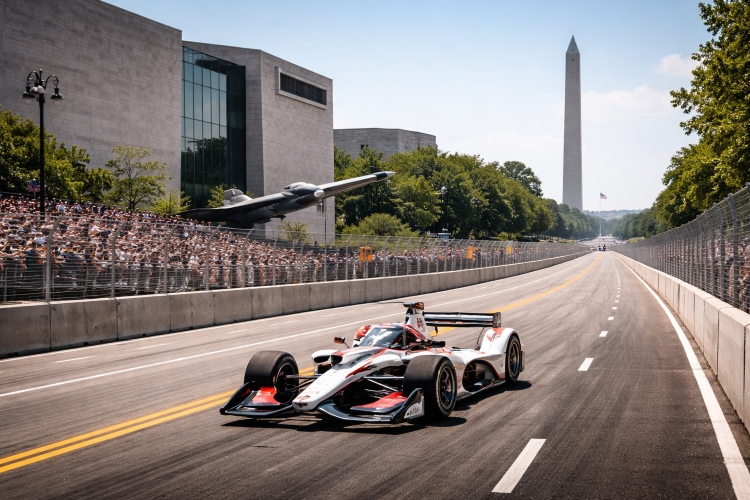
Before engines fire and tires grip asphalt, it’s worth stepping back to appreciate why this event exists. The Freedom 250 Grand Prix of Washington, D.C. was conceived as part of the United States’ 250th anniversary celebrations. In March 2026, officials unveiled the track layout and announced that the race would be held on August 22–23, 2026. This marks the first time an auto race will take place on the National Mall, a space traditionally reserved for monuments, protests and celebrations of national significance. The grand prix honors the spirit of freedom, innovation and unity that define America.
America’s 250th birthday
America’s semiquincentennial—often called America 250—commemorates the signing of the Declaration of Independence in 1776. Celebrations across the country include concerts, exhibitions, sporting events and historical reenactments. The Freedom 250 adds high‑speed excitement to the lineup. Officials noted that previous milestones were marked with horse races in the early republic; the grand prix brings that tradition into the 21st century. The event is free and open to the public, emphasizing inclusivity and community participation.
Executive Order and government support
The race became reality through an executive order titled “Celebrating American Greatness with American Motor Racing.” Signed early in 2026, the order paved the way for infrastructure adjustments, security plans and federal coordination. Supporters include the U.S. Chief of Protocol, Secretary of Transportation, Secretary of the Interior and the Mayor of Washington, D.C. Their involvement underscores the event’s stature and ensures that national landmarks are respected while roads are prepared for racing.
Why a street race on the National Mall?
Holding a race on the National Mall serves several purposes. First, it showcases America’s capital to a global audience, inviting viewers to witness landmarks like the Washington Monument, the U.S. Capitol and the Smithsonian museums in a new context. Second, it celebrates innovation. The NTT IndyCar Series showcases cutting‑edge engineering and sustainable fuels, aligning with the country’s technological aspirations. Finally, it reaffirms that freedom includes the freedom to pursue speed, competition and spectacle in the heart of a city often associated with politics. For locals, the event promises tourism revenue and civic pride; for visitors, it’s a once‑in‑a‑lifetime chance to see world‑class racing set against America’s most recognizable skyline.
Event Schedule and Weekend Activities
Imagine arriving in Washington DC on a bright Friday morning and feeling the buzz. Vendors line Pennsylvania Avenue, banners flutter and practice sessions roar in the distance. The Freedom 250 weekend spans three days—August 21 to 23, 2026—and includes practice, qualifying and the race itself. Because the event is free, spectators can come and go as they please, exploring the city’s attractions between sessions. Here’s how the weekend unfolds.
Three days of racing and celebration
| Date | Activity | Highlights |
|---|---|---|
| Friday, Aug 21 | Practice sessions | Teams shake down their cars on the circuit, giving fans their first chance to hear engines echo off monuments. Explore the vendor village and America 250 exhibits. |
| Saturday, Aug 22 | Qualifying and community events | Drivers battle for starting positions. Off track, enjoy historical reenactments, concerts and food festivals celebrating diverse American cultures. |
| Sunday, Aug 23 | The Freedom 250 Grand Prix | The main event. Cars line up on Third Street, and the green flag drops on a 100‑lap contest. After the race, stay for fireworks and a closing ceremony on the National Mall. |
Tickets are distributed through an online lottery beginning around April 1. Because the race is free, winners receive passes that designate a specific area along the course. VIP packages—complete with hospitality suites and elevated viewing platforms—are available for purchase through official channels. Families can attend kids’ zones featuring interactive exhibits from the Smithsonian and racing simulators provided by the NTT IndyCar Series.
Off‑track events
The America 250 planning committee has integrated the Freedom 250 into a broader cultural festival. Expect these highlights:
-
Historical exhibits – Temporary museums along the Mall tell stories about 1776, the founding documents and the evolution of motorsport. Partner institutions like the National Archives and the Smithsonian contribute artifacts and interactive displays.
-
Concerts and performances – A stage near the Lincoln Memorial hosts patriotic concerts, gospel choirs and contemporary musicians. Performances by military bands and local artists create a festive soundtrack.
-
Food and craft markets – Vendors from across the 50 states offer regional specialties. Sample New Orleans beignets, Texas barbecue and New England clam chowder, all within sight of the race course.
-
Community runs and bike rides – Before the track closes for the race, the public can walk, run or cycle the 1.7‑mile circuit, experiencing the turns and straightaways from a competitor’s perspective.
-
America 250 events – Additional celebrations include the Patriot Games (a multi‑sport competition), a state fair on the Mall and a planned UFC bout at the White House, underscoring the scale of the anniversary celebrations.
Viewing Spots and Spectator Experience
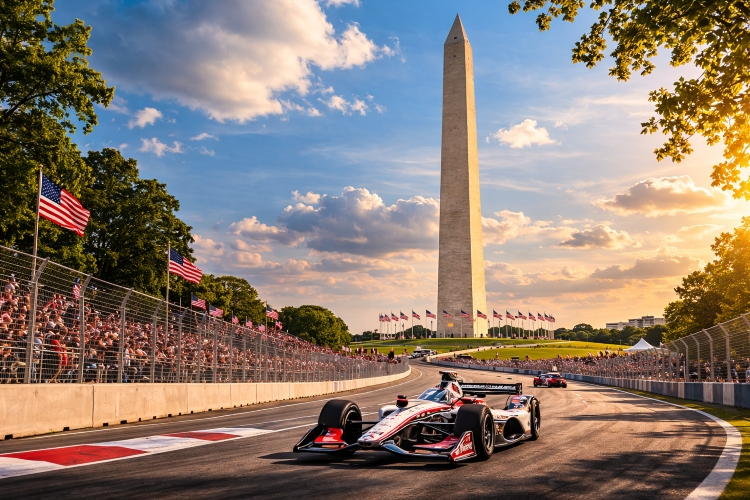
Choosing where to watch the Freedom 250 is part of the fun. The circuit’s design allows spectators to experience everything from high‑speed blasts to technical corners. As Josef Newgarden noted, the joy of a street race lies in exploring different angles. You can wander the National Mall’s grass, stake out a spot along Pennsylvania Avenue or splurge on a VIP suite overlooking the start‑finish line.
Best public viewing areas
-
Pennsylvania Avenue near the Washington Monument – Stand here for a panoramic view of the frontstretch. Watch drivers accelerate to top speed while the Monument towers above. Bring binoculars to appreciate the sense of speed.
-
Third Street Lawn – Situated right at the start‑finish line, this lawn offers views of the race’s climactic moments. It’s a great spot for photos with the U.S. Capitol in the background. Arrive early; space will fill quickly.
-
Constitution Avenue corners – The course’s technical section around Ninth Street forces drivers to slow down. This area is ideal for fans who love watching late braking, overtaking and acceleration out of turns.
-
Reflecting Pool hill – A gentle slope near the Lincoln Memorial provides elevation, allowing you to see multiple sections of the track at once. Bring a blanket and enjoy a picnic atmosphere.
-
Museum steps – The steps of the National Gallery of Art or the National Archives give you a view over barriers. Arrive early and be prepared for limited seating, as museum staff may restrict access once the race begins.
VIP and hospitality options
For an elevated experience, consider hospitality packages. Premium viewing boxes near the U.S. Capitol offer shade, seating and catered meals. Paddock club passes grant access to the pit lane, where you can watch mechanics work during practice and qualifying. Corporate suites along Pennsylvania Avenue provide air‑conditioned comfort, private restrooms and panoramic windows. Be aware that these packages sell out quickly due to limited capacity.
Spectator tips
Attending a free, open‑street race in a major city requires planning. Here are some practical tips:
-
Arrive early – Gates open several hours before practice. Lines for security checkpoints may be long, so budget extra time.
-
Pack light – Bag size restrictions will be enforced. Bring sunscreen, water, earplugs and portable chargers.
-
Use public transportation – Metro stations at Smithsonian, Federal Triangle and Archives are within walking distance. Avoid driving downtown; road closures will affect parking.
-
Explore different zones – The course is free to roam. Visit multiple corners to appreciate the race’s variety.
-
Respect monuments – Remember that the National Mall is a historic park. Stay within designated areas, dispose of trash properly and follow National Park Service guidelines.
-
Stay updated – Check official event apps for schedule changes, security advisories and transportation updates.
Travel and Accommodation
Planning your trip to the Freedom 250 involves more than picking a spot along the fence. You’ll need to navigate a busy city, find comfortable lodging and make the most of your time in Washington. Fortunately, the capital offers extensive transport options and a wide range of hotels, including one that stands out for its location and history—Hotel Washington, the closest hotel to the White House, positioned at the edge of the White House Lawn.
Getting to Washington DC
Washington is served by three major airports: Ronald Reagan Washington National Airport (DCA), Dulles International Airport (IAD) and Baltimore/Washington International Thurgood Marshall Airport (BWI). From DCA, the city’s Metro system delivers you to the National Mall in about 15 minutes. From IAD and BWI, take shuttle buses to Metro stations. Amtrak’s Union Station welcomes visitors from the Northeast Corridor and connects to Metro’s Red Line. If you’re driving, expect heavy traffic and limited parking due to road closures; plan to park outside downtown and use public transit.
Choosing accommodations
When selecting a hotel, proximity to the National Mall is key. Staying within walking distance allows you to avoid traffic congestion and fully participate in the weekend’s festivities. Options range from budget hostels to luxury suites; however, Hotel Washington is particularly notable. Originally built in 1917 and recently renovated, it boasts rooftop views of the White House and quick access to Pennsylvania Avenue. The property’s design fuses contemporary comfort with historical charm, making it a perfect base for race fans and history enthusiasts alike. Booking early is essential, as demand will be high for hotels near the Mall. Other nearby options include boutique inns in Penn Quarter and larger chains around Metro Center.
Transportation during race weekend
Because the race route runs through the heart of downtown, certain roads will close incrementally beginning July 26. Organizers plan to build walls and fencing at night to keep intersections open as long as possible. Metro stations around the Mall will remain open, though some entrances may close for security. Biking is a convenient way to move between viewpoints; Capital Bikeshare stations dot the National Mall. Taxis and ride‑sharing services will have designated drop‑off points outside road‑closure zones. If you’re staying at Hotel Washington, the short walk to the course may be the easiest way to arrive.
Nearby dining and nightlife
Washington’s culinary scene offers something for every palate. Pennsylvania Avenue features food trucks selling gourmet sandwiches, while the District Wharf along the Potomac offers seafood and waterfront views. For dinner after qualifying, venture to U Street for jazz clubs and Ethiopian cuisine, or Shaw for craft breweries. Many restaurants extend hours during the race weekend to accommodate visitors. Reservations are recommended for popular spots near the Mall.
Local Attractions and Things to Do
The Freedom 250 takes place in the heart of one of the world’s greatest museum districts. Between sessions you can stroll through centuries of art, science and history—all for free. This section offers a curated itinerary for exploring the capital’s cultural treasures.
Must‑see museums and monuments
-
Smithsonian National Museum of Natural History – Discover dinosaur fossils, gemstones and an insect zoo. The museum’s Hall of Human Origins traces our evolutionary story.
-
National Museum of American History – See the Star‑Spangled Banner, the Greensboro lunch counter and presidential artifacts. Exhibits explore innovation, pop culture and social change.
-
National Gallery of Art – Its East and West Buildings house works by da Vinci, Vermeer, Monet and Rothko. Stroll through sculpture gardens for a moment of calm.
-
National Archives – View the original Declaration of Independence, Constitution and Bill of Rights. Interactive exhibits explain the power of these documents.
-
Smithsonian National Air and Space Museum – Immerse yourself in the history of flight, from the Wright brothers to Apollo missions.
-
Lincoln Memorial – Climb the steps and gaze toward the Reflecting Pool. Read the Gettysburg Address engraved in stone and feel the weight of history.
-
Washington Monument – Reserve timed tickets to ride the elevator to the top. The 555‑foot obelisk offers panoramic views of the city.
-
U.S. Capitol – Book a tour to explore the Rotunda, Statuary Hall and Visitor Center. The Capitol grounds provide a quiet place to relax after the race.
Parks and outdoor experiences
While the National Mall is an obvious draw, Washington’s parks extend beyond its borders. Visit Rock Creek Park for hiking trails and picnic spots. Explore Theodore Roosevelt Island, a 91‑acre wooded oasis accessible by footbridge. Walk along the C&O Canal Towpath in Georgetown and watch rowers glide on the Potomac River. For a taste of international design, wander through Kenilworth Aquatic Gardens, where lotus flowers bloom in summer. These green escapes provide a peaceful counterpoint to the noise of race cars.
Neighborhood explorations
Washington’s neighborhoods each tell a distinct story:
-
Penn Quarter and Chinatown – This lively district near the course offers art galleries, theaters and Asian cuisine. Check out the Capital One Arena for sports and concerts.
-
Capitol Hill – Beyond the Capitol building, this residential area features historic rowhouses and the bustling Eastern Market. Enjoy brunch at a local café before heading to the race.
-
Georgetown – Known for cobblestone streets and waterfront dining. Browse boutiques on M Street or take a kayak onto the river.
-
Adams Morgan – A multicultural hub with live music venues and diverse restaurants. Nightlife here contrasts with the formal atmosphere of federal buildings.
-
Dupont Circle – Home to embassies, bookshops and the famed Phillips Collection art museum. Grab a coffee at a sidewalk café and watch the world go by.
Evening entertainment
After the day’s racing action, Washington comes alive with entertainment. Catch a performance at the Kennedy Center, where classical music, jazz and theater converge. Head to the 9:30 Club on V Street for live bands, or enjoy stand‑up comedy at DC Improv. The Wharf hosts outdoor concerts during summer nights, and rooftop bars around Shaw provide skyline views with craft cocktails. Fireworks over the Lincoln Memorial end the race weekend on a festive note.
IndyCar Series Overview and Racing Context
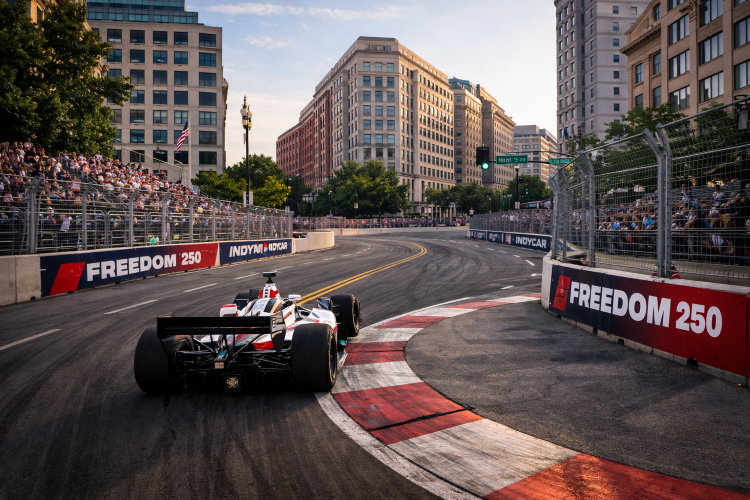
To fully appreciate the Freedom 250, it helps to understand the NTT IndyCar Series. IndyCar is North America’s premier open‑wheel racing championship, known for its mix of oval tracks, permanent road courses and temporary street circuits. Cars are built around the Dallara DW12 chassis and powered by twin‑turbocharged V6 engines producing around 700 horsepower. Drivers compete across diverse venues, from the Indianapolis 500 to the streets of Long Beach and Toronto.
IndyCar versus other series
IndyCar often invites comparisons with Formula 1 and NASCAR. While F1 features highly customized cars and primarily international circuits, IndyCar utilizes a standard chassis and focuses on North American venues. Races tend to be more competitive, with overtaking opportunities influenced by push‑to‑pass systems. NASCAR, meanwhile, uses stock cars and emphasizes oval racing. IndyCar’s blend of disciplines means drivers must adapt quickly from high‑banked ovals to tight street courses, a skill set that will be on full display in Washington.
2026 season context
The 2026 IndyCar season includes classic stops like St. Petersburg, Barber Motorsports Park, Detroit, Road America, Mid‑Ohio and Laguna Seca before culminating with the Freedom 250 in Washington and the season finale at WeatherTech Raceway Laguna Seca. The DC race serves as the fifteenth round, adding a new test to the championship fight. Because points from the Freedom 250 count toward the overall standings, teams will approach the weekend with strategic intensity. Expect all championship contenders to treat Washington as a must‑win.
Open‑wheel racing fundamentals
In open‑wheel racing, the wheels sit outside the main body of the car, reducing weight and allowing for high cornering speeds. Aero packages create downforce, pressing the car into the track. Street circuits like Washington tend to have bumpier surfaces, limited run‑off areas and tighter turns, placing a premium on driver precision. Engineers adjust suspension setups to handle uneven pavement and maintain tire life over 100 laps.
Notable drivers and teams
IndyCar attracts a diverse field of veterans and rising stars. Josef Newgarden, who toured the DC course during its unveiling, is a two‑time series champion known for his adaptability. Alex Palou, Pato O’Ward and Colton Herta represent a new generation eager to carve their names into history. Teams like Team Penske, Chip Ganassi Racing, Arrow McLaren and Andretti Autosport bring decades of experience. Each will bring different strategies to Washington; some will prioritize qualifying for a good grid position, while others will gamble on pit strategy.
Safety and sustainability
IndyCar continues to innovate with safety and environmental initiatives. The aeroscreen protects drivers from debris, while energy‑absorbing barriers line street courses. The series plans to introduce hybrid power units in 2026, combining gasoline engines with electric motors. This technology aims to improve efficiency and align the sport with broader sustainability goals. The Freedom 250 therefore serves not only as a spectacle but also as a platform to showcase greener motorsport technology.
Street Racing Logistics and City Impact
Transforming the center of Washington into a temporary race circuit requires careful planning. Officials must balance the needs of residents, commuters, tourists and race fans. Coordination between the NTT IndyCar Series, the city government and federal agencies ensures that infrastructure remains intact and public safety is maintained.
Course construction and road closures
Work on the Freedom 250 circuit will begin around July 26. Construction crews will install concrete barriers, catch fencing and temporary grandstands at night to minimize disruption. Intersections along Third Street, Seventh Street, Ninth Street and Constitution Avenue will stay open until the week of the event. Residents will receive advance notice of lane closures and alternative routes. After the race, crews will remove barriers swiftly, restoring streets for everyday use within days.
Security and safety measures
Given the course’s proximity to national landmarks, security is paramount. Federal and local law enforcement agencies will coordinate checkpoints, bag checks and surveillance. Spectators should expect metal detectors and restricted items lists similar to those at national events. Medical teams, fire departments and track marshals will be positioned around the circuit. IndyCar’s safety protocols include the AMR safety team, which travels with the series and responds instantly to on‑track incidents.
Economic and tourism impact
Hosting a free event of this scale will attract more than a million visitors, according to city officials. Local businesses benefit from increased foot traffic, while hotels see a surge in occupancy. Restaurants, museums and retail shops welcome new customers. The event highlights Washington as a tourist destination beyond politics, potentially boosting long‑term visitation. In addition, broadcasters like FOX Sports will showcase the city to a national audience, promoting tourism even after the race.
Community considerations
To minimize disruptions, organizers encourage residents to plan ahead. Public forums and information sessions will provide details about road closures, noise levels and security procedures. Because the race is free, locals can enjoy the spectacle without purchasing tickets. Park rangers and volunteers will be on hand to answer questions and direct crowds. The city also invests in temporary infrastructure improvements—such as resurfacing worn sections of Pennsylvania Avenue—that remain after the event.
Comparisons to Other IndyCar Street Races
Street circuits are a signature of the IndyCar schedule, and each has a unique character. Comparing the Freedom 250 to established events helps illustrate what sets Washington apart.
| Event & location | Track length & turns | Distinctive features | Notes |
|---|---|---|---|
| Toyota Grand Prix of Long Beach (California) | ~1.968 mi, 11 turns | Follows Shoreline Drive along the harbor; includes a famous fountain section. | Long Beach is IndyCar’s oldest street race, known for celebrity events and a festival atmosphere. |
| Firestone Grand Prix of St. Petersburg (Florida) | ~1.8 mi, 14 turns | Starts on an airport runway, then winds through downtown waterfront. | Season opener that combines wide runways with tight city streets. |
| Honda Indy Toronto (Ontario) | ~1.786 mi, 11 turns | Includes a long Lakeshore Boulevard straight and bumpy streetcar tracks. | Canada’s premier street race, challenging for its mixed surfaces. |
| Big Machine Music City Grand Prix (Nashville) | ~2.1 mi, 11 turns | Crosses the Korean War Veterans Memorial Bridge twice; features elevation changes and long straights. | Known for high attrition and spectacular downtown views. |
| Freedom 250 Grand Prix (Washington, DC) | 1.7 mi, 7 turns | Sweeping 0.4‑mile frontstretch along Pennsylvania Avenue; passes the National Mall’s monuments and museums. | First‑ever race on the National Mall; part of America’s 250th celebrations; free to attend. |
Washington’s track is the shortest among these events, with fewer turns but a longer straight than St. Petersburg. The integration of national landmarks gives it a distinctive feel. Unlike Nashville, which crosses a river, the Freedom 250 course remains on Washington’s flat grid, making surface grip and braking points the main technical challenges.
Frequently Asked Questions (FAQ)
What is the Freedom 250 Grand Prix?
The Freedom 250 Grand Prix of Washington, DC is an IndyCar street race held on the National Mall. It marks the first auto race on these historic streets and is part of America’s 250th anniversary celebrations.
When is the race and how long is the track?
The event takes place from August 21–23, 2026, with the main race on August 23. The street circuit is 1.7 miles long and features seven turns.
How can I get tickets?
Admission is free. Tickets are distributed via an online lottery that opens around April 1. VIP hospitality packages are available for purchase through official channels.
Where are the best places to watch?
Popular spots include the Pennsylvania Avenue frontstretch, the start‑finish line on Third Street, and corners near Ninth Street. Spectators are encouraged to explore multiple areas for varied views.
What transportation options are recommended?
Use Metro stations near the National Mall (Smithsonian, Federal Triangle, Archives). Driving downtown is discouraged due to road closures. Bicycles and walking are convenient within the course area.
Are there other events during the weekend?
Yes. The Freedom 250 coincides with America 250 celebrations, including concerts, cultural exhibits, food festivals and community runs. Fireworks and a closing ceremony follow the race.
Which landmarks does the course pass?
The circuit winds around the National Mall, passing the Smithsonian National Air and Space Museum, National Gallery of Art, National Archives, Washington Monument and the U.S. Capitol.
What should I bring to the race?
Pack light but include sunscreen, water, ear protection, a hat, and a portable charger. Check the event’s official guidelines for prohibited items.
Conclusion: Plan Your Freedom 250 Experience
The Freedom 250 Grand Prix Course in Washington DC promises to be a landmark event—a fusion of sport, history and celebration unlike any other. With a 1.7‑mile route that showcases the National Mall’s monuments and a weekend of concerts, exhibits and fireworks, the grand prix offers something for everyone. As you plan your trip, secure your viewing spot early, explore the city’s museums and neighborhoods, and embrace the spirit of America’s 250th birthday.
For visitors seeking a home base close to both the race and the heart of government, consider Hotel Washington. Situated on the edge of the White House Lawn, this iconic property offers rooftop views, elegant rooms and easy access to Pennsylvania Avenue. It’s the perfect starting point for a weekend of horsepower and history. As the engines roar and the nation celebrates, you’ll be at the center of the action—ready to create memories that will last long after the checkered flag falls.
Read other posts