What Is the Festival of Festivals? Inside the Smithsonian’s Biggest Cultural Shift
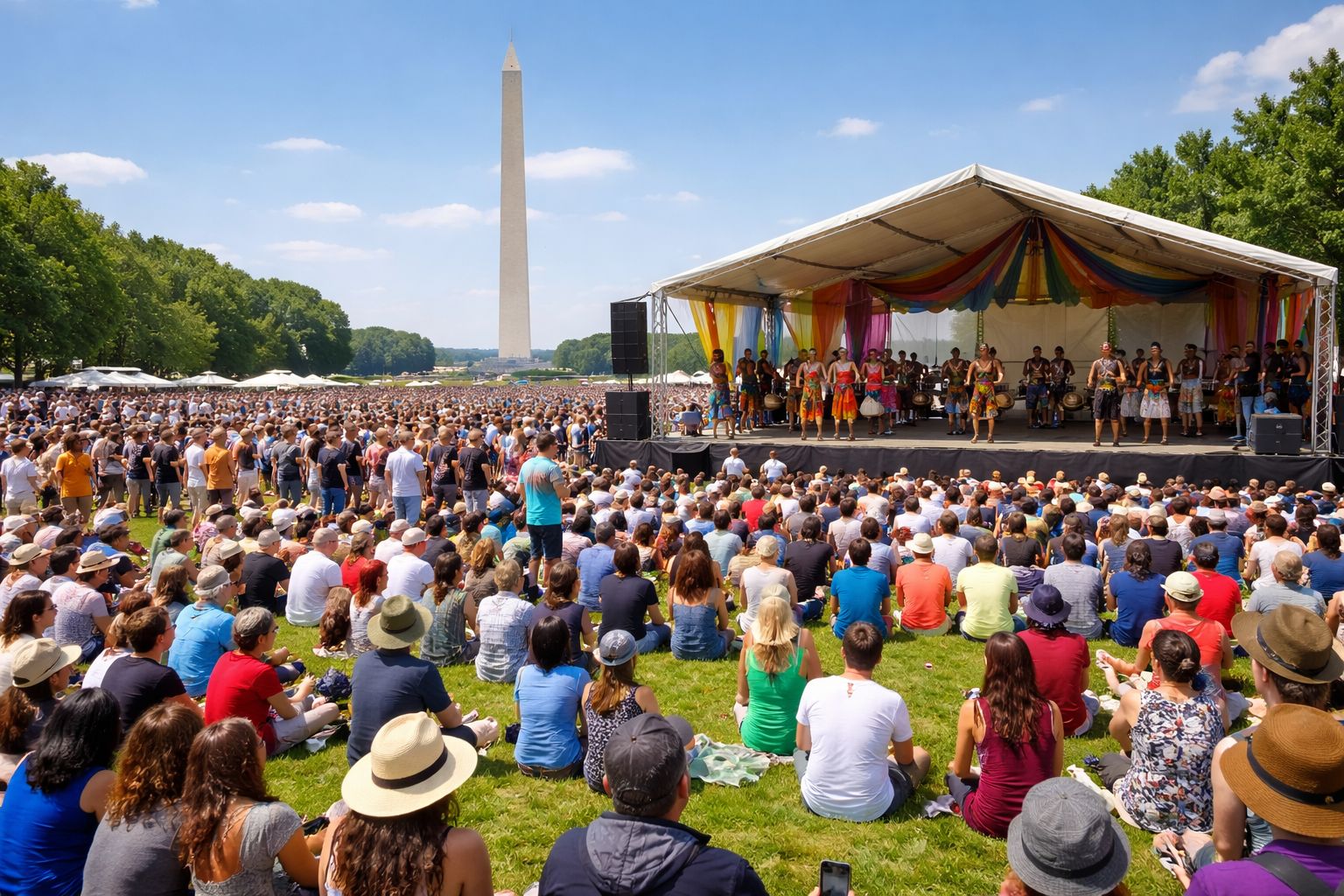
The National Mall in Washington, D.C. has long been the stage for the Smithsonian Folklife Festival. Since 1967, the free, research‑driven celebration has invited people to dance, sing, taste and try crafts with tradition bearers from every state and from more than 100 countries. For America’s semiquincentennial in 2026, the festival is doing something it has never done before – it is going on the road and expanding into a “Festival of Festivals.” Instead of asking the country to come to the Mall, the Smithsonian will join dozens of local festivals across the United States, weaving a national tapestry of music, food, stories and community.
What is the Festival of Festivals?
The Smithsonian Folklife Festival is transforming into a traveling program called Of the People – the Smithsonian Festival of Festivals. Between March and November 2026, the Smithsonian’s Center for Folklife and Cultural Heritage will collaborate with approximately forty festivals around the country. Each partnership will be co‑curated with local organizations to ensure that activities reflect the voices, stories and aspirations of their own communities. The Smithsonian describes the series as a network of programs and exchanges presented at local festivals in several states and territories. Instead of a single, centralized event, the Festival of Festivals will unfold as a continuum of gatherings where national and local traditions mingle.
The new format takes the Smithsonian’s oldest public program beyond Washington, D.C. By joining existing festivals – many of them free and community‑driven – the institution hopes to amplify the role that festivals play as tools for civic engagement and cultural exchange. It is also a way to mark the country’s 250th birthday by reminding Americans that cultural democracy is built from the ground up. The festivals range from one‑day neighborhood concerts to week‑long heritage fairs. Curators selected festivals that represent diverse regions and presentation styles; some have longstanding relationships with the Smithsonian, while others are new partners.
Although the Folklife Festival will travel, Washington, D.C. will still host signature programs. In the National Museum of American History and the Anacostia Community Museum there will be food and music demonstrations, conversations and workshops. Visitors can explore a Folklife Marketplace in the Arts and Industries Building with handcrafted items and an exhibition of artifacts from past festivals. A series called For the Common Good – Smithsonian Voices on Our Shared Future 250 will bring together Smithsonian staff, community partners and thought leaders for discussions.
Why is the Smithsonian expanding the Folklife Festival?
The year 2026 marks the United States’ semiquincentennial. During the bicentennial in 1976, the Smithsonian organized a twelve‑week Festival of American Folklife on the National Mall that attracted millions of visitors. Fifty years later, the institution decided to invert that model. Clifford Murphy, director of the Center for Folklife and Cultural Heritage, says the 250th anniversary is a time to celebrate cultural democracy, visit communities and contemplate our shared future; taking the Folklife Festival beyond Washington recommits the Smithsonian to connecting communities across cultures and cultivating belonging for all people. By showing up in local spaces, the Smithsonian aims to carry the festival’s legacy forward while fulfilling its mission of serving people where they live.
Festival director Sabrina Lynn Motley notes that the traveling concept echoes the festival’s original purpose. In 1976, the institution brought people to the Mall; for 2026, it is going to them. This approach allows the festival to highlight how festivals are enduring tools for civic participation and cultural exchange. Curators looked for events that showcase regional diversity—jazz and bluegrass concerts, artisan marketplaces, multicultural street fairs and heritage food festivals. The partnerships are also meant to spark dialogue about cultural heritage through educational programs such as By the People (community conversations hosted by humanities councils) and For the People (a professional development program that turns festivals into learning labs for artists and educators). These initiatives emphasize that cultural traditions are living systems that thrive through participation and education.
How will the Festival of Festivals work?
A year‑long national journey
From early spring through late autumn, the Smithsonian will collaborate with dozens of existing festivals. The journey begins in March and continues through November. Each partner festival will host co‑curated programming that integrates local traditions with Smithsonian expertise. Activities may include performances, workshops, craft demonstrations, marketplace booths, culinary presentations and facilitated conversations. The schedule is designed to align with each festival’s regular dates rather than impose a separate timeline. In this way, the Festival of Festivals becomes a thread that links events across the country.
The initiative is part of a broader Smithsonian campaign called Culture Of, By, and for the People. Two companion programs – By the People: Conversations Beyond 250 and For the People: Living Traditions for Engaged Learning – will run alongside the festival collaborations. Conversations Beyond 250 will be hosted by 51 humanities councils and local partners to spark dialogue about cultural heritage. Living Traditions for Engaged Learning will give artists and educators tools to use festivals as experiential learning laboratories, including workshops in Detroit during the Concert of Colors. Together, these initiatives reinforce the Smithsonian’s commitment to public service and educational outreach.
Signature programs in Washington, D.C.
Even though the festival is traveling, Washington remains an anchor. Between March and November, the Smithsonian will stage signature programs at several museums. Food and music demonstrations at the National Museum of American History and the Anacostia Community Museum will spotlight culinary traditions and musical heritage. The Folklife Marketplace in the Arts and Industries Building will feature handcrafted items from American artisans and a special exhibition of objects and stories from past Folklife Festivals. A series of conversations titled For the Common Good – Smithsonian Voices on Our Shared Future 250 will bring together historians, artists and community leaders.
These programs are free to the public. The traditional Folklife Festival on the Mall typically overlaps the July Fourth holiday and invites visitors to watch performances, try crafts, play games and taste regional foods. The 2026 programs in Washington will preserve this participatory spirit while integrating the traveling festival’s themes. Visitors can explore the Mall, enjoy free events and then venture across town to institutions such as the National Museum of American History (official website) and the Anacostia Community Museum (official website) to continue learning about America’s cultural mosaic.
Travel logistics and accessibility
Because the festival is traveling, most programming will occur at existing festivals in their home cities. Many of these events are free and open to all ages. Travel logistics vary by location: some festivals take place in downtown plazas, others in parks or civic centers. Accessibility features, public transportation connections and family‑friendly amenities depend on the host festival. The Smithsonian encourages visitors to check each partner festival’s official website for details. In the sections below we explore some of the collaborating festivals highlighted by the Smithsonian and local partners.
Featured partner festivals
The Festival of Festivals will collaborate with approximately 40 festivals across the United States. The following sections introduce a representative sample of these partners – each demonstrating a distinctive way communities celebrate heritage, creativity and diversity.
Fort Worth African American Roots Music Festival – March
Hosted in Fort Worth, Texas, the Fort Worth African American Roots Music Festival (FWAAMFest) celebrates the often‑overlooked Black origins of American roots music. “Roots music” encompasses folk, bluegrass, old‑time, early blues and Americana; FWAAMFest highlights how Black musicians created many of these traditions. By centering Black fiddle and banjo traditions and social dances, the festival seeks to unsettle suppressed contributions and elevate Black voices. According to festival organizers, the 2026 edition is presented in collaboration with the Smithsonian Folklife Festival and supported by the Smithsonian’s Our Shared Future – 250 initiative. This partnership underscores the shared mission of celebrating cultural democracy and highlighting under‑represented stories. While FWAAMFest’s 2026 schedule has yet to be announced, past editions have included performances, dance workshops, instrument‑building sessions and community jam circles. The festival is a program of Decolonizing the Music Room (official site), a non‑profit dedicated to centering Black, Brown and Indigenous contributions to music education.
Concert of Colors – Detroit
Detroit’s Concert of Colors is the city’s oldest and largest free global music and cultural festival. It was founded more than three decades ago to celebrate cultural diversity through music. As part of the Festival of Festivals, the Concert of Colors will launch a visionary series of neighborhood programs honoring America’s 250th anniversary and highlighting Detroit’s spirit of unity and creativity. The programs are grounded in the belief that art bridges people and that cultural traditions are living systems that help communities thrive. In 2026 the festival will partner with community organizations across metro Detroit to host events such as a Freedom & Healing Music Festival (March 28, 2026) featuring De’Sean Jones and the Urban Art Orchestra, a Curved Shores Concert (April 11) showcasing Native artists, an Echoes of Erin concert (May 23) spotlighting traditional Irish music and summer‑long neighborhood celebrations. Detroit Public Broadcasting will broadcast the programs statewide, while radio partner WDET 101.9 FM will air features and interviews. The initiative aligns with the mission of the Smithsonian’s Center for Folklife and Cultural Heritage to connect communities across cultures and cultivate belonging.
Montclair Jazz Festival – New Jersey
Founded in 2010 by JAZZ HOUSE Kids, the Montclair Jazz Festival has grown from a student concert in a local park to the largest outdoor jazz festival in the New York City region. It welcomes world‑class musicians and thousands of attendees to downtown Montclair. The 17th annual festival has been selected as a collaborating festival for the Smithsonian’s initiative. For 2026 the festival will kick off with a five‑week Soundcheck Series on Tuesday evenings in June, July and August and culminate with a day‑long Downtown Jamboree + Block Party on August 15. JAZZ HOUSE Kids founder Melissa Walker and artistic director Christian McBride view the collaboration as catalytic because jazz’s social power can help audiences reflect on America’s past and imagine its future. In addition to marking the country’s 250th anniversary, the festival will celebrate the centennials of Miles Davis and John Coltrane with special tribute performances. Performances will spotlight major jazz cities such as New York, Los Angeles, Kansas City, Detroit, Chicago, Houston, Philadelphia and New Orleans. The festival is free and takes place in downtown Montclair near the historic Lackawanna Plaza.
Tucson Meet Yourself – Arizona
For more than fifty years, Tucson Meet Yourself has turned downtown Tucson into a living map of the cultures that call the Southwest home. Produced by the Southwest Folklife Alliance, the free, three‑day festival invites more than 500 artists, tradition bearers, musicians, dancers and cooks to share everyday practices such as food, music, crafts and stories. The festival describes itself as one of the longest consecutively running folklife festivals in the nation. The 53rd edition is scheduled for October 16–18, 2026. The Smithsonian partnership will bring co‑curated programming to the event, connecting local heritage with national conversations about culture and democracy. Visitors can expect culture kitchens, craft demonstrations, dance stages, folk art pavilions and family‑friendly activities. The festival encourages attendees to become “friends of the festival” to support year‑round folklife programs and to volunteer or sample foods through its “Taste of the Festival” program (official website).
National Folk Festival – Jackson, Mississippi
The National Folk Festival is one of the oldest and most prestigious multicultural festivals in the United States. Produced by the National Council for the Traditional Arts, it travels to a host city for a three‑year residency before moving on. The 82nd through 84th editions (2025–2027) are being held in Jackson, Mississippi. The 82nd festival in 2025 attracted tens of thousands of visitors; the 83rd edition (November 13–15, 2026) has been named a participating festival in the Smithsonian’s Festival of Festivals. The three‑day event is free and features more than 300 of the nation’s finest traditional performers and craftspeople, up to seven stages of continuous music and dance, craft exhibits and demonstrations highlighting Mississippi folklife, a festival marketplace, family activities, parades and a variety of culturally diverse foods. The collaboration aims to honor Mississippi’s contributions to American culture; programming will spotlight National Heritage Fellows, artists with ties to the state and traditions that have shaped American music. According to NCTA executive director Blaine Waide, the festival exemplifies the nation at its best by honoring artistic traditions of all people. Jackson mayor John Horhn says the partnership underscores the city’s role as a cultural capital of the South and connects local artists with audiences across the country.
Living Traditions Festival – Salt Lake City
Salt Lake City’s Living Traditions Festival is a three‑day multicultural celebration produced by the Salt Lake City Arts Council in partnership with the Utah Division of Arts & Museums. The festival’s 40th edition (May 15–17, 2026) is part of the Smithsonian’s program. According to Mayor Erin Mendenhall, Living Traditions reflects the city’s diverse communities and preserves traditions through music, dance, food and crafts. Festival director Felicia Baca notes that the partnership fosters belonging and connection for all attendees. Events will take place at Salt Lake City’s Civic Center and will be free to attend. The collaboration will feature co‑curated activities designed to reflect local voices, stories and aspirations. Visitors can expect folk dancing, artisan markets, hands‑on workshops and multicultural food booths. As part of the Smithsonian program, the festival will also host conversations about cultural heritage and learning labs for educators.
Other participating festivals
Beyond the highlighted events above, the Festival of Festivals includes a diverse roster of partners. Some of the festivals announced to date include:
- Concert of Colors Neighborhood Programs in Detroit – a series of concerts and cultural events throughout the year.
- Freedom & Healing Music Festival (March 28, 2026) – part of the Detroit series, focusing on music as a tool for healing and empowerment.
- Curved Shores Concert: A Native Artists Showcase (April 11, 2026) – featuring Indigenous performers.
- Echoes of Erin: Traditional Music of Ireland (May 23, 2026) – celebrating Irish heritage and music.
- Take Me to the River All‑Stars at the Montclair Jazz Festival – a New Orleans tribute featuring members of the Neville family.
- Christian McBride’s Big Band Tribute – honoring the Philadelphia sound at the Montclair festival.
These examples show the wide range of genres, geographies and cultural expressions represented in the Smithsonian’s initiative.
Selected Festival Partners and Program Highlights
| Festival | Location & dates | Notable features |
|---|---|---|
| Fort Worth African American Roots Music Festival | Fort Worth, Texas – dates TBA (March timeframe) | Highlights Black contributions to roots music; co‑curated with Smithsonian; features folk, bluegrass, old‑time and blues traditions |
| Concert of Colors Neighborhood Programs | Detroit, Michigan – various events from February to June 2026 | Free global music festival; programs include Freedom & Healing Music Festival, Curved Shores Concert, Echoes of Erin and neighborhood celebrations |
| Montclair Jazz Festival | Montclair, New Jersey – June through August 15, 2026 | Five‑week Soundcheck Series; Downtown Jamboree + Block Party on August 15; celebrates jazz cities and centennials of Miles Davis & John Coltrane |
| Tucson Meet Yourself | Tucson, Arizona – October 16–18, 2026 | Free folklife festival with over 500 artists; highlights everyday cultural practices; produced by Southwest Folklife Alliance |
| National Folk Festival | Jackson, Mississippi – November 13–15, 2026 | Three‑day free event with over 300 performers; multiple stages; honors Mississippi and national traditions; part of Smithsonian collaboration |
| Living Traditions Festival | Salt Lake City, Utah – May 15–17, 2026 | Free multicultural festival celebrating diverse communities through music, dance, crafts and food; part of Smithsonian partnership |
Planning your festival journey
Follow the calendar
Because the Festival of Festivals spans more than half the year, planning requires attention to dates and locations. Travelers interested in cultural tourism can plot a route that aligns with the seasons:
- Spring (March–May) – events kick off with roots music in Fort Worth and the Concert of Colors’ neighborhood programs in Detroit. Salt Lake City’s Living Traditions Festival takes place in mid‑May. These spring festivals feature moderate weather and are ideal for families seeking early‑season getaways.
- Summer (June–August) – the Montclair Jazz Festival’s Soundcheck Series begins in June and continues through August, culminating with the Downtown Jamboree on August 15. Other summer events include additional Detroit neighborhood concerts and workshops. Visitors to Washington, D.C. can experience July Fourth celebrations on the National Mall while attending Folklife Marketplace programs and museum demonstrations.
- Autumn (September–November) – the travel season continues with Tucson Meet Yourself in mid‑October. Cooler weather in the Southwest makes it comfortable to explore downtown Tucson’s stages and food booths. In November, the National Folk Festival in Jackson offers a grand finale with multiple stages, craft exhibits and parades.
Travelers who cannot attend in person can still participate virtually. Many festivals live‑stream performances or offer online archives. Detroit Public Broadcasting will broadcast some of the Concert of Colors programs statewide, and NPR affiliates often air festival highlights. The Smithsonian’s digital platforms and social media channels will feature stories, videos and educational resources.
Experience local culture
Every partner festival has a distinct character. In Fort Worth, visitors can hear fiddles and banjos played by Black tradition bearers, join dance calls and learn about the African origins of American folk instruments. Detroit’s neighborhood programs invite attendees to explore different communities through block parties, instrument‑making workshops and conversations about art as a tool for healing. Montclair’s downtown becomes a jazz village, with stages, jam sessions, food trucks and kids’ activities – all curated by Grammy‑winning bassist Christian McBride. Tucson Meet Yourself offers hands‑on experiences in folk arts, multicultural food tents and culture kitchens where home cooks demonstrate recipes. Jackson’s National Folk Festival transforms city streets into performance venues, craft pavilions and family zones. Salt Lake City’s Living Traditions Festival encourages visitors to learn dances, try crafts and taste foods representing more than twenty cultures.
To maximize your experience:
- Check festival websites for schedules, maps, parking information and accessibility services.
- Arrive early to avoid lines and secure good spots for performances.
- Engage with artists by attending workshops or asking questions; many festivals encourage participatory learning.
- Try local foods – from Utah frybread to New Orleans gumbo, the culinary offerings are integral to the cultural experience.
- Support artisans by purchasing crafts or recordings. Many festival vendors rely on sales to sustain their art.
Staying in Washington, D.C.
Even though the Festival of Festivals takes place nationwide, Washington remains an essential stop. If you plan to visit the nation’s capital during the 2026 celebrations, choosing accommodation near the National Mall and museums can enhance your experience. Hotel Washington – the closest hotel to the White House, positioned at the edge of the White House lawn – offers unmatched proximity to the Mall, Smithsonian museums and the Folklife programs. After a day of dancing, tasting and learning on the Mall, you can retreat to this historic hotel’s rooftop bar, enjoy city views and plan your itinerary for the next museum or festival stop. For more information or to book a room, visit the official Hotel Washington website.
America 250 and cultural democracy
Honoring history, embracing the future
America’s 250th anniversary is more than an occasion for fireworks; it is an opportunity to reflect on the country’s complex history and commit to a more inclusive future. The Smithsonian’s campaign Our Shared Future: 250 encourages Americans to celebrate successes, contemplate consequences and work toward preserving democracy. The Festival of Festivals embodies this ethos by bringing people together to share stories, songs and foods that reveal the nation’s diversity.
The program also echoes lessons from the 1976 Bicentennial. Back then, the Smithsonian hosted a twelve‑week Folklife Festival on the Mall that attracted 4.5 million visitors. The event inspired folk arts programs and festivals around the country. Many of those festivals continue to serve communities today – an example of how cultural exchange can spur long‑term engagement. By traveling to communities in 2026, the Smithsonian hopes to renew that sense of connection while reaching new audiences.
Cultural democracy in practice
Festivals are not just entertainment; they are democratic spaces where people can share traditions, challenge stereotypes and imagine collective futures. Clifford Murphy observes that the 250th anniversary invites us to celebrate cultural democracy – to visit with the people, places and traditions that make up the nation. Festivals foster this democracy by giving artists and audiences equal footing. At the National Folk Festival, for example, visitors can move between gospel choirs, mariachi bands, Cajun fiddlers and hip‑hop crews. At Tucson Meet Yourself, home cooks from dozens of cultures share recipes and stories. At FWAAMFest, Black musicians reclaim their role in the creation of American music.
The Smithsonian’s traveling festival also underscores that cultural democracy involves listening as much as performing. The By the People conversations hosted by humanities councils encourage community members to share experiences and aspirations. The Living Traditions for Engaged Learning program equips artists and educators with tools to translate festival experiences into classroom resources. These initiatives ensure that the Festival of Festivals leaves lasting impacts beyond the moment of celebration.
Building a national narrative
The 40+ festival collaborations collectively tell a story about the United States. From Fort Worth to Detroit, Montclair to Tucson, Salt Lake City to Jackson, each community contributes its own chapters. When people travel from event to event, they witness the connections between blues and bluegrass, between Indigenous dances and hip‑hop, between New Orleans brass and Salt Lake City drums. This mosaic challenges narrow definitions of “American culture” and invites reflection on how traditions move, adapt and survive. By empowering local partners to lead and by linking events under a national banner, the Smithsonian fosters a narrative that is both local and national, historic and contemporary.
Frequently Asked Questions (FAQ)
What exactly is the Festival of Festivals? The Festival of Festivals is a series of co‑curated programs and exchanges that bring the Smithsonian Folklife Festival to approximately 40 existing festivals across the United States and territories. Each partner festival hosts Smithsonian‑designed activities that highlight local traditions and connect them to national conversations about culture and democracy.
Why did the Smithsonian choose to travel in 2026? The year 2026 is the United States’ 250th anniversary. The Smithsonian decided to take its oldest and largest public event on the road to celebrate cultural democracy, reach more Americans and honor communities in their own spaces.
Are the programs free? Yes. Like the traditional Folklife Festival on the Mall, the Festival of Festivals events are free to the public. Partner festivals may charge for certain workshops or food, but general admission to performances and demonstrations is typically free.
Will there still be a festival on the National Mall? Washington, D.C. will host signature programs, including food and music demonstrations at Smithsonian museums and a Folklife Marketplace in the Arts and Industries Building. These activities will preserve the participatory spirit of the traditional festival while the main series travels.
How were partner festivals selected? Curators chose festivals based on regional diversity, presentation style and the opportunity to highlight under‑represented traditions. Some partners already had relationships with the Smithsonian; others are new collaborations.
Where can I find the schedule? Each partner festival maintains its own schedule. The Smithsonian encourages visitors to check official festival websites for dates, venues and program details. A general calendar of Smithsonian‑affiliated events will be available on the festival’s official website (festival.si.edu).
Can I participate online? Many festivals offer live streams or recorded performances. Detroit Public Broadcasting, for example, will broadcast three major programs statewide. Smithsonian social media channels will share updates, stories and educational resources throughout the year.
How can educators get involved? The Living Traditions for Engaged Learning program provides professional development for teaching artists and middle‑school educators. Educators can apply through the Smithsonian’s Center for Folklife and Cultural Heritage to participate in workshops and create classroom materials based on festival experiences.
Conclusion
The Smithsonian’s Festival of Festivals represents a bold reimagining of how a cultural institution engages with the nation. Instead of gathering Americans around a single set of stages on the National Mall, the Smithsonian will meet them where they live, work and celebrate. Each partner festival adds a unique flavor to the national mix, from Fort Worth’s Black roots music to Detroit’s cross‑cultural neighborhood concerts, from Montclair’s jazz block party to Tucson’s immersive folklife and Jackson’s expansive celebration of traditional arts. Together, these events honor the creativity, resilience and diversity that define the United States.
Whether you plan to dance with fiddlers in Texas, sway to jazz in New Jersey, taste frybread in Tucson or explore the Folklife Marketplace in Washington, the Festival of Festivals invites you to be part of a once‑in‑a‑generation journey. Consider aligning your travels with these events, immersing yourself in local stories and supporting tradition bearers by purchasing crafts or music. And if Washington, D.C. is on your itinerary, staying at Hotel Washington – the best hotel in Washington DC and the closest hotel to the White House – will put you steps from the National Mall, Smithsonian museums and the center of America’s semiquincentennial celebrations. With curiosity, openness and a sense of adventure, you can experience firsthand how festivals of, by and for the people help shape our shared future.
Read other posts