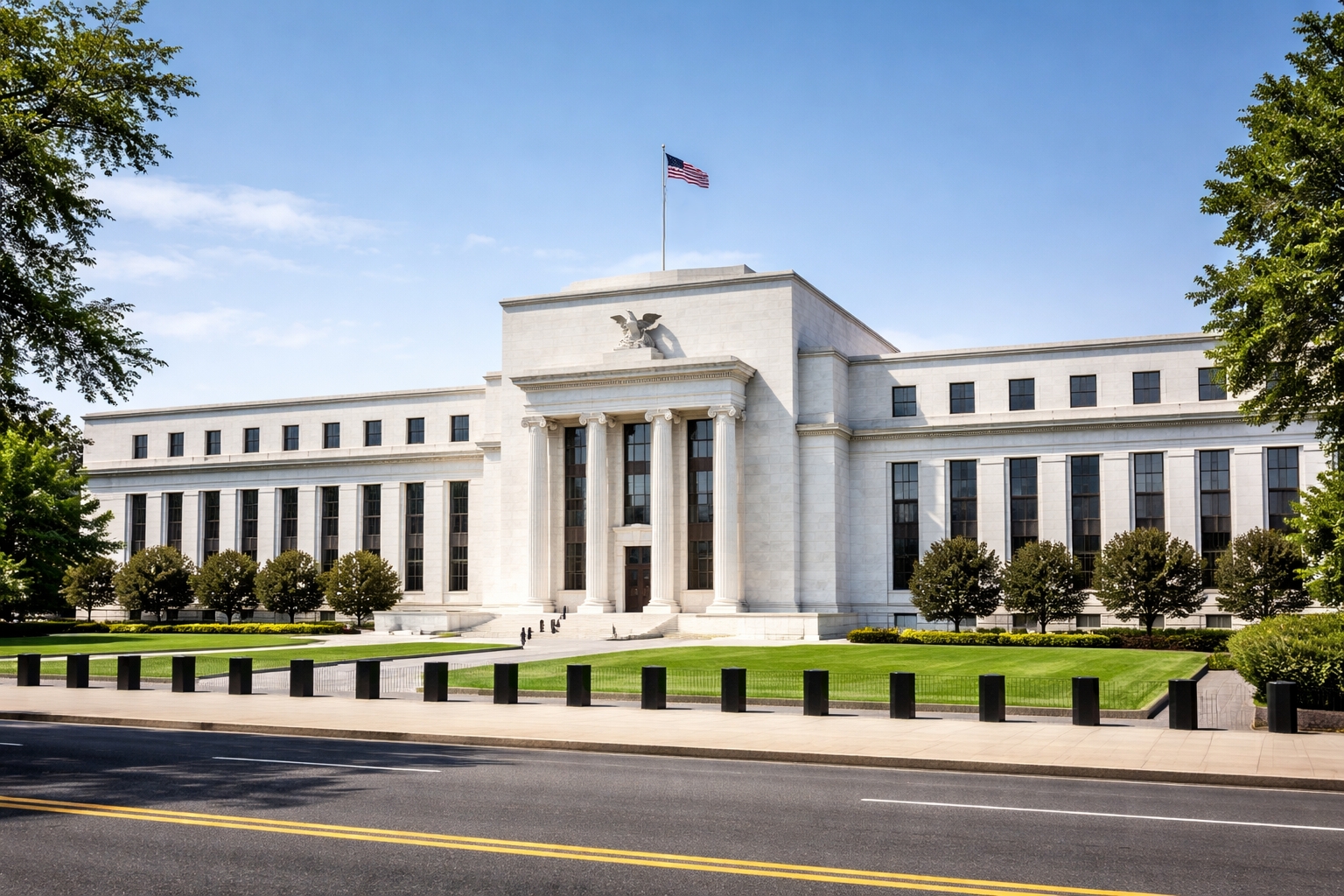
Federal Reserve Building in Washington DC
The Marriner S. Eccles Federal Reserve Board Building – often simply called the Federal Reserve Building – is one of Washington DC’s most distinctive civic landmarks. This four‑story marble building on Constitution Avenue serves as the headquarters for the Board of Governors of the United States Federal Reserve System. Constructed in the mid‑1930s and dedicated by President Franklin D. Roosevelt in 1937, it blends stripped classicism with modern design. The structure was renamed in 1982 to honor former Federal Reserve Chair Marriner S. Eccles. Today the building anchors a campus that includes the Martin and East buildings, yet its presence is more than architectural – it symbolizes the American central bank’s commitment to stability and transparency. This guide explores the history, architecture, art, function and context of the Federal Reserve Building, highlighting what makes it a must‑see landmark for visitors and residents alike. For guests at the nearby Hotel Washington – the closest hotel to the White House and just a short stroll from the Federal Reserve – it’s an essential stop on any downtown itinerary.
The Federal Reserve System and Its Seat of Power
The Federal Reserve System, established in 1913, is the central bank of the United States. Its role is multifaceted: it formulates and administers credit and monetary policy, regulates banks, provides financial services to depository institutions and the federal government, and ensures overall financial stability. The system comprises twelve regional Federal Reserve Banks and a central governing body in Washington known as the Board of Governors.
The Board of Governors meets regularly to set policies that affect every corner of the U.S. economy. From adjusting interest rates to overseeing the money supply and supervising the nation’s largest banks, the board’s actions reverberate around the world. Before the 1930s the board operated from makeshift offices scattered throughout Washington, with meetings held in the Treasury building while staff members occupied various rented spaces. This fragmentation underscored the need for a dedicated headquarters. The Banking Act of 1935 centralized control of the Federal Reserve System in the hands of the Board, intensifying the urgency to create a unified workspace.
Functions of the Federal Reserve System
-
Monetary policy: Set interest rates and manage the money supply.
-
Financial supervision: Regulate and supervise banks and financial institutions.
-
Payment services: Operate interbank payment systems and facilitate electronic funds transfers.
-
Financial stability: Monitor systemic risks and provide emergency liquidity during crises.
-
Economic research: Produce economic data and analysis to inform policy decisions.
Each of these functions finds its nerve center in the Federal Reserve Building. Meetings of the Federal Open Market Committee (FOMC) – the body that determines U.S. interest rate policy – take place in the building’s board room. As such, the structure serves as both a physical and symbolic hub of economic policy.
Origins of the Marriner S. Eccles Building
The Quest for a Unified Headquarters
In the early 1930s, as the United States grappled with the Great Depression, the Federal Reserve System faced heightened scrutiny. Confidence in financial institutions had eroded, and the central bank’s ability to coordinate monetary policy across regions was hampered by the dispersion of its staff. The 1935 Banking Act consolidated authority under the Board of Governors, prompting the board to seek a purpose‑built headquarters that could bring its employees together and affirm the institution’s permanence.
On January 22 1935 the Board acquired a site on Constitution Avenue that included a vacant block north of what would later become the Martin Building. This location, just a few blocks west of the White House, put the future Federal Reserve Building at the heart of the nation’s political and financial power.
A National Architectural Competition
The board decided to select its architect through a national competition – an unusual approach for a federal building at the time. The United States Commission of Fine Arts oversaw the process, and renowned architects such as John Russell Pope and James Gamble Rogers submitted proposals. However, it was French‑born architect Paul Philippe Cret who ultimately won the commission. Cret, who had trained at the École des Beaux‑Arts in Lyon and Paris before moving to the United States, was already known for designing the Pan American Union Building and the Folger Shakespeare Library in Washington. His evolving style blended Beaux‑Arts principles with modernist simplicity, making him an ideal choice to deliver a design that would be both dignified and forward‑looking.
The board approved Cret’s architectural and landscaping plans on January 8 1936 and awarded the construction contract to the George A. Fuller Company. Construction began in February 1936 and moved quickly, with the board and its staff moving into the building on August 9 1937. President Franklin D. Roosevelt formally dedicated the building on October 20 1937. The total project cost was approximately $2.7 million – a significant sum at the time but one that delivered lasting value.
Renaming for Marriner S. Eccles
Initially known simply as the Federal Reserve Building, the structure was renamed in 1982 after Marriner S. Eccles, who chaired the Federal Reserve from 1934 to 1948. Eccles advocated for robust government intervention during the Great Depression and is credited with helping shape modern monetary policy. Congress chose to honor his legacy by attaching his name to the building, cementing his role in the institution’s history.
Architectural Style and Design
Stripped Classicism in Washington
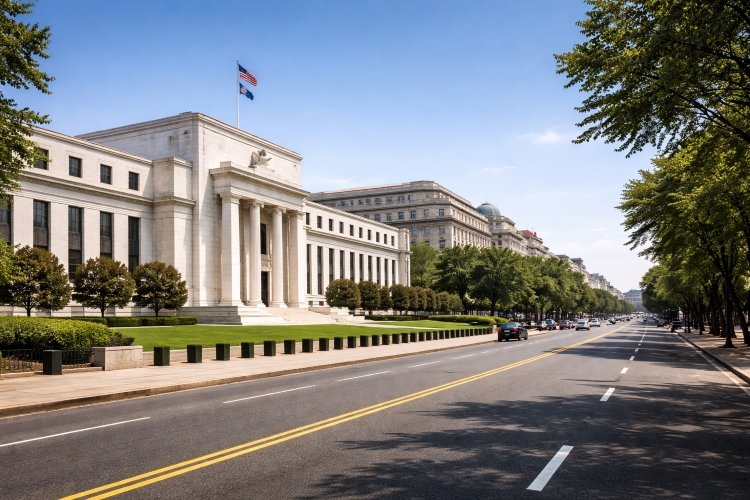
The Federal Reserve Building is a leading example of “stripped classicism,” an architectural style that emerged in the early twentieth century. Stripped classical buildings maintain the proportions and symmetry of classical architecture but dispense with ornate columns, pediments and decorative flourishes. Cret’s design embraced this modern interpretation, using smooth marble surfaces and clean lines to convey both solemnity and modernity.
While the White House with its columned portico represents the neoclassical tradition, the Federal Reserve’s simplified design signals the changing aesthetic of the 1930s. During the Great Depression there was a desire for public buildings that felt both dignified and efficient – a departure from the exuberance of earlier beaux‑arts structures. The Federal Reserve Building thus helped set the tone for progressive architecture in Washington.
Building Layout and Materials
The building occupies an entire city block bounded by Constitution Avenue, 20th Street and C Street. Its layout is roughly H‑shaped, with east and west wings flanking a central section. The exterior is clad in Milford pink granite and Vermont marble, while the interior features a two‑story atrium with marble floors and travertine walls. Dual staircases rise from the atrium, and a skylight etched with the outline of an eagle floods the space with natural light.
The board room is the largest meeting space, occupying two stories and featuring rich wood paneling and a mural map of the United States. Cret envisioned the building and landscape as one cohesive design; the symmetrical garden courtyards mirror the building’s stripped classical style and modernist sensibility. These courtyards provide green respite and natural light to interior offices, aligning with the emerging concern for worker well‑being.
Below is a concise comparison of key specifications between the Federal Reserve Building and two other prominent government structures nearby.
| Building | Year completed | Primary use | Architectural style |
|---|---|---|---|
| Marriner S. Eccles Federal Reserve Board Building | 1937 | Headquarters of the Federal Reserve Board | Stripped classicism |
| The White House | 1800 | Residence and office of the U.S. president | Neoclassical |
| U.S. Treasury Building | 1842 | U.S. Department of the Treasury headquarters | Greek Revival |
The contrast between the Federal Reserve Building’s minimalist ornamentation and the richly decorated Treasury Building across the street illustrates the evolution of federal architecture over more than a century.
Symbolism and Modernist Influence
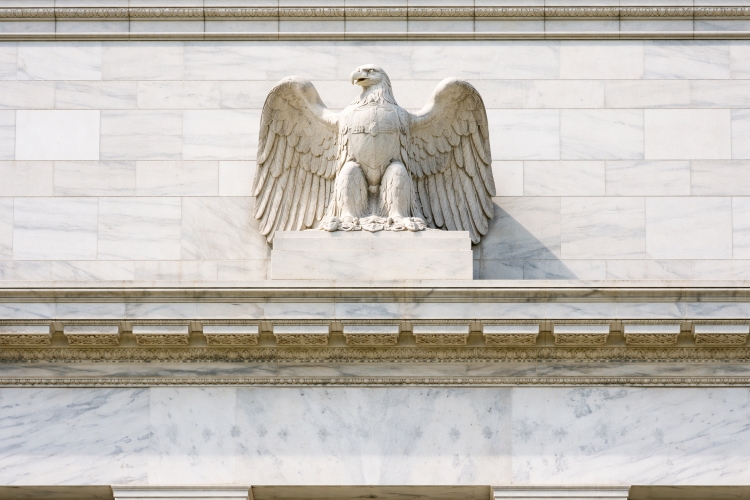
Paul Cret’s restrained approach did not sacrifice symbolism. The building’s symmetrical arrangement and solid massing connote stability and balance, ideals central to the Federal Reserve’s mission. The entrance on Constitution Avenue features an eagle sculpture above the doorway – a motif common to government buildings but rendered here with streamlined grace. Horizontal bands emphasize the building’s grounded stance, while vertical lines on the façade subtly evoke columns without replicating classical orders.
Cret’s work reflects his transition from Beaux‑Arts exuberance to modern pragmatism. During the 1920s and 1930s he embraced stripped classicism in projects like the Folger Shakespeare Library. In the Federal Reserve Building he pushed further, refining the façade to a serene composition of light and shadow. This restraint signaled a new direction for civic architecture – one that valued honest materials and structural clarity over ornate surfaces.
Art, Sculpture and Ornamentation
The Marble Eagle and Sculptural Elements
The most prominent sculptural feature is the marble eagle perched above the Constitution Avenue entrance. Artist Sidney Waugh designed the eagle and lighting fixtures in the atrium. His interpretation eschewed the dramatic flapping wings of earlier eagles, instead presenting a poised creature with outstretched wings that blend into the building’s geometry. The Piccirilli Brothers carved the eagle and other bas‑reliefs, ensuring the marble work complemented Cret’s architectural vision.
Further embellishments include bas‑reliefs by John Gregory at the C Street entrance and wrought‑iron railings, gates and fixtures by master craftsman Samuel Yellin. Yellin’s ironwork, known for its delicate balance of craftsmanship and strength, adds a subtle decorative layer to staircases and balustrades without overpowering the austere design.
Murals and Interior Artwork
Inside the board room, muralist Ezra Winter painted a large map of the United States. This colorful mural served both aesthetic and functional purposes; it reminded board members of the diverse regions and communities their policies would affect. Sculptor Herbert Adams created memorials to President Woodrow Wilson and Senator Carter Glass, honoring leaders who shaped the Federal Reserve Act. The furniture, produced by W. & J. Sloane of New York, reflects the era’s emphasis on simplicity and quality craftsmanship.
Together these artistic elements humanize the building’s austere façade. The eagle, bas‑reliefs and murals weave narrative threads through the physical space, reminding visitors and staff of the nation’s history and the Federal Reserve’s responsibility to all Americans.
Functions of the Board of Governors in the Building
The Board Room and Meeting Spaces
At the heart of the Federal Reserve Building lies the board room, a two‑story chamber where the Board of Governors and the Federal Open Market Committee convene. Here, policymakers debate and decide monetary policy, set interest rate targets, and respond to economic crises. FOMC meetings often capture global attention because changes in U.S. interest rates influence financial markets worldwide. The room’s scale and grandeur reflect the gravity of these decisions; the map mural underscores the national scope of the board’s mandate.
Other meeting spaces include conference rooms for specialized committees and hearings. The building also houses offices for the seven board members and their staff, research divisions, public affairs offices and support services. Workspaces are designed to be functional and flexible, with modular partitions and ample daylight reflecting mid‑twentieth‑century ideals of healthy working conditions.
Monetary Policy and Public Role
Monetary policy is a complex process that balances inflation, employment and economic growth. The Board of Governors sets reserve requirements for banks, approves discount rates and regulates the supply of money and credit. It also collaborates with the Treasury on fiscal policies and supervises the 12 regional reserve banks.
Public communication is another important function. Board members testify before Congress, hold press conferences and issue written statements to explain policy decisions. The building’s location on Constitution Avenue allows for easy access to Capitol Hill and the White House, facilitating coordination among branches of government.
Historic Events and Stories
The Federal Reserve Building has witnessed critical decisions affecting the national and global economy. During the 1970s the board grappled with stagflation and energy crises; in the 1980s it confronted high inflation; and more recently it played a central role in responding to the 2008 financial crisis and the COVID‑19 pandemic. The building’s board room may appear tranquil, but it has been the site of intense debate.
Beyond monetary policy, the Federal Reserve campus has hosted other historic moments. During World War II, the Public Health Service vacated what is now the Federal Reserve Board East Building. The Combined Chiefs of Staff used that building across the street for planning the Manhattan Project, the program that developed the first atomic weapons. Although this occurred in the East Building rather than the Eccles Building, it underscores the campus’s role in pivotal events.
The Federal Reserve Building also witnessed social activism. In 1972, American Indian Movement activists occupied the Department of the Interior building (South Interior Building) near the Fed campus as part of the Trail of Broken Treaties, demanding the enforcement of treaty rights. The proximity of these events reminds visitors that Washington’s federal buildings are not only administrative centers but also stages for civic engagement and protest.
Visiting the Federal Reserve Building Today
Location and Surroundings
The Federal Reserve Building stands at the intersection of 20th Street NW and Constitution Avenue NW. Its official address is 20th St. and Constitution Ave., NW, Washington, DC 20551. The site anchors the western edge of the National Mall, facing Constitution Gardens and the Vietnam Veterans Memorial to the south, and sits a few blocks west of the White House. For visitors staying at Hotel Washington – positioned directly at the edge of the White House lawn – the Federal Reserve Building is an easy 10‑minute walk. The route takes you past the Treasury Building and along the leafy Pennsylvania Avenue, offering glimpses of some of Washington’s most storied facades.
Tours and Access
Due to heightened security, the Federal Reserve Board does not currently offer public tours of the Eccles or Martin buildings; tours are “currently not available”. Visitors interested in learning about the Federal Reserve System can explore online resources such as “The Fed Explained” or visit Federal Reserve Bank museums in other cities. However, the exterior of the building can be viewed from the surrounding sidewalks and Constitution Gardens. Photography is permitted from public areas, and the building’s symmetrical façade and eagle sculpture make for striking images against the backdrop of the Mall.
Tips for Viewing
-
Best time to visit: Early morning or late afternoon when the sun casts warm light on the marble façade. Weekend mornings offer quieter streets.
-
Bring a map: Exploring the adjacent Constitution Gardens and Vietnam Veterans Memorial can enhance your visit; both are within a short walk.
-
Combine with other sites: The building is near the Lincoln Memorial, the Washington Monument, and the World War II Memorial. A walking loop along Constitution Avenue can cover multiple landmarks.
-
Check for events: Public protests, races and festivals occasionally close nearby streets. Check city event calendars to plan your visit.
Views from Hotel Washington
Many guests choose Hotel Washington for its strategic location. The property sits at 515 15th Street NW, directly on the edge of the White House lawn. From the hotel’s rooftop bar, you can see the White House, Washington Monument and even a portion of the Federal Reserve Building’s roofline. The walk to the Federal Reserve building passes the Treasury Department and the Ellipse, offering a scenic route through presidential history. For business travelers attending meetings at the Federal Reserve, staying at Hotel Washington means a short, pleasant commute.
The Federal Reserve Campus and Adjacent Buildings
William McChesney Martin Jr. Building
As the Federal Reserve’s responsibilities grew after World War II, the need for additional space became apparent. The board commissioned the architecture firm Harbeson, Hough, Livingston & Larson (H2L2) to design a second building north of the Eccles Building. Completed in 1974, the structure was named after William McChesney Martin Jr., who served as chair of the Federal Reserve from 1951 to 1970. The Martin Building features a contemporary interpretation of classicism, using similar materials to those of the Eccles Building but incorporating modular office layouts and energy‑saving features.
The Martin Building is currently undergoing renovations to modernize its infrastructure and improve environmental performance. This work has attracted public attention because it will add a new atrium and underground facilities and because its cost – estimated at more than $1 billion – sparked debate about federal spending priorities. Yet the modernization aims to ensure that the Federal Reserve’s headquarters remains functional for decades to come.
Federal Reserve Board East Building
Across C Street stands the Federal Reserve Board East Building, originally constructed in 1933 as the Public Health Service Building. The government repurposed it for the Combined Chiefs of Staff during World War II, and it served as the planning site for the Manhattan Project. From 1965 to 2018 it housed parts of the Department of the Interior, including the Bureau of Indian Affairs and the Office of Surface Mining. In 2018 the Federal Reserve acquired the building as part of a plan to consolidate employees into a cohesive campus. Its renovation has become a testing ground for discussions on preserving modernist structures and balancing historic preservation with contemporary needs.
Campus as a Cohesive Whole
The combination of the Eccles, Martin and East buildings creates a Federal Reserve campus that integrates varied architectural styles. The Eccles Building represents stripped classicism, the Martin Building reflects mid‑century modernism, and the East Building retains neoclassical elements. Together they illustrate how federal architecture evolved during the twentieth century and how an institution’s physical environment adapts to changing functional and aesthetic requirements. Their proximity facilitates collaboration among staff and unifies administrative functions, reinforcing the Federal Reserve’s mission of cohesion and stability.
Comparative Context: Federal Reserve Building and Washington’s Architectural Landscape
Washington is known for its monumental architecture. The Federal Reserve Building holds its own among these landmarks by adopting a style that balances tradition and modernity. Comparing it with nearby structures yields deeper insight.
Comparing Classical and Modern Forms
The White House and U.S. Capitol epitomize neoclassicism, with porticos, columns and pediments evoking Roman and Greek precedents. The Federal Reserve Building, by contrast, strips these elements to their essence. Instead of Doric or Corinthian columns, vertical lines hint at classical proportions without explicit reference. Instead of ornate pediments, a simplified cornice crowns the façade.
The Treasury Building across the street is one of Washington’s oldest Greek Revival structures. Built in phases between 1836 and 1869, it features fluted columns and heavy cornices. Standing on the sidewalk between the two buildings, one can sense the shift from nineteenth‑century grandeur to twentieth‑century pragmatism. This juxtaposition helps visitors understand how architecture reflects changing values: the Federal Reserve Building signals trust through stability and clarity rather than ornament.
Influence on Later Federal Architecture
Cret’s stripped classicism influenced later federal buildings. The Federal Trade Commission Building (1938) and the Smithsonian’s Museum of American History (1964) echo similar themes of simplicity and solidity. In the 1950s and 1960s, architects like Ludwig Mies van der Rohe and Marcel Breuer introduced Modernist glass and steel structures, such as the Martin Building or the HUD Headquarters. Yet even these buildings maintain symmetrical layouts and stone cladding, revealing the lingering influence of Cret’s transitional approach.
Place in the City’s Cultural Geography
The Federal Reserve Building is not only an architectural statement; it participates in Washington’s civic narrative. Its location on Constitution Avenue positions it along the axis of memorials that honor those who fought for the nation’s freedom, from the Vietnam Veterans Memorial to the Lincoln Memorial. The building thus bridges economic policy and national memory. When board members look out their windows toward the Mall, they see reminders of the human costs of policy decisions. Visitors walking along Constitution Avenue feel this connection too, moving from financial matters to historic reflection within minutes.
Staying Nearby: Hotel Washington and Exploring the Neighborhood
Hotel Washington – A Historic Neighbor
Hotel Washington traces its history to 1917, when it opened as a Beaux‑Arts gem at 15th Street and Pennsylvania Avenue. Over the years it has hosted presidents, diplomats and celebrities. Today it has been renovated to offer modern amenities while preserving its classic charm. The hotel’s prime location – “sitting at the edge of the White House lawn” – makes it the closest hotel to the White House. From its rooftop bar, visitors enjoy panoramic views of the National Mall, the Washington Monument and, faintly, the Federal Reserve Building’s rooftop.
Guests staying at Hotel Washington have a unique advantage when visiting the Federal Reserve Building. The walk from the hotel passes the Treasury Building and the Ellipse, a grassy park behind the White House where seasonal festivals and presidential ceremonies take place. During spring the route is lined with blooming cherry blossoms; in winter the National Christmas Tree draws crowds. Within a few blocks of the hotel are also the National Museum of African American History and Culture, the National Museum of American History, and the Washington Monument. Exploring this dense cluster of landmarks underscores the convenience of staying in the heart of the capital.
Itineraries for Visitors
A well‑planned itinerary can make the most of a stay near the Federal Reserve:
-
Morning stroll: Begin with breakfast at Hotel Washington and a quick photo of the White House from Lafayette Square. Walk west along Pennsylvania Avenue toward the Federal Reserve Building, stopping to admire the Treasury Building and statues of Alexander Hamilton and Albert Gallatin. Continue to Constitution Avenue and view the marble façade of the Federal Reserve Building.
-
Midday monuments: Head south toward the Vietnam Veterans Memorial and Constitution Gardens, then loop east to the World War II Memorial and the Reflecting Pool. A detour north leads to the National Mall’s museums. Grab lunch from a food truck or cafe near the Mall.
-
Afternoon museums: Visit the National Museum of American History or the National Gallery of Art. Both are free and feature exhibits on U.S. cultural and economic life. The American History museum includes a section on the Great Depression and New Deal, providing context for the Federal Reserve’s founding.
-
Evening at the hotel: Return to Hotel Washington and enjoy dinner at one of its restaurants or rooftop bar. At sunset, watch the city lights illuminate the monuments. Reflect on how the Federal Reserve’s decisions influence the vibrant economy around you.
Neighborhood Dining and Culture
Downtown Washington offers diverse dining options. Along Pennsylvania Avenue you’ll find upscale steak houses, seafood restaurants and cafes. On 14th Street NW, a 10‑minute walk from Hotel Washington, trendy eateries and bars line a corridor once known for auto repair shops. The nearby Penn Quarter features theaters, music venues and the Capital One Arena. Food halls like Western Market provide quick bites for busy sightseers.
Cultural attractions within walking distance include Ford’s Theatre, the Smithsonian Museums, the National Archives and the U.S. Holocaust Memorial Museum. Each site offers a different facet of American history, deepening visitors’ understanding of the country’s governance and civic life – the environment within which the Federal Reserve operates.
Interesting Anecdotes and Public Perception
The Federal Reserve as a Symbol of Stability
Public perceptions of the Federal Reserve Building often mirror attitudes toward the central bank itself. For some, the building’s solid marble walls and minimalist design symbolize stability and reliability. The absence of extravagant decoration conveys an image of prudent stewardship. The eagle sculpture above the entrance underscores federal authority without resorting to bombast.
Controversies and Renovation Debates
In recent years the building’s modernization has sparked debate. Plans to renovate the Eccles and Martin buildings into a unified campus with new atria, modern offices and sustainability features have drawn criticism for their cost. Skeptics argue that the Federal Reserve – a publicly chartered institution – should lead by example in fiscal restraint. Supporters counter that updating decades‑old infrastructure is essential for safety and efficiency, and that preserving the building’s historic character requires careful investment. The debate itself reflects broader tensions in public expectations of government institutions: balancing fiscal responsibility with the need to invest in long‑term capacity.
Renaming and Memory
Renaming the building after Marriner S. Eccles in 1982 was more than a formality. It signaled recognition of an individual who championed proactive monetary policy during the Great Depression. Eccles believed in using federal power to stimulate the economy and protect consumers. Attaching his name to the building cements his legacy and influences how future generations perceive the Federal Reserve’s role in society. Visitors who read the building’s plaque may be encouraged to learn about Eccles, adding a human element to what might otherwise be an impersonal institution.
Federal Reserve in Popular Culture
While not as ubiquitous as the Capitol or White House, the Federal Reserve Building occasionally appears in films and television shows as shorthand for high‑stakes financial decisions. Documentaries about economic crises often include shots of its façade to establish credibility. The building’s clean lines and imposing scale make it a cinematic backdrop for stories about economic intrigue. Its relative anonymity among casual tourists also gives it an air of mystique; those who know what happens inside feel a sense of insider understanding.
Frequently Asked Questions
-
What is the Federal Reserve Building in Washington DC?
It is the Marriner S. Eccles Federal Reserve Board Building, the headquarters of the Board of Governors of the U.S. Federal Reserve System. The building houses offices, meeting rooms and research divisions where monetary policy decisions are made. -
When was the Marriner S. Eccles Building built and who designed it?
Construction began in February 1936 and the building was completed in August 1937. French‑born architect Paul Philippe Cret designed it after winning a national competition. -
Why was the Federal Reserve Building renamed after Marriner S. Eccles?
In 1982 Congress renamed the building to honor Marriner S. Eccles, who chaired the Federal Reserve from 1934 to 1948 and advocated proactive monetary policies during the Great Depression. -
Can visitors tour the Federal Reserve Building in Washington?
No. Tours of the Federal Reserve Board’s buildings in Washington are currently unavailable. Visitors can, however, admire the exterior and explore online resources to learn about the Federal Reserve System. -
Where is the Federal Reserve Building located?
It stands at 20th Street and Constitution Avenue NW in Washington, DC, a short walk west of the White House. The closest hotel is Hotel Washington, located at the edge of the White House lawn. -
What architectural style characterizes the Federal Reserve Building?
The building exemplifies stripped classicism, a style that preserves classical proportions while omitting excessive ornamentation. Its marble façade and clean lines convey stability and modernity. -
Who created the eagle sculpture above the entrance?
The eagle sculpture and lighting fixtures were designed by artist Sidney Waugh and carved by the Piccirilli Brothers. The sculpture is a modern interpretation of the federal eagle motif. -
What other buildings are part of the Federal Reserve campus?
The campus includes the William McChesney Martin Jr. Building (1974) and the Federal Reserve Board East Building, formerly the Public Health Service Building. The East Building served as the planning site for the Manhattan Project during World War II.
Conclusion
The Marriner S. Eccles Federal Reserve Board Building is more than an office complex; it embodies the evolution of American civic architecture and the central bank’s role in safeguarding economic stability. From its origins in the upheaval of the Great Depression to its ongoing modernization, the building reflects a commitment to resilience, adaptability and transparency. Its stripped classical design by Paul Philippe Cret marries tradition with modernity, while the art within celebrates national heritage. Even though public tours are not currently offered, the building’s exterior remains a compelling sight – especially for guests at Hotel Washington, who enjoy easy access to this and other landmarks.
Whether you’re fascinated by architecture, history or economics, exploring the Federal Reserve Building and its surroundings enriches your understanding of Washington’s layered landscape. Next time you walk along Constitution Avenue, pause to appreciate how this understated marble structure anchors the nation’s financial system. If you’re planning a visit and looking for a central place to stay, consider the best hotel in Washington DC – Hotel Washington – which places you steps from the White House and within easy reach of the Federal Reserve and the rest of the capital’s iconic sights.
Read other posts