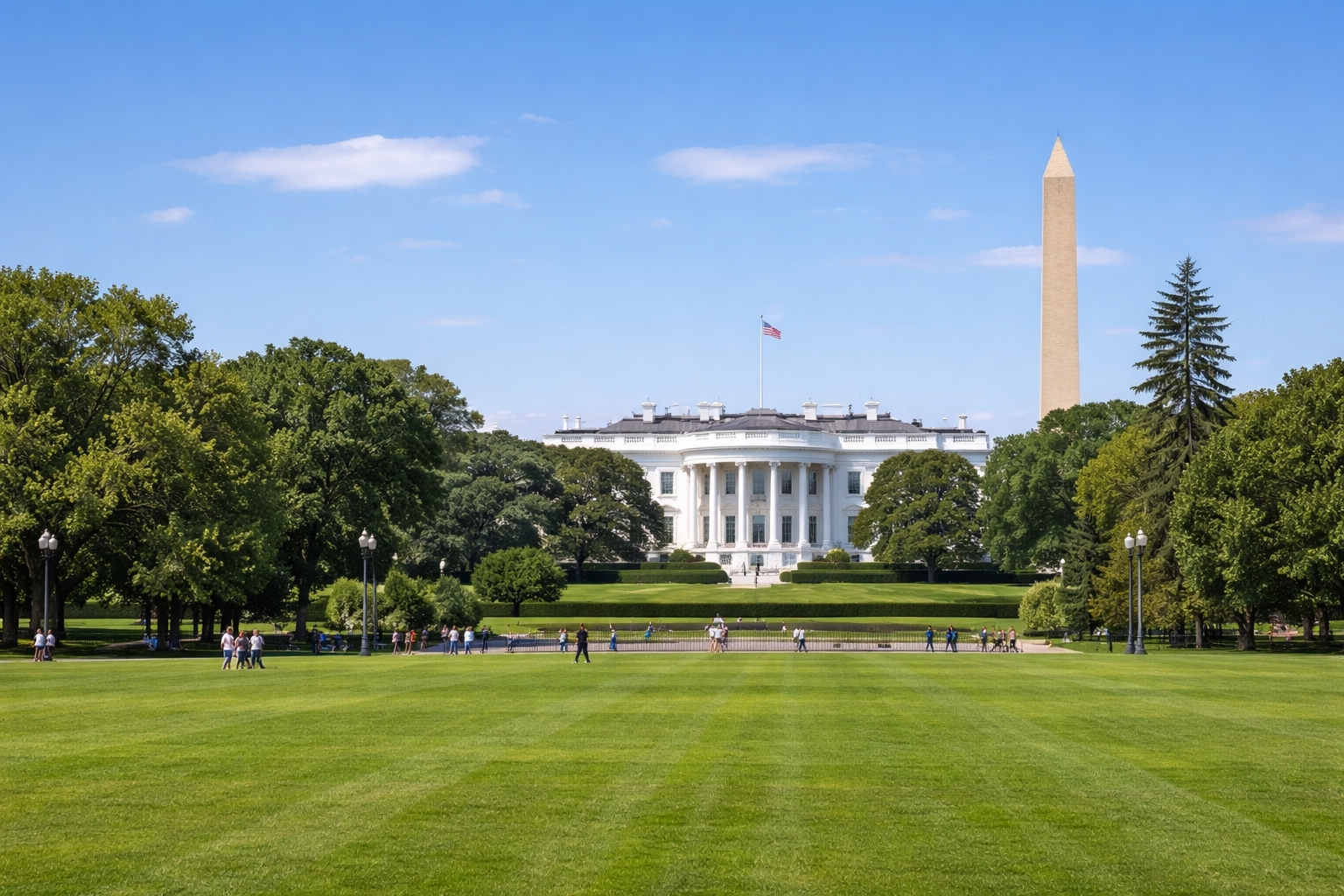
Does the President Use Presidents Park at the White House?
Yes – the President does use areas within Presidents Park, though not in the same way that visitors experience them. Presidents Park is a large historic park system surrounding the White House that includes the Ellipse to the south and Lafayette Square to the north. While these spaces are open to the public and serve as civic gathering areas, presidents occasionally use parts of the park for official events, ceremonies, speeches, and national traditions such as the National Christmas Tree lighting. However, routine presidential movement through the park is limited due to strict security protocols surrounding the White House.
Presidents Park functions as both a symbolic civic space for the American public and an extension of the White House grounds. Visitors can walk through much of it freely, while the President may access portions of the park during major national moments or public addresses.
What Is Presidents Park at the White House?
Presidents Park is one of the most historically significant public landscapes in Washington DC. It surrounds the White House and includes two iconic civic spaces that frame the executive residence – Lafayette Square to the north and the Ellipse to the south.
The park is managed by the National Park Service and forms a living extension of the White House grounds. While the White House itself sits inside a protected security perimeter, Presidents Park represents the public-facing side of the presidential environment.
The park covers more than 80 acres and plays a unique role in American civic life. It functions as a national stage for public events, protests, celebrations, and historic gatherings.
Visitors exploring Washington DC often encounter Presidents Park without realizing its name because it blends seamlessly into the surrounding monumental core.
The park includes:
• The Ellipse – a large open lawn south of the White House
• Lafayette Square – the historic park directly north of the White House
• White House visitor areas and surrounding green spaces
• Monument views across the National Mall
The official park system is maintained by theNational Park Service Presidents Park,
which preserves the landscape, monuments, and historic elements surrounding the White House.
The Ellipse – The Southern Lawn of the White House
The Ellipse is perhaps the most recognizable portion of Presidents Park. This vast oval-shaped lawn stretches south of the White House and connects the executive residence with the monumental landscape of the National Mall.
Historically, the Ellipse has been used for ceremonial events, public gatherings, and national celebrations. It also serves as a visual foreground to the White House when viewed from the south.
Visitors standing on the Ellipse experience one of the most powerful sightlines in Washington DC – the White House to the north and the Washington Monument rising just beyond.
The Ellipse is formally part of The Ellipse at Presidents Park,
an open public lawn used for recreation and historic events.
Notable uses of the Ellipse include:
• Presidential speeches and national addresses
• Public festivals and celebrations
• Athletic activities and recreation
• The annual National Christmas Tree lighting
• Large public gatherings and demonstrations
While the public is free to walk across the Ellipse, security restrictions may temporarily close sections during presidential movement or major events.
Lafayette Square – The Park Across from the White House
Directly north of the White House sits one of the most famous urban parks in America. Lafayette Square faces Pennsylvania Avenue and forms a historic civic space that has witnessed nearly two centuries of American political life.
Visitors standing in the square enjoy a clear view of the White House façade, making it one of the most photographed locations in Washington DC.
The park is named after Marquis de Lafayette, the French military officer who played a crucial role in the American Revolutionary War.
The square itself is part of Lafayette Square at Presidents Park and includes statues honoring foreign heroes of the American Revolution.
Key features of Lafayette Square include:
• Historic statues of Revolutionary War figures
• Tree-lined walkways and benches
• Views of the White House north façade
• Historic protest and demonstration space
Over the years, Lafayette Square has become one of the most visible places for public demonstrations in the United States, reinforcing the symbolic relationship between citizens and the presidency.
Does the President Actually Use Presidents Park?
Although Presidents Park surrounds the White House, presidents rarely walk through it casually the way tourists do. The primary reason is security.
The President of the United States operates within one of the most secure environments in the world. Movements outside the White House grounds require coordination with the Secret Service and extensive security planning.
However, presidents do use portions of Presidents Park for official and ceremonial purposes.
Examples include:
• National Christmas Tree lighting ceremonies on the Ellipse
• Large public speeches delivered from the Ellipse
• Presidential motorcades that pass through the park area
• National celebrations and gatherings held near the White House
Presidents have occasionally walked across the Ellipse or used it for major announcements, though these moments are rare and tightly controlled.
In practice, Presidents Park functions as a public civic stage connected to the presidency rather than a private garden used regularly by the president.
The National Christmas Tree – A Presidential Tradition on the Ellipse
One of the most beloved annual traditions tied to Presidents Park is the lighting of the National Christmas Tree.
Each year, the President participates in the ceremony that illuminates the massive decorated tree located on the Ellipse. The event marks the beginning of the holiday season in Washington DC and draws visitors from across the country.
The ceremony is organized through the National Christmas Tree Lighting program and includes musical performances, speeches, and a formal countdown led by the President.
During the holiday season, the Ellipse transforms into a festive park filled with decorated trees representing all 50 states and U.S. territories.
The tradition began during the administration of President Calvin Coolidge in the early 20th century and continues today as one of the most visible presidential traditions held outside the White House.
Historic Presidential Moments in Presidents Park
Throughout American history, Presidents Park has served as a stage for national milestones.
Several major political and cultural moments have unfolded on the Ellipse or in Lafayette Square.
Examples include:
• Presidential speeches addressing large crowds
• Public demonstrations advocating for civil rights and political reform
• Historic gatherings tied to national events
• Military celebrations and commemorations
Because of its proximity to the White House, Presidents Park represents a symbolic meeting place between the presidency and the public.
It is a place where civic expression, national ceremonies, and presidential authority intersect.
Can Visitors Walk Through Presidents Park?
Yes – most of Presidents Park is open to the public.
Visitors exploring Washington DC can freely walk across the Ellipse, stroll through Lafayette Square, and enjoy the historic views surrounding the White House.
The park is especially popular for:
• White House sightseeing
• Walking tours of downtown Washington DC
• Photography and scenic views
• Historic exploration
The park connects easily with the surrounding monumental core of the city, including the
White House and the nearby Washington Monument.
Because the park sits in the heart of the capital, it offers one of the most accessible ways to experience the atmosphere surrounding the presidency.
Security conditions occasionally change access patterns, but large portions of the park remain open year-round.
Why Presidents Park Matters
Presidents Park represents a rare type of national landscape.
Few places in the world place a democratic government leader at the center of such an open public space.
While the White House remains a secure residence, the surrounding parkland allows citizens to gather, observe, and participate in civic life directly outside the seat of executive power.
The park symbolizes:
• Democratic openness
• Civic expression
• National celebration
• Public access to historic landscapes
Whether hosting peaceful protests, holiday ceremonies, or visitors from across the world, Presidents Park reflects the evolving relationship between the American public and the presidency.
Experiencing Presidents Park While Visiting Washington DC
Walking through Presidents Park offers one of the most memorable experiences in Washington DC. Visitors can move between the Ellipse and Lafayette Square while enjoying views of the White House, historic monuments, and the surrounding city.
Because the park sits in the center of downtown Washington DC, it serves as a gateway to many of the city’s most important landmarks.
Exploring the park often includes:
• Viewing the White House from Lafayette Square
• Walking the open lawns of the Ellipse
• Viewing the Washington Monument from the park grounds
• Experiencing seasonal events and celebrations
For travelers seeking to explore this historic area on foot, staying nearby provides the easiest access to the park and surrounding landmarks.
Hotel Washington sits just steps away from the park system and offers an exceptional vantage point for exploring this part of the city. As the closest hotel to the White House, positioned at the edge of the White House Lawn, the property places guests within immediate reach of Presidents Park and the monumental core of Washington DC.
From the hotel, visitors can step directly into the historic landscape that has framed the American presidency for more than two centuries.
Travelers planning a visit to Washington DC can learn more about accommodations and experiences near Presidents Park at www.thehotelwashington.com
Read other posts