The Declaration of Independence: Origins, Significance, and How to Experience Its Legacy
The Declaration of Independence is more than a parchment on display; it is the eloquent statement that launched the United States as a sovereign nation. When the Continental Congress adopted it on July 4, 1776, the delegates severed political ties with Great Britain and laid out a vision of government based on equality and natural rights. This document not only justified revolution but also articulated universal principles that continue to resonate around the world. For travelers staying at Hotel Washington—the closest hotel to the White House, positioned at the edge of the White House Lawn—the Declaration’s story unfolds through museums, historic sites, and anniversaries that are accessible within a short walk or train ride.
Seeds of Revolution: Colonial Grievances and the Road to Independence
Before the Declaration could emerge, decades of tension simmered between the colonies and the British crown. Parliamentary taxes such as the Stamp Act and the Tea Act, coupled with punitive measures like the Intolerable Acts, convinced many colonists that their rights as Englishmen were being trampled. In the wake of protests and boycotts, patriot committees enforced non‑importation agreements while colonial newspapers debated the proper relationship between the colonies and the mother country. The outbreak of fighting at Lexington and Concord in April 1775 shattered any illusion that disputes could be resolved peacefully. As King George III refused the Olive Branch Petition and ordered the suppression of the rebellion, colonial leaders increasingly viewed independence as the only viable course.
Thomas Paine’s pamphlet Common Sense circulated widely and argued that monarchy was incompatible with liberty. By early 1776, support for complete separation spread rapidly. The Second Continental Congress, meeting in Philadelphia’s Pennsylvania State House, took on the role of a national government. On June 7, delegate Richard Henry Lee introduced a motion that “these United Colonies are, and of right ought to be, free and independent States”. Although some delegates wished to reconcile with Britain, the motion prompted the creation of a committee to draft a formal declaration of independence.
Driving Forces Behind Independence
The decision to declare independence grew out of multiple grievances and intellectual currents. Key factors included:
-
Taxation without representation: British taxes were levied without consent of colonial assemblies, violating the principle of self‑government.
-
Military occupation: Stationing British troops in American cities and quartering them in private homes fed resentment.
-
Trade restrictions: Acts regulating trade and manufacturing limited economic growth in the colonies.
-
Natural rights philosophy: Enlightenment writers such as John Locke promoted the idea that individuals possess inherent rights to life, liberty and property.
-
Regional unity: Shared frustrations helped disparate colonies perceive themselves as part of a collective American identity.
These grievances, compounded by bloodshed and radical literature, made independence seem not merely desirable but necessary. By mid‑summer the Continental Congress was prepared to articulate the colonies’ case.
Drafting the Document: The Committee of Five and Jefferson’s Pen
Once Lee’s motion had been introduced, Congress appointed a committee on June 10 to draft a statement that would justify separation. The Committee of Five—Thomas Jefferson, John Adams, Benjamin Franklin, Robert R. Livingston and Roger Sherman—represented a cross‑section of colonial leadership. Although each member contributed, the drafting was entrusted to Jefferson, who retreated to a Philadelphia boardinghouse to write.
Jefferson produced a draft between June 11 and June 28 and submitted it to Adams and Franklin, who suggested minor changes. The committee presented the revised draft to Congress on June 28. Debate ensued: delegates removed a passage condemning the transatlantic slave trade and softened language that criticized the British people. On July 2, Congress passed the Lee Resolution declaring the colonies independent. Two days later, on the afternoon of July 4, the delegates adopted the Declaration of Independence.
Chronology of Drafting and Adoption
-
June 7, 1776: Richard Henry Lee introduces a resolution for independence.
-
June 10: Congress appoints Jefferson, Adams, Franklin, Livingston and Sherman to draft a declaration.
-
June 11–28: Jefferson drafts the document and consults with Adams and Franklin.
-
June 28: Committee submits the draft to Congress for review.
-
July 2: Congress votes in favor of the Lee Resolution, effectively declaring independence.
-
July 4: Congress adopts the final text of the Declaration of Independence.
-
July 19: Congress orders the document engrossed on parchment, instructing all delegates to sign.
-
August 2: John Hancock signs the engrossed document, followed by other delegates; eventually 56 signers place their signatures.
By emphasizing natural rights and enumerating British abuses, the Declaration laid a philosophical foundation for republican government. Its adoption signaled to foreign powers, notably France, that the American colonies were committed to independence and worthy of support.
Anatomy of the Declaration: Preamble, Grievances and Conclusion
The Declaration is structured in three main parts: an opening section that articulates principles, a list of grievances against King George III, and a concluding declaration of sovereignty. Jefferson drew heavily on Enlightenment philosophy to craft the preamble. In one of the most famous passages, he wrote that “all men are created equal” and that they possess “certain unalienable Rights” among which are “Life, Liberty and the pursuit of Happiness”. These words encapsulated the Enlightenment belief that government exists to secure rights and derives legitimacy from the governed.
The body of the document lists more than two dozen complaints against the British crown. Delegates accused the king of obstructing legislation, dissolving representative bodies, maintaining standing armies during peace, imposing taxes without consent, and violating the colonists’ rights to trial by jury and due process. By cataloging these grievances, the Declaration aimed to prove that British rule had become tyrannical and that the colonies were justified in withdrawing their allegiance.
The conclusion asserts that “these United Colonies are, and of right ought to be, free and independent States” and pledges mutual support for the revolutionary cause. Delegates also appealed to the “Supreme Judge of the world” for the rectitude of their intentions and pledged their lives, fortunes, and sacred honor to the struggle. Although the final line is often remembered, it represented a solemn commitment rather than mere rhetoric; signers understood that their names on the parchment would make them traitors in British eyes.
Who Signed the Declaration? Profiles of Courage
Fifty‑six men signed the engrossed Declaration when it was laid out on parchment. The signatures were arranged by state, with John Hancock of Massachusetts affixing his name first and most prominently. Some signers, such as Robert R. Livingston, never signed at all despite serving on the drafting committee. The delegates represented a mix of professions—lawyers, merchants, farmers, physicians—and hailed from all thirteen colonies.
Among the most notable signers was Thomas Jefferson of Virginia, the principal author. John Adams of Massachusetts championed the cause of independence and later became the second U.S. president. Benjamin Franklin of Pennsylvania, already famous as a scientist and diplomat, tempered debates and helped secure French support. John Hancock’s flamboyant signature became synonymous with signing one’s name. Other signers, such as Button Gwinnett of Georgia and Caesar Rodney of Delaware, are less known today but were instrumental in unifying their colonies behind the document.
Signers by Region
-
New England: John Adams, Samuel Adams, John Hancock, Robert Treat Paine, and others from Massachusetts; William Whipple and Matthew Thornton represented New Hampshire; Connecticut sent Roger Sherman, Samuel Huntington, William Williams and Oliver Wolcott.
-
Middle Colonies: Pennsylvania’s delegation included Benjamin Franklin, James Wilson and Benjamin Rush; New York sent Lewis Morris and Philip Livingston; New Jersey’s signers included John Hart and Richard Stockton.
-
Southern Colonies: Virginia delegates included Jefferson, George Wythe and Richard Henry Lee; Maryland’s signers included Charles Carroll of Carrollton; North Carolina sent William Hooper; South Carolina’s delegation included Edward Rutledge; Georgia’s signers were Button Gwinnett, Lyman Hall and George Walton.
While signers risked their lives and property, they also conveyed the unity of the colonies. Many went on to fight or serve in state governments. Not all survived the war; several died during the struggle, and some lost fortunes. The legacy of their signatures endures as a symbol of collective resolve.
Philosophical Foundations: Natural Rights and Social Contract
To appreciate the Declaration’s power, it is essential to examine the philosophical ideas woven into its fabric. Jefferson drew on European Enlightenment thinkers—especially John Locke—who argued that individuals possess natural rights independent of government. Locke’s social contract theory held that governments are instituted to protect these rights and that people have the right to overthrow any government that fails to do so. The Declaration’s assertion that governments derive “their just powers from the consent of the governed” echoes this view.
The concept of unalienable rights also appears in earlier colonial documents. Massachusetts’ 1772 “Rights of the Colonists,” drafted by Samuel Adams, declared that all men have a right to life, liberty and property. Paine’s Common Sense argued that society is a blessing and government, at best, a necessary evil. Jefferson synthesized these ideas and added his own flourish by replacing “property” with the “pursuit of happiness,” suggesting a broader interpretation of personal fulfillment.
The Declaration’s moral appeal lay in its universal language. By stating that these rights belong to “all men,” the document invited later generations to expand its promises. Abolitionists, women’s suffrage activists and civil rights leaders would later invoke the Declaration to argue that its principles applied to enslaved Africans, women and other marginalized groups. In this sense, the document has functioned as a living charter for expanding freedom.
Key Enlightenment Concepts in the Declaration
-
Natural rights: Rights inherent in human beings that cannot be legitimately taken away.
-
Consent of the governed: Legitimate government authority arises from the people’s consent, not divine right.
-
Right of revolution: When a government becomes destructive of rights, people have the right to alter or abolish it.
-
Equality: All individuals are equal in their possession of rights and in the moral law.
-
Pursuit of happiness: The idea that fulfillment and well‑being are fundamental human pursuits.
These philosophical commitments gave the Declaration its enduring appeal. They also set the stage for later debates about how widely to extend the benefits of American independence.
Aftermath and Immediate Impact: War, Diplomacy and Public Reaction
The Declaration did not end the war; rather, it deepened British resolve to suppress the rebellion. After news of the document reached London, the British government dismissed it as a trivial pronouncement by disgruntled colonists. At home, however, the Declaration energized patriots and clarified the stakes of the conflict. Public readings took place in town squares, militia camps and church pulpits. Colonists tore down royal symbols and erected Liberty Poles. Newspapers reprinted the text in full, and broadsides circulated widely.
Internationally, the Declaration served a strategic purpose. It allowed American diplomats to seek alliances and recognition. France, eager to weaken Britain, signed a Treaty of Alliance with the United States in 1778, providing critical military aid. Spain and the Netherlands followed later. The Declaration also inspired other colonial peoples, such as the Haitian revolutionaries, who drew on its language of natural rights when drafting their own documents.
Public Reactions at the Time
-
Patriots: Celebrated the Declaration with bonfires, readings and the removal of symbols of the crown.
-
Loyalists: Viewed the declaration as reckless; many fled to Canada or England to avoid reprisals.
-
Enslaved people: Some found hope in the language of freedom; thousands fled to British lines, hoping that a British victory would mean emancipation.
-
Native Nations: Reactions varied; some tribes allied with Britain, hoping to prevent American expansion into their lands.
The Declaration thus functioned both as a political act and a propaganda tool. It solidified colonial unity, justified the war, and reached an international audience.
Independence Day: The Birth and Evolution of July 4th Celebrations
Americans began celebrating independence almost immediately. On July 8, 1776, the Declaration was read publicly in Philadelphia, and crowds rang bells and fired cannons. In the early years of the republic, July 4 was marked with parades, orations and dinners. The new nation considered itself a model of republican virtue, and Independence Day provided an annual opportunity to reaffirm commitment to those ideals.
During the 19th century, celebrations became more elaborate. Local communities organized picnics, sporting events and fireworks. As immigration increased, July 4 became a way to Americanize newcomers. In 1870, Congress made Independence Day a federal holiday. Today, Washington DC hosts the National Independence Day Parade, a televised concert on the West Lawn of the U.S. Capitol, and a spectacular fireworks display on the National Mall. The National Park Service notes that the National Mall provides prime viewing for the annual fireworks show, drawing tens of thousands of visitors.
Modern Traditions on July 4
-
Fireworks: Pyrotechnic displays in cities and small towns commemorate the “rockets’ red glare.” In DC, fireworks illuminate monuments along the Potomac River.
-
Parades: Marching bands, floats and military units process down Constitution Avenue in the National Independence Day Parade.
-
Concerts: “A Capitol Fourth” features performances by popular artists and the National Symphony Orchestra.
-
Family gatherings: Barbecues, picnics and community festivals celebrate summer and national pride.
-
Patriotic ceremonies: Naturalization ceremonies and flag raisings honor the continuing story of American citizenship.
Staying at Hotel Washington positions visitors at the heart of these celebrations. Located near the White House and National Mall, the hotel provides front‑row access to parades, concerts and fireworks without the hassle of long commutes.
Experiencing the Declaration Today: Museums and Historic Sites
Visitors can engage with the story of the Declaration by touring historic sites and museums in both Philadelphia and Washington DC. Each location offers unique insights into the document’s creation, preservation and legacy.
Independence Hall and the Liberty Bell in Philadelphia
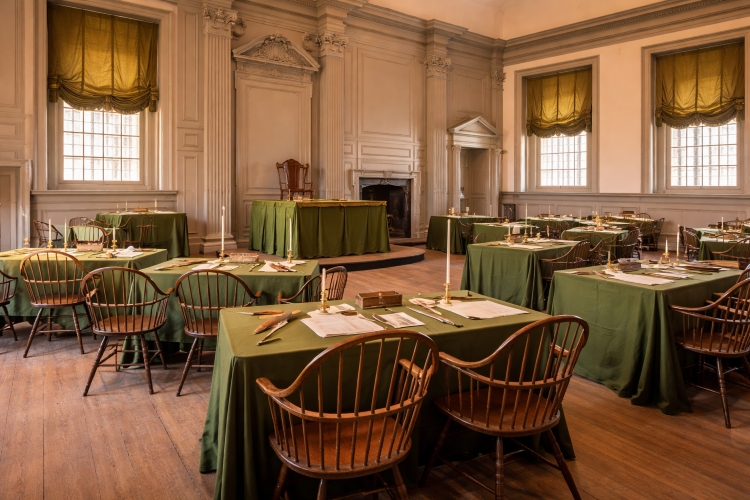
The Pennsylvania State House—today known as Independence Hall—is where delegates debated and adopted the Declaration. This UNESCO World Heritage Site is described by the National Park Service as the birthplace of America; both the Declaration and the U.S. Constitution were debated and signed inside its Assembly Room. Construction on the building began in 1732, and the assembly room was lent to the Continental Congress during the Revolution. The site’s significance extends beyond the 1770s, hosting events from the ratification of the Articles of Confederation to fugitive slave hearings.
Next door stands the Liberty Bell, housed in the Liberty Bell Center. The bell’s inscription, “Proclaim Liberty Throughout All the Land Unto All the Inhabitants thereof,” has inspired abolitionists, suffragists and civil rights activists. According to the National Park Service, the bell’s crack likely developed after nearly ninety years of use, and attempts at repair created the wide fissure visible today. Visitors can view the bell without tickets and learn how it transformed from a Pennsylvania assembly bell into a symbol of liberty.
National Archives Museum in Washington DC
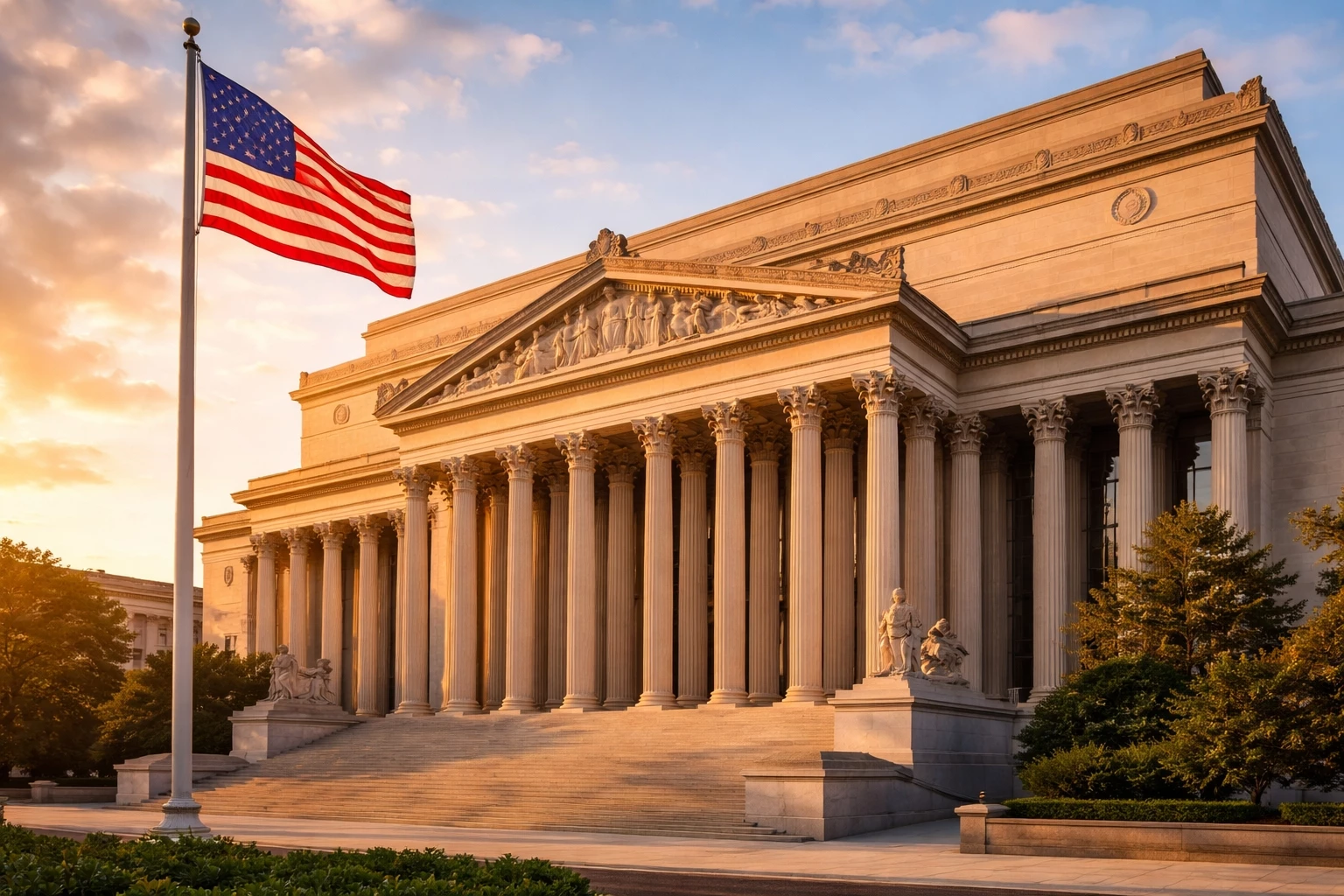
The original engrossed Declaration is preserved in the Rotunda for the Charters of Freedom at the National Archives Museum in Washington DC. The National Archives explains that the parchment copy was engrossed on July 19 and signed beginning August 2. Visitors can view the Declaration alongside the Constitution and the Bill of Rights, collectively known as the Charters of Freedom. Exhibits explain how the document has been cared for and how its message has been invoked over time.
Other Sites and Experiences
-
Continental Congress sites: Carpenters’ Hall in Philadelphia, where the First Continental Congress met, offers insight into early colonial cooperation.
-
Museum of the American Revolution: This Philadelphia museum houses interactive exhibits and artifacts that contextualize the Declaration within the broader revolution.
-
Mount Vernon: George Washington’s estate in Virginia displays personal letters that reveal the general’s views on independence.
-
State archives: Many state capitals display signers’ copies and early prints of the Declaration.
Travelers can easily plan trips to these sites from Washington DC. Hotel Washington’s concierge can arrange day trips to Philadelphia or provide information on local exhibits. For visitors prioritizing proximity, staying within walking distance of the National Archives Museum and the White House ensures maximum time spent experiencing history rather than commuting.
Comparing the Declaration with the Constitution and Bill of Rights
Understanding the Declaration’s unique role requires distinguishing it from two other foundational documents: the Constitution and the Bill of Rights. While all three are displayed together in the Rotunda of the National Archives, they serve different functions.
| Document | Purpose | Key Features |
|---|---|---|
| Declaration of Independence | Announces and justifies the colonies’ separation from Britain | Asserts natural rights, lists grievances against King George III, declares the United States a free and independent nation |
| U.S. Constitution | Establishes the framework of federal government | Creates legislative, executive and judicial branches; outlines powers and limitations; provides for amendment |
| Bill of Rights | First ten amendments to the Constitution protecting individual liberties | Guarantees freedom of speech, religion, press; protects against unreasonable searches; ensures due process |
The Declaration is revolutionary and aspirational, articulating ideals and reasons for independence. The Constitution is structural, detailing how those ideals will be implemented through governance. The Bill of Rights is protective, enumerating specific rights to safeguard against government overreach. Together, they form a trilogy that defines American political identity.
Misconceptions and Lesser‑Known Facts
The Declaration of Independence is so familiar that myths abound. Clarifying these misconceptions enriches understanding.
-
All signers signed on July 4: In fact, only John Hancock and Charles Thomson signed the printed copies distributed on July 5; most delegates signed the engrossed parchment on August 2.
-
Independence was declared on July 4: Congress actually voted for independence on July 2 when it adopted the Lee Resolution. July 4 marks the adoption of the Declaration’s final text.
-
The Declaration is law: Unlike the Constitution, the Declaration does not create enforceable laws; it is a statement of principles and intent.
-
All thirteen colonies were enthusiastic: Some colonies, such as Pennsylvania and South Carolina, hesitated and only supported independence after intense debate.
-
The Declaration’s principles were universally applied: Its ideals of equality and rights were not extended to enslaved people, women or Native nations at the time; those struggles unfolded over centuries.
Appreciating these nuances deepens respect for the complexity of the founding era.
Hotel Washington: Gateway to History
For visitors inspired by the Declaration’s story, location matters. Hotel Washington, the best hotel in Washington DC, provides unparalleled proximity to the city’s most significant sites. Situated at the edge of the White House Lawn, the hotel is just steps from the White House and within an easy walk of the National Archives Museum, where the Declaration is displayed. Guests can stroll down Pennsylvania Avenue, explore the National Mall’s monuments and memorials, or take a short Metro ride to the Smithsonian museums and Capitol Hill.
The hotel’s historic building offers modern comforts such as elegantly appointed rooms, rooftop dining with panoramic views of the Washington Monument, and a concierge team knowledgeable about local history. After a day visiting Independence Hall in Philadelphia or viewing the Declaration in the Rotunda, guests can return to an oasis that blends classic architecture with contemporary amenities. Whether traveling for business or leisure, staying close to the White House enriches the experience of exploring America’s founding.
Nearby Attractions Within Walking Distance
-
White House: The iconic executive residence is visible from the hotel and offers tours for visitors with advance reservations.
-
National Mall: Home to the Lincoln Memorial, Washington Monument, World War II Memorial and other landmarks.
-
Smithsonian Museums: The National Museum of American History, National Museum of African American History and Culture, and National Gallery of Art are all within a short walk.
-
National Archives Museum: Houses the Declaration, Constitution and Bill of Rights.
-
Ford’s Theatre: The site of President Lincoln’s assassination, now a historic site and working theatre.
This concentration of attractions allows travelers to immerse themselves in American history while enjoying the convenience of a centrally located hotel.
Frequently Asked Questions
What is the Declaration of Independence? It is a document adopted by the Continental Congress on July 4, 1776, which announced the American colonies’ separation from Great Britain and articulated principles of natural rights and self‑government.
Who wrote the Declaration of Independence? Thomas Jefferson drafted the document as part of a five‑member committee that included John Adams, Benjamin Franklin, Roger Sherman and Robert R. Livingston.
How many people signed the Declaration of Independence? Fifty‑six delegates eventually signed the engrossed parchment on August 2, 1776.
Where can I see the original Declaration of Independence? The engrossed parchment is displayed in the Rotunda for the Charters of Freedom at the National Archives Museum in Washington DC.
Did everyone support independence on July 4? No. Some delegates hesitated, and several colonies were divided; the vote required persuasion and compromise.
What’s the difference between the Declaration and the Constitution? The Declaration justified independence and articulated philosophical principles; the Constitution, adopted in 1787, created the framework of government and is legally binding.
Why is July 4 celebrated instead of July 2? Although Congress voted for independence on July 2, it adopted the final text of the Declaration on July 4, and that date quickly became associated with the holiday.
Which hotel is closest to the White House for visitors planning to see the National Archives? Hotel Washington is positioned at the edge of the White House Lawn, offering convenient access to the National Archives Museum and other historic sites.
Closing Thoughts
The Declaration of Independence endures as a beacon of liberty and an invitation to reflect on the values that define the United States. Its assertion that all individuals possess unalienable rights has inspired revolutions, social movements and personal journeys. Travelers can trace its story from the Assembly Room of Independence Hall in Philadelphia to the Rotunda of the National Archives in Washington DC. By immersing oneself in this history—walking through rooms where debates echoed, reading the signatures of courageous delegates, and watching fireworks light the sky on July 4—one gains a deeper appreciation of the document’s continuing relevance.
Whether you are a history enthusiast, a family introducing children to America’s past, or a visitor seeking meaningful experiences, Washington DC offers countless ways to engage with the founding era. For those seeking a comfortable and centrally located base, Hotel Washington provides elegant accommodations just steps from the White House. Plan your visit today by exploring available rooms and special packages at Hotel Washington. Your journey into the heart of American independence begins here.
Read other posts