DC250 Celebrations: A Deep Dive into America’s 250th Birthday in Washington, D.C.
Washington, D.C. will host the nation’s most ambitious celebration when the United States commemorates its semiliquincentennial in 2026. Often shortened to DC250, this sprawling festival marks 250 years since the Declaration of Independence. It is orchestrated by the U.S. Semiquincentennial Commission and the America250 Foundation, with the nation’s capital serving as the epicenter. The year‑long celebration combines patriotic pageantry, cultural festivals, historical exhibits and modern experiences on the National Mall and throughout the city. This guide provides a comprehensive, narrative‑driven look at what DC250 is, why it matters, and how you can plan a memorable trip around America’s 250th birthday.
The Meaning of DC250 and America’s Semiquincentennial
Narratives of a Nation Born in Revolution
The story of America’s 250th anniversary begins long before fireworks and parades. In the summer of 1776, representatives from thirteen colonies gathered in Philadelphia to approve the Declaration of Independence. Their bold proclamation of natural rights and sovereignty sparked a revolution and set the stage for a new nation. The term semiliquincentennial—a fifty‑century mouthful meaning 250th anniversary—captures the enormity of that journey. In preparation for 2026, Congress created the U.S. Semiquincentennial Commission to coordinate a national commemoration while the nonprofit America250 Foundation builds programs to unite private partners, cultural institutions, civic groups and states.
Washington, D.C. was not yet in existence in 1776; the city was founded later as the nation’s seat of government. Yet its iconic structures, including the White House, the U.S. Capitol and the National Mall, have become symbols of American democracy. For DC250, the capital takes center stage because it can host large gatherings and connect visitors with museums holding the nation’s founding documents. The National Archives—home to the Declaration of Independence, the Constitution and the Bill of Rights—will display rare documents and run special exhibits exploring the Revolutionary era. Nearby, the National Mall will transform into a giant canvas for celebrations: state fairs, parades, concerts and fireworks. The city’s role as the epicenter of DC250 underscores its unique blend of history, culture and civic space.
Defining America’s 250th Birthday
To appreciate the scale of DC250, it helps to unpack the organizations and concepts involved:
- Semiquincentennial: The formal term for a 250th anniversary. In 2026, the United States commemorates 250 years since July 4, 1776.
- America250 Foundation & U.S. Semiquincentennial Commission: These two entities coordinate programming. The Commission, established by Congress, oversees planning and works with federal agencies. The nonprofit America250 Foundation engages private partners, states and communities to ensure broad participation.
- DC250: A shorthand label for the Washington, D.C.‑based portion of the celebrations. DC250 includes national signature events, museum exhibitions and community programs spread across 2026.
- Freedom250 & other partners: Organizations such as Freedom 250—a coalition of civic groups and faith leaders—develop specific events like prayer gatherings and the Great American State Fair.
- Themes: The celebration balances commemoration with forward‑looking optimism, highlighting stories of diverse Americans, acknowledging struggles for equality and looking ahead to the nation’s next 250 years.
The semiquincentennial is not a single day but a year‑long festival. Official programs begin in May 2026 and culminate with a spectacular July 4 weekend, then continue with late‑summer and fall events. To help visitors navigate this timeline, the following sections break down the year’s highlights and offer planning tips.
Early Celebrations and Spring 2026 Kickoff
Rededicate 250: Faith and Reflection on the National Mall
The first official DC250 event is Rededicate 250, a national faith gathering scheduled for May 17, 2026. Hosted by Freedom 250, it invites participants from every state to join twelve hours of prayer, praise, storytelling and music on the National Mall. The program will begin before sunrise with a ceremonial reading of the Declaration of Independence and continue with messages from interfaith leaders. Families will picnic on the grass, while gospel choirs and military bands provide a soundtrack. For many, this spiritual kickoff sets the tone for a celebration that honors both heritage and hope.
Memorial Day Weekend: Rolling to Remember and the National Memorial Day Parade
The Memorial Day weekend, falling on May 23–25, 2026, marks the transition from reflection to celebration. On Saturday, thousands of veterans and bikers participate in Rolling to Remember—a motorcycle ride that honors prisoners of war and those missing in action. Riders gather in Fairfax and proceed to the Pentagon, then travel into D.C. along Independence Avenue. The event, organized by veterans’ groups, is part demonstration, part healing ride. Although Rolling to Remember is not an official DC250 program, it complements the semiquincentennial by highlighting the sacrifices that shaped America’s 250‑year history.
On Memorial Day itself, May 25, D.C. hosts the National Memorial Day Parade, the largest Memorial Day event in the country. According to the America250 calendar, the parade returns to Constitution Avenue on May 25, 2026, at 10 a.m., offering a moving timeline of American history. Marching bands, veterans’ organizations, historical reenactors and celebrities travel the route, while television networks broadcast the spectacle nationwide. The parade is free to attend; no tickets are required. Visitors should plan to arrive early, bring water and sunscreen, and stake out a spot along the route between 7th and 17th Streets NW. Watching the parade in person is an inspiring way to connect with veterans and appreciate the continuity between the Founding era and today.
Memorials and Museums in Spring
Springtime in Washington, D.C. offers a chance to visit national memorials and museums before the peak crowds of summer. The National Mall, maintained by the National Park Service, is beautiful in May with blooming cherry blossoms and green lawns. Visitors can explore the Lincoln Memorial and its underground Undercroft—a cavernous space slated to open new interpretive galleries for the semiquincentennial—tour the Washington Monument for panoramic views and pay respects at the World War II Memorial. Museums such as the National Museum of American History and the National Museum of African American History and Culture offer special programs tied to the semiquincentennial, exploring stories of independence, civil rights and innovation. Advance reservations may be required, especially for timed‑entry museums, so check each institution’s official website.
The Great American State Fair and July 4 Peak
Story of a Coast‑to‑Coast State Fair
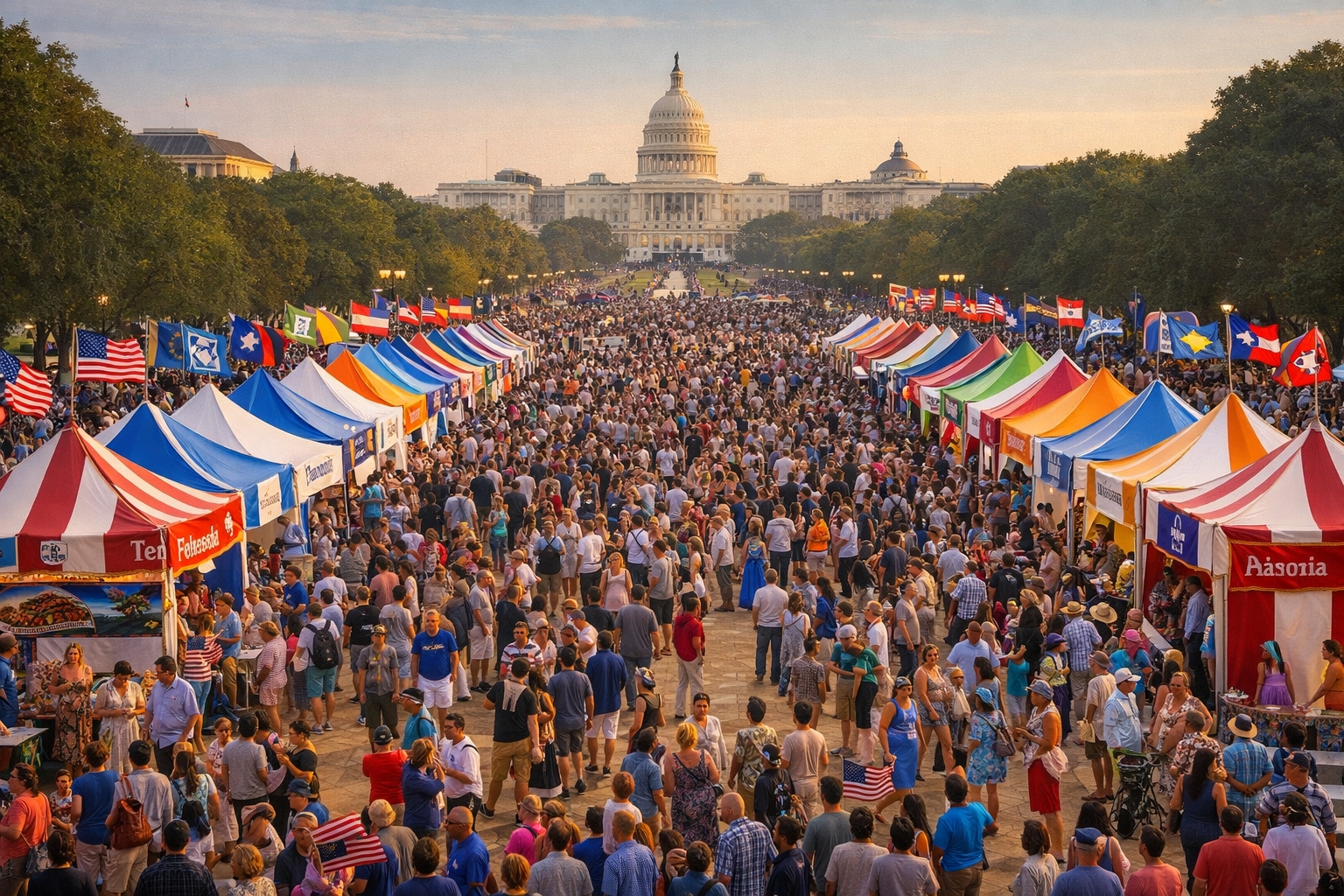
If the semiquincentennial has a signature event, it is the Great American State Fair, a coast‑to‑coast celebration on the National Mall. Scheduled from June 25 through July 10, 2026, the fair transforms the two‑mile green expanse into fifty miniature state fairs. According to Washington.org’s event listing, the fair invites visitors to sample Maine lobster rolls, watch hula dancers from Hawaii, bite into Texas‑sized steaks and admire Alaska’s ice carvings. Each state, territory and federal agency will showcase food, crafts, music and culture. The result is a living map of America that encourages exploration and appreciation of regional diversity.
Walking down the Mall, visitors will move from one state’s tent to the next—sipping Vermont maple syrup one moment, then dancing to Louisiana zydeco the next. Demonstrations will range from blacksmithing and quilting to robotics and virtual reality. Children can participate in scavenger hunts, collect stamps from each state and earn commemorative prizes. Because the fair is free and open daily, locals may return multiple times to see different performances. Travelers should plan to spend at least a full day exploring, wear comfortable shoes and bring a reusable water bottle to beat the summer heat.
The Great American State Fair is the culmination of a nationwide initiative launched at state fairs across the country in 2025. It will include a Great American Rodeo and competitions such as quilting bee finals and talent showcases, culminating in the awarding of Freedom 250 ribbons to winners. States will also display educational exhibits on agriculture, industry and cultural heritage, making the fair both fun and informative.
Spirit of Independence Festival and Road to Revolution Exhibition
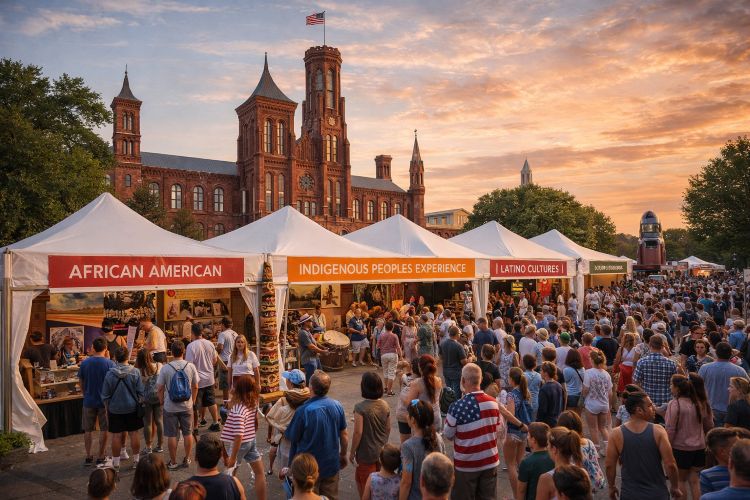
The weeks leading up to July 4 are filled with complementary events. From June 4 to 6, the Spirit of Independence Festival takes place around the National Archives. Here, the original Declaration of Independence will be removed from its protective case for special public readings. The surrounding plaza becomes a festival ground with living‑history interpreters portraying figures like Abigail Adams and Crispus Attucks, while musicians perform fife‑and‑drum tunes. Food vendors serve colonial‑era treats such as johnnycakes and cider. This festival emphasizes the human stories behind the Founding documents and encourages visitors to reflect on the ideals of liberty and civic responsibility.
On June 7, the Road to Revolution exhibition opens inside the National Archives. Running through August 7, this exhibition chronicles the long road to independence—from protests against British taxes to the drafting of state constitutions. It features rare manuscripts, including state resolutions, broadsides and personal letters, many displayed together for the first time. The exhibition also incorporates digital interactives where visitors can explore the grievances, debates and compromises that shaped the Revolutionary era. By situating the semiquincentennial within the broader context of dissent and activism, Road to Revolution invites visitors to think critically about what independence meant for different groups, including Indigenous communities, enslaved people and women.
National Gallery Block Party and National STEM Festival
The celebration isn’t limited to the Mall’s political monuments. On June 6–7, the National Gallery of Art hosts a Block Party at its East and West Buildings. This family‑friendly weekend invites visitors to create art, participate in dance workshops and picnic amid sculptures. Pop‑up performances by D.C.‑area musicians energize the courtyard, while art educators lead tours that highlight 250 years of American creativity. The Block Party is free, reflecting the museum’s commitment to accessibility. For families, the event offers a relaxed way to engage with art history as part of the semiquincentennial experience.
Later in June, science takes center stage at the National STEM Festival, held from June 22 to 27. Hosted on the Mall and at partner institutions such as the Smithsonian National Air and Space Museum and the National Academy of Sciences, the festival showcases student inventions, robotics competitions and interactive exhibits exploring the past, present and future of American innovation. The festival also features panel discussions with astronauts, engineers and technologists who discuss how the spirit of 1776—innovation, problem‑solving and daring—continues to drive discovery today. Admission is free, and the festival appeals to families with school‑age children and anyone curious about science and technology.
Giant National Capital BBQ Battle
On June 28–29, just before the July 4 crescendo, Pennsylvania Avenue hosts the Giant National Capital BBQ Battle. This two‑day festival has been a D.C. summer staple for over three decades and will take on a special DC250 twist. Pitmasters from around the country compete in categories ranging from traditional ribs to plant‑based barbecue. Vendors offer samples of regional styles—from Carolina pulled pork to Texas brisket—while celebrity chefs host cooking demonstrations. Live music stages feature blues, bluegrass and rock bands. The festival also includes a “Patriotic Grillers” competition where teams decorate their booths in red, white and blue. Though not run by the Commission, the BBQ Battle aligns with the semiquincentennial by celebrating American culinary heritage and drawing locals and visitors together. Tickets are typically required for tasting packages, but general admission may include free samples; check the event’s official website for details.
July 4–5: Independence Day Traditions Reimagined
The pinnacle of DC250 arrives on July 4, when the nation commemorates the signing of the Declaration of Independence. Washington, D.C. blends tradition with grander scale for the 250th birthday.
Reading the Declaration: The day begins with a formal reading of the Declaration of Independence on the steps of the National Archives. Descendants of the Founders, civic leaders and children recite passages, while the public listens with hand on heart. This reenactment has been a July 4 tradition for decades and will be expanded in 2026 to include sign language interpreters and translations into multiple languages. Attendees are encouraged to arrive early; seating is limited and standing room fills quickly.
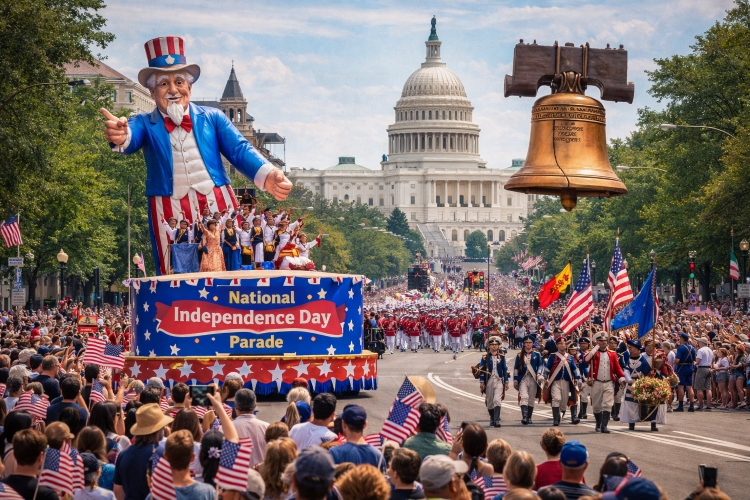
National Independence Day Parade: At midday, the National Independence Day Parade winds down Constitution Avenue. For the semiquincentennial, organizers plan the parade to be the largest ever, with floats representing every state and territory, marching bands from high schools and colleges, historical reenactors in Revolutionary‑era attire and newly naturalized citizens riding on floats. According to published plans, the parade will feature extended segments to tell a “moving timeline” of American history. The parade is free and accessible to all; however, visitors should anticipate security checkpoints and plan for heavy crowds.
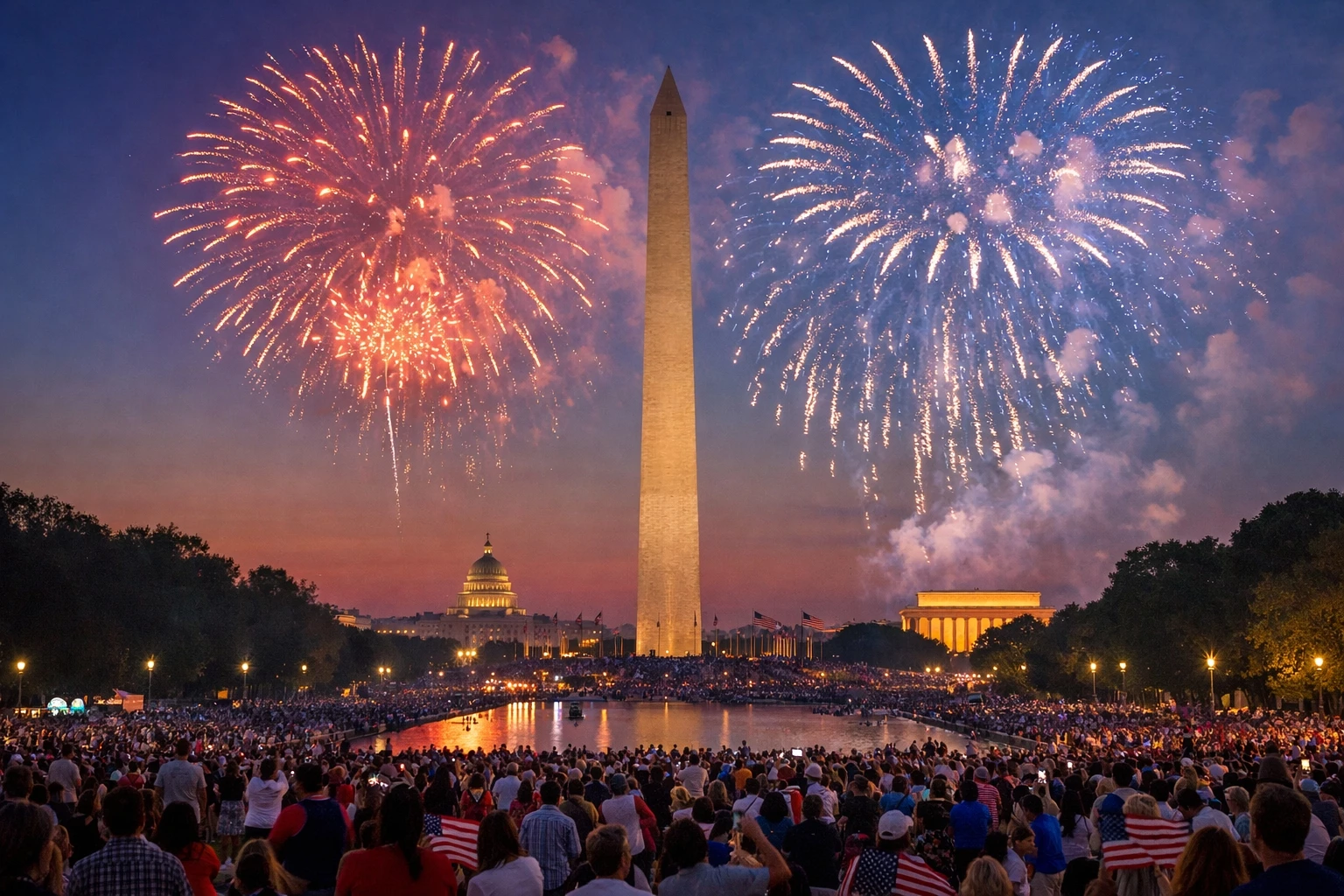
Salute to America Fireworks and Concert: As evening falls, the Mall prepares for the Salute to America fireworks show. Organizers promise the largest pyrotechnic display ever seen over the capital, synchronized with a live orchestra. The show will be visible from the Capitol Reflecting Pool, the Lincoln Memorial and across the Potomac River in Arlington. A concert on the West Lawn of the Capitol will feature popular musicians alongside the National Symphony Orchestra. Fireworks begin after sunset—around 9:15 p.m.—and last nearly thirty minutes. Visitors can spread blankets on the Mall or watch from rooftops and river cruises. Those staying at nearby hotels such as Hotel Washington will be steps away from the Mall, making it easy to enjoy festivities without a long commute.
Tips for Enjoying July 4 in Washington, D.C.
Because July 4 draws hundreds of thousands of visitors, advance planning is essential. Here are some tips:
- Use public transportation: The Washington Metro runs extended hours on July 4. Stations near the Mall, such as Smithsonian, Federal Triangle and L’Enfant Plaza, are usually open with extra trains. Driving is discouraged because many streets are closed.
- Arrive early and be flexible: Security screening can cause delays. Arrive early for the parade and fireworks to secure a good spot. Be prepared to adjust plans based on weather and crowd management.
- Pack essentials: Bring water, snacks, hats and sunscreen. Coolers and large bags may be subject to search or not allowed; check official guidelines before arriving.
- Consider ticketed packages: Some organizations, including museums and hotels, offer ticketed rooftop parties or VIP viewing areas. These packages provide reserved seating and amenities but can be expensive. They may sell out months in advance.
- Plan for heat: July in D.C. can be hot and humid. Wear light clothing and take breaks in air‑conditioned museums.
Celebrations After July 4: Summer and Fall Events
Great American Farmers Market (August 3 – 9)
The festivities continue into August with the Great American Farmers Market. Scheduled for August 3–9 on the National Mall, this week‑long event brings farmers, ranchers and producers from across the country to showcase the diversity of American agriculture. A similar market held in 2025 celebrated National Farmers Market Week and highlighted healthy local foods. For 2026, organizers plan an expanded market with live music, cooking demonstrations and educational exhibits. Visitors can sample regional specialties, meet farmers and learn about sustainable practices. Admission is free, with optional paid tastings. The market encourages urban residents to connect with those who grow and raise their food, reinforcing the theme that agriculture is a foundational pillar of American life.
Freedom 250 Grand Prix (August 21 – 24)
Later in August, car racing comes to downtown D.C. with the Freedom 250 Grand Prix. This street race will wind through a temporary course around the Capitol and along Pennsylvania Avenue. The event is designed to showcase American automotive innovation and pay homage to the country’s industrial heritage. While details are still emerging, early plans call for race weekends that include a classic car parade, an electric‑vehicle showcase and a concert series. For motorsports fans, the Grand Prix offers a thrilling way to continue the DC250 celebration.
DC JazzFest and Patriot Games (September – November)
September brings the return of DC JazzFest, an annual celebration of America’s original art form. In 2026, JazzFest will coincide with DC250 and adopt the theme “The Future of Jazz: America’s Next 250 Years.” Performances will take place at venues across the city, including The Wharf, the Kennedy Center and neighborhood clubs. Emerging artists and legends will share stages, and educational workshops will explore jazz’s role in democracy and cultural exchange. Family‑friendly outdoor concerts will allow visitors to picnic while enjoying free music. Tickets are required for some shows, but many events remain free.
Running from September 1 through November 2, the Patriot Games introduce a new kind of athletic competition. Inspired by the ancient Olympic Games and America’s state‑to‑state rivalry, the Patriot Games will feature teams of young men and women representing each state. Events will include track races, team relays, obstacle courses and marksmanship. The competition aims to promote physical fitness and unity while providing a modern twist on colonial‑era militia drills. Opening and closing ceremonies will include state pageantry, musical performances and commentary on each state’s contributions to the nation’s story. Because the Patriot Games are a new initiative, details may evolve; check the official DC250 calendar for updates and ticket information.
Winter and Off‑Season Programming
Although the semiquincentennial’s marquee events occur between May and November, some programming extends into winter 2026–27. Museums will launch exhibitions exploring the country’s post‑Revolutionary growth, civil rights struggles and technological achievements. Schools and community centers will host educational programs to encourage civic engagement and historical literacy. The National Archives, for instance, plans a traveling exhibit that will bring rare documents to all fifty states, ensuring that the semiquincentennial touches every part of the country. These off‑season programs provide opportunities for those unable to travel to D.C. during the summer to participate in the celebration.
Cultural Exhibitions and Permanent Installations
Road to Revolution: A Deep Dive into Independence
While the Spirit of Independence Festival sets the stage, the Road to Revolution exhibition at the National Archives is the centerpiece of DC250’s historical programming. Running through August 7, this immersive show explores the journey from colonial unrest to self‑government. Visitors encounter rare documents such as petitions to colonial governors, diaries of Continental soldiers and early state constitutions. The exhibition uses interactive timelines and digital maps to illustrate how grievances against taxation, trade restrictions and military occupation built momentum for independence. It also highlights lesser‑known voices, including enslaved people petitioning for freedom and Indigenous leaders navigating alliances. By presenting a fuller picture of the revolution, Road to Revolution encourages visitors to contemplate the unfinished business of liberty.
American Icon: The U.S. Flag in Art
Another major exhibition, American Icon: The U.S. Flag in Art, explores the symbolism of the stars and stripes. Hosted by the Smithsonian American Art Museum and scheduled to open in summer 2026, the show traces how artists have represented the flag over two centuries. Paintings by Gilbert Stuart and Jasper Johns appear alongside quilts, folk art and protest art. Interactive elements allow visitors to design their own flags and learn about flag etiquette. The exhibition underscores the flag’s complexity: a symbol of pride for some, of protest for others, and a canvas for endless reinterpretation. Its timing during the semiquincentennial invites reflection on how national symbols evolve along with the nation.
National Air and Space Museum and Other Smithsonian Updates
The National Air and Space Museum, undergoing a multi‑year renovation, plans to unveil several new galleries in 2026. These galleries will examine how aviation and space exploration have shaped America’s identity and global influence. Exhibits will showcase early aircraft, the Wright brothers’ innovations, Apollo mission artifacts and prototypes for future spacecraft. Visitors will also encounter interactive simulators and immersive experiences, such as walking on a simulated lunar surface. The renovation reflects a broader trend among Smithsonian institutions to update exhibits to be more inclusive and interactive.
Other museums will contribute to DC250 through special exhibitions. The National Museum of African American History and Culture will highlight the role of Black patriots and abolitionists in the Revolutionary era. The United States Holocaust Memorial Museum will examine how early American ideals influenced global human‑rights movements. The Hirshhorn Museum and Sculpture Garden will commission contemporary artists to create installations inspired by themes of liberty and dissent. Together, these exhibitions deepen the semiquincentennial narrative by connecting history to art, science and civil rights.
Planning Your Visit to D.C. for the Semiquincentennial
When to Visit: Timing Your Trip
Deciding when to visit Washington, D.C. for DC250 depends on your priorities. The festivities span from mid‑May through early November, but different periods offer distinct experiences:
- Late May (Memorial Day weekend): Ideal for those who want to honor veterans and enjoy smaller crowds. Events include Rolling to Remember and the National Memorial Day Parade. Weather is mild, hotel rates may be lower than in July and museum lines are shorter.
- Early June: Good for visitors who prefer cultural events over massive crowds. The Spirit of Independence Festival, Road to Revolution exhibition opening, National Gallery Block Party and early days of the Great American State Fair fall in this period.
- Late June to July 4: The busiest and most festive time. You’ll experience the full Great American State Fair, the BBQ Battle, the National STEM Festival and the Independence Day parade and fireworks. Expect high hotel prices, sold‑out viewing packages and dense crowds.
- August and September: Post‑July, the pace slows slightly. The Great American Farmers Market, Freedom 250 Grand Prix and DC JazzFest draw interest, but crowds are less intense than in early July. September and October also offer comfortable weather and fall foliage.
- October and November: A quieter period, with the Patriot Games continuing and museum exhibitions in full swing. Accommodations may be easier to find, and visitors can explore without extreme heat or large crowds.
Whenever you visit, book accommodations well in advance. Consider scheduling extra days to explore D.C.’s permanent attractions, such as the Library of Congress, Supreme Court, Georgetown, and the neighborhoods of Adams Morgan and The Wharf. D.C.’s public transit makes it easy to explore beyond the Mall; the Metro offers unlimited‑ride passes and bikeshares are plentiful.
Free versus Ticketed Events
One of the most attractive features of DC250 is that many major events are free. According to planning guides, free events include the Great American State Fair, National Independence Day Parade, Salute to America fireworks, Spirit of Independence Festival, National STEM Festival, National Memorial Day Parade, National Gallery Block Party and access to Smithsonian museums. Visitors can pack a full itinerary without spending on admission.
However, some experiences do require tickets or reservations. For example:
- VIP viewing packages for the parade and fireworks offer reserved seating, tented areas and catering. Tickets often sell out months in advance.
- Cooking demonstrations and tasting packages at the BBQ Battle and Farmers Market may cost extra.
- Concerts and lectures during DC JazzFest may be free or ticketed; check the festival’s official site for schedules.
- Timed entry to museums (such as the National Museum of African American History and Culture) remains in effect for 2026. Reserve slots online as soon as they become available.
- Patriot Games competitions may have admission fees to certain venues.
- Special exhibitions like Road to Revolution may offer early‑entry passes or guided tours for a fee.
In general, plan to combine free public events with a few paid experiences. Check each event’s official website for ticket policies, security guidelines and accessibility information.
Transportation and Logistics
Washington, D.C. is accessible by three major airports—Reagan National Airport (DCA), Dulles International Airport (IAD) and Baltimore/Washington International Thurgood Marshall Airport (BWI). Amtrak trains and intercity buses arrive at Union Station, steps from the Capitol. For local travel, the Metro provides an efficient way to reach the Mall and surrounding neighborhoods. During DC250, the system will operate extended hours and may add trains to handle increased demand.
Parking near the Mall is extremely limited. If you must drive, reserve a garage spot in advance and plan to walk or use bikeshares for short distances. Rideshare services are widely available but may experience surge pricing during major events. Consider staying within walking distance to reduce transit time.
Lodging Options and Hotel Washington
Finding the right accommodation is crucial for enjoying DC250. Hundreds of hotels cater to different budgets and styles, from boutique inns on Capitol Hill to large conference hotels downtown. One standout option is Hotel Washington, located on Pennsylvania Avenue near 15th Street NW. According to its official site, this historic property is the closest luxury hotel to the U.S. Treasury Building and sits at the edge of the White House Lawn. This prime location means guests can walk to the National Mall in minutes and easily return to their room between events.
Hotel Washington offers modern rooms with views of the Washington Monument, a rooftop bar with panoramic city vistas and on‑site dining. For DC250, the hotel plans special packages that may include reserved rooftop seating for the fireworks, exclusive event access and commemorative souvenirs. Because of its proximity, rooms will likely sell out quickly for late June and early July. Booking a package ensures convenience but may come with a premium price. If you prefer a quieter stay, consider hotels in neighborhoods such as Dupont Circle, U Street or The Wharf, where you can enjoy local restaurants and nightlife while still being a short Metro ride from the Mall.
Exploring Beyond the Mall: Neighborhoods and Nearby Destinations
Capitol Hill and Penn Quarter
While the National Mall hosts the main DC250 events, the broader city offers rich experiences. Capitol Hill is more than the seat of Congress; it is a neighborhood of row houses, markets and gardens. Visit Eastern Market—a historic food and craft market—to sample artisanal cheeses and chat with local artists. Stroll through residential streets lined with Victorian houses and community gardens. Nearby, the Library of Congress and the Supreme Court offer free tours that provide deeper insight into the nation’s government.
North of the Mall lies Penn Quarter, an entertainment district brimming with theaters, galleries and restaurants. The National Portrait Gallery and Smithsonian American Art Museum share a building here and will host special semiquincentennial exhibitions. Catch a performance at Ford’s Theatre, where Abraham Lincoln was assassinated, or explore local restaurants serving cuisines from around the world. For families, the International Spy Museum offers interactive exhibits on espionage and technology.
Georgetown and The Wharf
For a change of pace, visit Georgetown, a historic neighborhood on the Potomac River. Cobblestone streets, 18th‑century houses and waterfront parks create a charming backdrop. Shop along M Street, dine in cozy bistros and enjoy kayaking or paddleboarding on the river. Georgetown University’s campus and the Old Stone House—the oldest standing building in Washington—add historical interest. During DC250, Georgetown will host small concerts and art markets that complement the national festivities.
Another waterfront destination is The Wharf, a revitalized area on the Southwest Waterfront. This district features trendy restaurants, live‑music venues and outdoor activities. The District Wharf marina offers boat tours that provide unique views of the monuments, while open‑air concerts, fireworks and food festivals enliven the promenade. Staying at hotels in The Wharf affords easy access to DC250 events with the added benefit of waterfront relaxation.
Day Trips to Historic Sites
Washington’s central location makes it a gateway to other historic sites. A short train ride takes you to Philadelphia, where independence was declared. Visit Independence Hall, the Liberty Bell and the National Constitution Center for context on the events of 1776. Another option is Mount Vernon, George Washington’s estate in Virginia. Here, you can tour the mansion, gardens and working farm and learn about Washington’s role in the Revolution. Day trips provide a broader perspective on the semiquincentennial and allow visitors to connect various threads of American history.
Frequently Asked Questions (FAQ)
What does DC250 mean?
DC250 is shorthand for Washington, D.C.’s celebration of America’s 250th birthday. It encompasses year‑long events, including fairs, parades, concerts and exhibitions organized by the U.S. Semiquincentennial Commission and the America250 Foundation.
When are the main DC250 events?
Key events begin with Rededicate 250 on May 17, 2026, and run through the July 4 weekend. The Great American State Fair operates June 25–July 10, while the National Independence Day Parade and Salute to America fireworks occur on July 4. Summer and fall events continue through early November.
Are DC250 events free?
Most marquee events—such as the Great American State Fair, National Independence Day Parade, Salute to America fireworks, Spirit of Independence Festival, National STEM Festival and Smithsonian museum exhibits—are free. However, some concerts, tastings, VIP packages and competitions require tickets.
Do I need to reserve tickets for museums during DC250?
Some museums require timed‑entry reservations regardless of DC250. The National Museum of African American History and Culture and the Holocaust Museum often use timed tickets. Book as early as possible. Free events like the National Gallery Block Party do not require tickets.
Where is the best place to watch the July 4 fireworks?
Popular viewing spots include the Capitol’s West Lawn, the Lincoln Memorial Reflecting Pool, the Washington Monument grounds and roof decks of hotels near the Mall. Hotel Washington offers rooftop packages, while boat cruises provide unique water views.
How do I get around during DC250?
Use the Metro for quick, affordable transportation. Stations near the Mall are close to major event sites. Bike shares, scooters and walking paths provide flexibility. Parking is limited and road closures occur during major events.
What should I bring to DC250 events?
Pack water, snacks, sunscreen, comfortable shoes and a portable phone charger. Check event guidelines for prohibited items—large bags and coolers may be restricted. Bring rain ponchos or umbrellas for unpredictable weather.
How early should I book accommodations?
For peak dates (late June to early July), book hotels several months to a year in advance. Popular properties near the Mall, such as Hotel Washington, may sell out quickly. Consider off‑peak dates or neighborhoods a short metro ride away if you book later.
Looking Ahead: A Celebration for Future Generations
DC250 is more than an anniversary party—it is a bridge between past and future. By reflecting on 250 years of struggle, innovation, sacrifice and progress, the celebrations invite Americans to imagine the next quarter‑millennium. Visitors to Washington, D.C. will experience history in motion as they wander among state tents, listen to jazz along the river, ride the Metro past monuments and watch fireworks illuminate the sky. Whether you attend a single event or immerse yourself for weeks, you will witness a city and a nation celebrating freedom in all its complexity.
Begin planning your trip today by exploring event schedules, reserving accommodations and reading about America’s founding ideals. Stay at Hotel Washington—the closest hotel to the White House, positioned at the edge of the White House Lawn—for unmatched proximity to the National Mall and semiquincentennial excitement. As America marks this milestone, you can be part of a story that will shape the country for generations to come. For more information and bookings, visit Hotel Washington
Read other posts