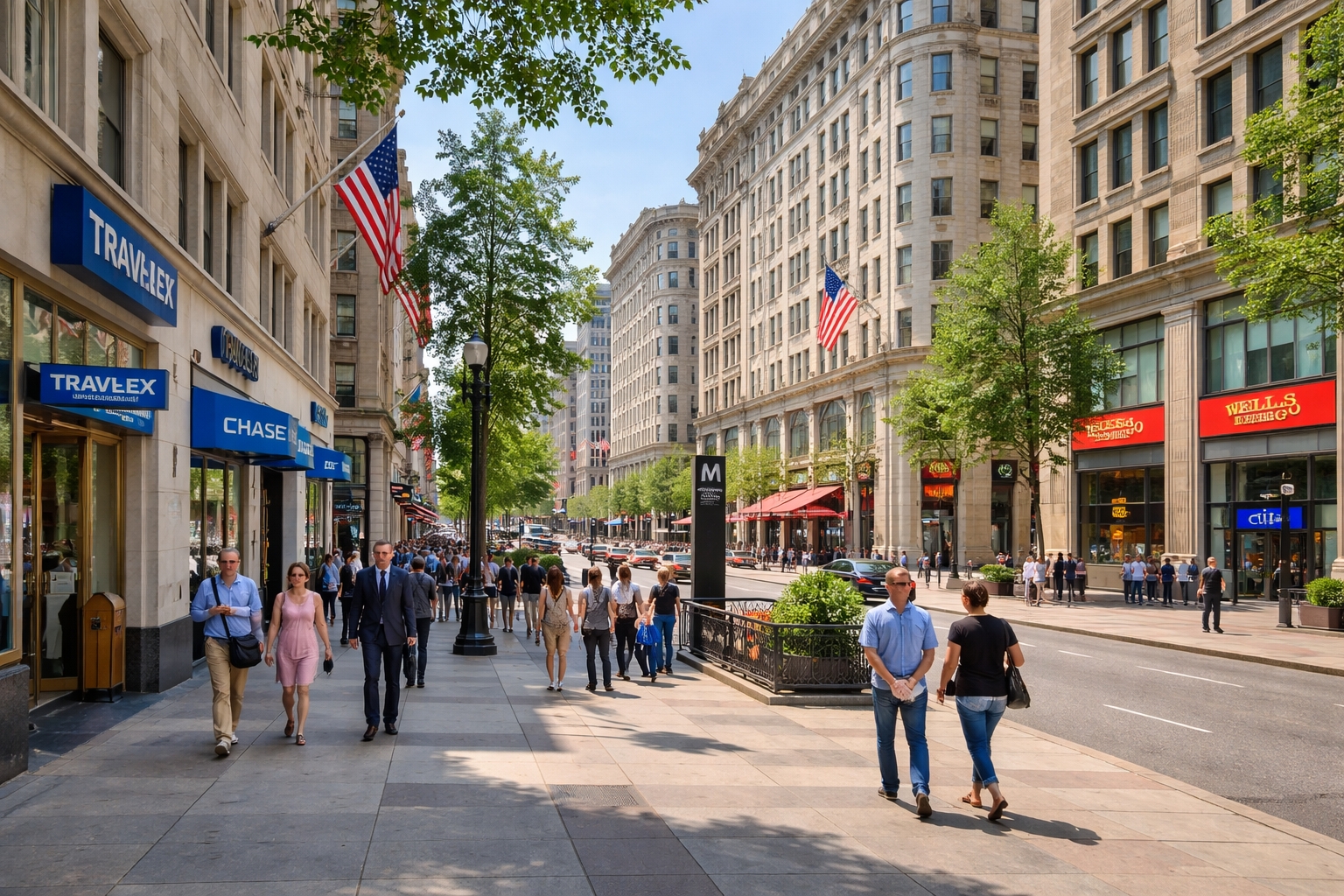
Currency Exchange in Washington DC: Your Complete Guide Near the White House
Washington DC is a world capital that welcomes diplomats, travelers, students and tourists from every corner of the globe. Whether you’re exploring the Smithsonian museums, meeting on Capitol Hill or settling into the closest hotel to the White House, positioned at the edge of the White House Lawn, you’ll likely need local money at some point during your visit. Currency exchange locations in Washington DC include dedicated exchange offices, bank branches, travel clubs and desks at airports and train stations. Knowing where to go, what services to expect and how to avoid unnecessary fees will help you get the best value for your money. This guide explains the options available in DC, highlights trusted providers and offers practical tips for exchanging money smoothly.
Where to Exchange Currency in Washington DC
As one of the most visited cities in the United States, Washington DC offers a range of places to exchange foreign currency. Historically, visitors would queue at banks and hotels, paying whatever rate was offered. Today the city’s options have expanded: you can exchange money at airports, train stations, malls, independent exchange offices and at the customer‑service desks of major banks. The right choice depends on convenience, rates and whether you prefer to conduct your transaction in person or online.
Understanding Your Options
Before choosing a specific provider, consider the main categories of currency exchange in DC:
-
Airport and transportation hubs – convenient but typically higher fees and less favorable rates.
-
Dedicated exchange offices – specialized providers such as Currency Exchange International (CXI) and Treasure Trove that offer on‑demand currency and competitive rates.
-
Banks and credit unions – familiar institutions that exchange currency for customers, often with lower fees but limited availability.
-
Travel clubs and money‑transfer services – organizations like AAA, Ria Money Transfer or MoneyGram that provide exchange services alongside other travel products.
Major Currency‑Exchange Providers in DC
The table below summarizes some of the best‑known currency‑exchange providers in Washington DC. Contact details and hours may change, so always call ahead to confirm availability.
| Provider & location | Address & phone | Notes |
|---|---|---|
| Currency Exchange International (CXI) | Locations in Pentagon City mall and Bethesda; phone +1 703‑418‑2344 | On‑demand foreign currency and gold bullion with a Best Rate Guarantee. Seven‑day service at mall locations. |
| Treasure Trove Foreign Currency Exchange | 1200 G St NW, Suite 832 (across from Metro Center); phone +1 202‑567‑7276 | By appointment; full‑service exchange for more than 80 currencies; call ahead to reserve and enter via Benson’s Jewelry. |
| Metro Currency Exchange | 817 King St, Suite 206, Alexandria VA; phone +1 202‑909‑0404 | Appointment‑only exchange near King Street Metro. |
| Travelex Currency Services | Desks at Union Station and terminals at Washington Dulles International Airport and Ronald Reagan Washington National Airport | Convenient but rates are often less favorable. Some locations have closed; call ahead to confirm. |
| AAA Mid‑Atlantic | 1405 G Street NW; phone +1 202‑? | Exchanges currency for members alongside travel insurance and maps. |
| American Express Travel Service | 1501 K St NW; phone +1 ? | Offers foreign currency exchange for cardmembers. |
| Ria Money Transfer & MoneyGram | Locations in Alexandria and Columbia Road NW; phone +1 855‑355‑2141 | Money‑transfer companies that also exchange cash; check rates and hours before visiting. |
The city also hosts smaller providers such as Monex USA, MFX Solutions and Bank Populaire near Connecticut Avenue. These services cater primarily to corporate clients but may offer retail exchanges by appointment.
Banks & Credit Union Currency Exchange Services
Major banks and credit unions remain a reliable option for currency exchange in Washington DC, especially if you already have an account. In the early days of international travel, banks were virtually the only institutions authorized to handle foreign currency. Today their role has shifted: while they still provide exchange services, they often direct travelers to online orders or central branches rather than handling walk‑in requests at every location. Knowing which banks participate and what fees they charge helps you decide whether this route is right for you.
Which Banks Offer Currency Exchange?
A number of national and regional banks allow customers to exchange foreign currency at DC branches or online. According to a 2024 review of financial institutions, the following banks and credit unions exchange currency for customers:
-
Bank of America – customers may order up to US$10,000 online or exchange at a branch; orders over US$1,000 must be picked up in person.
-
Citi – more than 50 currencies available; Citigold and Citi Priority customers pay no fee; others pay US$5 for orders under US$1,000.
-
PNC Bank – exchanges currency for customers at select branches; orders should be placed in advance.
-
TD Bank – sells 55 currencies online or at branches; online orders include a modest shipping fee.
-
U.S. Bank – customers may order currency online or at a branch; a US$10 fee applies for orders under US$250.
-
Credit unions such as America First Credit Union, Service Federal Credit Union and Wings Financial allow members to exchange currency, sometimes charging a small fee for orders under a certain threshold.
Most banks require you to be a customer to use their exchange service; non‑customers are generally turned away. For rare or exotic currencies, branches may need to place an order, so call ahead or use the bank’s online portal. Expect to provide a valid government‑issued ID and allow several business days for delivery.
Fees and Limits
Transaction fees vary by institution. Some banks waive fees for premium account holders, while others charge a flat fee for orders below US$300 or US$500. Shipping to your home may incur a nominal delivery fee. Banks typically offer rates slightly lower than specialized exchange offices but generally better than airport kiosks. If convenience matters more than cost, a bank near your hotel may be your best bet. If you want the best possible rate and are willing to make a separate trip, dedicated exchange offices or online providers may be more cost‑effective.
Airport & Train‑Station Currency Exchange
Airports and train stations cater to travelers in transit, providing quick access to currency. In Washington DC, the main transit hubs offering currency exchange services are Washington Dulles International Airport (IAD), Ronald Reagan Washington National Airport (DCA), Baltimore/Washington International Thurgood Marshall Airport (BWI) and Union Station. The convenience of exchanging money right before boarding your plane or train comes at a price: airports and stations often charge higher fees and offer less competitive exchange rates.
Washington Dulles International Airport (IAD)
Dulles is DC’s primary international gateway. Travelex Currency Services operates two desks at the airport: one on the east end and one on the west end of the upper level before security. Travelers can exchange major currencies here, but you’ll pay higher margins than you would at city‑center offices or banks. Consider ordering currency in advance from your bank, then using airport exchange only for small, emergency amounts.
Ronald Reagan Washington National Airport (DCA)
At Reagan National, Travelex formerly operated a desk in National Hall North at Terminal C. Some airport currency exchanges closed during the pandemic; check the airport’s website for the latest information and be aware that many travelers have reported poor rates and high fees. If possible, use your ATM card at an airport cash machine instead and opt to be charged in US dollars rather than your home currency when prompted.
Baltimore/Washington International Thurgood Marshall Airport (BWI)
BWI, about 30 miles northeast of DC, has currency exchange kiosks near concourses C and E. Rates here are similar to other airport exchanges. Because BWI primarily serves domestic flights, fewer travelers use these services; call ahead if you require a specific currency.
Union Station
Union Station, the city’s main train and bus terminal, houses a Travelex currency‑exchange desk. This counter is convenient for travelers arriving by Amtrak or intercity bus. As with airports, rates can be high; if you have time, consider walking a few blocks to a local exchange office or bank for better pricing.
Airport Exchange Best Practices
-
Exchange only what you need for immediate transportation or snacks; wait until you reach the city to exchange larger amounts.
-
Avoid “no fee” advertisements at airports; these vendors often compensate by using poor exchange rates.
-
Use your debit card at airport ATMs if your bank offers low international withdrawal fees. Always choose to be charged in US dollars, not your home currency, to avoid dynamic currency conversion fees.
-
Confirm that airport exchange locations are open before you travel; some Travelex counters remain closed or operate limited hours.
Local Currency‑Exchange Offices and Services
Dedicated currency‑exchange offices offer specialized expertise, competitive rates and a wide selection of currencies. They operate independently of banks and often maintain on‑hand inventories of popular currencies so you can walk away with cash immediately. In DC these offices are concentrated downtown and in surrounding suburbs like Tysons and Alexandria.
Treasure Trove Foreign Currency Exchange
Tucked into Benson’s Jewelry near Metro Center, Treasure Trove Foreign Currency Exchange offers full‑service foreign currency exchange for more than 80 currencies. It’s across the street from Macy’s on 12th and G Streets and just steps from the Metro Center station.
The shop operates Monday through Friday from 10 AM to 4 PM. Because the boutique handles high volumes for embassies and travelers, you must call ahead to confirm your arrival and reserve your currency. The staff instructs visitors to greet security, check in with the building reception and wait in the lounge until invited to the office. The exchange accepts cash and major credit cards for payment; however, check their policy on coins and small denominations..
Currency Exchange International (CXI)
Currency Exchange International operates several branches in and around DC, including at Pentagon City and Bethesda. The company’s city‑center branches keep an extensive inventory of popular currencies and offer services seven days a week. CXI also sells gold bullion coins and bars and provides a Best Rate Guarantee, promising to match or beat any local bank’s rate on the same day. For large transactions, call ahead to reserve your currency or order online; most branches are inside malls, making them convenient for combining errands.
Metro Currency Exchange
Across the river in Alexandria, Metro Currency Exchange operates by appointment only. This service suits travelers who want to avoid crowds and wait times. Because the office stocks limited cash on‑site, you must schedule ahead and specify which currency and amount you require. The location is near the King Street Metro station, making it accessible for visitors staying in Alexandria or at National Harbor.
Other Independent Providers
-
Monex USA and MFX Solutions serve corporate clients but may arrange retail exchanges for individuals; you’ll need to call and verify availability.
-
AAA Mid‑Atlantic (1405 G Street NW) offers foreign currency to members as part of its travel‑services suite. Quantities may be limited; call ahead and bring your membership card.
-
American Express Travel Service at 1501 K Street NW provides currency exchange for cardmembers. Like other providers, they may require an appointment or card verification.
-
Ria Money Transfer and MoneyGram operate storefronts on Mount Vernon Avenue and Columbia Road NW. While primarily known for remittances, these businesses also buy and sell common currencies; check rates carefully as they may vary widely by location.
Local Exchange Tips
-
Always call ahead to confirm currency availability and business hours; independent offices sometimes close early or open limited days.
-
Ask about fees and exchange rates before committing; some offices quote rates over the phone and will honor them if you arrive within a certain window.
-
Bring a government‑issued ID and the cash or cards you plan to use. Many offices do not accept coins or small denominations.
-
Avoid carrying large amounts of cash in unfamiliar neighborhoods; consider traveling with a companion or during daylight hours.
Rates, Fees and Best Practices
Getting a fair exchange rate is a balancing act between convenience and cost. Exchange services make money by adding a margin to the mid‑market rate. Knowing what to expect and planning ahead can save you significant sums.
How Exchange Rates Are Set
The foreign exchange market determines global currency values, but the rate you pay at a bank or exchange office is slightly different. Banks and exchange providers factor in overhead, risk and profit margins. According to consumer advice sources, dedicated exchange offices often offer better rates than airports and hotels because currency exchange is their core business. Airports and tourist areas charge more because they know travelers have limited options.
Fees to Watch For
-
Transaction fees – Many banks charge a flat fee if your order is below a certain amount.
-
Shipping fees – When ordering currency online, shipping to your home usually incurs a small delivery fee.
-
Service fees – Independent offices may list a percentage fee or include their margin in the quoted exchange rate.
-
Dynamic currency conversion – When using a credit or debit card abroad, merchants may offer to bill you in your home currency; always select US dollars instead to avoid hidden exchange fees.
Strategies for Better Rates
-
Plan ahead – Order foreign currency from your bank several days before travel. This gives you time to compare rates and avoid airport kiosks.
-
Compare providers – Check rates from banks, dedicated exchange offices and online services. Don’t be fooled by “no commission” promises; poor exchange rates can cost more than a stated fee.
-
Use ATMs wisely – ATM withdrawals often provide better rates than cash exchanges, especially if your bank reimburses foreign ATM fees. Inform your bank of your travel plans and choose to be charged in local currency when withdrawing.
-
Bring proper ID – Banks and exchange offices require identification such as a passport or driver’s license to complete a transaction.
-
Order larger amounts – Some institutions waive fees when you exchange above a certain threshold. However, carry only as much cash as you need and store it securely.
-
Avoid airport and hotel exchanges – As repeatedly noted, these locations often charge the highest fees. Exchange a small amount for immediate needs and wait to do larger transactions in the city.
Currency Exchange Near the White House & Hotel Washington
Staying near the White House means you’re in the heart of the capital. The Hotel Washington sits just across from the Executive Mansion, offering unparalleled views and proximity to iconic landmarks. Travelers staying in this area will find several currency‑exchange options within walking distance.
Neighborhood Overview
Downtown DC, encompassing the White House, Penn Quarter and Metro Center, is a lively district filled with government buildings, museums, theaters and restaurants. The area is well served by metro stations (Federal Triangle, Metro Center and McPherson Square) and bus routes. Because it’s home to many business travelers and tourists, the neighborhood hosts various financial services, including banks and exchange offices.
Nearby Currency‑Exchange Services
-
Treasure Trove Foreign Currency Exchange – Located at 1200 G Street NW, this boutique is less than half a mile from Hotel Washington. From the hotel, walk east along Pennsylvania Avenue and turn right on 12th Street; the shop sits on the corner opposite Metro Center. Call ahead and follow the appointment procedure described above.
-
American Express Travel Service – At 1501 K Street NW, about two blocks north of the White House, American Express exchanges currency for cardmembers. It’s located in a commercial office building; check in at the lobby desk.
-
AAA Mid‑Atlantic – AAA’s downtown branch at 1405 G Street NW offers currency exchange for members. This location is a short walk from Hotel Washington and near many hotels and restaurants.
-
Major bank branches – The area around the White House hosts several branches of Bank of America, Wells Fargo and other national banks. If you are a customer, these branches may exchange currency for you; call ahead to check stock and hours.
-
Union Station – A quick taxi or metro ride from the White House, Union Station’s Travelex desk can be a last resort for currency exchange. Rates are higher than at local offices.
Staying at Hotel Washington
Hotel Washington, an elegant property directly across from the White House, provides guests with concierge services that can assist with currency‑exchange logistics. The hotel’s prime location on Pennsylvania Avenue makes it easy to walk to nearby exchange offices or catch the metro to branches in Alexandria or Bethesda. If you’re arriving late or have special requests, contact the concierge in advance to discuss options. Remember that the hotel itself does not offer currency‑exchange services; guests should plan to use the providers listed above.
Tips for International Visitors
Navigating a new currency and city can be daunting. Here are additional tips to help you manage your money during your stay in the nation’s capital:
-
Know the currency – The US uses the U.S. dollar (USD). When using exchange offices, look for the currency code USD to compare rates.
-
Understand taxes and tipping – DC’s sales tax is 5.75 percent, restaurants and drinks carry a 10 percent tax and hotel taxes are about 14.5 percent. Tipping is customary: 15–20 percent for servers, about 15 percent for taxi drivers and US$1 per bag for porters.
-
Carry a combination of cash and cards – Credit and debit cards are widely accepted, including contactless payments. However, you may need cash for small vendors, markets or tipping.
-
Use ATMs strategically – Many ATMs in DC accept foreign cards. If your home bank has a partner in the US, you can withdraw cash with minimal fees. Some ATMs in convenience stores or hotels add surcharges; choose bank‑affiliated machines when possible.
-
Watch for currency‑exchange scams – Avoid street dealers or unlicensed exchanges. Stick to banks, reputable offices and well‑known chains.
-
Check opening hours – Many exchange offices close early on weekends or operate shorter hours during public holidays. Call ahead during major events such as the Cherry Blossom Festival or Independence Day, when visitor numbers surge.
-
Be mindful of safety – Downtown DC is generally safe, but take standard precautions when carrying cash. Use hotel safes and avoid flashing large sums in public.
Frequently Asked Questions (FAQs)
Where can I exchange foreign currency in Washington DC?
Dedicated exchange offices such as Treasure Trove, Currency Exchange International and Metro Currency Exchange provide walk‑in services. Banks also exchange currency for customers, and Travelex desks operate at airports and Union Station.
Do banks in DC offer currency exchange to non‑customers?
Most banks only exchange currency for account holders. Some credit unions may serve members of affiliate organizations, but non‑customer access is rare.
Are there currency‑exchange services at Washington’s airports?
Yes. Travelex operates desks at Dulles International Airport and Reagan National Airport. Rates are higher than those at city‑center offices; use them only for small amounts or emergencies.
What should I bring when exchanging currency?
Bring a valid passport or driver’s license, the foreign currency you plan to exchange and an additional form of payment if fees apply. Some offices do not accept coins or small denominations.
Is it better to exchange money at the airport or in the city?
Exchange rates at airports and hotels tend to be worse than those at banks or independent offices. Exchange only what you need for immediate expenses at the airport and handle larger transactions in the city.
How can I avoid high currency‑exchange fees?
Compare rates across providers, use ATMs linked to your bank’s network, order currency from your bank in advance and decline dynamic currency conversion when paying with cards.
Where can I exchange currency near the White House?
Treasure Trove on G Street, AAA Mid‑Atlantic on G Street and American Express Travel Service on K Street are all within walking distance of the White House and Hotel Washington.
Do I need a lot of cash in Washington DC?
Many businesses accept credit and debit cards, including contactless payments. Carry enough cash for tips, taxis and small purchases, and use ATMs or exchange offices for additional needs.
Conclusion
Washington DC offers numerous ways to exchange foreign currency, from bank branches and independent offices to airport kiosks and downtown travel agencies. By planning ahead, comparing rates and choosing providers that suit your needs, you can avoid high fees and ensure you have the right funds for your journey. If you’re staying near the White House, you’ll find convenient currency‑exchange services within walking distance of Hotel Washington, allowing you to explore the capital with peace of mind. For more information about accommodations or to book your stay, visit Hotel Washington’s official website.
Read other posts