Best Time to Visit Washington DC
The best time to visit Washington DC is generally from late March through May and from September through October, when the city offers mild weather, walkable days, seasonal beauty, and a full calendar of cultural events. These periods balance comfortable temperatures with vibrant energy, making them ideal for sightseeing, museum visits, and exploring the city on foot. That said, Washington DC is a year-round destination, and each season delivers a distinct experience depending on travel priorities, crowd tolerance, and budget.
Washington DC is not a city with a single perfect moment. It is a city of moments. Cherry blossoms drifting across the Tidal Basin in spring, long golden evenings along the National Mall in summer, crisp air and historic avenues in fall, and quiet monument walks in winter all tell different versions of the same story. Understanding when to visit is less about chasing an ideal date and more about aligning the season with how you want to experience the city.
Best Months to Visit Washington DC
While Washington DC can be visited any month of the year, certain months consistently deliver the best balance of weather, activity, and overall experience.
April and May are widely considered the most desirable months to visit Washington DC. Spring brings moderate temperatures, blooming landscapes, and an unmistakable sense of renewal throughout the city. Parks and memorials feel alive, and walking between landmarks is genuinely enjoyable.
September and October rival spring in appeal. The intense heat and humidity of summer fade, crowds thin after the peak travel season, and the city takes on a more relaxed rhythm. Fall colors begin to appear in tree-lined neighborhoods and along historic avenues, creating a calm, refined atmosphere that feels particularly well suited to cultural exploration.
March and November are transitional months that appeal to travelers seeking fewer crowds. While weather can be unpredictable, these months often reward visitors with quieter museums, more hotel availability, and a more local feel.
Best Season to Visit Washington DC
Each season in Washington DC shapes the city in a different way, influencing how visitors move through it and what stands out most.
Spring in Washington DC
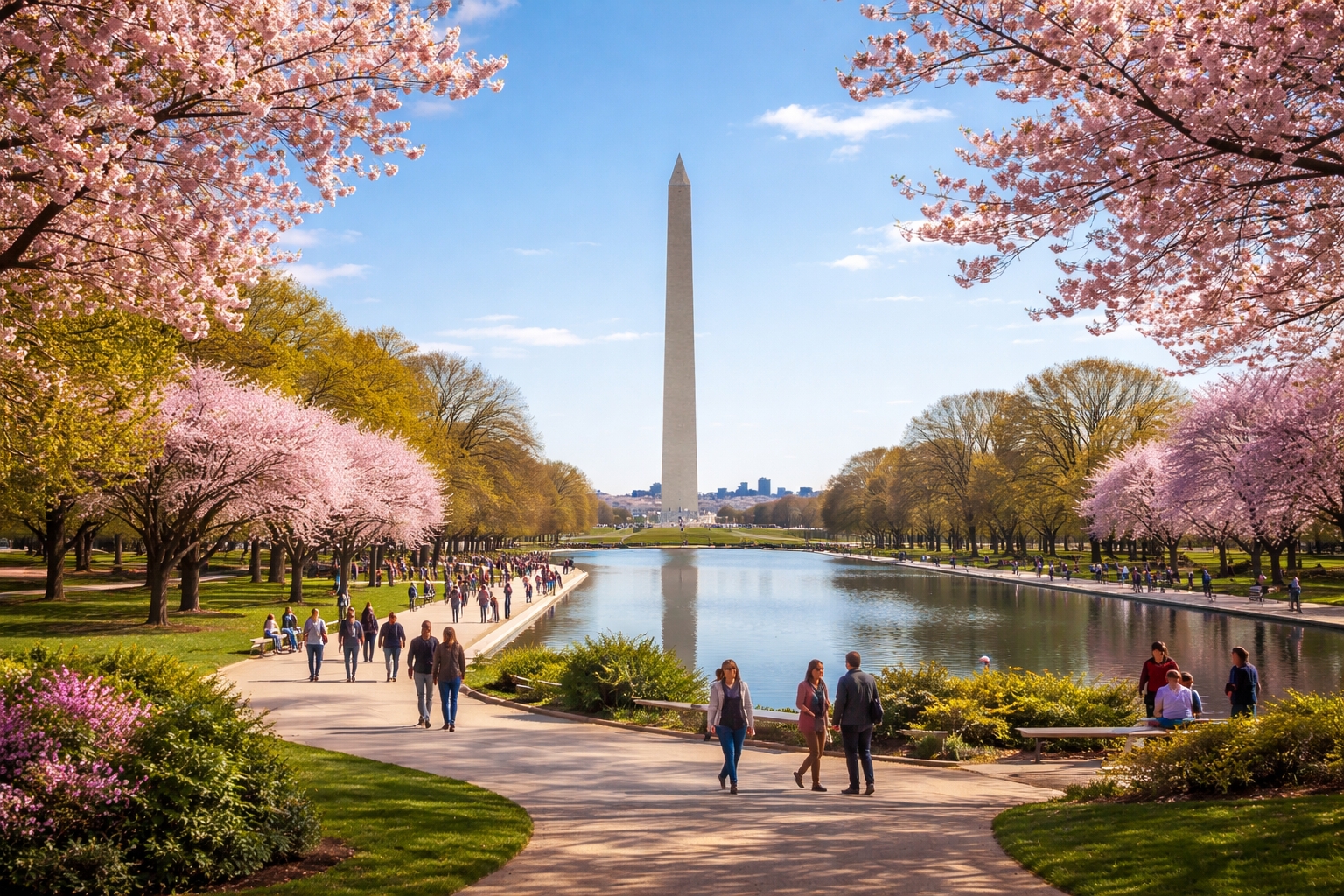
Spring is the season most associated with Washington DC. As winter fades, the city awakens with color and activity. The arrival of cherry blossoms transforms the landscape around the Tidal Basin and signals the start of peak travel season.
The highlight of spring is the National Cherry Blossom Festival, an annual celebration commemorating the gift of cherry trees from Japan. During this period, visitors experience Washington DC at its most iconic, with pale pink blossoms framing monuments and memorials across the city. Official festival information is available through the National Cherry Blossom Festival website at https://nationalcherryblossomfestival.org.
Spring weather is generally mild, with daytime temperatures comfortable for walking tours and outdoor exploration. This is the ideal season for first-time visitors who want to experience Washington DC as it is most often portrayed.
Summer in Washington DC
Summer in Washington DC is energetic, lively, and intense. The city fills with families, school groups, and international travelers, creating a bustling atmosphere around major attractions. Extended daylight hours allow for long days of sightseeing and evening monument visits.
However, summer also brings high heat and humidity. Temperatures regularly rise, and afternoon conditions can feel oppressive, particularly for travelers unaccustomed to East Coast summers. While museums provide air-conditioned relief, walking long distances outdoors can be challenging.
Summer appeals most to travelers who prioritize events, extended daylight, and school vacation schedules. It is less ideal for those seeking comfort or quiet.
Fall in Washington DC
Fall is often considered the city’s most underrated season. As temperatures cool and summer crowds fade, Washington DC becomes calmer and more contemplative. The pace slows, and the city feels easier to navigate.
Autumn foliage appears throughout neighborhoods and parklands, softening the monumental architecture with warm tones. Outdoor dining becomes more comfortable, and walking tours feel leisurely rather than rushed.
Fall is especially appealing to couples and cultural travelers who value atmosphere, balance, and a more refined experience of the city.
Winter in Washington DC
Winter reveals a quieter, more introspective side of Washington DC. While temperatures can be cold and occasional snowfall occurs, the city takes on a peaceful character that many visitors find unexpectedly moving.
Monuments feel especially powerful against winter skies, and museums are less crowded. Travel costs often drop, making winter attractive for budget-conscious travelers.
Winter is ideal for visitors who enjoy museums, historical reflection, and a slower pace. It is less suitable for those focused on outdoor sightseeing.
Washington DC Weather by Season
Weather plays a significant role in shaping the visitor experience in Washington DC.
Spring temperatures are typically mild, with cool mornings and pleasant afternoons. Rain showers are possible but rarely persistent.
Summer is hot and humid, with high temperatures and occasional thunderstorms. Hydration and indoor breaks become essential.
Fall offers crisp mornings and comfortable afternoons, often considered the most pleasant conditions of the year.
Winter temperatures vary, with cold spells and occasional snow. While not severe by northern standards, winter weather can affect walking comfort.
Best Time to Visit Washington DC for Sightseeing
Sightseeing is central to most Washington DC visits, and timing directly affects how enjoyable that experience feels.
The best time for sightseeing is spring and fall, when weather supports long walks and outdoor exploration. Landmarks such as the National Mall, operated by the National Park Service at https://www.nps.gov/nama, are most enjoyable when visitors can move at an unhurried pace.
Morning and evening hours are especially rewarding during these seasons, offering softer light, fewer crowds, and a more personal connection to the city’s landmarks.
Best Time to Visit Washington DC for Events and Festivals
Washington DC hosts events throughout the year, but certain periods stand out.
Spring is anchored by the National Cherry Blossom Festival, which draws visitors from around the world.
Summer brings free concerts, outdoor performances, and national celebrations tied to Independence Day.
Fall features cultural festivals, seasonal markets, and a renewed focus on arts and education as the city transitions into a calmer phase.
Winter includes holiday decorations, seasonal performances, and a quieter calendar suited to reflective travel.
Cheapest Time to Visit Washington DC
For travelers focused on value, winter and late summer generally offer the lowest travel costs. Hotel rates often decrease outside peak seasons, particularly in January, February, and August.
These periods provide opportunities to experience Washington DC with fewer crowds and reduced expenses, especially for flexible travelers willing to prioritize indoor attractions and museums.
Worst Time to Visit Washington DC
The worst time to visit Washington DC depends on tolerance for heat and crowds. Mid-summer often combines peak tourism with uncomfortable weather, making it challenging for some travelers.
Late spring during peak cherry blossom bloom can also feel overwhelming due to crowds, though many visitors accept this tradeoff for the experience.
Best Time to Visit Washington DC for Couples and Weekend Trips
Couples and weekend travelers often prefer spring and fall, when the city feels romantic, walkable, and balanced. Evenings are comfortable, dining scenes feel relaxed, and monuments glow without overwhelming crowds.
Staying close to major landmarks enhances this experience. Hotel Washington, the closest hotel to the White House, positioned at the edge of the White House Lawn, offers an unmatched vantage point for travelers who want to step directly into the heart of the city’s history and culture.
How Long You Need to Visit Washington DC
Most visitors find that three to four days allows for a well-rounded Washington DC experience. This timeframe supports museum visits, monument exploration, neighborhood walks, and time to absorb the city’s atmosphere without feeling rushed.
Travelers visiting during peak seasons may benefit from additional time to navigate crowds at a comfortable pace.
Where Timing Meets Location
No matter when you visit Washington DC, location shapes the experience. Being within walking distance of major landmarks reduces reliance on transportation and allows visitors to adapt plans based on weather, crowds, and energy levels.
Hotel Washington’s position near the White House places guests at the center of the city’s most meaningful sights, allowing for early morning walks, evening monument visits, and effortless exploration across seasons.
Frequently Asked Questions
What is the best time of year to visit Washington DC
Spring and fall are generally considered the best times due to mild weather, walkable conditions, and seasonal beauty.
What month has the best weather in Washington DC
April and October typically offer the most comfortable weather for sightseeing and walking.
Is Washington DC worth visiting in winter
Yes. Winter offers fewer crowds, lower prices, and a quieter atmosphere ideal for museums and monuments.
When should you avoid visiting Washington DC
Mid-summer can be uncomfortable due to heat and humidity, and peak cherry blossom periods can feel overcrowded.
What is the cheapest month to visit Washington DC
January and February often have the lowest travel costs.
How many days do you need to visit Washington DC
Three to four days is ideal for most visitors.
Planning Your Visit
Choosing the best time to visit Washington DC ultimately depends on what you want from the trip. Whether you are drawn to spring’s iconic beauty, fall’s calm elegance, or winter’s quiet reflection, the city offers something meaningful in every season.
Exploring Washington DC from a central location enhances any visit. To learn more about accommodations positioned at the heart of the city, visit www.thehotelwashington.com.
Read other posts