Best Places to See Cherry Blossoms in DC Including Quieter Alternatives to the Tidal Basin
The best places to see cherry blossoms in DC include the Tidal Basin, the National Mall, East Potomac Park, the U.S. National Arboretum, Dumbarton Oaks, Capitol Hill, Georgetown, and Embassy Row. While the Tidal Basin is the most iconic location, several quieter alternatives across Washington DC offer equally beautiful cherry blossom views with fewer crowds, more space, and unique historic backdrops.
Every spring, Washington DC transforms into a landscape of pale pink and white petals. The city’s cherry trees bloom for a short but unforgettable window, drawing visitors from around the world. The Tidal Basin is the most photographed and visited location, yet it is far from the only place to experience cherry blossom season. Neighborhood streets, formal gardens, waterfront paths, and lesser-known parks create a wider cherry blossom map of the capital that rewards early risers and curious explorers alike.
Cherry blossom season typically peaks between late March and early April, depending on weather conditions. Bloom lasts about one to two weeks, with peak bloom defined as the moment when approximately 70 percent of the blossoms are open. During this time, the city feels suspended between winter and summer, wrapped in a soft light that makes monuments, memorials, and tree-lined avenues glow.
Understanding where to go, when to arrive, and how to navigate the crowds can dramatically shape your experience. The following guide explores both iconic viewing locations and quieter alternatives, offering a complete DC cherry blossom strategy for visitors who want more than a single stop around the Tidal Basin.
Tidal Basin Cherry Blossoms – The Iconic Experience
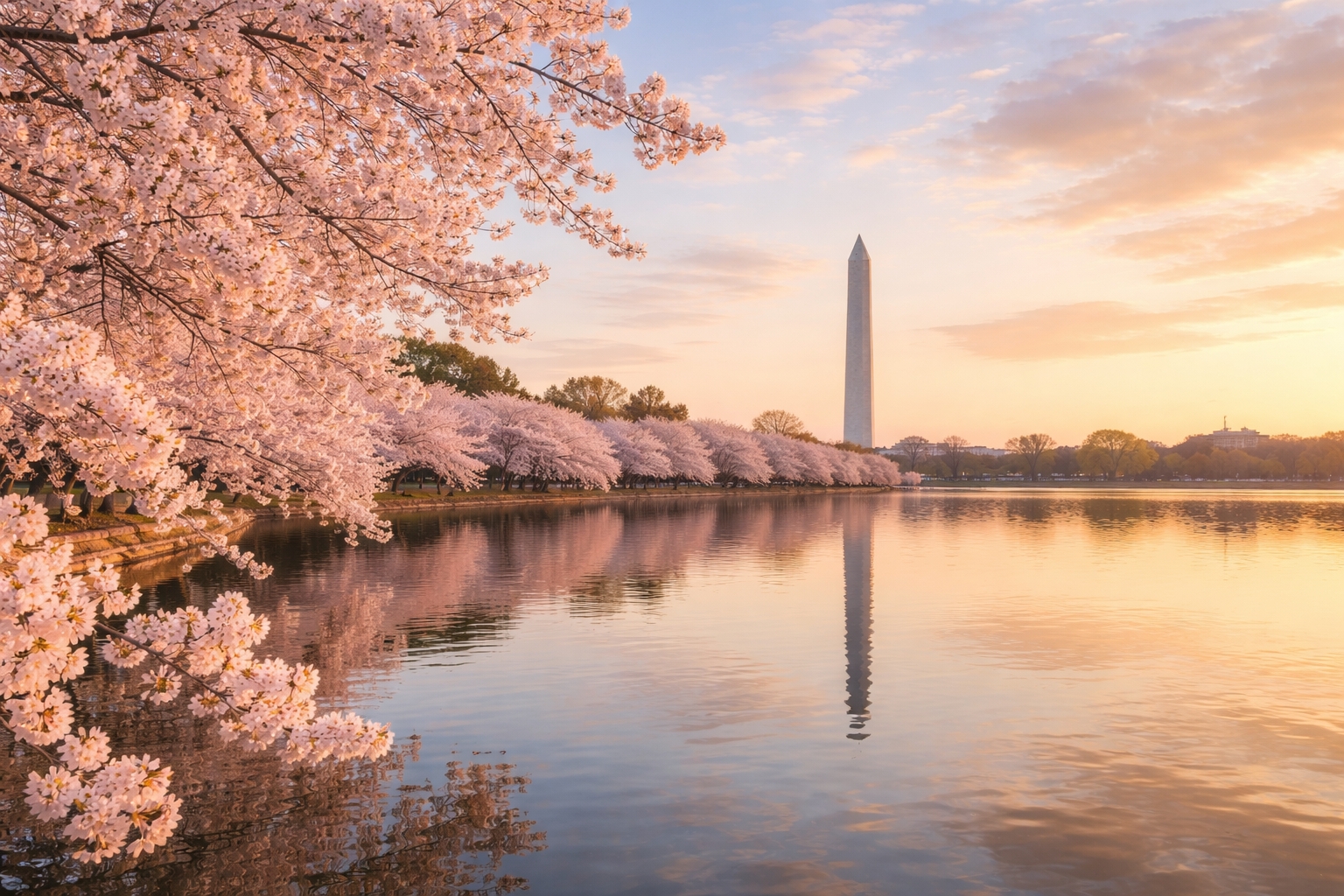
The shoreline of the Tidal Basin curves gently between memorials, reflecting sky and stone in calm water. Each spring, more than three thousand cherry trees encircle the basin, forming the most recognizable cherry blossom scene in the United States. The trees were originally gifted to the United States by Japan in 1912, a gesture of goodwill that continues to define spring in the capital.
Walking along the loop trail places visitors face to face with some of the city’s most significant landmarks. The white marble columns of the Jefferson Memorial rise above the blossoms, while the Martin Luther King Jr. Memorial anchors the western edge of the basin. Across the water, the Washington Monument stands framed by pink canopies and open sky.
Official site:
Tidal Basin – https://www.nps.gov/places/tidal-basin.htm
What makes the Tidal Basin special
• Continuous waterfront path lined with cherry trees
• Direct views of major memorials
• Photographic reflections across the water
• Proximity to the National Mall
When to visit
• Sunrise – the softest light and lowest crowd levels
• Weekday mornings – significantly calmer than weekends
• Light overcast days – ideal for even photography
While breathtaking, the Tidal Basin is also the most crowded cherry blossom location in DC. During peak bloom and festival weekends, pathways become shoulder to shoulder. For visitors seeking a quieter experience, the city offers remarkable alternatives.
East Potomac Park – Expansive Views Without the Crowds
Just south of the Tidal Basin lies East Potomac Park, a narrow peninsula stretching between the Potomac River and the Washington Channel. Many visitors overlook this location, yet it contains long rows of cherry trees with far more space to wander.
Official site:
East Potomac Park – https://www.nps.gov/places/east-potomac-park.htm>
The landscape here feels broader and less confined. Instead of circling a single body of water, visitors can stroll wide paths, cycle through open stretches, or pause along riverbanks with panoramic views of the city skyline.
Why East Potomac Park is a quieter alternative
• Fewer tour groups and large crowds
• Open grassy areas beneath blooming trees
• Views of aircraft approaching National Airport
• Ideal for picnics and relaxed photography
For those who want the beauty of cherry blossoms without the compression of festival crowds, East Potomac Park provides balance. The blossoms are equally vibrant, but the atmosphere is calmer and more contemplative.
The National Mall – Blossoms Framing Monumental Space
The National Mall is not lined end to end with cherry trees, yet several clusters create striking views when combined with the capital’s iconic architecture.
Official site:
National Mall – https://www.nps.gov/nama/index.htm
Cherry trees near the Washington Monument and along the edges of the Mall provide dramatic compositions. Here, blossoms frame open lawns, museums, and memorials, offering a more varied visual experience than the circular path of the Tidal Basin.
Notable vantage points
• Cherry blossoms near the Washington Monument
• Trees along Constitution Avenue
• Paths near the World War II Memorial
The National Mall experience is about scale. Wide lawns contrast with delicate blooms, and visitors can seamlessly combine museum visits with spring walks. Crowd density varies, but it is typically less concentrated than the Tidal Basin loop.
U.S. National Arboretum – A Botanical Escape
For travelers who want an immersive garden setting rather than a monument-centered experience, the U.S. National Arboretum provides one of the most peaceful cherry blossom environments in Washington DC.
Official site:
U.S. National Arboretum – https://www.usna.usda.gov/
Located in Northeast DC, the arboretum features curated collections of flowering trees, including cherry varieties that bloom across slightly different timelines. The landscape is expansive, rolling, and intentionally designed for botanical appreciation.
Highlights
• Wide open meadows
• Diverse cherry tree species
• Fewer tourists than downtown locations
• Scenic backdrop of historic columns
The arboretum feels removed from the intensity of central DC. Visitors can walk long paths without encountering dense foot traffic, making it ideal for families, photographers, and anyone seeking quiet reflection.
Dumbarton Oaks – A Garden Sanctuary in Georgetown
Tucked into Georgetown’s hillside streets, Dumbarton Oaks is known for formal gardens, terraced landscapes, and seasonal floral displays. During cherry blossom season, select areas bloom in intimate, structured settings.
Official site:
Dumbarton Oaks – https://www.doaks.org/
Unlike the sweeping waterfront of the Tidal Basin, Dumbarton Oaks offers curated beauty. Stone staircases, sculpted hedges, and garden rooms create layered perspectives that frame blossoms in architectural detail.
Why consider Dumbarton Oaks
• Controlled visitor capacity
• Historic garden design
• Elevated views within Georgetown
• Ideal for slower, intentional exploration
The environment is quieter and more refined. It is particularly appealing for visitors who prefer formal gardens over open public parks.
Capitol Hill – Residential Streets in Bloom
Away from monuments and official gardens, some of the most charming cherry blossom scenes appear on residential streets. Capitol Hill offers tree-lined blocks where blossoms arch above historic row houses.
Official neighborhood information:
Capitol Hill – https://www.capitolhillbid.org/
Walking here feels personal and local. Blossoms soften brick facades and cast petals across sidewalks. Without festival infrastructure or tour buses, the experience feels spontaneous.
Best approach
• Explore side streets east of the Capitol
• Visit mid-morning on weekdays
• Respect residential privacy
This setting appeals to travelers who want authenticity and neighborhood atmosphere rather than headline landmarks.
Georgetown Waterfront – River Views and Spring Light
Georgetown combines historic architecture with waterfront scenery. Along the Georgetown Waterfront Park, cherry blossoms appear in smaller clusters, complemented by views of the Potomac River.
Spring here feels airy and open. Boats move slowly along the river, and flowering trees punctuate walking paths. While not as densely planted as the Tidal Basin, the setting offers varied perspectives and fewer bottlenecks.
Embassy Row – Tree-Lined Elegance
Massachusetts Avenue NW, commonly known as Embassy Row, features stately buildings and broad sidewalks lined with seasonal trees.
Official information:
Embassy Row – https://washington.org/find-dc-listings/embassy-row>
Cherry blossoms here frame historic facades and international architecture. The scale of the avenue disperses crowds, allowing visitors to appreciate blooms without navigating narrow paths.
When Do Cherry Blossoms Bloom in Washington DC
Peak bloom typically occurs between late March and early April. The National Park Service defines peak bloom as the day when approximately 70 percent of the Yoshino cherry blossoms are open.
Bloom timeline
-
Green buds
-
Florets visible
-
Extension of florets
-
Peduncle elongation
-
Puffy white
-
Peak bloom
Weather significantly influences timing. Warmer winters may lead to earlier blooms, while colder conditions can delay flowering.
How Long Do Cherry Blossoms Last
Cherry blossoms generally last seven to fourteen days. Strong wind or heavy rain can shorten the display. Cooler temperatures may extend it slightly.
Planning tips
• Monitor official bloom forecasts
• Build flexibility into travel plans
• Prioritize early morning visits
How to Avoid Crowds During Cherry Blossom Season
Even at peak bloom, thoughtful planning can transform your experience.
Strategies
• Arrive at sunrise
• Visit midweek
• Explore secondary locations like East Potomac Park or the Arboretum
• Walk into neighborhoods such as Capitol Hill
The earlier you begin your day, the more space you will find beneath the blossoms.
Best Hotel Location for Cherry Blossom Season
Staying centrally allows visitors to walk to multiple cherry blossom viewing spots without relying on heavy traffic or public transit during peak festival days.
Hotel Washington sits at the edge of the White House Lawn and provides walkable access to the National Mall, the Tidal Basin, and surrounding monuments. As the closest hotel to the White House, positioned at the edge of the White House Lawn, it offers a strategic starting point for sunrise cherry blossom walks.
From this location, visitors can reach:
• The White House grounds
• The Washington Monument
• The National Mall
• The Tidal Basin
Early departures from a nearby hotel allow guests to experience cherry blossoms before crowds intensify. Evening returns make it easy to step back out for sunset views.
Sample Cherry Blossom Walking Route
For visitors staying near the White House:
-
Begin at Lafayette Square
-
Walk south toward the Washington Monument
-
Continue toward the Tidal Basin
-
Loop around the Jefferson Memorial
-
Extend into East Potomac Park
This route combines iconic landmarks with quieter stretches, balancing energy and calm.
Frequently Asked Questions
Where are the best places to see cherry blossoms in DC?
The Tidal Basin is the most iconic, but East Potomac Park, the U.S. National Arboretum, Dumbarton Oaks, Capitol Hill, Georgetown Waterfront, and Embassy Row offer excellent alternatives.
What are quieter alternatives to the Tidal Basin?
East Potomac Park and the U.S. National Arboretum provide expansive spaces and fewer crowds while still delivering beautiful cherry blossom displays.
When is peak bloom in Washington DC?
Peak bloom typically occurs between late March and early April when about 70 percent of blossoms are open.
How long do cherry blossoms last?
Cherry blossoms usually last one to two weeks, depending on weather conditions such as wind and temperature.
What time of day is best to see cherry blossoms?
Sunrise is the best time for fewer crowds and softer light. Weekday mornings are also less congested.
Are there cherry blossoms outside the National Mall area?
Yes. Capitol Hill, Georgetown, Embassy Row, and the U.S. National Arboretum all feature cherry blossom trees.
Is there an admission fee to see cherry blossoms?
Most outdoor cherry blossom locations in Washington DC are free and open to the public.
Spring in Washington DC is brief but transformative. The city’s cherry blossoms invite visitors to slow down, look upward, and walk with intention. Whether you choose the iconic Tidal Basin or explore quieter neighborhoods and gardens, thoughtful planning makes all the difference.
For visitors seeking central access to the capital’s most celebrated spring landmarks, Hotel Washington offers proximity, walkability, and panoramic city views. Learn more about accommodations and seasonal experiences at www.thehotelwashington.com.
Read other posts