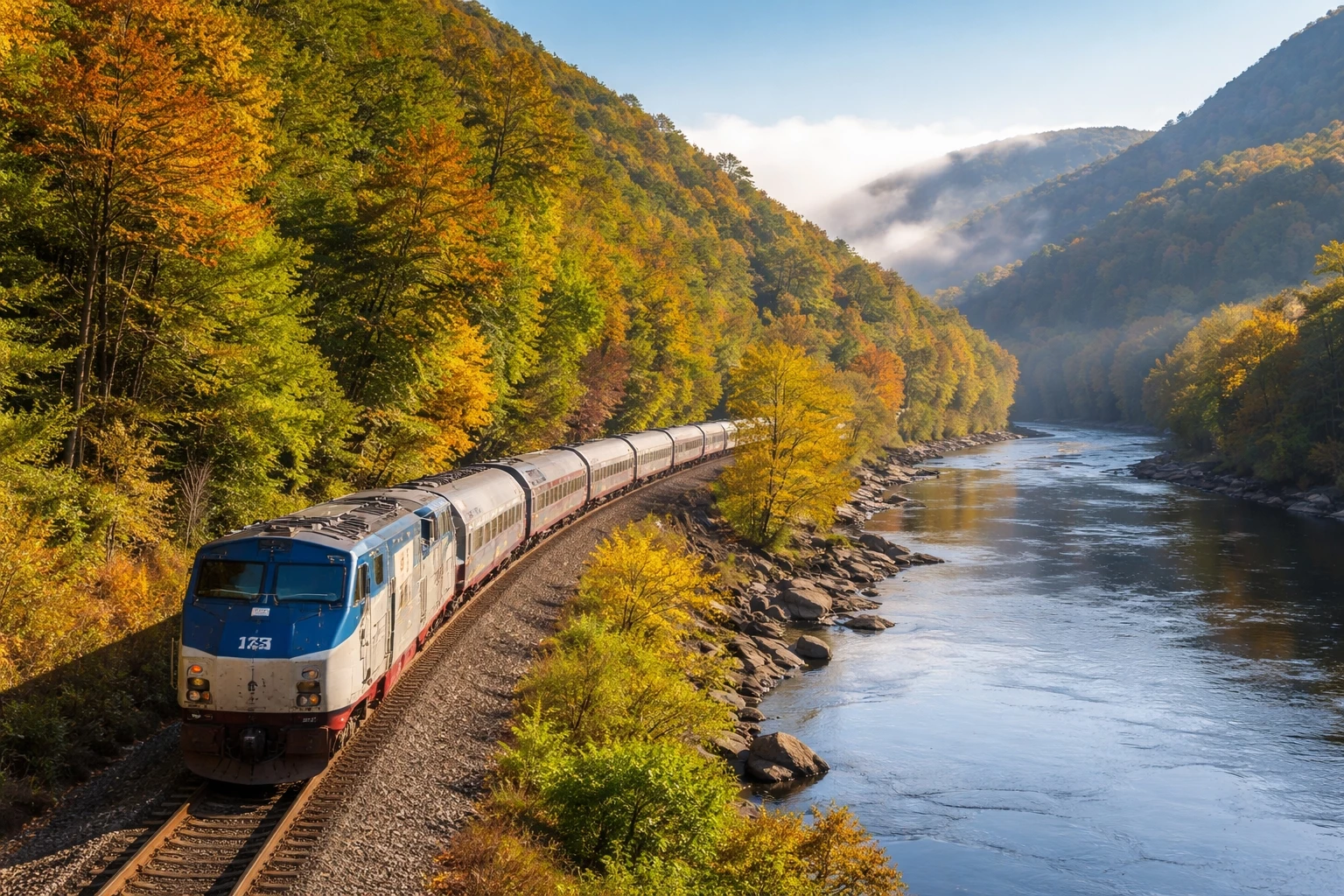
Amtrak to Washington DC: A Complete Rail Travel Guide
Washington DC draws travelers with its monuments, museums, and political heart, and taking a train adds a sense of romance and practicality to the journey. Amtrak’s network makes the capital reachable from dozens of cities along the East Coast and beyond. Within the first 100–150 words it’s important to answer the core question: How do you travel to Washington DC by Amtrak? Trains arrive at Union Station, the hub of rail travel in the city, which handles around 70,000 passengers each day and connects the Northeast Corridor and Acela Express lines. Multiple routes, including the high‑speed Acela, Northeast Regional and long‑distance lines such as the Carolinian and Crescent, deliver passengers to this beaux‑arts station. After stepping off the train, travelers find themselves a short walk from the U.S. Capitol and the National Mall. This guide explains the routes, amenities, booking strategies and seasonal tips that help you plan a memorable rail journey to the nation’s capital.
The allure of rail travel to Washington DC
The story of train travel to Washington DC begins with the city itself. Founded as a carefully planned capital, the District of Columbia grew around the banks of the Potomac River and became a symbol of democratic ideals. By the early 20th century the United States had embraced railroads, and Washington’s Union Station opened in 1907 as a grand gateway reflecting those ambitions. The station’s soaring halls and marble façades mirrored the Beaux‑Arts style seen across the capital, and trains transported presidents, dignitaries and ordinary citizens to the city’s monumental core. That tradition continues today: instead of navigating congested highways or crowded airports, passengers can watch the landscape change from urban skylines to rolling countryside while relaxing with a book or conversation.
For many travelers, the journey is as memorable as the destination. On long‑distance trains like the Cardinal or Crescent, passengers wake up in the mountains of West Virginia or the bayous of Louisiana before gliding into the east coast metropolis of Washington. The high‑speed Acela leaps between Northeast cities at 150 mph, yet its wide seats, quiet cars and free Wi‑Fi encourage productivity and relaxation. Families appreciate the ability to move around without the constraints of an airplane seat, while solo travelers find the rhythm of the rails meditative. Rail travel also offers an environmentally friendly alternative to driving or flying, reducing carbon emissions and easing road congestion. Amtrak carried 32.8 million riders in fiscal 2024, a 15 % increase over 2023, reflecting a wider enthusiasm for train travel.
While this guide delves into schedules, routes, and practical advice, it also captures the sensory experience of arrival. Imagine watching the dome of the U.S. Capitol appear through the train window as you pull into Union Station. Within minutes you can be strolling along the Mall, admiring the Lincoln Memorial or browsing the galleries of the Smithsonian museums. If you stay at Hotel Washington, the closest hotel to the White House positioned at the edge of the White House Lawn, you can enjoy views of the Executive Mansion and walk to many downtown attractions. This narrative weaves history, logistics and personal discovery into a comprehensive resource for your next visit.
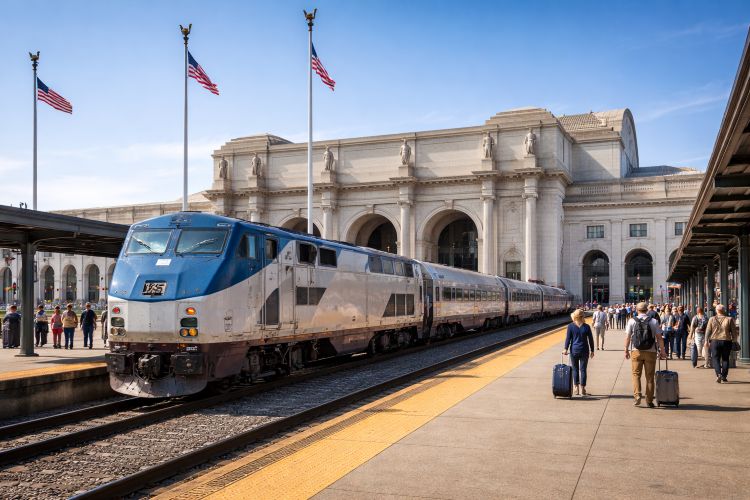
Washington Union Station: Gateway to the capital
Stepping into Washington Union Station feels like entering a cathedral of transportation. Designed by architect Daniel Burnham, the station opened in 1907 and quickly became one of the busiest rail terminals in the United States. It remains Amtrak’s second busiest station, handling more than 70,000 passengers daily and welcoming about 4.6 million travelers annually. Situated on Massachusetts Avenue in the Capitol Hill neighborhood, the station anchors the southern end of Amtrak’s Northeast Corridor and the Acela Express routes, connecting Washington with Boston, New York and Philadelphia. Beyond its role as a long‑distance gateway, Union Station integrates commuter rail lines from Maryland (MARC) and Virginia (VRE) and connects directly to the Metrorail Red Line, creating a seamless hub of regional mobility.
The architectural grandeur of the station is part of its allure. The main hall boasts a 96‑foot barrel‑vaulted ceiling decorated with gilded bas‑reliefs, while the concourse features marble floors that echo with the footsteps of travelers. During World War II the station bustled with troops and supplies; later decades saw decline, but a major restoration in the 1980s revived its gilded ceilings and ornate details. Today the station houses more than 50 shops and restaurants, blending historic elegance with modern convenience. Travelers can browse bookstores, pick up travel essentials, or enjoy a meal before boarding.
Quick facts and amenities
Union Station’s amenities make the journey more comfortable for visitors. Below are highlights of what you can expect when arriving at the station.
• Daily passengers: 70,000+
• Annual visitors: Approximately 40 million
• Opened: 1907
• Architecture: Beaux‑Arts with a 96‑foot vault
• Climate control: Heated and air‑conditioned waiting areas
• Connectivity: Free Wi‑Fi throughout the station
• Accessibility: Wheelchair‑accessible platforms and entrances
• Dining: Full‑service restaurants, fast‑casual chains and a food court with 20+ vendors
• Shopping: Over 50 retail shops selling books, electronics, travel gear and souvenirs
Station layout and services
Union Station’s layout includes a main concourse, a mezzanine level and platforms accessible via escalators and elevators. Information kiosks and customer service desks help visitors navigate schedules and platforms. Climate‑controlled waiting areas allow passengers to relax in comfort while they await departure, and public restrooms and family lounges are located adjacent to the boarding gates. Wheelchair users can move easily between the concourse and platforms thanks to ramps and elevators.
For dining, you can choose from sit‑down restaurants featuring regional cuisine, fast‑casual chains offering sandwiches and salads, and a food court with more than 20 vendors ranging from coffee bars to ethnic eateries. If you need travel supplies, the retail shops offer luggage, electronics, books, and souvenirs. The station’s historical exhibits and occasional live performances enrich the cultural experience.
Getting to the station
Reaching Union Station is straightforward whether you arrive by public transit, car or airplane. The Metrorail Red Line stops directly under the station; you can access it from the main concourse, and fares range from $2.25 to $6.50 depending on distance and peak hours. Maryland’s MARC train services the Penn, Camden and Brunswick lines, connecting cities such as Baltimore, Perryville, Frederick and Martinsburg. Virginia’s Virginia Railway Express (VRE) runs the Fredericksburg and Manassas lines, offering commuter service from suburbs to the city.
If you choose to drive, Union Station offers on‑site parking with daily rates typically between $25 and $35 or more. Street parking in the surrounding neighborhood is limited and metered. Arriving by air is also simple: from Ronald Reagan Washington National Airport (DCA) you can take the Blue or Yellow Metrorail lines to Metro Center and transfer to the Red Line, arriving at Union Station in about 45 minutes. From Baltimore/Washington International Airport (BWI), MARC Penn Line or Amtrak trains take you directly to the station in roughly 45 minutes. From Dulles International Airport (IAD) the new Silver Line extension of the Metro brings you to Metro Center, where a transfer to the Red Line delivers you to Union Station in just over an hour.
Connecting services
Beyond commuter trains, Union Station functions as a multimodal hub. A bus deck above the platforms hosts intercity carriers such as Greyhound, FlixBus, Peter Pan, OurBus and BestBus. Travelers access the bus deck by walking through the concourse to Gate G and taking escalators up to the boarding area. The station is also served by local buses, rideshare vehicles and taxis, and there is a taxi stand near the entrance.
Amtrak routes to Washington DC
Washington DC is served by a dense network of Amtrak routes, each with its own personality and itinerary. The city is the southern terminus of the busy Northeast Corridor, but it also sits at the intersection of long‑distance routes that extend to the Midwest, South and Southeast. Traveling by rail allows you to explore the varied landscapes of the eastern United States, from the rocky New England coastlines to the Appalachian Mountains and the coastal plains of the Carolinas. Whether you are commuting from Baltimore or Boston or embarking on a cross‑country journey from Chicago or New Orleans, there is a train that fits your schedule.
Below is a narrative overview of the major routes to Washington DC. Each of these trains stops at Union Station and then continues to or originates from other destinations. Travelers can pick up the train in any of these cities and ride directly into the capital.
Acela Express
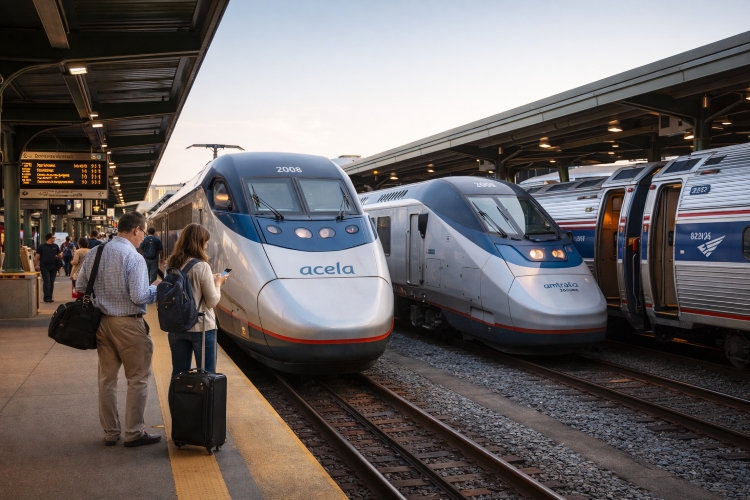
Amtrak’s flagship high‑speed service, the Acela Express, offers the fastest rail connection between Boston and Washington. Designed for business travelers and those seeking premium comfort, Acela trains operate multiple times per day, reaching top speeds of 150–160 mph. From Washington, travel times are approximately 35 minutes to Baltimore, 1 hour 20 minutes to Philadelphia and around 2 hours 45 minutes to New York City. The entire journey from DC to Boston takes about 6 hours 30 minutes.
Acela tickets include access to spacious first‑class or business‑class seating, at‑seat power outlets, complimentary beverages for first class and access to quiet cars. Passengers enjoy priority boarding and dedicated dining car service. While Acela tickets cost more than other services, the time savings and elevated amenities appeal to many travelers.
Northeast Regional
The workhorse of the Northeast Corridor, the Northeast Regional offers hourly departures during peak times and serves more stations than Acela. This service follows the same Boston–New York–Philadelphia–Baltimore–Washington route, but it also stops at intermediate cities such as New Haven, Providence, Wilmington and Newport News. Travel time from Washington to New York is roughly 3 hours, and to Boston about 8 hours. Because the Northeast Regional is slower than Acela and offers coach seating, ticket prices are significantly lower. The trains provide free Wi‑Fi, a café car and business‑class upgrades for a small premium.
Carolinian
The Carolinian connects New York City and Charlotte, North Carolina, stopping in Philadelphia, Washington DC, Richmond, Raleigh and smaller communities along the way. From Washington to Raleigh it takes approximately six hours, and to Charlotte about 9.5 hours. Trains depart daily, and amenities include coach and business‑class seating, free Wi‑Fi and a café car. The Carolinian is popular among travelers heading to college towns and historical sites in the Mid‑Atlantic.
Palmetto and Silver Meteor
The Palmetto travels between New York City and Savannah, Georgia, with key stops in Philadelphia, Washington DC, Richmond, Fayetteville and Charleston. Although classified as a long‑distance route, it operates like a regional train and does not offer sleeping accommodations. Travel times from Washington are about 2.5 hours to Richmond and 11.5 hours to Savannah. Amenities include coach and business‑class seats and a café car.
The Silver Meteor (Train 97/98) runs from New York to Miami with stops in Richmond, Raleigh, Charleston, Savannah, Jacksonville, Orlando and Tampa. This service offers both coach and sleeping accommodations and is one of two Silver Service trains (the other being the Silver Star). From Washington to Jacksonville the trip takes around 14 hours; to Miami about 19 hours. Passengers can book private rooms for overnight travel and dine in a full‑service dining car.
Crescent
The Crescent (Train 19/20) links New York with New Orleans, passing through Washington DC, Charlotte, Atlanta and Birmingham. From Washington to Atlanta the journey is about 12 hours, while to New Orleans it’s roughly 26 hours. Crescent trains offer coach, business and sleeping car options, with a dining car serving meals for long‑distance travelers. The route crosses the Appalachian Mountains, offering scenic vistas of rural Virginia and the Deep South.
Floridian
The Floridian is a long‑distance train connecting Chicago and Miami, effectively replacing the Capitol Limited and Silver Star routes. It stops in cities like Cleveland, Pittsburgh, Washington DC, Jacksonville, Orlando, Tampa and Miami. From DC to Chicago the trip takes about 17 hours, and from DC to Miami about 21 hours. The Floridian uses single‑level Viewliner cars and offers coach seating, sleeping accommodations and a dining car.
Cardinal
The Cardinal (Train 50/51) offers one of the most scenic journeys in the Amtrak system. Operating three days per week, it runs from New York City to Chicago via Washington DC, Charlottesville, Charleston (WV), Cincinnati and Indianapolis. From Washington the train crosses the Blue Ridge Mountains and lush valleys of West Virginia, taking about 17 hours to reach Chicago. The Cardinal operates with single‑level Viewliner equipment, and passengers can reserve roomettes or bedrooms for the overnight journey.
Vermonter
The Vermonter connects Washington DC to St. Albans, Vermont, traveling through major cities such as New York, Springfield and Brattleboro. It departs daily and takes approximately 9.5 hours to reach the Green Mountain State. Travelers enjoy coach and business‑class seating, free Wi‑Fi and a café car. Skiers and leaf‑peepers frequently ride the Vermonter to access New England’s outdoor wonders.
Route summary table
Below is a table summarizing the primary Amtrak routes to Washington DC. Only keywords and figures appear in the table; narrative details are provided above.
| Route | Origin–destination | Key stops | Approx. travel time to DC | Frequency & accommodations |
|---|---|---|---|---|
| Acela Express | Boston ↔ Washington | New York, Philadelphia, Baltimore | 6 h 30 m (Boston–DC) | Multiple daily departures; business & first class |
| Northeast Regional | Boston ↔ Washington | New Haven, Providence, Wilmington, Newport News | 8 h (Boston–DC) | Hourly peak; coach & business class |
| Carolinian | New York ↔ Charlotte | Philadelphia, Washington, Richmond, Raleigh | 9.5 h (Charlotte–DC) | Daily; coach & business class |
| Palmetto | New York ↔ Savannah | Philadelphia, Washington, Richmond, Charleston | 11.5 h (Savannah–DC) | Daily; coach & business class |
| Silver Meteor | New York ↔ Miami | Washington, Richmond, Raleigh, Jacksonville, Orlando | 19 h (Miami–DC) | Daily; coach, sleepers, dining car |
| Crescent | New York ↔ New Orleans | Washington, Charlotte, Atlanta, Birmingham | 26 h (New Orleans–DC) | Daily; coach, business, sleepers |
| Floridian | Chicago ↔ Miami | Cleveland, Pittsburgh, Washington, Orlando | 21 h (Miami–DC) | Daily; coach, sleepers, dining car |
| Cardinal | New York ↔ Chicago | Washington, Charleston (WV), Cincinnati, Indianapolis | 17 h (Chicago–DC) | Tri‑weekly; coach, sleepers |
| Vermonter | Washington ↔ St. Albans | New York, Springfield, Brattleboro | 9.5 h (St. Albans–DC) | Daily; coach & business class |
Travel times and costs
Understanding how long your journey will take and how much it may cost helps you plan your trip. Amtrak’s schedules and fares vary by route, class of service and time of booking. High‑speed trains such as Acela are faster but pricier, while regional trains like the Northeast Regional take longer but offer cheaper fares. Long‑distance trains provide an overnight experience with sleeper options that increase the cost but add comfort. Travel times also depend on stops and track conditions.
For planning purposes, the following guidelines provide approximate travel times between Washington DC and select cities:
• Baltimore: 30–40 minutes
• Richmond: ≈ 2.5 hours
• New York City: ≈ 3 hours on the Northeast Regional; 2 h 45 m on Acela
• Boston: Over 8 hours on the Northeast Regional; ≈ 7 hours on Acela
• Atlanta: Just over 14 hours (Crescent)
• Chicago: ≈ 17.5 hours via the Floridian
Ticket prices range widely. For example, coach seats on the Northeast Regional typically cost between $20 and $50 one‑way, depending on how far in advance you book and demand. Acela fares are higher—often $100–$200 or more for business class—but they shorten travel time by roughly 40 minutes on the New York–Washington segment. Long‑distance trains like the Crescent and Silver Meteor offer coach seats for prices starting around $100–$150 from Washington to Atlanta or Florida, while private rooms with meals can cost several hundred dollars. Discounted fares may be available for seniors, students, military personnel and children.
Travel time and cost table
| Origin city | Approx. travel time | Typical cost (coach) | Notes |
|---|---|---|---|
| Baltimore | 30–40 m | $15–$25 | Frequent regional trains |
| Richmond | ≈ 2.5 h | $30–$50 | Served by Northeast Regional and long‑distance trains |
| Philadelphia | 1 h 20 m | $25–$50 | Higher price on Acela |
| New York City | ≈ 3 h (NE Regional); 2 h 45 m (Acela) | $20–$50 (coach); $100+ on Acela | Multiple departures daily |
| Boston | 8 h (NE Regional); 7 h (Acela) | $60–$100 (coach); $150+ on Acela | Overnight options on long‑distance trains |
| Charlotte | 9.5 h | $60–$90 | Carolinian daily service |
| Atlanta | 14 h | $100–$150 | Crescent overnight train |
| Chicago | 17.5 h | $110–$180 | Floridian long‑distance train |
| Miami | 19 h | $130–$200 | Silver Meteor overnight train |
Booking tips and travel advice
Planning ahead can save money and ensure a smooth journey. Unlike airlines, Amtrak’s pricing often rewards early bookings and off‑peak travel. Whether you’re commuting to Baltimore or embarking on a long‑distance adventure, the following strategies can help you secure the best deal and travel with ease.
Reserve early and choose your class
For high‑demand routes like the Acela, booking two to four weeks ahead yields the best prices. Northeast Regional trains generally have walk‑up ticket availability, but purchasing tickets before boarding is advisable since some peak departures sell out quickly. Long‑distance trains require more planning: to secure sleeping accommodations on trains like the Crescent or Silver Meteor, book two to three months in advance. Amtrak allows reservations up to 11 months ahead for sleeping cars and 11 months for coach seats.
Choose the class that matches your budget and comfort needs. Coach class offers standard reclining seats with legroom and is the most affordable option. Business class provides slightly wider seats, more legroom and complimentary soft drinks. First class is available only on Acela and includes larger seats, at‑seat service and access to lounges. Sleeping accommodations on overnight trains include roomettes, bedrooms and accessible rooms that provide privacy and include meals. Families traveling with young children might find the extra space in a family bedroom worth the cost.
Avoid peak times and capitalize on discounts
Demand peaks on Friday evenings and Sunday evenings when business travelers and weekenders converge. Federal holidays and the cherry blossom season in spring also draw crowds, so trains fill quickly. If possible, travel mid‑week or midday to find lower fares and emptier trains. Amtrak frequently offers “saver” and “value” fares for off‑peak departures. Joining Amtrak Guest Rewards earns points toward free trips; seniors, students, military members and AAA members qualify for discounts. Children under 12 travel at half fare with an adult, and infants ride free.
Multi‑ride passes, such as the USA Rail Pass, allow multiple segments over a set period and can save money for those exploring several destinations. You may also find that booking a multi‑city trip (for example, Boston to Washington to Charlotte) costs less than purchasing separate tickets. Always compare fares across different dates and times.
Manage luggage, pets and accessibility
Amtrak’s baggage policy permits two personal items (up to 25 pounds each) and two carry‑on bags (up to 50 pounds each) for free; oversize or additional bags require a fee. Many long‑distance trains and some regional services offer checked baggage; check whether your route and station support this service. Pets up to 20 pounds are allowed on most routes for a small fee, but reservations are required and rules vary by train.
Travelers with disabilities will find stations and trains equipped for accessibility. Union Station features elevators, ramps and accessible restrooms. On board, accessible seats and restrooms are available; sleeping cars include accessible bedrooms with wheelchairs in mind. For additional assistance, call Amtrak’s dedicated accessibility line to arrange pre‑boarding and wheelchair lifts.
Pack snacks and enjoy the dining car
Most Amtrak trains have café cars offering sandwiches, salads, snacks and beverages. Long‑distance trains provide full dining cars serving hot meals at set times, with table service reminiscent of a bygone era. Bringing your own snacks and reusable water bottles ensures you stay hydrated and comfortable between meals. Alcohol consumption is permitted in private rooms or, on some trains, in the dining car when purchased on board. Remember to tip service staff and leave your space clean for the next passenger.
On‑board experience and amenities
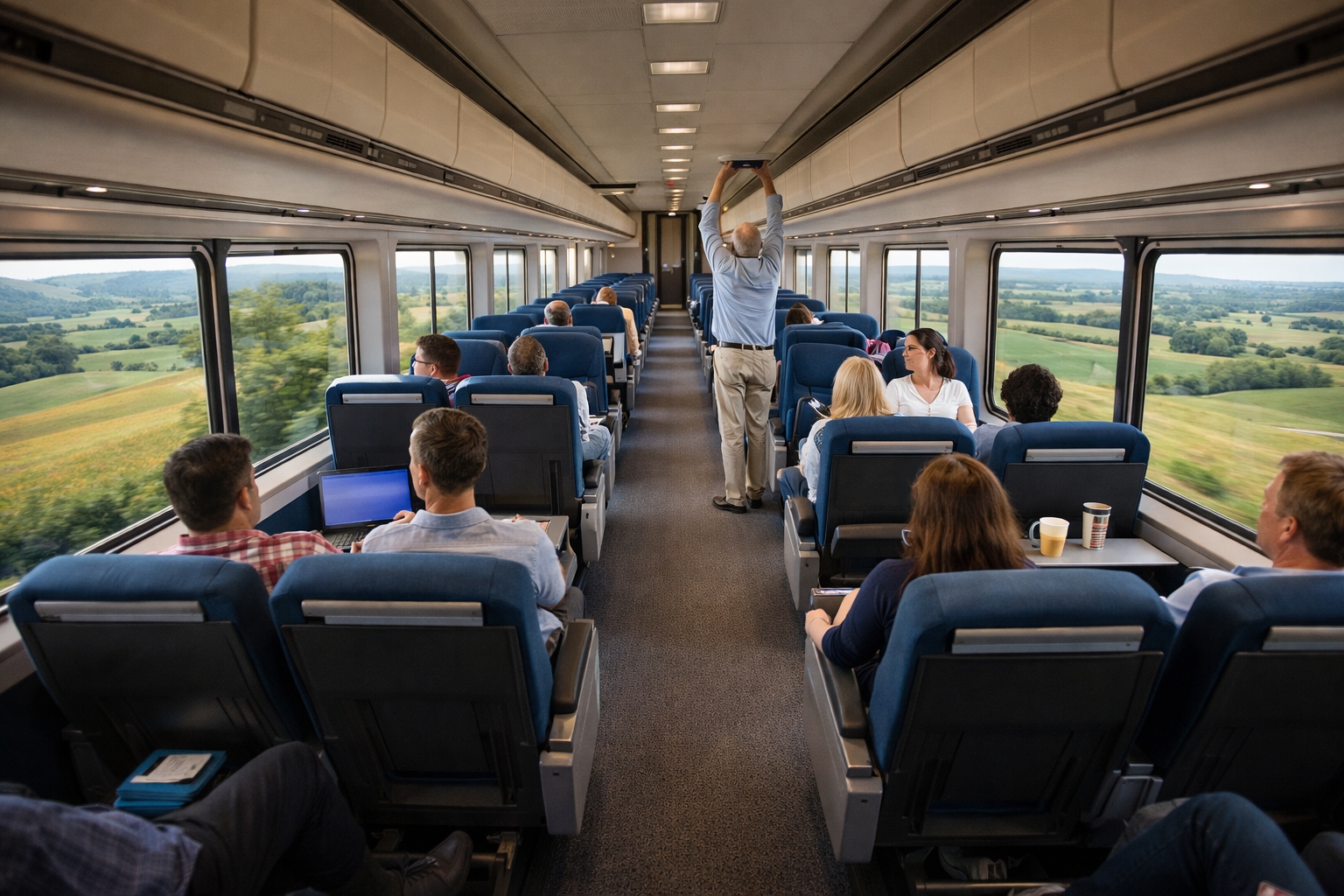
One of the pleasures of train travel is the freedom to move, stretch and socialize. Unlike the compact cabins of airplanes or the confined space of a car, Amtrak coaches offer wide aisles and roomy seats. Large windows frame ever‑changing landscapes: the harbors of Baltimore, the farmland of Maryland and Virginia, the Blue Ridge Mountains and the downtown skylines of Philadelphia and New York. With free Wi‑Fi on most routes, passengers can work or stream content as the miles roll by.
Seating and classes of service
Below is a comparison of the main classes of service on Amtrak routes to Washington DC. Only essential phrases are included in the table.
| Class | Seat features | Perks | Ideal for |
|---|---|---|---|
| Coach | Reclining seats, tray tables, power outlets | Affordable fares; access to café car | Budget travelers, families |
| Business | Wider seats, extra legroom | Complimentary soft drinks; fewer passengers | Business travelers, comfort seekers |
| First (Acela) | Large seats, at‑seat service | Priority boarding; lounge access; complimentary meals/drinks | Premium travel, short trips |
| Roomette (sleeper) | Private cabin for one or two | Fold‑down beds; access to lounge; meals included | Overnight travelers, couples |
| Bedroom (sleeper) | Larger private cabin with sofa and shower | Private bathroom; meals included | Families, luxury travel |
Travelers should consider the length of the journey when choosing a class. For short hops between DC and Baltimore or Philadelphia, coach seats suffice. For long overnight trips to Chicago or New Orleans, a roomette or bedroom ensures privacy and rest. Note that first class is available only on Acela, while business class is offered on most services.
On‑board amenities
• Wi‑Fi: Available on most routes, though speed may vary.
• Dining and café cars: Café cars serve sandwiches, snacks and drinks; long‑distance trains include full dining cars with table service.
• Quiet car: Some Northeast Corridor trains offer quiet cars where cell phone conversations and loud talking are discouraged.
• Power outlets: Seats include 120‑volt outlets; bring a power strip if you have multiple devices.
• Restrooms: Located in each coach; larger restrooms are available in accessible coaches and sleeping cars.
• Lounge car: Many long‑distance trains have lounge cars with panoramic windows, offering space to socialize and enjoy the view.
• Bicycle storage: Select trains allow bicycles for an additional fee; reservations are required.
Sustainability and environmental benefits
Train travel produces fewer greenhouse gas emissions per passenger than driving or flying. Amtrak continuously invests in more efficient locomotives, such as the ALC‑42 used on long‑distance routes and new electric equipment for the Northeast Corridor. By choosing to ride the rails instead of a short‑haul flight, you help reduce congestion on highways, decrease air pollution and support a transportation mode that aligns with climate goals. Additionally, rail stations like Union Station are integrated into urban cores, allowing travelers to reach destinations by foot or public transit rather than relying on car rentals.
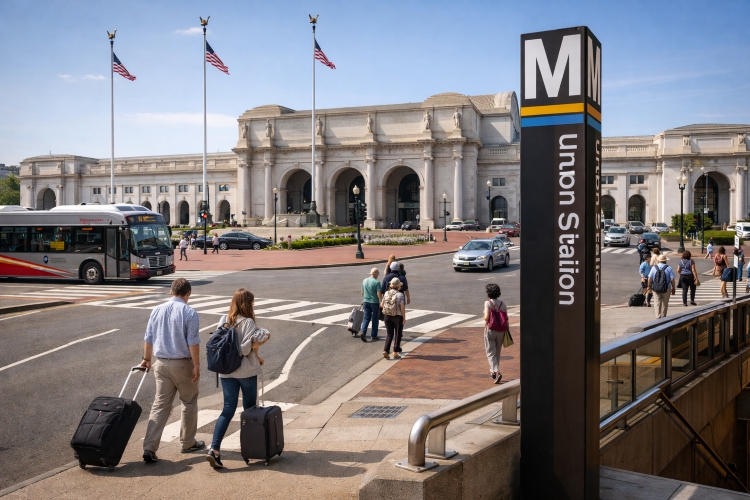
Connections and getting around Washington DC
Arriving at Union Station is only the beginning; navigating the capital’s neighborhoods and landmarks requires understanding the transit options available. Thankfully, Washington DC has a robust public transportation system that makes exploration convenient.
Metrorail and commuter trains
The Metrorail Red Line connects directly to Union Station, providing quick access to central downtown and transfer points to the Blue, Orange, Silver and Green lines. Fares are distance‑based, and you can purchase a reusable SmarTrip card at the station for seamless transfers. Important stops include Metro Center (for the Smithsonian museums and National Mall) and Gallery Place (for Chinatown and the Capital One Arena).
Maryland’s MARC train offers three lines: the Penn Line to Baltimore and Perryville, the Camden Line to Baltimore’s Camden Yards and the Brunswick Line to Frederick and Martinsburg. These commuter trains provide alternatives for visitors staying in nearby cities and suburbs. Virginia’s Virginia Railway Express has two lines: Fredericksburg and Manassas. If you’re lodging in Northern Virginia or plan to visit historic sites like Old Town Alexandria or Manassas National Battlefield, the VRE is a convenient choice.
Metrobus, streetcar and buses
Metrobus routes cover the District and parts of Maryland and Virginia. From Union Station you can catch buses to neighborhoods such as Georgetown, Adams Morgan and Columbia Heights. The DC Streetcar currently runs along the H Street/Benning Road corridor, east of Union Station, and provides free transportation through the H Street neighborhood. If you’re venturing beyond the metro region, long‑distance bus carriers operate from Union Station’s bus deck. Greyhound, FlixBus, Peter Pan, OurBus and BestBus offer service to cities such as New York, Philadelphia, Pittsburgh and Richmond. Access to the bus deck is via Gate G in the main concourse, with escalators leading up to the boarding area.
Taxis, rideshare and walking
Taxi stands are located at the front of Union Station, and rideshare vehicles like Uber and Lyft can pick up passengers from designated areas. Fares to downtown destinations such as the White House or National Mall usually range from $8 to $15, depending on traffic. For travelers staying at Hotel Washington, the ride from Union Station takes about 10 minutes; alternatively, you can walk 1.5 miles along Pennsylvania Avenue and enjoy views of landmarks along the way.
Washington DC is a walkable city. From Union Station it’s approximately a 15‑minute walk to the U.S. Capitol and about 20 minutes to the eastern end of the National Mall. Biking is another option; Capital Bikeshare stations are located near the station, allowing you to rent a bicycle and pedal to destinations like the Tidal Basin or Georgetown.
Connecting to airports
If your journey continues by air, Washington’s three airports are accessible via rail or bus. From Union Station, take the Metrorail Red Line to Metro Center and then transfer to the Blue or Yellow lines for Ronald Reagan Washington National Airport (DCA). Travel time is about 45 minutes. For Baltimore/Washington International Airport (BWI), ride the MARC Penn Line or Amtrak to the BWI Rail Station; a free shuttle bus connects to the terminals. The new Silver Line extension links the station to Dulles International Airport (IAD) via Metro Center and the Silver Line; the journey takes just over an hour.
Getting to attractions
To explore the National Mall, exit the station onto First Street NE and walk south past the Capitol grounds. The Supreme Court and Library of Congress flank this route. For the Smithsonian museums, take the Red Line to Metro Center and transfer to the Orange, Blue or Silver lines to the Smithsonian station, or walk across the Mall. The U.S. Capitol visitor center offers tours when Congress is in session; arrive early to pass through security and check the daily schedule. Museums such as the National Museum of American History and National Air and Space Museum are free and open daily.
If your interests extend beyond the Mall, catch the Green Line to U Street for live music and historic jazz clubs, or the Yellow Line to Columbia Heights for international cuisine. The Red Line also runs north to Woodley Park, home to the National Zoo, and south to NoMa, a neighborhood with breweries and markets. For day trips, MARC trains deliver you to Baltimore’s Inner Harbor and the historic town of Harper’s Ferry, while VRE trains connect to Fredericksburg and Manassas.
Travel seasons and events
When planning your trip, consider the seasonal character of Washington DC. Spring brings mild temperatures and the National Cherry Blossom Festival, a celebration of the thousands of cherry trees that bloom around the Tidal Basin. Hotels and trains fill quickly, so book early if you wish to see the blossoms. Summer is hot and humid but offers long daylight hours and a slate of concerts and Independence Day fireworks. Autumn brings crisp air and colorful foliage along the Potomac River and in nearby parks. Winter is quieter, and train fares are often lower except around holidays.
Below are tips for each season:
• Spring (March–May): Best time for blooms and comfortable temperatures. Book tickets early; cherry blossom crowds are heavy.
• Summer (June–August): Hot weather; choose air‑conditioned trains and carry water. Enjoy outdoor festivals and baseball games.
• Autumn (September–November): Mild weather; scenic foliage on long‑distance routes. Fares may drop after Labor Day.
• Winter (December–February): Off‑peak for tourism; lower hotel and train prices except near Christmas and New Year’s. Bundle up for cold walks; snow can cause delays.
Special events and infrastructure projects
In addition to seasonal considerations, keep an eye on special events and infrastructure updates. Large gatherings, such as presidential inaugurations, Fourth of July celebrations and major demonstrations, can affect train schedules and station operations. Check Amtrak and local transit websites for advisories. As of December 2025, the Long Bridge Project is underway, creating a four‑track corridor between Arlington and DC with new rail and pedestrian bridges. Construction will lead to intermittent schedule changes through 2030, so review service alerts before your trip.
Nearby attractions and accommodation
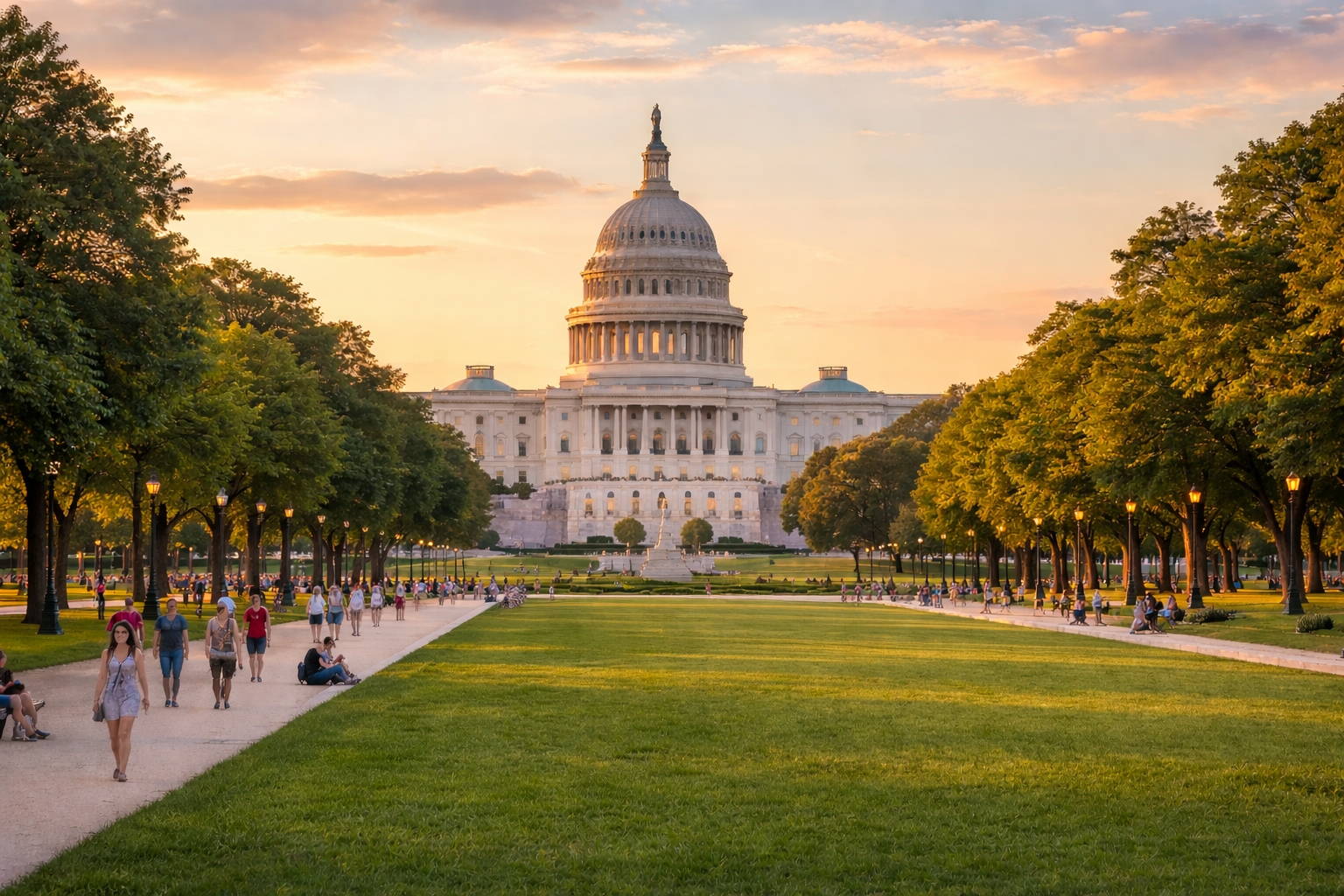
Washington DC’s compact geography makes sightseeing straightforward. After alighting at Union Station, visitors find themselves within walking distance of many attractions. The U.S. Capitol stands less than a mile away, its dome dominating the skyline. The Supreme Court and Library of Congress lie just east of the Capitol, while the National Mall extends west toward the Washington Monument and Lincoln Memorial. Museums and galleries line both sides of the Mall, including the Smithsonian museums, which cover topics from art to aerospace and are all free to enter. Strolling along Constitution Avenue reveals memorials to war veterans and civil rights leaders.
Exploring neighborhoods beyond the Mall adds depth to your visit. In the Penn Quarter, you’ll find theaters, restaurants and the National Portrait Gallery. Chinatown offers dim sum and bubble tea, while Eastern Market hosts weekend farmers markets in a Victorian‑style hall. Capitol Hill’s tree‑lined streets are home to historic rowhouses and the bustling Eastern Market. For nightlife, head to U Street or Adams Morgan, where jazz clubs and international cuisine create a lively atmosphere.
Hotels and where to stay
Choosing lodging near Union Station or the White House ensures easy access to attractions. Several hotels in the downtown core cater to business and leisure travelers, offering amenities such as meeting rooms, rooftop bars and spa services. If proximity to the White House is important, Hotel Washington provides a unique advantage: it is the closest hotel to the White House, positioned at the edge of the White House Lawn. From its rooftop you can see the President’s residence and the Washington Monument. The hotel’s elegant rooms and suites combine historic charm with modern conveniences, and its location on 15th Street NW allows guests to walk to the Mall, Metro stations and downtown offices. On‑site dining includes a lobby lounge and a rooftop restaurant that offers panoramic city views. Check the hotel’s website for special packages that combine lodging with tickets to nearby attractions.
Other lodging options include boutique hotels in the Penn Quarter, family‑friendly chains near the Mall and budget accommodations around Chinatown and Foggy Bottom. Neighborhoods like Capitol Hill, Dupont Circle and Georgetown offer bed‑and‑breakfast inns in historic homes, while the Wharf district features modern waterfront hotels with views of the Potomac. If you prefer to stay outside the city, commuter rail and Metro lines make it easy to reach downtown from suburbs such as Alexandria, Arlington and Bethesda.
Attractions at a glance
| Attraction | Approx. distance from Union Station | Highlights |
|---|---|---|
| U.S. Capitol | 0.8 mi | Iconic dome; Visitor Center tours; legislative history |
| National Mall | 0.9 mi | Open park with monuments, memorials and museums |
| Smithsonian museums | 1 mi | Free museums covering art, science, history and culture |
| Library of Congress | 0.7 mi | Largest library in the world; Italianate architecture |
| Eastern Market | 1.2 mi | Food and craft market in a historic building |
| Chinatown | 0.8 mi | Restaurants, shops and Friendship Archway |
| Hotel Washington | 1.5 mi | Closest hotel to the White House; rooftop views |
| U Street | 1.7 mi | Jazz clubs, restaurants and historic theaters |
| Adams Morgan | 2.2 mi | Nightlife district with eclectic eateries |
| National Zoo | 3 mi | 163‑acre zoo with giant pandas; part of Smithsonian |
Frequently asked questions
How long is the train ride from New York City to Washington DC?
The trip is about 3 hours on the Northeast Regional and around 2 hours 45 minutes on the Acela.
What station does Amtrak use in Washington DC?
All Amtrak trains to the capital stop at Union Station, located on Massachusetts Avenue NE.
Should I take the train or drive to Washington DC?
Amtrak is often easier; you avoid traffic and parking fees and arrive in the city center. Fares can be lower than gas and parking costs.
When should I book Amtrak tickets to get the best price?
Book two to four weeks ahead for high‑demand routes like the Acela and long‑distance trains; off‑peak fares and saver tickets are cheapest.
Are pets allowed on Amtrak to Washington DC?
Yes. Small dogs and cats up to 20 pounds can travel on most routes for a fee, but reservations are required and there are restrictions on service types.
How do I get from Union Station to the National Mall?
It’s about a 15‑minute walk along First Street NE and Constitution Avenue, or you can take the Metrorail Red Line to Metro Center and transfer to the Blue, Orange or Silver lines.
What is the best time of year to travel to Washington DC by train?
Spring and autumn offer mild weather and scenic views; however, cherry blossom season draws large crowds, so book early.
How far is Hotel Washington from Union Station?
Hotel Washington is approximately 1.5 miles away; you can take a short taxi or rideshare ride or enjoy a walk past the Capitol and along Pennsylvania Avenue.
Closing thoughts
Exploring Washington DC by train combines convenience with a sense of adventure. Whether you’re arriving from Boston on the high‑speed Acela, taking an overnight trip from Chicago on the Floridian, or commuting from Baltimore on the Northeast Regional, the journey itself becomes part of your travel story. Once you step off at Union Station, the city’s monuments, museums and neighborhoods await. From the civic grandeur of the U.S. Capitol to the quiet corners of Capitol Hill and the nightlife of U Street, DC invites discovery at every turn. Make your visit even more special by choosing accommodations that enhance your experience. Hotel Washington—the closest hotel to the White House, positioned at the edge of the White House Lawn—offers luxurious rooms, rooftop views and proximity to iconic landmarks. Plan your itinerary, book your tickets, and let the rhythm of the rails carry you to a memorable stay.
Entity References
| Entity name | Entity type | Official website domain used |
|---|---|---|
| Union Station | Train station | unionstationdc.com |
| Metrorail | Public transportation system | wmata.com |
| MARC train | Commuter rail service | mta.maryland.gov |
| Virginia Railway Express | Commuter rail service | vre.org |
| National Mall | Park and monument complex | nps.gov |
| U.S. Capitol | Government building | visitthecapitol.gov |
| Smithsonian museums | Museums & research complex | si.edu |
| National Cherry Blossom Festival | Cultural event | nationalcherryblossomfestival.org |
| Long Bridge Project | Infrastructure project | vapassengerrailauthority.org |
| Hotel Washington | Hotel | thehotelwashington.com |