2026 Washington Nationals Home Opener: Experience the Game, Explore D.C., and Stay in Style
Every spring in Washington D.C. carries a special energy as cherry blossoms open and baseball fans start counting down the days until the first pitch. In 2026 that feeling will be amplified when the Washington Nationals open their home schedule on Friday, April 3, 2026 against the Los Angeles Dodgers. The matchup comes after the club begins its season on the road at Wrigley Field against the Chicago Cubs, marking the earliest opening day in franchise history. This article is designed to answer all the key questions about the home opener—when it starts, what to expect at Nationals Park, how to plan your day in the nation’s capital, and why Hotel Washington is the ideal base for experiencing it all. Within a few minutes of reading you’ll understand the schedule, the ballpark, the city, and how to make the most of your visit.
Setting the Stage: A New Season for the Nationals
Baseball seasons are long narratives, and 2026 promises to be a chapter of renewal for the Washington Nationals. After a rebuilding year, the franchise enters the new season under fresh leadership with President of Baseball Operations Paul Toboni and general manager Anirudh Kilambi steering a youthful roster through an early gauntlet of tough opponents. The season opens in Chicago against the Cubs on March 26 before returning home for a marquee series against the Dodgers.
Highlights of the 2026 Schedule
Fans looking beyond Opening Week will find several dates circled on the calendar. In addition to the home opener against the Dodgers, the Nationals host their annual July 4 game against the Pittsburgh Pirates and welcome the New York Yankees for a three‑game set just before the All‑Star break. Interleague play brings the Baltimore Orioles to town for the Beltway Series in mid‑May and a return trip to Baltimore in late June. A late‑season stretch features key divisional clashes with the Mets, Braves, Marlins and Phillies as the club pushes for postseason positioning.
The Home Opener Opponent: Los Angeles Dodgers
The 2026 home opener brings one of baseball’s most storied franchises to Nationals Park. The Los Angeles Dodgers have amassed multiple World Series titles and are known for star‑studded rosters that blend homegrown talent with marquee acquisitions. Their visit to Washington promises a match‑up filled with fireworks at the plate and on the mound.
Historically, games between the Dodgers and Nationals have delivered dramatic moments, including playoff battles and tight regular‑season contests. By 2026, Los Angeles remains a powerhouse in the National League West, anchored by a deep pitching staff and a lineup that combines power and speed. The Nationals’ young core will use the series as a measuring stick, seeking to start their home schedule with a statement victory in front of a packed house.
A Brief Look at the Dodgers’ History
The Dodgers’ lineage traces back to Brooklyn in the late 19th century, when trolleys crisscrossed the borough and occasionally forced players and fans to “dodge” streetcars—hence the nickname. After moving to Los Angeles in 1958, the franchise ushered in West Coast baseball and produced legends such as Sandy Koufax and Jackie Robinson. Dodger Stadium, perched above Chavez Ravine, remains one of the most iconic venues in sports. Their commitment to scouting and player development has kept them competitive for decades. When the Dodgers visit Nationals Park, fans have the chance to watch a team whose pedigree mirrors the Nationals’ aspirations.
Nationals Park: A Ballpark on the Anacostia River
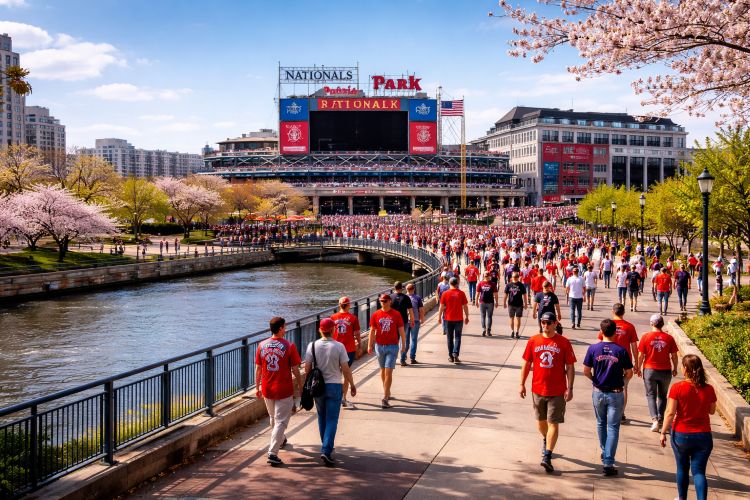
No visit to a home opener is complete without appreciating the venue itself. Nationals Park is located in the Southeast quadrant of Washington, south of the Capitol along the fast‑developing Capitol Riverfront adjacent to the Navy Yard. The ballpark sits at 1500 South Capitol Street SE and overlooks the Anacostia River. Its design not only redefined modern sports architecture but also catalyzed a new mixed‑use neighborhood that blends residential buildings, offices, restaurants and parks. With a seating capacity of 41,373 and a field oriented toward downtown D.C., the stadium affords upper‑deck views of the Washington Monument and the U.S. Capitol on clear days.
A Brief Architectural Tour
The ballpark opened in 2008 after a two‑year construction project that cost roughly $693 million. It became the first LEED‑certified major professional sports stadium in the United States. The structure’s open concourses and glass‑and‑steel facade allow natural light and breezes to flow through the seating bowl. Fans entering from the right‑field gate are greeted by wide views of the field and a two‑story bronze statue of Hall of Fame slugger Frank Howard. Art installations and landscaped plazas surround the exterior.
From the bowl, the dimensions stretch 337 feet down the left‑field line, 402 feet to straightaway center and 335 feet down the right‑field line. Over 14 sanctioned parking lots and garages surround the ballpark, but many fans prefer to arrive via the Washington Metro’s Green Line to the Navy Yard–Ballpark station, which sits just outside the center‑field entrance. Metrobus routes and bicycle valet services provide additional transit options.
Seating and Tickets
Nationals Park offers a range of seating experiences for every budget. Field‑level seats place you close to the action along the baselines and behind home plate. Club sections include access to indoor lounges with climate control and upscale concessions. Sections in the left‑field outfield corner—known as the Budweiser Brew House and District Wharf Boardwalk—provide social spaces with craft beer and river views. For families, the first‑base side offers shaded seats during afternoon games, while the Kids Zone behind right field features a playground and educational exhibits.
Tickets for the home opener typically sell quickly, especially when the opponent is the star‑studded Los Angeles Dodgers. Fans can purchase tickets through the Washington Nationals’ official ticketing platform at mlb.com/nationals, choosing from single‑game seats, multi‑game packages or premium suites.
Transportation and Accessibility
Getting to Nationals Park is part of the game‑day experience. Public transportation is the easiest method: the Navy Yard–Ballpark station on the Green Line is only one block from the center‑field gate. Cyclists can take advantage of more than 110 bike racks and a free valet service at Garage C. Driving is straightforward via Interstate 395 or Interstate 295, which connect to South Capitol Street; the recently renovated Frederick Douglass Memorial Bridge carries vehicles and pedestrians across the Anacostia River. Parking lots open several hours before first pitch, but spaces fill up quickly on special event days, so advance purchase is recommended.
Pre‑Game and In‑Stadium Experiences
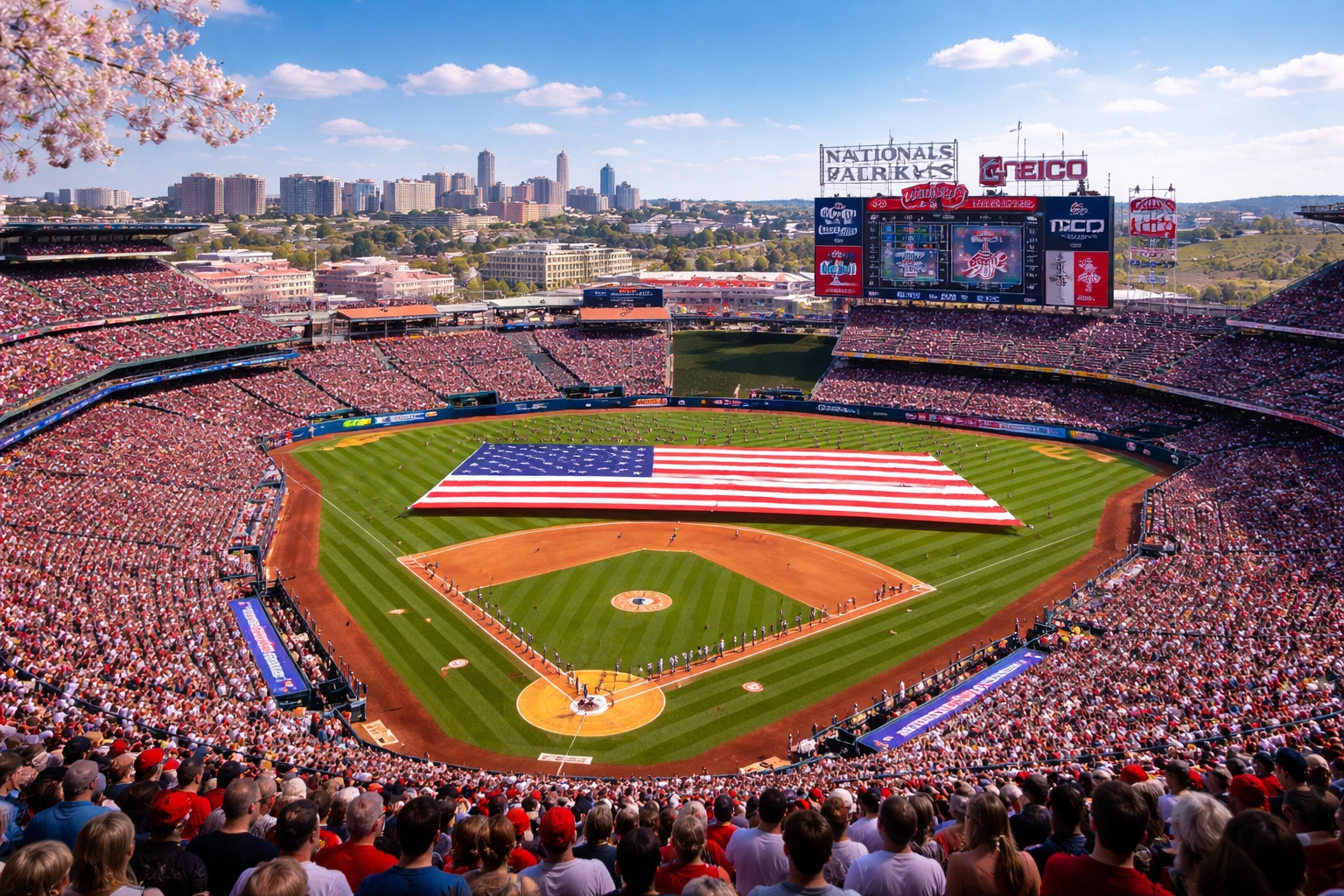
Home openers in Washington blend tradition with contemporary flair. The day often begins with a ceremonial first pitch thrown by a local dignitary or veteran. Military honor guards present the colors and a vocalist performs the national anthem as a giant American flag stretches across the outfield. Between innings fans are treated to the Racing Presidents, a trademark Nationals Park event in which oversized costumed versions of George Washington, Thomas Jefferson, Abraham Lincoln and Theodore Roosevelt sprint around the warning track to raucous cheers. Giveaways ranging from commemorative rally towels to collectible baseball cards reward early arrivals.
Concession options reflect D.C.’s culinary diversity, with stands serving Chesapeake crab cakes, half‑smokes, pupusas and barbecue alongside familiar ballpark staples like hot dogs and peanuts. Craft beer lovers can sample local breweries at the District Drafts stands, while families appreciate the affordability of the Nats Value Menu with $5 snacks.
Game Day Itinerary: Planning Your Washington D.C. Experience
Attending the home opener is more than just a three‑hour ballgame—it’s an opportunity to immerse yourself in the capital’s culture. With thoughtful planning you can craft a day that balances baseball, history, dining and relaxation.
Morning: Exploring the National Mall
Begin your day with a stroll through the National Mall. This two‑mile green expanse, managed by the National Park Service, connects many of the country’s most iconic monuments and museums. Start at the east end near the U.S. Capitol and the United States Capitol Visitor Center – the official hub for tours of the legislative branch and a gateway to understanding American governance. Walking westward you’ll pass the Smithsonian Institution, a collection of free museums whose treasures range from the Wright Brothers’ Flyer to the Hope Diamond.
Consider a visit to the National Air and Space Museum to see historic aircraft and spacecraft up close or the National Museum of American History for a glimpse of the Star‑Spangled Banner. Continue toward the center of the Mall to stand beneath the Washington Monument, an obelisk honoring the nation’s first president. Beyond it you’ll find the reflecting pool leading to the Lincoln Memorial, where Abraham Lincoln’s seated statue watches over the city. Each of these sites is managed by official federal agencies, and you can learn more by visiting the National Park Service at nps.gov/nama, the Smithsonian Institution at si.edu, the Air and Space Museum at airandspace.si.edu, and the Capitol Visitor Center at visitthecapitol.gov.
During spring the cherry blossoms around the Tidal Basin often peak in late March or early April. If timing allows, circle the water to see the Japanese‑gifted trees in full bloom and stop by the Thomas Jefferson Memorial and Martin Luther King Jr. Memorial along the way. Crowds can be heavy, so consider arriving early to enjoy the serene beauty before the midday rush.
Midday: Lunch and Neighborhood Wandering
After exploring the Mall, refuel at one of downtown’s many eateries. Penn Quarter offers a mix of fine dining and casual spots, while the up‑and‑coming Wharf development along the southwest waterfront features waterfront restaurants and live music. Food halls like Union Market gather dozens of local purveyors under one roof, giving you the chance to sample cuisines from around the world. For a quick yet quintessential Washington bite, try a half‑smoke—a smoked sausage topped with chili and onions—at a local stand.
If you prefer to stay close to Nationals Park, the surrounding Capitol Riverfront neighborhood has blossomed with breweries, coffee shops, and fast‑casual restaurants. The Yards Park provides riverfront green space where you can picnic and watch boats glide along the Anacostia.
Afternoon: Pre‑Game Preparations
As game time approaches, head toward Nationals Park with plenty of time to soak in the atmosphere. Gates typically open 90 minutes before first pitch, allowing you to watch batting practice and perhaps snag a souvenir ball. If you’re bringing children, arrive early to explore the Kids Zone and let them burn off energy before settling into their seats.
Before entering, take a detour to the Capitol Riverfront section of the Anacostia Riverwalk Trail for views of the ballpark and the river. Street performers and local vendors often line the sidewalks on Opening Day, adding to the festive mood. Pick up a program, snap photos at the team statues and soak in the buzz of thousands of fans all heading to the same destination.
Hotel Washington: Your Home Base in the Heart of the City
Where you stay can make or break your home opener experience. Situated at 515 15th Street NW, Hotel Washington is uniquely positioned as the closest hotel to the White House, actually located at the edge of the White House Lawn. This placement allows travelers to begin and end their days at the epicenter of Washington D.C. without commuting into the city. From its front door, you can walk to the National Mall in minutes, and a short ride on the Metro’s Green Line takes you directly to Nationals Park.
A Century of Hospitality
Hotel Washington has been hosting visitors since 1917. Its Italian Renaissance Revival exterior, designed by architect Thomas Hastings, was constructed in 1917 and later designated as a historic property worthy of protection by the District of Columbia. Inside, the lobby arches represent interest groups commonly lobbied for in the Nation’s capital, and the constellations on the elevators mirror the night skies on pivotal dates in U.S. history. Throughout the decades the hotel has welcomed world leaders, dignitaries, entrepreneurs and Hollywood stars. Elvis Presley famously stayed in rooms 505–507 before meeting President Nixon at the White House, and the property has appeared in films such as The Godfather Part II and Wonder Woman 1984. In 1995 it was listed on the National Register of Historic Places and now contributes to the Fifteenth Street Financial Historic District.
Rooms and Amenities
Guests will find a harmonious blend of historic charm and modern comfort. Rooms feature high ceilings, marble bathrooms, plush bedding and technology such as fast Wi‑Fi and smart televisions. Many rooms offer unobstructed views of the Washington Monument or the Treasury Building.
For dining, the hotel’s Vue Rooftop restaurant and lounge sits atop the building, offering panoramic views of the White House, the Mall and the city skyline. This chic venue serves American cuisine with contemporary twists and hosts live music during the spring and summer. On the ground floor, Fireclay provides a more casual ambiance with wood‑fired pizzas, locally sourced ingredients and craft cocktails. The hotel’s spa offers massages, facials and wellness treatments—ideal for unwinding after a day of sightseeing or cheering at the ballpark. Meeting rooms and event spaces accommodate corporate functions and weddings, while the concierge team can arrange tours and secure tickets to popular attractions.
Location and Connectivity
One of Hotel Washington’s most compelling qualities is its proximity to nearly every major landmark in downtown D.C. The White House is literally across the street, and Lafayette Square offers a tranquil park for morning jogs or evening strolls. The hotel is also a short walk from the National Mall, the Washington Monument and the U.S. Treasury Building. Within a few blocks you’ll find Metro stations on the Blue, Orange, Silver and Red Lines, making it easy to reach Nationals Park and destinations such as Arlington National Cemetery and Reagan National Airport.
By staying at Hotel Washington you avoid the traffic and parking hassles that often accompany game day. You can explore the city on foot, return to your room to freshen up, then head to the ballpark with ease. After the game, celebrate your team’s victory from the rooftop lounge while watching the city lights sparkle.
Understanding D.C. Neighborhoods: Where to Wander After the Game
Washington D.C. is a city of distinct neighborhoods, each with its own character. After the final out, you might choose to explore beyond the immediate ballpark area.
Capitol Riverfront and Navy Yard
Adjacent to Nationals Park, the Capitol Riverfront is one of the city’s fastest‑growing districts. Formerly industrial, it now features high‑rise apartments, green spaces and waterfront promenades. The Yards Park offers boardwalks, splash fountains and outdoor concerts. Craft breweries like Bluejacket pour inventive ales and serve seasonally driven menus. If you enjoy contemporary art, the nearby Anacostia Arts Center hosts exhibitions and performances that highlight local talent.
Penn Quarter and Chinatown
Heading north from the National Mall brings you to Penn Quarter, home to theaters, galleries and restaurants. The National Portrait Gallery and the Smithsonian American Art Museum share a stunning historic building with a luminous atrium. Capital One Arena anchors the neighborhood, hosting basketball and hockey games as well as concerts. Next door is Chinatown, where the Friendship Archway welcomes visitors to a cluster of Chinese and Asian restaurants.
U Street and Shaw
For nightlife, consider the U Street corridor and the adjacent Shaw neighborhood. These areas celebrate D.C.’s African American heritage and musical roots. Jazz clubs like Bohemian Caverns and Twins Jazz (currently under renovation) recall the days when Duke Ellington performed here. Historic theaters host live music and spoken‑word events, while contemporary bars and eateries serve global cuisine. Murals and street art animate the blocks between 14th and 9th streets, making for a vibrant post‑game atmosphere.
Georgetown and the Waterfront
For a more laid‑back evening, head west to Georgetown. Its cobblestone streets, Federal‑style architecture and waterfront restaurants offer a charming setting for dinner or drinks. Walk along the C&O Canal towpath or browse the upscale shops on M Street. The waterfront park provides views of the Potomac River and the Key Bridge.
The Capital’s Springtime Appeal
April in Washington is not only baseball season; it’s also one of the most beautiful times of year to visit. The city’s famous cherry blossoms usually bloom around late March or early April, depending on weather conditions. The National Cherry Blossom Festival celebrates this phenomenon with parades, street fairs and cultural performances. For 2026, the festival schedule aligns closely with the Nationals home opener, meaning visitors can enjoy both events in a single trip. Many of the festival’s events take place near the Tidal Basin, easily accessible from Hotel Washington or from Nationals Park via Metro.
Beyond blossoms, spring offers comfortable temperatures that make walking tours enjoyable. Outdoor dining patios open, farmers’ markets return, and neighborhood festivals begin. The Smithsonian Folklife Festival, though typically later in the summer, often announces its themes and performers around this time, allowing visitors to plan return trips.
Baseball Culture and Traditions
Part of the appeal of attending a home opener is immersing yourself in baseball’s rich culture. Major League Baseball is woven into American history and has developed rituals that fans cherish. Before the game you might hear organ music echoing through the concourses. During the seventh‑inning stretch, the crowd stands to sing “Take Me Out to the Ball Game,” a tradition that dates back more than a century. Scorecards, peanuts, and Cracker Jack evoke nostalgia even as digital scoreboards and mobile apps modernize the experience.
Washington’s baseball tradition predates the Nationals. Earlier teams such as the Washington Senators captured the city’s heart in the early 20th century. Although the Senators eventually relocated (becoming the Minnesota Twins and the Texas Rangers), baseball returned to Washington in 2005 when the Montreal Expos relocated and became the Nationals. The team won its first World Series in 2019, showing that perseverance and community spirit can pay off. A home opener honors that lineage by uniting generations of fans who share memories of past glories and hopes for future triumphs.
Eating and Drinking Around Nationals Park
The area around Nationals Park has blossomed into a culinary destination. Whether you’re looking for a quick bite before the game or a sit‑down meal afterward, options abound.
-
Bluejacket – This brewery and restaurant in a converted Navy Yard warehouse offers house‑brewed beers alongside dishes such as fried chicken sandwiches and seasonal salads.
-
The Salt Line – New England–style seafood is the highlight here, with lobster rolls, clam chowder and raw bar selections served on a spacious patio overlooking the Anacostia River.
-
El Bebe – A lively taqueria located at The Yards, El Bebe serves tacos, burritos and margaritas in a colorful setting.
-
All‑Purpose Pizzeria – Known for its Jersey‑style pizzas and Italian‑American comfort food, this restaurant is ideal for sharing plates with friends and family.
-
District Winery – For a more sophisticated evening, this working urban winery pours its own wines and offers a full dining menu with riverfront views.
Inside the park, consider sampling local vendors: Half Smoke District sells D.C.’s signature sausages, Ben’s Chili Bowl brings its famous chili from U Street to the ballpark, and Shake Shack offers its popular burgers and shakes. Vegetarian and gluten‑free options are increasingly available.
Cultural Attractions Beyond Baseball
While baseball might be your main reason for visiting, Washington is brimming with cultural attractions that deserve your attention. Here are a few that pair well with a weekend visit:
-
National Gallery of Art – Split between the West Building of classical art and the East Building of modern and contemporary works, the National Gallery also boasts an outdoor sculpture garden. Admission is free.
-
International Spy Museum – A favorite with families, the museum invites guests to adopt spy personas and navigate interactive exhibits on espionage history.
-
Holocaust Memorial Museum – This powerful museum documents the history of the Holocaust through artifacts, survivor testimonies and archival footage. Timed tickets are recommended.
-
United States Botanic Garden – Near the Capitol, this conservatory houses tropical, desert and subtropical plant collections. It provides a tranquil escape from the city’s bustle.
-
ARTECHOUSE – A digital art space offering immersive installations that blend art, science and technology. Exhibits change regularly and often align with seasonal themes.
By weaving these attractions into your itinerary you’ll gain a richer appreciation for Washington beyond baseball.
Frequently Asked Questions (FAQ)
When is the 2026 Washington Nationals home opener? The Nationals host the Los Angeles Dodgers on April 3, 2026. Game starts at 1:05 PM.
Who do the Nationals play in their 2026 home opener? They face the Los Angeles Dodgers in a three‑game series that begins on April 3.
Where is Nationals Park located? Nationals Park is at 1500 South Capitol Street SE in Southeast Washington, D.C., along the Capitol Riverfront.
How can I get to Nationals Park? Most fans use public transit via the Navy Yard–Ballpark station on the Green Line. Driving via Interstates 395 or 295 and parking in one of 14 sanctioned lots is also an option.
What time do gates open for the home opener? Gates typically open 90 minutes before first pitch; consult the Nationals’ official website for confirmed times.
Which hotels are near Nationals Park? Several hotels are within a few blocks, but Hotel Washington—located near the White House—provides unparalleled convenience, luxury and centrality.
What should I bring to the game? Bring your ticket (digital or printed), a valid ID, a small bag that complies with the Nationals’ bag policy, and essentials like sunscreen, a hat and a charged phone.
Are there family‑friendly activities at the ballpark? Yes. Nationals Park offers a Kids Zone with playground equipment, educational displays and occasional mascot appearances. Family seating sections and value menus make game day comfortable and affordable.
A Final Word and Next Steps
Attending the 2026 Washington Nationals home opener is more than just a day at the ballpark; it’s an experience that intertwines America’s pastime with the rich tapestry of the nation’s capital. From the historic echoes of Nationals Park to the cherry blossoms framing the National Mall, and from the pre‑game excitement of a marquee match‑up to the comfort and elegance of Hotel Washington, your visit can be both exhilarating and deeply rewarding. Plan ahead, embrace the city’s walkable layout, explore its cultural treasures and savor the crack of the bat heralding a new season.
When you’re ready to book your stay or learn more about the hotel’s amenities, visit the Hotel Washington official website. There you’ll find special packages for baseball fans, rooftop dining reservations and insider tips to make the most of your Washington adventure. We look forward to welcoming you to the city and to a springtime celebration of sport, history and hospitality.
Read other posts